Categories
Excerpt

A Walking History of the Himalayan Landscape

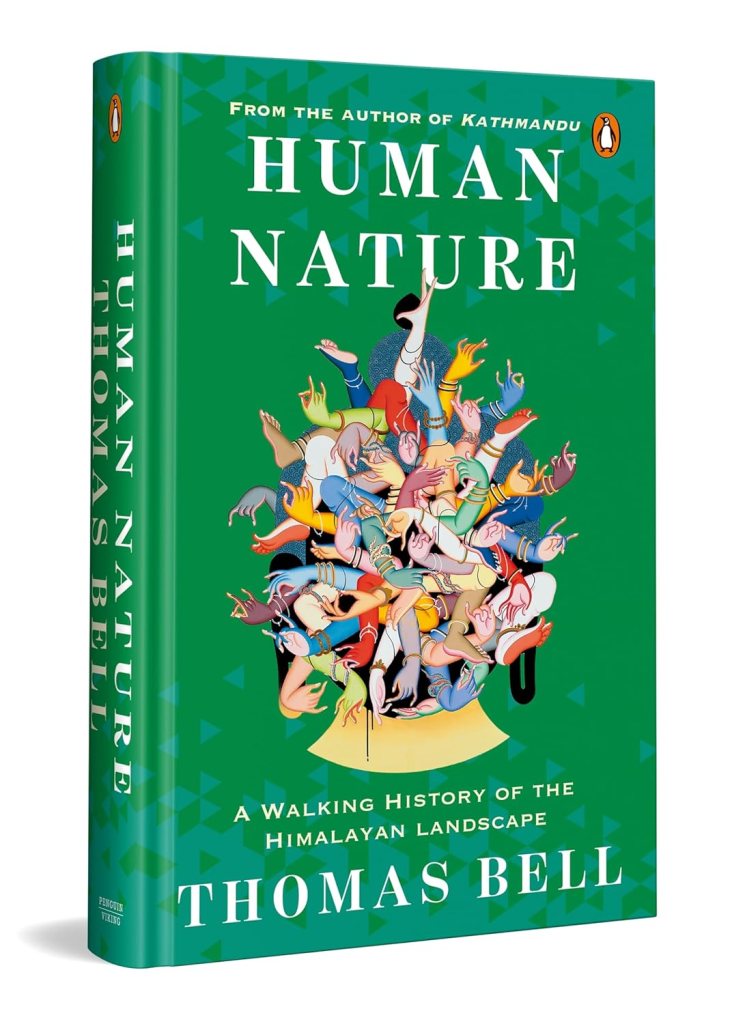
Title: Human Nature: A Walking History of the Himalayan Landscape

Author: Thomas Bell

Publisher: Penguin Random House

On the plane from Kathmandu I could see the thunderheads building over the eastern hills, after a month of drought. At the bus park, when I claimed my place in the front of the jeep, the soldier who’d already taken his said, ‘This is going to be awkward.’ He spent the first part of the journey asleep on my shoulder.

The road climbed through the clouds and tea gardens of Ilam. The neat little tea hedges were whorled around the round hills like the ridges on a fingerprint. The air was opaque with condensation, like every time I’ve been there. I was once told that this continually cloudy weather—‘the sun never shines, it’s so depressing!’—accounts for the fact that Ilam has the highest suicide rate in the country. But a woman from here, whom I met in Kathmandu, said, ‘No, it’s because the kids’ parents won’t let them be with whom they want to be; they’re lovesick, then their exams come, they come under even greater pressure, feeling their whole lives are at stake, and they drink poison or jump in a river.’

The music in the jeep was loud, and there wasn’t much conversation until we began descending into Phidim in declining light. Beyond the steamed-up glass we saw a blur of rain, cloud and forest, the lights of the town below, and white flashes of lightning. ‘Mother!’ squealed the young woman in the back, and the passengers began talking about deaths by lightning. In his home district they’re quite common, Rajendra said. ‘The victims are burnt black-black!’ The jeep dropped people off at various places, lastly me and Rajendra at a hotel. He carried most of the bags and fishing rods upstairs.

That evening in the hotel restaurant I was joined by an engineer, who was living there while he worked on a hydropower project. It was stormy outside. We drank whisky and talked about fishing, which he was interested in, and about walking routes. After we’d been talking for a while, and it seemed I knew enough to get around, he asked why I needed a guide, referring to Rajendra, who he’d seen carrying the rods upstairs.

‘I need someone to help me with my stuff,’ I said.

I was planning to walk down the Tamar River, do some fishing, and make our way back through the hills to Kathmandu in two or three weeks. ‘Start your walk from the village of Majhitar,’ the engineer said. ‘It’s on your way, and the fishing will be good where a stream flows into the Tamar.’

In the morning a car from the engineer’s project took me and Rajendra and dropped us a few kilometres away, which was as far as the road stretched then. The map I had was only ten years old, but very out of date, because in a short time the hills have filled with roads. The footpath leading from Phidim towards the Tamar was in the process of becoming the Mid-Hill Highway, a major project that will coil over ridge after ridge across the whole country. We began tramping along the unfinished surface towards Majhitar.

Except for last night’s squalls, the weather had been dry throughout the hills. Forest fires were in the news. Here, the villagers were ploughing in preparation for more rain, whereupon they’d plant maize. Where the immense red slopes were too steep to farm they were thinly forested with sal trees, which had shed their leaves to endure the arid spring. The braided streams of the Tamar came into view beneath us. After last night the water was a dirty, concrete grey. The road descended to Majhitar.

The name of this village means that members of the fishermen’s caste—Majhi—are living on a flat piece of alluvial land called a tar. The first people we reached were rethatching their house ahead of the monsoon. Their nets were hanging in the rafters. Rajendra stopped to talk, and they fried some minnows for us. ‘There are fish in this river as big as ourselves,’ the Majhis said, ‘but there’s no chance of catching them in this black water.’ They showed us the thick lines and 2-inch hooks they use, baited with minnows, to catch the big ones. ‘Fish eat fish?’ Rajendra asked.

For the rest of the day we crossed the slopes high above the black waters of the Tamar. We climbed steeply through a burnt forest, the path levelled out among fragrant pines, then we walked all afternoon in grinding sunshine, through leafless jungle with little to drink. The brightness, heat and thirst, last night’s whisky, the weight of my bag, and the awkward load of fishing rods swinging around my body made the world contract. By the end of the day I’d withdrawn into determination only to reach the village where we’d stay. When we got there the villagers asked us, for some reason, ‘Are you from the land registry department?’ They were also Majhis.

Archaeologists have speculated that fishing villages were the first permanent settlements, because even before agriculture they had a source of food in one place. It seems plausible that a similar principle is relevant here. This village, which only consisted of half a dozen stone huts, was built on a naturally formed terrace about 20 yards above the river. Each hut was a single windowless room, with a wall-less sleeping platform above it under a pitched thatch roof. Drunks were asleep on steps and benches at the end of the afternoon. We put our stuff down and were shown which house would take us. Rajendra and I asked them to prepare daal and rice for us, but they said they had no daal.

‘Vegetables then?’ They had no vegetables.

‘Can I have a cup of tea?’ There was no tea.

‘Then give me a cigarette.’ There were no cigarettes. They rolled the tobacco they grew in strips of fibre from their maize cobs.

About the Book

Human Nature, Thomas Bell embarks on four walks through the Himalaya, each in a different season, to explore the interplay between the land and the people who call it home. This evocative history entwines travelogue with folklore, literature, art and anthropology, offering a nuanced portrait of life over the centuries in one of the world’s most enigmatic regions.

Bell’s decades of living in Nepal give him an unusual perspective that bridges the gap between insider and outsider. The stories told to him touch on themes from religion to ecology and political economy, and from pre-history to the present day. He also deftly examines the impact of British imperialism and the growing external pressures on the environment.

Accompanied by striking photographs, Human Nature is a magnificently written account that spans big ideas and real lives. Erudite, intimate and evocative, this is essential reading for anyone seeking to understand the relationship between communities and their environment.

About the Author

Thomas Bell was born in the north of England. After university, he moved to Nepal to cover the civil war there for the Daily TelegraphThe Economist and other publications. He was the Southeast Asia correspondent of the Daily Telegraph, before returning to Kathmandu where he was a political officer for the United Nations during the peace process. His earlier book, Kathmandu, is a history of Nepal’s capital.

.

PLEASE NOTE: ARTICLES CAN ONLY BE REPRODUCED IN OTHER SITES WITH DUE ACKNOWLEDGEMENT TO BORDERLESS JOURNAL

Categories
Essay

The Good, the Bad, and the Benign: Back across Bass Strait

Photography and Narrative by Meredith Stephens

“What! A text message at this hour,” exclaimed Alex, reluctantly looking at his phone.

Then his expression turned to concern.

“Gregory, our boat neighbour in George Town, says the boat hatch is open.”

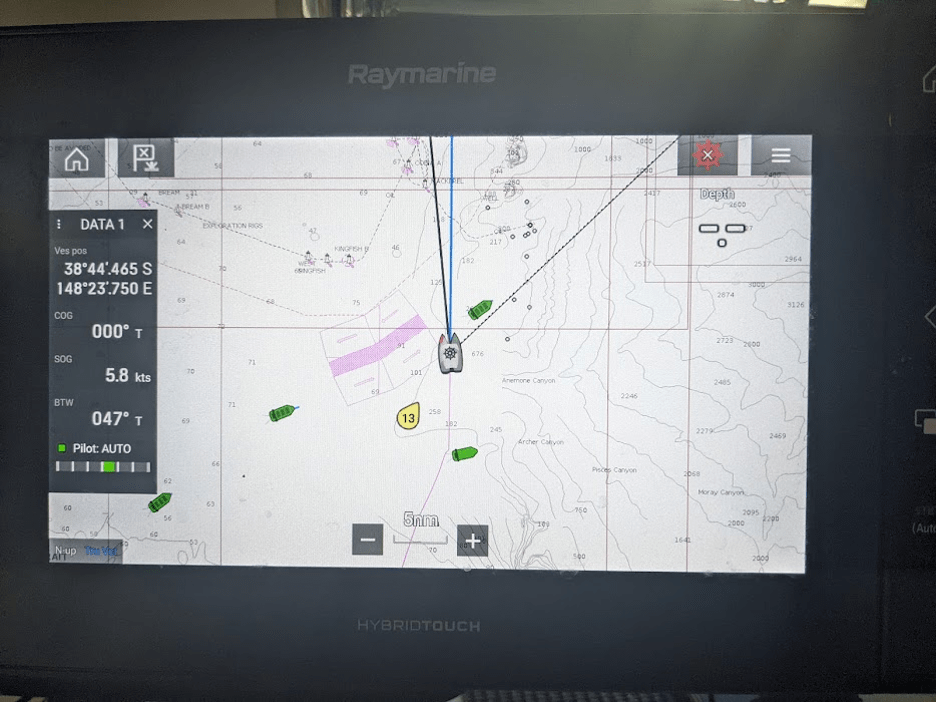
George Town, Tasmania, was a two-hour flight and a one-hour bus ride away from Adelaide. Who could have entered the boat from the hatch? They would have to be both slim and lithe. What could they have taken? Could they have taken the chartplotter – used to navigate, the Emergency Position Indicating Radio Beacon (EPIRB) – used to aid search and rescue or the Automatic Identification System (AIS) – used to track other vessels? We couldn’t sail without them.

“I can’t really bring our flight to Hobart forward because all the seats are gone during the Easter break. We’ll just have to hope for the best.”

Meanwhile, Alex decided to text Gregory back and ask him to take a look through the hatch to determine what might have been stolen. Gregory kindly obliged, and sent Alex a photo of the interior of the boat. The equipment appeared to be in place.

Alex checked the location of the boat on the AIS. It should have been updated daily, but it had been inactive for a few days. That did not bode well.

We spent the next day packing our bags as carefully as possible to avoid excess charges. On Friday Alex, Verity, Katie and I caught the plane from Adelaide to Hobart, and then picked up our rental car. We drove north through the centre of the island to the lush agricultural lands of the Tamar River, passing through towns lined with Georgian buildings constructed with convict labour.

Sculpture at Evandale

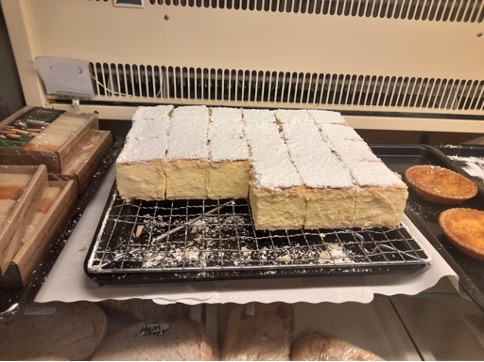
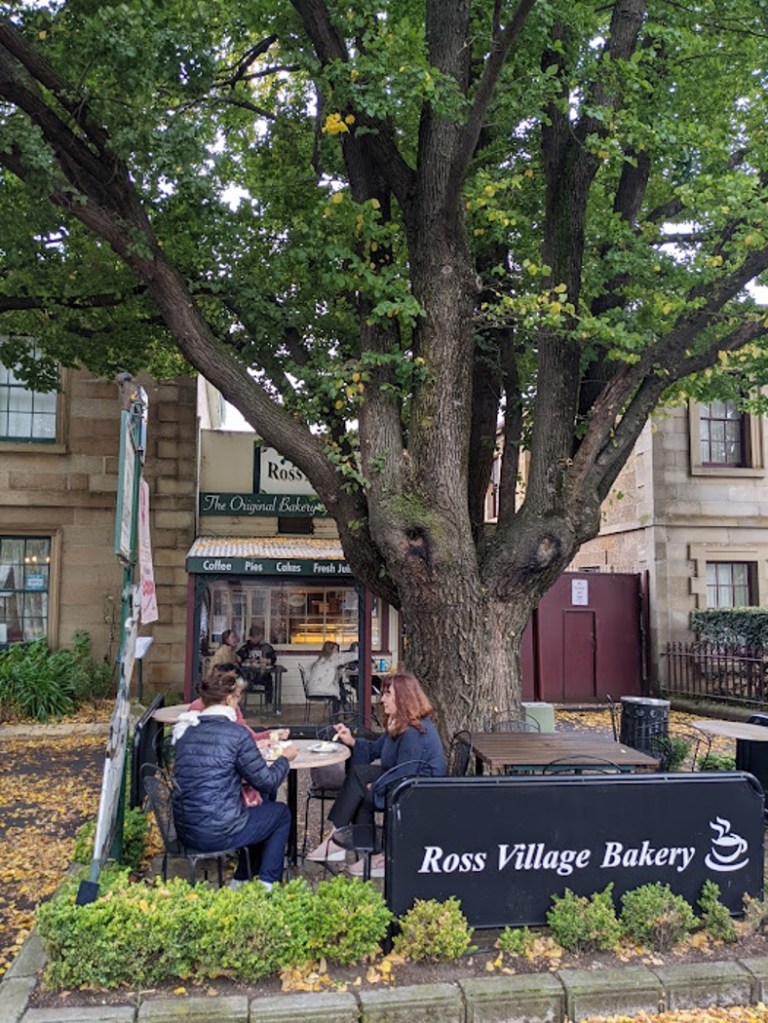
We were particularly looking forward to partaking of the best vanilla slices in the world, located in the township of Ross, and I confess that this distracted us from our concern for the safety of the boat equipment.

We sat outside the bakery savouring the vanilla slices as slowly as possible. Who knew whether we would ever be able to come back to Ross?

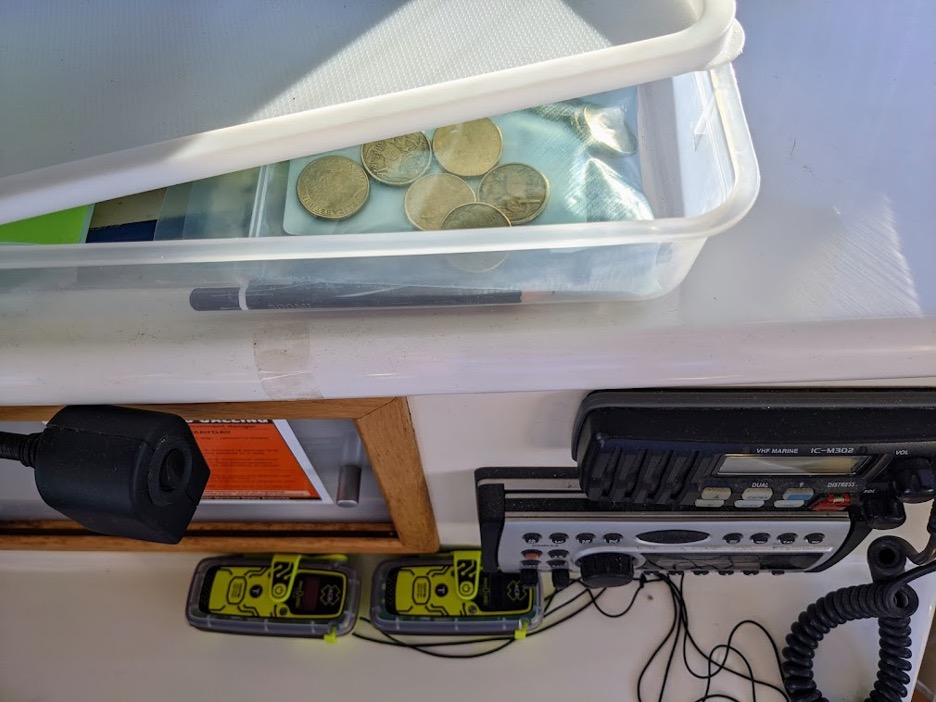
Then we continued our drive northward to George Town, Australia’s third-oldest settlement, meandering through other towns lined with Georgian buildings. As night fell, we arrived at George Town to our boat home. My fellow crew members were able to climb on the boat from the wharf unaided but I wasn’t tall enough to do this. Alex positioned an upside-down bucket on the wharf so that I could clamber on board. With trepidation we opened the door, now unlocked, and ventured inside. The equipment was still there but it had been unplugged. The lid of the clear plastic box under the monitor was open.

“They’ve taken the spare keys. The gold coins have gone too!” Alex observed.

Alex had prepared a collection of one and two dollar coins in a plastic bag in the clear box to be used for laundromats on shore. So this is what the thieves had been after!

Next Alex checked his wine collection in one of the bilges, “the boat cellar”. This was untouched. The thieves must have entered through the hatch and left through the door. Other than the keys, the only goods that had been stolen were the gold coins for the laundromat – or so we thought. Perhaps they were planning to return, next time through the door.

The theft of gold coins reminded me of advice I had received at the beginning of my teaching career in the 1980s in the city of Whyalla in South Australia. I had been assigned teacher housing by the education department. I was advised by a colleague that when I was away from home, I should leave gold coins in obvious places for youngsters who might break in.

Alex was relieved that they had not taken any navigational or safety equipment, and I was relieved that they had not taken my boat slippers. We were well into autumn and it was cold underfoot.

Despite the break-in we were very fond of George Town, not least due to the camaraderie of our boat neighbours.

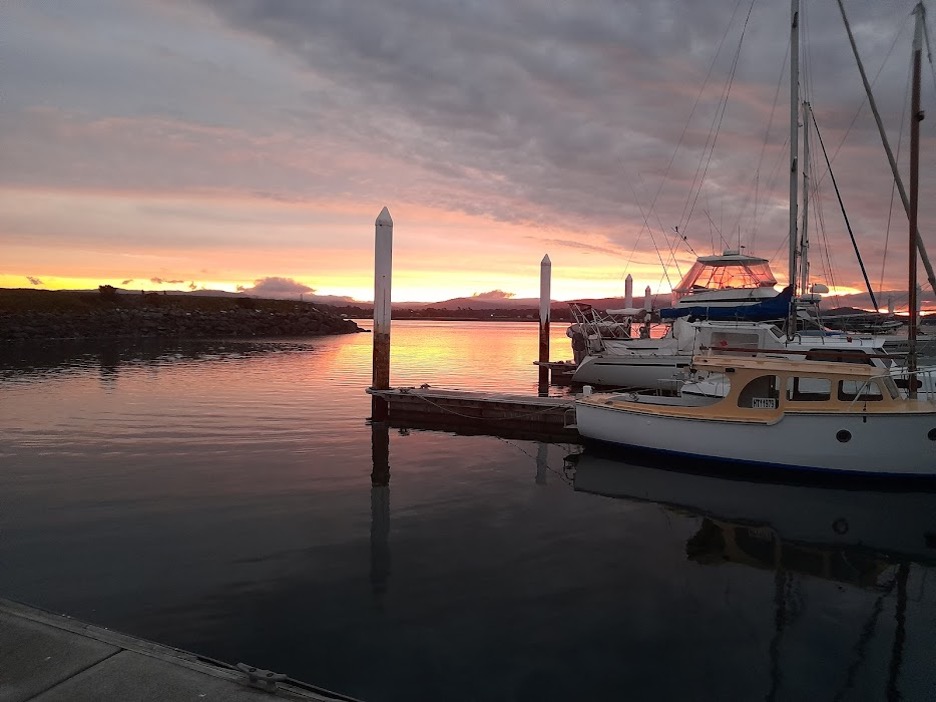
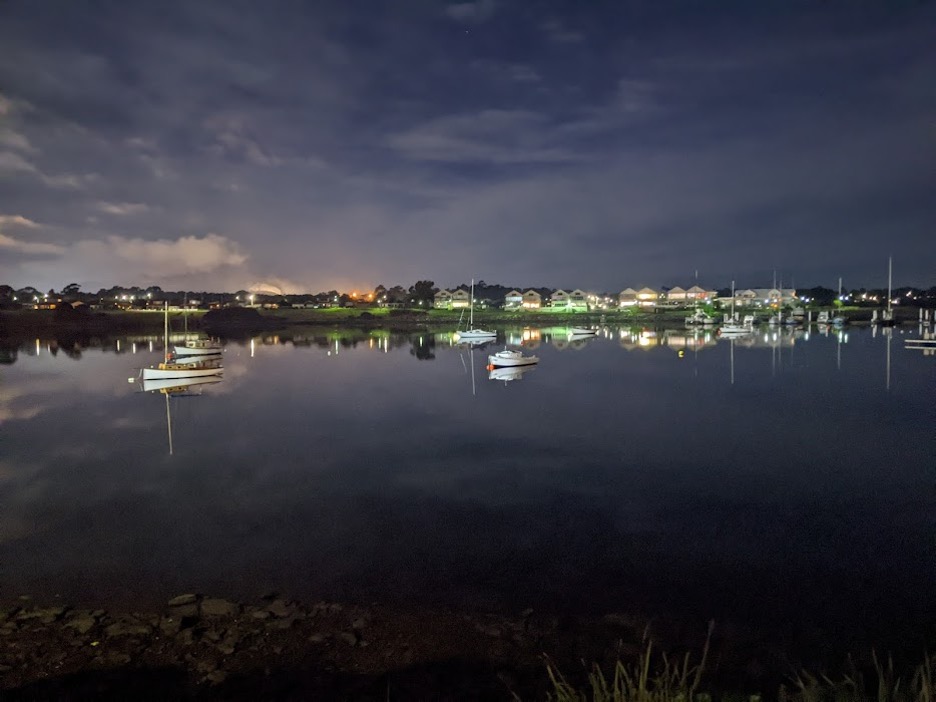
On the day of departure, as always, Alex got up before the rest of us to commence the day’s sailing. We were due to head north across Bass Strait towards the mainland. The harbour was generously lit up by the lights in the supermarket carpark on the other side, facilitating the safe exit to the Tamar River.

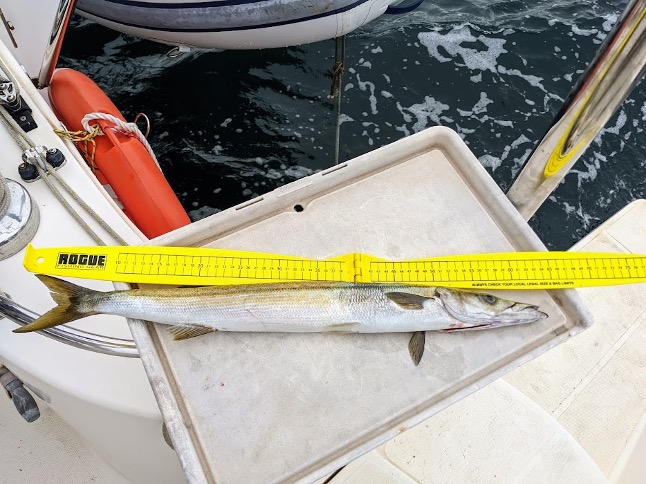
One of our favourite boat meals was freshly caught fish. Only when looking for a rod one evening did we discover yet another item had been stolen — a heavy-duty tuna fishing rod. This time, rather than using the rod we trolled with a hand reel, and had no trouble catching smaller fish.

Meanwhile someone in George Town was enjoying spending our gold coins and fishing with Alex’s special rod. At least we had our technology to guide our decisions as we crossed Bass Strait, where identifying marine traffic and the right weather conditions was critical. We followed the course Alex had plotted, stopping at the offshore island of Badger Island overnight, East Kangaroo Island and Whitemark for a few hours the following day, then anchoring at Settlement Point for our second night. Based on the Predict Wind forecast, we decided to tuck in for shelter at Outer Sister Island for two nights to wait out a front bringing strong winds. The shore looked tantalisingly close. I asked Alex if we could take the dinghy ashore but, pointing to the shore break, he told me that if we did we would likely capsize. We stayed indoors for the day, reading, writing and longingly looking at the forbidden shore. My preferred pastime is writing, but every now and then I had to force myself to stop and fix my eyes on the horizon as the boat danced over the anchor, to recover from bouts of seasickness.

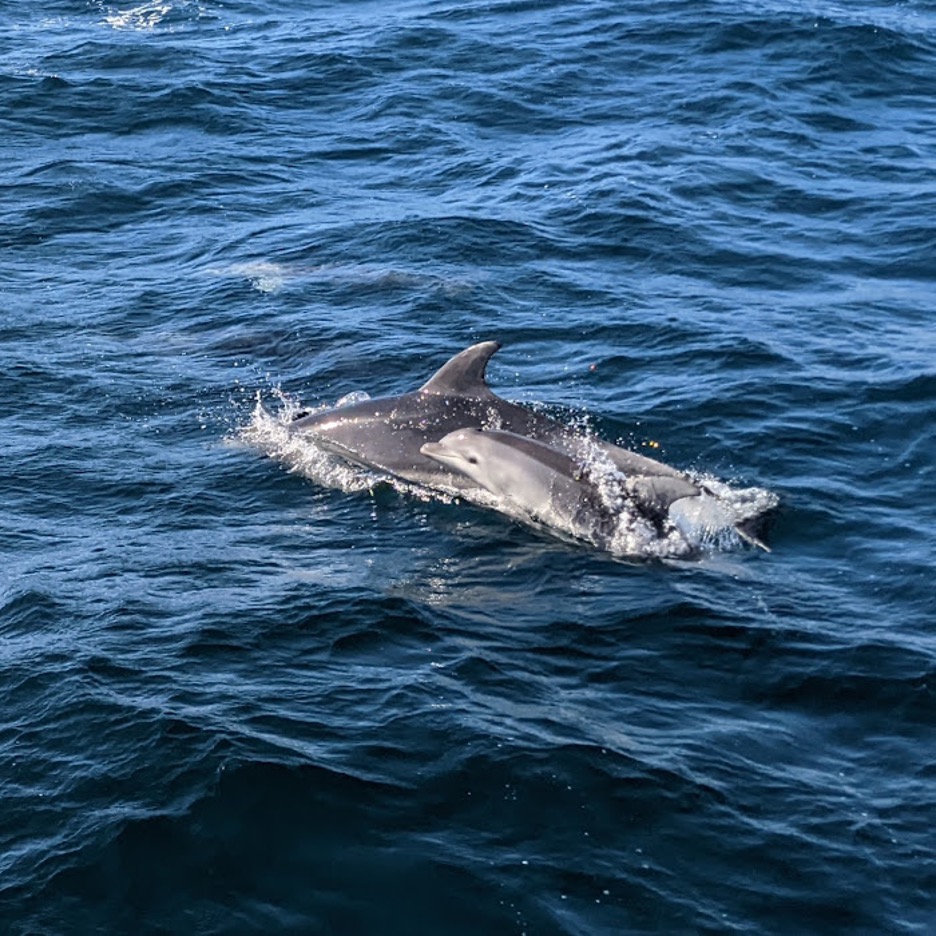
The forecast was for calmer conditions the following morning. We were ready for the long stint to the mainland, during which there would be no more coves in which to shelter. Alex got up first and departed Outer Sister Island at 6.38 am. We persevered sailing through both day and night. During the day we were rewarded by dolphin sightings as they played alongside and in front of us for about ten minutes a time, before suddenly veering away. During the night Alex and I roused ourselves at midnight to take our turn on the three hour shift until 3 am. Well, to be fair, Alex did the night watch while I forced myself to keep my eyes open.

We arrived at Eden, New South Wales, at 4.20 pm, and secured the boat on a public mooring. Too tired to venture ashore that evening, we relaxed on the boat, ready to explore Eden the following morning.

We had crossed Bass Strait availing ourselves of the technological support of the chartplotter and the AIS. Although the equipment did not spare us the trials of the night watch, it did help us avoid commercial trawlers and container ships in the shipping lanes. If it weren’t for our boat neighbour Gregory back in George Town, the thieves may have returned to steal the crucial equipment which made our crossing of Bass Strait safer. No less importantly, the notorious Bass Strait had been kind to us.

Meredith Stephens is an applied linguist from South Australia. Her work has appeared in Transnational Literature, The Muse, The Font – A Literary Journal for Language Teachers, The Journal of Literature in Language Teaching, The Writers’ and Readers’ Magazine, Reading in a Foreign Language, and in chapters in anthologies published by Demeter Press, Canada.

PLEASE NOTE: ARTICLES CAN ONLY BE REPRODUCED IN OTHER SITES WITH DUE ACKNOWLEDGEMENT TO BORDERLESS JOURNAL