By Paul Mirabile
The alarm-clock rang at seven as usual. Jonathan, puffy-eyed, yawned and slammed down the catch violently. He then rolled over towards Heather, his wife, who always needed a firm nudge to get her up in the morning. Alarms had absolutely no effect on her eardrums. Roll he did but the left side of the bed was empty! Odd, Jonathan, a light sleeper, had not heard the creaking of the bed. Besides, he had always been the first to rise in the mornings.
He threw off the blankets, blurry-eyed, and shuffled to the loo. Throwing a bathrobe over his pyjamas, Jonathan glided barefoot into the kitchen. No one! Into the sitting-room. Empty! He opened the door to their son’s now unslept in room and took a peep. Nothing! He shrank back when he saw the large map of Southeast Asia scotched to the wall over his son’s desk, and two books laid out open: André Malraux’s La Voie Royale[1] and Somerset Maugham’s The Gentleman in the Parlour: A record of a journey from Rangoon to Haiphong. He closed the door quietly with a religious deference.
A bit ruffled by this unaccustomed morning void in the house, Jonathan quickly washed, dressed, drank a cup of coffee and decided to investigate the strange absence of his wife. First he telephoned her bridge-club mates, Molly, Susan and Julie. Not one had seen or heard from her since their last get-together last week. Nonplussed, Jonathan dialled Heather’s sister’s number, Hazel at Luton. She had no great love for him but …
Hazel answered the phone, yawning, vague and aloof. No, she hadn’t spoken to Heather since Tuesday. It was Friday. “Maybe she’s out buying a mink stole,” she scoffed with unaffectionate irony. And she slammed the receiver down. Jonathan winced, poising his phone over its hook. He let it drop with a dull thud …
He fell back into a wicker chair chaffed by Hazel’s customary curtness. From the large bay window of his Town Council flat he gazed musingly out at the dwarfed pine trees that separated the pavement from his tiny front garden. The autumn leaves, sad, spiralled up and down against the grey sky, tumbling about the yellowing grass. He rocked back and forth meditatively. Wherever could she be? This was not like her, he repeated over and over again. He suddenly thought of the detective’s report…No, it had nothing to do with that. He was sure of it.
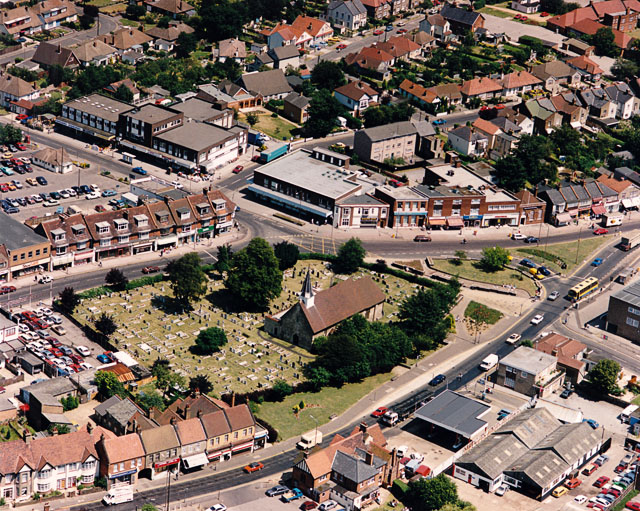
Jonathan shot out of the wicker chair and stepped out the front door. He would make a few rounds of Stevenage before doing anything too hastily. He got into his brand new 1975 Ford Cortina and roared off to their favourite pub, The Duck or Grouse. Why she should ever go there at this time of the morning seemed absurd. But one never knows … Heather worked there in her younger days as a barmaid, perhaps she popped in for a chat before shopping.
The inside of the pub was cloaked by the darkness of early morning emptiness. The owner, Lawrence, a squinty-eyed bloke, was busy juggling bottles of liquor and whistling some ridiculous television series tune. His huge, round, pink, hairless face lit up in surprise at the sight of Jonathan. The pub-owner stopped juggling, staring at him out of his squinty, shabby eyes.
“A bit early for a pint, mate!” he boomed in that portentous fatuous voice of his. “Where’s your better half ?” And he gave Jonathan a conspicuous wink. Jonathan, in no mood for Lawrence’s boring humour, came to the point :
“Heather has gone off, or I think she’s gone off.”
“With who ?” came the other’s equivocal repartee.
“Don’t mess about, Lawrence. Just tell me whether she’s been in or not.” Lawrence rubbed his hairless chin thoughtfully and shook his head. He turned towards the kitchen in the rear and cried out, “Have you seen Heather about, love?” A faint voice between splashes and the clanging of kitchenware answered in the negative. The pub-owner shrugged his burly shoulders. Jonathan pursed his lips, turned his back to him and strode dejectedly to the door. As he reached the low door Lawrence shouted out huskily: “Cheerio old boy ; give my regards to the misses … when you find her … Mind the head, duck or grouse!” Jonathan bit his lip, disregarded the caustic remarks and stalked into the streets.
Back in the car he weighed up the situation, fuming over Lawrence’s uncalled for insinuations. Heather was over sixty ! He frowned. The cheeky sod believed the whole thing to be a joke. Gone off with who?
Perhaps she’s at the pictures. No, at this time of day? What’s on? Oh, that stupid action film. She’d never go in for that.
His eyes lit up — the grocer’s, yes, of course, she went out to the grocer’s shop just across from the Cromwell Hotel. Jonathan headed towards the Cromwell in downtown Stevenage Old Town without a second thought.
The dumpy, red-cheeked Mrs Whitby was all smiles when she caught sight of Jonathan stumbling into her empty shop, although the redness of his face and his bloodshot eyes startled her — that is, piqued her curiosity.
“All right, Jonathan ? You’re not looking very jaunty this morning,” she began in her hoarse, cocky voice.
“Yes, yes, I’m fine,” he lied. “But listen, has my wife been in this morning?”
“Can’t say that I’ve seen her. Why? Has the misses been playing hide and seek with her mate?” She gave him a sly wink. Jonathan stiffened. He never liked Mrs Whitby and this feeling was manifestly reciprocal. Nor did Heather for that matter. She thought her vulgar. Alas, this was the closest grocery shop to their flat.
“You must take this seriously, Mrs Whitby,” responded Jonathan sharply. “She’s nowhere to be found, and I don’t know what to do.”
“Go to the bobbies,” she suggested tersely. “It’s their job to find missing people, right ? Be quick about it though, she might have been abducted by some romantic stranger stirring about Stevenage.” Mrs Whitby chortled, rolling her crossed eyes in a grotesque manner. Jonathan pulled a dour face.
“Oh don’t talk nonsense. There are no romantic strangers stalking about Stevenage, and if there were, they would never have chatted up a sixty-five year old woman.”
“Well, well, well. How do you know that a woman at sixty-five couldn’t seduce a man?” Mrs Whitby riposted dryly as if she herself, in her sixties, had ensnared a few ‘romantic strangers’. “You should know, sir, that old birds do catch the worm.” Jonathan was shocked by the vulgarity of the metaphor. Then she added lightly, “Go to the police station or call Scotland Yard. You know, Scotland Yard always finds missing people. Mind you, most times they’re dead, but they find a few alive.”
Jonathan stared at the ungainly woman in disbelief; the words stabbed at his chest with poignant thrusts. She noticed Jonathan’s ghastly mien and wanted to retract her statement but it was too late. She quickly said, “But sometimes they find them alive, they do. Don’t worry about Heather; she can take care of herself good and proper.”
He left the grocery shop as if in a drunken stupor, staggering into the cold, wind-swept streets. Melancholic leaves twirled about, descending in crispy clusters to the pavement. Above they dangled precariously from naked boughs, then down they plummeted from the high arching tree-tops, floating like fairy lights, bouncing to the pavement and street listlessly, their silken colours obscured by the mud. Jonathan followed intensely their errant adventure; the spiralling leaves drew him ever closer to their Fate. Suddenly, he drew back from the scene lest he become emotionally devoured by it. The morning events grew more and more estranged to him, like a bad dream or a doctor notifying you that your cancer was incurable. Plucking up courage he took a deep breath, dashed for his car and raced off to the police station in Stevenage New Town.
Jonathan stopped the car abruptly. There, tottering along the pavement was his neighbour Andy. He had no overcoat and sported a stained starched white shirt. His long, wavy hair had visibly not been combed. Andy was certainly drunk! Jonathan pulled up beside him and called out, “Andy! Do you have a minute?”
Andy, indeed drunk, stopped short in his footfalls. When he realised it was Jonathan, he danced over to the Ford flapping his arms like a bird. Andy was in a delightful mood.
“Blimey, Jonathan old fellow, fancy meeting you here.” Andy skipped back and forth, jovially tapping Jonathan’s car window with his tobacco-stained fingers.
“Stop dancing for heaven’s sake,” an exasperated Jonathan yelled out. “Have you seen Heather about ?”
Andy froze in his side-stepping and posed as if to have his photo taken. He turned his beetle-like eyes on his neighbour, “Have I seen Heather ? Well … “ He put a finger to his temple. “Yes, I might have dreamt of her last night or the night before … lambent eyes sparking like wine, teeth, milky white.”
“Stop mucking about and just tell me whether you’ve seen her or not,” the wife-seeker lashed out, beside himself. Andy had always been the ingratiating neighbour, ‘stepping in’ uninvited for tea at four, or more often, for a few shots of Jonathan’s expensive Armagnac at seven!
“I can’t say that I have, Johnny.”
“Stop calling me Johnny! Are you sure? You look absolutely sloshed.”
“Yes I’ve had a few, but I am able to peer through the fumes of Glenfiddich[2] and grasp the dire urgency of the situation. Now let me see,” and he rolled his eyes about in their orbits. “Sorry mate, I haven’t seen your wife since ‘mi own troubles and strife’[3] buggered off with the manager of the Cromwell.”
“What are you insinuating ?” Jonathan eyed him coldly.
“Nothing old boy ; no need to make a row over a flown bird. You know what they say, when the cage is left open birds will fly out.”
“Drunken fool !” Jonathan rolled up the window and sped off to the police station. It soon dawned on him that he had no time to lose. All these ridiculous enquiries led him nowhere. No one took either him or the affair with any seriousness. But was it all that serious? What would the police do? Would they snicker at him, cast amusing glances at one another as he narrated his morning’s ordeals? Would they twitch their moustaches whilst rubbing their clean-shaven chins? Before he had any answers to these questions, he had parked across from the local police station.
Unexpectedly there were no twitching of moustaches or amused glances for the simple reason that behind the desk, congested with sheaves of documents and notes, sat one very clean-shaven police officer, his corrugated, oval face beaming with absolute boredom. As Jonathan staggered forward, the police officer peered at him out of steel, blue eyes. The frosty peering of those eyes examined him from head to toe. Jonathan suddenly felt very self-conscious, like when one forgets to put on underwear on an outing, or trying on shoes at the shop with holes in your socks. In a state of exhausted excitement, he reported everything he had experienced since the alarm-clock woke him up at seven sharp. He even had a photo of Heather in his wallet. The officer obediently jotted down every word in a very professional manner. This show of professionalism put Jonathan somewhat at ease, although he did feel his energy flagging, his verbosity aimless.
The officer held the photo in front of him, studying it carefully. After a few minutes, he turned his attention to Jonathan whom he studied for a minute or two. Those steel, blue eyes bore into his. Jonathan felt terribly awkward.
“I shall have Scotland Yard check all English citizens having left the country on flights to Southeast Asia,” the officer finally stated, beating his brows. These words were spoken as if they brooked no questioning. Jonathan, however, was in no mood to be brow-beaten by a young police officer whose cryptic words left him more in a muddle than when he arrived. This being said, he did express a tinge of anxiety as if the officer were keeping him in the dark by withholding a piece of information that concerned him personally.
“Why Southeast Asia ?” he stuttered.
“Why not Shangri-La for that matter?” The other, amused by Jonathan’s caustic humour, leaned over the desk with an enigmatic smile.
“Are you not Jonathan Richards, father of the teacher who went missing in Thailand some six or seven months ago ?” Jonathan, abashed, fell back.
“Yes I am. But I fail …”
“To see the motive of your wife’s disappearance in connection with your son’s? In that case, allow me, sir, to put you in the picture. Instead of contacting us or Sotland Yard, you went about hiring a private detective whose reputation, as far as our files show is a far cry from Sherlock Holmes’.” He chortled at his own comparison.
Jonathan remained stoic, unamused by such a preposterous assumption. Was this officer making fun of him ?
“My son’s disappearance has nothing to do with my wife’s!” he managed to retort tartly.
“Does it not?” came the other’s terse rejoinder. Jonathan unzipped his vest and unbuttoned his collar. The air had become sultry, laden with danger, unexpectedness.
“I shall not be misled or abused,” he objected without conviction.
“Misled ? Abused ? Dear sir, here you are whimpering about your missing wife after having whimpered about your missing son. What have you done for both ? You sent an incompetent fool to Thailand for an extravagant fee, when in fact, if I am not mistaken, your wife urged you to go contact the police or Scotland Yard.”
Jonathan, aghast, went pale, jarred by the officer’s personal details. He was at the edge of despair, but at the same time was beginning to understand …
“How dare you pry into my family affairs ? Did my wife come to you in secret ? Are you in league with her … hand and glove ?”
“Secret ? Hand and glove ?” he chuckled. “I should think not Mr Richards. It seems that all this is a secret only to you!”
At that blow Jonathan took hold of the officer’s untidy desk. He immediately straightened up, “Am I then responsible for both their disappearances?”
“Now, now, let us not get all rattled over an incident that has been in our files for months. Yes, your wife, Heather, I believe, informed us of your son’s misfortune after Sherlock Holmes had given her his trashy report. You know that the police keep abreast of these foreign matters.”
“That means you urged her to leave then…?” Jonathan shouted, his peevish, bloodshot eyes blurry from anger and insult.
“Not exactly.” The officer replied coolly, twiddling a pen about his thumb. “The police do not urge, as you put it; we merely suggested that since the detective in question happened to be a crank, or charlatan if you wish, other means of locating your son would have to be adopted.”
“Such as?” Jonathan’s voice rose a pitch.
“Such as you yourself going to fetch him, old chap! And since you haven’t made a move for over six months, well, it appears that the misses has taken it upon herself to do what you should have done.”
The accusation addressed so pointedly at him drove him to a frenzy.
“Are you accusing me of parental misguidance ? How dare you …” he shouted, flushing red in the face.
“Let us not get nasty now, Mr Richards. Would you prefer that I send you packing with trite remarks or stencilled phrases like ‘oh, not to worry, it can happen to the best of us. Keep a stiff upper lip’?”
“Rubbish! Anyway, how can you be so sure about all this? Has she left you a note?”
“Police intuition, my good man. Intuition,” snorted the officer all smiles, his cold blue eyes gleaming with rakish roguery.
“Intuition ! What nonsense !” Jonathan exploded.
The officer resumed in a mollifying tone, “Just go home and wait for a letter or a phone call. We, too, shall do our own investigation. No need to put yourself out.” The aloof nonchalance of the police officer’s reaction and comportment infuriated Jonathan even more. He turned on his heels and scuttled out of the station as if having been tutored by some old nanny.
The late morning sun lay hidden behind layers of thick, grey clouds. He felt a sudden chill. A sudden urge to scream at passers-by that eyed him with either indifference or overt suspicion. A scream that would bring back his Heather … his son !
“We can go find him together, Heather … please …,” he lamented to himself. A few drops of rain fell on his feverish forehead. He let the drops drip down into his parched mouth. He needed a drink. The whole sky was engulfing him in a white cloak of despondency. The chills grew longer, succeeded quicker.
“No, impossible ! She couldn’t have gone on her own. She knows nothing of travelling nor of taking care of herself. I’ll call Heathrow to confirm it.”
That officer’s smirk burned his insides. “How dare he tell me more about my wife than …” Jonathan’s train of thought came to an abrupt halt, “A conspiracy! Yes, everyone is ganging up on me; that blasted sister of hers, Andy, Mrs Whitby, Lawrence … even the Stevenage police ! The whole lot of them are in on it. How dare that officer address me as an old chap ! Heather planned this behind my back in connivance with a pack of deceiving scourges …”
In a savage rage he kicked at the water-logged leaves that clung to the pavement. He struck at them violently whilst the pitter-patter of rain fell heavier and heavier. Several leaves rebuffed his vicious assaults, clinging all the more securely to the now drenched pavement. He flew into a tantrum beating the rebellious leaves, “I’ll show you!” he cried aloud, wrenching them out of their refractory state, tearing them to pieces with his boot.
Several women passing by stopped to observe this unusual spectacle. Jonathan, suddenly conscious of their regard, ceased his petulant outburst. There he stood, cutting a gloomy, lonesome figure in the now pouring rain. He felt like a helpless child. He moved swiftly to his car, flung open the door and sped off home, thoroughly disgusted with the police, his neighbours, Stevenage … with Humanity as a whole …
Once at home, wet as a rat, he immediately threw himself down on the sofa in the sitting-room. He wanted to cry but could not. He thought of Heathrow. As he reached for the receiver, his bloodshot eyes fell on a folded piece of paper stuck between the blue china bought in Amsterdam, the artificial wax orchids and two family picture frames on the mantelshelf of the hearth. Why had he not seen that this morning? He stood and looked at it carefully. Heather’s handwriting had scribbled his name on the fold of the paper. With a trembling hand he unfolded it. A sudden sadness overwhelmed him…
Dearest Jonathan,
Off to Southeast Asia to find our Francis. I’m sure you understand my decision given the fact that for six months you have made no move yourself. I had no other choice love, believe me. You’ll be on your own for some time, but you’ll get on just fine without me. I’m sorry I said nothing of this to you, but woman’s intuition told me what you would have been very cross with me if I had. Now that I am gone pray for my safe return with our dear Francis securely at my side.
Love, your Heather.
P.S. I shan’t tell Francis that his poor Patty died. It would break his heart. I’ll let you handle that on our arrival.
Resignedly Jonathan let the note drop to the carpeted floor. He returned to the sofa and lay back exhausted, brooding over his wife’s leaving … her lack of affection … of honesty towards him. “A conspiracy!” he whimpered, planned by the police and Heather. “And strike me dead if Hazel wasn’t involved in the whole thing ! That brazen hussy probably put her up to it …”
His face dropped into his hands and he began to cry softly. He dried his tears and fixed his attention on the picture of sixteen-year-old Francis on the mantel shelf with his dog Patty, at that time just a puppy. The reality of the situation creeped into the empty house. His whole existence seemed suddenly forfeited. What had prompted his conduct? He had only himself to blame for the whole mess. It was true, they were right. He had done little for his only child. Hiring a detective had been his idea, a way of compensating for his apathy, indifference … even his obtuse disregard of the whole affair as if Francis had been a victim of his own puerile doings, and would just have to find a way out of the mishap himself. Alas, at that time he had no means of weighing the consequences of his indolence in his wife’s eyes. She surely despised him! Jonathan, jaded by these unwelcoming but candid thoughts, stretched out on the sofa and dozed off into a troubled sleep.
A very troubled sleep during which he dreamt that his death had awakened him to life. Little did Jonathan Richards know his wife would never return …
.
[1] The Royal Road
[2] A Sottish malt whiskey
[3] ‘my wife’ in Cockney rhyme
.
Paul Mirabile is a retired professor of philology now living in France. He has published mostly academic works centred on philology, history, pedagogy and religion. He has also published stories of his travels throughout Asia, where he spent thirty years.
.
PLEASE NOTE: ARTICLES CAN ONLY BE REPRODUCED IN OTHER SITES WITH DUE ACKNOWLEDGEMENT TO BORDERLESS JOURNAL
Click here to access the Borderless anthology, Monalisa No Longer Smiles
Click here to access Monalisa No Longer Smiles on Kindle Amazon International


 Borderless