Poetry and translations from Malay by Isa Kamari
THE BENCH

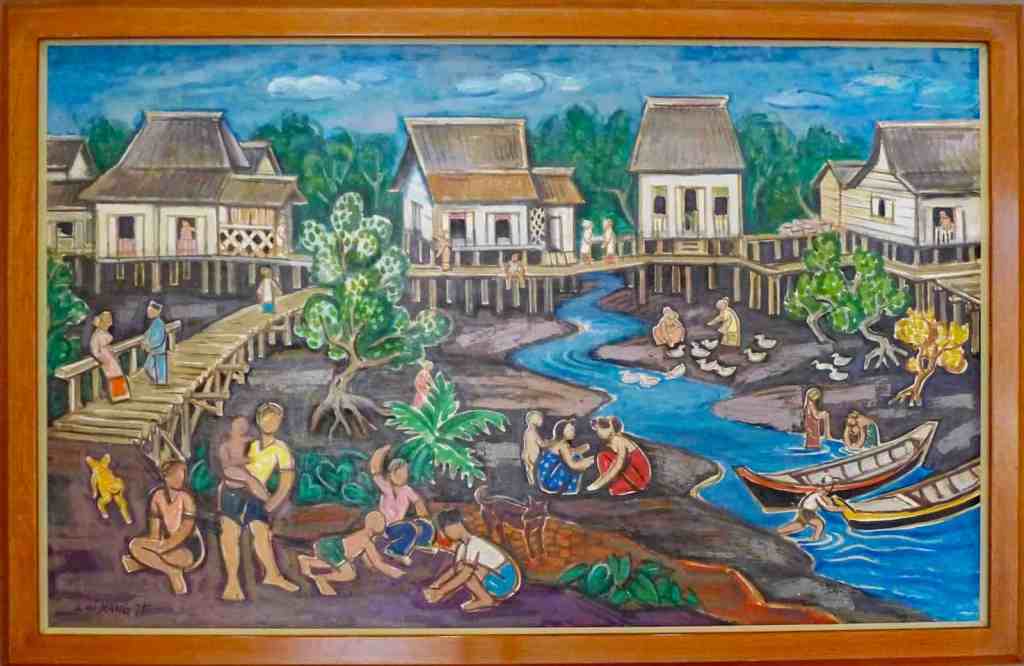
The melodious magpie on the bamboo twig --
the passing breeze welcomed the chirping.
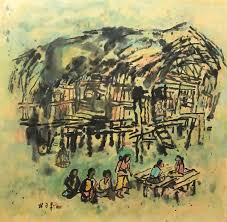
Sitting on a dilapidated wooden bench,
under the thick canopy of the mango tree,
village folks rested in the shade,
calming the tremors of troubled hearts.
The hardship evident in the sighs,
still hopeful of tomorrow’s dreams,
drying the sweat of weariness.
Honest earnings chased away worries.
A pinch on the thigh, a cry of pain.
Laughter and jokes were shared merrily,
teasing the maiden sitting by the door,
smiling sheepishly, welcoming attention.
Recollecting a slice of an old tale,
fun and camaraderie were reminisced,
firm and amicable bonds were fostered.
It’s but a memory. It’s but a memory. It’s but a memory.
Now alone in a room,
gazing at the handphone screen,
chatting aimlessly in social media—
do we remember and long for the dilapidated bench,
crafting old tales, forging firm and amicable bonds?
Do we remember and pine
for the maiden sitting by the door?


CUSTOMS

Customs are not like banana fritters
coated with rice flour, dipped in hot oil,
served instantly, crispy and delicious, eaten warm,
accompanied by sips from a cup of black coffee.
Customs are like rain
that falls on the whims of the weather.
It’s always there, although infrequent,
temperamental and purposeful,
sometimes an inconvenience— plans thwarted—
but always invigorating
and instils a sense of acceptance.
If received with gratitude,
directed with perseverance,
and tempered with wisdom.
Life is beautiful with droplets of grace.
Life is fertile with the pouring of bounties.
Life is prosperous with love bestowed.
Customs make the earth supple.
Customs make the village noble.
Customs make a people well-mannered.
Once in a while,
relish a crispy banana fritter
and sip warm black coffee
while it rains cats and dogs.
Momentary disruption of plans,
the alleys and roads flooded—
moments of reflection,
moments of appreciation for the day,
is inherent in droplets of grace,
inherent in the pouring of bounties,
inherent in love bestowed.
Shifting of time and signs
the soil is tilled with purpose.
The village gathers and collectively agrees,
the people ready to realise
aspirations of good character
and respected stature.


SMOKE

Like smoke billowing amidst rubbish,
he burns his self-worth,
dances in the flames,
when the fire is meant
to warm breakfast and meals to school.
Now like smoke,
his children are floating,
begging for favours
at tips of cigarettes and cars’ exhaust pipes,
crushed by confusion in the stifling air.
Who would be hungry
if the smoke does not billow in the kitchen,
and for generations,
our humanity returns uncooked to God?


CURSE OF A WARRIOR

Hail the snake and its venom!
Call it a callous and rebellious act!
Shame be endured,
head decapitated!
Surrender not, carry the corpse!
Foolish is the mind,
desperate are the moves.
Let death fulfil the curses.
Let death be executed by the Angel.
Destroy my body, take my soul.
The wooden club hit the coffin.
Pierce my tongue and neck.
Stab my chest, guts dis-embowelled.
Blood spurts, life departs.
The warrior kisses the earth.
Blood turns into pus.
Pus turns into ambers of Hell.
Let me die so you die.
Let us die so everyone dies.
I give you my sin, my hurt, my sadness.
You’ll bathe in blood.
Isa Kamari has written 12 novels, 3 collections of poetry, a collection of short stories, a book of essays on Singapore Malay poetry, a collection of theatre scripts and lyrics of 3 music albums, all in Malay. His novels have been translated into English, Turkish, Urdu, Arabic, Indonesian, Jawi, Russian, French, Spanish, Korean, Azerbaijan and Mandarin. Several of his essays and selected poems have been translated into English. Isa was conferred the S.E.A Write Award from Thailand (2006), the Singapore Cultural Medallion (2007), the Anugerah Tun Seri Lanang (2009) from the Singapore Malay Language Council, and the Mastera Literary Award (2018) from Brunei Darussalam.
He obtained a BArch (Hons) from the National University of Singapore in 1989, an MPhil (Malay Letters) from Universiti Kebangsaan Malaysia in 2008 and is currently pursuing a PhD programme at the Academy of Islamic Studies, Univeristi Malaya. His area of research is on the problem of alienation and the practice of firasat (spiritual intuition) in selected Singapore Malay novels.
The Lost Mantras is a collection that blends spirituality, Malay cultural heritage, and universal human experience. First published as part of Menyap Cinta (Love Greetings, 2022, Nuha Books KL), these poems are like a bridge between mysticism and everyday life, where traditional images (betel, jasmine, kris[1], oil lamps, setanjak[2]) are woven with Qur’anic echoes, prayers, and existential questioning. The collection carries a Sufi resonance—always circling back to longing, humility, surrender, and beauty as signs of God. The poems are not only lyrical but also function as cultural memory: they preserve Malay traditions, communal practices, and village life, while situating them in a cosmic framework of faith, sin, and redemption. The use of Malay customs, rituals, and objects is powerful: it asserts that spirituality is not abstract but embedded in heritage. This makes the collection uniquely Southeast Asian despite its universal in appeal.
[1]A dagger
[2] Malay headgear
PLEASE NOTE: ARTICLES CAN ONLY BE REPRODUCED IN OTHER SITES WITH DUE ACKNOWLEDGEMENT TO BORDERLESS JOURNAL
Click here to access the Borderless anthology, Monalisa No Longer Smiles
Click here to access Monalisa No Longer Smiles on Kindle Amazon International

 Borderless