Categories
Slices from Life

The Rule of Maximum Tolerance?

By Jun A. Alindogan

From Public Domain

In the Philippines, ‘maximum tolerance’ refers to peacekeepers practicing a high level of restraint during public gatherings to ensure safety and maintain peace, while law enforcement implements action against violent demonstrators and shows tolerance towards those who are peaceful. Essentially, it means tolerating an individual’s capacity for patience, endurance, and long-suffering in the face of behavioral challenges.

Until now, I have maintained a close relationship with an orphaned nephew of a colleague of mine. Our bond grew stronger when he moved to our church shelter from a nearby mountainous town to live with his uncle. I have always empathised with him, as my family also provided care for fatherless children. The purpose of his relocation was to enable him to complete his college education. He eventually graduated with a degree in computer science from an institution that claims to have an Asian focus, despite lacking a physical campus during the Covid-19 pandemic. Understandably, he struggled to find employment. He returned home to stay with his aunt’s family, patiently waiting for an opportunity to secure a job, which proved to be challenging.

During his studies, we would occasionally meet for meals to discuss the work on his paper requirements before graduation and plan his group thesis. When the pandemic hit, our conversations shifted online, but his willingness to seek my assistance remained strong, and I gladly supported him.

His first job involved selling organic powdered coffee imported from Malaysia at an office in the heart of Quezon City. When the Covid-19 virus spiked, all the company’s employees had to work from home. However, there were times when they were asked to come to the office despite the significant health risk.

My friend refused to do so, which was quite reasonable as he lived with his elderly aunt and uncle. As a result, he was reprimanded and issued a memo for unauthorised leave of absence. I had to help him draft a letter in response to the memo. This situation challenged him to assert his rights as an employee as not every human resource policy is beneficial. At times, companies will test your threshold of tolerance to the limit which is not necessarily wrong. Upon repeated emails that we sent to the HR department, he was finally given his last paycheck months after his resignation.

His next job was as a management trainee for a Canadian-based coffee shop in a mall chain. Coffee shops and fast-food stores often hire college graduates from any field to fill staffing gaps caused by high employee turnover, even if their majors are unrelated to the food industry. Unfortunately, he did not pass the probationary period because he said he was verbally mistreated by the store manager over work principles and practices.

His initial job application at a global fast-food chain was unsuccessful, as he did not receive an interview. He ended up taking a part-time online job at a small pharmaceutical company to earn money for his expenses. After a year of waiting, he was finally invited for a management interview at the same fast-food chain in a city near his hometown. He got the job.

He has been working for the global fast-food chain for over two years now and enjoys his role as a specialist manager due to his interest in computing and ordering items. However, the local store management has not been supportive in terms of taking care of their team. For example, when he had a high-grade fever while working, he was not allowed to go home until the next shift manager arrived, in the midst of a heavy, rainy evening. There was even an instance where he had to attend a management meeting at another store after his graveyard shift.

On a particular rest day after his graveyard shift, he was instructed to attend management classes in a southern city for three days, without being given additional days off to offset his attendance during his rest day. Another schedule required him to report at 2pm after working a graveyard shift. At times, he was also instructed to go to other stores to manage, without any fare allowances. All these cases are documented online. The goal is for the team to hit the sales target at whatever cost and without offering any additional incentives. Even when he had toe-surgery and had to go on sick leave, he was still expected to work from home regarding stock orders. The global fast food chain’s work-life balance policy is only superficial.

Maximum tolerance does not mean to allow individuals, communities, and corporations to exploit us to unimaginable levels, where our self-worth is solely dependent on our output. Outstanding results should be based on a holistic approach that recognises everyone’s basic humanity. Resignation prevails simply because individuals are not allowed to exercise and enjoy their humanness in any circumstances. This should not be the case.

This scenario is not only limited to corporations, but also to religious institutions. In the church that I regularly attend, the resident minister encourages members to be involved in various programs, as leadership should not be dependent on a single individual but on the collective efforts of everyone. However, in doing so, he expects every member to participate in a series of activities all day on Sundays. Sundays, or any Sabbath day, should be a day of spiritual and physical refreshment and renewal. However, with the onslaught of day-long programmes each Sunday, the maximum tolerance of members is tested to the point where most skip events instead of feeling encouraged, as the minister makes them feel guilty. Saying ‘n’o is not a sin of omission.

I look forward to a time when it will be common for business enterprises and social institutions to implement appropriate mechanisms that help individuals to be more human, rather than just robots mindlessly following instructions.

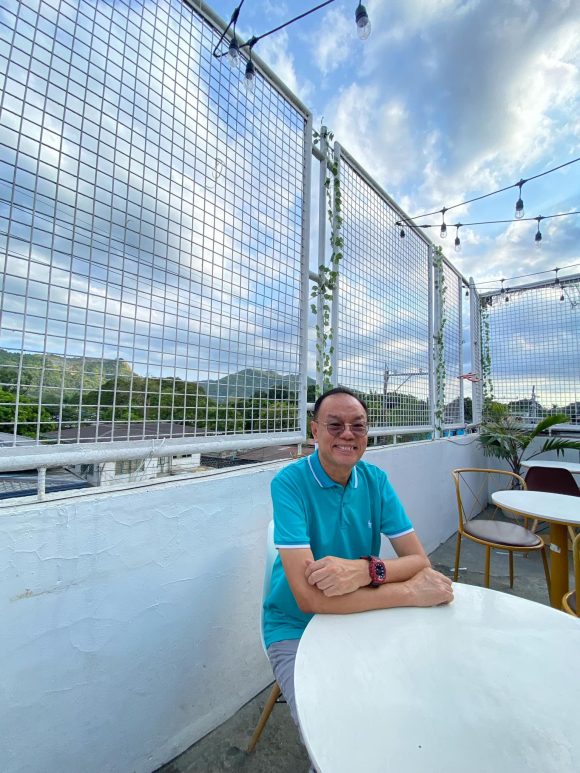
Manuel A. Alindogan, Jr. or Jun A. Alindogan is the Academic Director of the Expanded Alternative Learning Program of Empowered East, a Rizal-province based NGO in the Philippines and is also the founder of Speechsmart Online that specialises in English test preparation courses. He is a freelance writer and a member of the Freelance Writers’ Guild of the Philippines (FWGP).

.

PLEASE NOTE: ARTICLES CAN ONLY BE REPRODUCED IN OTHER SITES WITH DUE ACKNOWLEDGEMENT TO BORDERLESS JOURNAL

Click here to access the Borderless anthology, Monalisa No Longer Smiles

Click here to access Monalisa No Longer Smiles on Kindle Amazon International

Categories
Essay

Peddling Progress?

By Jun A. Alindogan

I grew up in a town where fish, shellfish, and seafood are abundant, so the specialty dishes are related to its topography. The location is humble, yet it boasts special delicacies such as noodles, porridge, tofu, duck eggs, and rice cakes. Many stores line the town’s main street, serving these types of morning and afternoon snacks that I was quite fond of. I particularly remember a store famous for its huge burgers with generous slices of cucumber, tomatoes, and onions on a tangy mayo-ketchup dressing — also popular for its all-day breakfast meals. Despite its marine resources, my hometown has no particular brand associated with it.

A Philippine-based fast-food chain was recently established in the area, and residents claim that development has now been put in place. Consumption is erroneously classified as development. A former English language student mistakenly believed that the Philippines was a wealthy nation because of the abundance of malls, only to realise later that poverty is widespread behind these malls. Consumption is peddled as a sign of progress.

This also happened during my university years when I had to take the elevated rail system to go to school. At the north end point of the train system stood a central grade school on a sprawling campus, which has now been transferred to a much smaller space but is still referred to as a central school. All central schools in our country are located on large campuses. Its original location is now part of a nationwide mall chain. Is going to the mall productive?

Years ago, my younger brother moved to the southernmost province of Luzon Island, which was our father’s hometown. In the past, I would spend holidays at my brother’s residence with some very close friends. The roads are well-paved, and in the city half an hour away, there are small commercial shops and a local fast-food chain unique to the area. The province is well-known for its “pili” nuts and handicrafts.

According to my brother, the city’s landscape has drastically changed with the addition of a big mall chain and a Roman-inspired colosseum. My nephew recently informed me that the provincial projects mainly consist of community-based gymnasiums. “Progress” seems to be selective and does not necessarily foster a strong culture of creativity and productivity in each household.

In my current municipality, the main issue is the lack of social infrastructure to support entrepreneurship. The prevailing norm is consumption, whether physical or digital. Bureaucratic red tape makes business mechanisms inaccessible, discouraging newcomers from starting any kind of enterprise.

Perhaps another reason for this lack of visitors is the municipality’s location. Being the last town in the province, only residents and haulers typically come to the area. It is isolated from the main arterial road that traverses the entire province.

The town does not have a specific product to boast of, unlike other cities and municipalities known for their specialties like shoemaking, salted and duck eggs, fish sauce, specialty noodle dishes, and slippers made from water lilies.

The town’s main products are concrete and sand, extracted through continuous quarrying activities that are detrimental to both human health and the environment. Agricultural produce — such as bananas, mangoes, tomatoes, okra, and eggplants — is limited due to the town’s rocky terrain. During a visit to an upland village, I met a caretaker of a small property that was supposed to be organic, but I discovered during our conversation that it was merely a facade by a large mobile phone provider for its social enterprise project.  Additionally, the population of native tilapia[1] is low due to murky waters caused by silt and mud. Despite having numerous hiking sites that also cater to consumerist interests, the municipality lacks a distinct specialty dish for people to enjoy and remember as part of its commercial offerings.

According to my sister-in-law’s brother, the main source of income for their island-province is remittances from Overseas Filipino Workers (OFWs) [2] .He also claims that the province is an ideal place to retire and spend money, boasting beaches, volcanic hot springs, coconut plantations, rice farms, nature resorts, and rivers. Despite having a root-crop based delicacy and an abundance of dried fish, the province lacks production or manufacturing facilities, with the exception of mining, which unfortunately led to one of the worst environmental disasters in the country’s history. As a result, consumption is the prevailing norm on the island. Isn’t it ironic that the ex-girlfriend of a close friend pursued a degree in BS Entrepreneurship but currently works as a Customer Engagement Manager at a global fast-food chain?  She should have considered starting her own business, no matter how small. She is actually promoting a perpetual cycle of consumerism, rather than entrepreneurship.

Based on online sources[3], there are only ten small manufacturing firms in my current area, Montalban (Rodriguez), which covers a total land area of   172.65 km 2 (66.66 sq mi) [4]. This implies that a culture of production is not the town’s priority when it should have been the first step to economic and social progress, alongside environmental protection and sustainability.

In hindsight, society generally encourages individuals to consume the latest gadgets, trends, food, technology, shoes, fashion, apps, make-up, and hairstyles. We are therefore told to consume and discard in a never-ending cycle of consumption and waste. Creativity in building enterprise is relegated in favor of a consumerist culture. To move forward, communities must do the reverse, so wealth is neutralized. Not everyone has the business acumen to succeed. However, production must still exceed consumption.

One main reason for the failure of production to establish a strong foothold in our communities could be attributed to the lack of practical and relevant entrepreneurial courses that are accessible to everyone in terms of fees, range, and distance. These courses are not tailored to the specific needs of each locality, as businesses tend to be similar in one area, causing most enterprises to struggle to take off without offering anything unique to attract patrons. Creativity and productivity go hand in hand.

To create a more sustainable society, we need to move away from consumerism and focus on increasing production through manual, mechanical, automated, or digital means. A thriving community relies on its ability to expand and improve production capabilities.

[1] Fish

[2] https://psa.gov.ph/statistics/survey/labor-and-employment/survey-overseas-filipinos/node/1684600

[3] https://www.dnb.com/business-directory/company-information.manufacturing.ph.rizal.rodriguez_%28montalban%29.html

[4] https://www.philatlas.com/luzon/r04a/rizal/rodriguez.html

Manuel A. Alindogan, Jr. or Jun A. Alindogan is the Academic Director of the Expanded Alternative Learning Program of Empowered East, a Rizal-province based NGO in the Philippines and is also the founder of Speechsmart Online that specialises in English test preparation courses. He is a freelance writer and a member of the Freelance Writers’ Guild of the Philippines (FWGP).

.

PLEASE NOTE: ARTICLES CAN ONLY BE REPRODUCED IN OTHER SITES WITH DUE ACKNOWLEDGEMENT TO BORDERLESS JOURNAL

Click here to access the Borderless anthology, Monalisa No Longer Smiles

Click here to access Monalisa No Longer Smiles on Kindle Amazon International

Categories
Musings

More than Words

By Jun A. Alindogan

From Public Domain

It is always refreshing when trust can be established online without any face-to-face interaction. Social media is filled with scammers, making it challenging to trust individuals based solely on their stories. This becomes even more complicated when the relationship starts at a time when the internet was not easily accessible. In these situations, you have to rely only on the person’s words. Sincerity is difficult to gauge, even with the use of emotive and abstract language in any physical correspondence.

Many years ago, I found myself in a situation where I met a woman through physical correspondence, as encouraged by a friend. He advised me to introduce myself to the lady and share about my work teaching at the seminary, providing English tutorials for Koreans, and assisting a church in a suburban foothill. As it turned out, she was part of a Christian NGO based in the US, along with a few other senior citizens. The organisation’s mission was to provide funds for seminary scholarships, livelihood support, books, conference fees, further studies, and toys.

Our relationship was purely based on trust as we did not know each other personally and yet for a number of years, she supported me financially as she learned of my journey. She preferred to write her letters on an electric typewriter and on blue-coloured stationery with a lovingly short note of affirmation. She took my every word at face-value although at times, I sent her photos of myself and church activities to support my stories that she sometimes quoted in her monthly newsletter.

When a missionary friend detoured to the US prior to her Colombian street kids’ programme, she visited the organisation’s garage cum office and brought my gift of a passenger jeep replica made from the ashes of a previous volcanic eruption, which she greatly appreciated. The organisation’s resources were donated to a graduate-level seminary in the US, that included her book, Pilgrims and Strangers Seek The City Not Made with Hands, upon her demise and all her colleagues.

Words only have meaning when they are used in a relational context; otherwise, they are simply meaningless.

Years before the internet became readily accessible, I used to write letters to two friends who worked as domestic helpers in Singapore. Despite having college degrees, they were unable to find relevant jobs in our country due to its political turmoil. I myself was jobless for two years, and like many new college graduates, I succumbed to depression and questioned my faith and self-worth. The struggles were compounded by stress from family and friends. I found a way to vent my issues to these Overseas Filipino Workers (OFWs), who also had their fair share of misery and homesickness. My letters were selfish. Over time, the correspondence gradually faded, along with the photos that sometimes accompanied their stories. One migrated to Canada and the other one is retired and lives with her sibling who has a physical disability in a suburban locality. All my letters from my benefactors and friends were washed away in an unexpected catastrophic flood that swept my residence. Up to this day, the loss is still palpable.

I lost two aunts during the pandemic, who were the last of my father’s siblings. The younger one passed away in her late 70s, while the older one died in her early 90s. Both were based in the US and worked as medical professionals. Every Christmas, I make sure to send them individual greeting cards through the mail, along with a few personal thoughts. They lived separately in the same village in the US, and I believe they appreciated these physical cards for their nostalgic value. They didn’t usually respond to emails or cards, as technology can be bothersome for the elderly.

My older aunt once told my eldest brother, who also lives in the US, that my emails were too long and tended to put her to sleep. I also send them thank you cards for the occasional holiday cash they send. My relationship with my aunts is mainly through written correspondence, with only a few rare occasions of meeting in Manila. Despite this, they never fail to remember me and my younger sibling, sending us thoughtful notes. My dad passed away at 60, and my aunts fondly told me that I look like my father. Perhaps this resemblance was one of the catalysts that kept our correspondence going, even in its irregularity. Stories, however trivial, matter to them.

Letter writing can be tedious, especially when done by hand. However, it is also tiring to write letters on computers and share both trivial and significant stories to send by post, as we are not certain if our experiences matter to our recipients. Nevertheless, physical personal correspondence brings about a certain degree of warmth that is often lacking online. It takes more effort to scribble than to type. It is also more spontaneous compared to digital writing, where you can effortlessly edit and revise through AI tools. Sometimes, the physical paper used says a lot about the sender and receiver. I am particularly fond of lined stationery with religious quotes and maxims on recycled paper. The envelope is of equal value as well because it must similarly match its properties.

At times, I also use plain paper to write letters. I remember writing letters of regards and sharing personal news with a college classmate and friend who was stationed on one of the most remote islands in the country for a kids’ mission. She replied to me, but her letters took a long time to reach me through the mail. Both her letters and mine were written in longhand. We were able to reconnect through letters because there were no mobile phones or internet at that time. The distance and physical absence made our words more meaningful and profound.

They say that the post office is in its dying stage, but time and again, it has proven itself to still be relevant in the internet age. Not everyone is connected, especially in areas where there is no access to electricity.

In one of the upland villages in my municipality, which is just about a two-hour drive from the city, they have not had electricity for years. This is because streetlights have to be paid for by the consumer. If the area has rugged terrain, it will require a good number of posts to be erected to bring electricity. This is a common scenario in agricultural and upland villages. While solar power is an option, procuring panels can be quite expensive as the government has not taken any measures yet to bring the cost down. To connect, villagers go to stores that offer WiFi for a minimal fee. Mobile signals are not available in many remote locations, so the gap is still widespread despite technological tools. We must accept the fact that technology is limited. Physical correspondence is here to stay.

From Public Domain


Manuel A. Alindogan, Jr., also known as Jun A. Alindogan, is the Academic Director of the Expanded Alternative Learning Program of Empowered East, a Rizal-province based NGO in the Philippines and is also the founder of Speechsmart Online that specialises in English test preparation courses. He is a freelance writer and a member of the Freelance Writers’ Guild of the Philippines (FWGP).

PLEASE NOTE: ARTICLES CAN ONLY BE REPRODUCED IN OTHER SITES WITH DUE ACKNOWLEDGEMENT TO BORDERLESS JOURNAL. 

Click here to access the Borderless anthology, Monalisa No Longer Smiles

Click here to access Monalisa No Longer Smiles on Kindle Amazon International

Categories
Slices from Life

Social Media Repitition

By Jun A. Alindogan

I remember feeling tense when I opened my very first email account with the help of the friendly staff at a British registered charity office where I was a member of the learning resource centre in Manila. I thought that it would open a floodgate of privacy issues, including surveillance and compromise. The world’s technological landscape was changing, and I had to adapt. I have always held onto the belief that while technology has immense benefits, it also has a lot of unbridled consequences, including insecurities, pride, selfishness, egoism, shame, and individual and religious superiority. A number of digital platforms have continuously increased and evolved in various iterations, from its email function to TikTok, Facebook, Messenger, Viber, vlogs, WhatsApp, YouTube channels, Pinterest, Blogspot, WordPress, LinkedIn, ZoomInfo, and Threads. The list seems endless.

I have a personal and professional Facebook account, as well as Messenger and Viber, because I find these platforms to be the most helpful to me. I have limited comprehension when it comes to understanding why young people feel the need to be on every digital platform. In my opinion, less is more. Being overexposed can be toxic in terms of seeking external validation and interaction. Not every thought needs to be published on social media. Why do you have to drag your friends and family and even strangers into your rollercoaster of emotions and shifting ideas about life’s journey all the time? While it is true that social media is a tool for self-expression, it is also equally true that it is a medium for self-destruction, as transparency can be both good and evil.

Take, for instance, the case of a woman in her mid-20s who is active on various social media platforms such as Facebook, Instagram, LinkedIn, Twitter, Pinterest, Blogspot, WordPress, TikTok and X (Twitter). She lost her parents at a young age and had to work as a household helper in the city. Eventually, she received a government scholarship and was able to continue her college studies. She shared on one of her social media accounts that it has become a sort of diary for her, in addition to her voice notes and physical journal. What is the reason for this repetition? Perhaps it is an issue of validation. When an individual delves into an onslaught of social media accounts, it implies proving one’s identity and self-esteem to the world. This can become a form of spiritual superiority, indicating that the person is self-absorbed. We are not the world.

The same holds true for partners who must keep up with their significant others’ social media accounts. The rat race is not just physical, but also digital. For instance, decisions about getting married early are often swayed by image quotes or social media discussions that push boyfriends to give in to these pressures, even if it’s not the right time for those who have only been working for less than two years and have not established a stable and relevant career. Saving for one’s wedding becomes the priority when it should be the other way around – saving for one’s personal and professional growth and development first. Why is there a need for comparison? As a result, emotional manipulation and threats are common. Career concerns are also plagued by the pressure to amass wealth by a certain age. The repetition of social media posts may be a way for individuals to acknowledge their own shortcomings.

In the context of a close friend, I have often wondered why, in most of his photos with me and our other friends, he rarely smiles. Yet, in his photos with his girlfriend, he has a big smile all the time. Is this a result of social media pressure, causing him to appear serious with friends while showcasing happiness in his relationship? On the contrary, I believe that his consistent seriousness may be a reflection of both his and his partner’s insecurities and jealousy.

For years, I have developed a close bond with a friend who was orphaned at a young age. Our main forms of communication are face-to-face and online. However, a year ago, he unexpectedly unfriended me on Facebook. I suspect that this decision may be related to the social media pressure he faces regarding his relationship. Despite this, we still communicate and share stories on Viber and meet face to face, although not as frequently as before. I understand that his job at a global fast food chain keeps him busy, but the pressure from social media can be overwhelming as it becomes a cycle of repetition.

In a way, social media serves as an escape, so repetition is necessary to cope with both material and non-material stressors. To some extent, this coping mechanism may be healthy, but most of the time, it becomes detrimental to a person’s well-being. Being overly repetitive on social media always comes at a cost.


Manuel A. Alindogan, Jr. or Jun A. Alindogan is the Academic Director of the Expanded Alternative Learning Program of Empowered East, a Rizal-province based NGO in the Philippines and is also the founder of Speechsmart Online that specialises in English test preparation courses. He is a freelance writer and a member of the Freelance Writers’ Guild of the Philippines (FWGP).

PLEASE NOTE: ARTICLES CAN ONLY BE REPRODUCED IN OTHER SITES WITH DUE ACKNOWLEDGEMENT TO BORDERLESS JOURNAL. 

Click here to access the Borderless anthology, Monalisa No Longer Smiles

Click here to access Monalisa No Longer Smiles on Kindle Amazon International