Categories
Stories

Naughty Ravi

By Naramsetti Umamaheswararao

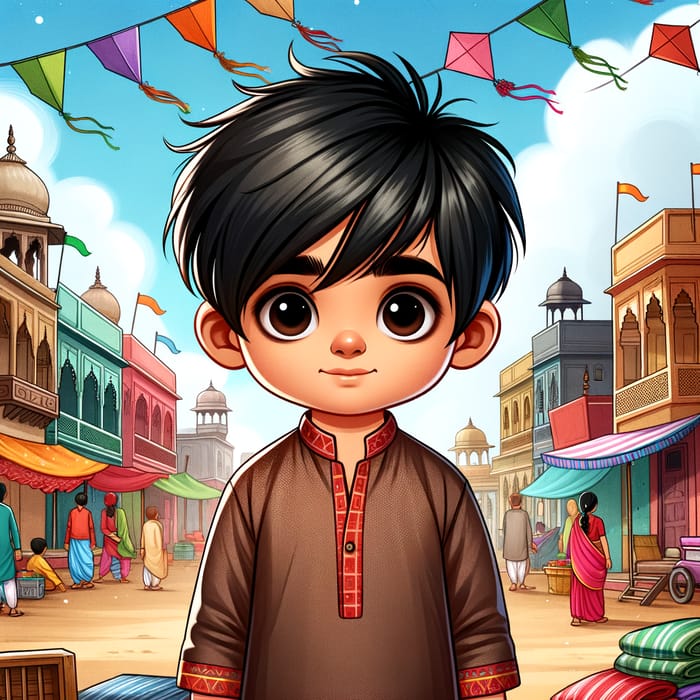
Ravi, a fourth-grade boy, could never sit still. His hands were always busy with some mischief. Whenever he found something at home, he would play with it, often damaging valuable items. Despite his mother’s occasional scoldings, Ravi never stopped his antics or playing around.

One morning, while playing with a ball inside the house, Ravi threw it at the television in the hall. The screen cracked, and his furious mother couldn’t hold back her anger. She hit him, but before she could deliver more blows, Ravi’s father intervened, rescuing the boy.

Through tears, Ravi said, “I didn’t mean to, Dad! I promise I’ll never play with a ball inside the house again.” His father calmed him down and persuaded his mother to forgive him.

But Ravi’s mischief didn’t end there. Another day, he saw a bug on the glass-top tea table in the hall. Picking up a cricket bat, he swung at the bug, but it flew away unharmed. Unfortunately, the table shattered under the force of his swing. The sound of breaking glass brought his parents running. They found Ravi holding the bat, standing next to the broken table.

Afraid of another scolding, Ravi glanced nervously at his mother. Before she could say anything, his father stepped in and asked, “Didn’t you promise not to play inside the house? What happened now?”

“I only used the bat to hit a big bug on the table, Dad. It got away,” Ravi explained, gesturing with his hands. His father patiently advised him, “Alright, but remember, no more damaging things at home.” Ravi’s mother, however, remained silent, visibly upset.

Another day, Ravi wanted a storybook from the shelf. Climbing onto a chair to reach it, he accidentally knocked down several books and other items. Hearing the commotion, his mother rushed in to find books and belongings scattered on the floor.

Frustrated, she scolded, “How many times have I told you to be careful? You’re always breaking or dropping something! Now clean this mess up!” Ravi tried to explain that the other items fell when he pulled out one book, but his mother refused to listen. Feeling deeply hurt, Ravi decided to leave the house for a while.

“If I go out, Mom will worry and search for me. She might even cry. That would make her stop scolding me,” he thought.

Ravi walked to the nearby park. Sitting amidst the greenery, he watched people, children playing in the distance, and ducklings swimming in a pond. Slowly, his irritation and sadness faded.

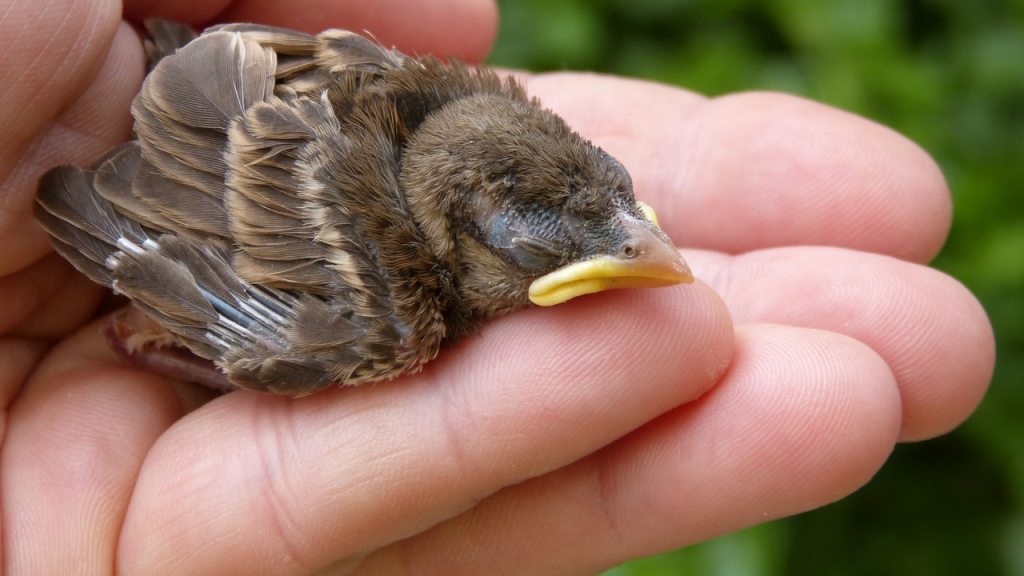
Just then, he noticed a baby bird falling from a nest in a nearby tree. The bird chirped loudly in fear. Ravi quickly ran to the tree and caught the bird in his hands before it could hit the ground. Gently stroking its wings, he calmed the frightened bird.
From Public Domain

Moments later, the mother bird flew down, circling Ravi and chirping anxiously. The baby bird flapped its wings joyfully at the sight of its mother. Ravi placed the baby bird carefully back near its nest. The mother bird covered it lovingly with her wings.

“The mother bird came back to protect her baby. Maybe my mom is already worried about me. I should go home and let her know I’m safe,” Ravi thought.

Ravi rushed back home. The moment his mother saw him, she smiled and said, “Where were you? I made some payasam for you. Come and eat.” Ravi sat down and narrated everything that had happened in the park.

Hearing his story, his mother’s face lit up with pride. She kissed his cheek and said, “You’re my precious little gem. You’re mischievous at home, but outside, you’re so helpful and kind.”

Ravi realised, “Mom scolds me when I do wrong and praises me when I do good. She truly loves me. I should never make her sad or upset again.” From that day on, Ravi started listening to his mother and became more careful both at home and outside.

Naramsetti Umamaheswararao has written more than a thousand stories, songs, and novels for children over 42 years. he has published 32 books. His novel, Anandalokam, received the Central Sahitya Akademi Award for children’s literature. He has received numerous awards and honours, including the Andhra Pradesh Government’s Distinguished Telugu Language Award and the Pratibha Award from Potti Sreeramulu Telugu University. He established the Naramshetty Children’s Literature Foundation and has been actively promoting children’s literature as its president.

.

PLEASE NOTE: ARTICLES CAN ONLY BE REPRODUCED IN OTHER SITES WITH DUE ACKNOWLEDGEMENT TO BORDERLESS JOURNAL

Click here to access the Borderless anthology, Monalisa No Longer Smiles

Click here to access Monalisa No Longer Smiles on Amazon International
Categories
Stories

Anand’s Wisdom

By Naramsetti Umamaheswararao

In the town of Kalyanapuram, there lived a wealthy man named Raghav. He had a daughter of marriageable age and was seeking a suitable groom for her.

Once, while Raghav was traveling to a nearby village called Bangaru Palem to explore a possible marriage alliance, he met Anand on the way. Anand introduced himself, saying he was from Machavaram village, well-educated, settled in business, and unmarried.

Raghav thought that Anand might make a good son-in-law, but he decided to test his intelligence and character before making a decision.

As they were traveling, the heat of the sun intensified, and Raghav felt thirsty. He asked a passerby, “Is there a well or a pond nearby?” The man pointed to a pond and said, “You can quench your thirst at that pond.”

Anand asked the man, “Is the pond water poisonous or life-giving?” The man replied, “I don’t know.” Raghav went ahead and drank the water from the pond. He thought to himself, “What a strange question Anand asked! Is he a fool?”

After some distance, two more travelers joined them. One was a farmer, and the other was a moneylender. The farmer was going to a neighbouring village to buy cattle, and the moneylender was on his way to collect old debts.

Anand asked the farmer, “Are you a provider of food or just greedy?” The farmer remained silent, unsure of how to respond. Then, Anand turned to the moneylender and asked, “Do you care for people’s well-being or just focus on squeezing them dry?” The moneylender also remained silent. Raghav now firmly believed Anand was indeed a madman and thought, “There’s no way I can accept him as my son-in-law.”

Even though Raghav continued walking with Anand, he kept his distance, disliking the way Anand spoke. The other two travelers also found Anand’s words odd and wanted to get rid of him as soon as possible.

A little further into the journey, it was noon, and the group felt hungry. They sat under a tree, unpacked their food, and began to eat. But Anand’s attention was drawn to a nearby bush. “It’s not safe to sit here. Let’s move away immediately,” Anand warned.

The other three ignored him and said, “We will eat here. If you don’t like it, go wherever you wish.” But Anand insisted, “I’m saying this for your safety. I sense a dangerous snake nearby. If we don’t leave quickly, it could be a threat.”

Raghav mocked him, “Did the snake come and tell you this in a dream? Or do you have some magical powers?”

Anand pointed to a snake’s skin near the bush and said, “Look at that freshly shed snakeskin. It’s about fourteen feet long and thick, which indicates the size of the snake. It must be nearby. I’m warning you based on this evidence.”

As soon as Anand finished speaking, the farmer screamed, “Look! There it is! The snake is coming toward us, just as Anand said.” In no time, all four ran far away to a safe place and had their meal.

Raghav ’s opinion about Anand began to change. He realised Anand wasn’t mad after all. However, Raghav was still curious why Anand had asked those strange questions earlier.

He asked Anand, “You seem to be a wise man. Why did you ask if the pond water was life-giving or poisonous?”

Anand replied, “Even if the water looks clean, it could be filled with dirt or dangerous creatures like crocodiles, which would make it deadly. On the other hand, water from a safe, clean source sustains life, making it like nectar. That’s why I asked.”

Next, Raghav asked, “Why did you ask the farmer if he was a provider of food or just greedy?”

Anand explained, “A farmer who grows food crops feeds others, so, he’s a provider of food. But if he only grows cash crops for profit, he is driven by greed. That’s why I asked.”

Hearing this, the farmer proudly declared, “I am certainly a provider of food!”

Then Raghav asked, “What was the meaning behind your question to the moneylender—whether he cared for people or just squeezed them dry?”

Anand replied, “There are two kinds of moneylenders. Those who consider the financial situation of the borrower and give them time to repay with understanding — they care for people. But those who are ruthless and demand repayment no matter what, are only focused on taking money and are like a burden on people’s backs. That’s why I asked.”

The moneylender, realising the wisdom in Anand’s words, said, “I am definitely the kind who cares for people!”

With all his doubts cleared, Raghav invited Anand to his home and expressed his desire to make him his son-in-law.

Naramsetti Umamaheswararao has written more than a thousand stories, songs, and novels for children over 42 years. he has published 32 books. His novel, Anandalokam, received the Central Sahitya Akademi Award for children’s literature. He has received numerous awards and honours, including the Andhra Pradesh Government’s Distinguished Telugu Language Award and the Pratibha Award from Potti Sreeramulu Telugu University. He established the Naramshetty Children’s Literature Foundation and has been actively promoting children’s literature as its president.

.

PLEASE NOTE: ARTICLES CAN ONLY BE REPRODUCED IN OTHER SITES WITH DUE ACKNOWLEDGEMENT TO BORDERLESS JOURNAL

Click here to access the Borderless anthology, Monalisa No Longer Smiles

Click here to access Monalisa No Longer Smiles on Amazon International
Categories
Stories

Significance

By  Naramsetti  Umamaheswararao

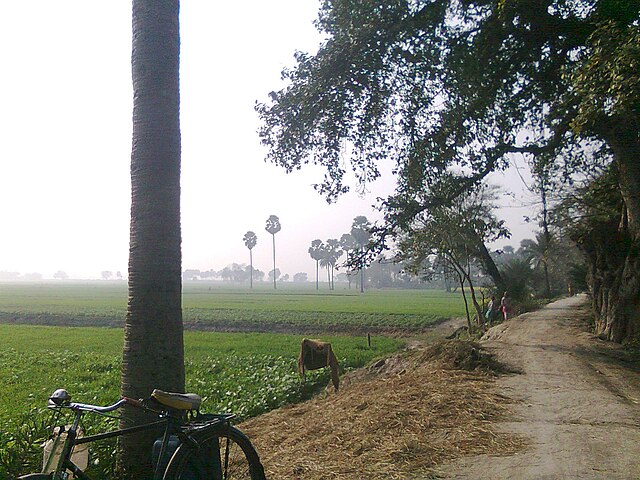
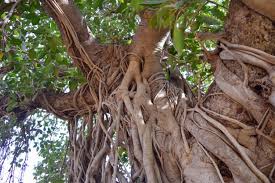
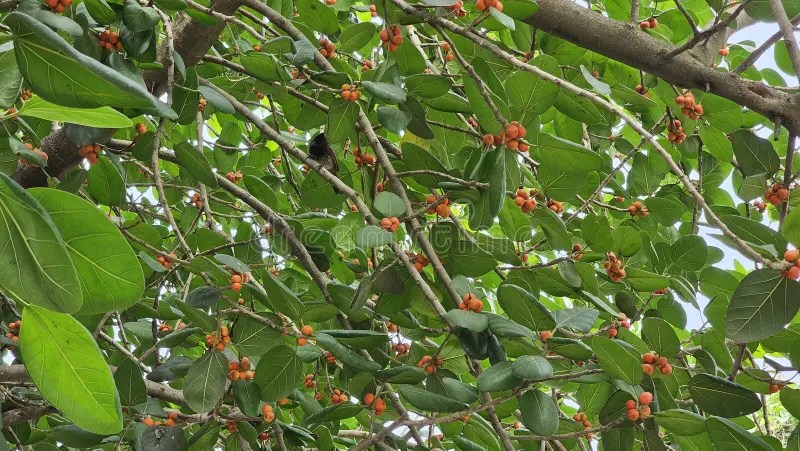
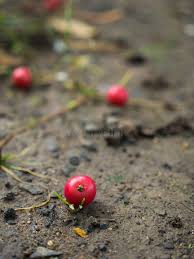
Once, while a bird was searching for food, it spotted a  berry under a banyan tree. As the bird grabbed the berry with its beak and flew, it slipped and fell. The place where the berry landed was a field next to a village. On the same day the berry fell, a strong storm brought rain, causing the soil to cover the berry.

Two days later, the berry rotted, and the seeds inside began to talk to each other.

One seed happily said, “We are alive thanks to our luck! Otherwise, we would have been digested in the bird’s stomach within a week.”

Another seed replied, “That’s true. If we had gone into the bird’s stomach, we would have died. We wouldn’t even have had the chance to talk like this.” The other seeds nodded in agreement.

After two more days, one seed sprouted. The sprouting seed excitedly jumped and said, “Look, everyone! I’ve sprouted!”

Seeing the sprout, the other seeds warned, “Pull that sprout back! If you grow, you will change your form and rise above the ground. You will face many hardships while growing. Sometimes, humans might uproot you. Other times, animals might trample or eat you. You must overcome all this to grow into a plant. If you grow, you need sufficient water. If you don’t get enough water, you will wither and die. You cannot endure all these hardships, so it’s better to remain as we are and enjoy our time together.”

The sprouting seed listened but did not respond or pull back its sprout. After a few days, the banyan plant emerged from the soil and began to grow. Its stem grew straight, branches spread out, and many leaves sprouted. Years passed, and it grew into a large tree.

To escape the heat, farmers and travelers rested in the shade of the banyan tree. Animals found shelter beneath it during the night and when it rained. Birds built nests on its branches. The banyan tree provided refuge to many, making the area lively.

Occasionally, indigenous doctors came to the banyan tree to collect its bark, leaves, and buds for medicinal use. Children played in the field, swinging joyfully on swings hung on the banyan tree. The banyan tree felt happy.

Many years went by. One day, a terrifying storm struck. Strong winds blew, and it rained heavily. Many trees were uprooted by the storm, and the banyan tree was among them. The people were deeply saddened by the fall of the banyan tree. The birds and animals living in its branches mourned silently.

After a few days, when the greenery of the banyan tree faded, villagers used axes to cut its branches and trunk for firewood. Everyone who carried the wood remarked, “It was useful even after it died.”

Meanwhile, the remaining seeds in the ground, which had stayed behind selfishly, felt happy hearing their sibling’s praises but were also ashamed. One seed said, “We all made a grave mistake. We remained as we were and couldn’t help anyone. We didn’t do anything worthy of remembrance. Every life should have significance, but our life has been wasted. Although we had a great opportunity to be born, we squandered it. Our sibling, however, did something good. Even in death, it lives on in the hearts and homes of people. Our sibling’s legacy uncovered the true significance of life.”

Hearing this, another banyan seed replied, “Some people also live cowardly lives. They continue to make the same mistake we did. They waste their lives, not realising that a life dedicated to helping others brings true satisfaction. If we understand that helping others leads to everlasting fame and support one another, it would be much better.”

The banyan seeds lamented, “We cannot bring back what has passed, so this is all we have in this life.”

Banyan Berries: Fom Public Domain

Naramsetti Umamaheswararao has written more than a thousand stories, songs, and novels for children over 42 years. he has published 32 books. His novel, Anandalokam, received the Central Sahitya Akademi Award for children’s literature. He has received numerous awards and honours, including the Andhra Pradesh Government’s Distinguished Telugu Language Award and the Pratibha Award from Potti Sreeramulu Telugu University. He established the Naramshetty Children’s Literature Foundation and has been actively promoting children’s literature as its president.

.

PLEASE NOTE: ARTICLES CAN ONLY BE REPRODUCED IN OTHER SITES WITH DUE ACKNOWLEDGEMENT TO BORDERLESS JOURNAL

Click here to access the Borderless anthology, Monalisa No Longer Smiles

Click here to access Monalisa No Longer Smiles on Amazon International
Categories
Stories

Chintu’s Big Heart

By  Naramsetti Umamaheswararao

Chintu, a fifth-grader, was known for his intelligence beyond his years. Every day, he walked a mile to school by himself. When his parents offered to accompany him, he confidently replied, “I can go by myself. I’m grown up now.” Since their village, Seethanagaram, was a small town, there wasn’t much fear of children being abducted or harmed, so his parents didn’t object.

One day, Chintu woke up early and set out for school earlier than usual. He packed a small spade, a water bottle, and his books into his schoolbag and slung it over his shoulder.

His mother, who had been observing him, asked, “Why are you leaving so early? There’s still time for school.”

“I have some work, mother. I’ll tell you when I come back,” Chintu replied.

On his way to school, Chintu spotted some discarded mango seeds. He carefully picked out the good ones and walked a little further from the road. Using his small spade, he dug holes and buried the seeds. Then, he poured some water from his bottle over them.

As Chintu was about to leave, an old beggar woman sitting under a nearby tree called out, “Come here, boy.”

Chintu approached her and greeted her politely.

“I saw you planting those seeds. That’s a good deed. But who will water them every day?” she asked.

“I pass this way to school every day. I will water them,” Chintu replied.

While talking to the old woman, Chintu noticed she looked weak and was coughing frequently. Concerned, he asked, “Do you have a fever? Have you eaten anything?”

“I don’t have the strength to move. I haven’t gone anywhere and haven’t eaten anything either,” the old woman replied.

“Oh no, that’s not good,” said Chintu, opening his lunch box and offering her some food.

The old woman hesitated. “You’ll be hungry in school. Don’t worry about me, son. I’m used to this.”

“Don’t worry about me. My friends will share their food with me,” Chintu reassured her. He then gave her water to drink and asked some passersby to help take her to the hospital before heading to school.

After school, on his way back home, Chintu saw a small puppy being chased by a big dog. The puppy, terrified, ran in search of shelter, letting out pitiful cries. It squeezed through the gate of a house, but the house dog barked at it, causing it to retreat. The puppy then ran into an alley, where a pig scared it further. Not knowing what to do, the puppy let out a helpless whimper.

Seeing the puppy in distress, Chintu took out his spade and used it to chase away the big dog. He picked up the trembling puppy and comforted it, saying, “Don’t be scared. I chased it away.”

Just then, a woman from the house across the street came outside and noticed the puppy in Chintu’s arms. “Its mother died in an accident while crossing the road. You can take it home if you want to raise it,” she said.

Without a second thought, Chintu took the puppy home.

When Chintu’s mother saw him with the puppy, she frowned. “Why did you bring a puppy home? It will make a mess everywhere. Leave it where you found it.”

“Poor thing… its mother died, and a big dog and a pig were chasing it. It was so frightened. Let’s take care of it for a while. We can let it go later. First, give it some food and milk,” Chintu pleaded.

“You seem to be taking on more responsibilities than necessary. You should be focusing on school, not trying to act like a grown-up,” his mother scolded.

“But if everyone thought that way, who would help those in need? Grown-ups can’t always do everything, and if kids aren’t allowed to help either, then who will assist those in trouble? Remember when you asked me this morning where I was going early? Let me explain now. I heard my teacher say that many people throw away mango seeds after eating the fruit. He said they shouldn’t go to waste. So, I buried some seeds by the roadside, and I’ll water them every day. There was an old woman with a fever under a tree. I gave her my lunch, and she was so happy. She blessed me,” Chintu said, his eyes wide with excitement.

“Is that so? You did a good thing. Keep helping others whenever you can. I’ll get some food for the puppy. Don’t worry about it. We’ll take care of it for a while and then find it a good home,” his mother said kindly.

“Let’s do that. I didn’t tell you this morning because I thought you might scold me. But now I know you’re kind-hearted and will understand. From now on, I’ll tell you everything I plan to do,” Chintu promised.

“You’re my precious child,” his mother said, hugging him lovingly.

From Public Domain

Naramsetti Umamaheswararao has written more than a thousand stories, songs, and novels for children over 42 years. he has published 32 books. His novel, Anandalokam, received the Central Sahitya Akademi Award for children’s literature. He has received numerous awards and honours, including the Andhra Pradesh Government’s Distinguished Telugu Language Award and the Pratibha Award from Potti Sreeramulu Telugu University. He established the Naramshetty Children’s Literature Foundation and has been actively promoting children’s literature as its president.

.

PLEASE NOTE: ARTICLES CAN ONLY BE REPRODUCED IN OTHER SITES WITH DUE ACKNOWLEDGEMENT TO BORDERLESS JOURNAL

Click here to access the Borderless anthology, Monalisa No Longer Smiles

Click here to access Monalisa No Longer Smiles on Amazon International
Categories
Stories

The Mango Thief

By Naramsetti Umamaheswara Rao

Ricky was a boy known for his mischievous nature. Though he was in the eighth grade, he had the sharpness and boldness of someone older. Ricky rarely attended school, preferring instead to roam around the fields beside the road, cutting sugarcane and plucking groundnuts, causing damage to the crops.

In his class, there was a bright and studious boy named Anand. Ricky thought it would be advantageous to befriend Anand to get his notes. The next day, Ricky brought some guavas he had stolen and offered them to Anand, saying, “These are from our orchard. They’re very sweet; take them.” Although Anand initially refused, Ricky insisted and placed the fruits in his hands, and Anand, not wanting to seem rude, reluctantly accepted them.

Over the following days, Ricky brought sugarcane and groundnuts, further solidifying their friendship. Ricky began inviting Anand to accompany him when he went out, and Anand, hesitant to refuse, would often join him. Their classmates noticed this and warned Anand, saying, “Don’t hang out with him. Being with him could get you into trouble.”

But Anand dismissed their concerns, thinking, “I’m a good person, so nothing bad will happen to me. Maybe Ricky will change for the better.”

One day after school, as they were walking home, Ricky suggested they enter a mango orchard along the way. Anand hesitated, knowing it was wrong, but Ricky was persistent. Ignoring Anand’s reluctance, Ricky said, “If you’re so scared, stay here. I’ll go in alone.” Ricky then climbed over the fence, entered the orchard and began plucking ripe mangoes, stuffing them into his school bag.

What Ricky didn’t know was that the orchard’s caretaker had been keeping a close watch. He was already angry about frequent thefts and was determined to catch the thief red-handed. Seeing Ricky pluck the mangoes, the caretaker approached the tree with a stick in hand and shouted, “Hey, you little thief! Come down! I’ll teach you a lesson!”

Ricky, momentarily startled, quickly regained his composure. He was used to such situations. “What can you do?” Ricky challenged, “You’re all alone, and there are two of us. We could easily overpower you, and no one would know.”

The caretaker, growing more furious, demanded, “Where’s the other one?”

Ricky pointed towards Anand, who was outside the fence, and said, “He’s waiting over there, keeping an eye out for me.” The caretaker, not seeing clearly, took a couple of steps to get a better view and thought he spotted someone. But when he turned back to the tree, Ricky had already jumped down and escaped.

The caretaker, enraged, thought, “Not only does this kid steal, but he also dares to threaten me?” He chased after Ricky but couldn’t catch him. Frustrated, he decided to catch the other boy instead, thinking it would lead him to Ricky later.

Ricky saw the caretaker running towards Anand but chose not to warn him.

Anand, seeing the caretaker approaching, remained calm, thinking, “Why should I be afraid? I haven’t done anything wrong.”

But as soon as the caretaker reached him, he grabbed Anand’s hair and began hitting him on the back. “Why are you hitting me? What have I done? I didn’t even enter your orchard,” Anand cried.

The caretaker slapped him twice and said, “You dare ask what you did? No shame? You came here to steal, sent your friend inside, and stayed outside to keep watch? Come with me, I’ll tie you to the tree. You two have been stealing my mangoes every day. I won’t release you until my boss arrives,” he said, dragging Anand inside the orchard.

Despite Anand’s protests and pleas of innocence, the caretaker refused to listen and tied him to a tree.

Passersby noticed Anand tied to the tree and, shocked by the sight, informed his parents. They came and freed him, explaining the situation to the villagers. Anand insisted that he hadn’t done anything wrong.

The villagers scolded him, saying, “Your mistake was befriending a bad boy. What else did you expect?”

Regretful, Anand lamented, “Despite my friends’ warnings, I knowingly continued my friendship with Ricky. I’ve learned my lesson. I won’t make this mistake again.”

Naramsetti Umamaheswararao has written more than a thousand stories, songs, and novels for children over 42 years. he has published 32 books. His novel, Anandalokam, received the Central Sahitya Akademi Award for children’s literature. He has received numerous awards and honours, including the Andhra Pradesh Government’s Distinguished Telugu Language Award and the Pratibha Award from Potti Sreeramulu Telugu University. He established the Naramshetty Children’s Literature Foundation and has been actively promoting children’s literature as its president.

.

PLEASE NOTE: ARTICLES CAN ONLY BE REPRODUCED IN OTHER SITES WITH DUE ACKNOWLEDGEMENT TO BORDERLESS JOURNAL

Click here to access the Borderless anthology, Monalisa No Longer Smiles

Click here to access Monalisa No Longer Smiles on Amazon International
Categories
Stories

Imitation

By Naramsetti Uma Maheswara Rao

Public Domain

“Mom, if you stick this on your head, your splitting head will heal. Here, take it and stick it on,” said four-year-old Ravi, handing over a roll of round plaster.

“Who told you to stick this for a headache?” Rajani asked in surprise, not quite understanding what he meant.

“Earlier, you told the neighbour aunty that your head was splitting. That’s why I brought it. Whenever something in the house tears, Dad sticks it with this. You should stick it on your head so it doesn’t split,” Ravi replied innocently.

Rajani laughed at her son’s sweet words. As a festival was on in the village, Rajani had invited her parents, siblings, and their families to her home. With everyone staying at her house, her daily chores had increased. Even though she woke up at dawn to start working, she couldn’t finish everything. Just then, the neighbour had come asking for a loan of some sesame oil.

“No matter how much I do, the work never ends. My hands are hurting, and my head is splitting,” Rajani had told the neighbour.

Ravi heard these words, and to help his mom, he brought the plaster his dad used to stick his brother’s torn books. He told his mother to stick it on her head to ease her headache. Now, Rajani understood the situation and laughed at her son’s cleverness.

“Why are you laughing? Won’t the headache go away if you stick this?” Ravi asked innocently again.

“You don’t stick plaster for a splitting head. A splitting head means I have a headache. If I apply Amrutanjan[1], it will go away,” Rajani explained in a way he could understand.

Rajani shared the incident with the rest of the family, and they all had a good laugh. 

.

That afternoon, the family sat down for lunch. Rajani served a curry made with chicken eggs to everyone.

“What is this?” Ravi asked. Rajani replied that it was a chicken egg.

“I want a donkey egg,” he said.

At first, Rajani didn’t understand what he meant. Everyone else also looked at Ravi with interest.

“There’s no such thing as a donkey egg. There are chicken eggs and duck eggs,” his grandmother tried to explain to Ravi.

“No, there is. I want that one,” Ravi insisted, starting to cry. No matter how much they tried to explain, he didn’t stop crying.

Ravi’s father suspected that someone must have mentioned it, as kids don’t come up with these things on their own. He took Ravi close and gently asked, “Who told you about a donkey egg? Tell me, and I’ll ask them to bring it for you.”

Hearing this, Ravi’s face lit up, and he pointed to his grandfather.

Everyone’s attention turned to the grandfather. “Did you tell him about it? Is there such a thing as a donkey egg?” everyone questioned him.

“Hold on! Why would I tell him that? Give me a moment to think,” the grandfather replied, trying to recall the incident. After some thinking, he remembered something.

That morning, one of the workers had done a job incorrectly, and in anger, the grandfather had said, “Is this how you do it? This is not a donkey egg!” Ravi, who was sitting on his grandfather’s lap at that time, heard these words. He had asked what a donkey egg was, but his grandfather, in his irritation, didn’t respond.

After learning the real story from the grandfather, the rest of the family laughed. Ravi’s father lovingly explained to Ravi that there’s no such thing as a donkey egg and that it was just an expression his grandfather used. It took some convincing, but eventually, Ravi understood.

.

Ravi also had an elder brother named Ramu, who was eight years old. Whenever Ramu came home from school, he and Ravi would fight over something or the other.

One day, as soon as they returned from school, they fought over the TV remote, leaving Rajani, already exhausted from housework, feeling more frustrated.

“I told you to change out of your school uniforms and wash your hands and feet when you come home. I’ve kept snacks on the table. Instead of eating, why are you fighting? Behave, or I’ll smack you with a hot spatula,” Rajani said.

“Mom, I want that. Don’t give it to my brother. Spank me now,” Ravi cried, running to his mom.

“What did you understand? Do you know what a spank is?” Rajani asked, calming down.

“Oh, I know. It’s a hot pancake. I’m hungry. Please spank me quickly,” Ravi said innocently. Hearing his sweet words, Rajani’s frustration disappeared, and she laughed wholeheartedly.

She kissed Ravi on his cheek and said, “Wait. I’ll get you the snacks,” and ran to the kitchen.

Rajani realised, “We shouldn’t use such words in front of children. They can misunderstand and repeat them in front of others, causing embarrassment.” From that day on, she learned to be cautious with her words around Ravi.

[1] Balm for healing headache

Naramsetti Umamaheswararao has written more than a thousand stories, songs, and novels for children over 42 years. he has published 32 books. His novel, Anandalokam, received the Central Sahitya Akademi Award for children’s literature. He has received numerous awards and honours, including the Andhra Pradesh Government’s Distinguished Telugu Language Award and the Pratibha Award from Potti Sreeramulu Telugu University. He established the Naramshetty Children’s Literature Foundation and has been actively promoting children’s literature as its president.

.

PLEASE NOTE: ARTICLES CAN ONLY BE REPRODUCED IN OTHER SITES WITH DUE ACKNOWLEDGEMENT TO BORDERLESS JOURNAL

Click here to access the Borderless anthology, Monalisa No Longer Smiles

Click here to access Monalisa No Longer Smiles on Amazon International