Categories
Essay

My Love Affair with (Printed) Books

By Ravi Shankar

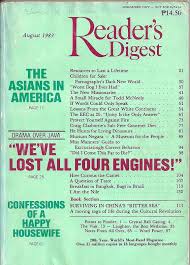
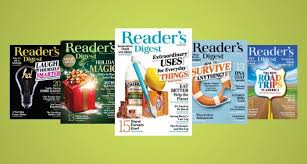
The last two years have been especially sad ones for printed books and magazines. Toward the end of 2023, the iconic magazine, National Geographic stopped selling its print issues. And in April 2024, Reader’s Digest stopped publishing. Many other print magazines have also downed their shutters though the online version continues.

I grew up with the Reader’s Digest. My father subscribed to the magazine and each month a copy wrapped in a brown envelope arrived at our door. The envelope partially covered the magazine inside, and you could see the top and bottom of the magazine. The size was small, and this made for easy handling. Reader’s Digest was a magazine you could read comfortably in bed. During the festival of Diwali, there was a special wrapping for the magazine. We had several magazines in our house when I was growing up. My mother used to read many magazines in Malayalam (our mother tongue).

Reader’s Digest provided shortened versions of stories and articles that had been published elsewhere. Their skill was in condensing the material while still retaining the interest. There was a rich collection of reading material. There were also advertisements for other books published by Reader’s Digest. Unfortunately, these were beyond our family budget. I wanted to purchase these when I grew up and became financially stronger. My neighbour who was a scientist had some of these books that I occasionally borrowed.

Another favourite of mine was the National Geographic. My father was a faculty member at a banker’s training college in Mumbai and their library subscribed to National Geographic. He often brought the magazine home. I was mesmerised by the articles and the photos in the magazine. The artistic quality of the photos was superb. The magazine had only three or four articles in an issue but addressed these at great depth. I travelled to faraway places, to the bottom of the ocean, to within the human body and to outer space with the magazine. Later, National Geographic started a television channel, and I would watch the documentaries in the nineties.

We also subscribed to the Illustrated Weekly of India. This was in a large format and again had very good photographs. I still remember the column by the journalist Khushwant Singh titled ‘With malice towards one and all’. I was also a fan of the comics section of the magazine. I had a huge collection of comics and my father purchased both Amar Chitra Katha and Indrajal Comics. Amar Chitra Katha introduced me to the rich history of India. Indrajal comics had superheroes like Phantom, Mandrake, and Flash Gordon. I used to eagerly await new issues. Most of my comics were lost when we shifted houses.   

When the news magazine, India today, made an appearance, we subscribed to it and to Outlook and The week (Indian news magazines). During my school days in May, I used to eagerly await the new textbooks and notebooks for the next class following the results. I used to go with my mother to purchase these from a stationery store near the railway station. The smell of the new paper and the fresh ink was mesmerising. I loved to read some of the easier chapters in these books. Covering the notebooks with brown paper was another major activity. Our school year started with the rains in June.  

My good friend, Sanjay Mhatre had a good library and loved to collect books. I loved to borrow from his vast collection. His collection on physics and cosmology were extensive. In those days, the erstwhile Soviet Union used to have cheap books of high quality for Indian readers. I remember the publishers Mir and Progress and I had several of their collections on science. The Soviet publishers used to hold exhibitions in our college. For twenty or thirty rupees, you could purchase high quality hard bound books. My introduction to quantum mechanics and to chemistry was through one such book.

At Thrissur in Kerala most of our medical textbooks were western and predominantly from the United Kingdom. There used to be an English Language Book Society (ELBS) that published cheaper versions of textbooks for developing countries. With our limited resources purchasing textbooks was a challenge. The two major textbooks published from the United States were those of Anatomy and Pathology. Those days we did not have online textbooks and online sources and were limited to the printed word.   

I used to write for our medical college magazine and eagerly waited for the annual issue to be published. During my residency days at PGI, Chandigarh I was the literary secretary and was very involved in bringing out the annual magazine, The Resident. We also introduced a newsletter, ARDent Voice, with ARD standing for the Association of Resident Doctors.

At Pokhara, Nepal the college library had a good collection of general books and novels in addition to medical books. I used to read a lot of novels and the author, Frederick Forsyth was one of my favourites. His meticulous research blurred the lines between fact and fiction. Sidney Sheldon was another bestselling author. Novels enabled me to travel vicariously to different places and through varied situations.

Today reading has become less common among the younger generation. Reading strengthens creativity and the imagination as you must imagine in your mind’s eye the situation the author is creating. Is it not magical that the author can communicate with you, the reader through squiggles on a page across the boundaries of space and time?

I started writing during my MBBS days. I still remember the versification competition I took part in and won the first prize. I used to participate in different literary events at my college. In Nepal, I combined my triple loves of writing, photography and hiking with articles for the newly started newspaper, The Himalayan Times. I met my writing guru, Don through the magazine, ECS Nepal. Don was the editor of the magazine and a powerful writer with a deep knowledge of Nepal. I learned a lot from his comments and suggestions and the workshops he conducted. I also used to write a medical column for ECS Nepal. ECS Nepal was a beautifully produced magazine with great photographs. Unfortunately, it stopped publishing around the beginning of the pandemic.

Other travel and lifestyle magazines were also published from Nepal but could not sustain themselves. In the Caribbean Island of Aruba, I used to write off and on for a daily newspaper published in English. Again, the newspaper ceased publishing. During the last two decades several print magazines have ceased to exist. I feel it is a great loss.

I do not read much on paper these days. Most of my reading is done online on computers, laptops and tablets. I also have a Kindle reader. Kindle screen mimics the appearance of paper closely, but it is not the same as reading a printed page. You can no longer feel the smoothness of glazed paper, the smell of fresh ink and the vivid colours of photographs. With the closure of the print version of Reader’s Digest, an era in print publishing has ended. The demise was sadly expected. Without printed books, our (my) world may never be the same again!
.

Dr. P Ravi Shankar is a faculty member at the IMU Centre for Education (ICE), International Medical University, Kuala Lumpur, Malaysia. He enjoys traveling and is a creative writer and photographer.

.

PLEASE NOTE: ARTICLES CAN ONLY BE REPRODUCED IN OTHER SITES WITH DUE ACKNOWLEDGEMENT TO BORDERLESS JOURNAL

Click here to access the Borderless anthology, Monalisa No Longer Smiles

Click here to access Monalisa No Longer Smiles on Kindle Amazon International

Categories
Essay

Where the Rice is Blue and Dinosaurs Roar…

By Ravi Shankar

The Kuala Terengganu Skyline. Photo courtesy: Ravi Shankar

The lighting was subtle but magnificent. The transparent minarets glowed red, green, pink, and blue in turn. We were at the Masjid Kristal on the island of Wan Man at Kuala Terengganu in the state of the same name in northern Malaysia.

The mosque is among the most photographed monuments in the Islamic Heritage Park, and we could easily guess why. This is the first intelligent mosque in the country with an IT infrastructure and wi-fi connection. We were glad we came. The reflection of the mosque lights on water was enchanting. Getting around KT — as Kuala Terengganu is lovingly called by the locals — could sometimes be tricky without your own vehicle. Ride hailing services may not work optimally in the peak hours of the evening. We were informed by one of the cab drivers that Maxim is the most popular e-hailing app in the city.  

The population in KT loves to eat out and in the evenings the restaurants are usually crowded. We were staying at the Intan Beach Resort at Pantai Batu Burok and the eating places by the beach were always crowded. The beach is popular with locals with several attractions and rides during the evenings. There is a three-kilometre walking path by the side of the beach. As we stayed right by the beach, we could enjoy early morning strolls on the soft sand.

Panti Batu Burok: Photo Courtesy: Ravi Shankar

The Kuala Terengganu state museum was huge and is located on over 23 acres of land. The museum was officially opened in 1996 and was designed by a well-known Malaysian architect, YM Raja Dato’ Kamarul Bahrin Shah, who also happens to be related to the royal family of Terengganu. The building is designed in traditionally Malay style and the outer façade was left undecorated. There are nine different galleries, and these include the Royal gallery, the historical gallery, the textiles gallery, the Islamic gallery, the handicrafts, the natural resources, the shipping and trading and the marine resources galleries.

Tha Batu Bersurat. Photo Courtesy: Ravi Shankar

The ‘Batu Bersurat’ (lettered stone) is the museum centrepiece and of great significance to the state. The stone is estimated to be 700 years old and mentions the position of Islam and the application of Islamic laws in the state. The stone is written in the Jawi script using Arabic characters. Jawi script is still used in Terengganu though in many areas Malay is written mostly in the Roman script. In the museum grounds, there is a good collection of different old cars and other vehicles used by the King and Chief Ministers of the state.  

The Islamic Heritage Park is a major attraction located on the island of Wan Man. The park has small scale replicas of famous global Islamic monuments. Among the monuments represented are the mosques at Medina and Mecca in Saudi Arabia, Dome of the rock in Jerusalem, the Taj Mahal in India, and a mosque in Aleppo, Syria. The national mosque of Malaysia and mosques in Singapore, Indonesia, Pakistan, Iran, China, Tatarstan, Uzbekistan, and Iraq are also on display. Replicas of these famous monuments were displayed in the vast gardens of the monument. I liked this concept, and the monuments were well maintained except one or two that may require more attention.

The sun was hot, and I had to drink copious amounts of water.  In the evening, my friend, Binaya, and I went to the floating mosque situated in Kuala Ibai Lagoon near the estuary of Kuala Ibai River, 4 km from Kuala Terengganu Town. The mosque combines modern and Moorish architecture, and is a white structure situated in five acres of land. There is also a floating mosque in Penang.

The next morning, we went to the Science and Creativity Centre. The centre is housed in a huge, modern building. There are multiple galleries to explore. I was fascinated by the stainless-steel exhibit showing the structure of DNA, the blueprint of life. The encounter with the dinosaurs was the highlight of the trip. The dinosaurs were colour coded in red (dangerous), yellow (exercise caution) and green (safe). Tyrannosaurus Rex was the highlight. Raptors, allosaurus and other dinos filled the hall with their cries and screams. The Stegosaurus had scales on the back. When I was young, I was a big fan of Phantom comics created by Lee Falk and Phantom had a stegosaurus as a pet. The inflatable dome on the top floor had a delightful cosmic show and you can see the universe projected above your head. The museum had plenty of things to see and do and is a big hit with children.

The Masjid Sultan Ismail Chendering has delicate artwork and is built entirely in white. The simple design and the beautiful artwork had me mesmerised. The mosque has a long history. The small Lebai Zainal Mosque which could accomodate150 people was first built near the current location of the mosque before being replaced by the Raja Chendering Mosque and then replaced again by a new mosque which is the Sultan Ismail Mosque.

Soon it was time for lunch. There are plenty of food options near our hotel. I enjoyed nasi kerabu, a Malaysian rice dish, in which blue-coloured rice is eaten with dried fish or fried chicken, crackers, pickles and other salads. The blue colour of the rice comes from the petals of Clitoria ternatea flowers, which are used as a natural food colouring.

In the evening, we went to see the Abidin Mosque which is Terengganu’s old state royal mosque built by Sultan Zainal Abidin II between 1793 and 1808. The Royal mausoleum is located next to the mosque. Istana Maziah, the official palace of the Sultan of Terengganu is located close to the mosque at the foot of the mountain, Bukit Puteri. The palace is the official venue for important functions such as royal birthdays, weddings, conferment of titles and receptions for local and foreign dignitaries. We wanted to climb Bukit Puteri, but the place was under renovation and closed.

We continued along the waterfront to the Shah Bandar jetty. A cool breeze was blowing, and many people were strolling along the promenade. We were moving toward the Kuala Terengganu drawbridge constructed in 2019 inspired by the London drawbridge. We waited for the sky to darken so that we could see the lights on the bridge.

Photo Courtesy: Ravi Shankar

Buses from KL take the highway to Kuantan and then bypass the town. The journey continues to the town of Paka and then takes the coastal highway through Dungun. Some parts of this state reminded me of my home state of Kerala in South India. Plenty of coconut trees were seen. Coconut trees grow so well in Kerala and in many areas along the west coast of India.

The expressways in Malaysia are well-designed and maintained. Traveling on these are usually a smooth experience though they get very crowded during major holidays when people leave Kuala Lumpur for their hometowns and villages. KT is about 400 km from KL and takes around eight hours by bus. Malaysia’s northern state on the East Coast can be a good getaway. The town and the state has culture, history, natural beauty, delicious food, and serene beaches. The islands off the coast were still closed. Redang island was mentioned to be one of the most beautiful islands in the world. Hopefully, we will visit these during our next trip. God willing, we shall!  

.

Dr. P Ravi Shankar is a faculty member at the IMU Centre for Education (ICE), International Medical University, Kuala Lumpur, Malaysia. He enjoys traveling and is a creative writer and photographer.

.

PLEASE NOTE: ARTICLES CAN ONLY BE REPRODUCED IN OTHER SITES WITH DUE ACKNOWLEDGEMENT TO BORDERLESS JOURNAL

Click here to access the Borderless anthology, Monalisa No Longer Smiles

Click here to access Monalisa No Longer Smiles on Kindle Amazon International