Categories
Musings of a Copywriter

Missing the Tail

By Devraj Singh Kalsi
From Public Domain

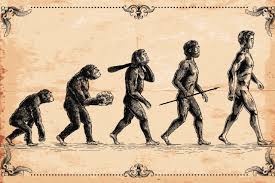
In the evolutionary journey, we have achieved a lot to feel proud of. In the gradual process, we have lost something that could have proved to be an asset. However, there is no human record of regret ever registered to mourn its absence or disappearance. Instead, the actual loss is interpreted as a tangible gain for the entire human race that would have suffered a slowdown if the tail had remained an organic hurdle attached to our lives and bodies. Getting rid of it before we acquired the present shape and structure is, therefore, considered a divine blessing except by some crackpots who indulge in overthinking to find novel ways of making the tail relevant to human lives once again and shift perception in its favour through a robust narrative listing its utility value in a tech-driven world.   

The tail remains alive in our vocabulary as many fellow inhabitants from the animal kingdom continue to sport it with style. Some cricketers are called tail-enders and heads and tails phrase is still relevant when it comes to tossing a coin. The aircraft went into a tailspin and so did the share prices – thus, it’s used in popular parlance. We have plenty of examples in various cultures, communities, and languages where the tail is fondly quoted for wisdom and comic relief but the ideas of strength, flexibility, and relevance are always derived from its appearance and existence in other animals, big or small and meek or beastly, to feed our collective imagination.

The tail would have been cumbersome for people already struggling with time management in the fast-paced world. The extra weight and length would have complicated mobility and added to maintenance costs. While there are multiple benefits of being born without a tail, the presence of the long rope-like appendage would have added the excitement of improvisation and made human beings look more animal-like, although they are already fiercely competitive in displaying beastly behaviour. Since nobody finds the time to focus on the aesthetic appeal and the swag the possession of the tail imparts to an animal, the side of beauty of the furry extension gets completely overlooked and the possibility of its attachment to the human body sounds more like a scary proposition rather than a meaningful addition.  

Thinking of the tail gives handle to wild ideas. Imagine a ramp walk – or a cat walk – with super models of all genders flashing the latest apparel and strutting the stage with a tail sashaying behind to make them resemble flashy fashion icons. It is just the beginning of how the tail would acquire space in the minds of the young generation and the extent they would go to bring it back to their lives – opting for artificial ones to make themselves look different from the rest. Such a trendsetting development would raise further demand for the tail and the universe would receive messages for its re-introduction.

Losing the tail has cut us off from the animal world but we still tend to commit bestial acts by calling ourselves distinctly different in appearance from other tail-bearing animals. We boast of getting rid of the tail that is common to four-legged creatures such as dogs, donkeys, cats, cows, elephants, pigs, horses, tigers, and lions. The loss of the majestic tail, if one looks intently at animals, stokes feelings of envy and deprivation at times. The movement of the tail reveals a lot: when the dog experiences joy, the wagging of the tail is natural, mirroring how the pet feels inside. But a smiling human face, even that of a close friend, hides true feelings and often misleads. Maybe, the tail attached to human beings would become a true indicator of the state of mind, a kind of lie detector that exposes everything that the human face hides.

The wild horse of imagination is galloping fast. Designers would get the chance to explore innovative ideas of how to cover or style up the tail. Had the prized object been foldable or a wrap-around-the-waist type, unique ideas of carrying it like a belt could have been tried out. For menfolk, the tail would be easier to flaunt as a stylish accessory. For women, having managed long, flowing hair reaching below the waist, they are naturally adept at sporting long tails without fuss. Besides, the tail promised to be a safety weapon. With spikes erupting on its surface to shield the female sniffing danger of any kind. The tail could stiffen at the right time and prevent episodes of harassment in public spaces, inside crowded trains and buses, acting as a preferred, reliable tool of self-defence.

The furry tail could open up new businesses, with the introduction of a new range of tail-care products that include shampoo, oil, cream, and moisturizers. The beauty parlours struggling for more revenue would get clients looking for professional tail grooming sessions. Tail colouring products of the herbal kind, tail combs and glittering tail clips would deluge the market. Colouring the tail to match the outfit would become the new craze. If the same colour provided by nature turned dull and boring or lost its sheen, the person would have the freedom to colour it differently again and again.  

With global temperatures rising, the tail could possibly work as a natural coolant for the body, warmer in winter and cooler in summer, allowing adjustable options. Toilet seats and chairs of all kinds would be redesigned to accommodate the new part of the human body. This would perk up trade and business, with the introduction of newly designed furniture items – chairs for offices, schools and college desks, and benches in courts and eateries giving space to the tail. Travelling inside trains, cars, or flying by airplanes would also involve remodelling of seats, thus providing a big fillip to the global industry.  

The tail could assist humans as a sensor to gauge a lot in advance. Maybe the tail would get a vibrational alert of imminent natural disasters and sense earthquakes and tornadoes. If we had a tail, we could also become sensitive and kind to animals. The tail could be short in length or long, depending on the height of the person, and the colour of the tail would be a natural contrast. The tail should ideally be darker if one is fair — giving a pretty fair idea of how black and white can combine at the same time, taking pride in neither and considering colour to be immaterial, subtle or pronounced. Fair-skinned people, both men and women, should get dark tails and vice versa, making this world less unequal, less discriminatory.  

In the age of robots, when human look-alikes are designed, it is time for nature to spring a surprise and the tail could well be a surprise in this regard. Recalibration would be required to align with the new shape of human structure and if the new-borns come to life with this new add-on, it could well be a game-changer of sorts, with the adult world clamouring for similar attachments to match with the evolutionary pace of nature even if it leads to reversal.

The fun element of having a tail cannot be sidelined. It amuses a lot to see animals around swishing it in style. When humans get the tail, they would need to adjust accordingly, and find multiple uses to justify its existence for centuries. The fear of the tail getting caught while closing door would be painful for its owner. Banging of doors would stop forever as people would be more careful about anger control. Any injury might prove serious and a replacement of the tail would not be available like other prosthetics designed by medical experts.

Instead of checking the pulse in the traditional manner, the tail would suffice for medical examination. Test vitamin D, lipid, haemoglobin, glucose levels with a prick on the tail instead of drawing blood like a vampire through the syringe. Body temperature and fever could be checked by placing the thermometer on the tail and the soft touch of the fur could reveal the perfect degree.

As everything is basing itself on face recognition, technology could also develop tail-based tests to study life span, DNA, and bring tail recognition tools to conduct psychological tests for memory, and neuron health to study personality types and disorders in the brain. Already, we have doctors who suggest a strong link between gut health and brain health and so the possibility of tail health and brain health would not be ruled out as future researches could reveal a deeper interconnection.

The tail could become a reliable source of support, making animals feel less threatened and closer to humans. The tail could be a unifying factor in this regard. Besides, holding hands and exchanging warm greetings could get replaced by simply wagging the tail. For romantically-inclined types, the shape and movement of the tail could offer compatibility insights. Tying the tails of the couple could be the equivalent of tying the nuptial knot. Covering up the tail in silk, brocade, polyester, or cotton could make it look fabulous. Matching clothes would render it stylish, engaging fashion icons with refined taste to bring out offbeat variants of couture clothing during festive seasons. Instead of shaking a leg, the new mantra would be all about grooving and shaking the tail.

People with fancy tails would become the new normal, exercising better control over their lives as the tail would carry profound secrets of success in life. The tail would have hidden mysteries revealed to those who would understand and respect the tail. Academics and professors would look smart with their restless tails inside the classrooms.

During free hours, the tail could be used as a handy tool swat flies. Dusting off seats in public spaces with the help of the tail would suffice and attaching heavy luggage to the tail instead of dragging suitcases for hands-free comfort would be another big benefit for the future generations travelling across the globe without the fear of theft lurking in their information-loaded minds. With the tail emerging as a clear favourite with immense utility value for people across gender and class, this tale should engage readers to build a strong defence and show tell-tale signs of how this weird demand should gather further momentum even if the appearance or availability of the tail as part of humans remains a fanciful idea for centuries to come.

From Public Domain

 .

Devraj Singh Kalsi works as a senior copywriter in Kolkata. His short stories and essays have been published in Deccan Herald, Tehelka, Kitaab, Earthen Lamp Journal, Assam Tribune, and The Statesman. Pal Motors is his first novel.  

PLEASE NOTE: ARTICLES CAN ONLY BE REPRODUCED IN OTHER SITES WITH DUE ACKNOWLEDGEMENT TO BORDERLESS JOURNAL

Click here to access the Borderless anthology, Monalisa No Longer Smiles

Click here to access Monalisa No Longer Smiles on Kindle Amazon International

Categories
Musings of a Copywriter

Horoscope or Horrorscope?

By Devraj Singh Kalsi

It is a matter of joy that my existence in this world has been largely successful in proving my birth chart predictions wrong. This has now fossilized into my belief even though my mother held a different viewpoint. Ever since I got to read the prized booklet in my teenage years, I was disturbed about my life as an adult and my life span. I was classified as an early achiever of success scheduled to play a long innings. So, I planned to delay almost everything and become a late bloomer instead. Success earned late lasts longer was the guiding thought. Imagine a young fellow who was destined to get his hands on everything considered worth acquiring. Contrast these projections with his determination to put everything on hold, to express solidarity with millions of others who have to struggle very hard and for too long to finally become an achiever. Being stubborn to refuse what fate has ordained sounds crazy and suicidal but that was the rebellious streak that glowed like a firefly in my head during those days. 

Wherever I found I was supposed to clock a win or hovered close to winning, I chose to withdraw, step back, or slow down to help another person in greater need of it. Such noble sacrifices were not included in my horoscope, but I gave no scope to destiny to remote control my life. After all, it did not include any career option of my choice and so the glowing tales of a ‘successful’ life meant little. While my mother was glad that the birth chart made it sound all good for me, a roller-coaster ride worth envying, she was upset that I was in a challenging mode, holding my will superior to what the astrologers had outlined in those few hand-written pages. I had some vital questions to raise and clarify doubts. When I expressed the desire to meet the astrologer who drafted my future at the time of my birth, she said he had departed from earth, leaving no scope for me to chase him for an explanation or seek a partial rewrite. There was no way I could convince myself that I was supposed to spend my entire life as per his forecast even though he foretold an abundance of material possessions and windfall gains.

Considering the prediction that I was going to be settled abroad around the age of thirty, I chose not to seek my fortune outside the country, believing that only the meritorious students deserve to go abroad for higher studies or only the highly educated get employed there. Nothing could materialise without the passport, so I delayed acquiring it in my early twenties. My singular focus was to ensure that I was academically unfit for the international job market. Although the extended family gave importance to settling abroad, and many relatives of my generation were upskilling themselves and secretly planning for the big break in the foreign lands, my lack of ambition stoked serious concerns as they concluded it quite abnormal that a young fellow does not dream of flying across continents. When they offered real life examples of how some of our relatives had a better, more ‘secure’ life and they were doing exceptionally well in Canada and Australia, I showed no interest in their immigration tales and chose to furnish a divergent viewpoint of domestic success being a greater challenge in an overpopulated job market.  

The holidaying arriviste from New York – an architect of a brilliant career in the field of computers – was eager to know what I was pursuing as we were the branches of the same family tree. When I disclosed that I was into media studies, he was visibly relieved that I would not be seeking any favours like sponsorship, internship, scholarship, or referrals. He was expecting me to praise his global success but my lack of curiosity in his professional breakthroughs made him furious within. His arched eyebrows suggested an element of shock when I mentioned I had zero interest in shifting to a foreign country in search of greener pastures. He read it as my lack of self-confidence to compete globally. He suggested I should mingle with those friends who have a strong urge to move abroad and develop a similar expansive mindset instead of remaining a frog in the well, with those outdated ideas of roots keeping me stuck and decaying my potential. His words failed to stir me or change my outlook, and I maintained that staying local but thinking global was sufficient for me. There have been big achievers who never boarded a ship or a plane, yet they were recognised by the world over for their contributions. 

Many friends were exploring opportunities abroad although they kept it as a closely guarded secret to reduce competition. My steadfast refusal to ape them was as source of disappointment, generating fears that the horoscope must have missed out some crucial details or the exact time of birth was recorded incorrectly – a difference of a minute or two possibly changed the entire calculation grid. That I had managed to raise questions on the accuracy of the birth chart was a big achievement, but my mother started scanning the newspaper classifieds for another experienced astrologer who could accurately read my palm and forehead and find out what the future had in store for me. I was sure that the excessive crisscrossing of lines and their lengths and breaks would confuse any seasoned palmist, making him lose patience to further read between the lines.

When I told my close friends that writing could be practiced from any part of the world, they argued that the opportunities to succeed in writing were non-existent within the country. The Western world offered a better life to mediocre writers as well. When my mother understood that creative pursuits were a priority for me, she tried to find some linkage with the birth chart once again. She did succeed in establishing a connection with writing and the business of iron. After all, books and newspapers began their printing journey with the use of metal in the early stages.

As the years passed by, she was convinced that her son would not move out of the city, forget leaving the country. Applying for a passport when it was well past the ‘right’ time to migrate was explained as a necessary step to ensure a holiday abroad though the vacation never materialised. Aside from some minor errors in calculations, she was unwilling to concede that the horoscope was fundamentally misleading. Just then a work-related opportunity in a neighbouring country arrived my way. When I refused to accept it, she was relieved that though late, the horoscope was right to suggest the professional breakthrough abroad and it was my decision to let it go. No more arguments on the accuracy of the birth chart as she felt quite victorious after a long phase of wait. An international opportunity gone waste gave a high of a different kind. My satisfaction that I was not crossing the border disappointed my mother, but I was happy to stay in my homeland.

That I was supposed to be a businessman according to the birth chart was another prediction that haunted me like a nightmare. I was keen to prove it incorrect. Those were the days when the self-employed or freelance professional tag was not in circulation so there were just two categories for astrologers to focus on. The iron business forecast consumed my energy as I feared I would end up being a scrap dealer instead of a global metal magnet. My confidence remained perpetually low, and the fundamental lack of ambition drove me insane. An overdose of humility and modesty stifled my voice to rise and shine.

When I told her about words being the complete world for me, she was happy the prediction was right. Words and books need paper and printing press, so my business of writing had the iron component in it. As per her assessment, the astrologer won despite my best attempts to prove him wrong. She gave a creative spin to those predictions and find some solid connection with my choices. Being published abroad meant it was going international and writing had metal and mettle associated with it. While I stayed happy with the conclusion that the astrologer was wrong, she stayed happy that the astrologer had predicted everything correct and things were unfolding in accordance with what the birth chart foretold.

Talking about life span, it is better to stay silent. I should not pose a challenge just to prove the astrologer wrong. Though I hated the long life he predicted for me as I wondered what I was supposed to do for so many decades, with each passing year now, I feel there is so much to achieve and the prediction gives solace that there is still enough time to fulfil my pending dreams as the journey began late due to my stubborn approach. Whenever I am doubtful about my future on this earth, I fish out the horoscope and read the short paragraph highlighting my long-life span and heave a sigh of relief.

 .

Devraj Singh Kalsi works as a senior copywriter in Kolkata. His short stories and essays have been published in Deccan Herald, Tehelka, Kitaab, Earthen Lamp Journal, Assam Tribune, and The Statesman. Pal Motors is his first novel.  

PLEASE NOTE: ARTICLES CAN ONLY BE REPRODUCED IN OTHER SITES WITH DUE ACKNOWLEDGEMENT TO BORDERLESS JOURNAL

Click here to access the Borderless anthology, Monalisa No Longer Smiles

Click here to access Monalisa No Longer Smiles on Kindle Amazon International
Categories
Musings

What Can Authors Do?

By Devraj Singh Kalsi

Over years of reading, some authors are likely to emerge as your favourites for various reasons and occupy the venerated position forever. When an author enters your list of favourites, you tend to grow intolerant of criticism of his work or personal life, even on valid grounds. All the foibles are tossed aside as natural or unavoidable. There is no chance of losing respect once an author achieves that glorified status in the eyes of a reader.  

Authors of classics are favourites when you are growing-up. They are the first ones to grab your imagination – much before contemporary authors mesmerise you with their narratives and styles. Since they are no longer around, they are admired for leaving behind a wealth of creative assets.

Reading one book makes you eager to read more from the same author and you end up reading everything the author wrote during his lifetime. This fondness makes you curious to read books by the author and books on the author. You dig up the archives, read what his contemporaries wrote about him, what his lovers and friends disclosed about him. The process of unearthing the mysteries throws up shocking disclosures.

One day you discover writings from established names that project him as a brothel-visitor, sadist, voyeur, or sexual pervert. As these graphic details emerge from multiple reliable sources, you are left to wonder why such great, exalted writers had such a dark, kinky side.

Your adoration suffers a jolt as you fail to deify him further. Even though the creative side keeps you inspired to become a good writer, the shady personal life scares you like hell. You begin to wonder whether writing actually involves dilution of character. Is it going to make the lovely people in your life suffer at your hands?  

Favourite authors are often reread. They hold a special place in your heart and your bookshelf. If you are proud of displaying your acquisitions, books by your favourite authors will be displayed in front. In case you are secretive, you prefer to conceal your favourites – hide them in the back of the bookshelf to escape getting noticed by others. Many people would like to borrow such titles and you are not ready to lend it to any person – not even to your best friend.

You always prefer to buy books by your favourite authors in hardbound cover – the paperback edition is not meant for you. Your favourite authors are part of your treasured collection that you wish to leave behind for future generations.

Your favourite authors share an intimate relationship with you. You take them to your bed and bedside. You go to sleep reading their writing and wake up fresh. Their magical words would have a soothing effect on your senses.

Sometimes you think these authors should not be read casually. So, you prefer to sit straight in your study and relish the prose with all seriousness. This is also a shade of respect you accord to your favourites. You never dog-ear the pages of your favourite tomes and prefer to place roses, feathers, or bookmarks inside. The sepia pages smell fragrant even after years and you inhale the evergreen freshness and revive the pleasurable experience of reading the long cherished book.

You tell the world who your favourite authors are and the reasons why they hold this exalted status with the fond hope that the other people will agree instantly. You want all your acquaintances to know you have found your favourites and the names should make them feel proud of you.

When you want more people to read your favourite author, you behave like an influencer and hope to multiply the flock of admirers. Adulation expressed with logic or emotion – or with a mix of both – tends to surprise your family and friends who never thought it was easy to select favourites from the vast world of writing and it required some kind of scholarship to be able to do so.

As a reader, if you have simply enjoyed the prose without trying to understand what great literary insight they offered, you are likely to find your favourite authors with ease. The readability factor coupled with reader engagement. A stage when you simply restrict yourself to one concrete line of confirmed admiration: I just love his words. This closes further debate and discussion. No power on earth can stop you from loving their books.   

If any of your favourite authors happens to be a living one, anywhere in the world, you consider yourself fortunate to be living in the era of such great writers. You feel a strong urge to connect with them, wish them on their birthday, buy their signed, autographed copies and flaunt the edition.

You take printouts of their photographs and put them up on the bedroom wall just as teenagers treat their rock stars. You pick up the favourite quotes from their books and frame those in your study to inspire and motivate you to greater heights – to credit the source of enrichment of your understanding of the complex world. On many occasions you feel the urge to quote their lines and express your fondness.

Such adulation rarely turns critical because you have grown up loving literature through their works. Their esteemed position remains unchallenged even if the erudite critics have contrary views to offer. After several years if you do not manage to write brilliantly, you remain in awe of their magical powers of expression. 

Sometimes, you pick up a few favourites but they are not quite the famous kind. They have not written much but their output appeals to you. The inhibition to mention their names remains within you but your clandestine admiration also stays alive.

Having a favourite author who is not famous is not an aberration. After all, it is an intimate relationship between the author and the reader. In case your list of favourite authors comprises some lesser known types, you sometimes feel the strong urge to pronounce their name and make the world know these writers deserved to be on the top list but they could not make the cut.

Your repeated thrust on those names does not change public perception but if your voice counts, you can surely evoke interest in some people who visit their works to find merit in your observations. As a sincere reader, you have the freedom to get them back in the reckoning – even if the outcome fails to meet your expectations. Your homage and tributes certainly go a long way in reviving the long-forgotten authors who slipped into obscurity.  

Favourite writers from your familiar world – the world you live in – and from distant lands leave you with a similar set of experiences. Space and time cease to matter and the reading experience alone decides the worth. When you have favourites from both the worlds, it shows you have no borders in the land of imagination and you respond with emotional force depending on the power of the prose.

Advice doled out by your favourite authors is revered and followed if you harbour literary ambition. You know these literary heavyweights share pearls of wisdom and hope the worth of their words gets recognised by people across boundaries and generations. Some people tend to keep one favourite, some have many favourites and some keep adding to their favourite list from different genres and countries. Whatever be the basis of cherry-picking the favourites, the installation is supposed to remain rooted in the fertile soil of your creative mind.  

Sometimes you notice a trend to honour great literary names by picking on famous names and quoting them in your work. Sometimes you begin to like real people with same names as those given to characters of your favourite writer, and sometimes you rename them with those dear names. When a character becomes famous like the author, there is definitely more life in the creation.  

Talking about my choices and the kind of relationship I share with my favourites, I must clarify that the choice was made on the basis of reading comfort alone. I had no idea about how great writers are judged and the parameters to define them. It was purely on the basis of pleasure of reading. Pleasure sounds a petty, sinful word for enlightened minds – a basic urge not worth writing about. As I derived pleasure from reading certain authors, I began to read more of them and that is how the relationship grew over the years.

Apart from the pleasure of reading a good story told in a lively manner, in refreshing prose, no other factor made me return to any author. Indulgent writing to show off literary flair put me off. Simple writing appealed a lot. Some living authors entered my system for these qualities. I do not say these alone should be the reasons to select your favourites, but in my case these became the glue factor. When I read A Suitable Boy (less than half), I realised simple writing is not easy. When I read A Fine Balance (just half), I realised simple writing is not easy. When I read The Guide (more than half), I realised simple writing is not easy.

Being a writer you aspire to become someone’s favourite one day and you keep working in that direction. You want a reader to confess your book transformed his life or made him look at writing in a fresh way. The list of favourites will continue to occupy the same slot in my mind. Even if respect does not come out in glowing terms, I feel inspired to write a book with such amazing simplicity some day. More than the name of the author, the name of the book leaves a lasting impact.  

I do not foresee the expansion of the list of favourites any further even if there is genuine merit in doing so. Right from early years of my growth as a reader, they have fired my imagination. So I prefer to be guided by the benchmark already set high. Being far, far away from that, despite years of reading and writing, generates a sense of remorse within. The intent is not to surpass these great works but to produce something that celebrates the inclusion of the strengths these works carried. There is no sense of competition of any kind – just the desire to give a new life to the qualities these works were raised with.

.

Devraj Singh Kalsi works as a senior copywriter in Kolkata. His short stories and essays have been published in Deccan Herald, Tehelka, Kitaab, Earthen Lamp Journal, Assam Tribune, and The Statesman. Pal Motors is his first novel.  

.

PLEASE NOTE: ARTICLES CAN ONLY BE REPRODUCED IN OTHER SITES WITH DUE ACKNOWLEDGEMENT TO BORDERLESS JOURNAL.

Categories
Musings

Observer at Home

By Devraj Singh Kalsi

During the lockdown phase, I started taking interest in what did not interest me earlier. As a writer fond of observing people and the world outside, my operating space was restricted now. Everything inside the house began to draw my attention. The small, minor issues and objects assumed greater importance than they actually deserved. My appetite for keen observation was evident every hour of the day.  

I had no memory that the ceramic mug I drank coffee from every morning was chipped. Quite like the small scratches you do not notice when they first appear. I held it close to my eyes to check whether it was fresh. Unable to reach a definite conclusion, I shared my observation with my partner to see how she reacted. My words did not elicit her glance in my direction so I placed the coffee mug on the table without making the slightest noise.  

After a long-drawn silence in which I had forgotten my query, she confirmed the coffee mug was chipped due to an accidental brush against the gushing steel tap in the sink almost month ago. Since it was emblazoned with her favourite motivational quote, she decided not to discard it. Maybe the coffee mug supplied her with the daily dose of positivity when I sat in front of her, holding it in my hand. A visual meditation with open eyes.  

It was amazing to discover the curtains of the windows in my study had two colours. Unwilling to blindly trust my vision, I walked to the window, held the fabric and double-checked it. What I had considered beige had a tinge of pink as well. I resisted for a while the urge to ask my partner to spell out the colours. I framed it a bit differently soon: Is the curtain in my study room baby pink?

Her reply was prompt this time: The curtain has been washed so many times that from fuschia pink it was now turned into pale baby pink. The presence of subtle elements in everything surrounding a writer is always elevating. Subtleties make art richer. And writers always look for possible signs of it. After this observation, I was filled with the joy of imagining a reader who finds a new shade of meaning in my stories years later. Maybe someone who reads my works with great passion is the one who locates fresh sensibilities in my writing.

On the top of my bookshelf, there had been a miniature terracotta elephant and a horse. I do not exactly remember when I last saw them there. But I remember seeing them whenever I looked that side. I found them missing for the first time in three years since they were purchased from the local arts fair and placed right on top. I needed an update regarding their present location. Had they been shifted elsewhere recently? I asked my partner about the elephant first. 

Thank God, you noticed that.  When they came, they were small. Now they have grown up. How can they fit in there?  

I was not getting what she was trying to imply through her sarcasm. Finding a blank expression on my sullen face, she said she had moved them to the terrace last year. For one year I had not noticed this change of location. It showed how unfamiliar I was with the house I was living in.

I know the rooms of my characters very well. Every nook and corner is vivid in my mind. When the world of fiction becomes so real, the real world the writer lives in tends to grow distant. Something of this kind had happened in my case.

While shaving during the afternoon, I noticed the mirror was not square anymore. The mystery of how it had become rectangle deepened. Various implausible plot angles took shape in my fecund mind. Laying them at rest because thrillers are not my genre, I rushed to seek clarity regarding my visual disturbance from my spouse who was ironing clothes.

Holding the hot iron in one hand like a shield, she looked vexed with arched eyebrows. She dismissed my repeated attempts at observing more inside the house and clarified that the square mirror fell off the wall last winter. Maybe the lizards engaged in combat had toppled it to gain more space. 

I realised this tendency would continue in this manner for weeks. Many striking differences would come to my attention and it was useless to irritate others with my queries. Instead of trying to update myself with the changes I was observing quite late now, I should ignore them all and give more rest to my frenzied brain during the lockdown phase.    

Devraj Singh Kalsi works as a senior copywriter in Kolkata. His short stories and essays have been published in Deccan Herald, Tehelka, Kitaab, Earthen Lamp Journal, Assam Tribune, and The Statesman. Pal Motors is his first novel.