BENDING THE KNEE
A group of creatures sat on a wall watching the sunset. The wall had been constructed to stop the sand from the beach blowing over the fields where crops grew. The scene was beautiful.
The hare said, “Let’s jump down and dance for joy.”
And that’s exactly what he did.
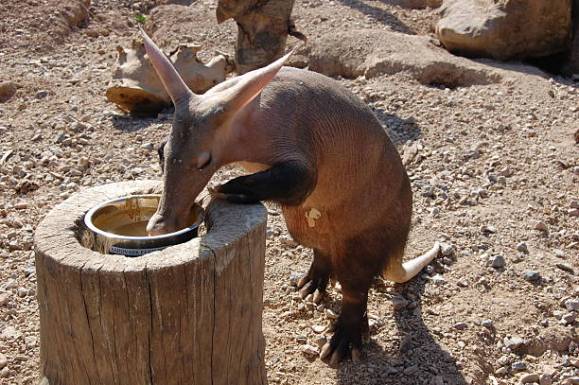
The weasel cried, “I’m coming too!” and he also jumped down. So did the fox, cat, monkey, grasshopper and aardvark. They capered in the ruby light and their shadows on the beach were amazingly long. The millipede was scared and remained on the wall.
“It’s a long way down,” he said nervously.
The hare said, “Don’t worry. It won’t hurt if you just bend your knees when you land to absorb the impact.”
“Bend my knees!” exclaimed the millipede. “But it’s almost evening. I don’t have all day, you know!”
BATHTIME FOR MOONS
A crescent moon was feeling tired, so he decided to have a nice dip in the Pacific Ocean. He lay back on his curve and just floated there without a care in the world or a care in the moon.
But an iceberg happened to pass along and when it saw the moon it couldn’t believe its eyes, partly because it didn’t have any eyes and partly because it had no belief. Yet it was amazed.
“Oh my!” it muttered to itself. “Look at the size of that banana!”
NET PROFIT
Drifting along in space, a cosmic spider was explaining to a galactic moth how it caught supper for itself. “First I make a web and then if I wait long enough, I always catch something edible.”
The moth was intrigued. “What’s your favourite food?”
“Planets,” answered the spider.
“Do you catch many of those, I wonder?”
The spider nodded. “So many that I can’t eat them all, so I leave some in storage for a rainy day. We don’t get many rainy days in outer space, but you know what I mean. Anyway, the funny thing is that some of these planets are infested with parasites.”
“Civilisations, you mean?” queried the moth.
“Exactly. And the inhabitants of those civilisations often think that my webs are lines of latitude and longitude. They sometimes use the separate strands for navigational purposes.”
“That’s hilarious!” chuckled the moth.
“Isn’t it?” agreed the spider.
The moth said, “Well, it was nice talking to you, but I’ve got work to do now. I have to circle that star over there a hundred times and then try to extinguish it by flying into it.”
“Good luck. Take care,” said the spider.
NOT A PATCH
A cumulus cloud kept rushing through the atmosphere, north, south, east and west; it never stopped for a moment. A sentient hot-air balloon asked if it had lost something. “I can’t think of any other reason why you should be hurrying through the sky like that.”
“I’m looking for a patch on sunlight on the ground,” said the cumulus cloud, “because I have been told they are worth seeing, but whenever I learn that one has appeared somewhere, it always vanishes by the time I arrive at the designated location. All I get to see is a shadow that happens to be precisely the same shape as me.”
“That’s a weird coincidence,” said the hot-air balloon. “The same thing happens to me but on a smaller scale.”
SWEET TALK
A chimp, a scarf and a hive were debating among themselves which of them had the most beautiful life. “I can peel bananas with my feet,” said the chimp, “and that’s one of the most beautiful things anyone can ever hope to do.” But the scarf wasn’t intimidated in the slightest and shouted, “I get thrown around necks and often my ends just dangle down, but in a strong wind they stick out horizontally; how can any conceivable thing be more beautiful than that?” But the hive laughed and said, “Flying insects live inside me and fill me with honey.”
Beauty is in the ‘i’ of the bee-holder.
JAM ON AN AARDVARK’S NOSE
A gorilla was bored and made a private vow that he would do something that nobody else had ever done before, so he travelled for many months until he came across an aardvark asleep in the shade of a tree. “Sorry for waking you,” said the gorilla, “but I’m wondering if you can do me a favour?” The aardvark responded sleepily, “What’s that, my hairy friend from faraway?” The gorilla explained, “Just stay where you are while I spread some apricot jam on your nose.”
The aardvark sighed. “You didn’t have to wake me up to make that request! You could have just gone ahead and spread the jam when I was sleeping and I probably wouldn’t have noticed.” The gorilla accepted this rebuke meekly and opened the jam jar.
When the nose was completely covered in jam, the gorilla stood back to examine his work. “Are you satisfied?” asked the aardvark. “Yes, it’s not bad,” said the gorilla. “Did you want anything else?” questioned the aardvark. “No, that’s sufficient. I’ll go home now. Nice to meet you and thanks for this opportunity. Goodbye!”
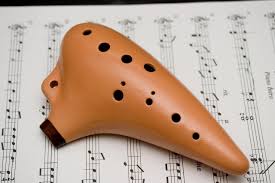
And the gorilla began the journey back home, but when he arrived, he found that his female had run off with an ocarina.
ABOVE HIS STATION
A philosopher was travelling on a train from Swansea to Tenby. It was a nice journey, but he wasn’t happy because his mind was a blank. It was his official job to keep having ideas, but not a single new one had come to him for ages. When he reached his destination, he got out of the train with the words, “This is my station.”
As he stood on the platform, he wondered if jumping into the air might help. So he made a pole from the branch of a tree and pole-vaulted over the railway tracks. As he reached the highest point of his immense jump, a new idea finally came to him.
His delight was short lived. On the opposite platform a hippopotamus was waiting for its own train and it happened to be yawning at that exact moment, maybe because it was tired or practicing for a competition. The philosopher landed in its mouth and vanished down its throat and into its stomach, never to be seen again.
Don’t get ideas above your station.
THE ROOK AND THE JACKDAW
A crow that had recently eaten cheese and olives with a scarecrow was interested in unusual friendships. He saw a rook and a jackdaw together in a field and said, “Excuse me, but I’m curious to know why rooks and jackdaws always seem to get on so well. You never mix with ravens or magpies or jays or any other corvid.”
“Rooks and jackdaws are natural allies,” said the jackdaw.
“Yes, but why?” persisted the crow.
“Because we have a shared interest in chess,” said the rook.
The crow was amazed. “Really?”
“Yes, it’s true,” confirmed the jackdaw, “but you won’t see us with a board and we use random objects for pieces. For instance, this twig is the white king and this leaf is the queen.”
“What are the pawns?” asked the crow.
“These little stones here.”
“What about the bishops and the knights?”
“Worms and mushrooms.”
“And the piece that is shaped like a castle? I can’t remember its proper name. What do you use for that?”
“I play that part myself,” said the rook.
APPEARANCE OF THE REALM
A strange face materialised above the bed of a weasel. “What the heck are you?” muttered the trembling weasel.
“An unexplained appearance,” came the answer.
“Is that like a ghost?”
“Yes. Sort of.”
“Well, what do you want?” asked the weasel.
“I need to borrow some cash.”
“Whatever for?”
The appearance sighed sadly and said, “I’m not any old appearance but an appearance of the realm, which is the most significant kind. I lost my bulging wallet in a strong current.”
“Was that a current of water or a current of air?”
“Neither. A landslide of dried grapes.”
The weasel was sympathetic. “Look, I only have £35,000 on me at the present time. Is that sufficient?”
The appearance nodded. “Yes, I think so.”
The weasel handed the money over. “When will you pay me back?”
“Tomorrow,” said the appearance.
Then he dematerialised, leaving the weasel much poorer. “I think I’ve been tricked,” said the weasel to himself.
And it was true. He had. The appearance never returned. And when the weasel checked on Wikipedia, he learned that there was no such thing as an ‘appearance of the realm’.
¶ Appearances can be deceptive.
SILLY GOOSE
A meteorite skimmed low over a pond. “Duck!” cried a heron. All the birds dived under the water except one, who was grazed painfully by the passing of the fiery space stone. “Why didn’t you warn me?” it shouted at the heron. “But I did!” came the response. “No, you didn’t,” insisted the wounded bird. “I shouted out ‘Duck’,” said the heron. “Yes indeed,” was the retort to this, “but I’m a goose.”
A QUICK DRINK
Three friends went into a bar. “I’ll have a glass of brandy,” said the first friend, who was an old fellow.
“Vodka for me,” said the second friend, who was a tomb.
The barman served them efficiently.
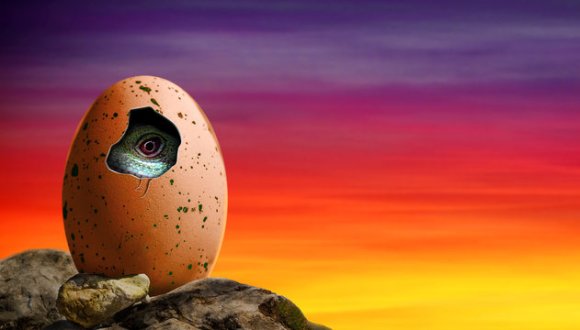
Now it was the third friend’s turn. He happened to be an egg. “Give me a stiff shot of rum!” he ordered.
The barman shook his head. “Sorry. You’re underage.”
“What do you mean?” cried the egg.
“You haven’t even hatched yet!” pointed out the barman.
“Look here,” responded the egg, “I’m much older than my two friends. The old fellow is only ninety-eight years old; the tomb dates merely from 450 BC; but I’m the egg of a dinosaur.”
Rhys Hughes has lived in many countries. He graduated as an engineer but currently works as a tutor of mathematics. Since his first book was published in 1995 he has had fifty other books published and his work has been translated into ten languages.
.
PLEASE NOTE: ARTICLES CAN ONLY BE REPRODUCED IN OTHER SITES WITH DUE ACKNOWLEDGEMENT TO BORDERLESS JOURNAL
Click here to access the Borderless anthology, Monalisa No Longer Smiles
Click here to access Monalisa No Longer Smiles on Kindle Amazon International






 Borderless