Categories
Slices from Life

In Quest of Seeing the Largest Tree in the World

By Meredith Stephens
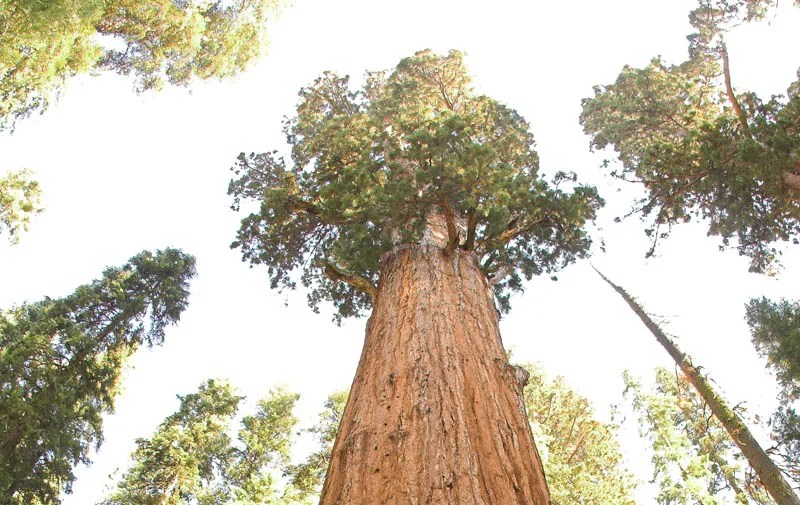
General Sherman: The largest tree in the world. Courtesy: Creative Commons

On our final day in California, we were looking forward to making the journey to Kings Canyon to see the largest tree in the world, a giant sequoia 87 metres tall. We packed the car with eight pieces of luggage destined for Australia, into Alex’s 1993 Ford Explorer. It had served us faithfully for several hundred miles of touring in California for the previous weeks. We headed up the winding mountains to Kings Canyon, dotted with live oaks and cattle in the foothills. We were heading up a particularly steep section of the road when the engine faltered. Alex urgently pressed his foot on the accelerator but the car refused to budge. 

“I’ll try and push it,” I offered.

I positioned myself to one side of the rear of the car. If the brakes failed, I did not want the car rolling back and flattening me. The car did not respond to my urgings so I gave up. I noticed cars ascending the mountains at speed, and the blind corner ahead. I decided to walk uphill so that I could signal the cars coming up the hill to warn them of oncoming traffic around the corner. When there was a car descending the hill on the other side, I put up my hand to warn them to stop until it was safe. About twenty cars passed us this way, until one driver noticed our plight and decided to help us. He stopped at the turn-out, and two elderly couples alighted from the car.

“Hasn’t anyone stopped to help you?” the driver asked.

“You’re the first,” I replied.

The two men walked towards the car to help push it twenty metres to the turn-out.

“John!” called out his wife, trying to stop him. It obviously wasn’t safe for a man in his seventies to push a heavily laden car up a mountain ahead of oncoming traffic.

Meanwhile, a man in his thirties had joined the party. Another car stopped on the other side of the road. Two burly men with tattoos crossed the road to help push the car to safety. Alex, the elderly men, the younger man, and the burly men, joined forces to push the car to the turn-out. The car slowly responded and was eventually positioned off the road. The burly men crossed the road to return to their car, and the elderly men returned to theirs. The younger man remained with us.

Alex tried to call the automobile service but his phone had no reception. 

“Can I borrow your phone?” he asked the younger man. 

“Sure. By the way, it might be quicker to call a tow truck. I suggest getting a tow-truck from Reedley, because you will be able to rent a car there.”

We called the tow truck company in Reedley and they agreed to come in two hours. The young man, who turned out to be an off-duty ranger, took his leave. We grabbed our picnic items from the car, and headed downhill to the shade of a large live-oak, while we waited for the tow truck. Lying on the grass under the cool shade of the live-oak, enjoying our picnic items, I could almost forget that we were in a crisis. After an hour or two we thought we needed to be visible from the road for the tow-truck, so we returned to the punishing heat road-side, and soon the tow truck appeared. The driver expertly loaded the car onto the truck, and invited us to join him in the front.

“Careful. It’s very high up,” he warned.
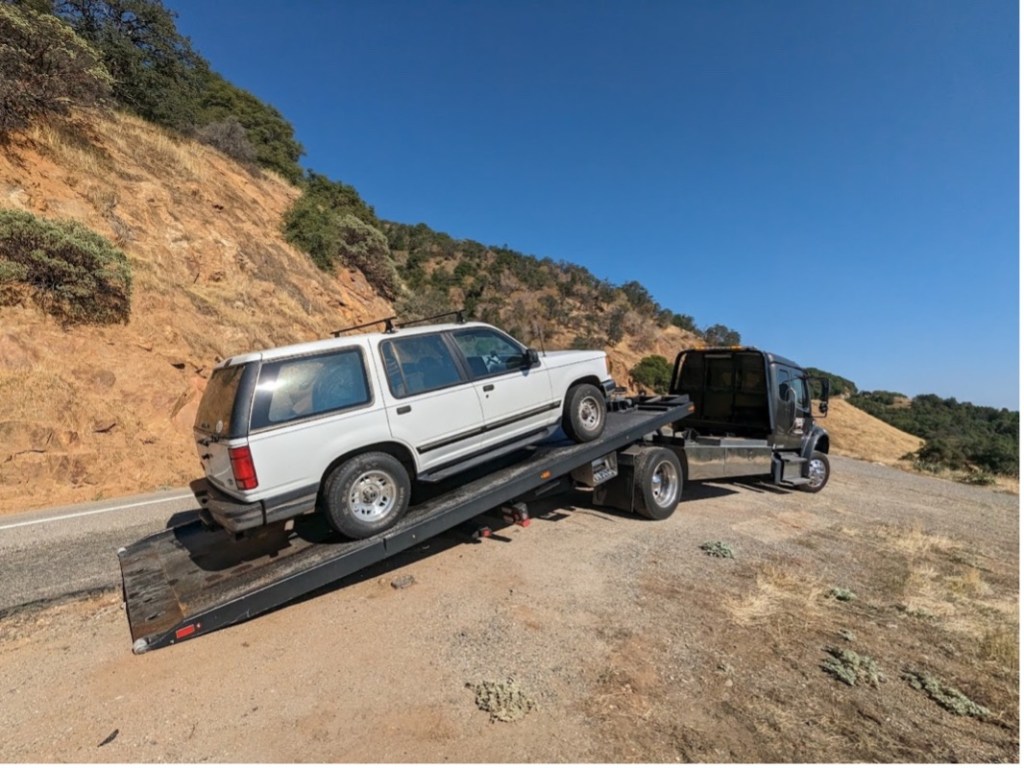
Photograph by Meredith Stephens

I stretched my legs to reach each step to get into the front of the truck, and sat in the back seat, while Alex sat next to the driver.

Sitting in air-conditioned comfort high up with a view down the mountain was such a contrast to sitting in the old car, straining up the mountain. We reached the plains and passed through the hamlet of Squaw Valley before reaching Reedley. With only minutes to spare, we picked up a rental car, removed a few items from the Explorer, and drove back up the mountain. We wound our way past where the car had broken down, into the National Park, through dense forest and charred remains of forest fire several years ago. We followed the signs to our lodge, but our break-down had cost us several hours, and we did not have time for sights that evening. 

That evening, Alex checked the passports to confirm they were at hand for our departure to Australia the following evening. They were not in their usual place. We searched our other bags. Then we retrieved bags from the car and searched them too, to no avail. 

“We’ll have to call the consulate and get temporary passports,” I suggested. 

“First, we will have to retrace our steps. Maybe they fell out when the car broke down. Maybe they are still in the Explorer,” suggested Alex.

That night Alex could not sleep, worrying about the passports. What if we could not return to Australia the next evening and had to buy new tickets? The next morning he was still worried.

“We’ll have to look for the passports, retracing our steps from yesterday. We have no time to see the tallest tree in the world.”

“Do we have time to see the third to tallest tree in the world?”

“Yes. That’s only a fifteen minute detour.”

We drove to see the third to tallest tree in the world. As I started walking in the forest I immediately felt both exhilarated and relaxed. These giant trees provided a protective canopy and their scent sent a rush of well-being through my body. I was satisfied. Did I really need to see the largest tree in the world? Yes, but that would have to wait!
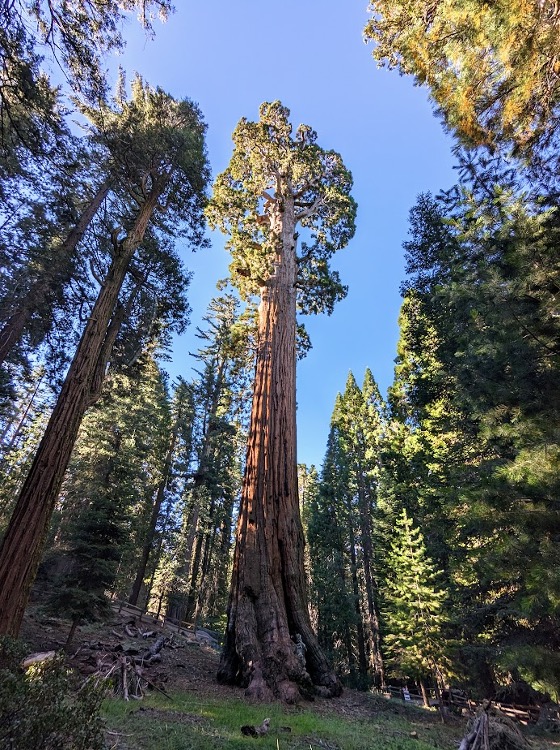
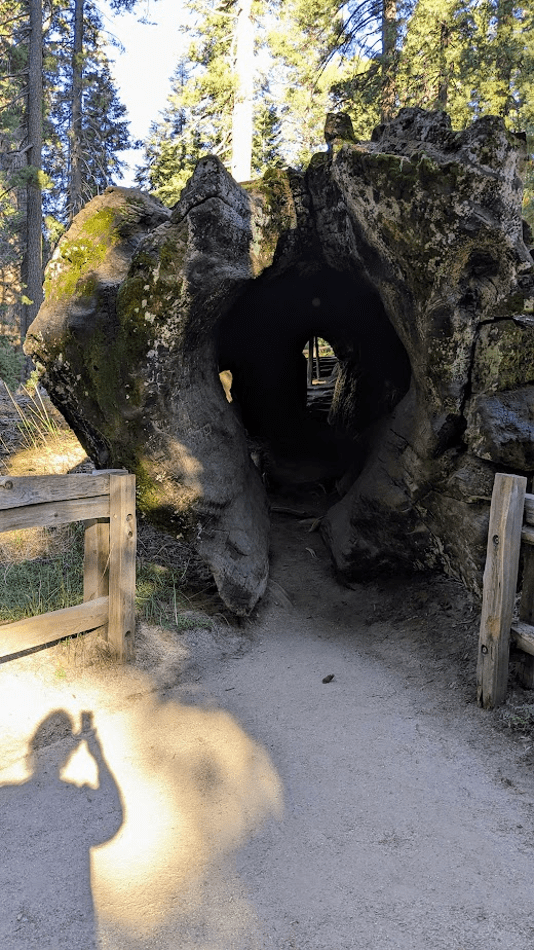
We hurried back down the mountain to search for the passports. We could not risk the possibility of not finding them just because of sightseeing. We reached the area of our break-down, and combed the grassy hill carefully in search of the passports, to no avail. Then we wound our way back down the mountain to the tow truck business. I received the keys from the office, opened the car door, and there were the passports on full display.

“Shall we go back to Kings Canyon to see the largest tree in the world?” I asked Alex.

“It will be ninety minutes to get back to the National Park, and then a five hour drive to the airport in LA.”

“I really want to see the tree, but I can’t face over six hours in the car. I guess we should head for the airport.”

“If we had known that the passports were here, we could have gone and seen the tree while we were still in the park,” lamented Alex.

With passports in hand, we did not need to visit the consulate to be issued temporary ones. We could catch the plane as planned. We were not able to see the tallest tree in the world, even though we had driven up the mountain twice. There was some consolation in the fact that the tree would be waiting for us, in years to come, when we had the opportunity to return to our beloved California.
Meredith Stephens is an applied linguist from South Australia. Her work has appeared in Transnational Literature, The Muse, The Font – A Literary Journal for Language Teachers, The Journal of Literature in Language Teaching, The Writers’ and Readers’ Magazine, Reading in a Foreign Language, and in chapters in anthologies published by Demeter Press, Canada.

PLEASE NOTE: ARTICLES CAN ONLY BE REPRODUCED IN OTHER SITES WITH DUE ACKNOWLEDGEMENT TO BORDERLESS JOURNAL

Click here to access the Borderless anthology, Monalisa No Longer Smiles

Click here to access Monalisa No Longer Smiles on Kindle Amazon International

Categories
Slices from Life

Onsen and Hot Springs

Meredith Stephens explores Japanese and Californian hot springs with her camera and narrative.

One of the pleasures of living in Japan is taking a dip in the hot springs, otherwise known as onsen. Although I lived in Japan for more than twenty years, it was ten years before I could bring myself to regularly visit an onsen. This is because I could not bring myself to accept the notion of communal (albeit segregated) nude bathing, which would be taboo in the West. My long-term expat English friend in Japan continued to entreat me to visit the onsen, and so I eventually capitulated. Would everyone in the onsen be slim, and would they look down on a curvy westerner? Would I attract glances because of my physical difference? I visited one of the many onsen in Matsuyama with my two daughters. Nobody appeared to look at me. The onsen was not full of young slim women. There were many elderly and infirm in the onsen. Maybe the young were already healthy, and they did not need to visit an onsen.

There was a wide range of pools at the onsen. One had a walking pool, in which you walked anti-clockwise. Another had pools with jets that could be turned on to massage your back, a carbonated pool, and stone beds to lie on while watching a television screen placed on the wall which faced you. Another had an outdoor area, with separate bathtubs, a communal pool, a communal cold pool, and a pool inside a cave. There was also a sauna. Inside was a bucket of salt. You could scoop some salt out of the bucket and throw it over your shoulders. There was a clock in the sauna. I could not bear to stay in as long as the other patrons and would sometimes let myself in the door and then walk straight back out again.

I made up for the ten years of not visiting the onsen by becoming a regular patron, usually visiting at least once a week. I returned to Australia at the beginning of the pandemic, and one of the many things I missed about Japan was visits to the onsen. The next time I was able to visit an onsen was over three years later, on a visit to California.

My companion Alex and I drove from Shaver Lake to Mono Hot Springs Resort, both in the Sierra Nevada. We wound up the mountains through the site of the Big Creek Fire. On each side of the road were charred tree trunks.

Huntingdon Lake, California

As we drew closer to the resort, we turned onto a narrow road with large granite boulders on each side. Dump trucks charged towards us, and we took shelter in the many turn-outs.

After this hair-raising drive we arrived at our destination at 4 pm. We collected the key to our hut from the office and made our way there. I remembered an experience from an onsen resort in Japan, where patrons boasted how many times they had bathed in the various pools, and decided I would do the same at this Californian hot spring. We consulted the map and decided to visit the bath house. We had purchased swimsuits for this purpose. In Japan being clothed in an onsen is taboo, but in America it is quite the contrary. The first thing I noticed outside the bath house was the sign saying, ‘No Dogs Allowed’.

Why would you bring a dog into a bath house? In Japan, I had seen a sign saying, ‘No-one with tatoos can enter’, but never — ‘No dogs’.

I entered the bath house expecting to see large communal pools as in Japan, but instead discovered individual showers and baths in separate rooms with doors that could be locked. Apparently, the water was piped into the bath house from the source across the valley. Next, we decided to cross the valley to take a dip in one of the outdoor springs. In order to cross, you had to wade through a river gripping on to a rope, and tread across river rocks.

Alex went ahead of me, and I slipped into the icy cold water onto the river rocks. I tried to grasp the rope, but it eluded me. After several attempts, I managed to grasp it.

“Alex! Help!” I shouted.

I was aware of the glance of onlookers on the rocks witnessing my panic. Alex climbed onto the rock on the other side, extended a hand, and pulled me to the other side. The onlookers offered words of encouragement. We walked across the granite rocks and up the grassy hill, to find El Padro baths. Other bathers kindly and unnecessarily stepped out of the bath to offer us a place. Unlike Japanese baths it was muddy underfoot. We bathed there for twenty minutes, then continued up the grassy hill to the Iodine Bath.

This was similar to El Padro. We bathed here for another twenty minutes and chatted to a fellow bather. Then we headed back to our hut, this time walking a considerable distance out of our way in order to cross the bridge rather than wade through the river again.

The next morning, we decided to return to the baths before breakfast, in the hope of having them to ourselves. We went back across the bridge and headed up the grassy hill to the mud bath. The mud bath was shallow, just deep enough to sit in. The base of the pool at one end felt like grains of granite, and at the other end soft slimy mud. We could feel the heat pulsing from the edge of the pool. We spread mud over our neck, shoulders and legs, soiling our new swimsuits. We lay in the pool for twenty minutes enjoying the sensation of the warm mud on our bodies. Then we stepped out and washed the mud off in a metal bath.

We returned to our hut to wash off the rest of the mud, and rest, before visiting another pool called Li’l Eden. We trudged up the road in the sunshine for about thirty minutes, before spotting a downhill path leading to the pool. The path turned into a steep granite decline. A rope had been placed there to assist in ab-sailing. I had never ab-sailed before, but I followed Alex’ example, placing the rope in between my legs, clutching it, while carefully placing my feet in suitable footholds. I descended safely, albeit with muddy sleeves and sodden shoes. We spotted Li’l Eden and entered. It was a large muddy pool. If I sat on the mud at the bottom of the pool, I could feel the heat pulsating through the mud. After luxuriating in the mud, we hopped out and decided to return to the hut via the path and cross the river, rather than the bridge. We trod through the long muddy grass back down the hill. This time, instead of wading through the river across the river rocks to get to the other side, we decided to walk along a log which had been placed there for this purpose. What if I fell into the cold waters below? At least the log was a shorter distance than wading through the river holding the rope, so I decided to try. I quickly placed one foot in front of the other and a few seconds later I was safely on the other side.

We had two lengthy conversations with fellow visitors, and what struck me was that both of them said that this was their favourite place in the world. One said he had come here over one hundred times and preferred it to more famous destinations such as Yosemite and Kings Canyon. The other said she loved it so much that she spent her entire summers here. (In winter the road is closed because of the snow.)

I’m glad I had the chance to visit Californian hot springs after having spent so many years visiting Japanese ones. The latter are much more manicured. Each bath has a unique quality, and clothed attendants come in regularly to test the water quality. The Californian hot springs were more rustic. Other than the bath house, they required physical effort to get to each one, and the floor of each springwas unsealed. Many bathers had tattoos, but this was unremarkable. Both the Japanese onsen and the Californian hot springs are charming in their own ways. Yet, it was only because I had succumbed to the encouragement of my friends in Japan to indulge in frequenting onsen that I had braved the almost inaccessible roads to reach Mono Hot Springs in California.

Meredith Stephens is an applied linguist from South Australia. Her work has appeared in Transnational Literature, The Muse, The Font – A Literary Journal for Language Teachers, The Journal of Literature in Language Teaching, The Writers’ and Readers’ Magazine, Reading in a Foreign Language, and in chapters in anthologies published by Demeter Press, Canada.

PLEASE NOTE: ARTICLES CAN ONLY BE REPRODUCED IN OTHER SITES WITH DUE ACKNOWLEDGEMENT TO BORDERLESS JOURNAL

Click here to access the Borderless anthology, Monalisa No Longer Smiles

Click here to access Monalisa No Longer Smiles on Kindle Amazon International