Categories
Interview Review

Festivities Celebrating Loneliness: The World of Isa Kamari

An introduction and a conversation with Isa Kamari, a celebrated Singaporean writer
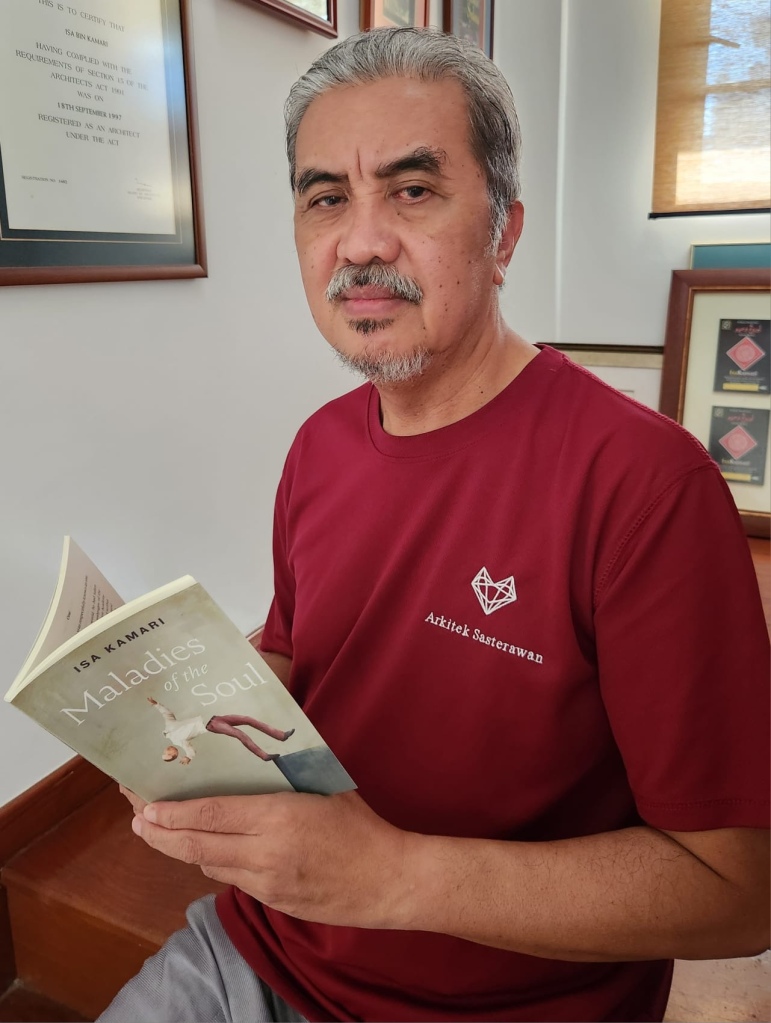
Isa Kamari

Isa Kamari is a well-known face in the Singapore literary community. He has won numerous awards — the Anugerah Sastera Mastera, the SEA Write Award and the Singapore Cultural Medallion, the Anugerah Tun Seri Lanang. He has been part of university curriculums and has written for the television. With 11 novels, nine of which have been translated from Malay to English — and some into more languages like Arabic, Mandarin, Urdu and Turkish, French, Russian Spanish — three poetry books, plays and one novella written in English by him, one can well see him as a leading voice in literature on this island that seems to have grown into a gateway for all Asia.

Kamari’s writings dip into his own culture to integrate with the larger world. The most remarkable thing about his works, for me has been the way in which he has brought the history of Singapore from the Malay perspective into novels and made it available for all readers. The most memorable of these actually gives the history of the time around which the Treaty of Singapore was signed between the British and the indigenous ruler in 1819, handing over the port to Raffles, the treaty that was crucial to the founding of modern Singapore. The novel is named after the year of the treaty.

Other novels like Song of the Wind , Rawa and Tweet — all bring into perspective how the local Orang Seletar integrated into the skyscrapers of Singapore. We can see in his writings how the indigenous moved to be integrated into a larger whole of a multi-racial, multi-religious accepting modern city. One of his novels, One Earth (1999), is like an interim almost, set during the Japanese occupation in Singapore. The narrative dwells on the intermingling of races in the island historically. Kiswah and Intercession are novels that cry out for reforms on the religious front.

He also has novels that delve into individual journeys to glance into the maladies of the modern-day world. Whether it is faith, or career, he brings into focus the need to heal. Recently, Kamari has brought out a book of short stories, Maladies of the Soul, to focus on just this. His fifteen short stories centre around the issue mentioned in the title. In the first ten stories, he writes of old age, of mental stress, of compromises made to achieve success, of anxieties just as the title suggests. These are internal conflicts of people in a country where most have enough to eat, a house to live in and access to education for their offsprings. Then in the last five stories, he moves towards not just showcasing such maladies but also resolving, using narratives that are almost surrealistic, or poetic. They are not happy but reflective with the ability to make one think, look for a resolution. They are discomfiting narratives.

One of the last stories is given from the perspective of a silkworm — a powerful comment on the need for freedom to survive. Another has the iconic Singapore Merlion emote to an extent. The writing escapes the flaw of being didactic by its sheer inventiveness. One is reminded that this is a book by an author from a city-state which has resolved problems like poverty to a large extent. That the journey was arduous and full of struggle can be seen in Kamari’s earlier novels. But now, that people have enough to eat and live by, he takes the next step that is necessary. His stories demand not just being familiar with the issues they faced in the past, but also suggest a movement towards resolving the social problems that in a developed country can warp individuals to make them non-functional and make the society lose its suppleness to adapt and progress.

One of the stories like his earlier novel, The Tower, reflects the climb of a careerist, an architect, up a tower he has built, while recalling the compromises made. The interesting thing is the conclusions have a similar impact. And then, there is yet another story that is almost Kafkaesque in its execution, where a man turns into a bull — a comment on stock trading or people’s obsession with money and to compete?

The book needs to be read sequentially to get the full impact of his message. For, he is a writer with a message, a message that hopes to heal the world by integrating the spiritual with modernisation. In this conversation, he discusses his new book and his journey as a writer.

What makes you write? What moves you to write? Why do you write?

I need to be disturbed by events, issues and thoughts before thinking of writing anything. I would then ponder and research on the topics at hand. Only when I have my own tentative resolution of the conflicting elements, I would begin to write. Most often, my views and positions will change as I write further. In that sense writing is a form of discovery and therapy for me.

Tweet in Spanish

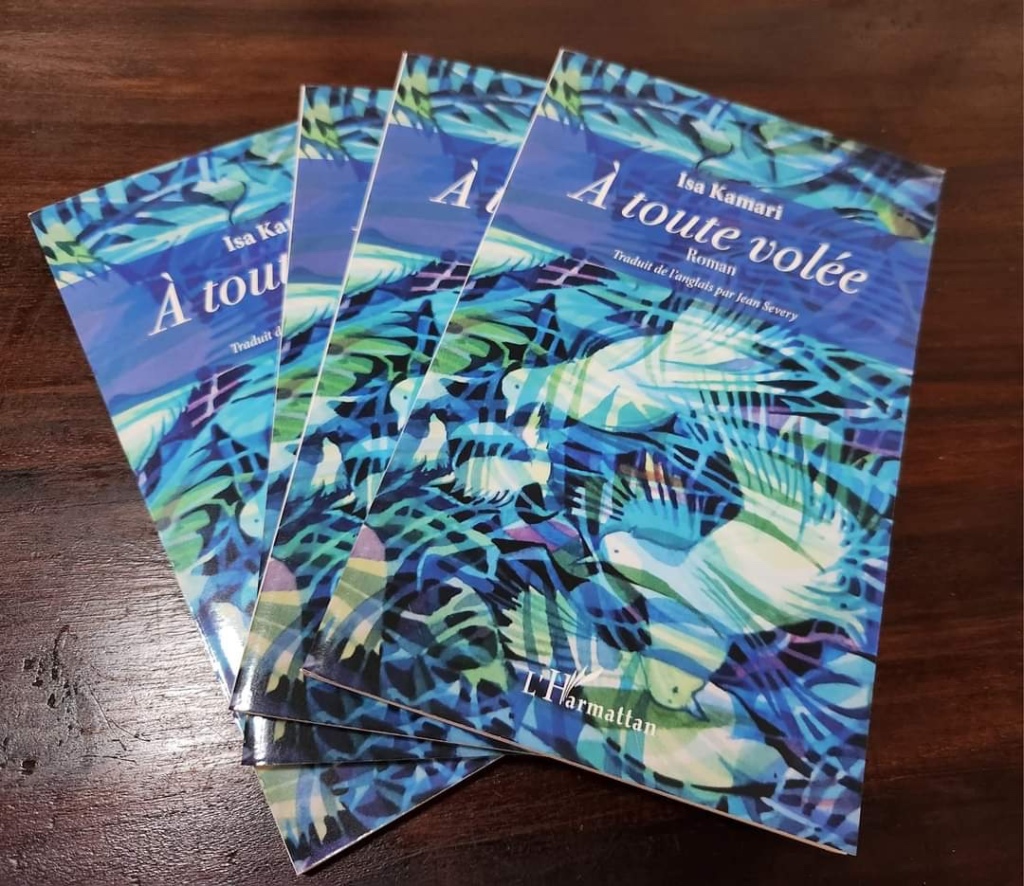
Do you see yourself as a bi-lingual writer or a Malay writer experimenting in English? You had written your novella, Tweet, in English. Later it was translated to more languages. How many languages have you been translated into? Do you feel the translations convey your text well into the other language?

Culturally, I think in Malay. English is a language of instruction for me. When I attempt to translate my Malay works into English, the writing sounds and feels Malay. Tweet is a result of a challenge I imposed upon myself to write creatively in English. The result is not bad. Tweet has been translated into Malay, Arabic, Russian, French, Spanish, Azerbaijan and Korean. I wouldn’t know how well the novella has been translated because I do not know those languages. I trust the translators whom I choose carefully.

The stories of Maladies of the Soul first appeared in Malay. Now in English. Did you translate them yourself, being a bi-lingual writer? Tell us your experience as a translator of the stories. Did you come across any hurdles while switching the language? What would you say is the difference in the Malay and English renditions?

Yes, I translated all the stories in the book. I had to overcome my own fear that the stories might end up too Malay in expression and feel. But I told myself to be true to my own voice and not be inhibited by language structure and convention. I would not know exactly the difference between the two renditions. I was just interested to tell the stories.

Is this your first venture into a full-length short story book? Tell us how novels and short stories vary as a genres in your work. How do you use the different genre to convey? Is there a difference in your premise while doing either?

I have produced just one collection of short stories. In each of the short stories, I had to be focussed on expressing concepts and philosophies on a single problem of the human condition. In my novels the concepts and philosophies are varied, expanded, more complex and layered but yet interrelated and weaved around dynamic human experiences facing common predicaments or challenges of an era.

One of the things I noticed about the book was that the stories would convey your premise better if read in order. Is that intentionally done or is it a random occurrence?

The short stories can be weaved into a novel. There is a central spine, which is my observation and philosophy of life which bind them all. The intrinsic sequence or order is not intentional, but perhaps it is the psychological thread and latent articulation of the storyteller.

Some of the stories seem to have echoes in your novels, like Kiswah and Intercession, both of which deal with crises in faith. Did your earlier novels have a direct bearing on your short stories?

I used to transform my poems into short stories, and from those write novels. The genres are just tools for me to express my thoughts and feelings. I use whatever works. I have even experimented on weaving short stories and poems in a novel. I wanted to create prose that are poetic, and poems that are capable of conveying a narrative. My latest novel, The Throne, is a result of this experiment.

Some of your stories touch on the metaphorical, especially the last five. Some of the earlier ones describe unusual or even the absurd situations we face in life. As a conglomerate, they explore darker areas of the human psyche, unlike your novels which were in certain senses more hopeful, especially Tweet. What has changed to bring the darker shades into your writing? Please elaborate.

The stories in Maladies of the Soul have a common theme of alienation in various facets and dimensions of life. As such the expected feeling after reading them is that of gloom and hopelessness. That is intentional as a revelation of the deeper and hidden fallacy of modern life that appears organised and bright on the surface. I wanted my readers to be shaken or at least moved to ponder and reflect on our current, shallow and fractured human condition. There is a better life if we were to look the other way and be more mindful and caring of each other and our environment.

I still recall a phrase from your novel, The Tower, “Festivities celebrating loneliness”. Would you say your short stories have moved towards that?

Exactly.

Why did you choose short stories over giving us a longer narrative like a novel?

It is like giving my readers bite sizes of my exploration and philosophy of life. I leave it to the readers to weave the stories into a whole, and reflect upon their own experiences, thoughts and feelings, perhaps in a more integrated and holistic manner.

What are the influences on your writing?

Life itself. Like I mentioned earlier I do not write in a vacuum. I engage life in my writing as a way of validating my ever-changing existence. I want my life and writing to be authentic and significant. Hopefully, meaningful to others too.

What can your readers look forward from you next?

I have just completed a draft of a novel in Malay, Firasat. As in all my novels, I offer a window towards healing by embracing a rejuvenated Malay philosophy called firasat which is an intuitive, integrated, balanced, lucid, harmonious and holistic way of life.

Thank you for sharing your time and your writings with us.

(The online interview has been conducted by emails by Mitali Chakravarty)

PLEASE NOTE: ARTICLES CAN ONLY BE REPRODUCED IN OTHER SITES WITH DUE ACKNOWLEDGEMENT TO BORDERLESS JOURNAL. 

Click here to access the Borderless anthology, Monalisa No Longer Smiles

Click here to access Monalisa No Longer Smiles on Kindle Amazon International

Categories
Poets, Poetry & Rhys Hughes

From a Kafkaesque Dream to the Penguin Cafe Orchestra

The Penguin Cafe Orchestras, and the plural is necessary because there were several of them, were responsible for a unique sonic experience, creating a blend of folk, jazz, classical and faux ethnic music that managed to pull off the difficult trick of sounding instantly familiar to the subconscious mind, as if it had already existed in the past but had been forgotten for ages and now was being retrieved from some pool of inspiration common to humanity.

They formed one of the background soundscapes to my student years. I recall the first time I heard a Penguin Cafe track. It was ‘Music for a Found Harmonium’ and it accompanied a short film featured on television called simply ‘Interlude’ that I have never been able to trace since. The melody and the visuals matched well, but it was years before I learned who was responsible for the music and I did so by pure chance. I went into a record store and bought the album Broadcasting from Home at random. That was a habit of mine back then.

Perhaps the cover image had intrigued me. Listening to the album at home I was delighted to recognise ‘Music for a Found Harmonium’ as the opening track. But I might be misremembering. There’s a suspicion in my mind that I actually bought the album Signs of Life on cassette first. It hardly matters. The title of that soul enhancing song, ‘Music for a Found Harmonium’, struck me as curiously enigmatic, so much so that I later entitled one of my books Stories from a Lost Anthology as a sort of tribute, an allusion noticed by no reviewers.

The real story behind the track is that Simon Jeffes (1949-1997), founder of the Orchestra, was on tour in Japan and wandering through the backstreets of Kyoto when he found an abandoned harmonium balanced on the apex of a pile of rubbish. He located the person who had discarded it and obtained permission to take the instrument away. The song was composed to celebrate this lucky find. I have never found a harmonium in a backstreet, or any other musical instrument for that matter, not even a harmonica. But Jeffes was special and attracted beauteous oddity by some form of magnetism he carried around within himself.

That magnetism is present in all the music he made. Born in 1949, Jeffes studied the classics in London before trying his hand at experimental music. He grew to be dissatisfied with the barren tonalities of contemporary avant-garde work. Similarly, his brief flirtation with rock came to nothing. African music alone seemed to contain elements he was seeking, powerful rhythms, freer harmonic approach, the mysterious qualities of its silences, an unmelodramatic emphasis on cadence, imaginative tuning systems and improvisational flair. Most of all, he was seeking pure musicality, pieces constructed of the vital essence of the art.

A Penguin Cafe composition rarely seems made up of separate parts, but is much more like an organic growth. Melody and harmony, rhythm and tone colour are fused together right from the very beginning, in an ambient seed. Then the piece grows into fruition with little fuss and perfect symmetry. In 1972, food poisoning confined Jeffes to bed where he dreamed of a Kafkaesque residential block full of people with empty lives. The following day a voice in his head said distinctly, “I am the proprietor of the Penguin Cafe. I will tell you things at random.” Jeffes tried to imagine what the house band of that cafe might sound like. When he recovered, he transformed his dream into truth and invented the PCO.

For the Orchestra, he recruited like-minded players Helen Leibmann, Steve Nye and Gavyn Wright. Calling themselves the “four musicians in green clothes”, they began recording and in 1976 released their first album, Music from the Penguin Cafe. Leibmann on cello, Nye on keyboards and Wright on violin remained with Jeffes for most of the subsequent recordings of this first phase of the Penguin Cafe adventure, but apart from Jeffes, Leibmann was the only member who has appeared on every one of the early albums. For this first release, they also recruited Neil Rennie on the ukulele and Emily Young to design the eye-catching album cover. Emily Young, who is now a high-regarded sculptor, was supposedly the same Emily that Syd Barrett and Pink Floyd sang about in ‘See Emily Play’.

Music from the Penguin Cafe is the most uncharacteristic and dissonant of the Orchestra’s productions. The multi-instrumentalism and big arrangements that were to become a trademark are largely absent. Though Jeffes plays bass, quatro, spinet, cheng, ring modulator and mouth percussion on some tracks, his primary duty is as an electric guitarist. The two earliest songs, ‘Penguin Cafe Single’ and ‘The Sound of Someone You Love Who’s Going Away and it Doesn’t Matter’, rely on just four basic instruments, with Nye’s electric piano and Leibmann’s cello largely displacing Jeffes, and they wrench the heart, sounding like reservoirs of poignancy, dammed to prevent sadness slipping over into the other tracks.

Despite lengthy improvisational passages, highly unusual for the early Orchestra, they are among the most successful songs on the album. Other oddities are dubious and not wholly forgivable, including a drenching vocal lament and a squeaky piece called ‘Pigtail’. Only on one track does the Orchestra provide a foretaste of what was to follow in the coming magical years, ‘Giles Farnaby’s Dream’, spinet and ukulele in foot-tapping mode, the strength of the piece deriving from its frenetic repetition. The album is the least Penguiny of the Orchestra’s productions and it was released on the Obscure label of ambient maestro Brian Eno.

Avant-gardists believe it to be their best album and easy listeners regard it as their worst. But it is neither. It is simply a prelude to the next four albums, which are the quintessential recordings. Yet there was a five year wait for the first of these. Jeffes never seemed in a hurry. The eponymous Penguin Cafe Orchestra (1981) defined the Penguin Cafe sound once and for all with the opening track, ‘Air à Danser’, which can almost be regarded as the PCO’s anthem. The jumpy guitar and wistful strings sound instantly recognisable even to someone who has never heard the piece before. It is the most perfect example of Jeffe’s ability to tap into the Universal Subconscious, an effect that is both pleasing and slightly eerie.

Several other tracks became mainstays of live performance, ‘Cutting Branches for a Temporary Shelter’, ‘Numbers 1-4’, the two ‘Yodel’ songs and ‘Paul’s Dance’. Best of all, however, is the funky and hypnotic ‘Ecstasy of Dancing Fleas’, a hugely gleeful song with warm bass and joyous refrain. The method of working employed by the Orchestra almost guaranteed good albums. Over a number of years, recordings would be made and only the finest tracks released. Again, Jeffes was never in a rush to push his music out there. He preferred a measured approach. This doesn’t mean that all his music sounds polished. Sometimes rough-edged work is exactly what is required to provide ideal incarnations for musical ideas.

After Penguin Cafe Orchestra, it was difficult to believe that a more archetypal sound could be achieved, but in Broadcasting from Home (1984), Jeffes refined the spirit of the music even further. The PCO had grown to encompass thirteen members of varying abilities and Jeffes had taken to playing more and more instruments. With another whimsical but haunting Emily Young cover, this is a vital release and tracks such as ‘Music For A Found Harmonium’, ‘Prelude & Yodel’, ‘In the Back of a Taxi’ and ‘Heartwind’ are impossible to dislike. Strangely enough, the album contains a couple of sequels to tracks on the first release. ‘More Milk’ and ‘Another One from the Colonies’ are wry comments on their predecessors. Musicians include Geoffrey Richardson on viola, shaker and bass; Dave Defries on trumpet and flugel; Annie Whitehead on trombone; Nye, Leibmann and Rennie on piano, cello and ukulele; and Jeffes on drums, harmonium, omnichord, soloban, dulcitone, penny whistle, violin, milk bottles, triangle, bass, and much more. It is easy to forget how peculiarly exotic some of those instruments seemed to the British public in those days. Musically we were far more insular then than we are now.

The fourth album was released in 1987. Signs of Life has a ‘frontier-ceilidh’ feel to it, taking elements of American country music, bluegrass and mountain folk. There is also a classical touch, particularly in the moody ‘Oscar Tango’. Sadness was a rare emotion in the Orchestra’s output, apart from in some of the very early material. It is on Signs of Life that the description of the PCO as ‘a string quartet letting its hair down at some mysteriously-located barn dance of the future’ most holds true. The opening track, ‘Bean Fields’, is quirky and imprecise and one of my three favourite Penguin Cafe tracks ever. ‘Dirt’ is rhythmic and compelling, as is ‘Sketch’ and ‘Swing The Cat’. ‘Southern Jukebox Music’, on the other hand, belies its title and is a deeply melodic lament. ‘Perpetuum Mobile’ is a punning title that references the metronymic pulse of the piece but also the town of Mobile, Alabama, and further connects the album to its basic Americana source, although the music seems to belong to another galaxy and to the distant past of our preliterate ancestors just as much as it does to any existing tradition. The ten minute long meditation ‘Wildlife’ is an acquired taste, seeming at first to be a directionless filler, but is perfect background music for simple relaxation or mind wandering. Personally it is my daydreaming and falling asleep music of choice. It evokes a strange forest soundscape where very little happens but everything eventually is found to have changed. Of the two pieces played wholly by Jeffes, one deserves special mention: ‘The Snake and the Lotus (The Pond)’, a piece just for bass, primeval and rather mystical.

The next two albums were live recordings. When in Rome… (1988) is a wonderful retrospective of the previous work and thus the best introduction to the PCO’s career. Pieces from all four albums are included and many have been improved, especially ‘Giles Farnaby’s Dream’ and ‘Air à Danser’, which have both been spiced up. Others sound almost identical to the studio recordings. The deliciously smooth atmosphere of the performance is captured well and the musicians are in complete empathy with each other. Missing on this album is Gavyn Wright and the PCO is down to nine members, but Bob Loveday on fiddle more than makes up for the loss. This is the only album where a member, Geoffrey Richardson in fact, actually plays more instruments than Jeffes. Less convincing is Still Life (1990), a ballet arrangement of material for a conventional orchestra. Although a nice album in itself, some of the pieces, such as ‘Numbers 1-4’, have been overdone, and this sixth release is probably the least essential album of them all. Nonetheless, listeners who prefer the grander feel of a larger orchestra and the traditional accents associated with classical music could do much worse than to seek it out.

Unusually for a project associated with Jeffes, the cover isn’t by Emily Young, and this detracts from the finished result. Luckily she was back on hand for the seventh, most sprawling, ambitious and varied of the PCO’s albums to date. Union Cafe (1993) was one of my most cherished albums of the decade in which it appeared. I appreciated its abundance and it felt more like a voyage than their other albums. This is not to say that all here is smooth and accomplished. Some tracks are doldrums in the sound ocean. As for the bolts of its realisation, more musicians than the PCO had ever employed before were used, though sadly Steve Nye isn’t one of them. The other originals, Leibmann, Wright and Rennie, seem content to share duties with a host of other puffers, pluckers, scrapers or bangers. Even Jeffes has decided to wisp himself out a little, be less dogmatic and often takes a lesser role in the performance of his own compositions. On two tracks, ‘Thorn Tree Wind’ and ‘Discover America’ he plays nothing at all. The former is given over entirely to the warblings of an electric Aeolian harp and credited to the winds of the cardinal points. This is fair enough as the winds compose the piece while in the act of playing it. The latter track employs a large number of strings, including twelve violins (led by Gavyn Wright), four violas, four cellos and two double basses. The result is an ear wash that doesn’t necessarily leave the ears feeling cleaner. But the variety is impressive. There is a track played by a computer called ‘Pythagoras on the Line’ that seems similar to a song on an earlier album called ‘Telephone and Rubber Band’.

There is also the excellent ‘Vega’, one of the Orchestra’s longest tracks to date; the salty ‘Organum’ and ‘Another one from Porlock’ and ‘Lifeboat (Lover’s Rock)’. Jeffes had recently announced his awakened re-interest in the Western Classical tradition and this new enthusiasm, together with the experience gathered from exploring other cultures, resulted in this album, which might be a melange, a mess or a masterpiece. The opening track is the superlative ‘Scherzo And Trio’ and because it is superlative I guess this means I ought to say nothing more about it, as superlative things are quite beyond praise, so my dictionary informs me.

Yet the one track that really stands out, conceptually if not sonically, is the tribute to composer John Cage, who had died not long before the album was made. Entitled ‘Cage Dead’, these words are all the notes of the melody, played strictly in that order, C-A-G-E-D-E-A-D. This is an example of a musical version of OuLiPo[1] (itself useably explained and defined as a playful workshop to create literature-that-is-both-constrained-and-made-ingenious by mathematics) officially known as OuMuPo, or Ouvroir de musique potentielle. Essentially it is trickery of the highest whimsical order and John Cage himself perhaps would be very pleased by it. Having said that, he could be inexplicably stringent and uncompromising about his music. He was a composer who wrote a piece requiring a musician to wear a tuba like a hat and not play it. When it was first performed he berated the musician for not wearing it in the correct manner and therefore spoiling the sound.

Now I have drifted off the point. Partly and paradoxically defined as avant-garde easy listening, the Penguin Cafe Orchestra are whimsical and catchy, yet there’s an improbable seriousness too, and a deep sadness embedded in some of the melodies. Good, I have returned to the point, deftly, quite deftly. After Union Cafe there were dramatic changes. Jeffes died. In effect he was the PCO and it became a ghost after his leaving. Yet as ghosts sometimes do, it floated on, splitting like ectoplasm that turns out to be flimsy fabric in an eerie half glow.

Some of the musicians who had worked with Jeffes wanted to continue with the PCO, as is only to be expected. We might also say they had the right to do so. The moral right, perhaps, but not the copyright. The words ‘Penguin Cafe Orchestra’ are not in the public domain, unlike the sound waves they threw out into the atmosphere during their performances and recordings. Jeffes’ son, also called Jeffes inevitably, wanted the name for himself, or a variation of the name. There was plenty of toing and froing and confusion and struggling. Eventually the situation thankfully seemed to settle down somewhat and we were left with…

(a) A set of original musicians in a combo initially called The Anteaters and then renamed the Orchestra that Fell to Earth, who mainly play PCO songs at festivals, and (b) Jeffes Junior in an outfit called Penguin Cafe, no relation to the Penguin Cafe Orchestra yet at the same time every relation to it. Penguin Cafe are a group of many musicians, none of whom were in the PCO, and they have released three albums so far (I write this in the year 2018). These albums are good albums, nobody can accuse the younger Jeffes of trampling or otherwise violating the memory and legacy of his father. Very good albums in fact. But they have a different tone to the albums of the old PCO. They are lusher, they sound sometimes as if Philip Glass was involved in some way, there is a rotational melancholy and not a bean field, temporary shelter or harmonium on a trash heap in view. I know I sound disparaging and I don’t mean to. I will shut my mouth soon, so don’t worry.

A Matter of Life (2011) is a rich surge of sound and one especially succinct critic described it as a ‘love letter’ to the original PCO music. Certainly there is nothing to suggest a travesty of what has gone before. The proprietor of the Penguin Cafe, if he is listening, will have no inclination to expel his house band and secure the services of another. I could drink cappuccino to this music all morning. Yet the lush element is suggestive of an autumn after the heady spring and sultry summer. I long for off-key twangs, for an occasional wrong note. But if this was the first album I ever sampled that had the words ‘Penguin Cafe’ on them and I was unable to make judgments based on the emotional resonances of prior knowledge sharpened by nostalgia, I would be happy enough. The music has the quality of being perfectly ignorable if you wish to ignore it and yet it also rewards careful listening. When you choose to focus in close to the unfolding soundscapes, it is gratifying.

‘Landau’ is perhaps my favourite track, bouncy and melancholic at the same time. ‘Sundog’ is also very nice indeed. ‘The Fox and the Leopard’ contradicts everything I have said in the prior paragraph, being as softly jolly and funky as the earlier ‘Ecstasy of Dancing Fleas’. Perhaps I don’t know what I mean anymore. The Red Book (2014) and The Imperfect Sea (2017) present more of the same thing, hypnotic and wistful songs with a strong driving core that seems to want to become pure trance music. I haven’t yet seen them perform live but I absolutely will when I get the chance. This statement also applies to The Anteaters (who fell to earth). I had the privilege of being present when suggestions for a name change were open to their listeners. I had nothing to offer, but later the words ‘The Great Aukestra’ popped into my mind, an example of l’esprit de l’escalier (or ‘staircase wit’) in which one thinks of a rejoinder or a proposal when it is too late to be of any use. The great auk was the northern version of the more familiar southern penguin. It became extinct in the middle of the 19th Century and Anatole France wrote a satirical fantasy about a society of them called Penguin Island, in which he explains that the word ‘penguin’ first referred to auks. The great auks were the original penguins.

I am about to go now, but I have just recalled that I forgot to mention a six track EP that the PCO released in 1983. The Penguin Cafe Orchestra Mini Album features four songs that can be found on other albums and two originals, one of which, ‘Piano Music’ (recorded live in Japan) is a gentle and dreamy piece that is also a little odd harmonically, reminiscent perhaps of Sorabji but not quite. It is nothing special really but it has a haunting quality despite its brevity. Yet the reason why this EP is worth hunting down is a track called ‘The Toy’, pure magic and too little-known compared with so many of their other songs. Right, I’m off.


[1] Ouvroir de littérature potentielle; roughly translates to “workshop of potential literature”. It is a loose gathering of (mainly) French-speaking writers and mathematicians who seek to create works using constrained techniques. 

Rhys Hughes has lived in many countries. He graduated as an engineer but currently works as a tutor of mathematics. Since his first book was published in 1995 he has had fifty other books published and his work has been translated into ten languages.

.

PLEASE NOTE: ARTICLES CAN ONLY BE REPRODUCED IN OTHER SITES WITH DUE ACKNOWLEDGEMENT TO BORDERLESS JOURNAL