Categories
Essay

Coffee, Lima and Legends…

Narratives and photographs by Ravi Shankar

The Pacific coast

The city of Lima, Peru was founded by the Spanish conquistador, Francisco Pizzaro in 1535. Spanish scouts sent out by him reported the place had ample water, fertile lands, sea access, and fair weather influencing the decision to settle there. Now, the city is in the agricultural region known by the locals as Limaq. It was once the most important city in the Viceroyalty of Peru that ruled over a large part of South America. Today over one-third of Peru’s population resides in the greater Lima area. The moisture-laden winds from the ocean result in fog throughout most of the year. The cold Humboldt current keeps the Pacific Ocean temperatures low. The coastal region of Peru known as the Costa is a dry desert and rainfall is scarce. The combination of very little rain with a thick fog fascinates both residents and visitors. Most mornings were foggy during my stay in Lima.   

Lima serves as the entry point to Peru and during your trips around the country, you can enter and leave Lima multiple times like I did. During one of my visits, I stayed with Cesar, a pharmacist with the Ministry of Health, on the 15th floor of a modern apartment complex overlooking the Pacific Ocean, in Magdalena del Mar, with a beautiful view of the Pacific.

Magdalena del Mar is fast becoming a trendy neighbourhood has an immaculate Heart of Mary Church, an ornate beautifully designed church in pink stone. Roman Catholicism with its emphasis on ceremonies, ornamentation, and ostentatious displays shares many similarities with the religions of the East. One afternoon after lunch, I visited the long stretch of beach which I admired from the fifteenth-floor window. I had to cross the Circuito de Playas, the six-lane highway that links several spots along the coast in Lima.

The city of Lima is famous for its museums. The Museum of Art in Lima is wonderful. Located in downtown Peru at the Parque de la Exposicion (Park of the Exposition), the museum houses one of the best collections of Peruvian art from pre-Columbian times to the modern day. The artworks are mostly grouped according to the period of their creation. Different cultures like the Moche, Nazca, Chimu, Chancay, Ica, and the Incas are represented. After the Spanish conquest, local artists and artisans concentrated on religious Catholic art. Modern Peruvian secular art began in the nineteenth century. I read with great interest the struggle between two schools/visions on how this art should grow and develop. One school wanted a cosmopolitan art like that developing in Europe while the other school wanted Peruvian artists to concentrate on traditional Peruvian topics like Inca buildings, town planning, Peruvian plateaus and mountains, and the Peruvian Indian.

Holiday makers in Plaza de Armas.

The Plaza de San Martin is one of the most representative public spaces in the capital. It was declared a UNESCO World Heritage site in 1988 and is connected to the Plaza de Armas by the Jiron de la Union. The plaza pays homage to the liberator of Peru, Jose San Martin (1778-1850). The plaza was built in 1921 in honor of the 100th anniversary of Peruvian independence. The buildings lining the plaza date from 1910 to the 1940s.

Exhibits of Gold

In the 1960s, Miguel Mujica Gallo used his private collection, gathered throughout his life, to open the “Gold Museum of Peru and Weapons of the World”. The museum has over 7000 gold, silver, and copper objects. Gold and silver had a religious importance in pre-Columbian Peru. Gold represented the Sun while silver represented the Moon. The collection is valued at over 10 million US dollars. The other major section represents the weapons of the world. I found it ironic that humanity expended so much effort and resources on devising better and better ways of killing each other. There is a Japanese room at the museum highlighting the close ties between Japan and Peru. Many Peruvians of Japanese and Chinese descent are still able to read in their native languages while at the same time being fluent in Spanish.

On my last day in Peru, I decided to use the public bus to visit the ruins of Pachacamac which is located outside the capital in the city of Lurin. Pachacamac was a major religious site for the different cultures of Peru. As new cultures became dominant, they added their constructions to the holy site. The site was first settled in 200 AD and is named after the earth-maker God, Pacha Kamac. some museums in Peru there are concessions for teachers which I feel is a very good idea. School children visit museums accompanied by their teachers and museum guides to develop a good understanding of their culture.

Unfortunately, Pachacamac was too near the capital Lima to escape the attention of the rapacious Spaniards. The conquistadores were mainly driven by their limitless appetite for gold and a narrow bigoted religious view which regarded Roman Catholicism as the only true religion and other religions as heretic practices to be destroyed. They caused much damage to Pachacamac.

Pachacamac

The wind started blowing and a flurry of dust pervaded the air. The Sun Temple is the major building. There were separate locations for religious buildings, administrative buildings, and residential buildings and there were also granaries.

View from the Sun Temple

The Incas and the pre-Inca cultures practiced human sacrifice. Enemies were ritually sacrificed but young virgin girls were also sacrificed. These mamacuna (Virgins for the Sun), had important status. They wove textiles for priests, and brewed corn beer which was used in Inca festivals. The women were sacrificed in the highest ritual; they were strangled with cotton garrote. They were wrapped in fine cloth and buried in stone tombs. Each was surrounded by offerings from the highlands of Peru, such as coca, quinoa, and cayenne peppers.

Peruvian coffee like Peruvian food turned out to be a hidden treasure. Smooth without bitterness or harshness, the coffee can be drunk black without milk. Peru is also home to ‘poop coffee’. Dung coffee is made by having an animal (usually a civet) eat coffee cherries. The natural digestion process reduces bitterness. When they poop out the beans, they’re gathered, thoroughly washed, and typically take on flavors of the animal’s diet. Peruvians use the uber-adorable coatis, which are like tiny raccoons. They are fed the best-of-the-best Arabica beans and nature takes over from there!

Twined with the flavour of Peru is a beautiful legend which needs to be told to highlight their colours. In the good old days, a widowed mother, Pacha, worked day and night to feed her three sons. The sons were lazy and survived on the food provided by their mother. One evening while returning home the mother tripped on a stone and was injured. She was bedridden and became dependent on her sons. The sons were too lazy to work their farm and stole from the villagers and eventually started selling their farm part by part. They lied to their mother about their plentiful harvests. One day, the mother went to the farm to see the harvest but was beaten by the villagers who mistook her for a thief. Learning about this, the sons got angry and turned themselves into hail, frost, and furious wind devastating the villagers’ farms and houses. Since that day when the elders gather at night to tell stories, they talk about the hail, the frost, the wind, and how they ruin the fields from time to time, and they continue to blame the men of the village for having mistreated the mother (mother earth / Pachamama)!

I enjoyed my days in the city of kings. The weather was good, the accommodation was great, the food was excellent, great architecture and art greeted one everywhere, getting around was not too difficult and the cost was reasonable. What more can a man want? I plan to return one day in the near future.  

Peruvian camelids

Dr. P Ravi Shankar is a faculty member at the IMU Centre for Education (ICE), International Medical University, Kuala Lumpur, Malaysia. He enjoys traveling and is a creative writer and photographer.

.

PLEASE NOTE: ARTICLES CAN ONLY BE REPRODUCED IN OTHER SITES WITH DUE ACKNOWLEDGEMENT TO BORDERLESS JOURNAL

Click here to access the Borderless anthology, Monalisa No Longer Smiles

Click here to access Monalisa No Longer Smiles on Kindle Amazon International

Categories
Stories

Mr Dutta’s Dream

By Atreyo Chowdhury

Mr Dutta’s dream of travelling around the world died with him. He was seventy-seven; an old lonely soul, who until the very end, never gave up his desire to see the world. 

Like any other day, that morning too, Mr Dutta sat on the balcony with a cup of steaming tea placed within his reach as he witnessed the sky turn bronze. His fading eyes stared fixed at an apartment building across the street. He wasn’t looking at anything in particular; his mind was already engaged.

The images swam in his head.

The Egyptian Pyramids—the mighty structures that housed the tombs of the great Pharaohs stood amidst an undulated sea of golden sand under a clear blue sky. A caravan moved leisurely with the wind breathing against them, bringing with it their presence; the faint tinkle of camel bells in an infinite ocean of silence. Mr Dutta closed his eyes. He inhaled the parched air and smiled.

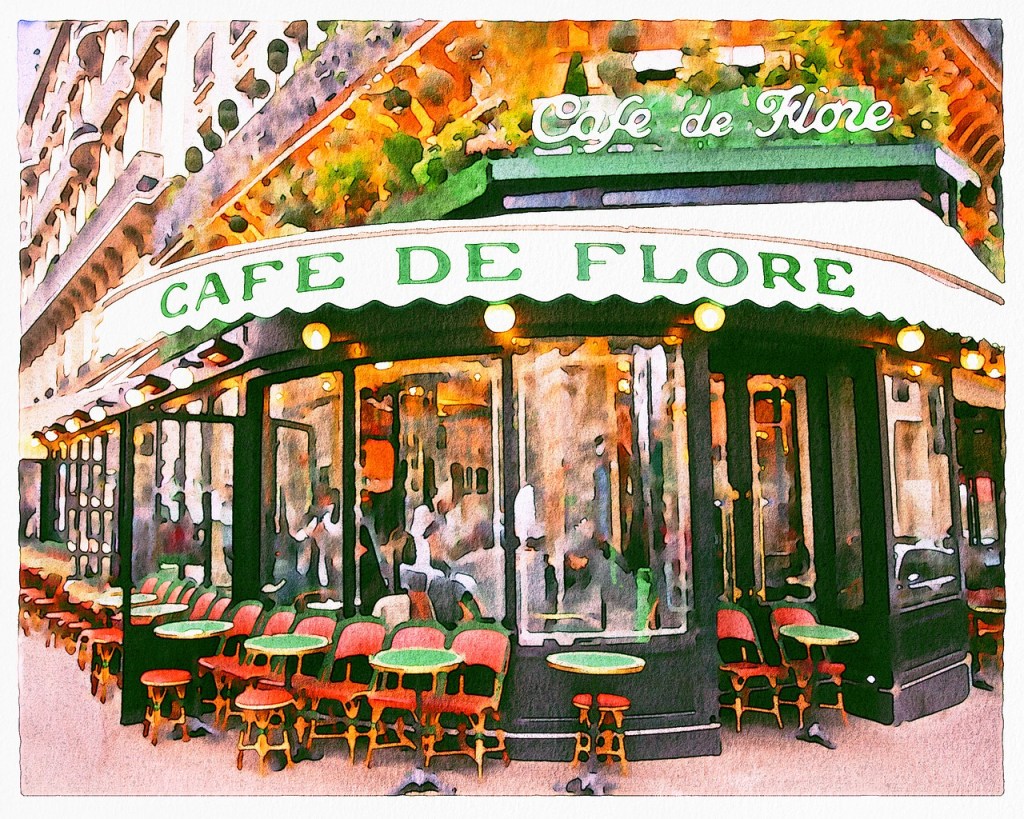
His mind stretched next to a summer evening in Paris, the sun dipping, the sky turning scarlet-blue. He was in a café at the edge of a narrow cobblestoned lane, where a young couple stood kissing, a musician played the accordion, a group of girls giggled past, and a man walked his dog.

Bonjour, Monsieur, Merci, Au revoir,” Mr Dutta said aloud, taking his time, articulating each syllable in the best manner he could. This was all the French he knew.

A silly chuckle left his mouth, and he reached forward. His hands trembled as he held the teacup. He sipped the milky-brown liquid with a long slurp and closed his eyes once again. He was now in the land of the rising sun, walking barefoot along a trail flanked by delicate pink cherry blossom trees.

Mr Dutta’s dream was born on a mushy summer evening sixty-seven years ago. He was at his friend’s place, hunched over a photo-album, looking agog at the photographs from across the globe. Every single picture captured his imagination, and in his mind, he began replacing his friend’s father—a stout, balding man having a pencil moustache with a tall, handsome young man, which he had no doubt he would grow to be.

His friend’s father, Uncle Jodu was in the merchant navy. Listening to him speak about his journeys, and watching him bounce about the room like a clockwork toy fetching little souvenirs; a key chain from London, a bottle of Vodka from Russia, a purple hand-fan from Japan, set Mr Dutta’s heart pounding furiously. He felt a flutter in his guts and knew in that precise moment that he had no other option than to join the merchant navy and sail as far as the seas stretched.

Since that evening, all Mr Dutta could do was daydream. He couldn’t sleep, couldn’t eat, couldn’t study or even speak. He was lost in a world of his own; travelling places, tasting exotic dishes, speaking new languages, making friends… Every day, he sat by his window, reading travelogues and maps, scribbling itineraries in a little red notebook, which, when he slept, found its place tucked safely under his pillow.

After finishing school, Mr Dutta went to college, still with his little red notebook in his pocket, and with the photos of that photo-album riveted into his memory. But he hadn’t planned against the misfortunes of life. His father’s business, which was small but sturdy until then, plummeted, and in the process, his father’s health faded too. With his father’s death, after a year of doctors and medicines, Mr Dutta had no other option but to drop out of college.

For months, he wandered through the city with letters of recommendation and found a position in a bank as a clerk. Years tumbled by, and one afternoon, while he sat at his desk chewing the excess of his fingernails, he remembered the little red notebook that had been gathering dust in his drawer all these years. The photographs flashed in front of his eyes like the spring sun, and he jumped from his seat, took out his little red notebook, and went to the branch manager’s cabin, to quit. The branch manager blinked at him curiously. Mr Dutta took a deep breath, and the moment he was about to utter the words, the phone rang. It was for him.

His mother was taken ill, and she had expressed her desire to see her son for the last time. Mr Dutta hurried to attend to his ailing mother, unaware of the consequences. The old lady, breathing heavy, took hold of his hand and whispered into his ear her death-wish. In a week, Mr Dutta was married—with his mother totally recovered, alive, with a mischievous grin.

.

Mr Dutta had known his wife since their childhood. Their families were close, and as a kid, Mr Dutta had always heard them reiterate how perfect they were for each other. So married life didn’t offer many surprises, apart from the fact that his responsibilities mounted and that he could barely save any money or time for his unfulfilled dream.      

A year later, his wife gave birth to a son, and Mr Dutta holding that tiny creature in his arms felt immense joy. But deep within, he was confounded by fear. He struggled from that moment on, juggling his role as a father and simultaneously maintaining his identity as a wanderer. It was exasperating to be rooted and possess a soul that wanted to expand limitlessly. He woke up often in the middle of the night, weeping; thinking of abandoning everything and running away. But something held him back.

As Mr Dutta’s son showed promise academically, he wanted his son to go abroad for higher studies. He revisited his dreams once again and expressed a desire to accompany his son. But the expenses were too high; he had already taken a loan to support his son’s expenditures, besides he couldn’t dream of going without his beloved wife. The day his son left for the USA, Mr Dutta pressed his forehead against the glass window at the airport watching the flight take-off; consoling himself that at least a part of him was off to see the world.

The year Mr Dutta retired, his son completed his education, returned to Calcutta, found a suitable girl, married, and announced his decision to settle in the USA. Mr Dutta had been awaiting the news secretly and knew it was only a matter of time before his son would ask them to join him.

He waited.

Each evening, as the old couple sat on the balcony expecting their son’s telephone call, Mr Dutta would fetch his little red notebook. He would announce his plans of travelling across the Americas—from Alaska to Argentina—with a must-do list:

  1. Watch the sunset at The Grand Canyon
  2. Gamble in a Las Vegas Casino
  3. Take a boat ride along the Amazon (catch a glimpse of an anaconda)
  4. Walk barefoot over the salt flats of Salar de Uyuni.
  5. Experience the lost world of the Incas
  6. Visit the Galápagos Islands…

His wife would listen, smile assuredly, but make no comments.

One evening, as Mr Dutta extended his plans further south to Antarctica, his wife suffered a stroke. She died a few days later.      

At her cremation, his son hugged him and said that it would take another year before he could come and stay with them. He appointed an attendant for the old man and left. Days turned into months, and months turned into years. Mr Dutta’s vision was fading now, and in his knees, gout had set in.

The telephone rang as Mr Dutta finished his evening tea and an extensive tour of the central African rainforest. The attendant received the call and handed it over. Tears trickled down as he listened to his son. He couldn’t speak; so unbound was his joy. Finally, he was going across the Atlantic.

The sun had now set, and Mr Dutta sat still.

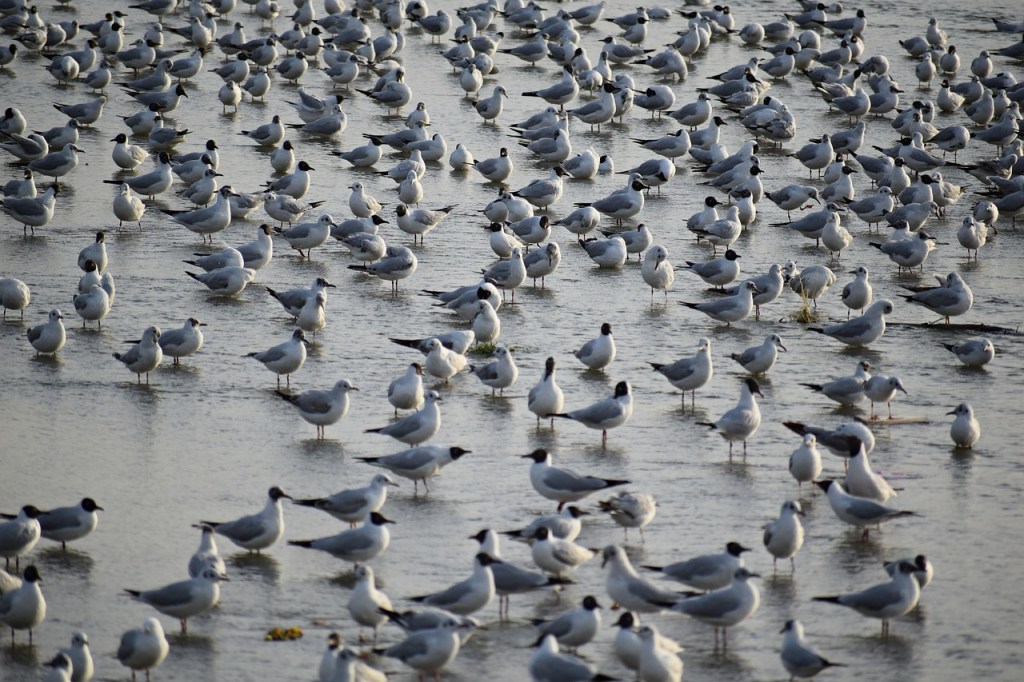
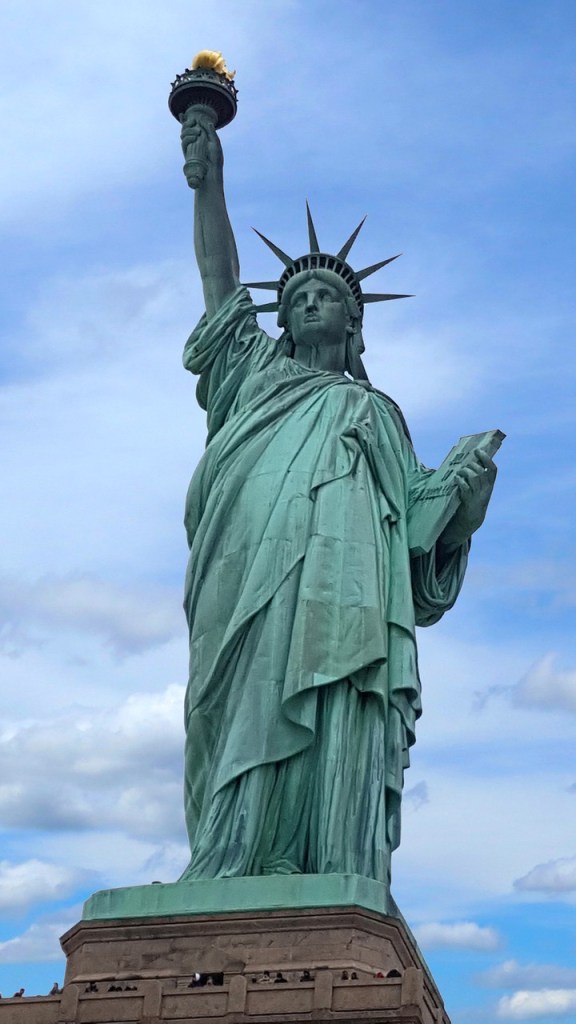
In the distance, a figure was appearing out of the mist. Mr Dutta strained his eyes to discern the outlines of it—the Statue of Liberty. He grinned. A flock of seagulls circled overhead, and the waves crashed against the ferry. A crimson sun was dawning against a greyish-orange sky…

Atreyo Chowdhury was trained to be a mechanical engineer and has a postgraduate degree from IIT Guwahati. Besides writing, he shares an equal passion for music and travelling. He can be found at https://atreyochowdhury.wordpress.com/

.

PLEASE NOTE: ARTICLES CAN ONLY BE REPRODUCED IN OTHER SITES WITH DUE ACKNOWLEDGEMENT TO BORDERLESS JOURNAL.