Categories
Stories

Nico Finds His Dream

By Paul Mirabile

From Public Domain

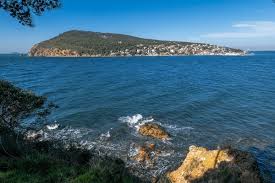
Vasiliki and Nico boarded the passenger steamer for Burgaz Island at Sirkeçi pier at Istanbul. As the steamer moved out slowly from the crowded port, Nico gazed at the dreamy silhouette of this storiedcity where for four days they had woven in and out of lanes and alleys, gardens and markets, prayed in the Greek churches.

They had left Hydra six days ago by boat and bus, arriving in Istanbul after a night spent in Thessaloniki. Now they were off to Vasiliki’s island of birth. He had never been back since his departure at the age of twelve, and the thought of returning excited him. “Look grandpa at the setting sun over Topkapı Palace,” shouted an elated Nico. And indeed Nico’s elation was not feigned.

The cypress trees and domes of the mosques and minarets were outlined against a sky alive with streaks of reddish flames whose reflections could be discerned in the unruffled waters of the Marmara Sea. The crenelated walls of Topkapı Palace undulated eerily in the ruddy, pastel twilight as did the silhouettes of the many domed mosques that embossed the mighty palace with a pinkish tinge. Nico stood hypnotized at the stern imagining himself as part of one of the yarns of A Thousand and One Nights. A sensation of estrangement, of magical transport had arrested his movements. Suddenly a flock of seagulls descended screaming into the wake of the steamer, snatched as many fish as possible and flew off towards Galata Tower, which they circled and circled until vanishing in the evening shadows beyond the hilly banks of the Bosphorus Strait, the yalıs[1], Dolmabahçe[2] and Berlerbeyi Palace.

“A fairytale city, Nico.” Vasiliki said, interrupting his grandson’s spellbound state.

“Yes, grandpa. It looks like one of the coloured pages of my A Thousand and One Nights.

 Vasiliki chuckled. “Perhaps it is, my boy.” And they both contemplated that marvellous city until it, too, disappeared under the orb of the sea …

They disembarked two hours later …

“Burgaz ,” sighed Vasiliki, stepping foot on to the soil of his birth. He took Nico’s hand and hurried him from the throngs of the port into the quiet of the main plaza where the statue of Saït Faïk greeted them. “There he is, Nico, one of the finest poets and short-story writers of the Turkish language.” Nico moved closer :

“He looks very thoughtful, grandpa. What do you think he’s thinking about?”

“That’s a good question. But for now we have to get a horse-drawn carriage to Zorba’s home before nightfall.”

For some unknown reason Nico’s thoughts roamed back to his Nefteli. “Do you think the Nefteli lay anchor at this island on her voyage to China, grandpa?” Vasiliki knitted his brows.

“I’m not so sure. She would have taken a more westerly route.” Nico nodded, unable, however, to imagine his beautiful Nefteli never having moored at this beautiful island with such a famous poet standing so thoughtful in the middle of the plaza. Whilst the boy ruminated these thoughts, Vasiliki hailed a horse-drawn carriage, and in broken Turkish directed the driver to take them to Soknar Sokak [3]located on the western side of the island.

“You speak good Turkish, grandpa,” Nico commented.

“My parents spoke it at home, but when we left Burgaz to settle in Greece, they chose to speak more Greek than Turkish. The Greeks never took a liking to us Greeks who lived in Turkey.”

“Why?”

“Oh, that’s a long and sad story. I’m too happy to be here on Burgaz to tell you now.” So Nico was left unsatisfied. “My brother’s friend’s name is Zorba,” Vasiliki continued. “He’s in the textile business in Istanbul. He comes to Greece often. His wife died two years ago and now lives alone in a big villa on a hillside overlooking the sea. He’s very wealthy and in his spare time writes poetry.”

“Like Saït Faïk?” Vasiliki puckered his lips.

“No one can write poetry like someone else, Nico. If that happens, it’s like imitating a poet’s poems and you shouldn’t do that. Anyway, you’ll soon meet him. And you’ll also meet my father’s friend Abi Din Bey, a Turkish Alevite who lives down on the beach. He knew Saït very well. He writes poetry, too. I remember one of his verses: ‘I wished to smell a rose./It feigned reluctance./No, it said, bring my scent …’ Oh, I forgot the rest.”

“But why did the rose not want to be smelt?” asked Nico curiously.

“I have no idea, my boy. It’s only poetry. Besides, I’m a fisherman, I haven’t had much instruction on those things.” And on that unscented note, Nico espied a flock of seagulls chasing the early evening cloudlets galloping far off towards the East.

They arrived. Vasiliki paid the driver and up they climbed a long flight of wooden stairs through a well-kept garden of intoxicating scents. Above them loomed a massive sun-bleached white, wooden pillared portico, above which rose three-balconed stories, surmounted by two towering turrets in the middle of which spiralled even higher a fretted gable. Nico stood awestruck as if he had come upon one of Zeus’s palaces. A minute later a huge, flabby-faced, moustachioed man burst through the front portico door to greet them in broken Greek.

“Welcome! Welcome! Come into my humble home, please,” Zorba gesticulated theatrically, dragging both guests into his home, which in the eyes of his two guests was far from humble …

Dragged I say through the lofty portico whose colonnade must have counted over twenty Doric-like pillars, then into a vestibule at the end of which a floating double staircase wound breezily above a bubbling marble fountain then on to a cambered, U-shaped landing bedecked with azaleas, wisteria and dwarfish palm plants. Hanging on the walls of the vestibule and the cambered landing were landscape paintings and several stately portraits. Zorba immediately escorted them into a brightly lit drawing-room whose frescoed ceiling teemed with Greek heroes and from which a shone a gigantic chandelier. Deep velvet-red draperies afforded a nineteenth century posh atmosphere, an atmosphere of opulent repose. They were seated on a plush, baize-covered ottoman. Refreshments were hurried into the room by a maid, set delicately on a superb pearl-inlaid coffee-table.

“Welcome to Burgaz, Vasiliki and Nico,” Zorba beamed, delicately seeping a large glass of mango juice. “Where will be your first visit if I may ask?” Vasiliki set his mango juice down, licking his lips.

“To Abi Din Bey’s beach home,” replied Vasiliki.

Zorba frowned. “Rather a shabby place his cabin on the beach,” he retorted gruffly.

“Perhaps, but I must see him. You know, he was a very good friend to my father.”

“Yes … yes, of course,” grumbled Zorba, ostensibly displeased at the mention of the beach comber. “Whatever ! You are my guests here and may stay as long as you please.” He looked at Nico affectionately: “What a wonderful adventure for your grandson. To relive his grandfather’s and father’s past …”

“And who knows, Zorba … perhaps his future …”

Zorba, a bit puzzled by that remark, smiled a gold-toothed smile, nevertheless. The smile seemed to set his well-fed, pasty face aquiver.

“Excellent, Vasiliki. But now we must dine.” Zorba ushered his guests into the tapestry-hung adjoining dining room where a long table had been set with all the delicacies that Burgaz Island could offer : sumptuous mezes[4]: stuffed vine leaves, eggplant caviar, marinated red peppers, homus[5], followed by lentil soup, fish and köfte[6]. This gargantuan meal terminated with strawberry sorbet and künefe[7].Two hours laterVasiliki and Nico sat back in their red upholstered chairs utterly exhausted.

Refusing any liquor, Zorba showed his guests their enormous room on the first floor whose bay-window overlooked a dark stretch of forest which gradually merged with the slow-moving lights of the steamers and cargoes on the Marmara Sea. Vasiliki and Nico, after unpacking, fell asleep as soon as their heads touched the pillows.

They awoke at nine o’clock, washed and rushed down the elegant, floating staircase for a quick breakfast. They ate alone, Zorba having breakfasted very early in order to meet customers in Istanbul, so said the maid. They set out for Abi Din Bey’s beach home, a half-hour’s walk down a winding path through the wooded hillside.

The sound and smell of the sea below, the laughing seagulls above thrilled Nico with an unequivocal joy. He felt drawn into an adventure. Once on the beach, they veered to the right and in two or three minutes stood at the Alevite’s welcoming gate, open to all and sundry. Charging out of the front door of a flat-roofed, one-storey little house, a handsome, stalwart, balding man greeted them with so many handshakes and kisses on the cheeks. He led them inside his three-room home, built under an arching rock shelf, overhung with a thick network of running vines and bougainvillaea which dangled over the front walls of the house.

Nico was astonished at all the books strewn on the rug-covered floor or lying open on the arms of a worn-out sofa. A low, wooden table, where a tea-pot and glasses had been set, comprised the rest of Abi Din’s ‘drawing-room’ furniture. The walls lay bare of pictures and the two front pane less windows bore no curtains. One naked lightbulb hung limply from a rafter. Nico, seated on the sofa, stared at the bareness of Abi Din’s abode. He could not decide whether the poet lived in poverty or simplicity.

As if reading his thoughts, Abi Din Bey, who had since served them black tea, said in his deep, authoritative voice: “Simplicity remains the poet’s true companion. All he needs is the whistling of the wind, the lapping of the waves, the rustling of the leaves. The true poet touches reality with his or her ears more than the eyes before voicing that reality, poetically. But I will acknowledge that the poet opens his or her senses to the moon at night and to the horizon-filled fishermen tossing their nets at the edge of the briny sea in the day.”

“You have been afflicted with Saït Faïk’s poetic madness,” laughed Vasiliki, translating his friend’s words for Nico.

“Anyone who came into contact with Saït became a poet … good or bad I am not to judge ! Who else listened to the talking seaweed or the weeping mussels?” Vasiliki agreed with a nod then translated for his grandson.

“Grandpa, how can seaweed talk and mussels weep?”

“Well, poets can hear things that we cannot, Nico.”

After tea, Abi Din Bey led them out to his front garden where the fragrances of oleander and honeysuckle muddled Nico’s imagination, already running amok due to  all this talk of weeping mussels and talking seaweed. Out beyond the wooden fence the glint of Marmara glowed turquoise.  

Vasiliki and Abi Din Bey spoke of Vasiliki’s father and grandfather, of a time when Burgaz bathed in a mellow light of unruffled peace and perfumed tranquillity. “And now look — Istanbul’s ‘hippies’ camp on weekends in the forests and on the beaches littering, smoking and drinking. Tourists swarm the island as if it were la Côte d’Azure. If Saïk or your father were alive … “ Abi Din Bey would repeat … but would never finish …

Towards late afternoon after a pleasant nap in their host’s hammocks, Vasiliki and Nico left Abi Din Bey to his domestic chores to stroll along the beach, avoiding the vast wracks of seaweed. “Let’s walk up to the Monastery of the Transfiguration on Bayrak Tepe,” Vasiliki suggested. “It’s the highest spot on the island. The monastery was built in the XIXth century and has never changed, so my father told me. We can talk to the Pope and his wife, they’re Greek … well, Turkish Greek.”

“You said there’s a difference, grandpa.”

“You see, the Greeks who came from Turkey to settle in Greece were never really liked by the Greeks because of their way of speaking Greek and their Turkish customs.”

“Why?” the boy insisted. But at that moment they halted in their tracks. A shirtless and shoeless man was busy erecting little pyramidal piles of stones here and there on the beach. Before Nico could enquire about this curious occupation the man turned towards the sea, opened his muscular arms wide, and in an eerie, sing-song voice chanted:

 “Women light the lamps of spirit with a blue light as they warm up coffee.

During the nights, in the darkness, on the peak of a mountain

a miller, his eyes closed,

sleeps, face down.

Villagers would come

To sell their copperware at the market,

To sell yogurt.

A naked child, begging in the street, was knee-deep in snow.

At the head of a bridge in the Big City

I would throw myself over,

Suspended above the waters.

I would hear the waters that I would cleave,

 Would see

The waters as I fell,

The waters that spurt up at the bridge.”[8]

The man turned his back to the sea and resumed his Sisyphean labour …

“What did the man chant, grandpa?”

“A poem by Saït, I think. A sad poem. You know, the life of a fisherman is not easy, but the life of a poet is not to be romanticised. Outwardly life may seem merry and bright. But deep inside, Nico, a poet’s lot is not to be envied. Saït’s short stories and poetry are filled with solemnity. Zorba thinks he understands this solemnity. Abi Din Bey is less pretentious; he leads a simple, lonely life and reads Saït for comfort. This solemnity has offered him a gratifying livelihood. He liked Saït so much and sought his companionship. But Saïk chose alcohol for a companion. Abi Din is a religious man, he doesn’t drink alcohol. Alcohol should never be a poet’s companion.”

Nico said nothing as they trudged up Bayrak Tepe to the Greek monastery, where after tea and honey cakes with the pope and his wife, they hurriedly trekked down the opposite side of the island, keeping the sea to the right. Two hours later they reached Zorba’s hillside home before nightfall. The sky blazed a crimson red as the sun set under the waveless Marmara.

Dinner having finished, Zorba and Vasiliki were served wine in the drawing-room and Nico a glass of lemonade. Zorba, exceptionally cheerful after a fruitful day in Istanbul, stood, poured himself another glass of wine and recited a few verses of his poetry :

“Honey is certainly a special nourishment;

Is truly medicinal.

He who eats honey thinks soundly;

He who does not, thinks ignorantly.”

Zorba sat down absorbed in the silence of his guests. “How I try to imitate Saïk,” he sighed at length.

“Can anyone imitate Saïk?” queried Vasiliki distractedly.

Zorba placed a pudgy hand to his heart: “Poets live to write and not write to live.”

Vasiliki agreed, heard the grandfather clock strike midnight, yawned and sleepily suggested that they be off to bed. Zorba acquiesced, promising a few more strophes the following night. A weary Vasiliki smiled perfunctorily …

Waking up with the larks, Vasiliki and Nico were served breakfast. Zorba had again left for Istanbul very early. The two tourists walked to the centre of town to visit Saint John the Baptist’s[9] church, then Saïk Faïk’s house-musuem and gardens. Saït’s former two-storey, balconeyed home rose into the blue island sky, the gable rising even higher than the palm trees that served as sentinels. The gardens were similar to Zorba’s — exceptionally well-kept. Inside, Nico was taken aback by the refined taste of the poet’s family: the exquisite, velvet cushioned chairs and sofas, the poet’s private library where many bookshelves contained poetry magazines, dictionaries and novels in Turkish, French and Greek. Nico surmised that the poet was a studious man.

“A very well-educated man,” whispered Vasiliki. “He translated too. His knowledge of languages inspired his short story and poetry writing.”

“Do you speak French, grandpa?”

“I’m afraid I don’t, my boy. You know, I’ve had little instruction. But you, Nico, look at those leather-bound volumes ; you may become a boat-building poet someday if you work hard at school.”

Nico’s little round eyes glowed a brilliant glow. How he loved to read, to touch the crispy pages of a book, to smell the print and paper. Spellbound by all this literature, he suddenly heard a fey voice :

“A table,

Flowerless.

Newspaper for cloth

Wine for love

 And for fancies …” [10]

The mysterious voice trailed off. Nico searched the room frantically for his grandfather. There he stood in front of a hanging portrait of Saït Faïk.

“Grandpa.”

“Yes, my boy.”

“I would like to be a poet.,” Nico asserted.

“A boat-building poet?”

“Yes, write poems and short stories like that man hanging on the wall. He has such a handsome face … a kind, smiling face. He must have been a gentleman.”

Vasiliki nodded. “I’ve no doubt he was. Those eyes speak the tremors of his soul, a soul filled with the love of life, all life : mineral, animal, vegetable, human.”

Nico screwed up his eyes which met those of Saït’s, a deep blue like the sea. Laughing eyes, like the seagulls’ … Five minutes later they stepped into the blazing Burgaz sun, white white …

The rest of the morning and afternoon was spent in Abi Din’s front garden, drinking tea, chatting about Burgaz fishermen. They ate grilled-cheese sandwiches and sardines for lunch.

The loquacious Abe Din turned to Nico: “A poet’s life has its highs and lows. It’s best to keep to the middle, no jealous rivals to spread scandal, no avaricious publishers to milk you like a cow. Thieves, all of them ! Just write poems, Nico. Don’t waste your energy on market reception, critic’s reviews or what publishers expect from you. Your poems speak for themselves. And do you know why ?”

Nico did not know why for two reasons: he couldn’t understand Turkish and he never wrote a poem. The animated man continued, nevertheless: “Because you organise the movement of the poem with your own voice, a poem is an activity not a product. Poems make poetry; poetry does not make poems. A poet has no regards for schools of poetry, for modes of poetry, for signs-of-the-time poetry. Writers of poetry express the signs of their times; writers of poems suggest images of untimely inspiration. Writers of poetry idolize poetic forms ; writers of poems organise their poems subjectively, free from poetic occult pedantry and cryptic complexity. Listen ! Listen to those outer and inner inspirations.”

Vasiliki translated his friend’s fiery tirade as best he could and when Nico had understood the ‘Listen! Listen!’ The obedient boy listened even harder. Abi Din Bey’s voice rose higher: “A poem is first heard in the heart then expressed by word of mouth or on paper. Open your ears wide, Nico, open them wide!” When those last words of wisdom were translated, Nico attempted to open his ears as wide as he could. It was not an easy task, much harder than opening his eyes wide …

When the sun began to set Vasiliki and Nico bid farewell to the poet, promising to return the following year. Little did they know that the solitary poet would pass from this world in the near future …

They spent four more nights as Zorba’s guests eating like kings, listening to their host’s business conquests and after-dinner poetry over a glass of wine or lemonade. They left Zorba on the long flight of steps, he waving good-bye with a pudgy hand as the horse-drawn carriage bounced his guests up and down towards Burgaz pier.

“Grandpa, I’m going to work hard at school and read Saït Faïk’s short-stories and poems.”

“We’ll find translations of them, Nico. I told you that Burgaz Island plays strange things on people who come here. Her soil inspires us. Her energy rises from the core of the earth into our hearts and spirits. Burgaz possesses a mystery that no one has ever solved.”

“Not even Saït Faïk, grandpa?” Vasiliki scratched his white beard.

“I have no answer to that one, my boy. Maybe he did solve it. Poems and stories were his livelihood, like my fishing, a daily labour of love and effort. Perhaps someday you’ll solve the mystery of Burgaz.”

“By boat-building and writing poems?” Vasiliki gazed up at the circling seagulls.

Nico was not sure. Meanwhile, ahead lay the pier and the steamer now steaming into port, smoke bellowing from her stack. Ropes had been thrown down to moor her as passengers straggled off and on. Grandfather and grandson rushed into the vortex of that rolling movement and disappeared within the bustling throngs …  

[1]        Wooden mansions or villas along the Bosphoros Strait.

[2]        Atatürk’s presidential palace.

[3]        ‘Street’ in Turkish.

[4]        ‘Appetizers or hors-d’oeuvres’.

[5]        ‘Mashed chick peas’.

[6]        ‘Meat rissole’.

[7]        A sweet dessert made of angel hair, (kadaif), cheese, butter and topped off with honey sirop and crushed pistachios.

[8]        Losely translated from ‘Bir Zamanlar’ ‘One Time’.

[9]      Iohannas Prodromos in Greek. It was built in 1899.

[10]      From Sait Faik’s poem ‘Masa’ ‘Table’, partially translated.

Paul Mirabile is a retired professor of philology now living in France. He has published mostly academic works centred on philology, history, pedagogy and religion. He has also published stories of his travels throughout Asia, where he spent thirty years.

.

PLEASE NOTE: ARTICLES CAN ONLY BE REPRODUCED IN OTHER SITES WITH DUE ACKNOWLEDGEMENT TO BORDERLESS JOURNAL

Click here to access the Borderless anthology, Monalisa No Longer Smiles

Click here to access Monalisa No Longer Smiles on Kindle Amazon International
Categories
Stories

Vasiliki and Nico Go Fishing

By Paul Mirabile

From Public Domain

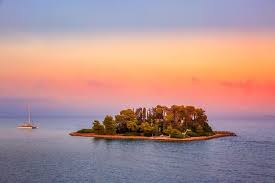
It was Easter holiday. Nico had ten days off from school. His grandfather, Vasiliki, had promised his grandson to take him out on a fishing expedition for a few days on the island of Pontikos to the south-east of Hydra. It was a tiny island hardly inhabited by man where wildlife roamed freely. Vasiliki had been there several times with his father. They always stayed in a cave which lay hidden in a small creek, unknown to all, save of course, themselves …

So one April morning, the sky more or less clear and the sea calm, Vasiliki weighed anchor and they set out in his motorised sailing dinghy. Making sure the motor was not in gear he pulled the pull-starter to ignite it. An instant later he choked it.

“Why did you choke the motor, grandpa?” Nico enquired, eating sardines with a slab of goat cheese and bread.

“Have to warm her up a bit, my boy. The fuel needs a few seconds to fill her.” Vasiliki again tugged at the pull-starter and away they glided, humming slowly away from the make-shift pier, Nico now hauling in the tie-ropes. Vasiliki took firm hold of the throttle, steering the boat out of the coastal waters.

“Shouldn’t we hoist the jibe, grandpa?”

“Not today. There isn’t much wind and Pontikos is far off. Thanks to my new motor, we’ll get there quicker … Tonight we’ll be eating shrimp,” he shouted over the pleasant humming of his new motor. “ And tomorrow morning we’ll fish for sea bream. Prawns and shrimp rise to the surface of the water at night and sea bream during the day.”

“Why is that, grandpa?” Nico sat sleepily on coils of rope at the bow wiping off the pieces of bread that had fallen on his anorak. He enjoyed the smell of the sea, that briny, seaweed smell. The air had a sweet taste to it that he could not identify, perhaps oleander or fuchsia.

His grandfather scratched his silvery beard: “I really don’t know why. Fish are like us humans. They have different reactions to different circumstances.” Nico, although not quite satisfied with this response had not the heart to pursue the subject.

“The sky was red last night,” continued Vasiliki, gently manoeuvring the throttle, steering the sail-less dinghy further out away from the dangerous rocky shores of Hydra. “You know what they say: ‘Red at night, sailor take delight; red in the morning, sailor take warning.’ No storm will be on us this morning.”

“Why do they say that, grandpa?” asked the inquisitive Nico.

Vasiliki observed the clouds moving in behind Hydra: “I really don’t know, Nico. It’s just one of rhymes that fishermen and sailors have repeated for centuries.” Vasiliki sniffed the air: “The weather will be clear only for us up till tonight, Nico. Who knows, we just may see a rainbow.”

“Only for us, grandpa?”

Vasiliki smiled: “Well, we’re the only ones out on the sea this morning, right?”

Nico nodded. Indeed their vessel was the only one seen on the whole wide horizon. The boy looked up — white puffy clouds plodded across the blue like camels over desert sands.

The motor raced them out into an Aegean smooth as silk. Gentle wavelets slapped the sides of the dinghy. The plodding caravan continued it’s heavenly voyage, the sun peeping over and to the sides of their creamy white humps. Nico gasped, he was witnessing an amazing spectacle of Creation! The early morning breeze stung his cheeks a crimson red. It was his first time out on a fishing expedition with his grandfather. How excited he was. He shot a glance behind him: a few dark clouds rose above the bleak cliffs of Hydra.

“The northern winds, grandpa,” he informed the steering Vasiliki, his voice a bit shaky. “They’ll be on us.”

“No bother, my boy, we’re out-racing them thanks to our new motor. That’s why I didn’t hoist the jibe, you see. Don’t forget : ‘red at night is sailor’s delight !’ Anyway, we’ll be at Pontikos in a few hours, long before those nasty black clouds chase or swallow those lovely white puffy ones.”

“Like the sea monsters that swallow boats and their crew, grandpa?”

Vasiliki offered no reply.

Three hours later, Vasiliki slackened speed by gradually easing up on the motor until he pressed the choke button on the throttle. He then took up the oars and began rowing strenuously, the muscles of his arms and shoulders contracting to the rhythmic movements of the current.

“Why have you cut the motor, grandpa?”

“Cause we’re entering the creek where our cave is. We have to be very careful to avoid snags. The strong current will also help us through the creek and push us right to the mouth of the cave. I know these waters well, my boy. You see, I’m not even rowing, it’s the current that’s doing all the work. Just look at this creek, Nico. It’s magic to the eye.”

Vasiliki gazed dreamily at their surroundings. He had indeed pulled up the oars and now let the current eddy them through sprays of seaweed toward the sandy beachhead. With the rising mist, the towering cliffs of Pontikos loomed eerily before them, encircling the indented crescent creek, although paths could be discerned on the pebbly strand, widening and snaking amidst the huge fissures and cavities of the cliffs. Tiny maritime parasols clung precariously off the jagged crags. The ruddy colours of the late afternoon bathed the whole scene in a marvellous fairy-tale aura. Nico sat mesmerised before the slightly rolling reflexions of the craggy palisades in the turquoise waters of the creek, over which his grandfather was now rowing prudently to avoid any collisions with the flat rocks that surged up here and there on the foamy wavelets. He envisioned himself on a page of A Thousand and One Nights, or on one in Robert Louis Stevenson’s Treasure Island which he had just finished reading …

“There she is, Nico … the mouth of our cave. That’ll be our home for a few days.”

Suddenly Nico cried out: “Grandpa! Look, a seal on the rock, I heard her cry … There she is!”

Nico stood up at the bow to get a better look. “It’s a fat seal with tiny white eyes.” The seal squealed in delight and dived into the cool, clear waters. “What a beautiful seal, grandpa!” added an overjoyed Nico.

“She sure is, Nico. Now let’s do the same. We have to jump into the water to haul the boat on to the beachhead. Take off your sandals and roll up your trousers.”

“I’d love to dive like that fat seal,” Nico called out as he hauled away. “I’d be able to catch so many prawns and sea breams and …”

“Get a hold of the rope and tie it to a few of the trailing vines that criss-cross the beach,” broke in Vasiliki, rubbing his calloused hands. Then he dropped anchor. “Get our bags out of the dinghy, but leave the fishing gear inside.”

Nico gathered up their bed-rolls, firewood and spittle, carrying them into the cave. Meanwhile his grandfather busily cleared and smoothed the floor of the cave to make it comfortable to lie on and build a fire. “I hope she comes up again,” Nico said, listening to his echo.

“Who?” 

“The seal, grandpa.”

“She’ll come up. My father and I always saw her come up and dive back down.”

“Can seals live that long?” Vasiliki glanced at his curious grandson.

“Well, I’m not sure she’s the same one. It may be her baby.” After that rather enigmatic reply, Vasiliki vanished into the deepest shades of the cave in search of prawns caught in the many shallow pools of water. Nico sat on the strand watching their boat dance suavely upon the wavelets that lapped the shore like ripples of laughter. The sun was setting over Hydra. The seagulls were laughing and the cormorants crying, both now on the wing, rising from the darkening waters, lifting their wet wings, flapping them madly. Suddenly the seal jumped up again on to the flat rock with a joyous squeal. The foamy waves brushed against the flat rock, soundlessly. She dived back into them. A call from the cave! Vasiliki had netted dozens of small prawns and was now scooping them out of the pools.

“Nico, get the big pot from the boat. We’ll be having boiled prawns with goat cheese, olives and bread tonight.” Vasiliki appeared stirred by the idea.

No sooner said than done! Whilst Nico searched for the big pot, Vasiliki dug a small hole, filled it with dry wood bits and made a fire. They used bottled water to boil and drink since no drinking water was found on Pontikos. 

Nico and his grandfather ate a hearty meal that first night. Tired from their voyage, they spread out their bed-rolls and lay down in the silence of the dim, fire-lit cave. Nico used his anorak for a pillow. He observed the last plumes of smoke rising to the rocky ceiling where there, they fanned out, the wisps tracing weird configurations: shapes of birds perched upon gigantic cliffs, deep-sea fish and reptilic creatures all moving slowly … very slowly. Nico rubbed his exhausted eyes, the phantasmagoria gradually vanished into the black rock. The fire lowered, then died out …

Streams of orange rays broke into their dreamless sleep. Vasiliki awoke first: “Nico, go out and find some brush and underwood for our fire. Be careful on the paths between the boulders, there may be scorpions or snakes.”

Nico rolled out of his bed-roll, splashed his face with a bit of briny-scented seawater, then throwing a sack over his shoulder which he retrieved from the dinghy, set out in search of firewood. The agile boy had not been at it for long when he stopped dead in his tracks. On the strand lay a seagull shaking her orange legs, pecked at the reddening morning sky with her horny beak. He approached the bird carefully. She opened her eyes as if pleading for help. Vasiliki soon joined his grandson.

“What’s wrong with the bird?”

“She’s dying, grandpa.” Nico lamented. “Look, she can’t fly when she spreads her wings.” Vasiliki shook his head sadly and turned to leave.

“We got to get to the boat, my boy, the fishing will be good today.”

Nico cradled the seagull’s head in his hands then poured some seawater onto her beak. She shook her head violently, closed her eyes and lay still. The boy dug a hole in the warming sands, placed the dead bird gently in it then covered her with sand and pebbles. He erected a little mound on the burial spot. The gloom-filled boy retraced his steps to join his grandfather at the boat, his bag full of wood bits and dry brush.

“What’s wrong, Nico?” asked Vasiliki as they pushed the dinghy into the still waters.

“The seagull’s dead, grandpa. I buried her.”

Vasiliki eyes shone with warmth. “Seagulls die, my boy,” he mulled, waist deep in the creek. “Like us, we die too.”

Vasiliki took up the oars and rowed out towards the open sea. Pulling them in, he let the dinghy float gently on her own whilst he prepared the fishing lines.

“We’re not too far out, grandpa?” observed Nico, fixing his line with a plummet and baiting his hook with worms and not with pieces of fish as the fishermen of Hydra would always do much to the dislike of his grandfather.

“No … Have to keep that coastline in sight,” reminded Vasiliki. “These waters can change in a blink of an eye.”

Nico fixed his line and sent it spinning through the rod out into the choppy waters. He sat on the coil of ropes sniffing the pleasant morning breeze. The air smelt of flowers. He scanned the watery horizon where he felt overwhelmed by a strange sensation of encountering a primordial world when primitive men hunted, fished, built fires in caves … sang dirges to the dead. Would he chant a dirge for the dead seagull that night in the warmth of their cave fire?

Hours passed. Both stared dreamily into the sea as they held their rods steady, a sea so creamy, so milk-like. Now and then a slight turbulence, perhaps a whirlpool, tossed the dinghy from side to side.

“Do you see any mackerel?” Vasiliki asked, peering over the surface of the sea.

“I’m not sure if they’re mackerel or scad fish, grandpa,” answered the boy, tugging lightly at his rod.

“Well, the mackerel chase the scad, so you know that the mackerel are behind them.”

Nico nodded.

“Tell me about the seagull, Nico.”

Nico peered at this grandfather’s aging face, leathery from the wind and sun, at his deep, gimlet set eyes. “Which one, grandpa? The one I just buried or Dimitri’s?”

“Dimitri’s?” 

“Yes, remember Dimitri, he was one of my classmates … He had a seagull for a pet.”

“A seagull for a pet? That’s strange. Tell me about her.”

“She was a different kind of seagull. A domesticated seagull. She would fly up on to a rock whenever Dimitri and his father were out fishing. From that rock, she would observe them with her beady eyes. Then she would dive straight down to the boat but she never perched on Dimitri’s father’s side of it, only on Dimitri’s side. His father was a grouchy old man and the seagull never cared for him. Dimitri would throw her fishbones, picarels and other bait. His father would get angry, saying that bait was for fishing and not for that blasted bird ! Dimitri never listened to his father. He would just wave a hand and keep feeding his companion. They were an inseparable pair, you know. When Dimitri died of the flu the seagull flew off and was never seen again … »

“Where did she fly off to?” enquired Vasiliki, intrigued by this tale.

“Perhaps she flew to China, grandpa … Like the Nefeli[1] …”

“To China?” Vasiliki eyed his grandson thoughtfully.

“Yes, grandpa. Or to somewhere unknown, or at least not known to us.” Vasiliki bowed his head. They shook their rods : nothing yet …

The sun was high in the sky now. It warmed their bones and skin. Nico threw off his anorak. How beautifully the sunbeams bounced off the blue waters. They shimmered like the scales of a fish just caught on the line. From time to time, the gulls and the cormorants that glid over their heads swooped down and skimmed the surface of the white foam in search of scud or other schools of fish that were presently leaping at the surface. The birds certainly had more luck than our two fishermen. Plunging downwards, fluttering their huge wings, their graceful dives and surges hypnotised Nico. Meanwhile in the fathoms of the deep, millions of sea-creatures pursued millions others. The microscopic fish were swallowed up by the bigger fish, and in turn were swallowed up by even bigger fish! The whole lot of them were then completely disappeared in one enormous suction into the hollow vortex of the great whale. A great battle indeed was underway both in the inflamed sky and in the broiling sea. Nico felt enfolded in this chaotic struggle for life. Would he, too, be swallowed up along with his grandfather?

Nico shot a questioning glance at Vasiliki who suddenly broke the silence with cries of joy: “Ah ! Nico, here … a fish … two or three fishes!” Vasiliki, all agog, triumphantly displayed three flapping fish in his straw-weaved basket, their gills quivering silver in the intense sunlight. Nico, too, quite unexpectedly got lucky. Not only had he reeled in a mackerel, but also a big, white fleshy sea bream. He had at first lost his plummet, no doubt badly tied. But when Vasiliki showed him how to fix it properly the fish came to him as if the bait were a magnet.

“We’ll be having a hot-pot tonight, my boy,” rejoiced Vasiliki. “We’ll cook some vegetables with our catch. What do you think?”

Nico smiled. He thought it an excellent idea …That night when they had cleaned the fish, Vasiliki boiled them with an assortment of vegetables brought over from Hydra, especially egg-plant, red-pepper and tomato.

“How was the meal, Nico?” asked his grandfather when they had finished eating.

Nico, who had been listening to the moaning wind, turned to him: “Delicious, grandpa. But you know, I thought of the dead seagull all day when fishing. She should have been diving and catching fish with the others.” He paused a moment. “Grandpa, what did you think of my story?”

“What story?”

“About Dimitri’s pet seagull.”

“A good story, my boy. A beautiful story. A very beautiful one.” Vasiliki puckered his lips. “Why do you keep thinking about the seagull you buried ? Do you want to give her a name, like your boat that sailed to China?” Nico stared at his grandfather rather perplexed.

“No grandpa, I have no name for her. She’s gone far away … like the Nefeli … to another land …”

“We’ll build another boat together,” Vasiliki promised. “A bigger boat. The biggest of them all. But the seagull,” he hesitated. “The seagull has flown off to a land where we can never see her again. I’m sure it’s a beautiful land, like where the Nefeli is now on her way.”

“Wouldn’t you like to see that land, grandpa?”

“Well … not right now, my boy. Right now I’d like to close my eyes and sleep. Tomorrow we’ll be on the sea the whole day again. They’re biting out there.”

And that is exactly what the old man did …

The last embers of their fire cast undulating shadows on the walls of the cave. Vasiliki was sound alseep, snoring lightly. Nico strolled to the beachhead. The moon had risen, girt by a rosy halo. Darkened seagulls glided in and out of the misty moonbeams. They danced an eerie dance. Nico perceived Hydra’s beacon far, far off at the south-west tip of the island. A steamer passed over the sleepy waters heading for Hydra, her lights burning bright against the umber orb of the horizon. Nico thought of the Nefeli on her long voyage to China. Slicing unmanned, captainless over unchartered seas, like Dimitri’s pet seagull on the wing, perhaps she too flying towards unknown lands now that her master had long since departed. The seagull he had buried could also be flying off to some mysterious place, a paradise for seagulls where she could fly and fly and fly without a thought of ever diving for fish or of escaping the hunter’s gun. A peaceful place…

Nico’s grandfather told him that tomorrow night they would be eating mussels with lemon juice; a real regale his grandfather had beamed. With bread and olives, too. Olives always go so well with mussels, he said. Nico smiled. Why they always go so well together his grandfather never offered a reason. But Nico believed him. Nico believed everything that his grandpa told him, even about the monsters of the sea that swallow boats and their crews. Perhaps the Nefeli had been swallowed up by one of those monsters.

Nico stared at the shadowy moon. A slight wind began to groan. The dinghy tossed gently, the scraping of the pebbly strand under her bow prompted a rather strange rhythm like a saw sawing wood.

Nico strolled back into the dark cave. The fire had gone completely out. Nothing could be seen, only heard: his grandfather’s snoring, the seagulls screaming, the wavelets lapping, the dinghy scraping … He loved his grandfather. Yes, they would build a great, majestic boat, sturdier than the Nefeli — an unsinkable boat, one that would voyage all around the world like Magellan’s galleon. He would name the boat Mytho … Yes, that would be a fitting name for such a beautiful boat.

Nico stared at his unseen snoring grandfather. He would have liked to ask him why olives and mussels go so well together. And his grandfather would have probably answered: “Well my boy, it’s just a feeling I can’t really explain. But believe me, they do go well together.”

And Nico would have believed him. Would have accepted that answer as a perfectly acceptable answer …

Nico slipped into his bed-roll and immediately into a deep, deep sleep. He dreamed of seagulls on the wing, boats navigating on the high seas, underwater monsters with long, leathery tentacles chased by the great whale and caves full of gold and diamonds and other precious stones whose names Nico had not as yet learned but would surely ask his grandfather their names when he awoke.

[1] Read the story by clicking on this link.

.

Paul Mirabile is a retired professor of philology now living in France. He has published mostly academic works centred on philology, history, pedagogy and religion. He has also published stories of his travels throughout Asia, where he spent thirty years.

.

PLEASE NOTE: ARTICLES CAN ONLY BE REPRODUCED IN OTHER SITES WITH DUE ACKNOWLEDGEMENT TO BORDERLESS JOURNAL

Click here to access the Borderless anthology, Monalisa No Longer Smiles

Click here to access Monalisa No Longer Smiles on Kindle Amazon International
Categories
Stories

Nico’s Boat Sails to China

By Paul Mirabile

From Public Domain

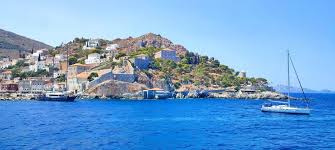
Winter, together with the northern gales, reached the shores of Hydra, an island belonging to the group of Saronic islands in the Aegean Sea. On the north-eastern side of Hydra, save a few monks in two monasteries, few human beings had built their homes. Hoary pines and cypresses intertwined with other plants, providing shelter and shade for the gangs of dangerous feral cats that roamed amongst enormous, solitary rocks and deep precipices hunting for food. Weird, colourful birds built their nests in the crevices of the towering cliffs whose plateaus were carpeted with red poppies and violet cyclamen. It was a desolate landscape unfavourable to human existence, although it was told that certain ‘wild’ islanders did dwell in the porous caves of the cliffs sculptured by the winds and rains overhanging the foamy waters far below …

It was in the south where the islanders enjoyed a relatively decent living, when of course the fish and tourists were plentiful. Now, however, the bathing areas lay silent and the villas, lifeless. Winter was the time for fishing. The sailing dinghies, catamarans and rowboats that had been hauled in for repairs were once again seen bobbing up and down upon the choppy waves. Seabass abound, as well as sea bream and sardines. Brightly painted sailing dinghies brought fish uninterruptedly to the market. But deep in this particular winter, the fishermens’ nets held little catch, and the islanders had to resort to eating vegetables that survived the cold from their gardens, the bread from their ovens, and now and then a partridge or a quail shot by those who owned rifles. Fish could be purchased from other fishermen in the neighbouring islands. But they sold their catch at a dear price. 

Old Vasiliki was preparing his multi-pronged fishhooks. The nets that he had mended long ago had snapped and ripped again. Up till then, winter’s catch proved hopeless. He had scarcely earned fifty drachma. Vasiliki still had earnings from renting the second floor of his house to summer tourists, but those savings were slipping away on fishing material, goods from the shops or fish bought from the fishermen of the other islands, where apparently the catch was abundant. Nico, his grandson, had fallen ill that winter and medicine was dear. The poor boy had not been to school for over two weeks …

School and notebooks cost money, too. So be it. Tonight, Vasiliki would go out fishing, so he carried on straightening out his turkey-feathered multi-pronged fishing-hooks, mending the rotten fishing lines, changing the rusting hooks. If he could catch a lot of fish, he could buy a petrol lamp and more candles for the house, a pair of shoes and a woollen vest for Nico. He would buy Nico a book of sailors’ tales that his curious-minded grandson longed to read. He would also buy him a huge picture of a Spanish galleon that he could pin up on to the yellow painted wall of his tiny room.

Vasiliki went out fishing in the evenings. Nico never knew when his grandfather would return …

Every night the boy dreamed the same enigmatic dream in the absence of his grandfather. He stood at the helm of a beautiful boat whose name was written in bold black letters but which he could never read. Enormous waves continuously surged and battered the solid vessel. Then a sudden volley of rocks or missiles assailed him from all sides out of a rising mist, accompanied by a deafening din of hysterical screams and raucous shouts. From above, a huge white-crested wave was about to engulf him … Nico would be startled out of this recurrent dream, never understanding how he escaped the missiles, the monstrous wave and screams because at that very instant he was startled out of sleep by the flapping of the curtains against the paneless window and the slow, heavy footsteps of his grandfather returning from fishing. Vasiliki, smelling of the briny sea, stepped into Nico’s room.

The boy sat up in bed: “Did you catch any fish, grandpa?”

“No, the sea was empty of fish tonight.”

“Empty?”

“A sea monster has surfaced, Nico. It is eating all the fish in the sea.” Nico blinked his eyes in mistrustful wonder.

“Have you seen the sea monster, grandpa?” The exhausted Vasiliki offered no answer. He shuffled out of his grandson’s room and retired to his own.

Whether Vasiliki really saw a monster always remained a mystery to Nico. He had read about weird sea creatures with lamps on their heads in the inky darkness of the deep; read about shoals of huge fish that swallowed dinghies and rowboats whole. His father, Constantine, had been swallowed up along with his crew by those horrible creatures … so his grandfather narrated, sadly. His mother, Myrto, died a few months later of tuberculosis … or of a broken heart. Or both. They were in their early thirties …

Vasiliki and his wife, Nefeli, took their grandson in. They did their best to bring up the lonely, melancholic boy. Then Nefeli fell ill with fever and died soon after. Vasiliki buried his beloved wife at the neighbouring cemetery. All that the old man cherished now was Nico, his taciturn grandson.

Vasiliki owned a small, green, two-storey wooden house, a house that belonged to his father. Summer was not far off so he could again rent out the second floor to tourists and earn a few lepta or drachma.

In the small sitting-room where the flower-dotted wall-paper was peeling off the badly cut boards, he had nailed photos of his wife and daughter, now yellowing due to the humidity. Vasiliki’s home was hardly furnished, although he had made an effort to provide low sofas, wicker chairs and sturdy tables for his guests upstairs. He even built a shower for them, a luxury that he and Nico dispensed with. They washed either in the sea or directly from the wash-basins in the garden behind the house. But since no one occupied the two rooms upstairs, ever so often they would shower upstairs and from the windows look out at the sea. Presently, Vasiliki climbed the five steps to one of the rooms, parted the laced curtains of the recently washed window and looked out towards the sea, whilst he mended his net, sang songs, thought of Nico’s future. His warm eyes slipped from his mending to the brilliant blue waters of the Argolic Gulf. That boy was all he had. His treasure. When he thought of Nico he awoke from his day-dreaming and smiled. He had promised him long ago that they would build a small boat and send it navigating on the high seas, like a bottle thrown amid the waves, and whose destination would be known to no one, a horizonless destiny for that little boat.

Vasiliki sighed: “I have to keep an eye on Nico. Those nasty children from town always take the thump him at school. He’s not big enough to fight on his own.” Vasiliki took up a needle and began stitching Nico’s torn trousers. “I have to walk him home after school so he won’t go sleeping under the olive trees or on the beach where the schoolboys could knock him up.” Vasiliki wondered where his grandson had gone …

Nico stood under a plane tree in front of his grandfather’s house. He was busy making a boat. It wouldn’t be his first boat. But this one would be the boat of all boats ! A long-voyage boat, built for the broad, open seas … the remote and unchartered seas, a boat that would weather stormy waves, glide over placid rolls, sail alongside monstrous creatures of the deep, a boat without a flag, a nationless boat, yet unmanned by pirates or corsairs, a boat completely independent. Nico put his whole heart into this project, his whole imagination of what such a boat should be made of, and how it should be navigated.

“Nico?” cried down Vasiliki from the upstairs window.

“Yes, I’m here, grandpa.”

“What are you doing?”

“Making a new boat.”

“Another one?”

“The biggest and the best, grandpa. It’ll sail to the other side of the world … to China …”

“Tomorrow you must go to school, don’t forget. You can work on your boat after school.”

“Yes, grandpa. I’ll work hard in school.”

“By the way, what will you name your boat?” Nico thought for a moment. At first ‘Neptune’ came to mind, but he quickly changed it as his grandfather’s eyes swelled with pride and joy at his grandson’s aspirations and imagination.

“I’ll call her Nefeli, grandpa.”

Vasiliki gave Nico an odd look. He didn’t know whether to smile or cry. He murmured the name several times on his lips, slowly, intimately. The old man burst out laughing: “Nefeli! Nefeli!”  he shouted. “Your grandmother would have been proud to know that her name will navigate the four oceans of the earth, my boy. Don’t forget to prepare your things for school tomorrow. We’ll be having sardines tonight that I bought from Dimitri. He sold more than a dozen at half price.” And Vasiliki returned to his mending and stitching since the yellowish light of late afternoon allowed his eyes to do so …

Nico went to school the following morning, shuffling along the dirt-packed road. What a burden to acquire knowledge that he would never use in ‘real life’. Neither Nico’s classmates nor his teachers held any interest for him. His two weeks’ absence afforded him time to dream … to concentrate on his boat-building. The boys who crossed paths with him on the way to school never wished him a good morning, nor did they enquire about his health. He was ostensibly shunned by all and sundry, even several of his teachers took a dislike to him.

Nico shrugged his shoulders, sitting in the back of the stuffy classroom, heated by a pot-bellied stove, gazing out over the bungalows to the wide sea. He envisioned the decks of galleons gleaming white from a good scrub, their sails bellowing in the refreshing breeze. Nico filled his lungs with the fresh, clean, ocean air. Yes, only the sea afforded the boy a pleasure in life, along with, of course, the voice and affectionate gestures of his grandpa. All other things to him seemed dull, lifeless … empty.

The children in his class thought only of the tediousness and boredom of their school work and the silly games they played with or against each other to compensate for that tediousness and boredom. None had any project to impassion their lives. None envisioned a future further than the next day at school or in the market. Few went swimming in the bay, where he swam too. They shrank away from his boyish laughter splashing about in the water, avoiding his company completely.

When Nico was not day-dreaming in school he was busy reading or making boats — all kinds of boats. Cutter in hand, he whittled small sailboats and rowboats … even catamarans! Everyday he whittled a raft as he contemplated the steamers’ coming and going in the glimmering Aegean. But his next boat would be huge. A huge boat with a bridge, lower and upper decks, a hold for cargo, masts, sails, portholes and a crow’s nest. This boat would be the largest, the loveliest … and the sturdiest of them all. A boat which had never been built before by a fourteen year old boy. And that day came. Nico, the fourteen year old boat-builder had completed his dream boat. For him this boat meant the world. He felt his heart swell with pride and satisfaction. Vasiliki inspected his grandson’s remarkable vessel. It was painted marine-blue. At the bow he had painted the head of Neptune. He had even cut a hole in the starboard for the anchor to be weighed or dropped using a big fish-hook tied to a long, thin rusty chain. The deck had been sand-papered to a dazzling gloss. He equipped her with a four-cornered small jibe[1], as white as the flesh of a sea bream. He had taken great pains to whiten that piece of cloth of a sail, rubbing and scrubbing away with aqua fortis. It took him days to attain that candid sheen …

All the rigging on the bridge was fixed solidly to the wide deck by thin copper wires rising high above all the rest, held securely with copper wires screwed into the thick wood of the deck and reinforced with English twine. Portholes had been carved out on both the portside and starboard for the cabins, for although Nico’s boat would be captainless — unless he himself exercised this task– his imaginary crew would be like the Lilliputians that he had read of in Gulliver’s Travels. How he had enjoyed reading those stories of sea and island adventures … Nico had even cut and inserted pieces of broken glass he found scattered about the streets to window the portholes, which he polished to a shiny, brassy gleam.

When all had been fitted out properly, he painted the endearing name Nefeli in bold, black letters on her portside. Vasiliki stood in quiet admiration of his grandson’s months of hard labour. It was indeed a work of art. He embraced him. His grandson may not be the best of pupils, but he worked wonders with his hands. Someday he would be a great boat-builder, and not just a poor fisherman like his father and grandfather …

The rising sun peeked over the watery orb of the sea. It was Saturday. That day Nico launched his boat into the placid waters of the Argolic Gulf. Vasiliki accompanied him on this long-awaited day, eager to witness her maiden voyage. The Nefeli once launched, slid with ease. At first, the boat floated unsteadily on her portside. But when the wind picked up, she rose to her full splendour and ploughed through the clammy waters with amazing ease, all sails aswell. Nico let the spool of English twine slide quicker and quicker from its spool. It unravelled rapidly, but the boy had full control of the situation. The spool held hundreds of metres of twine.

The Nefeli skimmed over the wavelets like a shark racing towards its prey. Vasiliki stretched out on the pebbly shore to mend a torn net, eyeing both the Nefeli and his mending in mute jubilation. He thought of his daughter and how proud she would have been to see her son manœuvre his own hand-made boat. His grandson, too, jubilated, running to and fro along the shore to manœuvre the cruising vessel as she swayed to the rhythm of the breeze. Suddenly an easterly gale drove her towards the shore. Nico slackened the twine. At the same time, though, he pulled her away from some dangerous rocks and uprooted pines. Any collision might have caused great damage to the Nefeli. After all, it was only a little boat and the sea a powerful force that no one should underestimate. Two hours or so later, Nico pulled her in, and he and his grandfather returned triumphantly homeward to eat.

News of Nico’s remarkable boat reached every ear on that small island. People from the big town would come to the shore to watch this young boy of fourteen manoeuvre his vessel. As promised, Nico launched his boat only after school as soon as he had finished his homework. For weeks now, the Nefeli had withstood the brunt of several white-crested waves and a slight collision against the rocky part of the shore. All in all, Nico’s boat proved robust and his manoeuvring worthy of any captain of the sea.

One fine, sunny Saturday Nico, as always, launched the Nefeli near a large grove of pine trees. A slight south-easterly wind was blowing. The twine unravelled rather quickly, the boat lying on her side, her stern twisting and turning in the foamy waters like a fish’s tail. He pulled at the twine and managed to steady her route. Nico sighed in relief … Suddenly he heard shouts, cries and screams from behind him. A gaggle of children were racing along the shore targeting his boat with huge stones, one of which, incredibly enough, after hitting its target, propelled her further away from the volley of projectiles. Two or three boys, whom he recognised from his class, had sling-shots and were letting fly stones with great rapidity but not necessarily with great accuracy. Nico ran faster, pulled at the twine, quickening the speed of his boat. But there were too many boys, many of them running faster than him. More and more stones were slung or thrown, luckily off their mark. Nico thought to haul the boat back to shore near the rocky cliffs in the hope that the scoundrels’ pockets would be emptied of stones by then.

The poor boy, however, stopped in his tracks. The Nefeli seemed to navigate on her own, wind filling her sails, skimming high and mighty over the angered waves in spite of the deluge of catapulted missiles. Then in one tremendous volley four or five of the bigger boys hurled dozens and dozens of stones at the speeding Nefeli, some of which broke through portside, others splintered the bridge and still others burst into the jibe and crow’s nest.

Nico’s wonderful workmanship managed to stay afloat for a half hour before sinking to the bottom of the sea. The last thing that Nico saw of his boat were the bold, black letters of his grandmother’s name: Nefeli.

The children vanished into the pine groves as quickly as they had appeared …

Nico turned his back to the dramatic sinking of his vessel. Opening the gate to his grandfather’s front garden, he strolled up to him.

 Vasiliki, cleaning several fish and shrimp that he had caught the previous night smiled at the approach of his grandson: “So, how did she sail …?” He suddenly noticed that Nico hadn’t the boat in his arms. He frowned and lowered his eyes.

“She set sail for the other side of the world, grandpa. She’s in route to China. The English twine snapped and off she sped out of the gulf towards the open seas disappearing over the edge of the waters …”

“Well, like a bottle thrown into the sea, right? You never know where she’ll land. I just hope the sea monster won’t swallow her up like it does all the fish.”

“No, grandpa. Monsters don’t swallow boats only fish. Did you see the monster last night?”

Vasiliki shook his head. “Can’t say that I did.” He put down his knife and scratched his white beard: “I caught some prawns last night Nico, what the Spanish call gambas. We’ll have a marvellous meal just you and me tonight.”

“It’s always just you and me that eat, grandpa,” Nico reminded his grandfather.

Vasiliki pursed his lips: “How right you are, my boy.” The old man paused for an instant taking up his knife: “Will you build another boat?”

The boy kicked up the yellowing grass in the garden with his torn sandals. “Yes, grandpa, I’ll build another one.”

“Bigger than the one that just sailed to China?”

“Yes, much bigger.”

“What will you name her?”

Nico furrowed his brow. He looked sadly into his grandfather’s eyes: “I’ll name her Myrto.

Vasiliki eyed his grandson affectionately. “I like that name Nico. It’s a beautiful name …”

“I like it too, grandpa.” And the boy shuffled off to his room …

[1]        Triangular staysails.

.

Paul Mirabile is a retired professor of philology now living in France. He has published mostly academic works centred on philology, history, pedagogy and religion. He has also published stories of his travels throughout Asia, where he spent thirty years.

.

PLEASE NOTE: ARTICLES CAN ONLY BE REPRODUCED IN OTHER SITES WITH DUE ACKNOWLEDGEMENT TO BORDERLESS JOURNAL

Click here to access the Borderless anthology, Monalisa No Longer Smiles

Click here to access Monalisa No Longer Smiles on Kindle Amazon International

Categories
The Literary Fictionist

Deathless are the Words

By Sunil Sharma

Courtesy: Creative Commons

It was decided.

The Madman was to be neutralised before he became a popular prophet.

“Take him down!” the chief secretary gave the oral order. “Leave no trace!”

“How?” the deputy asked.

“Cops in the civil dress. Mid-night arrest. Unmarked cars.”

The deputy replied, “Consider it done, boss!”

The senior bureaucrat breathed easy.

His mind went back to the afternoon summons to the offices of the dreaded MOT (Ministry of Objective Truth).

The Minister was furious: “Why does the Madman roam free in our dear republic?”

“Sir, we are working in that direction. Trying to find incriminating evidence. Except few diaries and books, nothing on him. He is an ineffective nut, dreaming of equal system of governance. Talks of ideal worlds! Harmless!”
“I know, I know all that. Those ideals are impossible in our old democracy! But our beloved King feels the man is a threat,” the minister grunted. “He is inciting the public. You know the consequences of turning people against our beloved King of the republic.”

“Yes, sir.”

“Remember our motto as determined by our beloved King?”

“Yes, Sir.”
“What is that?” the Minister asked.

“Words are the real danger.”
“Yes.”

The chief secretary smiled.
“Look at this video carefully,” the Minister said. “Subversion, open and loud! Challenging us!!”

The video showed a bearded man in old clothes shouting to a small crowd:

“Change-change!”
“Change-change!” the crowd chanted lustily.

The Madman looked up and shouted: “The days change. Evenings change. Why not they and you?
“Yes. Change-change! Bring them on. Change-change, change them all,” the public shouted spiritedly, as the nut paced up and down an area circled with a red chalk; stopping, walking, talking to invisible beings within that marked spot.

The crowd listened eagerly to the dishevelled figure, increasing in size.

The Madman paused for long and then resumed in a hoarse voice: “Fools! All! Listen! to the drum beats, the roll of thunder and crashing seas! Roll on thunder! Cleave the sky and forest, bring in the new! Fools! All!”
“Fools! All!” the crowd repeated faithfully. “Change! All! Don’t fight shy!”

It was a spontaneous chorus provided by the onlookers, mostly idlers and the young unemployed.

Vaudeville staged freely in the public garden.

“This will come to a pass. This, too, will change fast. Despair not! Come forward!” The Madman continued.
Pause.

Then the principal actor yelled dramatically: “Things change. This will change. Un-fix. Re-fix. Fix. Fix.”

The audience clapped and echoed the lines: “Fix, re-fix, fix, fix!”

“Iron gates get rusted and fall away in the gales…stone walls crumble. Hark! The shattered visage of Ozymandias rots in the vastness of the desert, mocking others of his tribe. Fix, re-fix. The march is on! Come on. Come on!”

The people laughed and repeated the last words of the Madman.

“My God! He is a like poison.” The secretary confirmed. “It is sedition, pure and unalloyed! More lethal than the missiles stored in our secret facility!”

“Shh! Shh!” cautioned the minister. “The Foreign agencies have eyes everywhere! There are no nuclear warheads in our dear and peace-loving republic!”

The chief secretary immediately corrected: “Oh! there are no missiles. The King loves peace!”

The Minister continued: “This man here in the video! He pretends to be mad. He is a dissident and needs to be punished for his outrageous comments against dear leader, our king.” The Minister’s eyes darted upward towards the ceiling.

Bugs!

“Yes Sir. He will be fixed tonight! He is a threat! A spy of the enemies of the republic, our beloved king.”

As directed, the cops arrested the man sitting on the pavement, staring into the sky, a street dog at his feet.

“Again?” He asked the cops. “Mad? Troubling a homeless man who has not committed any crime? Better go after the robbers in suits sitting in the palace.”

“We are here to take you home, real home, dear sir,” the inspector said. “Away from this world. Be the guest of our great republic. A tiny dark cell is now your new home.”

“All the world is my home, fools!” the man laughed. “You can imprison my body, not mind. You can jail the writer by declaring him mad, a threat but cannot imprison his words in the stone walls! Words tend to escape and fly even the maximum-security jails.”

The inspector smiled: “We will see this time.”

The Madman picked up his tattered bag and said goodbye to the dog that tamely followed the speeding vans.

The new prisoner was lodged in an isolated cell.

A team monitored his behaviour.

In the dungeon, he talked to the walls or slept on the hard floor.

Once he was heard talking to the air: “Because things are the way they are, things will not stay the way they are. Brecht was right. These fools will never understand! Status quo! It will unravel. Brecht, the Great!”

The inspector reported to the chief secretary: “Eureka! He talks about another collaborator Brecht. Who can be this dark conspirator?”

The chief secretary had never heard the name but did not show. He asked the go-to person, the famed MK (Memory Keeper) — the sole custodian of names, dates and archives– the top-secret vaults of the state secret. All significant names from history and arts, philosophy and political science were erased carefully– names of critical thinkers; revolutionaries and radical writers and artists by the king via this super secretive body but archived for future references by the king and his core council only.

These archives were guarded by the MK and his team of young and dedicated sleuths who pored over texts and documents and eliminated anything remotely radical, out-of-box thinking or quotes or essays or books from the records in a methodical way.  

Only the name of the King was allowed to be inscribed in records, new histories, books, syllabi and other state data, all created diligently by the scribes. king as a seer! His edicts were cast in stone.

Only thing allowed: Daily chants of his name and party by the people—social media and public spaces, supervised by the MOT and the IT (Information Technology) Cells.

The King is the Truth! The Truth is the King!

That was the official motto.

The Memory Keeper smiled. “Brecht! Forget him. No threat in a de-radicalised democracy. Mere vintage! Already forgotten globally by the youth and middle class!”

They all heaved a sigh of relief: One man less to locate and interrogate!

Somehow, the news of Madman’s disappearance spread.

The Madman Arrested and Tortured! The global media screamed religiously for days.

 The news mobilised the intellectuals and influencers. Wildfire-like, it further spread. People were enraged and protested against the arbitrary nature of power.

#Free the Voice of People# Free the Madman.

The movement spread.

Amnesty Association, Union of Countries  – all joined the movements across world capitals.

People took out candle marches, held rallies, organised sit-ins.

Media covered each such meeting at the public squares.

The King finally intervened.

He asked his Council to release the Madman.

And told the Plan to silence this gadfly.

The Madman was back to his bench and the famous Circles of Chalk.

People rushed to welcome him in the streets.

The Madman again prophesied: “Beware of the seasons! Spring coming! Winter is over!”

The public again followed him and listened to his predictions: “Today autumn; tomorrow spring! You cannot imprison the gales and winds! Down, down, the bridge and the old castle. Here comes the Spring!”

The crowds shouted this as the latest mantra.

His popularity surged.

Dubbed as The Mad Philosopher for the Mad Age, his fan following grew in millions, over the months.

The Plan was activated: Declare him heretic. Against God. Against nation. Against heritage.

A systematic campaign was created on social media.

The Madman hates his country!

The Madman hates God.

The Madman hates his country, its language and culture.

He is the Enemy of the State.

Must be killed!

Doctored videos circulated.

He was shown laughing at the old gods of the land, ridiculing the language, culture and religious texts of the country, eating things that were not sanctioned or, wearing wrong clothes or, mixing with “Other”.

It inflamed the passions of the young and the disaffected.

The impression was carefully crafted: The Madman is not a Patriot! Anti-order. Messenger of chaos!

The IT cells of the MOT went into overdrive.

“Hatred and misinformation, once sown, do their destruction,” MOT was told by its zealous minister.

“People can be easily divided,” he briefed the team, “by the notions of skin colour, accent, ethnicity, food, clothing, gods, regions, sex. The Controllers should know how to play the game and create disaffection among the public.”

The Controllers understood. The most crucial office: Controllers of Thoughts, they decided to release what constituted as the sole and objective Truth.

Or, falsehood.

The Minister was specific: “Lies are truths in post-modern democracies. Sow the discord! Fictions are facts.”

They did.

A hysteria was manufactured.

Madman, the Devil!

Army of hate mongers helped.

Soon, blinded by anger and hatred, a young man, radicalised by the constant rhetoric, attacked the Madman in the public garden with a sharp knife. The man lay bleeding on the road.

People took pictures.

His dying words, “Fools! You can kill me, not my words! I will return in a changed form. My spilled blood will become words. Words take wings. You will never be able to trace and kill the winged words! I will outlive killers.”

The authorities deployed old strategies of annihilating fatal words by organising complete bans, issuing edicts; via censors, book burnings, cancelations of commemorative events; even through the sponsored murders of key followers and sympathisers of the nut becoming a prophet and rallying centre for the large populations of the world; by systematic stamping out references to the Madman, a total erasure.

“Like cutting the heads of the hydra!” the chief secretary complained.

More the mandarins tried, more they failed.

His image and words appeared in some other form or place.

Even an underground flourished in his name.

The King ordered them not to stop in their sole and most important enterprise of removing the Madman from memory and history of the national consciousness.

He was officially declared as mad subversive who misled the gullible public and any mention of him invited the penalty of death.

The “gullible” public called him the Sane Saint!

To the collective horror of the King and core council, multiple sightings of the dead Madman in many cities and regions were reported by the ordinary citizens!

The pandemic is now a borderless phenomenon.

Each affected citizen claims, “I am the Madman! I have become sane!”

The war cries are loud and clear.

Getting amplified by the minute.

The State and King are trying to figure out ways of dealing with this perplexing paradox, this strange social development, before it spills into a storm.

.

Sunil Sharma is an academic and writer with 23 books published—some solo and joint. Edits the online monthly journal Setu. 

.

PLEASE NOTE: ARTICLES CAN ONLY BE REPRODUCED IN OTHER SITES WITH DUE ACKNOWLEDGEMENT TO BORDERLESS JOURNAL.