Categories
Essay

A Brickfields Christmas Tale

By Malachi Edwin Vethamani

The Old Brickfields

The world changes. Yet, the memories captured and frozen in time, moments that one never thought would come to pass, remain. In my child’s eyes I still see and recall a world that has gone by, the space and the people and all in it that I still love. Brickfields was no remote Indian enclave even in the 1960s. It was about 5 miles from Kuala Lumpur, the capital town. The outside world would soon collide with my small space called Thambapillai Kampung[1] in Brickfields amidst 13th May 1969 race riots and my childhood world would become the past.

We were a small community, a kampung of about 100 households. We were all tenants to a lawyer landlord who charged a small rent to occupy a small portion of his land. It was home to many Indians who were barely scaping for a living above the poverty line. What we lacked in the material world, was made up with a sense of community. It was not perfect, but we co-existed amicably and often looked out for each other.

Thambapillai Kampung composed a good mix of Hindu and Christian families, mostly of Tamil ethnicity, both Indian and Sri Lankan. Mine was a Christian childhood here. The Methodist Tamil Church was a ten-minute walk away from our home. The Hindu temple, Sri Kandaswamy Kovil, at the end of Scott Road was even closer. The kampung is now replaced by condominiums none of us could have afforded, except the lawyer who sold his land for the gentrification of this place. The church and temple still remain.

The Days Before Christmas

Christmas Palagaram-Making

Our house was often the hive of Christmas palagaram making activities. My mother and her group of women friends, Hindu and Christian, all housewives, would plan a schedule on making traditional Indian palagaram[2] like muruku, achimuruku, chippi, neiyi orrundai, monturikottu and sometimes even kalu oorundai (almost as hard as cricket balls). They would take great care to get all the ingredients and make the palagaram from scratch.

Below is an excerpt from my poem ‘A Brickfields Christmas’ that narrates my childhood experience of witnessing this activity over several years:

December descends on us.
Womenfolk, friends of
Amma, Sithi and Paati,
all aunties to us arrive.
Palagaram-making begins.
Muruku, achimuruku, chippi
and neiyee oorundai –
South Indian festive fare.
We wait at the side lines
like cats for scraps.

My elder sisters put their
culinary skills to work.
The fragrance of freshly baked
cookies and cakes
waft through the house,
giving a sweetness
over the usual aroma
of curries in our home.
A festive air spreads
and seeps through the house.

Annual House Spring Cleaning

The days before Christmas fell during the school holidays and we the children were homebound. It was also the time for our big-time annual spring cleaning of our house as part of the preparation for Christmas and new year. All the children were involved in various tasks to clean and repaint the whole house. This is re-counted in the extracts from my poem ‘A Brickfields Christmas’:


It’s November and school’s out.
We are all home-bound.
There’s an excitement
despite the work at hand.
Paint brushes appear
and paint pails sit next to Appa’s bicycle.
The yearly routine is set to begin
in our house.


The house waits
like a patient giant
its coat slowly scraped away
and its nakedness to be clothed
by an eight-sibling work team.

Chores allocated according
to seniority and skills.
I am happy to scrape
last year’s peeling paint.

Limestone white
for personal living spaces
ICI blue paint just for the hall.
The worn-down white planks over
the months are slowly lapped up
by paint-laden brushes.

Large black spiders once secure
in crevices now scuttle about.
Plank by plank whiteness emerges.
A new brightness which in time
will wear off once more.
The house smells fresh
and a lightness caresses us.

Annual Christmas Shopping

Mutabak. From Public Domain

Our family practice was that all the children would get clothes for the festive season. Three set of clothes one for Christmas eve, Christmas day and New Year’s Day. Amma was the prime mover in all our activities. We would set out to Batu Road (now Jalan Tuanku Abdul Rahman) to Globe Silk Store and Kishu’s Departmental Stall, for their affordable prices, to buy our shirts. Along the way, we would stop at Central Shoe Shop or Bata to buy our shoes. Taking a break from shopping, we would be treated to murtabak at the famous Kassim Restaurant which was also situated among these shops.

It was also the time of year for buying gifts. For this, my eldest brother, Annan, would accompany us and we would go to Deen’s to buy our board games, toys for building and construction sets and even musical instruments. All these would be gift wrapped and placed under our Christmas tree. Besides our choice of gifts, there would some surprise gifts too.

Appa[3] was busy with his work and left this work to Amma[4]. Being a newsvendor, he had no holidays. He worked every day if newspapers were printed and needed to be delivered to his customers. Yet, he still found time to take the boys to the tailor near our house in Scott Road to get our short pants sewn.

Christmas Decorations for Our Home

The last few weeks, the postman would have brought tens of Christmas cards for the family and individuals who were of card-sending/receiving age. We used to look out for who would get the most greeting cards besides our parents. In the last few Christmases in Brickfields, I was among those assigned to write the greetings and addresses on the Christmas cards before they were sent off to the nearby Brickfields post office. I can remember the many times I wrote: To, Mr & Mrs xxx and fly … Best wishes from Mr & Mrs N Vethamani & fly (short form for family).

A few days before Christmas we would begin putting up the decorations. The cards we received would be strung and hanged on the living room walls using a string to hold them. Balloons were blown and hung in the corners and sides of the living room walls. Finally, the Christmas tree that had been stored away after last year’s celebration would be brought and decorated:


Last year’s Christmas tree
is uncovered from its yearlong dust.
My younger brother and I
hang the glittering trinkets
fearing a drop could shatter
the fragile bells and baubles.
Our friend Ahmad is cutting
out crepe paper and
making streamers.

A golden star crowns our tree.
Annan places the lights
A final touch, Akka sprays the snow.
For the first time that night
the lights come on again.
The multi-coloured twinkling bulbs
complete the advent of Christmas
into our kampung home.
Christmas Eve

Christmas eve marked the height of the festivities for us children. It was a day of giving and sharing. Christmas cheer through palagaram, Christmas goodies. Around five in evening, as the day grew slightly cooler, we would begin the palagaram-giving to our neighbours, both Hindu and Christian. Amma, Paati[5] and my elder sisters would arrange our homemade palagaram on trays. They would be covered with a tray lace.

It was a joyous occasion, carrying trays of goodwill to our neighbours’ homes. We were warmly greeted. Often, the mothers in the neighbours’ houses would receive our gift. They would then take our gift and often leave a small gift, one Ringgit or five Ringgit note even. These cash gifts often thrilled us to no end as it meant more spending money during Christmas. Seeing my elder siblings, even as a child, I knew that I best enjoy what I had as with each passing year the younger ones would take my place. What I didn’t know was how quickly this world would come to an end.

The Christmas tree would be lit in the evening, and our presents lay on the floor below the branches. Annan[6] would be playing Christmas carols on the gramophone. The day would end with playing with crackers and fireworks with my cousins who lived a few doors away. We would wait anxiously for the evening to pass and soon it would be Christmas. We seldom stayed awake till midnight. The excitement through the day wore us out and we were soon in our beds.

Some Christmas eves, our Sittappa[7] would butcher a young goat in his garden. We, children, we were not allowed to see the actual killing of the goat but once it was done, we would watch Sittappa cut and clean the carcass. On Christmas day and the next few days, we would have mutton curry along with mutton tripe, mutton dalcha and other mutton delicacies.

Christmas Day

On Christmas morning, the air was filled with everything fresh and new, the house with its freshly coated paint and all of us in our new clothes. Morning would have started early for Amma, Paati and my elder sisters. They would have started to cook the food for us and our guests who would arrive for our Christmas lunch. Amma was a good cook and all of us and our guests looked forward to her biryani and dishes. Often, we had turkey kurma curry for Christmas lunch. For breakfast we had fruitcake, jam tarts and other palagaram.

Turkey Kurma Curry. From Public Domain

Soon it was time to get ready for church. My poem ‘One Christmas Morning’ captures how the day began on a Christmas morning while we lived in Brickfields:

One Christmas Morning

The smell of curries
and familiar kitchen sounds
of Paati, Amma and my sisters
have awakened me.

My younger brother already about
caught up with his presents
opened at midnight by the Christmas tree
has no time for me.

Annan has switched on the gramophone
and Pat Boone sings carols
that he’d be home for Christmas
though not my sister, away in a distant land.

The smells of curries and ghee rice
waft through the house
guests will arrive,
but not yet.

Appa’s come back,
his bicycle still laden with the day’s newspapers
offices closed for the holiday
deliveries can wait another day.

A brother’s in the bathroom,
another awaits his turn,
soon we’d all have bathed
and dressed in our Christmas best.

Ready for church,
a quick walk away.

Now dressed in our Christmas best, we make our way to Church which is a few minutes’ walk. Amma, Paati and my elder sisters in their new sarees, Appa in his new vesti and shirt and we the sons in our new shirts, shorts and shoes. The church would be decorated in festive Christmas colours and among the congregation there was a general sense of joy celebrating Jesus’ birth.

Once the Church service is over and we are back home, the busy hours in our home begins. Our family friends begin to make their way to our home for lunch. We would have gone to their homes for Deepavali and other occasions. We, the children, would have invited some of our friends too and we get to play hosts to them. Annan’s and Akka[8]’s friends and work colleagues and our classmates come calling. 

Going to friends’ homes during festive occasions is very much a thing of a past. Malaysians used to invite friends from different races and religions to their homes. Unfortunately, the practice of ‘open house’ slowly declined and has mostly faded. There are no more closely knit communities as when we were in Thambapillai Kampung, Brickfields. Most people seem quite happy to celebrate in neutral places like restaurants where there is no fear of offending religious sensibilities. Muslims want halal food and Hindus should not be served beef. Then there are the vegetarians and the vegans. The spirit of coming together is lost by that which divide us and not celebrate our diversity.

All my Christmases have changed over the decades. Now many years on since the Brickfields Christmases, with our parents having passed away there is no family home Christmases. My siblings have their own families and my sons all grown up and with their own families do not celebrate Christmas either. So, I’m left with the happy memories of my childhood Christmases. Still, it is a happy occasion.

Merry Christmas, everyone!

[1] Malay word for village

[2] Tamil word for snacks, sweets and confectionary

[3] Tamil word for Father

[4] Tamil word for Mother

[5] Tamil word for Grandmother

[6] Tamil word for Elder Brother

[7] Tamil word for Uncle

[8] Tamil word for Elder Sister

 Malachi Edwin Vethamani is a Malaysian Indian poet, writer, editor, critic, bibliographer and academic. He is Emeritus Professor with University of Nottingham. More details at : www.malachiedwinvethamani.com

.

PLEASE NOTE: ARTICLES CAN ONLY BE REPRODUCED IN OTHER SITES WITH DUE ACKNOWLEDGEMENT TO BORDERLESS JOURNAL
Click here to access the Borderless anthology, Monalisa No Longer Smiles

Click here to access Monalisa No Longer Smiles on Kindle Amazon International

Categories
Excerpt

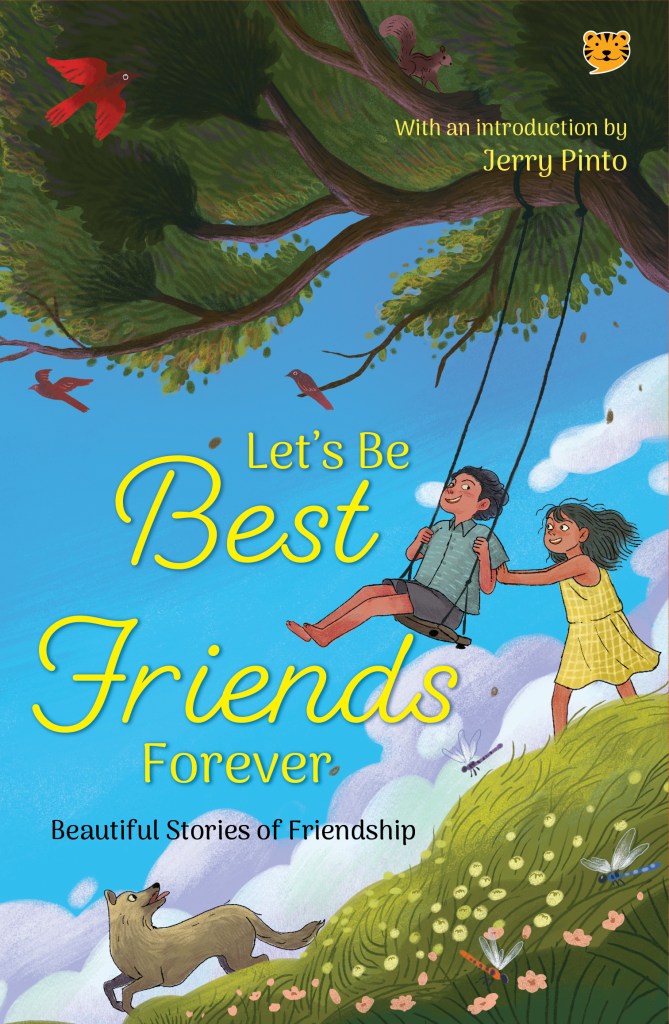
Let’s Be Best Friends Forever

Title: Let’s Be Best Friends Forever: Beautiful Stories of Friendship

Publisher: Talking Cub, Speaking Tiger Books

From ‘The Tunnel of Friendship’ by Ruskin Bond

I had already started writing my first book. It was called Nine Months, but had nothing to do with a pregnancy; it referred merely to the length of the school term, the beginning of March to the end of November, and it detailed my friendships and escapades at school and lampooned a few of our teachers. I had filled three slim exercise books with this premature literary project, and I allowed Azhar to go through them. He was my first reader and critic. ‘They’re very interesting. But you’ll get into trouble if someone finds them,’ was his verdict.

We returned to Shimla, having won our matches against Sanawar, and were school heroes for a couple of days. And then my housemaster discovered my literary opus and took it away and read it. I was given six of the best with a Malacca cane, and my manuscript was torn up. Azhar knew better than to say ‘I told you so’ when I showed him the purple welts on my bottom. Instead, he repeated the more outrageous bits he remembered from the notebooks and laughed, till I began to laugh too.

‘Will you go away when the British leave India?’ Azhar asked me one day.

‘I don’t think so,’ I said. ‘My stepfather is Indian. My mother’s family have lived here for generations.’

‘Everyone is saying they’re going to divide the country. I think I’ll have to go away.’

‘Oh, it won’t happen,’ I said glibly. ‘How can they cut up such a big country?’

‘Gandhi will stop them,’ he said.

But even as we dismissed the possibility, Jinnah, Nehru and Mountbatten and all those who mattered were preparing their instruments for major surgery.

Before their decision had any effect on our life, we found a little freedom of our own—in an underground tunnel that we discovered in a corner of the school grounds. It was really part of an old, disused drainage system, and when Azhar and I began exploring it, we had no idea just how far it extended. After crawling along on our bellies for some twenty feet, we found ourselves in complete darkness. It was a bit frightening, but moving backwards would have been quite impossible, so we continued writhing forward, until we saw a glimmer of light at the end of the tunnel. Dusty, a little bruised and very scruffy, we emerged at last on to a grassy knoll, a little way outside the school boundary. We’d found a way to escape school!

The tunnel became our beautiful secret. We would sit and chat in it, or crawl through it just for the thrill of stealing out of the school to walk in the wilderness. Or to lie on the grass, our heads touching, reading comics or watching the kites and eagles wheeling in the sky. In those quiet moments, I became aware of the beauty and solace of nature more keenly than I had been till then: the scent of pine needles, the soothing calls of the Himalayan bulbuls, the feel of grass on bare feet, and the low music of the cicadas.

World War II had just come to an end, the United Nations held out the promise of a world living in peace and harmony, and India, an equal partner with Britain, would be among the great nations…

But soon we learnt that Bengal and Punjab provinces, with their large Muslim populations, were to be bisected. Everyone was in a hurry: Jinnah and company were in a hurry to get a country of their own; Nehru, Patel and others were in a hurry to run a free, if truncated, India; and Britain was in a hurry to get out. Riots flared up across northern India.

At school, the common room radio and the occasional newspaper kept us abreast of events. But in our tunnel Azhar and I felt immune from all that was happening, worlds away from all the pillage, murder and revenge. Outside the tunnel, there was fresh untrodden grass, sprinkled with clover and daisies, the only sounds the hammering of a woodpecker, and the distant insistent call of the Himalayan barbet. Who could touch us there?

‘And when all wars are done,’ I said, ‘a butterfly will still be beautiful.’

‘Did you read that somewhere?’ Azhar asked.

‘No, it just came into my head.’

‘It’s good. Already you’re a writer.’

Though it felt good to hear him say that, I made light of it. ‘No, I want to play hockey for India or football for Arsenal. Only winning teams!’

‘You’ll lose sometimes, you know, even if you get into those teams,’ said wise old Azhar. ‘You can’t win forever. Better to be a writer.’

One morning after chapel, the headmaster announced that the Muslim boys—those who had their homes in what was now Pakistan—would have to be evacuated. They would be sent to their homes across the border with an armed convoy.

It was time for Azhar to leave, along with some fifty other boys from Lahore, Rawalpindi and Peshawar. The rest of us—Hindus, Christians, Buddhists, Sikhs and Parsis—helped them load their luggage into the waiting British Army trucks that would take them to Lahore. A couple of boys broke down and wept, including our departing school captain, a Pathan who had been known for his unemotional demeanour. Azhar waved to me and I waved back. We had vowed to meet again some day. We both kept our composure.

The headmaster announced a couple of days later that all the boys had reached Pakistan and were safe. On the morning of 15 August 1947, we were marched up to town to witness the Indian flag being raised for the first time. Shimla was still the summer capital of India, so it was quite an event. It was raining that morning. We were in our raincoats and gumboots, while a sea of umbrellas covered the Mall.

(Extracted from Let’s Be Best Friends Forever: Beautiful Stories of Friendship, with an introduction by Jerry Pinto. Published by Talking Cub, the children’s imprint of Speaking Tiger Books.)

ABOUT THE BOOK

 An Afghan trader and a young Bengali girl form a touching connection that transcends cultural barriers in Rabindranath Tagore’s classic story ‘The Kabuliwala’. Jo March and Laurie from Little Women meet at a dull party and become companions for life. L. Frank Baum’s timeless characters Dorothy and Toto adventure around Oz forging magical bonds of friendship.

The brave queen of Jhansi and her ally Jhalkaribai come together to fight for freedom and dignity; Jesse Owens narrates an inspiring tale of sportsmanship and solidarity from his Olympic days; and twelve-year-old Kamala and her friends, Edward, Amir and Amma, endure the Partition riots together in Bulbul Sharma’s heart-warming story.

In these pages you will also meet Nimmi and her best pal, Kabir, whose school misadventures include spirited debates; Sunny, whose love for books leads to a new friendship on a trip to Darjeeling; Cyril and Neil, who face life’s challenges with inventive word games, and Siya, who discovers that true friends can come in the most unexpected forms—even as a cherished doll.

Animal lovers will delight in the escapades of Gillu, the charming squirrel, Harold, the handsome hornbill, Rikki-tikki-tavi, the loyal mongoose, Hira and Moti, the powerful oxen, and Bagheera, the brave panther who looks after the young boy Mowgli.

With stories from beloved and popular authors—Ruskin Bond, Rudyard Kipling, Mahadevi Varma, Jerry Pinto, Shabnam Minwalla, and many more—Let’s Be Best Friends Forever is an enchanting collection that celebrates the universal power and beauty of friendship.

.

PLEASE NOTE: ARTICLES CAN ONLY BE REPRODUCED IN OTHER SITES WITH DUE ACKNOWLEDGEMENT TO BORDERLESS JOURNAL

Categories
Review

Remembering the Partition

Book Review by Meenakshi Malhotra

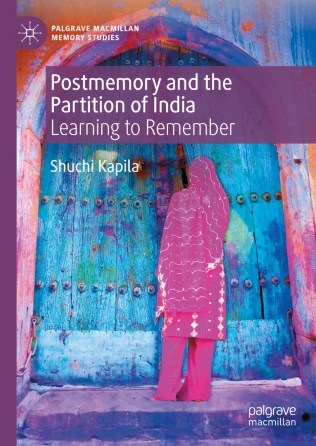
Title: Learning to Remember: Postmemory and the Partition of India

Author: Shuchi Kapila

Publisher: Springer

Shuchi Kapila’s book on Partition focuses on the hinge generation — the one separated by a generation or two from the actual experience of the Partition, but increasingly drawn to analyse its memories in their own lives and its significance for the future. Simply because, the Partition with its trauma and losses remains a huge part of their parental, familial and collective memory.

While Kapila’s book recovers these embedded memories through interesting anecdotes, the fact remains that the historical event of the Partition cast a huge shadow on her parents’ lives, and that of many like her. She, like others (Priya Kumar, Urvashi Butalia) are drawn to excavate and unpack this silence and trauma that impinged upon the parents’ lives and shaped them in umpteen ways.  Such postmemory is described by Marianne Hirsch as “the experience of those who grow up dominated by narratives that preceded their birth, whose own belated stories are evacuated by the stories of the previous generation shaped by traumatic events that can be neither understood nor recreated” (Hirsch 1996, 659, quoted by Kapila). She goes on to write: “It is the largeness of these stories that dominate our psyches even as we often know very little about them, a kind of haunting that is often not understood.”

Like many in this generation, Kapila  was protected from all knowledge of the event by the silence of those who had experienced it directly. At the same time, she strongly felt a compulsion and an ethical imperative to understand the legacy of the Partition on her own terms.

Kapila points out that the flood of writing on the Partition that has emerged since the fiftieth anniversary of independence in India and Pakistan includes scholarly histories, oral histories, feminist studies, and literary and cultural studies of the Partition (which have poured out in a steady stream in the decades after 1997), show a strong inclination to exhume buried and seemingly lost memories. Priya Kumar’s Limiting Secularism, one of the most significant studies of the ethics of remembering, presents a compelling summary of this terrain of ‘return’ to the Partition. She argues that it is not merely that the first generation of Partition migrants is now dying out leading to an understandable anxiety about capturing their voices(as Butalia also voices in her book The Other Side of Silence) but also that the fact that Partition is the “founding trauma” (Dominick la Capra) of the subcontinent to which we must return in constant acts of “avowal” (Kumar 2008, 87).

Kapila’s book then is one such act of return and avowal in exploring again from a post memorial position the travels and travails of Partition memory. The enormity of the Partition— around a million dead, migration of between twelve and fourteen million across the borders of Punjab and Bengal, 75,000 women of different faiths abducted and very few “rehabilitated”– the numbers are mind-numbing.

Given that Partition was a territorial, social, and political division of peoples who had lived together for the previous centuries, there were many who resisted the idea of this division but recognised equally that it was a moment for Muslim self-determination in the formation of Pakistan. A common feeling in this context which prevailed among all communities, Hindus, Muslims, Sikhs, was a feeling that the departing colonial powers had betrayed them. With these affects,the act of remembering Partition, the author feels, can never be a single, linear, decisive and discrete fact specific to communities but somewhat fuzzy and porous. It is inevitably marked by the recognition of multiple narratives jostling for attention with all communities involved as perpetrators and victims. The Indian nationalist myth that the Indian Congress party wanted a united India whereas Muhammad Ali Jinnah, the leader of the Muslim League, wanted to divide India and secure Pakistan for Muslims has been interrogated most famously by Ayesha Jalal who argues that literary narratives have also offered scholars the opportunity to think through the ethics of co-existence, which is the focus of Priya Kumar’s study, Limiting Secularism (2008), in which she considers how literary texts imagine possibilities and histories of productive relationships that seemed to have been irrevocably lost with partition.

Another significant area of research opened up was that of  collecting narrative oral histories, a methodology which has been referred to by Ritu Menon and Kamla Bhasin in Borders and Boundaries(1998) and used powerfully in Urvashi Butalia’s The Other Side of Silence(1998). These accounts revealed that women’s lives were deeply impacted by the rape and violence visited upon them during Partition and the silencing of their narratives as a patriarchal state was inaugurated. Jill Didur (2006) reads the silences and ambiguities of women’s stories as an important counter-narrative that unsettles Partition, revealing, for instance, how the agency of abducted women was completely eluded even in the recovery operations to establish a benevolent paternalist state. Given that there is a necessary relationship between the public and private realms of memory, it is unsurprising that some of the same themes can be found in testimonials and oral histories as well. This is the case made by Anindya Raychaudhuri (2019) whose attempt to think through Partition as “a productive event” is very much in line with Kapila’s  effort to highlight the different generational voices of  interviewees (Raychaudhuri 2019,13).

The book also considers private family memory and public institutions like the 1947 Partition Archive and the Amritsar Partition Museum. However, Kapila is aware that both these public institutions are relatively recent developments making it difficult to gauge their impact on private memory. Like literature and cinema, oral histories have also expressed themes of loss, violence, home, childhood, and trauma that appear repeatedly in stories of  Partition migrants. Yet,  as Kapila avers, “despite scholars’ clear understanding of the particularity of each oral history encounter, most studies distill them for themes and documentary evidence rather than as specific performances” based on “the subject position of interviewer and interviewee, time, space, social and regional position.” In contrast to this, Kapila is observant about the processual aspect of memory that are constituted by a more expansive understanding of “the filial and affiliative in each encounter as it rearticulates the nature of family, belonging, and community and while Partition literature and film have coloured narratives and tropes which shape how people remember or narrate,” her focus is on the interaction between the subject position of interviewer and interviewed.

Anjali Gera Roy’s significant work on Partition testimonies works toward an amplification of the historical record, which works by filling in “the personal, sensory, affective memories of both documented and undocumented historical events”(Gera Roy 2019, 24). She describes  her work,  as a “corrective and as supplement” to historical accounts. In the 160 testimonies gathered by her and her research assistants in many cities of North and East India, she unearths the ‘intangible violence’ of Partition.

The questions she poses sheds considerable light both on the processes and workings of memory as well as the methodology of such an enquiry: “How much of my parents’ relationship was structured by a deep and intimate understanding of Partition trauma? How much of their subterranean anxieties about their children were shaped by the experience of Partition? Heeding Marianne Hirsch’s description of postmemory mediated “not by recall but imaginative investment, projection, and creation,” she  asks how we could help in exploring its potential for progressive futures (Hirsch 2012, 5). Family history, though repeated many times and extensively written about is both representative and singular, each experience one more testimony to what millions experienced.

In emphasising a humanistic approach to Partition memory, she explores it not as aggregation of historical or social fact but for the relationship it sets up among post memorial generations and between them and first-generation migrants and the importance of each act of articulation. This book is thus a study of the culture of Partition memory that is being built by post memorial generations through public institutions, research, oral history, and family stories. For these generations, studying Partition is an experience in learning to remember from new socio-political locations not just in South Asia but also in its diaspora in Europe and the United States, and other parts of the world. These acts of memory are significant not only to gain insight into an event, but also ultimately to address the psychological impact of the event.

Kapila’s work is a significant contribution to Partition and memory studies. In revisiting Partition through the lens of memory, her book reminds us about the significance of processing painful memories as a way of approaching the past. The chronology is also significant, coming as it does, more than seventy-five years after Partition. Yet it is precisely this belatedness which makes it significant. In their preface to their edited book on The Psychological Impact of Partition in India, psychiatrists Sanjeev Jain and Alok Sarin (2018), mention the lack of conversation or research material on the psychological impact of Partition in the sub-continent. They flag the urgency of revisiting and processing traumatic memory. Understanding the delayed effects of trauma thanks to their extensive experience as psychiatrists and psychologists, they view the time lapse and belatedness as central to the way memories work.  

Kapila’s book has a chapter on the idea of ‘nostalgia’ for instance and then also on new institutions of memory like the museum. She explores different avenues that have been developing to rectify some of this missing memory of Partition, through extensive interviews.  This is the thrust of the first half of the book—these intergenerational conversations and understandings of Partition. The second half of the book looks more closely at the two physical spaces that have been established to communicate about Partition. These two physical spaces include the Berkeley, California 1947 Partition Archive, which now contains at least 10,000 oral histories of Partition, available for researchers, scholars, and individuals to explore and examine. India has also recently opened the Partition Museum, Amritsar, the first museum of its kind in India. Museums tend to craft particular narratives of events or experiences, and Kapila considers this new museum in that light

Postmemory and the Partition of India: Learning to Remember is a fascinating interrogation of this concept of remembering and memory, and how we craft narratives of our understandings of events through our memories or the memories of others. Ultimately, Kapila is asking the reader to consider how it is we learn to remember, particularly how we learn to remember complex, political events that shape who we are and how we think of ourselves in the world. Focusing on the centrality of processing traumatic memory in order to negotiate our daily lives, Kapila’s work is deeply interdisciplinary. Her scholarship can also be viewed as a labour of love and a tribute to her parents — and their generation — for the considerable emotional labour  they invested to ensure that their children were able to go beyond their own memories of loss.

.

Dr Meenakshi Malhotra is Associate Professor of English Literature at Hansraj College, University of Delhi, and has been involved in teaching and curriculum development in several universities. She has edited two books on Women and Lifewriting, Representing the Self and Claiming the I, in addition  to numerous published articles on gender, literature and feminist theory.  Her most recent publication is The Gendered Body: Negotiation, Resistance, Struggle.

.

PLEASE NOTE: ARTICLES CAN ONLY BE REPRODUCED IN OTHER SITES WITH DUE ACKNOWLEDGEMENT TO BORDERLESS JOURNAL

Click here to access the Borderless anthology, Monalisa No Longer Smiles

Click here to access Monalisa No Longer Smiles on Amazon International

Categories
Tribute

‘He Belongs to Me, He Belongs to You’

Santosh Bakaya weaves magic around the iconic Gandhi

Courtesy: Creative Commons
MAGIC

 
Lo! I saw a magician last night. 
 A slender silhouette -- almost half-naked. 
Was the night at its tricks once again? 
Was the frail figure about to pull rabbits out of his hat? 
Magicians do have this incorrigible habit of pulling rabbits from hats.
But this magician defied all stereotypes. Where was his hat? 
Where the rabbits? 

I looked at the calendar, and gasped. It was 16 August 1946. 
How bizarre! The stars outside had a fickle glow. 
There was chaos, there was confusion. There was hatred. 
The graffiti on the mildewed walls screamed: 
Direct Action Day! 

Piercing the cacophony, a soft, feathery voice
 fell on the turbulent crowd. 
Not a rabble rousing voice, but a magical one.

“I have come here to serve Hindus and Muslims.” 
A hush fell. Louder – louder – louder grew the hush.

Then I saw the half-naked figure walking away. 

All alone – but in sync with 'Gurudeb's words 
'Ekla chalo Re*’. 

But lo and behold! There was more magic! 
The pages of the calendar fluttered in the breeze. 
With great ardour, swayed the trees.
I was amazed; the calendar now showed the year 2023.

I peeped through the window.
 Birds perched on bowers were singing, impromptu songs.
 The folds of their yellow-green-blue-wings hid musical notes.
Then I again saw the half-naked figure. 
Walking alone, but in sync with 'Gurudeb's words, 
'Ekla chalo Re,' ringing in his ears.  

But lo and behold! There was more magic! 
The One Man Army was no longer alone.
The trickle had become a deluge. 
Music poured from every tree.

A multi-layered song was being sung in every tone, 
every tenor, every pitch, pouring love melodies.  
The sun of a new morn smiled from above.  
The heady scent of freshly hewn lawn spread in the air.

Megalomaniacs had fallen pathetically silent.
The muted falling of a leaf creating a quiet turbulence.
An invisible drummer was beating his drum.

“Back to nature --Back to peace --Back to love. 
An eye for an eye, a tooth for a tooth will make the whole world blind. 

Blind-Blind-Blind.” 
The surroundings resounded.
 The boughs seemed to be swaying to the beat of myriad stringed instruments 
Queedle queedle -queedle hoo- ah hoo- hoo- hoo kleek kik ik ik ik .honk honk 
koo- ookoo hoooooooo…

Birds sang from every branch-- high pitch – low pitch, contralto cadences,
 chirruping notes, and even hoarse, grating rattles and loud caws. 
Magic again happened-- creating a soul-- soothing symphony 
of eclectic pitches and rhythm. 

 “He belongs to me, he belongs to you. 
He belongs to the man in the street. 
He belongs to the coward and the bold. 
He belongs to the strong and the effete.
He belongs to the one shivering on the pavement.
He belongs to me, he belongs to you.  

"He belongs to the man whimpering under the awning.
Hoping for something good in the coming morning. 
He belongs to the bruised and the battered.
And the one with unshed tears and clothes tattered. 

"He belongs to the one who lives by his labour. 
And even to the one who does not love his neighbor. 
The spunky woman bending in ceaseless toil.
And the youngster whose blood is on the boil. 
 
"He belongs to the one with the frown. 
He belongs to the white, black and brown. 
The one with a swagger in his gait. 
The one who suffers viciously at the hands of fate.

"The bird fluttering helplessly in the cage. 
The youth struggling with road rage. 
Those engrossed in ego tussles 
and the one flaunting his muscles.
He belongs to me, he belongs to you.”

With a revolutionary fervor, every leaf was shaking.
A symphony of love and peace was in the making. 
The pilgrim was no longer alone 
Love had injected every bone. 
Faces glimmered with hope -- there was no mistaking. 

*Gurudeb means Teacher and refers to Tagore in this case. 'Ekla Cholo Re' (Walk Alone) is a well known song by Tagore.

Santosh Bakaya, PhD, poet, essayist, novelist, biographer, TEDx speaker, has written twenty-three books across different genres, Ballad of Bapu, and Only in Darkness can you see the Stars [Biography of Martin Luther King Jr]. have won international acclaim. What is the Meter of the Dictionary? is her latest solo book of poetry. 

.

PLEASE NOTE: ARTICLES CAN ONLY BE REPRODUCED IN OTHER SITES WITH DUE ACKNOWLEDGEMENT TO BORDERLESS JOURNAL

Click here to access the Borderless anthology, Monalisa No Longer Smiles

Click here to access Monalisa No Longer Smiles on Kindle Amazon International