
Categories
Essay

Morning Walks by Fakrul Alam

Morning walks, or rather ambles, tiptoeing towards the rest of the day. One’s day gathers pace seemingly hour by hour after one wakes up, like a typical Bhairavi[1] performance in Indian classical music, starting slow and accelerating in tempo till the end. The world seems so tranquil in the morning; the Dhaka air smells so relatively fresh (how fresh depends of course on where you are!) at that time. I think indolently most days now (even before the alarm rings!), why not walk at an easy pace and even lazily at first, at least for a while, before picking up speed afterward?

It was not always thus with me; time was when I used to greet the morning impetuously. Like Donne in ‘The Sun Rising’[2], albeit sans a lover next to me, I would, once upon a time, feel like chiding the sun— “busy old fool, why disturb my sleep so? Why not light up some other world and break someone’s sleep in continents far, far away?” My mother, stirred by the call to prayer she always heard in her conscience (for those were days without alarms), would try to wake us up. Or she would scold and cajole us till my siblings and I would eventually arise, rubbing our eyes and getting up from bed for another schoolwork-filled day in practiced disbelief and simulated foot-dragging.

Mother would tell us of fabled early risers. “Take Rabi Thakur[3],” she would say, “never missed a sunrise!” Or formulaically, “Morning shows the day!” My father would do his bit: “Early to bed,” he would recite ritually, “and early to rise/ would make a man healthy, wealthy and wise!” But the man who made me take up morning walks seriously and regularly was my physician. Gravely, he said, while writing blood pressure pills for me when I was well past 50, “You must walk regularly too—half an hour every morning at least!” Setting out for my “prescribed” morning walks initially, I would think, “How boring! How slowly does the body warm up this way!” For someone who had played contact sports requiring a lot of running around/movement (basketball, football, cricket and tennis) for decades, walking was decidedly dull when I began to do the needful in my 50s. One missed the excitement and emotions generated when like-minded boys of all ages competed with each other intensely in games. But like everything else in life pursued regularly, walking soon became a habit for me. In no time it became an activity I began to like and even looked forward to. After all, morning walks, I soon found out, have their unique attractions.

Fuller Road Morning Walks

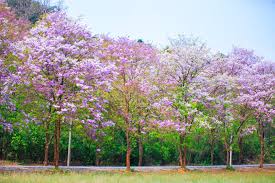
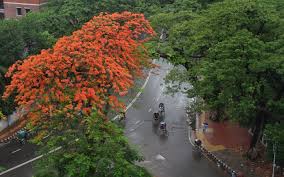
I was lucky that I first began to do my constitutionals on Fuller Road and the Mall part of the Dhaka University campus. The walks my doctor had prescribed soon began to feel pleasurable in the still lovely parts of the DU campus. How could I not like the early morning sights and sounds in that green and quiet world then? In spring and early summer flowering krishnachura, radhachura or jarul trees presented a visual feast even as mango blossoms and other flowers scented the air; the solitary cuckoo bird, at its most insistent in the early hours, too, was unforgettable. In the rainy season, everything looked lush green while the fragrance of kodom or kamini flowers suffused the air; in autumn, delicate sheuli blooms embellished mornings imperceptibly for us walkers.
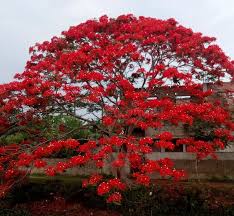
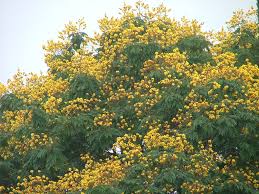
February morning walks were made colourful by “early bird” couples all dressed up for the occasion of Bashanta Utshob[4] or Valentine’s Day dates. Ekushey February[5] and December 14[6]— Martyred Intellectuals Day—mornings, in contrast, were mournful occasions when walkers appeared touched by the solemnity of events they were heading towards. Eid days saw only scanty early morning traffic, but soon after seven in the morning, kurta-clad people could be seen rushing to the central mosque of the campus. But most days, Fuller Road mornings seemed to us walkers in sync with a relaxed, unhurried mode of existence.

Other scenes caught my attention during morning walks for often unusual reasons. The wild dogs of night would disappear in full light, but one would occasionally come across pack members intimidating one another or chasing solitary, skinny squirrels or stray cats who would fight back in their own fierce or wily ways. A not uncommon and sobering scene was that of a rickshawallah parked on the street, precariously perched on his seat, attempting to steal some sleep anyhow before heading for his next back-breaking assignment. Certain times of the year, the neighbourhood madman would attract one’s attention with his manic display. And not infrequently and sickeningly, one would encounter a bedraggled drug addict every now and then. Looking doped and possessed, his eyes turned away from prying gazes, he was inclined to slink away.

I, for my part, got addicted quickly to my early morning campus walks. There was the heady feeling of the fresh air charging up my veins; it was pleasurable too to walk with people with whom I could share the twists and turns of university politics and vent my indignation at the way campus politicking was vitiating the atmosphere day by day. And after 45 minutes of brisk walking and a quick shower, I had a healthy appetite and a mind relaxed for the day’s work.

Dhanmondi Morning Walks

In 2017, I moved to Dhanmondi to begin life in the city outside the DU campus after 20 or so years in it. One reason this seemed a fit place for retired life was the walkways edging the lakes, built thoughtfully for walkers, traversing Dhanmondi and winding their way through parks and open spaces. I felt in my mind in choosing a new flat, that this would be an ideal place for morning walks for people like me so dependent on constitutionals. I was not really disappointed by what I experienced in my Dhanmondi morning walks initially. We were surrounded by greenery. The water in most parts of the lake was reasonably clean and quite greenish blue; scattered bits of reflected sunlight here and there made the water even more attractive during the morning hours. If I was able to get up really early, I could watch the glowing sun ascend above Kalabagan from the road 32 bridge. One lucky day, I was even able to capture the crimson-daubed rising sun reflected in the placid lake water.

Unlike the Fuller Road-Mall areas of DU, the Dhanmondi lake walkways and the park areas fill up in no time at all with morning walkers. It was good to see people doing calisthenics in groups daily, or playing badminton (in winter and early spring). Occasionally, I came across a man or a woman on the mobile, rapt in intimate conversation, no doubt with a significant other with whom talking is essential even that early. All alone in my walks now, I, on the other hand, found early morning walks a good time to think about things or think through things—solitude is sometimes the best company! Ideas for papers I was writing or projects I hoped to undertake seemed to become clearer by the bend in my walks. And soon I discovered Dhaka FM radios that performed from 6 to 7 am with little or no commercial or smart-talking DJs intervening for long stretches and with music that synced with my Bhairavi mood.

But there are aspects of Dhanmondi life that make morning walks here much less relaxing than the Fuller Road ones—despite the lakeside ambiance and the abundance of greenery. The park becomes so crowded within half an hour or so of sunrise that a common experience is people jostle one another on the walkways after a while. The lake water is quite polluted in places; a common sight is the garbage littered in the lakeside or plastic bags floating on tucked away parts of the lake or even near bridges. Almost immediately after seven, never-ending honking and noxious fumes emitted by cars swarming to the main and neighbourhood roads to drop children to the innumerable schools of Dhanmondi can mar morning moods easily. Irritating, too, can be professional beggars placed strategically on walkways and on intersections. For instance, shortly after I start my walk every day from road 27, I encounter the conscience-clouding gaze of a beggar woman clad in a black burqa, peering at the passer-by purposefully, reminding one of the figures playing death in western medieval morality plays. And then there are the vendors lined up to sell food or this or that inside as well as outside the park. Truly, Dhanmondi is now an area where the line between the residential and commercial is close to disappearing. In many ways, Dhanmondi morning walks are nowhere near the ones I would set out for on almost always serene Fuller Road.

And yet I find much to like in my morning walks even now. Dhaka still appears a nice place to live at that time of the day. The morning breeze, if and when flowing, revives me. One morning recently, when I was walking by the lakeside where the palash flowers blazed against the greenery and the greenish blue lake water, I heard on my mobile FM radio lyrics of a song that said it all for me then: “Emon manob jibon ki hobe/Eto shundor prithibe te ki ar asha hobe?” (Will there be another life like this one/ Will I come back to another world as beautiful as this one?”)

[1] Morning raga in Hindustani Classical

[2] A poem by John Donne (1572-1631)

[3] Rabindranath Tagore (1861-1941)

[4] Bengali Spring Festival

[5] Mother tongue day. On 21/2/1952, the Bangladeshi movement started against the imposition of Urdu

[6] December 14 was observed as a Martyrs’ Day to commemorate the large number of Bangladeshi intellectuals killed during the Bangladesh Liberation War.

(First Published in Daily Star in March 2019)

Fakrul Alam is an academic, translator and writer from Bangladesh. He has translated works of Jibonananda Das and Rabindranath Tagore into English and is the recipient of Bangla Academy Literary Award (2012) for translation and SAARC Literary Award (2012).

PLEASE NOTE: ARTICLES CAN ONLY BE REPRODUCED IN OTHER SITES WITH DUE ACKNOWLEDGEMENT TO BORDERLESS JOURNAL

Click here to access the Borderless anthology, Monalisa No Longer Smiles

Click here to access Monalisa No Longer Smiles on Amazon International
Categories
Essay

A Short, Winding, and Legendary Dhaka Road

By Fakrul Alam

From Public Domain

Fuller Road, the short and winding road in the middle of the University of Dhaka campus, is quite legendary, not only as far as the history of that institution is concerned, but also in the annals of Bangladesh. It must also be one of the most beautiful of Dhaka city’s roads, having till now mostly escaped the degradations other old roads of the city have been subjected to due to rampant urbanisation. It is steeped in history, but still looks as if it was built not that long ago. Undoubtedly, it has real character and a distinctive place in the city’s life.

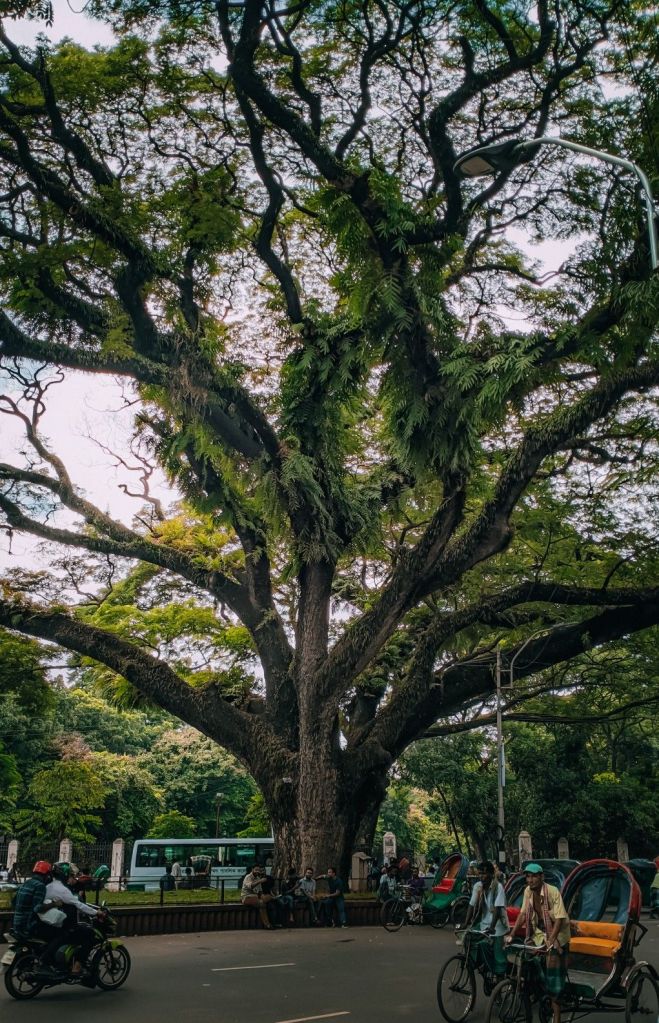
Bampfylde Fuller[1] was the first Lieutenant Governor of the province of East Bengal and Assam but he held that position for less than a year. Fuller Road must have been named to acknowledge his indirect role in the creation of Dhaka’s university. A controversial administrator and a very opinionated man, he had quit his position in a huff after less than a year at his job. The Partition of Bengal had been revoked in 1912, and all Fuller left behind then in his brief stint seemingly was the beautiful Old High Court Building of the city (whose construction he had initiated) and the splendid, sprawling rain trees of the university he had apparently imported from Madagascar. Nevertheless, the naming of the road indicates that he was part of the historical current that would lead not only to the building of the University of Dhaka in 1921, but also to the Partition of India in 1947, and the birth of Bangladesh in 1971. Fuller Road is thus replete with history.

Enter it from Azimpur Road and you will see it flanked on one side by Salimullah Muslim (or SM) Hall, and on the other by Jagannath Hall. The former, of course, is named to honour Nawab Salimullah, one of the university’s founders, and someone who had donated a lot of land to the university. Built in 1930-1931, SM Hall is a splendid building, incorporating features not merely of Mughal architecture and gardens, but also of design elements of the colleges and halls that echo another venerable university, Oxford (one reason why the University of Dhaka was once called the “Oxford of the East”). Jagannath Hall comes with an overload of history as well. It, too, was originally modelled after the halls of the University of Oxford and was named after a zamindar of Savar who had contributed to the founding of Jagannath College, which had an organic connection with the university for a long time.

Fuller Road, in fact, is also steeped in the history of Bangladesh. If you enter it from its Azimpur Road entrance, you will see the Swadhinata Sangram, a group of sculptural busts by Shamim Sikder that commemorates the legendary names associated with the university and the birth of Bangladesh. If you care to enter the university staff quarters from either the left or right of the road, and if you then ask the guards to show you around, you will find the graves of intellectuals (or plaques honouring them). These were men martyred in 1971 due to the single-minded determination of the Pakistani army and its Bengali collaborators to eliminate dissident intellectuals who had worked for the birth of Bangladesh, thereby crippling the country at the moment of its birth.

If you exit the road on Nilkhet road, you will find a solemnly built commemorative area in another island, containing plaques listing university teachers, staff members, and students martyred in 1971. The sculptures and the plaques are testaments not only to the sheer bloody-mindedness of the Pakistani forces of yore but also to the major contribution made by the university’s people to Bangladesh’s independence. I grew up listening to snatches of the history of the University of Dhaka and Fuller Road that are relevant here.

One of my uncles, for instance, is still fond of retelling an incident when he escaped from the Pakistani police’s bloody assault on demonstrators protesting on February 21, 1952, against the imposition of Urdu as the sole national language of the nascent state by (West) Pakistani administrators and their cohorts. He had taken refuge at that time in the Fuller Road flat of an European Jewish academic, who was then a faculty member. A few of my teachers have either talked about or written about the movements that continued from that memorable incident till December 16, 1971, describing their involvement with the various other movements that led to the emergence of Bangladesh. They highlight, in the process, noteworthy moments in the road’s history and the roles its denizens played in our country’s pre-liberation stages, as well as the memorable transitional historical moments they had either witnessed or were part of.

As I move in from the Swadhinata Sangram island on the Azimpur Road entry point of Fuller Road nowadays, I can see only a few remnants of the natural beauty the road once boasted. Gone is the basketball court placed in a picturesque setting that SM Hall once possessed, or the lush green grass tennis court of the Hall that my uncle reminisced about. He played there before my time. For a long time, there were many statuesque and lovely trees on the SM Hall side of the road. However, the distinctive architectural features of the SM hall building still strikes me as very impressive.

On the other side, however, the first clear signs of the uglification of Fuller Road are visible in the drab features of the newly built extension of the Jagannath Hall complex. In addition to these two halls, Fuller Road is flanked on one side by the British Council and university staff quarters, and on the other by Udayan Bidyalaya (aka Udayan School/College), some faculty and staff quarters, the residences of one of the pro-vice chancellors and the treasurer, and the vice chancellor’s house. The two buildings of the pro-vice chancellor and the treasurer are pretty nondescript, as are the Udayan buildings, but the British Council setup is quite notable. I have written about the British Council’s transformation from an open access center for intellectual and cultural pursuits and my own memories of stimulating as well as adda[2]-filled days in anguished as well as indignant remembrance elsewhere, but let me just reiterate what I say in that piece briefly here: This new British Council is, indeed, sleekly designed and has state-of-the art security, but it is no longer the vibrant centre of intellectual exchange it once was, and is now mostly a place visited by those who can afford its wares of British education.

The Vice-chancellor’s residence, however, is undoubtedly still striking. If you have had the privilege of going inside, you must have been impressed by the building as well as the grounds, containing krishnachuras and jarul trees, which when flowering, make Fuller Road look vibrant and colourful—almost a garden in Dhaka city. Indeed, the rain trees, the krishnachuras and jaruls in bloom, one or two shirish and a solitary sonalu trees and (still) numerous mango trees play their part in making Fuller Road a distinctive floral phenomenon of the cityscape. Fuller Road is indeed as beautiful as you could expect any road to be in a bustling, bursting-at-its seam, and unsparingly chaotic city like Dhaka.

It is a road that also has many moods and that you can see in many lights—literally. I lived in Fuller Road for over two decades and frequented it for two more, and thus have had the privilege of viewing the road at different times of the day and on diverse occasions for at least four decades. When I now reflect on what I saw, I am struck by the immense variety of the experiences the road affords to those who live in it and even to passersby.

It was during my prolonged stay in Fuller Road that I got frequent glimpses of the wondrous place it once must have been. Even now, a nature-lover can take delight in its birds, for although the cacophonic crows still reign supreme amongst the bird population of the locality, throughout the day, and especially in the evening, you will see swiftly flying flocks of pigeons, tribes of parrots, and incomparably beautiful yellow-breasted holud pakhi[3]couples, in addition to the sad-looking, ubiquitous shaliks[4] and evening’s surrealistic bats.

When I first started living in Fuller Road, I would occasionally see snakes slithering by on monsoonal days; mongooses darting away at the sight of walkers is a not uncommon experience even now. Wild dogs roam in parts of Fuller Road at nights and early mornings. The foxes have disappeared, and I have seen a stray monkey only once or twice, but there is still enough flora and fauna around to make you feel an intimate connection with nature in this neighbourhood of the city. But of course, in addition to its nonhuman residents as well as its human ones, Fuller Road is now frequented mostly by people who find its free and open spaces appealing for different reasons at different times of the day.

Early in the morning or late in the evening, for instance, you will find men and women chatting away as they do their constitutionals; during the day students saunter across the road while vehicles fill the free and plentiful parking spaces; come evening lovers sit down discreetly in its dark spots, trying to be as close as possible and as far away as they can from prying eyes; with nightfall nouveau riche youths park faux sports and/or sleekly painted cars, trying to impress the girls who stroll across the road. Nowadays you will see with irritating frequency in evenings the parked motorcycles of busy-seeming student leaders. At night, Fuller Road can have a surrealistic feel to it—lit up but deserted, desolate as in some dreamscape, and as in a dreamscape, hauntingly familiar. 

What surely makes Fuller Road truly distinctive, though, are the festival days that it hosts throughout the year, and the processions and parades that cross it throughout the year for one reason or the other. If you list them by the English calendar, you can begin with the new year when celebrations continue from the final hours of the dying year and end till the first nightfall of the new one. February is a truly distinctive month in the road—first Bashanta Utshob[5]and then Valentine’s Day see it fill up with young men and women in bright, warm colours and obviously romantic, flirtatious moods. Even solemn Ekushey[6]February, when night-long Fuller Road residents hear the doleful notes of the Ekushey song commemorating our language martyrs, and when from dawn to afternoon the road is closed to all vehicular traffic, switches to a festive mood by late afternoon, as those crisscrossing it seem bent on leaving the sad notes behind to celebrate all things Bengali. But the most exuberant display you can see in and around Fuller Road is during Pohela Boishakh[7], when the road turns into a conduit for festival-loving people flowing from fun-filled event to event. Eid days and Durga Pujas, and Saraswati pujas too witness suitably dressed young people walking across the road in obviously celebratory moods, lighting up themselves and the people around them, as they either stroll by or stand in pairs or groups here and there in the curving road’s embrace.

And the processions and parades? Suffice it to say that they are motivated not only by politics but this or that reason or cause. In the three Fuller Road flats I lived in for twenty or so years, I felt the kind of contentment and ease that I did not experience in the many neighbourhoods of Dhaka I had lived in before, or the Dhanmondi flat I live in now. Mango-filled trees exuding mango blossom scents, kamini flowers with overpowering fragrances, wide open spaces where children and boys play to their hearts’ content and neighbours greet each other familiarly throughout the day made my life on Fuller Road incomparably pleasing.

Towards the end of my Dhaka University career, I moved to a flat on the ninth floor of the newly constructed faculty apartment complex. There I saw what I had never seen before—monsoonal cloud formations, magnificent sunsets (I would not get up in time for sunrises!), the moon in its full glory, and star-studded nights. Heaven seemed to come closer and closer to me then. I truly seemed to have ascended to celestial heights! But paradise has to be lost sooner or later and can only be regained in this world by willing the mind to vision it from exilic places every now and then. But to have had some close to it moments in this life through Fuller Road is truly something to be thankful for!

From Public Domain

[1] Fuller (1854-1935) held the position from 16 October 1905 until he resigned on 20 August 1906 after which he relinquished the position to Lord Minto (1845-1914).

[2] Tete-a tete

[3] Orioles

[4] Mynas

[5] Spring Festival

[6] Twenty-first February has been declared the mother tongue day by UNESCO. One of the reasons Bangladesh was formed was its insistence on Bengali being its mother tongue while Pakistan tried to impose Urdu as the national language.

[7] Pohela Boishakh (first day of the Bengali month of Boishakh) falls on 14th April in Bangladesh and  is celebrated as the start of the Bengali New Year with a holiday and fanfare.

(First Published in Daily Star on July 7, 2018)

Fakrul Alam is an academic, translator and writer from Bangladesh. He has translated works of Jibonananda Das and Rabindranath Tagore into English and is the recipient of Bangla Academy Literary Award (2012) for translation and SAARC Literary Award (2012).

PLEASE NOTE: ARTICLES CAN ONLY BE REPRODUCED IN OTHER SITES WITH DUE ACKNOWLEDGEMENT TO BORDERLESS JOURNAL

Click here to access the Borderless anthology, Monalisa No Longer Smiles

Click here to access Monalisa No Longer Smiles on Amazon International