Categories
Slices from Life

Hooked for Life and Beyond…

By Ravi Shankar

I was hooked! It was my first exposure to a computer though I had read about these in the newspapers and seen them on television. I think it was a Spectrum personal computer popular in the 1980s. My friend, Sanjay and I did a few simple tasks and played a few games on the computer. The games of the 80’s were slow and clunky by today’s standards. In those days however they were interesting and enticing. BASIC was the most popular computer language then. We also had COBOL and a few others. My good friend, Sanjay Mhatre was a bibliophile and a free thinker, and I often used to visit his place and borrow from his vast book collection. However, even in the 1980s there was uneasiness and opposition to computers and the fear that it would replace people and lead to mass unemployment was often mentioned.

The rise of information technology (IT) and the important role to be played by Indian companies was still in the future. I expect artificial intelligence (AI) will also open new jobs in the future. At my medical college in Thrissur, Kerala, India computers were still rare. Communist Kerala had a love-hate relationship with computers and technology. Maharashtra (a western Indian state) was an early adopter of computers, and my tenth- and twelfth-mark sheets were computerised while my MBBS ones were handwritten. During my postgraduation at Chandigarh, computers gained prominence in our conversations. Our head of the department was gracious enough to offer the services of his secretary for typing our research manuscripts when she was free. The only other option was to pay for the service from outside providers. In those days WordStar and WordPerfect dominated word processing. 

Creating slides for presentations was a challenge. LCD projectors were not available, and we had to create physical slides with cardboard mounting. The slides were created on early versions of PowerPoint and photographed using a camera to create the physical ones. My co-guide, Dr Anil Grover (then a cardiologist) at Postgraduate Institute (PGI), Chandigarh mentioned how computers will become increasingly common and encouraged me to learn the Microsoft package of Word, PowerPoint, and Excel. PGI also started offering email facility on a limited basis. You had to write down the details of your email and take it to the IT section who will send your message. We had modems then, which took a while to connect and made a series of sounds with flashing lights while connecting to the internet.

In Pokhara, Nepal at the beginning of the twenty-first century, internet was still a luxury. Manipal College of Medical Sciences used to charge 10 Nepalese rupees to send a message. Faculty could type their message in Outlook and twice a day, the IT person would send and receive messages. In those days, a floppy disk was the most common external storage device, and I soon had a large and colourful collection of floppies. Floppies were not always reliable and sometimes the data on them could not be read. CD-ROMs were another storage device, but CD writers never became commonplace. At Mahendra Pul in the heart of Pokhara, a new cybercafé came up in the early 2000s offering internet browsing at 150 Nepalese rupees per hour. Compared to what we were previously paying, this was a steal!

The college also had an LCD projector though it was not commonly used by faculty members for teaching-learning. This was a large and clunky device. Earlier versions often had compatibility issues. You create your slides and hope for the best. These may or may not open on the laptop and may or may not be projected. One had to have a backup of the lecture on overhead projector (OHP) transparencies, just in case. We did not yet have easy access to computers or laptops. This came only later when the United States Pharmacopeia (USP) set up a drug information and pharmacovigilance centre at the teaching hospital. We got two excellent Dell computers, and the hospital provided us with internet.

The early computers were slow with a big, bulky, and heavy cathode ray screen. They had a blinking cursor and words appeared slowly after typing. The Hollywood movie, You’ve Got Mail (1998), follows the romance between Meg Ryan and Tom Hanks developed through email. The movie is a good introduction to the early days of the internet.  

We had purchased a home desktop computer in 2001 or 2002. This purchase was a financial disaster. The computer required frequent repairs and drained our finances. Google launched its beta version of email, Gmail in 2004, and I was one of the early adapters. I became a fan of Gmail right from the start. It offered significant advantages over the then dominant Hotmail, Yahoo mail and Rediff mail. The storage was larger and there was no need to delete your old emails. Kist Medical College in Lalitpur, Nepal had purchased Dell desktop computers, and these were among the best ones I had used. Fast and responsive with good memory and speed. These had LCD monitors and looked sleek and modern.  

Computer technology has made significant advances. I read that if cars had made similar advances to computers we could drive to the moon and back on a litre of gasoline. Chips started getting smaller and more powerful and are today fought over by the global technology superpowers. A variety of online applications started making their appearance with the spread of the internet. Some of these eventually became the internet giants of today. In India, internet became widely available, and the costs dropped significantly. Mobile technology also made dramatic advances. In India most people access the internet and carry out online tasks using their mobile phones. For around 12000 Indian rupees today you can get a decent mid-range phone. Today mobiles in the palm of your hands have greater processing power than the giants of the 1950s and 1960s. I remember reading a comic strip where a visitor from the future time travels to the present. He laughs on seeing the supercomputer, the most powerful one on earth. When asked why he shows a small ball and introduces it as a computer from his time with much greater processing power than the humungous supercomputer.

One of the major advances has been cloud computing and cloud services. We have Chromebooks that work on web-based applications and needs the internet to do things. Both Google and Microsoft offer a range of services including storage, meetings, messaging, and applications for text, presentations, and calculations. AI is now an integral part of applications. PowerPoint offers the designer option for slides and creates stunning backgrounds. I recently attended a workshop on Copilot, the AI support software from Microsoft that is fully integrated into all their applications. I like the transcribing option for interviews and focus groups offered by Teams and later by Zoom and this makes my life as a researcher easier.

Star Trek, Futuristic computing

When I was growing up, I had no clue about what would soon become commonplace. The world wide web, the ability to browse libraries and art collections, video conferencing, online work processes, applying for government and other services online, online fund transfer and remittance are now at our fingertips. The COVID pandemic shifted a lot of learning and even assessment online. Presently we mainly interact with computers using a keyboard. I am a fan of the sci-fi series, Star Trek, where people interact with computers mainly using their voice. Voice commands are already available and  steadily improving.

I was slow getting into social media. Their judicious use is to be recommended. Facebook keeps me updated on what my friends, acquaintances and former students are doing. LinkedIn is the professional face I present to the world, Twitter (now X) is a concise way to stay connected and YouTube is a major source of entertainment. Computers have changed our life for ever. At a basic level these are based on the flow of electrons through circuits and on the pioneering work in atomic physics done at the start of the twentieth century.

The last three decades have seen developments and changes at unimaginable speed. Who knows what the next three will bring? Will progress continue at an ever-accelerating pace or will we eventually hit a roadblock? We may have to wait for Father Time to provide the answers!

Dr. P Ravi Shankar is a faculty member at the IMU Centre for Education (ICE), International Medical University, Kuala Lumpur, Malaysia. He enjoys traveling and is a creative writer and photographer.

.

PLEASE NOTE: ARTICLES CAN ONLY BE REPRODUCED IN OTHER SITES WITH DUE ACKNOWLEDGEMENT TO BORDERLESS JOURNAL

Click here to access the Borderless anthology, Monalisa No Longer Smiles

Click here to access Monalisa No Longer Smiles on Kindle Amazon International
Categories
Stories

The Agent

By Paul Mirabile

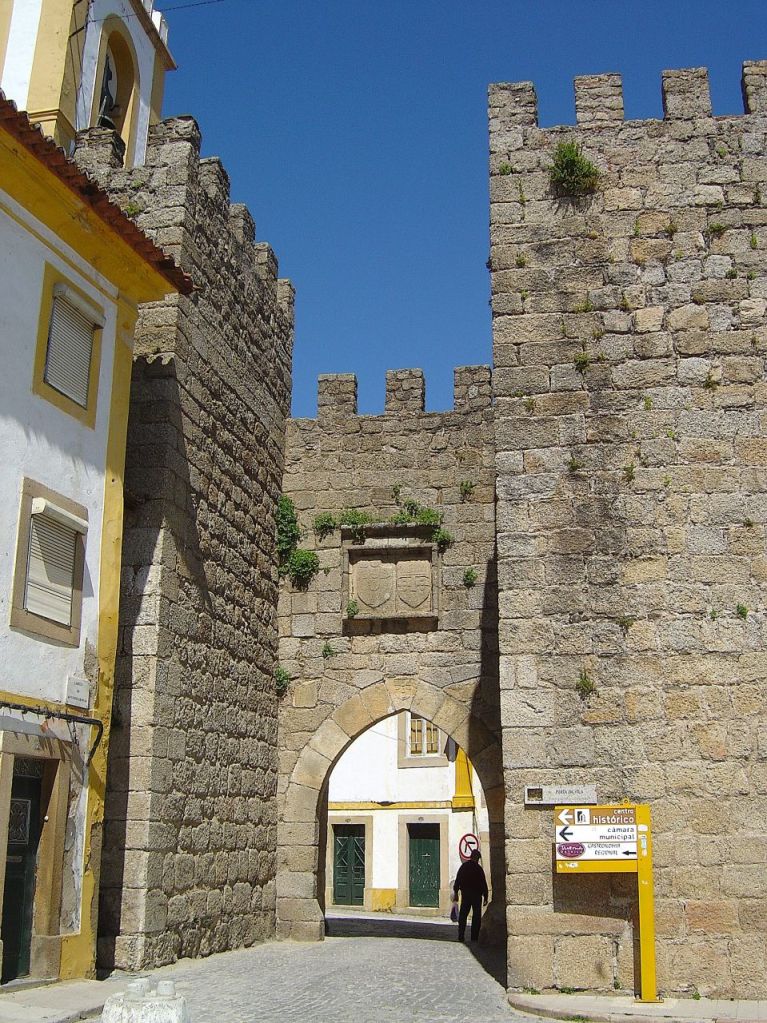
Nisa, Portugal. Courtesy: Creative Commons

  “ … And do you think our present government is meeting the demands of its people ?” spouted the Spokesman Doctor, chairman of the Portuguese Communist Party Delegation in Nisa. Seated in a squalid, fly-laden café, he directed his poignant words towards a group of glassy-eyed villagers, seemingly rather perplexed at such a display of political pathos. He had been at it now for at least two hours.

A dusty gust of wind and shuffling of feet directed the villagers’ languid attention to the doorway. Long strips of coloured plastic peevishly scraped against one another. Someone stepped in : a young man, well-to-do, by his appearance, obviously not from Nisa. He side-stepped a dozing dwarf, making his way to the counter. All glassy eyes fell on the stranger.

 “You never answer questions,” the Spokesman Doctor said, turning on the villagers coldly, although keeping a watchful eye on the stranger at the counter. “All of you, how long are you going to sit here swallowing insult and humiliation ? You can’t live on olives and bread alone. Look at our land … where are the tractors ? Where’s the money from America ?” There was no reply to those beseeching questions, only the slight chuckling of the stranger, who leaned gingerly at the bar sipping a coffee.

 “You’d rather live then without running water and electricity ?” the Doctor spat out, staring hard at the stranger, who stared back at the Doctor even harder. “And still you don’t understand my questions.” One skinny, toothless fellow made some effort to amuse the Spokesman Doctor, but only succeeded in ordering another cup of coffee. The stranger broke into a wide grin. All eyes peered at him from yellow, sunken sockets. He broke the frosty silence by asking in the most delicious courtesy, but in the most atrocious Portuguese, for a glass of iced lemonade.

The unexpected appearance of this stranger brought whispered comments from the villagers. The Spokesman Doctor’s wiry face eyed the stranger with suspicion. He set aside his cup of coffee. A fly aimlessly found itself inside the sugar-coated rim of the cup where it remained until the Spokesman Doctor swished it disdainfully away.

“Are you Portuguese ?” he asked, rhetorically, with a slight accent of irony. The young man turned to him and answered in his choppy Portuguese that he was not, adding a few instants later that he was an American on visit to a friend whom he works with in France. This last phrase was declared in excellent French, something which surprised many of the villagers, most of whom had worked in France for years. The most astounded, however, was the Spokesman Doctor.

“So you have a friend in Nisa ?”

 “Yes I do,” returned the American, catching a note of doubt in the Doctor’s authoritative tone.

 “Who is this friend of yours ?”

“Domingo Flaco, but he’s still in France just now. I think he’s on his way, or at least he should be. I’m not certain ; he wrote me some time ago.”

“Do you still have the letter ?”

The American searched the Doctor’s tiny, black eyes, twitching nervously in their sockets.“No, am I supposed to have it ?”  the other retorted dully.

The lanky American’s easy flow of speech and command of French relieved some of the villagers’ mistrustful thoughts, thoughts put there by the Doctor’s obsessional fear of alien spies in the mountain villages. Domingo’s name set the villagers at ease, but the Doctor remained on his guard, shifting irritably about the table, playing mindlessly with his empty cup of coffee. Another fly, finding itself helplessly stuck in the grounds of the coffee, the Doctor savagely crushed it with his thumb. He seemed to sense something foul ; something amiss, even insalubrious in this clean-cut American who spoke excellent French. Domingo indeed did live in Nisa, that was an undeniable fact. But what would an American be doing with Domingo … a poor mountain peasant who had immigrated to France, and there was presently working on a wine farm ? This relation had no logical link to it, or if it did, it completely escaped his wits. A well-to-do American visiting a peasant in the poverty of Portugal concealed a reason that his imagination could not fathom.

The Spokesman Doctor fell on his prey like a lion : “Does anyone know him ?” he asked the villagers in Portuguese. There followed a long pause. During that pause the American ordered another lemonade, quite unaware that he had become the topic of discussion. Nonchalantly he drained his glass, eyeing the assembly curiously. Again a jumble of words struck him oddly. The cold lemonade contrasted sharply with the heat that had been accumulating around him.

“Do you know this American ?” asked the Spokesman Doctor again, but this time addressing the veiny-face villager behind the counter.

 “I think he does work with Domi,” he responded, wiping the counter for about the hundredth time which scattered the vexatious flies.

 “No, I don’t think he does work with Domingo,” rallied the Doctor hurriedly. “I saw him handing out Jesus Christ leaflets yesterday. He was haranguing people for money. Then he went from bar to bar asking questions. Where’s your papers, American ?” The Doctor shot a fiery glance at the young man, who for one, was relieved that this man had finally spoken to him directly, and in French.

“What papers ?” he inquired. The Spokesman Doctor laughed haughtily. The others followed, but with more restraint. The Doctor now felt he had hit the nail on the head. His ‘people’ were with him, as always. “Come on, we want to see your papers. I saw you yesterday handing out Jesus Christ leaflets to people in the streets.”

The American wiped the sweat off his forehead, intrigued more by the use of ‘we’ than by the accusation. “What the hell are you talking about ?” replied the American, crimsoning under the glow of a dozen eyes.

“Are you a Communist ?” rifled the Doctor. The American nodded in the negative, taken aback by the bluntness of the question.

“Are you then a Capitalist ?” Again the same negative nod.

 “Then you are nothing but an evangelizing parasite !” A pasty smile flitted across his lips. The American breathed deeply, moving a trembling finger across the counter. He couldn’t think of anything to say to defend himself ; all this seemed utter nonsense.

“Where are your papers ?” asked the Spokesman Doctor cloyingly.

 “What in God’s name are you raving about, man ?” fired the American, stepping back, the enraged flies skirling about his red, sweaty face.

Again the Doctor smiled, slowly pushing his way towards the circle of villagers round the counter.

“Do you know about the CIA here in Portugal ?”

This question frightened the stranger. He brushed his flaky blond hair from his forehead, then threw the villagers a bewildering look. “Should l know about it ?” he retorted, involuntarily shifting his right foot towards the swaying, plastic strips of the doorway.

Suddenly a man shouted out coarsely : “No Doctor, he does work with Domi in France. I saw him there six months ago when I visited my cousin in Beaune.”

“No !” brayed the Spokesman Doctor vehemently. “I tell you I saw him yesterday handing out  Jesus Christ leaflets. You know, there’s lots of those people in Portugal today, mostly Americans, too … you know, with the elections coming up … Look what happened before the last elections … the same thing, American agents running about the countryside posing as people of the Jesus Christ Movement.” This last statement was met by incredulous glances from the villagers. They all acknowledged the Doctor as a grand man, politically astute and well-read, but a doubt reigned over their blurry, uneducated minds. And yet, it was true: an American in Nisa posed a problem, and raised a mystery that none, at least in that hot and illiterate café, could unravel.

“You know a lot about many things, don’t you ?”enquired the Spokesman Doctor, ingratiatingly. This time the subject of conversation did not deign to reply. The Doctor scoffed at this show of pretense. “I don’t know American, but I saw you yesterday going from café to café with those dirty leaflets in your hands. There’s something about you I can’t understand. I know you speak excellent Portuguese, too.” With this ‘compliment’, if it may be considered as one, the American lifted an enigmatic eyebrow.

“There’s a lot of CIA activity in this area round election time,” continued the Doctor with his pasty smile. “Communism is very strong in our villages. Look around you … everything is falling apart in our villages. Americans are to blame for the poverty of our country.”

 “Not Americans,” blared out the young man beside himself. “The …”

 “No !” screamed the other louder than his rival. “I don’t want to listen to your sweet, poisoned words. Laughing, he turned away to speak quietly to his people.”

Many words darted in and round the savage, swirling flies, words which the American was at a loss to comprehend. He could have left, the way was clear to the door. But he remained adamant in his right to be in that café and drink coffee with the villagers. No proxy lout of a Communist courtier would eject him from that public place. Then a strange sensation crept up on him : everyone appeared to have come to some sort of resolution … verdict would be a better word … As if he had been accused of some crime. He saw the jury to his right … then the judge, to his left, a dark man, sporting a moustache with a horrible pasty smile.

“We have found the accused guilty,” came a hushed, indescribable voice. A wave of panic seized the accused.

“Guilty … guilty of what ?” The sad, sunken eyes of the jury hung suspended in the air. The flies, too, seemed to have adjourned their monotonous gyrating. The eyes of the judge were laughing at him, as a sickly moustache inched its black way into the left corner of his mouth.

— Has everyone gone crazy ? the American thought. –An innocent man has been falsely accused. Yes, something is very wrong here. How could this have happened ? I only came in for a cup of coffee ! Really I did … — These inner pleadings hammered at his temples, hot and pulsating. Was it real ? –To the doorway– were his next whispered words. –Must escape before they trap me in here.– The American rushed towards the doorway but scraping feet forced him to swing his shoulder to the left. –It’s not true … they’re on me. For what ? — A knotty fist shot out. He blocked it with his forearm. Then another which again he easily countered. –They’re all crazy … really crazy, — a tiny voice within him admonished.

He wanted to speak aloud but his voice found no chamber to echo his confused thoughts. Something cracked in his mouth; blood filled the spaces between his teeth. He stumbled back, catching hold of the counter. Turning, he faced his judge, and in an instant of crystal clarity he caught sight of a dull, metal object in his hairy hand. A flame tore through his belly. He grabbed at it … fingered it … found clots of blood smeared on it.

“What have you done ?” he managed to spit out in a flow of blood, his eyesight gradually fading into an empty space behind his head.

The American crumbled to his side, still conscious of his surroundings. A face slid across his sight, that of a moustached man, smiling a very pasty, wicked smile. A glibly voice nettled what remained of his pride. “That will be all for you,” said the pasty, wicked smile.

And it was true what that smile said. For the young man moaned aloud, then lay still. Everyone rose and left the café …

Paul Mirabile is a retired professor of philology now living in France. He has published mostly academic works centred on philology, history, pedagogy and religion. He has also published stories of his travels throughout Asia, where he spent thirty years.