By Md Mujib Ullah
The air at Patenga Sea Beach hung thick with salt and memory, a living weight that clung to Karim’s skin and settled in the grooves of his thoughts. He stood motionless, his feet half-buried in the damp embrace of sand, facing the heaving expanse of the Bay of Bengal. Each wave broke with a rhythm once known to him, a lullaby of youth and simplicity. Now, it rolled like an echo chamber of loss.
He didn’t just see the sea—he saw the absence it bore. Azimpur Union, a coastal village once nestled like a secret in the arms of Sandwip, no longer existed. The Meghna River had devoured it, inch by insatiable inch, until it was reduced to memory. His family, like countless others, had fled inland, displaced not by war or persecution but by the creeping violence of climate change. Halishahar became their reluctant refuge. Karim, now a climate scientist, carried the wound like a relic—not healed but honed.
Beside him, Anika traced idle circles in the sand with her bare toe, drawing galaxies destined to be washed away. Her short hair fluttered in the breeze, framing a face defined by quiet determination and dark, searching eyes. As a student of Environmental Sciences at the Asian University for Women, she viewed the beach not just as a source of beauty, but as a battleground.
“It’s getting worse, isn’t it?” she asked, not breaking her gaze from the horizon, where cargo ships floated like steel ghosts. Karim nodded. “It’s not just the sea creeping in. It’s the salt in our fields, the poison in our wells. My grandfather spoke of golden paddy fields in Azimpur. Now it’s all water. Still. Empty. Unforgiving.” A voice, crisp and clear, cut through the air. “That’s why your work matters, Bhaijaan[1].”
Hafsa had arrived, stepping into the wind like it obeyed her. Younger than Karim by a decade, she wore her uniform from Feni Girls Cadet College like a blade sheathed in pride. Her eyes, sharp and unwavering, carried a fire that scorched complacency.
“Understanding the science is our first defence,” she said. “You’re giving us a fighting chance.” Karim smiled—not the performative curve of lips, but the rare, involuntary kind that cracked through layers of grief. “That’s why I studied Oceanography. Not for grades. To learn the language of the sea. To understand the force that took everything from us.”
They drifted to the quieter banks of the Chittagong Boat Club, where boats bobbed like dreams tethered to fragile ropes. Here, the water lapped gently, less a threat, more a whisper.
“Sandwip’s shoreline is disappearing,” Karim said, leaning on the railing. “Sometimes by metres each month. It’s a perfect storm: rising seas, broken river systems, displaced sediments. The Bay of Bengal funnels it all into disaster. It’s not just nature. It’s a mirror of our neglect.” Anika picked up the thread like a weaver. “It’s a slow massacre. Salt invades the soil. Crops wither. Freshwater turns brackish. The mangroves—our final fortress—are dying. The Sundarbans are gasping.”
“And with them,” Hafsa added, “everything unravels. People flee inland. Cities like Halishahar swell and groan. Agriculture collapses. Food security frays. And without mangroves, every cyclone cuts deeper. Everything is connected.”
Karim nodded, the weight of data behind every word. “The models I build are no longer predictive. They’re prescriptive. They warn of what is already unravelling. Sea levels, salinity, erosion—they all spike. The IPCC[2] confirms it. But the tide doesn’t wait for consensus.”
At Foy’s Lake, serenity shimmered over the water like an illusion. But their thoughts grew darker.
“Bangladesh knows storms,” Anika said, her voice soft. “Bhola, 1970. Chittagong, 1991. Cyclones that rewrote our history in wind and water.”
“Those storms taught us resilience,” Karim said. “Shelters. Warnings. Community drills. However, the storms are now stronger. Hotter oceans feed them. And higher seas mean bigger surges—even from weaker storms.”
Hafsa’s voice quivered at the edges. “But how much more can we endure? Our grandparents rebuilt after every storm. But if this continues, is it resilience, or a kind of slow exile?” Anika nodded. “Traditional adaptation isn’t enough anymore. We need foresight. Long-term planning. Even planned migration. And that’s not just about moving people. It’s about moving lives, cultures, entire identities.”
They sat for a while, sharing silence, watching birds slice the air like omens. In that stillness, Anika said, “You know what hurts most? It’s not the loss of land. It’s the loss of certainty. The knowledge that what raised you, fed you, and shaped your memories is vanishing. And there’s no going back.”
Silence followed them to the War Cemetery, where white stones bore witness to another kind of war. One with bullets and borders. Karim saw it differently now: this, too, was a battlefield. But here, the enemy was time, water, and indifference. Later, among the blooms of DC Park and the Sitakunda Botanical Garden and Eco Park, their talk turned to life beneath the waves.
“Most people think of fish,” Karim said, gesturing to a flowering hibiscus. “But the ocean’s true wealth lies in biodiversity. Coral reefs, like those near St. Martin’s Island, are the lungs and nurseries of the sea.”
“And they’re dying,” Anika said. “Warming waters bleach them. Carbon dioxide makes the ocean acidic. Reefs dissolve before our eyes. It’s extinction, hidden by depth.”
Karim’s voice dropped like an anchor. “The blue economy—fishing, tourism, aquaculture—depends on healthy oceans. Without reefs, fish vanish. Livelihoods collapse. The sea becomes a graveyard.”
“So it’s not just conservation,” Hafsa said. “It’s survival. But how do we grow our economy without destroying what sustains it?” Karim didn’t hesitate. “Balance. Policy grounded in science. Marine protected areas. Sustainable fishing quotas. Eco-tourism. Stewardship over extraction.”
They spent hours walking through the botanical paths, discussing seagrass, kelp forests, and the future of ocean farming. Anika shared her dreams of working with community-led marine conservation, and Hafsa spoke of pushing climate policy debates in every youth parliament session she attended. High in the Chandranath Hill, where the wind carried the scent of leaves and legacy, their voices softened.
“There’s more to the sea than science,” Karim said, his voice almost reverent. “There’s a myth. Memory. Identity. That’s what the blue humanities teaches us. When Azimpur disappeared, it wasn’t just land. It was language. It was lullabies.” Anika blinked; her eyes were glassy. “I see it in displaced communities. They lose more than their homes. They lose stories. The names of trees, the tastes of festivals.” Hafsa, ever the compass, brought it home. “So blue humanities means recognising the ocean not just as a resource but as part of us. A mirror. What we take from it, we take from ourselves.” Karim looked at them and felt a surge rise in his chest, not of sorrow this time, but something like hope. “You’re right. This fight isn’t just scientific. Or economic. It’s human. And we can only win it together.”
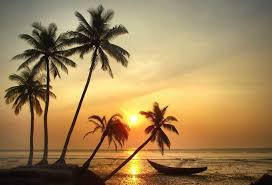
As the sun dipped behind the Chandranath Hill, setting the sky ablaze in golds and blood-reds, they walked in a hush, not of despair, but of reverence. They were young, yes. But in their hearts, they carried the future—and it was heavy.
Then Anika asked, “What gives you hope?” Karim looked at her, then at Hafsa, and smiled. “You do. The fact that we’re talking like this. That we care. That we haven’t given up.” And Hafsa, eyes firm as stone, said, “We won’t. We’re the generation that listens to the tide before it screams.”
They turned from the sea, toward the uncertain shore of tomorrow. The water behind them was not done. But neither were they.
[1] A respectful way of addressing a man, translates to brother
[2] Intergovernmental Panel on Climate Change
Md Mujib Ullah reads, researches, thinks, and writes. His work has appeared in Artful Dodge, Text, Borderless, and elsewhere.
‘
.
PLEASE NOTE: ARTICLES CAN ONLY BE REPRODUCED IN OTHER SITES WITH DUE ACKNOWLEDGEMENT TO BORDERLESS JOURNAL
Click here to access the Borderless anthology, Monalisa No Longer Smiles
Click here to access Monalisa No Longer Smiles on Kindle Amazon International
 Borderless