Categories
Essay

Akbar Barakzai: A Timeless Poet

By Hazaran Rahim Dad
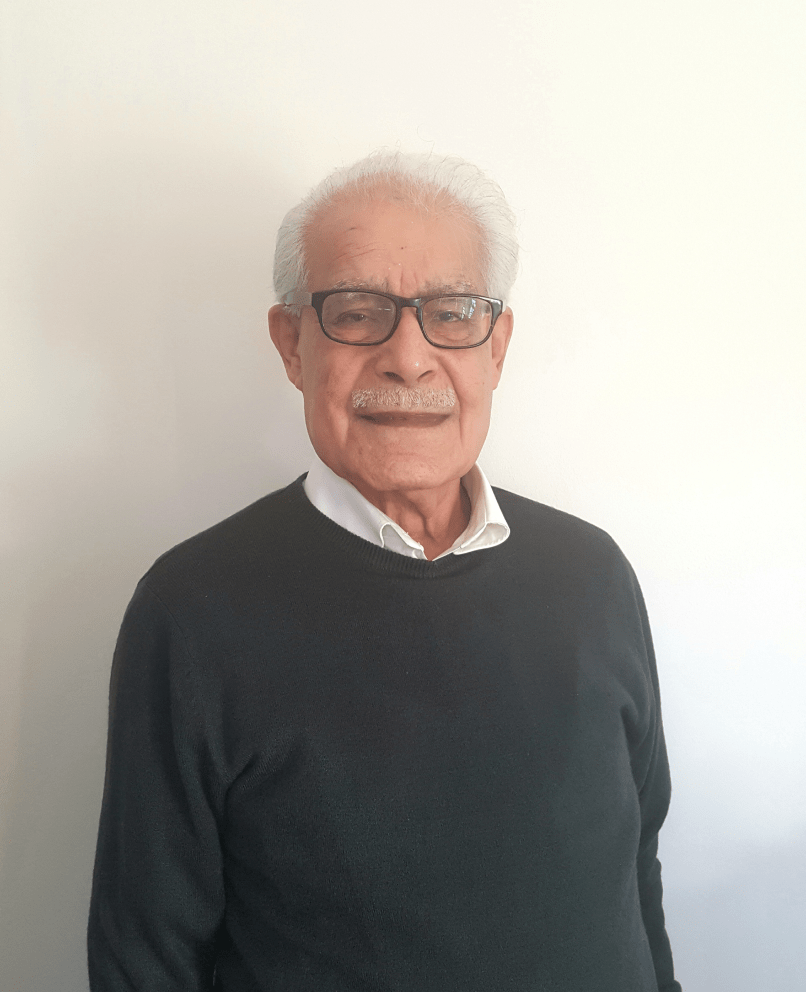
Akbar Barakzai (1939-2022) was born in Shikarpur Sindh, Pakistan. He received his early Education from Karachi and later he graduated from University of Karachi. Barakzai  is considered as one of the most defiant progressive voices in modern Balochi literature. His poetry reflects the objective realities of life and ambitions of his people. Boundless love for masses, profound desire for peace and prosperity, and unwavering resolve to resist and defy the tyranny are some of the commonplace themes of his poetry.

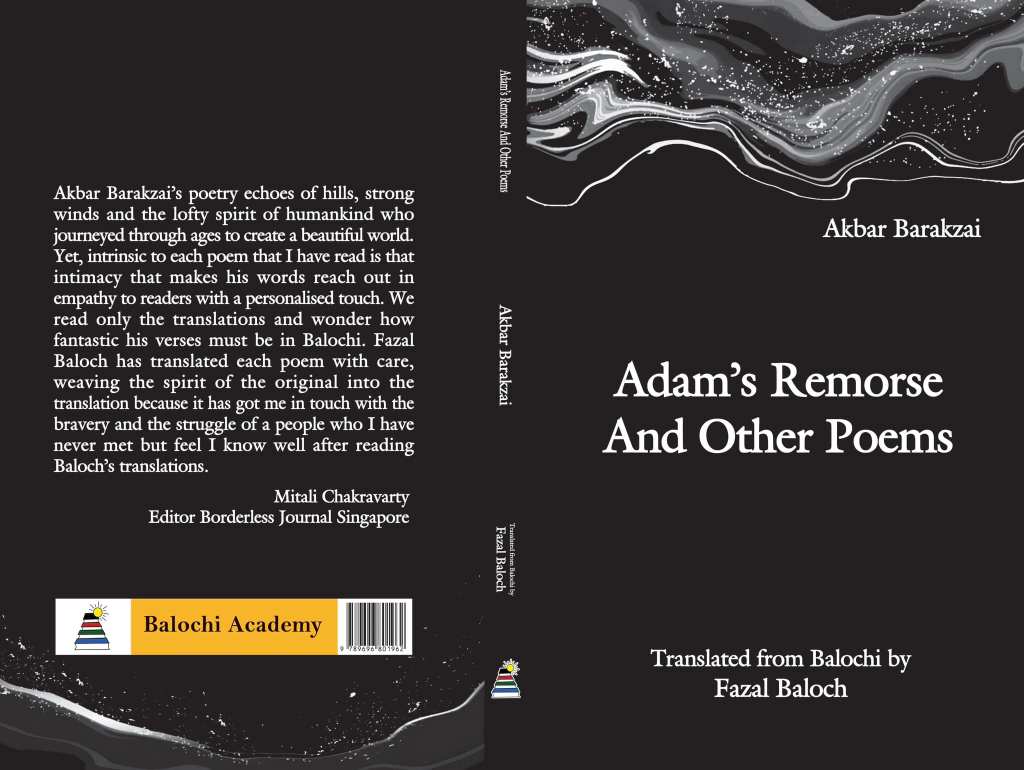
 “Akbar Barakzai belongs to the generation of the poets that witnessed the political and literary activism of Muhammad Hussain Unqa, Sher Mohammad Mari, Mir Gul Khan Naseer and Azat Jamaldini”, writes Fazal Baloch, a renowned translator who most recently brought out the anthology of Barakzai’s translated poems under the title Adam’s Remorse and Other Poems, published by Balochi Academy Quetta in 2023.

In his literary career, which spans over a half century, Barakzai has managed to bring out only two of his anthologies. Some selected poems by Barakzai have been translated from Balochi to English by Fazal Baloch, a college professor in Turbat, and a prominent literary translator.

Akbar Barakzai was an honest and dedicated political and social activist whose aim was progress of Baloch people. He as poet could not only express the human sentiments but could also express their aspirations for their life of Freedom and Dignity. “He served … his people admirably and deserves our respect and love,” says Meer Mohammad Ali Talpur, a Baloch intellectual.

Barakzai’s poems are rich in linguistic and literary expressions. His language is both simple and philosophical. In his poetry, he celebrates resistance, challenges oppression, and expresses a belief in a better future without losing hope. He emphasises resilience to overcome suffering. He writes:

I am the tree of immortality,
O, you tyrant brute!
The more you hew me down,
the more I sprout

The imagery of the tree symbolises the strength and the life cycle of a tree which remains steadfast midst harsh weathers.

In another poem, titled ‘Not Forever’, Barakzai continues to convey themes of resistance and defiance. As he says:

The rule of chains and fetters
Will last only for today, not forever.
The age of tyranny and oppression
Will last only for today, not forever.

He inscribes that the current state of being oppressed or controlled (“rule of chains and fetters,” “tyranny and oppression”) is temporary. Barakzai implies hope for a future where such oppression will end, indicating a belief in the eventual triumph of freedom and justice.

Barakzai sought to reshape the prevailing socio-political views and wrote for freedom and liberty, peace and prosperity and dignity of mankind. His love for human dignity transcends all geographical and cultural frontiers and becomes universal, added Fazal Baloch.

Indeed, Barakzai’s poetry transcends borders and speaks to universal themes. In his poem ‘Who Can Snuff Out the Sun?’ written in response to Che Guevara’s execution, he celebrates Che Guevara’s heroism and the universal struggle for justice and freedom. By acknowledging Che Guevara’s courage and sacrifice, Barakzai connects with a broader global struggle for human rights and liberation.

"Who can snuff out the sun? 
Who can suppress the light?"

And in the last lines of the poem, he notes,

I'm Ernesto Che Guevara
I'm Immortal
Everywhere in the world

“This is not only Barakzai’s most quoted poem, but it is also one of the most remarkable Balochi poems touching the theme of resistance and defiance,” contends Fazal Baloch.

Similarly, in his another poem like ‘I’m Viet Cong’, he expresses solidarity with the people of Vietnam, few lines are written as such:

I'm the spirit of freedom and liberty 
Who can enslave me?
Who can kill me?
After all
I'm Viet Cong I'm Viet Cong.

He might have shown solidarity with Afghanistan in his poem ‘April 1978’. His lines read:

Let's sing for the Saur
Let’s extol the groom
A garden in our heart has bloomed
Doves chant and herald the news
Revolution has arrived
Arrived what we desired

One of the ways in which Barakzai weaves the West and the East into his poetry. He has a poem called ‘Waiting for Godot’. Samuel Beckett’s Godot is emblematic of an ideal that we keep waiting for. Barakzai has captured the essence of the whole play in his poem with his refrain —

Arise! O friends from this deep slumber 
Godot will not, will never show up

In one of his most powerful poems, ‘Word’, Barakzai conveys the power of speaking up for one’s rights and the importance of not remaining silent in the face of oppression. He believes that by voicing one’s grievances and advocating for justice, freedom, and salvation can be achieved, ultimately leading to the end of oppression as these lines indicate:

Don’t ever bury the word
In the depth of your chest
Rather express the word
Yes, speak it out.
The word brings forth
Freedom and providence
Of course, freedom and providence.

In ‘How Long’, Barakzai starts by portraying a bleak situation where life is filled with distress and young people are dying tragically. He inscribes,

For how long
Life will remain in utter distress
Handsome youths keep falling to bullets
And mirror like hearts
Continue to shatter into shards?

Then, he shifts the tone to one of hope and optimism, and writes,

Light-- the very essence of freedom 
Will not forever remain in prison
Life will not suffer distress
The serpent of tyranny
Will vanish evermore
The sapling of envy and hatred
Will wither away.

He suggests that despite the current darkness, better days are ahead. He expresses confidence that “light”, symbolic of freedom, will not remain imprisoned forever. He predicts an end to the suffering and the disappearance of tyranny. The imagery of the “serpent of tyranny” vanishing and the “sapling of envy and hatred” withering away conveys the idea of a brighter future where oppression and negativity are eradicated.

Barakzai’s poetry is a ray of hope in the midst of suffering from atrocities and hatred and envy. His poetry reflects his love for humanity resonating with the voices of the oppressed and for them.
Hazaran Rahim Dad is a poet and writer. She writes on sociopolitical issues focusing on the right of fishermen. Currently she is pursuing her MPhil degree in English literature from Karachi.

PLEASE NOTE: ARTICLES CAN ONLY BE REPRODUCED IN OTHER SITES WITH DUE ACKNOWLEDGEMENT TO BORDERLESS JOURNAL

Click here to access the Borderless anthology, Monalisa No Longer Smiles

Click here to access Monalisa No Longer Smiles on Kindle Amazon International
Categories
Stories

Hasan Sol: A Balochi Folktale

Translated by Fazal Baloch[1]

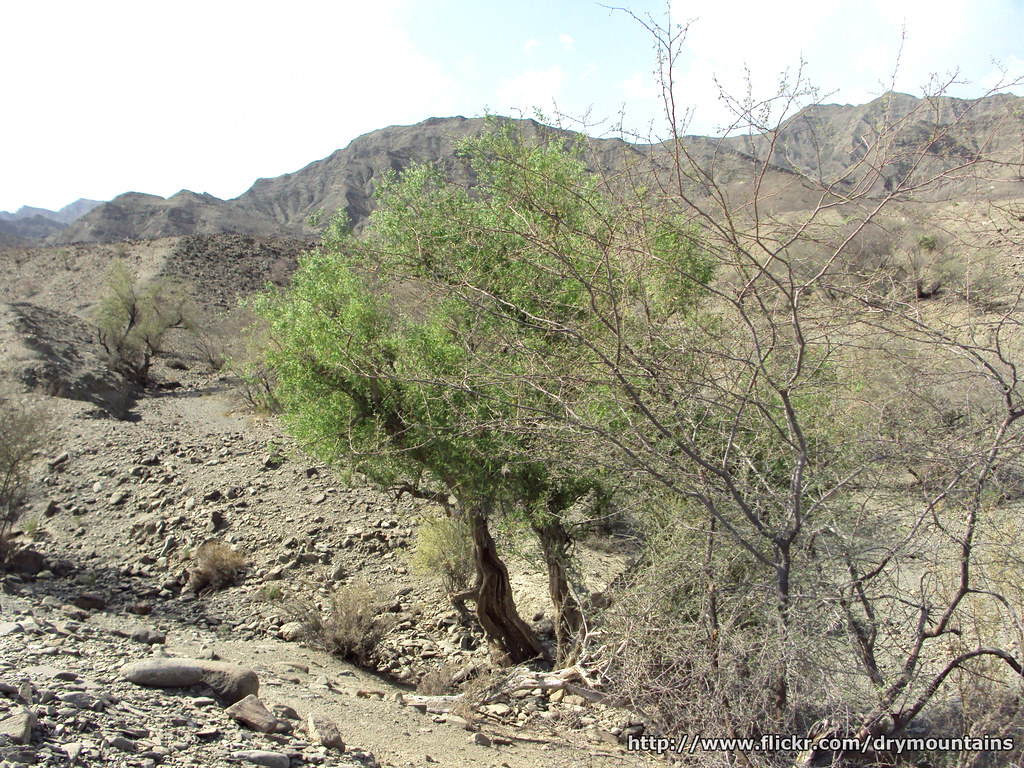
Balochistan. Courtesy: Creative Commons

Once there lived a poor man. Despite all his efforts, he could not beget any offspring. The grief of being childless had almost emaciated him. Most of the time he remained grief-stricken.

One day he left his home and took the route to the jungle where he reclined against a giant jujube tree. He decided not to move unless he was blessed with a child. A couple of days later a voice in the tree addressed him: “Man! Why don’t you leave me alone? I’ve named this tree after my own name. It is my dwelling. I have left the entire world for humankind and spared this tree for myself. Here I worship my Creator. Please leave me alone.”

The poor man said: “O, holy fakir! I am an unlucky man. I have no child. I have decided not to leave the tree unless I am blessed with a child. No matter if I die of thirst or hunger, I’m not going away”.

The fakir said: “Go home you will be blessed with a child, If it happens to be a boy, it is all yours but if it turns out to be a girl, you are bound to marry her with me. I will be your son-in-law”. The fakir continued, “If he’s a boy, his name will be Hasan sol, and in case of a girl, her name will be Nokmadina”.

The poor man replied, “Master! I am a Baloch. I will honour my promise”.

Nine months later he was blessed with a girl. As advised by the fakir, he named her Nokmadina. Time passed by and Nokmadina grew up. One day, along with other girls and womenfolk of the hamlet, she went to the jungle and walked over to the giant jujube tree to pluck its ripened fruits. The moment she stretched her hand, she felt her scarf had entangled with a branch of the tree. Despite all her efforts, she could not free it. She heard a voice addressed her: “Nokmadina! Ask your father to honour his promise”.

She immediately left for home but forgot to convey the message to her father. The next day when she went to the jungle, the same voice echoed again but Nokmadina couldn’t remember either. On the third day, when the jujube branch held her dress, Nokmadina apologised to it that she couldn’t remember his message.

The voice emanating from the tree said, “If you put your hand in the jar to pick up a dry date, a wasp will sting your finger and remind you of my words.”

She freed the hem of her scarf and quickly rushed towards home. Unmindful of the fakir’s words, the moment she ran her hand into the jar, the wasp stung her, and she broke out crying. Her father rushed to her and asked her what had happed to her. She recalled and told her father what the fakir had been telling for the past three days.

Her father did remember his promise. Though he did not want to marry his daughter with the fakir, he still wanted to fulfil his promise. His wife said, “May the Holy Quran cripple the old fakir! Do you have the heart to abandon your grown-up daughter in a jungle at the mercy of wild beasts? I am not going to allow you”.

The poor man said: “I’ve to honour my words. Let’s settle with whatever our fate has for us. First, we didn’t have any child. When we were blessed with one, it turned out to be a girl. And I have to marry it with the tree”.

Then he turned to his daughter and told her to be ready for he was going to leave her in the custody of the jujube tree the next morning. Everyone in the house including the girl and her mother cried inconsolably.

The next day he held Nokmadina’s hand and walked down to the jujube tree. Hasan Sol descended from the tree and they solemnised the marriage accordingly. Nokmadina’s father took the road back home.

Hasan Sol had already two ghoul-wives whom he visited every Friday in Mount Qaf and stayed with them for three days. He asked an old crone to stay with Nokmadina during his absence. Feeling envious of her, the old woman put Nokmadina in an underground den nearby and placed a huge rock on its opening so that she could not come out. When Hasan Sol returned, she produced her daughter before him and said, “Your wife has grown prettier than ever.”  On the other hand, she secretly fed Nokmadina with just a few morsels.

On a Friday morning, when Hasan Sol was about to leave, a dove perched on the tree. He shot at the bird and put it in the oven to roast it. Suddenly, the birds said: “The old woman has put Nokmadina in the den and brought her daughter in her place”. The bird repeated it over and again.

Hasan Sol thoroughly scanned her wife to determine the truth. He concluded that the bird was right.  Hence, he held her hand, spun it in the air and hurled it off like a stone in the sling. She landed beyond seven mountains. Nobody found any trace of her. Then he called out the old woman. He seized hold of her legs and thrusted them beneath the ground. Then he went to the nearby mountains to look for Nokmadina. He searched in each cave and cavern but could not find any trace of her. On his way back, he heard someone’s groan coming out of a jackal-den. He removed the rock from its opening and helped Nokmadina out and carried her home. When she fully regained her senses, Hasan Sol told her that he was going to Mount Qaf to visit her ghoul-wives. He warned her thus, “Never follow me. The road to Mount Qaf is long and tedious. You will wear out seven pairs of shoes made of steel, till you reach there. The ghouls will kill you there.”

When Hasan Sol flew off, Nokmadina made it to an ironsmith and ordered seven pairs of shoes made of steel and set out for Mount Qaf. After a long and tedious journey, having worn out all seven pairs of shoes, she finally reached the Mount Qaf.

A few children were playing at the door of a garden. She asked them if they knew anything about Hasan Sol. One of the children said that the very garden belonged to Hasan Sol and he would come there for his ablutions. She put her ring in the earthen jar, which he used to store water for cleaning himself, and hid behind a tree.

A little later, Hasan arrived there. When he noticed the ring in the bottom of the jar, he overturned and spilled the water on the ground to retrieve the ring. He assumed Nokmadina had disobeyed him and made it there. He asked the children if they had seen someone around.

The children told him about Nokmadina who was hiding behind a tree.

Hasan Sol walked over to her and asked her why she came there. He advised her to be careful otherwise the ghouls would eat her flesh. Hasan Sol transformed her into a knife and slipped it into his pocket and went home. The moment he got there, his ghoul-wives blurted loudly, “Human Smell! Human Smell.”

Hasan Sol said, “Where is the human? There’s no human but me. Are you want to eat my flesh?” He picked up spear and with great effort, he managed to silence them. He took his meal and strolled towards the garden where he transformed Nokmadina back into a human and together with her, he ate his meal. Then Hasan Sol transformed her into a pomegranate and tucked in a tree and told his ghoul-wives, “This pomegranate is meant for a sick man. Whosoever lays her hand on it, I will gouge out her eyes”.

When Hasan Sol left, the wives suspected it was a human. Thus, they cut a small piece and shared it together. When Hasan Sol returned, he asked them who spoiled the pomegranate in his absence. But they feigned ignorance. In the very instant, Hasan Sol transformed her back into a human and found out her that the ring on her little finger was missing. Infuriated, he shouted at them and said, “I swear by my sanctity, next time if you even touch her, I will tie you with chains and throw you before the dogs.”

One day when Hasan Sol had gone on an errand, one of the ghouls called Nokmadina and said, “You damn good-for-nothing human! Go to our mother’s house and bring us hair oil, comb and mud-soap.” They also gave her a letter as well. She complied and left. Midway through, she saw Hasan Sol who asked her where she was heading.

“I am going to deliver the letter to your mother-in-law,” she replied.

Hasan Sol asked her to show him the letter.

It read, “The moment this daughter of human delivers you the letter, kill her.” Hasan Sol changed the letter and wrote instead: “She is your granddaughter from your youngest daughter.” He further advised her thus, “Down the road you will see a dog with some grass before it and a goat with a piece of bone before it. Place the grass before the goat and the bone before the dog. Some distance further, you will find a mosque, replace its old mats with new ones. Then you will come across a dry pond. Unblock the watercourse and fill it with water.”

Nokmadina did exactly what Hasan Sol had advised her. When she delivered the letter, the ghoul woman hugged her and showered her with boundless love and affection. Nokmadina noticed a cage with four doves in the house. She asked her about them. The woman said: “One is my spirit; second one is your mother’s; third one is your stepmother’s and the fourth one is their grandmother’s”.

She took the cage and trampled the dove that was her co-wife’s sprit and ran off. The woman chased her. When she reached near the pond, she called the pond to stop her but the pond told her that she filled it with water a while ago so it would not stop her. When she drew close to the mosque, the woman asked the mosque to not let her go, but the mosque said that a while ago she replaced its mats, so it let her go. Then she asked the goat and the dog for the same, but they too refused as she fed them a while ago. At last, she reached Hasan Sol’s garden. When he saw the cage in her hand, he said, “Lo! You brought the cage along”.

“Why shouldn’t I? They don’t let me live. So now I’m not going to spare them either”, remarked Nokmadina.

“Alright. Kill all of them,” said Hasan Sol.

So, the story ended. And they headed home.


[1] This folktale is translated with permission from Geedi Kessah-4(Folktales Vol: 4) compiled and retold by Gulzar Khan Mari in Balochi, published by the Balochi Academy Quetta in 1971.

Fazal Baloch is a Balochi writer and translator. He has translated many Balochi poems and short stories into English. His translations have been featured in Pakistani Literature published by Pakistan Academy of Letters and in the form of books and anthologies.

.

PLEASE NOTE: ARTICLES CAN ONLY BE REPRODUCED IN OTHER SITES WITH DUE ACKNOWLEDGEMENT TO BORDERLESS JOURNAL