Categories
Slices from Life

Embracing the Earth and Sky…

By Prithvijeet Sinha

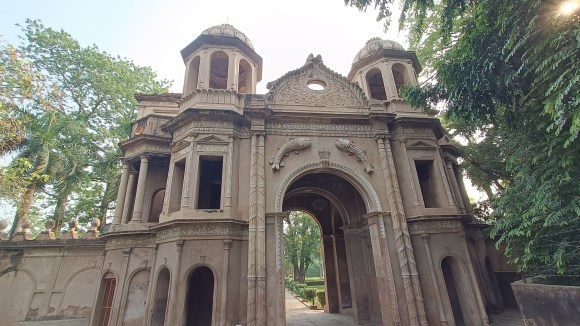
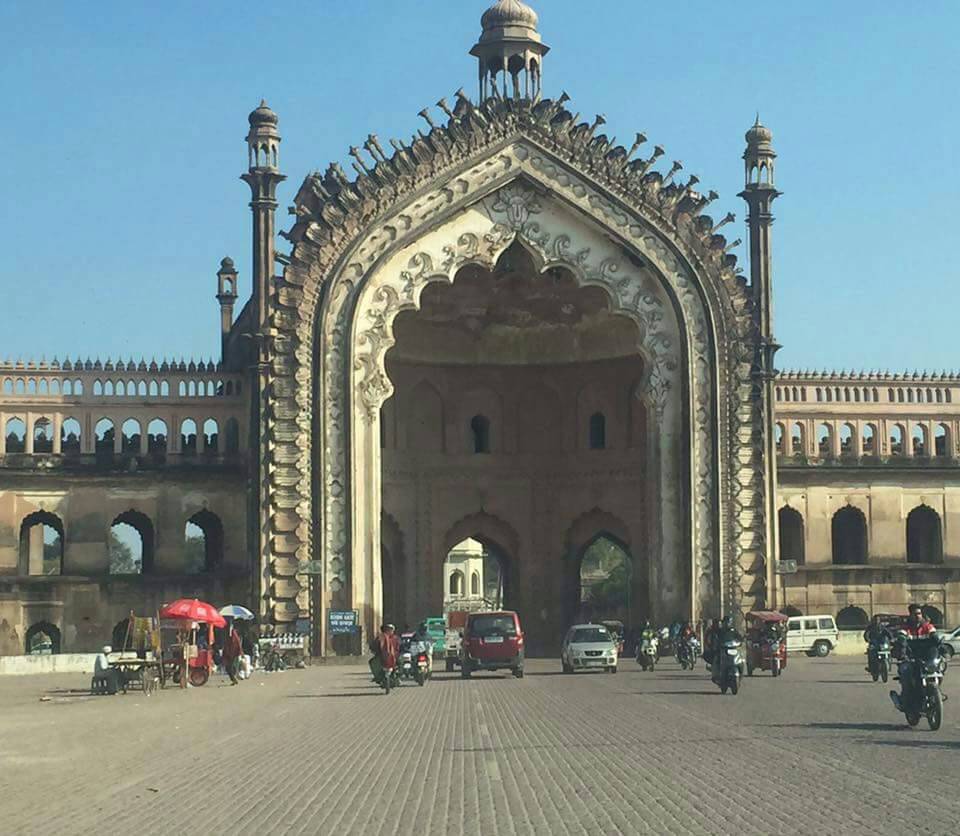
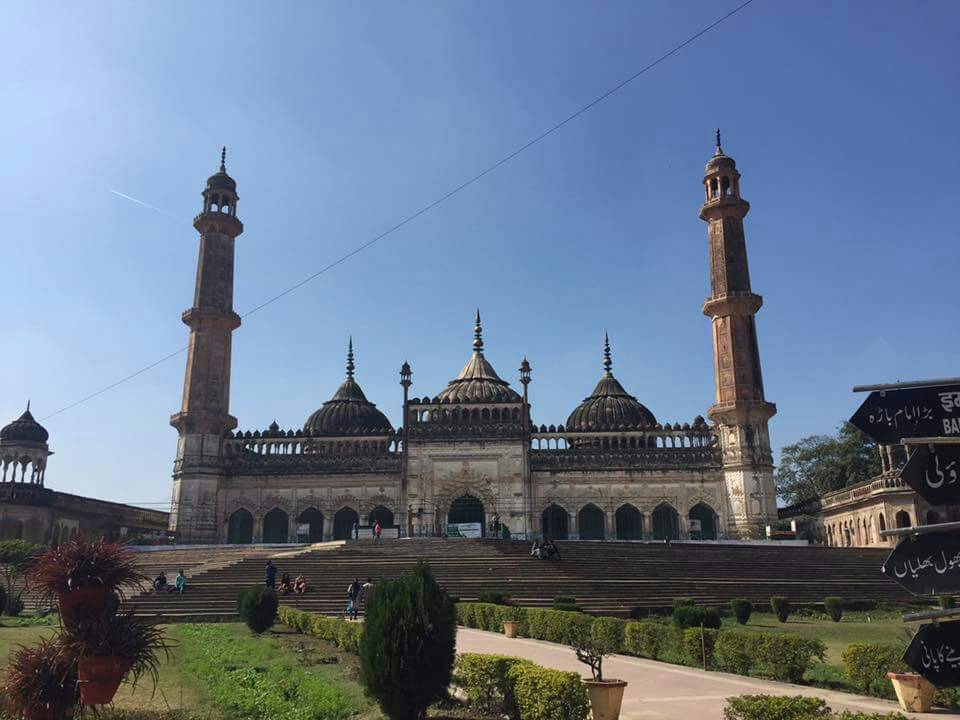
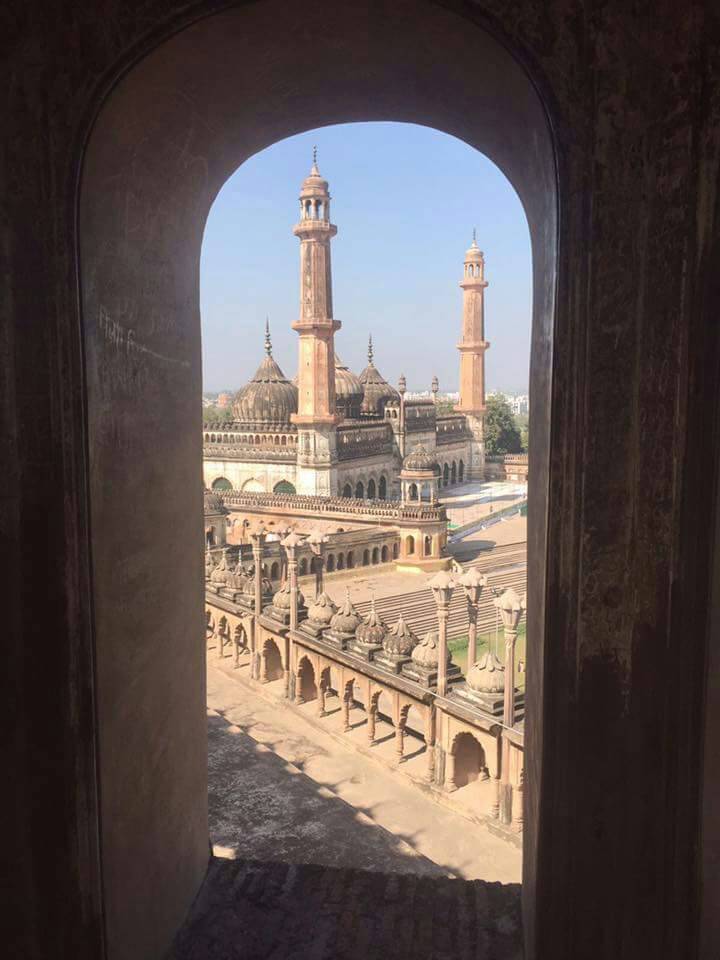
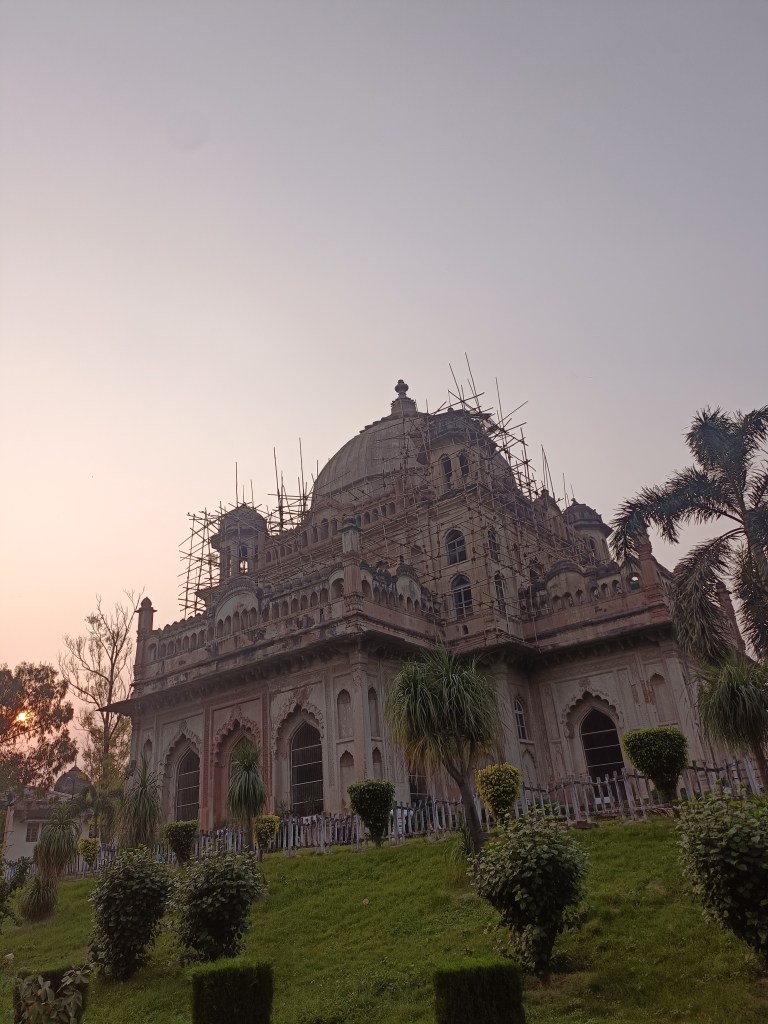
Saadat Ali Khan’s tomb. Photo Courtesy: Prithvijeet Sinha

In Lucknow, there’s a peculiar yet quintessential fascination with preserving the dead, ensuring that monuments to revere them are not only easy on the eyes but also constructed with a certain soulfulness. The sublime, inevitable poetry of mortality is hence the reason why multiple Imambaras and Maqbaras (resting places and tombs) eulogise the architects of a region that led the charge by invigorating secularism, architecture and employment to the masses.

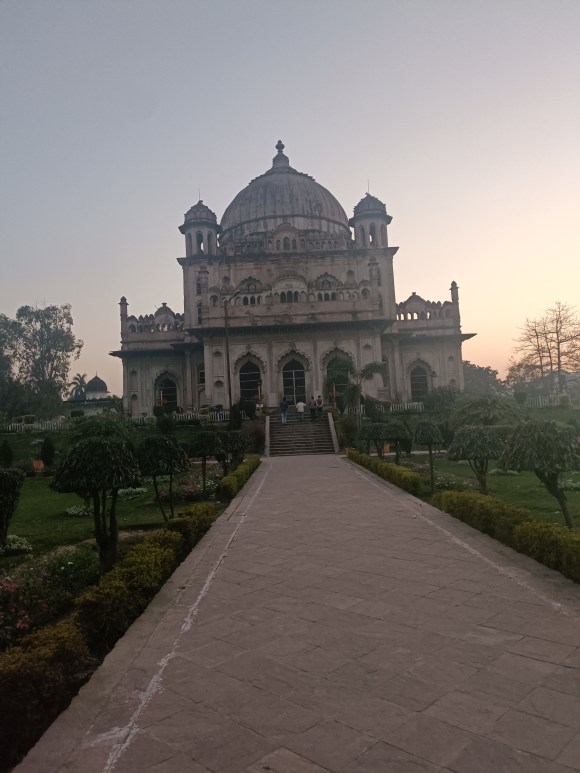
The stunning Saadat Ali Khan tomb testifies to all these features with poignant grace till this present era. Built by Ghazi-ud-Din Haider, the crowned King of Awadh in the early years of the 19th century in memory of his father, the eponymous Nawab Wazir of Awadh, Saadat Ali Khan, it was a palace of refined craftsmanship that took on the sombre hues of remembrance and eternal memory by being rebuilt as a tomb. Such is the fervour of familial legacies. Those eternal memories of wives and children now rest in the vaults that have been preserved in the inner chamber of the structure in its rear end.

On his part, Ghazi-ud-Din Haider (1769-1827) was a man of poise and taste. But he was also operating at a time when colonial powers were shareholders of Awadh as much as any other part of the country. Being a ruler may have been as much a nominal position for him as it was for his father, Yameen-ud Daula Saadat Ali Khan II Bahadur (1752 – 1814). But they both walked on common ground as they ensured that administrative duties fuelled by colonial interests didn’t usurp the spirit of their homeland. Lucknow was much more to Ghazi-ud-Din Haider and his father than just a city. Hence, their architectural aesthetics came into play to build a monumental legacy. If father Saadat Ali Khan was the mind who gave Lucknow a large number of memorable monuments between the city’s fabled Kaiserbagh and Dilkusha corridor then son Ghazi was no flash in the pan himself. The majestic Chattar Manzil, the quietly captivating Vilayati Bagh (built in memory of his beloved English wife Mary Short/ Padshah Begum) and the impressive Shah Najaf Imambara (modelled after the holy Shia site of Najaf in Iran) are all beholden to his vision. They all occupy pivotal central areas of the city today and are a visitors’ delight. He was also the pioneer behind a printing press, employing English and local scholars who were versed in multiple languages and enriched his court with the compilation of an extensive Persian dictionary.

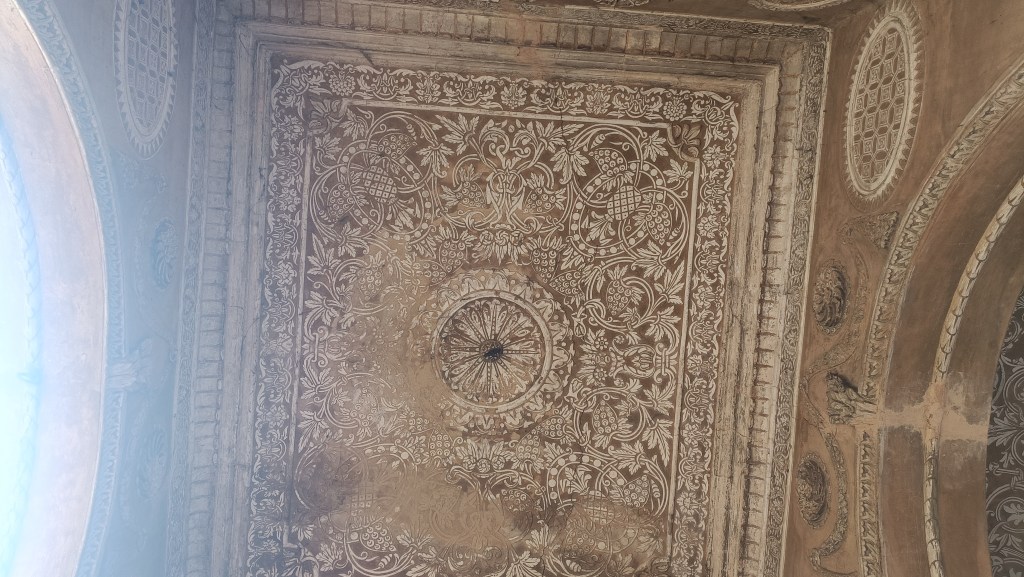
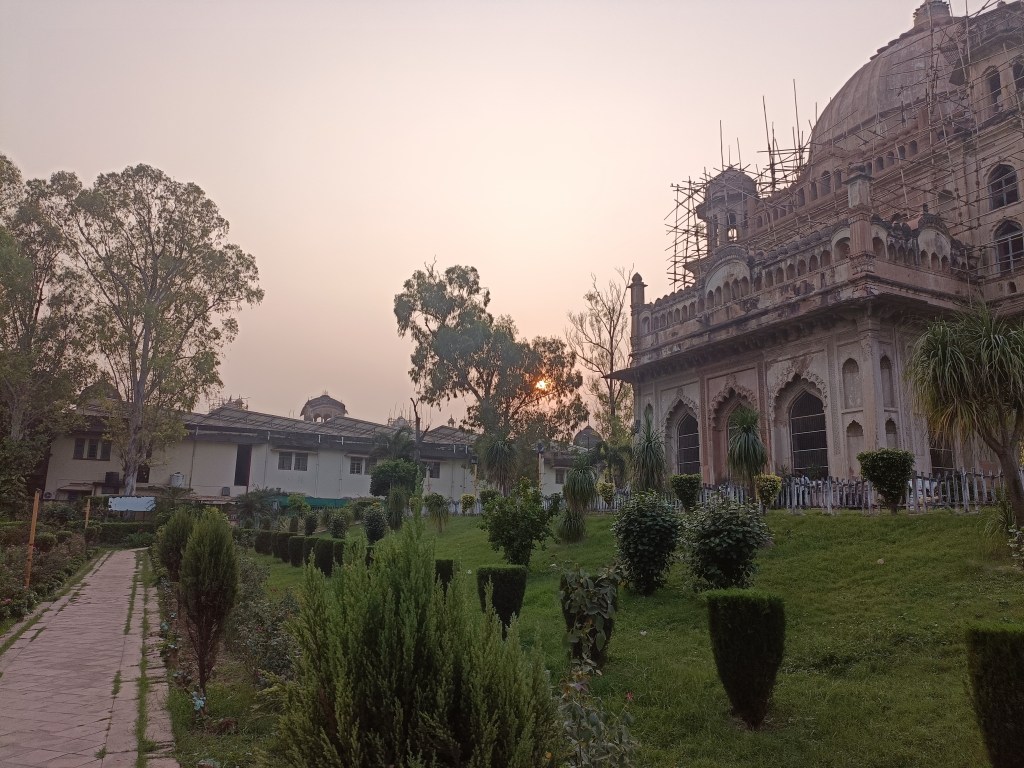
Saadat Ali Khan’s Tomb extends his legacy, it’s a stunning architectural design of a palace turned resting place for dearly departed retaining Lucknow’s exquisite stamp. The magnificent dome, arches, unbridled calligraphy of designs, decorative motifs and the pillars echo with two hundred years and more of all that the structure represents. The distinctive wash of yellow, brown and sometimes bleached lemon in the building are all captivating to discerning eyes. Under this dome and the parapets, one walks in circles and picks up the nuances of beauty that surround it. Chief among them being huge windows framed with nets, galloping squirrels and various potted plants covering the expanse.

Even more wonderful is the tomb of Mursheer Zadi, Saadat Ali Khan’s beloved wife, that stands parallel to his tomb. With its similarly constructed structure and darker tones, the confluence of dome, spires, parapets, inner chamber and decorative motifs become breathtaking. If the morning reveals these structures as enchanting dual partners, afternoons suffuse them with a time-honoured glow while the evenings bathe them with shades of devotion to this cityscape.

Visitors people the verandahs that surround it. At the Saadat Ali Khan Tomb and Garden, we relive the permanence of smiling flowers, the majestic architecture and the surreal power of its mystique. It’s a structure that seems to literally rise out of the earth and court the sky in reverence to both. We, in turn, understand its juxtapositions of mortality and muted grandeur as die-hard Lucknawis.

As scaffolds populate the tombs and restoration work ensures more renewed glint for its overall structure in the new year as also for its neighbouring Chattar Manzil, this site becomes the classical storyteller it has always been. Its saga is continuous, eternal. Its haunting understories are as soaked in legends and myths as is the wonderful city of Lucknow. The dead don’t just rest in peace here, they converse in whispers that become the wind and birdcalls.

Photo Courtesy: Prithvijeet Sinha

Prithvijeet Sinha  is an MPhil from the University of Lucknow, having launched his prolific writing career by self-publishing on the worldwide community Wattpad since 2015 and on his WordPress blog An Awadh Boy’s Panorama. Besides that, his works have been published in several journals and anthologies. 

PLEASE NOTE: ARTICLES CAN ONLY BE REPRODUCED IN OTHER SITES WITH DUE ACKNOWLEDGEMENT TO BORDERLESS JOURNAL

Click here to access the Borderless anthology, Monalisa No Longer Smiles

Click here to access Monalisa No Longer Smiles on Kindle Amazon International

Categories
Musings

Bibapur Mansion: A Vintage Charmer

By Prithvijeet Sinha

Writing about Lucknow’s fabled monuments has set me free to regurgitate images and feelings (‘ehsaas‘ as the Urdu equivalent goes) that call for effusive recollections. When the praxis of location and travel stand side by side, words flow out of the material foundations of structures that court our instant awe. Another fabled monument that rewrites the architectural-historical continuum of Awadh in that admirable vein is Bibiapur Kothi (Mansion); there’s just something sturdy about its presence in one of the most beautifully quiet corners of the cityscape.

Blessed by the legendary aesthetic choices of Nawab Asaf-ud-Daula, one of the most prominent architects of Lucknow, and built by architect Antoine Polier and his dedicated team in the latter part of the 18th Century, Bibiapur Kothi is a vision of grandeur. Legend has it that it was a favourite country retreat for the Nawabs as well as a centre for another arcane ritual from the past — hunting.

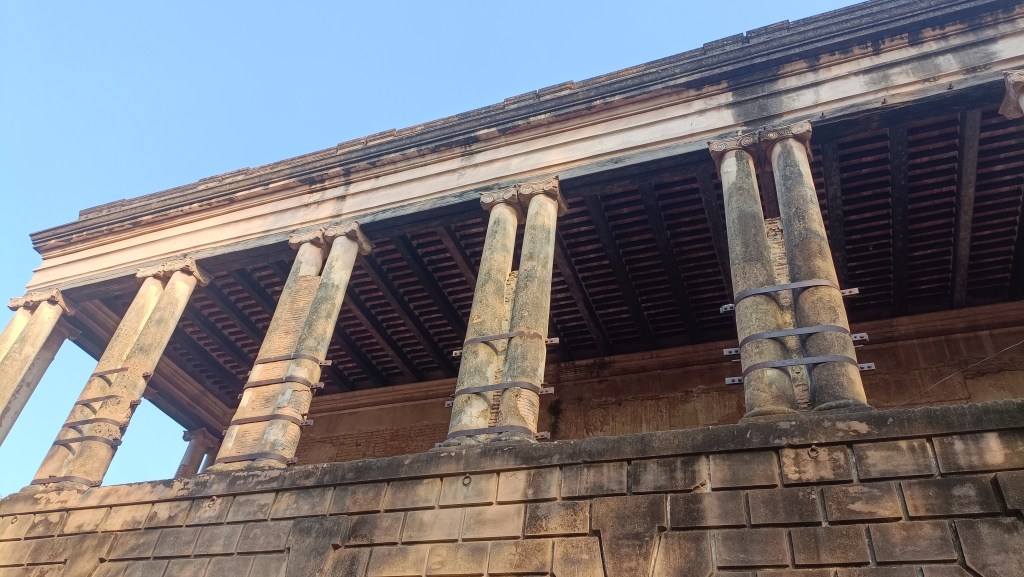
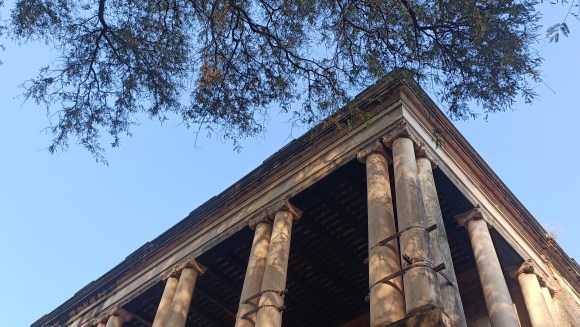
Like it always happens, visiting this site is like opening a door and entering the mystifying corridors of a past that can never be replicated. The neo-classical architectural style itself is easy on the eyes as spacious arches, halls, high roofs and round pillars — hypnotic ballasts of extreme strength – mesmerize the visitor. An enchanting spiral staircase divides this space into two storeys while the halls and Greek columns, beautifying its iconic exteriors, make us hark back to the glory days of interracial socialization that prevailed here. Lakhauri[1]betweenbricks and majestic stones’ sturdy network further arrests our undivided attention.

Imagine the masked balls, coronations (such as that of Saadat Ali Khan as the legend goes) and exquisite mehfils (musical/ poetic congregations) marked this mansion and its prominence for both for the native and colonial understanding of Awadh’s sensibilities, particularly Lucknow as the harbinger of urban sophistication.

.

Even for a modern traveller who can visualise yesteryears’ customs and etiquettes, the place is like a replica for the way the people lived and loved the essence of Lucknow. One can hear the hooves of equestrian sentinels guiding elaborate carriages, imagine a nawab reminiscing of a beloved while beholding the moon from the second floor and guests spread out under these roofs and occupying the hall, deep in conversations that could make or break the cultural sphere of influence tied intimately to regional politics. So, it’s natural that the more credulous storytellers still believe in this space holding fort for ghostly travellers who, it seems, just can’t escape the thrilling sensibilities of this particular realm.

.

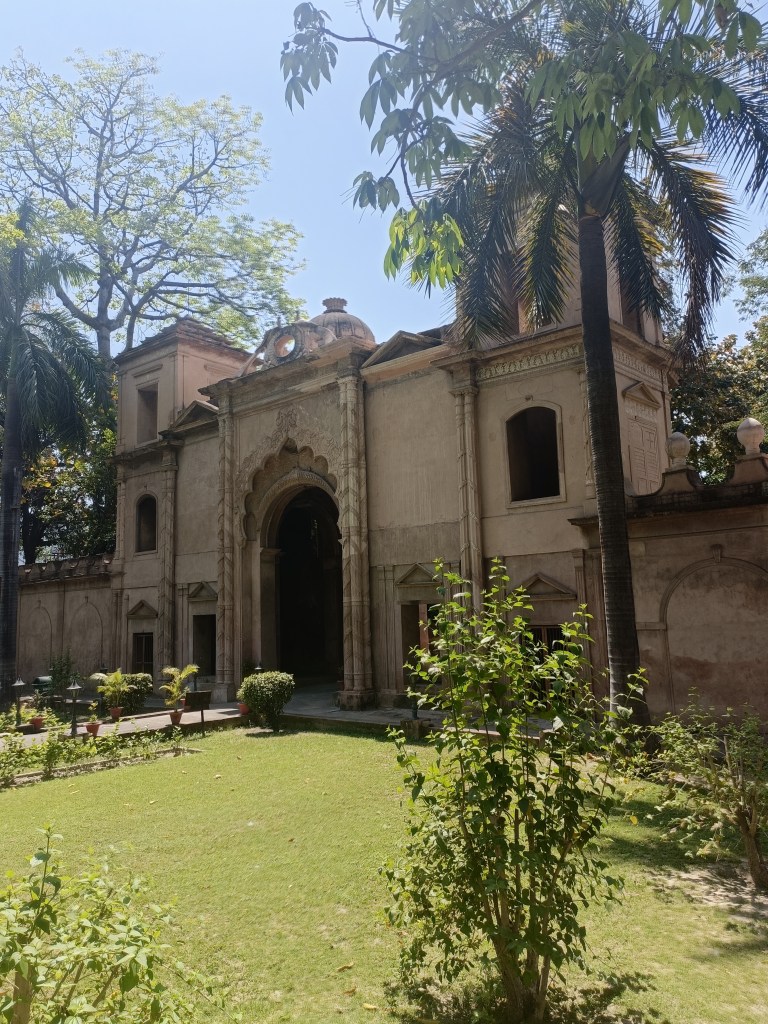
Bibiapur Mansion is a visual delight. Its current locational axis generates awe for discerning visitors. Today, one has to take a straight drive from the Dilkusha corridor and nestled within the cantonment area beyond an old railway line is this architectural wonder. An army sentry guides us further as we enter the gateway and a world of trees, vegetation, cricket’s unified whispers, quarters and a granary beholden to the cantonment board fall in the pathway. Everything has old-world charm. The passage invites to the visitor like a transcendent experience. Surrounded by ancient trees, some with beautiful forms and thickets relaying the permanence of this area’s timelessness, is this fabled monument.

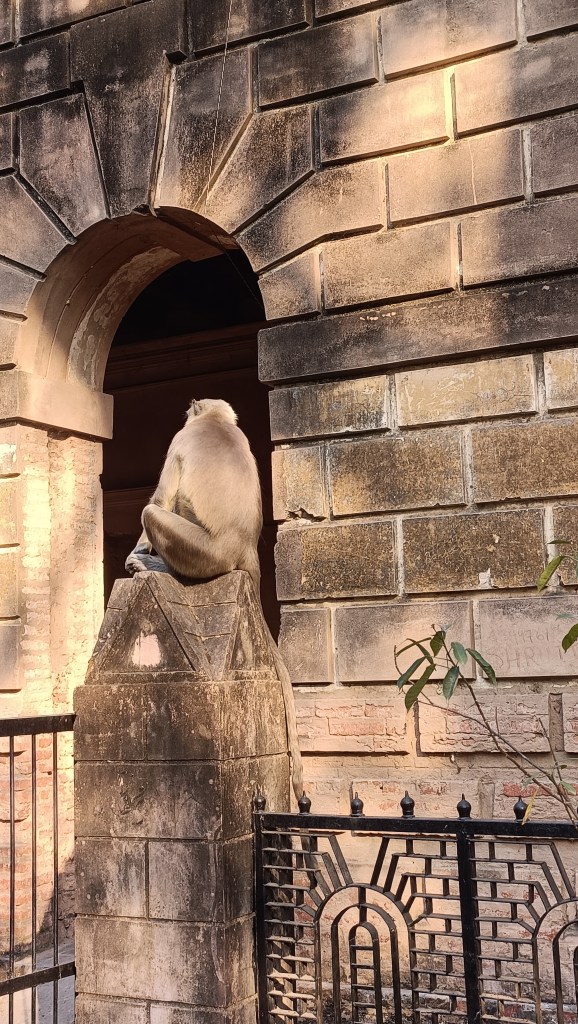
Sunlight lights up its walls and every now and then a langur(monkey) sprawling his long tail stands guard over the gates. The staircases, spacious compound, arched entryway and the glory of the Greek columns touched by the inimitable mix of lakhauri and current-day refurbishments awe us.

Here at Bibiapur Mansion, everything has a presence. Everything is accessible and iconic. In the absence of noise and marked by surfeits of wonder, we travel to the past while celebrating the immediate moments that brought us to this place.

Here, History and Wonder never sleep for long. Rather they awaken a new sentience.

Photograph by Prithvijeet Sinha

[1]Lime paint and plaster

Prithvijeet Sinha  is an MPhil from the University of Lucknow, having launched his prolific writing career by self-publishing on the worldwide community Wattpad since 2015 and on his WordPress blog An Awadh Boy’s Panorama. Besides that, his works have been published in several journals and anthologies. 

PLEASE NOTE: ARTICLES CAN ONLY BE REPRODUCED IN OTHER SITES WITH DUE ACKNOWLEDGEMENT TO BORDERLESS JOURNAL

Click here to access the Borderless anthology, Monalisa No Longer Smiles

Click here to access Monalisa No Longer Smiles on Kindle Amazon International
Categories
Essay

Where No One Wins or Loses a War…From Lucknow with Love

Narratives and photographs by Prithvijeet Sinha

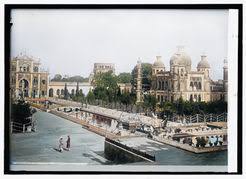
Talking about Vilayati Bagh as being an isolated cousin among the many gardens and monuments of Lucknow would be feasible given its elusive nature. I say elusive because it is nestled in the lush environs of the cantonment area and forested canopy that lies ahead of Dilkusha Palace which is one of the city’s many frequently visited wonders. Within this canopy lies Vilayati Bagh, “Vilayati”(foreign) referring in no small terms to not only a colonial past but also the stark fact that it is home to three tombs of erstwhile British officers who perished in the high noons of 1857’s First War of Independence. It was only a year ago that I, myself, had the opportunity to go there for the very first time. But that March morning changed everything. I have been there twice already to revel in its tranquility.

Its history is quite like other gardens and leisure spots of Awadh. It was built in the earlier parts of 19th Century by Ghazi Ud-Din Haider[1], the Nawab of Awadh, as a gift for his beloved European consort. During the revolt of 1857, it fell prey to shellings and other bombardments. But like most of Lucknow’s quintessential monuments, the spirit of renaissance did not elude it for long. In the present day, it is still tucked away in its quiet corner, slumbering and awakening for discerning eyes (and minds) who go there to capture crucial echoes of its unique identity.

Flanked by the Gomti close by and a cemetery in the middle of a spacious compound, the property begins its enchanting passage as one takes a straight drive (or walk) from Dilkusha Palace, approaches Kendriya Vidyalaya and then continues to move ahead to encounter a railway crossing, opposite which lies the cantonment granary, quarters and the grand and haunting Bibiapur Kothi. Taking a left turn from that location brings one to the verdure of old, huge trees, a moderately spacious road and pleasant sounds of cicadas and birds. In this pithy journey to Vilayati Bagh, the feeling of time-traveling to a gracious era of architectural elegance comes into sight the moment we reach its immediate premises. A beautiful Sufi dargah bathed in impressive green lies on the left and a few moderate homes of those who probably maintain this compound meet us.

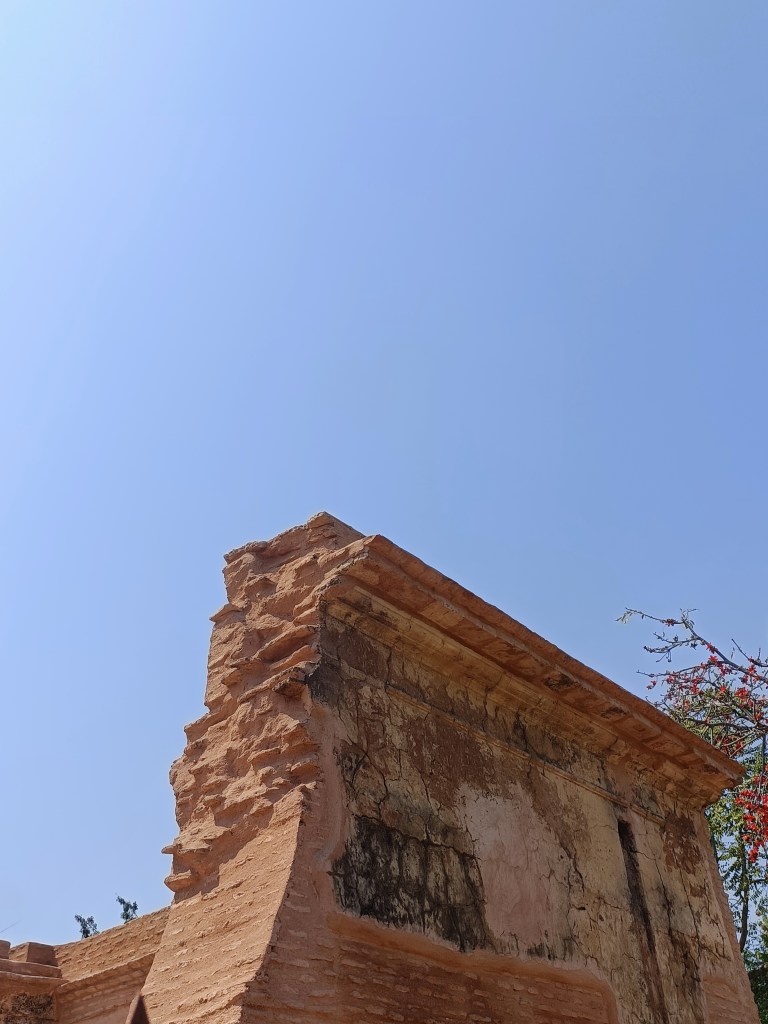
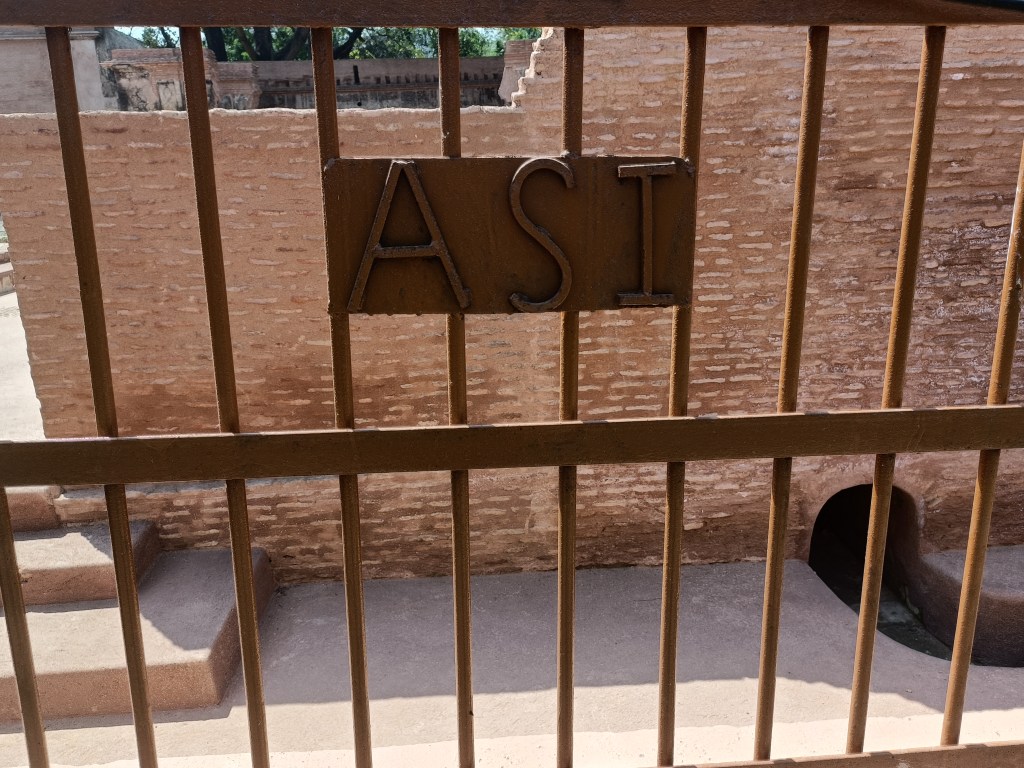
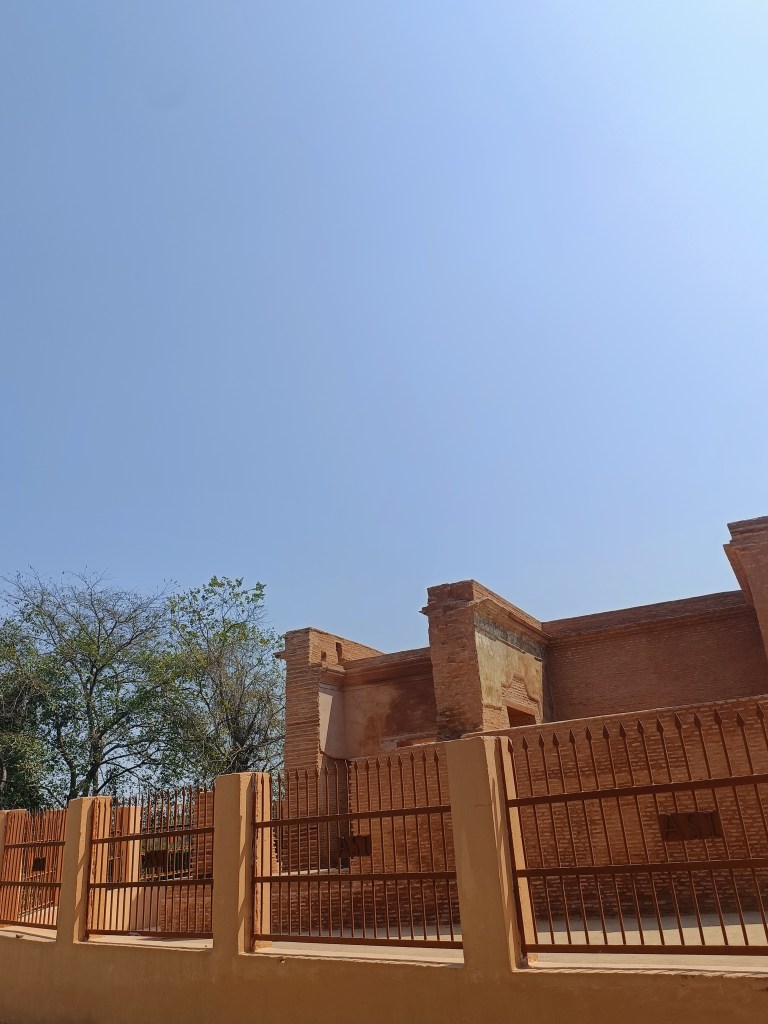
Then the real journey begins. A sophisticated sense of the building blocks of this elusive garden are elucidated by its brown- yellow, almost auburn walls. The lakhauri[2] paint and plaster give it luster on a sunny day. These ramparts retain their history of age, war and past reckonings. Yet it’s the sun that designs their colour schemes in the most sublime shades.  Archeological Survey of India has restored its lost glory in recent years and the result is there for all to see.

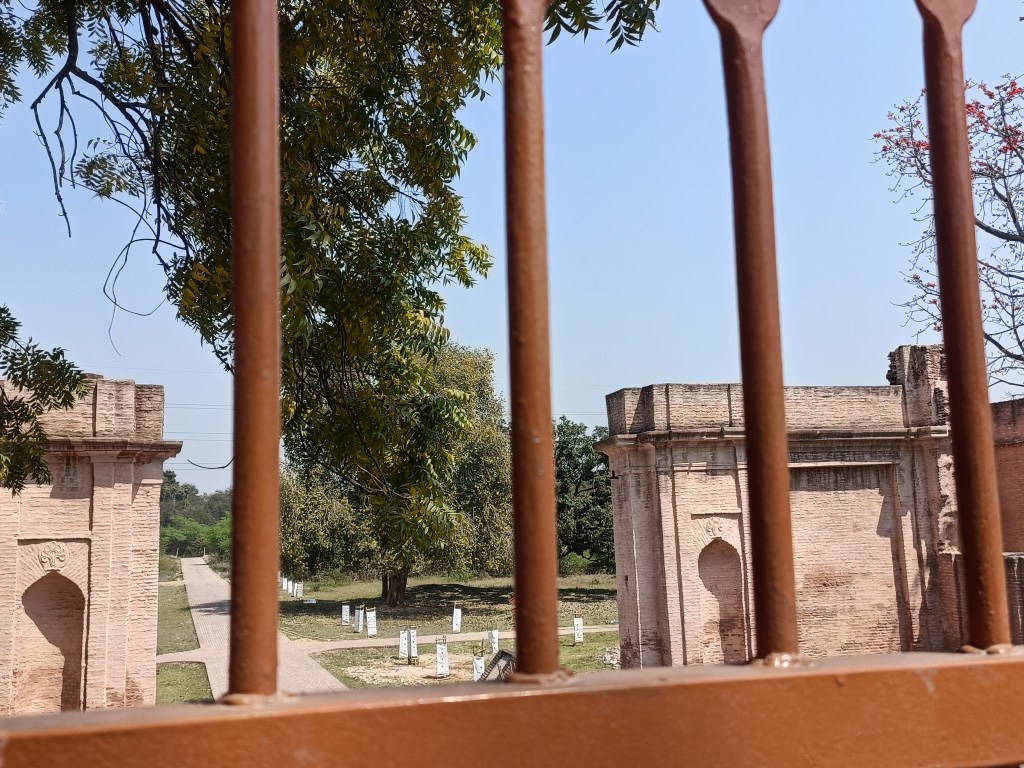
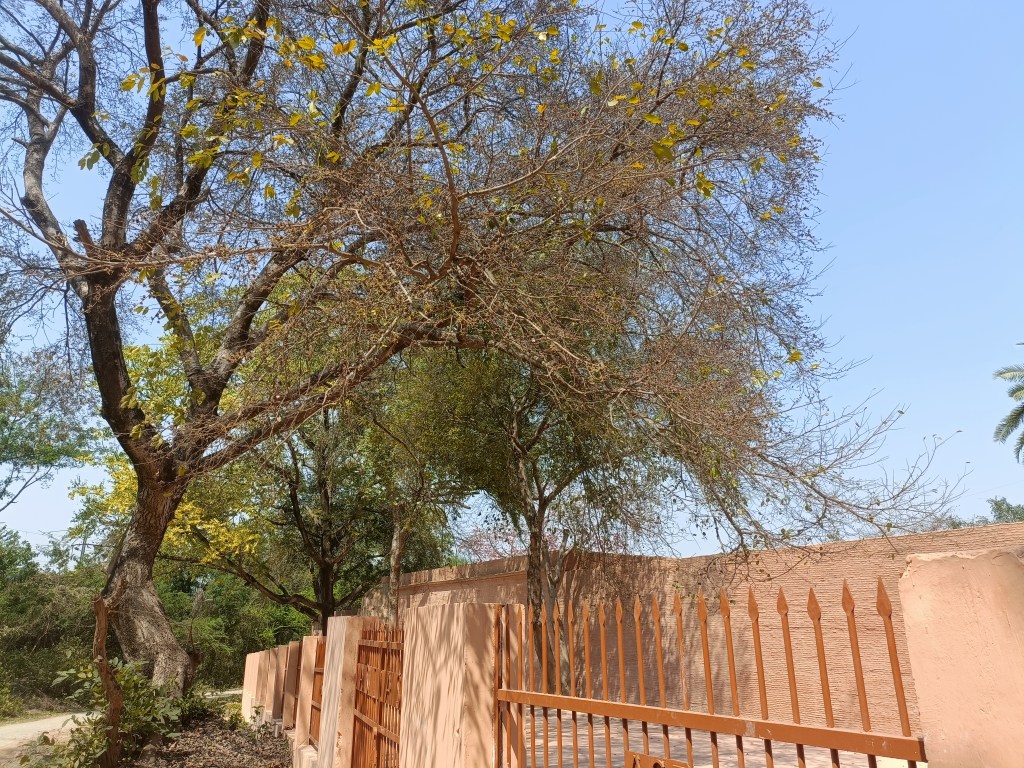
The boundary walls have a sturdy presence and are enclosed by arrow-shaped iron structures painted in pleasant brown. As one explores the interiors of the garden compound, little monoliths, corrugated outer flanks that look like barracks emerge, the exposed bricks red and pink in their sublimity of skin tones. A Y-shaped drain also flanks them. There is an aura of extraordinary peace all around. This isn’t meant to be a tourist spot. This is the one for aesthetes and true aficionados of history. The mind wanders and is arrested by trees whose branches are shaped like pitchforks.

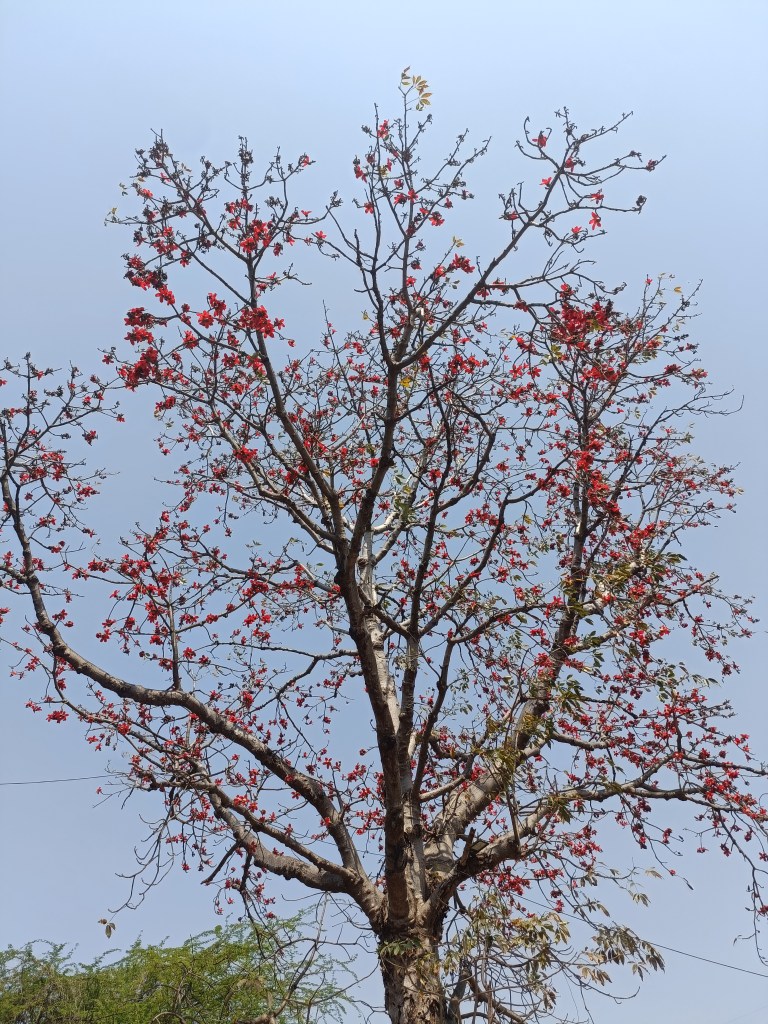
A dargah (miniature Sufi shrine) greets one at the outer end of the compound while a majestic gulmohar tree seems to appear like a tall fellow wearing red scarves. Arches and domes subsist in this sturdy network of walls.

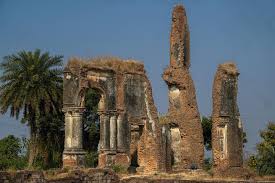
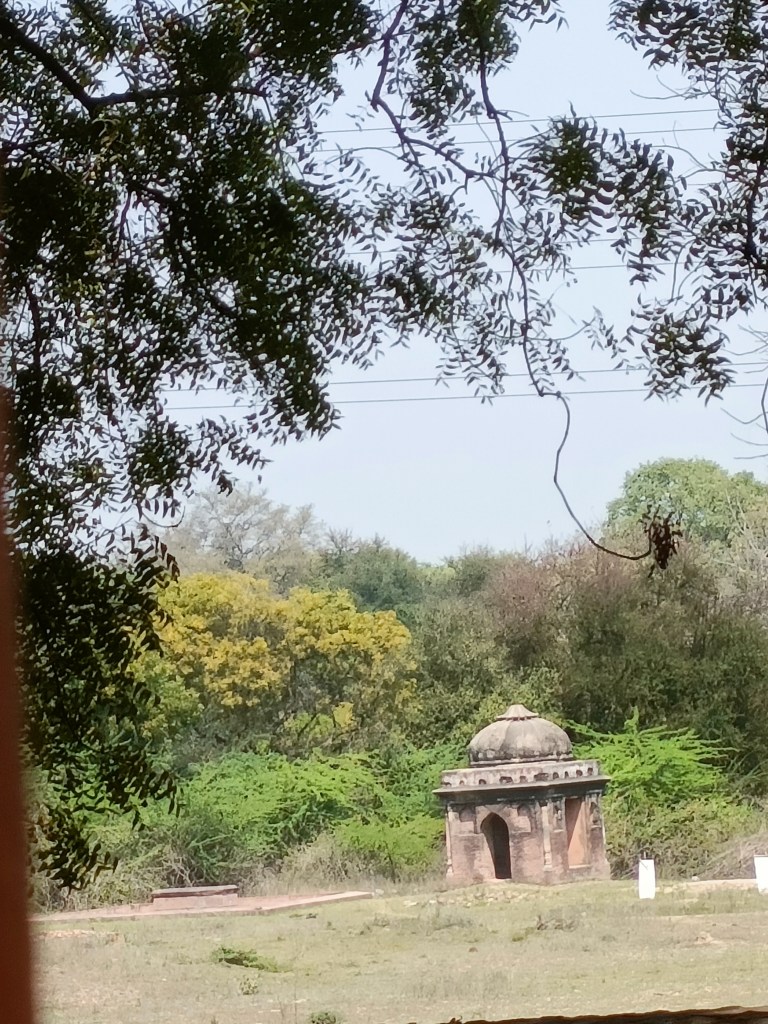
The saga of Vilayati Bagh is one of beauty but the starkness of its melancholy is evident in the cemeteries that lie in a little distance from the main gateway. They belong to fallen English soldiers Henry P. Garvey, Captain W. Helley Hutchinson and Sergeant S. Newman. These tombs are made in the image of a wide basin, crypts depicting that no one side can win or lose a war. Everybody has formidable stakes, and the dead don’t preach the gospel of victory or sombre defeat. Flanking these resting places are miniature pavilions with domes; they are surrounded by white rectangles made from cloth supported by twigs — sobering symbols of lives lost and the unpredictable designations of mortality.

Despite this unique mixture of melancholy and beauty, sobriety reigns. Of course, the obvious euphoria of discovery overrides every other emotion. Lucknow is a city that lives and breathes in such possibilities where a monument or elusive corner of its expanse can prompt an awakening for its discerning residents. Going further than the limitations imposed by acquired knowledge is always a source of deeper reckoning. This garden that houses nature and ghosts of mortality in its inner sanctum gives me another reason to keep my curiosity intact.

[1] Ghazi-ud-Din Haidar Shah (1769-1827), The first King of Oudh and the last Nawab Wazir of Oudh. He started a line of kingship which ended with the exile of Wajid Ali Shah(1822-1887).

[2] Traditional natural ingredients, often dyes or pastes from plants, used for coating buildings in Lucknow

Prithvijeet Sinha  is an MPhil from the University of Lucknow, having launched his prolific writing career by self-publishing on the worldwide community Wattpad since 2015 and on his WordPress blog An Awadh Boy’s Panorama. Besides that, his works have been published in several journals and anthologies. 

PLEASE NOTE: ARTICLES CAN ONLY BE REPRODUCED IN OTHER SITES WITH DUE ACKNOWLEDGEMENT TO BORDERLESS JOURNAL

Click here to access the Borderless anthology, Monalisa No Longer Smiles

Click here to access Monalisa No Longer Smiles on Kindle Amazon International
Categories
Essay

This Garden Calls Out to Me: A Flaneur in Lucknow’s Sikandar Bagh

Photographs and Narrative by Prithvijeet Sinha

Sikandra Bagh

What if I tell you that History is my neighbour? It would sound like hyperbole to a lay person. But if you are a resident of the historic and expansively beautiful urban area of Hazratganj that is the heart of the city, it will seem a shorthand for reflections in time.

Hazratganj is a state of mind, not only a piece of land stretching across kilometres and hosting the best that humanity has to offer, whether natural or man-made, including the Imambaras, gardens and riverfronts and gateways that define Lucknow as also the mass of commercial institutions, cultural centres and culinary establishments elevating its profile as a diverse area of activity.

In this beautiful centre of a glorious city lives yours truly and one of the most evocative of the historic gardens dotting Hazratganj also happens to be a mere five-minute walk from his home. I’m talking about Sikandar Bagh, a garden complex that is a sight for sore eyes and retains history in its structure, with lime yellow walls of lakhauri[1], a beautiful gateway bearing the city’s fabled fish symbol and a pagoda style arch signifying the melange of influences in its multidimensional whole.

The domes and ramparts retain the haunting afterglow of history but also the dark days that led to its tragic unraveling.

Built around the mid 1840s by Nawab Wajid Ali Shah[2], the great aesthete and ruler of Lucknow, Sikandar Bagh was a private residence, a garden of elegance and a performance art venue made to honour his love for Sikandar Begum, his beloved wife. The intimacy of this saga of love and mutual respect shared between two life-partners is reflected in the way the place comes alive for any visitor. There’s nothing grand here. Yet there’s the gift of verdure, the protection of huge, dome-like trees and remnants of the original structure that reminds us of a place preserved in its handsome inception and prevalence down the ages.

But Sikandar Bagh is a cultural outlier because apart from its blessed beginnings and present serene state, it had also been scarred by the First War of Independence in 1857[3]. This was the site that was used by sepoys of Awadh (a hallowed title for the region comprising Lucknow and its neighbouring districts that continues to this date) to mount their rebellion against British supremacy. This was a private garrison and hiding place in those erstwhile days of November 1857 where the plotting of a historic rebellion took place. History was not kind to the rebels, and nearly all were slain by the colonial establishment. Knowing that the serenity here could hold so much ballast in its open space makes one ponder. To know about this is to understand that we are progeny of these brave and the remains of the walls facing this garden and continuing up till the Shahnajaf Imambara seem to take the toll of all that bloodshed and hurt that lies embedded within these bricks.

Of course, knowing the background is imperative but so is being inured to its beauty. I am an eternal walker, a flaneur, so for me Sikandar Bagh has been a favourite place to revel in the humbling and aesthetic aspects of Lucknow. Sikandar Bagh befits my desire to saunter and take in the bouquet of nature.

*

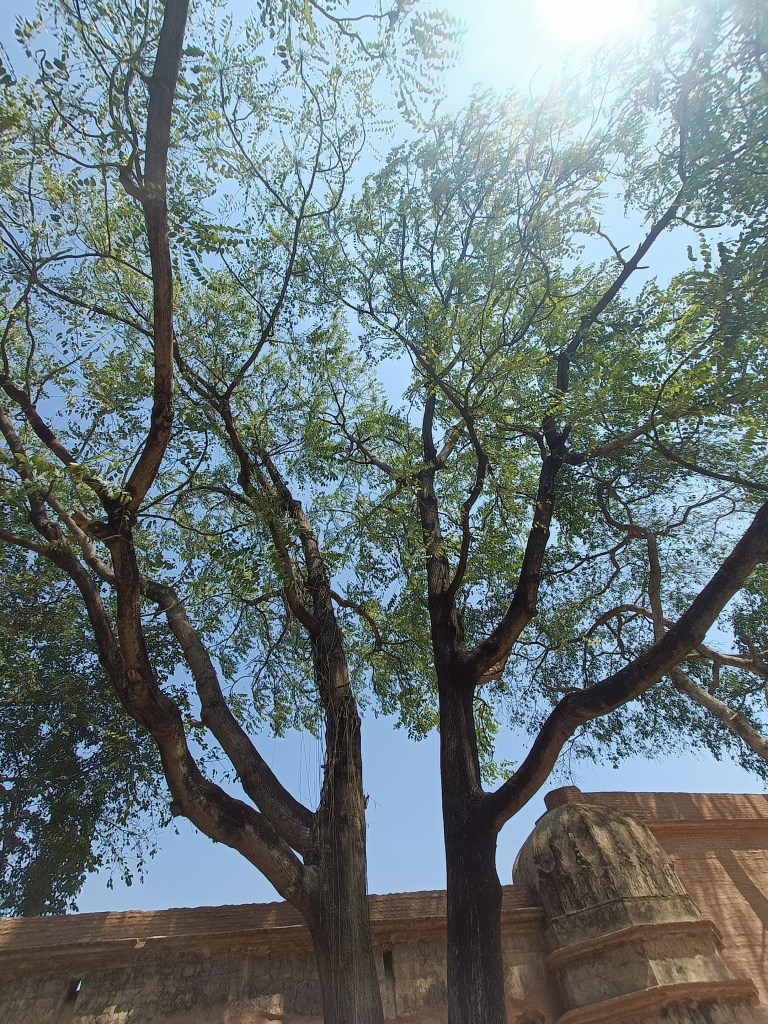
It’s been my morning ritual to be comforted by the breeze, swayed and lulled to satisfaction with the lullaby of the trees within its compound and behold a distant beehive in the tallest Goliath among these ancient trees, looking at nestling birds and squirrels in the lower branches of their trunks.

As I write this after a brief stroll in this garden on a pleasant Sunday afternoon, the summer seems to have been evoked to spread its sunny yellow carpet with mellow repose instead of scorching us with humid darts and blows.

The thing with Sikandar Bagh is that history is alive here but also a natural companion. Always the silent, sturdy type, an occasional morning walker or casual passers-by make for rare sights inside its premises in the early hours. It always makes me feel like the chosen one, allowed to roam its length and breadth, making it a regular haunt.

*

A lot of times while going from one place to another, I see young people seated on its green benches, relieving themselves of their pressures and sometimes enjoying a quiet meal here. I also look at people who, besotted by its unique beauty and structure, walk leisurely and photograph its stretches.  Their eyes register the special place it holds for them.

Today, Sikandar Bagh is overseen by the Archeological Survey of India. Around early 2022, it commissioned a refurbishment that restored its walls, ramparts with the lakhauri , a far cry from the concrete jungle that is an urban reality in the modern era.

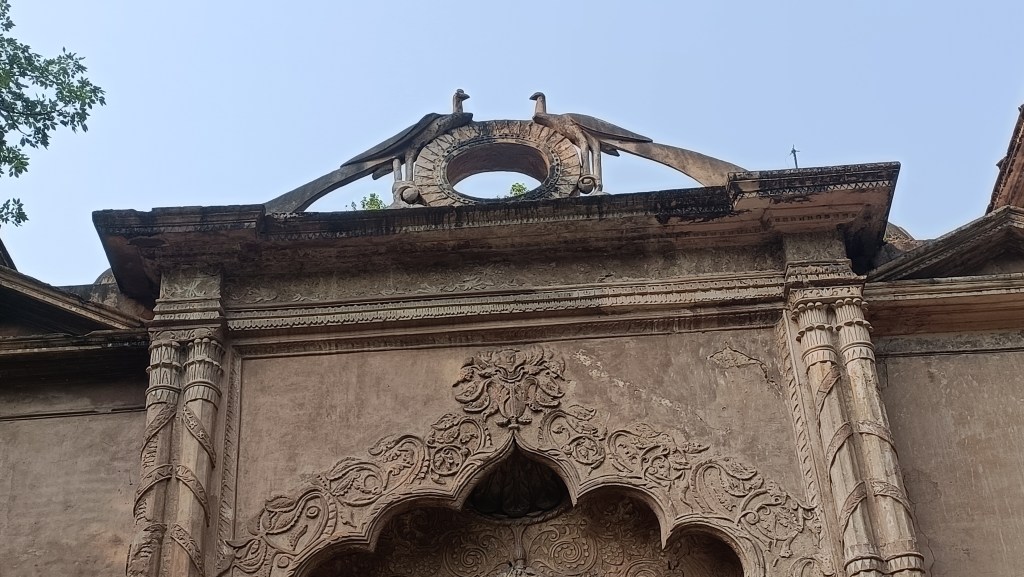
It always comes down to these columns, frescoes, ramparts, a humble mosque within this secular compound, the pavilion signifying what once was an open theatre and the palatial remains, all blended in the unique textures and colours of centuries; worn out by time but never denuded of glory, a stark yet humbling reminder that Sikandar Bagh is a labour of love. Writing this, I am enchanted by its gateway’s peacock iconography, how they seem to call out to the actual birds who visit from the neighbouring Botanical Gardens premises facing this little slice of verdure and architectural wonder.

I inhale the sights, simultaneously rattled by the annoyance of traffic outside its main gate intruding upon its peculiar, unique position within the heart of the city. Yet I know it’s sealed by a dignified reserve, as if these domes and the gateway spell quietude and ubiquity like the red eyes of the pigeons flying near the roof and peering down its height.

*

Honeybees on the tallest trees here go from the nectar of one season to the next and the sun shades this compound in moods invoking the spirit of a poet in me. It’s so easy to be wrapped in the peace and calm of this open space and its historical representation, so easy to know that creative inspiration fed by such a pleasant source is far from just a fictional device. It is a living, breathing ally to diurnal times.

Being in the lap of nature within cities can be a novel intervention. But my love affair with Sikandar Bagh – my own paradise — never waits for a distinct memento. It came to be from a place of love. It is my composite love for it that makes it stand out.

[1] lime paint and plaster

[2] Nawab Wajid Ali Shah was the eleventh and last nawab of Awadh. His kingdom was annexed by the East India Company in 1856 and he was exiled to Kolkata.

[3] Revolt of 1857: The sepoys – Hindus and Muslims – rose united in rebellion against the British Raj. As a result, the British adopted the weapon of Divide and Rule successfully, and the subcontinent continues to be scarred by the fanning of the same flame to this day.

Prithvijeet Sinha  is an MPhil from the University of Lucknow, having launched his prolific writing career by self-publishing on the worldwide community Wattpad since 2015 and on his WordPress blog An Awadh Boy’s Panorama. Besides that, his works have been published in several journals and anthologies. 

PLEASE NOTE: ARTICLES CAN ONLY BE REPRODUCED IN OTHER SITES WITH DUE ACKNOWLEDGEMENT TO BORDERLESS JOURNAL

Click here to access the Borderless anthology, Monalisa No Longer Smiles

Click here to access Monalisa No Longer Smiles on Kindle Amazon International
Categories
Musings

Quiet Flows the Gomti: A Monument of Tranquility 

By Prithvijeet Sinha

Chota Imambara. from Public Domain

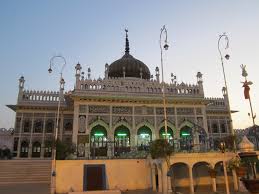
A land known and globally recognised for its mannerisms, poetry and an old-world graciousness that never seem to be at odds with the churning that defines our supercilious modern lives, Lucknow is exuberant and mildly attuned to the speed of hurtling motions. Amidst its chaotic hustle of life, the Chota Imambara is like a syncretic island of serenity in the tumult that thrives around it.

Built by Mohammad Ali Shah[1] around 1838 as a religious congregation site, it is both a mausoleum and a monument. This spirited inter-dependence often springs forth from Lucknow’s erstwhile Nawabi realm as in the Chota Imambara. But above all, it offers a tranquility that verges on the sublime, in no small part because of its architecture. A mere five minute walk from the inimitable Bara Imambara, it is adorned with Quranic verses in impeccable calligraphy on its outer walls. Sunlight beams through its surface against the silvery backdrop like a revelation to the senses; the eyes trained to its humble beauty are no less transfixed by it than the other sites on its way, the historic expanse of the Hussainabad corridor converging in this final corner. The historic Hussainabad corridor is the crown of Lucknow as it’s suffused with natural beauty that is visible and transcendent. The cobble stone roads, erstwhile havelis (mansions), gateways, a picture gallery, the iconic Clock tower and bridges with characteristic craftsmanship, Teele Wali Masjid (the iconic mosque on a hill) and ancient temples invite instant awe, a continuum for those who dwell within the city to avidly become guides for the uninitiated.

When you look at this mausoleum in the afternoon shaded by the sun, the turrets and intricate design of its gateway welcome you first as if receiving a weary traveller, offering him reprieve from the heat and the crowds that have preceded his journey to the Bara Imambara and Rumi Gate, the legendary doorway that is a sight for sore eyes. There’s a beauty to the colour of the Chota Imambara’s gateway, the golden anemometer(a geographical instrument used to indicate the wind’s direction) in the shape of the fish and an Anglicised statue in the middle of this compound that’s startling and comforting. Then there are the pond and the fountains further ahead. Something about the water, especially shimmering during hot summer days, already prepares one for the holy glint there is in the entire structure or in the Taj Mahal styled miniatures on both sides, one of which bears Muhammad Ali Shah’s beloved daughter Asiya Begum’s tomb. The symmetry of the place hence doesn’t overwhelm but is subdued in subtle colours and muted moods of light and shadows.

*

It’s the inner part of the Imambara that is a burst of red, green, yellow, blue and white, their variations dazzling and sensuous on account of the distinctive placement of Belgian chandeliers and tazias (religious processional items of great significance especially during Muharram). Both attest to a paradox- of luxury and faith coalescing. Both come draped in these bold colour schemes that delight the onlooker who soon beholds them. There’s also a throne and mirrors in this hall — indicating a rich past and illusions of grandeur that have now become mists, the air filled with memories yet redolent of individual stakes.

*

In essence, the Chhota Imambara maintains its privacy at the further end of Lucknow and when looking at its almost moon-like silver glow, the promise of Sham-e- Awadh ( fabled evenings of the city) gets more romanticised. These evenings where food, cultural activities, long walks and conversations with animated strangers and friends alike take centre stage  diffuse its historic community where boundaries of faith and personal beliefs blur into a beautiful embroidered fabric.

 The Chhota Imambara’s peculiarity is that despite so many elements to its structure including a hamam (bath) in the outer realm, there’s a simplicity to it all. Nothing screams out for attention. Each aspect invites individual perspectives shorn of tacky symbolism or a mishmash of styles. Every colour, every inch ultimately soothes.

It’s all about the aesthetics of grace and charm which is particularly unique to Lucknow. At the end of the day, there’s no humungous historical backstory behind Chhota Imambara or a grave precedent to its place in the Awadhi pantheon, Awadhi relating to both the region within which Lucknow stands and which it shapes ceaselessly into joyful forms. But it has always been here, rescuing itself from elusive murmurs and forgetfulness daily. Yet never adhering to overexposure. That is its greatest gift to the city and its loyal custodians.

Every visitor is a beholder here and his spirit becomes as free and unburdened like the pigeons finding home in this structure’s spires and dome, a picture of harmony.

[1] Nasser-ud-daula Mu’in ad-Din Muhammad Ali Shah(1774 –1842), was the ruler of Awadh, the former name of Lucknow.

Prithvijeet Sinha  is an MPhil from the University of Lucknow, having launched his prolific writing career by self-publishing on the worldwide community Wattpad since 2015 and on his WordPress blog An Awadh Boy’s Panorama. Besides that, his works have been published in several journals and anthologies. 

PLEASE NOTE: ARTICLES CAN ONLY BE REPRODUCED IN OTHER SITES WITH DUE ACKNOWLEDGEMENT TO BORDERLESS JOURNAL

Click here to access the Borderless anthology, Monalisa No Longer Smiles

Click here to access Monalisa No Longer Smiles on Kindle Amazon International
Categories
Musings

As Flows the Gomti: A Palace of Benevolence

Narrative and Photographs by Prithvijeet Sinha

The Bara Imambara in Lucknow

Solitude hardly alienates us when our mind is at peace. It travels with us. It’s a profound pursuit when one embraces the solitude of a city like Lucknow. Our fates travel with the boat of time flowing on the languid currents of the river that flows through the town, Gomti.

As someone born and brought up here, it’s a great joy to walk in the footsteps of those who gave exquisite shape to its countless monuments, their chisels and hammers turning stones into works of art, adorning the city with centuries of hard toil that created exquisite beauty. This beauty hewn into the Bara Imambara enchants me anew everytime I stroll through the compound. Those limestone pillars, graded by years of construction in its classical heyday, are miracles of human hands that mesmerise. The golden paint adorning its architecture courts the sun and that great orb of light gives in to the invitation to be eternal friends for life.

The Bara Imambara, also bestowed with the title of “Asafi Imambara”, was made by the king Asaf Ud Daula out of benevolence. He commissioned the building in order to employ the drought-stricken populace of the city in the 18th Century. Very soon, this structural project expedited as a corollary to supplement the dwindling fortunes of the region became more than a philanthropic feat. Over the centuries, Bara Imambara became a royal palace, a seat of power and knowledge and a quintessential component of the Awadhi [1]identity. It’s convenient to say that it’s the axis around which the entire city revolves. It’s the architectural apex around which Lucknow sculpts its identity with each era.

Throngs of revellers travel across the city to savour its beauty and historicity. The Imambada keeps its tryst with timelessness sacred, giving every discerning eye moments to cherish, feel the same timeless energy course through their mortal bodies, giving them the gift of the spiritual. Then there’s the mystical side to it where on each visit tugs my heart. It’s as if from some intensely private part of the soul emerge these words, “Thank God, you are alive to see it. Thank God that you were born to witness such sublime beauty.”

The story of arches, pillars, doorways, the zigzagging mysteries of the Bhool Bhulaiya — its fabled labyrinth, hallways that make a single lighting of the match echo with precision across great distances and the cool atmosphere that envelops it even on muggy or scorching days make it a unique experience. But as the horizon spills its canvas around it and the panorama of life becomes a live orchestra of colours, the Imambara transcends its solemn sanctity as the abode of imams, transcends the rails of religion to diffuse faith to every corner. From some high point in the parapet, when you look straight at the city, each angle reflects the union of the divine and the mundane. It’s a grand gesture that this timeless solitude is something that can be felt even among millions of other feet and voices. It’s the solitude of the dark alleys and the baoli or stepwell within these enchanting premises. It’s this solitude gliding with the birds above the soaring pillars and dome of the Asafi Mosque, making the secular transport tangible in the mouths of those who drink in the air contained in the edifice of this monument.

I may be a dreamer but, in a city, where so many parts feel like a dream come true, the Hussainabad corridor hosting Bara Imambada is immune to modernisation’s whims or the gritty nature of our societal churnings.

As tongas[2] carry dignified visitors on cobblestone roads, Lucknow’s epicenter of culture beseeches us like a best friend to partake in the poetry of its eternal axis. Which is why I always like to walk towards it, crossing a stretch of the road that finds beautiful buildings, parks, wide roads and secular spots lead towards that most handsome of structures. Time stops here yet moves like ripples. Time is of the essence. A lifetime of meetings with the Imambada makes one reconcile with the inherent meanings behind one’s attachment to Lucknow and its Awadhi cheer. I’m fortunate to live and tell the tale, a modest man made to feel grander by these inflections of architecture, stillness and cosmic solitude that only this city has to offer. The Imambada absorbs all of these inflections and stands in good stead, telling me, “You are not a dreamer, son. Your sense of your world is intimate to a fault. Come to us. Come again. There’s so much to seek from each other…”

[1] Awadh was the ancient name of Lucknow

[2] Horse drawn carriages

Prithvijeet Sinha  is an MPhil from the University of Lucknow, having launched his prolific writing career by self-publishing on the worldwide community Wattpad since 2015 and on his WordPress blog An Awadh Boy’s Panorama. Besides that, his works have been published in several journals and anthologies. 

PLEASE NOTE: ARTICLES CAN ONLY BE REPRODUCED IN OTHER SITES WITH DUE ACKNOWLEDGEMENT TO BORDERLESS JOURNAL

Click here to access the Borderless anthology, Monalisa No Longer Smiles

Click here to access Monalisa No Longer Smiles on Kindle Amazon International
Categories
Poetry

A Grandmother’s Lament

By Prithvijeet Sinha

A solitary Om circled her ablutions,
holding the pain of those post war years in her ribs,
when she was young and on her way to the bed chamber,
praying for lesser contractions of torment,
consummating a war-torn union with her eyes to the ceiling.

Broken bangles, shattered pots,
leaking vessels of the Shergill women,
severed heads of cows and crows
and approaching stilts of vultures upon the river's bank --
She escaped all that with her wedding procession,
for the countryside's doomsday was two weeks later.

Telegraphs of the carnage reach her,
from those zigzagging pole wires and squinting birds in the balcony,
her memory drawing palms towards the heads of brides and grooms,
now asking for eternal peace and her elderly wisdom.
Another marital procession seeking her ancient presence,
in the arterial vista of generations.

**

She was young once,
when her tongue limned the outline of his shoulders
and his fingers caressed the very essence of her body.
The idea of existence,
of sandalwood aromas reeling with sweat and smells of new beginnings,
all garnered few towns away from her own, 
where intimacy took beastly garbs to snap hymens
and midnight guards broke their sacred words,
to ransack humanity.

"Blessed be the union of these two souls,
prosper and progress as pilgrims on this eternal road,
in faith and in fidelity,
draw strength and make amends the first time around in brewing conflict's way, "
Her words comforting a small town that always lay outside the epicenter of her heyday.

**

Her town burned,
looted and pillaged,
sacked to become refuge of wandering ghosts
and a blot on nostalgia's subtle arc.

She remembers swings swaying past the rainbow,
the fairs bedecked with children's hoots
and parental vigils of joy
and the day before a prognosis of bloodshed doused the fire of youth.

She remembers.
The lament of her 'long ago' gone
with the last smoke of the past,
her failing memory
and the joy of the town congregating for a couple's future.

She remembers.

Prithvijeet Sinha has prolific published credits that encompass poetry, musings on the city, cinema, anthologies, journals of national and international repertoire, as well as a blog, An Awadh Boy’s Panorama, from which these poems have been republished. His life-force resides in writing, in the art of self-expression.

.

PLEASE NOTE: ARTICLES CAN ONLY BE REPRODUCED IN OTHER SITES WITH DUE ACKNOWLEDGEMENT TO BORDERLESS JOURNAL. 

Click here to access the Borderless anthology, Monalisa No Longer Smiles

Click here to access Monalisa No Longer Smiles on Kindle Amazon International
Categories
Review

The Warrior Queen of Awadh

Book Review by Somdatta Mandal

Title: Begum Hazrat Mahal: Warrior Queen of Awadh

Author: Malathi Ramachandran

Publisher: Niyogi Books

Over the past few decades there has been a surge in the publication of Indian historical fiction where the authors are fascinated by India’s rich past, and the many human stories of love and loss buried beneath the larger narratives. Simplistically speaking, historical fiction is a literary genre in which the plot takes place in a setting related to the past events, but is fictional.  An essential element of historical fiction is that it is set in the past and pays attention to the manners, social conditions, and other details of the depicted period. Authors also frequently choose to explore notable historical figures in these settings, allowing readers to better understand how these individuals might have responded to their environments. After The Legend of Kuldhara (2017) and Mandu (2020), Malathi Ramachandran has now presented us with a fascinating novel, Begum Hazrat Mahal: Warrior Queen of Awadh (2023). She endeavours in her novel not just to re-create history as it happened long ago, but to also explore the lives and relationships of those who lived in those times.

The setting of the novel is Lucknow, 1857 where the First War of Independence against the British is fought. Wajid Ali Shah, the last Nawab of Awadh has been exiled by the British to Calcutta along with his courtiers and his coterie some months ago. Only his second wife, the beautiful queen Begum Hazrat Mahal, who had refused to accompany her husband to Calcutta stays back with her young twelve-year old prince Birjis Ali. Hazrat vows to fight the British and win back her beloved Awadh for her people and the crown for her son. She builds a rebel army and high drama ensues as they besiege the Residency, the walled British cantonment, for five months. A fictional saga based on actual events, this book takes us within the walls of the Residency where love and passion rage alongside the battle, and into the world of Begum Hazrat and her loyal band. From the beginning we encounter Hazrat’s interactions with Major Kenneth Murphy, the Company’s liaison officer who is enamoured by the beauty of the Begum and succumbs to her machinations. She wants his help to crown Birjis Ali the next Nawab and win back their lands and their properties. Then there are many stereotypical British characters – women who came from England to seek husbands and worked in evangelical missions, doctors, sergeants, and officers who took up native women for sexual gratification, and the like.

When Hazrat decides on action against the Angrez1, she forms baithaks2 comprising of the rich and poor, powerful and subordinate, Hindu, Muslim and Christian, all of whom feel that they had had enough of subjugation by these tyrants from another land. They would not take any more of their religious conversions, their oppression on the streets, their suppression in the garrisons. Her friendship with Jailal Singh, based on a shared love for Hindustan, blossomed and he promised her his allegiance in the fight against the British. She had found in Jailal a confederate, an able accomplice.

A large section of the narrative is then devoted to the details of the fight that ensued. There were times when the natives thought that they had managed to restrict the British soldiers from winning; at other times the tide of fortune turned in their disfavour when even after forming women’s brigade and defiant groups among the natives, success didn’t come in their favour. The reader is kept guessing whether the rebel army would storm the British bastion before their relief forces arrived or the tide would turn in a wave of loss and grief, crushing Hazrat Mahal’s dream for Awadh and her son. In November 1858, after more than nine months of fighting in Lucknow, and finally establishing complete control over North India, the Governor General, Lord Canning, presided over the Queen’s Durbar in Allahabad and read out the Proclamation from Queen Victoria. The territories of India, up until now governed by the East India Company, would now come directly under the Crown, and be governed by the Queen’s civil servants and military personnel.

After several turns of incidents Hazrat realises that defeated she and her army may be, but they would never be vanquished in spirit. In her chamber in the Baundi fort, she paces back and forth, the printed proclamation crumpled in her hand. Her close supporters watched in mute frustration. She would never agree to the British offer of clemency with all its benefits. She would rather live in penury than become one of their vassals. Deep inside the stone fortress, she sits huddled in her quilt, and feeling the loneliness and desolation of one who had fought and lost everything. The story ends with Hazrat and her son silently leaving the already orphaned Awadh and heading into the forests to cross over to Nepal on the other side and seek asylum there.  

Malathi Ramachandran must be appreciated for the racy narrative style of the novel that does not weigh down under the plethora of historical events. Here one must mention the similarity of incidents narrated about the plight of another Indian queen in another historical fiction titled The Last Queen written by Chitra Banerjee Divakaruni. This novel also tells us the story of Jindan Kaur, Maharaja Ranjit Singh’s youngest and last queen, his favourite. She became regent when her son, Dalip, barely six-years-old, unexpectedly inherited the throne. Sharp-eyed, stubborn, passionate, and dedicated to protecting her son’s heritage, Jindan distrusted the British and fought hard to keep them from annexing Punjab. Defying tradition, she stepped out of the zenana, cast aside the veil, and conducted state business in public. Addressing her Khalsa troops herself, she inspired her men in two wars against the ‘firangs3.’ Her power and influence were so formidable that the British, fearing an uprising, robbed the rebel queen of everything she had, including her son. She was imprisoned and exiled. But that did not crush her indomitable will. Like Begum Hazrat Mahal, she also had to live the last years of her life in exile, shorn of all her power and wealth. In both the novels, we learn about the strong and determined will power of Indian women who wanted to retain the pride of their motherland despite all odds and machinations of the British. A perfect blending of fact with fiction, the novel is strongly recommended for all categories of readers, serious and casual alike.

  1. British ↩︎
  2. Concerts ↩︎
  3. Foreigners ↩︎

Somdatta Mandal, author, critic and translator, is former Professor of English at Visva-Bharati University, Santiniketan, India.

PLEASE NOTE: ARTICLES CAN ONLY BE REPRODUCED IN OTHER SITES WITH DUE ACKNOWLEDGEMENT TO BORDERLESS JOURNAL

Click here to access the Borderless anthology, Monalisa No Longer Smiles

Click here to access Monalisa No Longer Smiles on Kindle Amazon International