Categories
Stories

The Real Enemy

By Naramsetti  Umamaheswara Rao

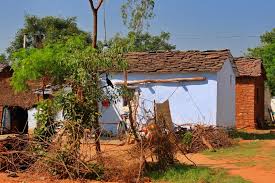
Once there lived a farmer named Venkanna in Bhimavaram village.  He had a grown-up son named Somu. But Somu was very lazy. 

One day, Venkanna’s relatives came. They said that they were going on a pilgrimage and invited them along. Venkanna replied, “Our paddy field will be ruined, if we go away for a whole month now. The harvest should be cut and stacked.” 

His relatives persuaded him by saying, “Let your son Somu take care of the work. He will also learn that way. If you both come along, we will see that you face no problems. You won’t get such good company again.” Venkanna agreed after thinking for a while. Overhearing this, Somu promised that he would handle the farm work.  Venkanna and his wife left with their relatives. 

As instructed, Somu went to the fields a couple of times in the beginning. Seeing the paddy, he thought, “The crop is not ripe yet. It needs ten more days.” So, he lazed and postponed the work. Eventually he stopped visiting the field altogether. 

He was reminded twenty days later when his neighbouring farmers enquired why he hadn’t harvested the crop yet. It was already too late by then. He rushed to the field. But he couldn’t find workers immediately. He managed to bring some labourers after five more days. But the crop had become overripe and most of the grains had fallen to the ground.  

Venkanna saw the field when he returned from the pilgrimage. He was heartbroken. “I should never have trusted Somu. I shouldn’t have gone,” he moaned while scolding his son bitterly for his laziness.

Later, when there was a wedding in their family, Venkanna again had to leave. Before going, he told Somu, “There is a crop of groundnuts. Go and check every day. Guard the field so cattle don’t graze on it. There’s still some time before it needs to be harvested, so be careful.” 

Somu remembered his past mistake with the paddy. He wanted to do better this time and called the labourers in advance. He had the groundnut harvested early. He stacked the crop neatly, thinking his father would praise him.

 Venkanna returned later and was shocked. The groundnuts were harvested before the seeds had matured. The grains were soft inside and not ready. Such a crop would fetch no price. Venkanna was distressed again.  He scolded Somu. “I only face losses because of you.  When will you learn?”

Somu replied stubbornly, “Even when I do the work, you’re never satisfied. Then why should I work at all?”   Their argument grew heated. 

At that time, their schoolteacher, Mohan, happened to pass by.  He stepped in hearing the quarrel and asked what had happened. Venkanna explained Somu’s laziness and the losses it caused. 

Then Mohan said, “Your son clearly doesn’t realise how dangerous laziness is. Let me talk to him.” 

He said, turning to Somu, “Laziness is the root cause of failure. A lazy person can never achieve what he wants. The greatest enemy of a man is not someone outside, it is laziness itself.” 

Somu replied honestly, “I want to give up laziness, but I am unable to. What should I do?” 

Mohan smiled and said, “You must practice being active. I’ll give you an example. You’ve raised hens, haven’t you? Have you seen how a mother hen cares for her eggs?” 

“No, I haven’t noticed,” said Somu.

Then Mohan explained, “The mother hen sits patiently on her eggs, waiting for the chick inside to peck its way out. Only when it hears the chick tapping from inside, does the hen carefully break the shell from outside to help it out. If she breaks it too early, the chick, which hasn’t fully formed, will die inside. This is exactly what happened with your groundnut harvest, you were too early.” 

He continued, “But the hen also never delays once the chick is ready. She immediately helps it out or else the chick will die. That was your paddy mistake. You were too late. Do you understand now?” 

Somu nodded realising.“Yes, I see my fault.” 

Mohan concluded, “Just as the hen waits with care and patience, we too must show the same attention in our work. Whatever it is…. Farming or business. Responsibility and timing are important. Then only we will get results. If you are a student, careful planning and sincere effort will always lead to progress.” Somu slowly started working hard and thoughtfully from then on.

Naramsetti Umamaheswararao has written more than a thousand stories, songs, and novels for children over 42 years. he has published 32 books. His novel, Anandalokam, received the Central Sahitya Akademi Award for children’s literature. He has received numerous awards and honours, including the Andhra Pradesh Government’s Distinguished Telugu Language Award and the Pratibha Award from Potti Sreeramulu Telugu University. He established the Naramshetty Children’s Literature Foundation and has been actively promoting children’s literature as its president.

.

PLEASE NOTE: ARTICLES CAN ONLY BE REPRODUCED IN OTHER SITES WITH DUE ACKNOWLEDGEMENT TO BORDERLESS JOURNAL

Click here to access the Borderless anthology, Monalisa No Longer Smiles

Click here to access Monalisa No Longer Smiles on Amazon International
Categories
Stories

The Wise Words of the Sun

By Naramsetti Umamaheswararao

Once upon a time, the Rain God and the Wind God had an argument.

“I am greater than you,” said the Rain God.

“No, I am greater,” replied the Wind God.

To decide who was truly greater, they made a deal: “Whoever can trouble the people of Earth more, will be the greatest,” they agreed.

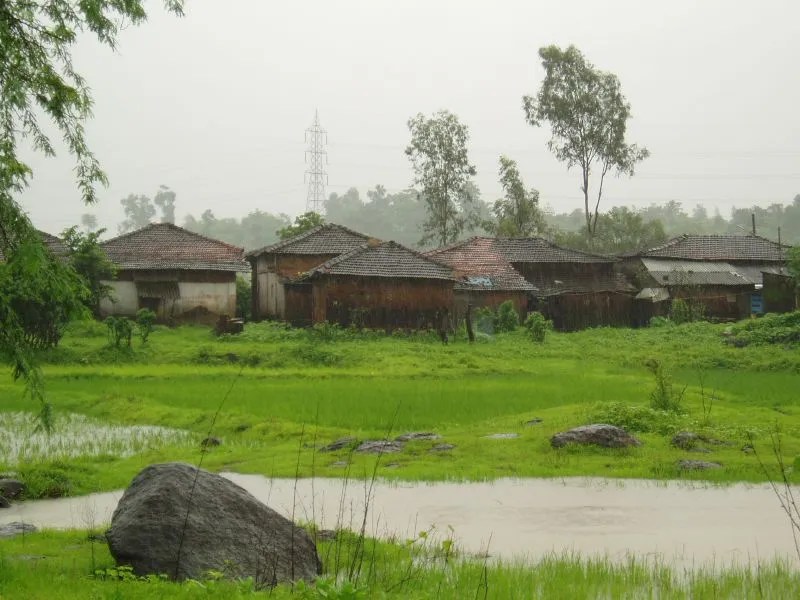
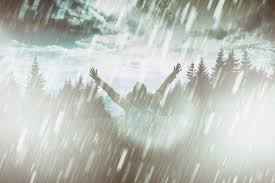
The next day, the Rain God started the round. It started with light showers but soon turned into heavy rain. It rained non-stop for an entire week! Crops were drowned. Farmers cried over their year-long hard work being washed away. Poor people’s small huts were destroyed. Some people died under collapsing walls. Animals were washed away in floods. Birds shivered in the cold. Rivers and lakes overflowed. Roads were flooded.

For seven days, the Sun didn’t shine, and people were very worried.

They prayed to the Rain God, “Please stop the rain!”

Hearing their cries, the Rain God finally stopped.

He proudly asked the Wind God, “Now do you agree I am the greatest?”

The Wind God replied, “Wait till you see my power. Then we’ll talk.”

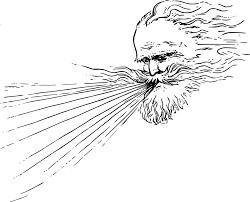
Suddenly, the Wind God blew with all his strength.

Dust flew everywhere. Nothing was visible.

Roofs of huts flew away. People and animals were picked up and thrown down by the strong wind. Trees broke and fell. Even cattle tied in the yard broke their ropes and ran away. People were terrified. They prayed, “Wind God, please calm down!”

Hearing this, the Wind God smiled and stopped.

He told the Rain God proudly, “Look! People couldn’t handle even one day of my power. If I continued, imagine what would’ve happened.”

The Rain God was about to agree when suddenly they heard a voice: “No, you are both wrong!”

Surprised, they looked around. It was the Sun God speaking from the sky.

The Wind God asked, “Are you saying I’m not the greatest?”

The Sun said, “What’s so great about scaring people? If I shine too bright all day, even I can make people suffer. But that’s not our purpose. We exist to help people, not to trouble them.”

The Rain God said, “We just wanted to know who is greater.”

The Sun replied, “If you want to know that, ask Indra or the sages—not the people. You made people cry and suffer. Is that fair?”

Both gods asked, “Then what should we do?”

The Sun said, “Rain God, bring rain when it’s needed—during the rainy season or when the water level is low. Then people will worship you with love and gratitude. Wind God, blow cool breeze during summer. In winter, be gentle. During rains, guide the clouds to where rain is needed. Then people will respect and pray to you. Look at Mother Earth. She gives and serves without asking anything in return. Be like her. Don’t make people suffer just to prove who is better.”

The Rain God and Wind God nodded.

“You are right, Sun God. We agree. We will never make that mistake again.”

And with that, they left peacefully.

From Public Domain

Naramsetti Umamaheswararao has written more than a thousand stories, songs, and novels for children over 42 years. he has published 32 books. His novel, Anandalokam, received the Central Sahitya Akademi Award for children’s literature. He has received numerous awards and honours, including the Andhra Pradesh Government’s Distinguished Telugu Language Award and the Pratibha Award from Potti Sreeramulu Telugu University. He established the Naramshetty Children’s Literature Foundation and has been actively promoting children’s literature as its president.

.

PLEASE NOTE: ARTICLES CAN ONLY BE REPRODUCED IN OTHER SITES WITH DUE ACKNOWLEDGEMENT TO BORDERLESS JOURNAL

Click here to access the Borderless anthology, Monalisa No Longer Smiles

Click here to access Monalisa No Longer Smiles on Amazon International
Categories
Stories

Lending a hand

By Naramsetti Umamaheswararao

From Public Domain

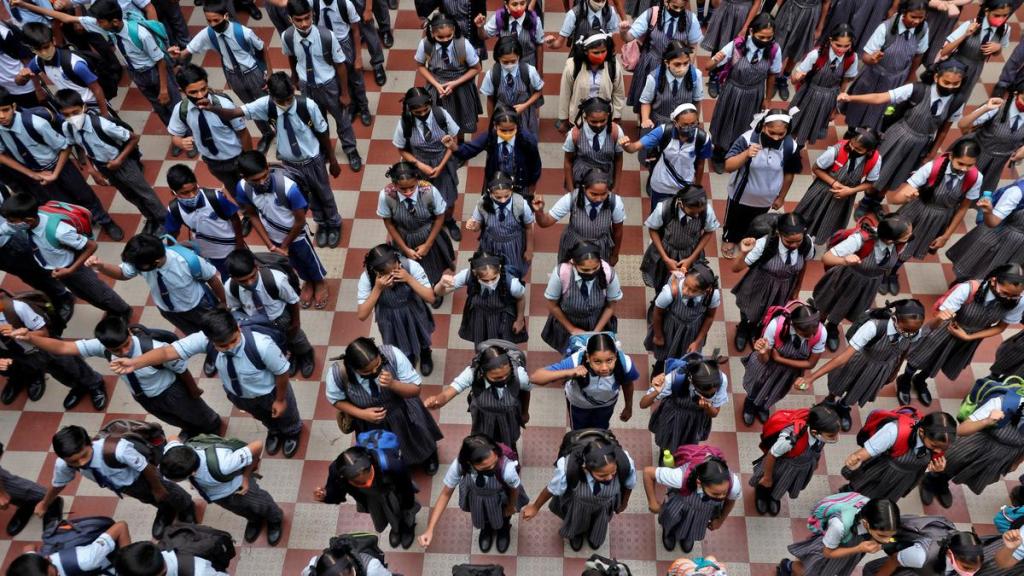
All the students of Seethanagaram High School stood in the playground for the morning prayer. The headmaster, along with the other teachers, was also present.

After the prayer, the headmaster addressed the students: “A new academic year began yesterday. Many new students will be joining us today. We will start lessons from tomorrow. For today, let’s spend the day playing games. Are you all ready?”

The mention of games excited the children. They enthusiastically replied, “Yes, Sir!”

“Alright! From where you are standing, try to reach the other end of the playground by hopping on one leg,” the headmaster instructed.

The students replied, “We can’t do that, Sir.”

“Don’t say that. You shouldn’t give up without trying. All of you, give it a shot,” he encouraged.

Some students stepped forward and tried to hop on one leg. A few managed to go a little distance before falling, while others gave up after a short while. The headmaster praised their efforts and asked them to return.

Next, the headmaster said, “Now, close your eyes and walk to the end of the playground.”

Just like before, the students shook their heads and said, “We can’t do that, Sir.”

“Don’t worry. We will be right behind you. No one should open their eyes or cheat,” the headmaster assured them.

Trusting his words, the students attempted the task. They walked slowly, but it was very difficult to walk with their eyes closed. They didn’t know what lay ahead—there could be stones or pits. They took each step with great fear. About three-quarters of the students gave up halfway, saying it was impossible. A few, with great difficulty, made it to the end of the playground. The headmaster praised their efforts and asked all the students to gather in the assembly hall.

Once all the teachers arrived in the assembly hall, the headmaster selected twenty students and paired them up to face each other. He tore some chits and wrote on them. Placing the chits in some of the students’ hands, he instructed them to convey the words in the torn scrap of paper to their partners using gestures. The students tried as instructed.

When asked if they understood what their partners were trying to convey, everyone said they did not.

Ravi, who had just started the tenth grade and was known for his courage, watched these games and asked, “Why did you have us do these activities, Sir? Do these games have anything to do with our studies? Walking on one leg, walking with eyes closed, and conveying messages through gestures were all very difficult. We struggled a lot, and some even fell. Why did you make us do this?”

The headmaster responded, “Ravi mentioned that walking on one leg, walking with eyes closed, and communicating through gestures were difficult. Do the rest of you agree?”

All the students nodded in agreement.

The headmaster then said, “You’re right. I agree with you. These tasks were indeed difficult. But due to the disabilities given to them by God, some people with physical impairments, like blindness or deafness, have to live their entire lives like this. Can we agree that their lives are more challenging than ours?”

The students remained silent, unable to answer. When the headmaster repeated the question, Ravi replied, “How would we know, Sir?”

“Didn’t you just experience what it feels like to be lame, blind, or deaf while playing those games? That should have given you some understanding. That’s why I asked,” the headmaster explained to Ravi, who nodded in agreement.

“Another question for all of you. If someone is in trouble, what should we do as fellow human beings?” the headmaster asked.

“We should help them,” the students replied.

“Good job! That’s the right answer,” the headmaster praised them, and the students responded loudly, “That’s right, Sir!”

The headmaster then asked, “We shouldn’t make fun of people like that, right?”

“No, Sir,” the students replied in unison.

At that moment, the headmaster called an attendant and had three students brought before the assembly.One student walked with the help of a stick. Another was visually impaired, and the third student’s disability was not visible but had a hearing impairment.

The headmaster showed these three students to the others and said, “These students joined our school yesterday. Two of their disabilities are visible, and the third has a hearing problem. They are already suffering from these disabilities. We should show compassion and offer our help to them. I have seen with my own eyes some students mocking and making them cry. That’s why I made you experience how difficult life is for those with such impairments through these games. These three students need your support and assistance. Not just these three, but anyone with disabilities, wherever they may be, should be helped. We should give them the assurance that we are here for them and give them moral support.”

The students responded loudly, “Yes Sir!”

At that moment, three students stood up and walked to the front of the assembly.

They said, “Sir, we were the ones who mocked them yesterday. We behaved wrongly because we didn’t understand their difficulties. Please forgive us.”

The headmaster advised them to help those in need and behave well in the future, and then he dismissed all the students to their classrooms.

Naramsetti Umamaheswararao has written more than a thousand stories, songs, and novels for children over 42 years. he has published 32 books. His novel, Anandalokam, received the Central Sahitya Akademi Award for children’s literature. He has received numerous awards and honours, including the Andhra Pradesh Government’s Distinguished Telugu Language Award and the Pratibha Award from Potti Sreeramulu Telugu University. He established the Naramshetty Children’s Literature Foundation and has been actively promoting children’s literature as its president.

.

PLEASE NOTE: ARTICLES CAN ONLY BE REPRODUCED IN OTHER SITES WITH DUE ACKNOWLEDGEMENT TO BORDERLESS JOURNAL

Click here to access the Borderless anthology, Monalisa No Longer Smiles

Click here to access Monalisa No Longer Smiles on Amazon International

Categories
Stories

Anand’s Wisdom

By Naramsetti Umamaheswararao

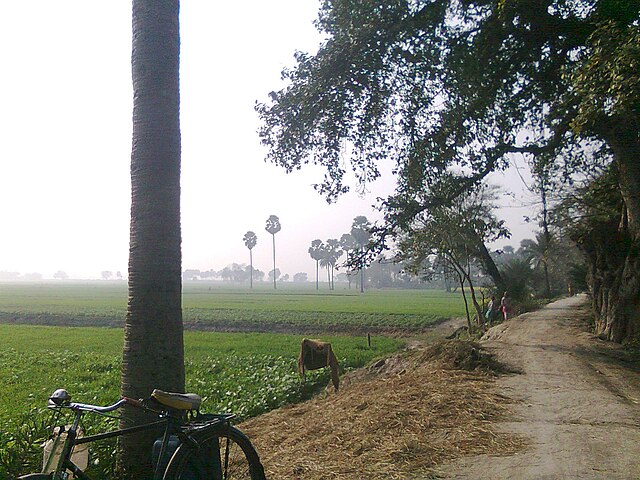
In the town of Kalyanapuram, there lived a wealthy man named Raghav. He had a daughter of marriageable age and was seeking a suitable groom for her.

Once, while Raghav was traveling to a nearby village called Bangaru Palem to explore a possible marriage alliance, he met Anand on the way. Anand introduced himself, saying he was from Machavaram village, well-educated, settled in business, and unmarried.

Raghav thought that Anand might make a good son-in-law, but he decided to test his intelligence and character before making a decision.

As they were traveling, the heat of the sun intensified, and Raghav felt thirsty. He asked a passerby, “Is there a well or a pond nearby?” The man pointed to a pond and said, “You can quench your thirst at that pond.”

Anand asked the man, “Is the pond water poisonous or life-giving?” The man replied, “I don’t know.” Raghav went ahead and drank the water from the pond. He thought to himself, “What a strange question Anand asked! Is he a fool?”

After some distance, two more travelers joined them. One was a farmer, and the other was a moneylender. The farmer was going to a neighbouring village to buy cattle, and the moneylender was on his way to collect old debts.

Anand asked the farmer, “Are you a provider of food or just greedy?” The farmer remained silent, unsure of how to respond. Then, Anand turned to the moneylender and asked, “Do you care for people’s well-being or just focus on squeezing them dry?” The moneylender also remained silent. Raghav now firmly believed Anand was indeed a madman and thought, “There’s no way I can accept him as my son-in-law.”

Even though Raghav continued walking with Anand, he kept his distance, disliking the way Anand spoke. The other two travelers also found Anand’s words odd and wanted to get rid of him as soon as possible.

A little further into the journey, it was noon, and the group felt hungry. They sat under a tree, unpacked their food, and began to eat. But Anand’s attention was drawn to a nearby bush. “It’s not safe to sit here. Let’s move away immediately,” Anand warned.

The other three ignored him and said, “We will eat here. If you don’t like it, go wherever you wish.” But Anand insisted, “I’m saying this for your safety. I sense a dangerous snake nearby. If we don’t leave quickly, it could be a threat.”

Raghav mocked him, “Did the snake come and tell you this in a dream? Or do you have some magical powers?”

Anand pointed to a snake’s skin near the bush and said, “Look at that freshly shed snakeskin. It’s about fourteen feet long and thick, which indicates the size of the snake. It must be nearby. I’m warning you based on this evidence.”

As soon as Anand finished speaking, the farmer screamed, “Look! There it is! The snake is coming toward us, just as Anand said.” In no time, all four ran far away to a safe place and had their meal.

Raghav ’s opinion about Anand began to change. He realised Anand wasn’t mad after all. However, Raghav was still curious why Anand had asked those strange questions earlier.

He asked Anand, “You seem to be a wise man. Why did you ask if the pond water was life-giving or poisonous?”

Anand replied, “Even if the water looks clean, it could be filled with dirt or dangerous creatures like crocodiles, which would make it deadly. On the other hand, water from a safe, clean source sustains life, making it like nectar. That’s why I asked.”

Next, Raghav asked, “Why did you ask the farmer if he was a provider of food or just greedy?”

Anand explained, “A farmer who grows food crops feeds others, so, he’s a provider of food. But if he only grows cash crops for profit, he is driven by greed. That’s why I asked.”

Hearing this, the farmer proudly declared, “I am certainly a provider of food!”

Then Raghav asked, “What was the meaning behind your question to the moneylender—whether he cared for people or just squeezed them dry?”

Anand replied, “There are two kinds of moneylenders. Those who consider the financial situation of the borrower and give them time to repay with understanding — they care for people. But those who are ruthless and demand repayment no matter what, are only focused on taking money and are like a burden on people’s backs. That’s why I asked.”

The moneylender, realising the wisdom in Anand’s words, said, “I am definitely the kind who cares for people!”

With all his doubts cleared, Raghav invited Anand to his home and expressed his desire to make him his son-in-law.

Naramsetti Umamaheswararao has written more than a thousand stories, songs, and novels for children over 42 years. he has published 32 books. His novel, Anandalokam, received the Central Sahitya Akademi Award for children’s literature. He has received numerous awards and honours, including the Andhra Pradesh Government’s Distinguished Telugu Language Award and the Pratibha Award from Potti Sreeramulu Telugu University. He established the Naramshetty Children’s Literature Foundation and has been actively promoting children’s literature as its president.

.

PLEASE NOTE: ARTICLES CAN ONLY BE REPRODUCED IN OTHER SITES WITH DUE ACKNOWLEDGEMENT TO BORDERLESS JOURNAL

Click here to access the Borderless anthology, Monalisa No Longer Smiles

Click here to access Monalisa No Longer Smiles on Amazon International