Categories
Stories

Elusive

By Sohana Manzoor

Bishti poray tapur tupur, nodaye elo baan

(The raindrops fall drip drop, the tide rises in the river.)

Ratri looked at the small nakshi kantha on the wall. The letters were uneven as if they had been stitched by some unsteady hand. But the bright green leaves and the blue droplets were neatly embroidered. She never remembered it in the last seven years, and yet it had been so much a part of her childhood. She recalled tracing the letters on a small piece of cloth and bringing it to the old lady who was her great grandmother. She had given her a needle with dark red thread and Ratri had made her first embroidery. Her Boro Ma had stitched the leaves and raindrops. The piece had yellowed slightly over the years; Ratri felt numb and stricken.

Why didn’t she remember it all these years? Is it because she always avoided the prospect of coming home? Now the only person who loved her was gone. She looked around the room of her great-grandmother—it still had her smell, faint but it was that intoxicating smell of jarda, incense, and contentment. She noticed her prayer beads hanging by the clothes rack. She took in the peeling green distemper which the old lady preferred to any other colour. The walls of her room were always green. Once it was painted white by mistake and her Boro Ma was furious. “Are they planning to make me blind or something? I need the green to soothe my eyes.” Two days later the walls were repainted.

When Ratri was young, she always felt safe and happy around her great-grandmother. Her mother was a classical dancer with a busy rehearsal schedule and frequent performances. Her parents had separated when she was an infant. Her grandmother had a big family and was busy fussing around the household. Everybody was too busy—only Boro Ma had time for Ratri.

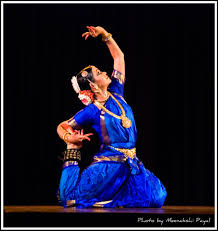
Ratri did not know how her mother smelled—that is, how she really smelled. She saw her from a distance when she was dressed to leave the house or returning from a show. When she entered a room, everyone noticed her, and she wore a tantalizing perfume that Ratri thought was mysterious—just like her. Many years later she recognized the perfume in a famous fashion house in London as Miss Dior. Sometimes she petted Ratri absentmindedly, in the same absent-minded way she petted the house cat Minni. She practiced early in the morning in a room downstairs. She had a beautiful figure and Ratri thought that she danced divinely. Her grandmother often joked that they must have had a baijee in the family tree, and her daughter Nazma had inherited the talent.

Even though she had been married before and had a small child, she had no dearth of suitors. Ratri clearly remembered the bevy of men who came to court her—as one courts a queen, without any expectation of return. They often brought presents for Ratri too. Nazma had a charming smile for everybody, a smile she used to practice before the mirror in her room. She was a consummate artist—everything she did was practiced and trained. Dancing was the only thing she cared about. There were times when Ratri tiptoed to the room where her mother practiced and stood outside the door to listen to the ringing of her anklets and the tak dhin dhin dha – tak dhin dhin dha—na tin tin ta—tete dhin dhin ta that accompanied the music her mother danced to. Some evenings, there were other dancers who joined her, and they danced together. Ratri remembered one night they were all rehearsing a Tagore dance-drama. She thought her mother was some princess or queen and she was ordering her attendants to summon somebody:

Bol ge nogor paley mor naam kori, Shyama dakitechhe taray.

(Tell them at the town centre taking my name that Shyama is calling out to you)

Ratri did not understand the words but was enchanted by the rhythm and the spectacle of the performance.

She did not notice Naina Auntie approaching. Her aunt found her entranced by the door and dragged her away. “What are you doing here, Pichchi? You know that your mom doesn’t like to be disturbed during rehearsal. Come with me!” Ratri turned toward her aunt, “She is sooo pretty! Is she a princess?” Naina laughed, “No, she is who she is. A court dancer.”

When Boro Ma heard about the incident, she looked at the child and commented in a stern voice, “Nazu should spend some time with Ratri. She needs to make time for her daughter.”  Naina Auntie replied, “She looks so much like her father that Apa does not even want to look at her.”

Boro Ma shook her head. “She should have allowed him to take her then,” she said. “What is the point of keeping her and then neglecting her?”

Neglect.

Ratri had not known then what the word meant. But over the years, she grew up learning all its nuances. She survived because of Boro Ma, the only one person who actually cared. And yet, Ratri would eventually take her for granted, imagining that the old lady would always be there. The years went by so fast—the rainbow years of childhood, the reckless years of youth, and she wondered what she did with them.

*

Boro Ma!” the little girl came running. The old woman was just done with her midday prayers and had opened her large closet. “Yes, my darling?” she smiled at the upturned face of her great granddaughter.

Usually, Ratri loved to sniff around her Boro Ma when she opened her closet. There were things from the past like her bridal sari that dated from before the Partition, and old embroidered pieces that she had made as a young woman. Curious little sandalwood boxes, and dainty silver trinkets tarnished with age. And there was that mysterious and intimate smell of incense and naphthalene. But today Ratri was too preoccupied to notice.

“Toton Uncle says that I cannot take on a big journey because I am a girl.” Ratri had a frown on her small forehead. “That’s not right, is it?” she asked.

“What do you think?” asked her great-grandmother.

“I think he is wrong. I plan to look for my prince rather than the prince searching for me,” pouted Ratri.

“A ha,” smiled Boro Ma, “so that’s what the journey is about!”

“Yes, but I want to take on the journey. I don’t like that the prince finds the sleeping beauty. Why can’t the princess go in search of the prince herself?” asked a rather peeved Ratri.

Naina, who was poring over a dense medical text, snapped the book shut and laughed out loud. “I guess you do have to look for your prince, Pichchi. No prince will be happy to find you. You are so dark!”

Boro Ma barked, “What kind of talk is that Naina? There are a lot of girls who are dark.”

“But not princesses,” said Naina. “Princesses are pretty and fair, while Ratri is—”

Before she could finish, the old lady intercepted coldly, “Draupadi, the most sought-after woman of ancient India was dark. And Ratri will be no stupid princess, you heard her. She has a mind of her own and will make her own choices when the time comes. Now get out of here before you utter any more nonsense.”

Naina left the room meekly, but Ratri was looking at her arms and legs which were rather dark compared to Naina’s and most of the people in the house. Even her Boro Ma was very fair despite her wrinkled skin.

She looked up at her Boro Ma. “Does dark mean ugly, Boro Ma?” she whispered. She hesitated a little before adding, “Is that why Ammu does not love me?”

“Who told you that your Ammu does not love you?” asked the old lady with a gleam in her eyes.

“Nobody,” replied Ratri. She looked at her feet and examined her toes. She did not want to say that she overheard one of her uncles talking to his wife. She said lamely, “Naina Auntie says that’s why I was named ‘Ratri,’ meaning ‘night.’”

Despite the arthritis in her joints, Boro Ma bent down and grasped the little girl’s face with both of her hands and lifted it toward her. Ratri looked at the liquid grey eyes of her great-grandmother. They were bright and somber.

“Listen, my pet, you are very beautiful. Your skin may not be as fair as your mother’s, but you are lovely just as you are. But even more important is that you are also very brave. You have a beautiful spirit. You want to make a journey of your own—how many little girls want to do that, do you think?” She got up slowly and smiled. “Now, run along and play. Don’t worry over silly things. And don’t listen to Naina.”

Ratri walked out into veranda with her coloring books. It occurred to her that Boro Ma did not actually contradict the notion that her mother did not love her.

*

A week after Ratri’s eighth birthday, her mother married again. She thought her mother had gone on some tour, but Nazma had actually left for her honeymoon, and then to live with her new husband. She had married a business magnate and launched a new life. Nazma had not informed Ratri and had not of course considered taking her to live with her and her new husband.

Ratri’s grandmother thought it odd that the girl did not ask even once about her mother. But Ratri already knew that her life would be different from all her cousins who lived with their parents and siblings. Most of her maternal uncles and aunts had married and moved out by then but visited frequently with their children. Only Toton Uncle and Naina Auntie still lived in the sprawling old British-era house in Lalbagh. Ratri lived there too, along with her grandmother and Boro Ma. She kept mostly to herself, held court in a sun-drenched roof top, and laughed with the birds. She had few friends at school. The only person she could actually share her thoughts with was her Boro Ma. And she did not miss her mother much even though she often wondered why her mother was not like other mothers. But the mysteriously beautiful woman she used to admire from a distance soon became a faded memory.

*

“Ratri, come down. You have a visitor,” yelled Naina from the bottom of the stairs. Their two-storied house was built in the 1920s and large enough to have once housed all six of Ratri’s uncles and aunts.

Ratri did not hear her the first time. She was buried with a pile of books, several guavas and pickles in the attic. The red tabby Minnie with her two kittens dozed nearby. It was afternoon and she was diving under the deep seas with Nautilus and Captain Nemo. She planned to make a painting of the blue ocean and Nemo’s submarine at some point. She was looking for more details when her aunt Naina called to wake her up from her reverie.

Naina yelled again, this time from the first-floor landing. “Ratri! Where are you? You have a visitor, I say!” Ratri thought she must be mistaken. Who on earth would come to visit her? “I’m coming!” she yelled back and dragged herself out of the sea.

She went all the way down to the ground floor. The drawing room, which was usually locked, was now resplendent with the light from a chandelier. Her grandmother and Toton Uncle were talking to somebody. They all turned to look at her and the visitor exclaimed, “Oh, there she is! She does not look like her mother at all.” He sounded surprised but not vexed as people usually were after finding that she did not resemble her gorgeous mother. She never told anybody about her mother, and nobody at school knew that the celebrated classical dancer Nazma Nehreen was Ratri’s mother.

Ratri looked at the stranger. He had a kind face, a slight stoop, and a touch of grey at the temples. She wondered if she had seen him before as his face seemed faintly familiar. He smiled and beckoned her, “Come here, child. Do you not know me?” Ratri made no reply but continued staring at him. She heard a voice behind her, the very familiar voice of her Boro Ma. “How can she know you when you never came to see her once in thirteen years?” She sounded brittle and hostile.

The gentleman stood up. “Nanu, you are still here, I see,” he said with a nervous smile.

“Yes, I am alive and well,” came the answer. Boro Ma entered the room and placed her hand on Ratri’s shoulder. “Why have you come? What do you want?” she asked.

“He has come to see Ratri, of course,” Toton uncle intervened. He smiled and looked at the stranger. “And perhaps take her with him too?”

Ratri was totally confounded. Why would an unknown man come to take her away? Who was he? He wasn’t her mother’s husband, she hoped. She did know that they had a daughter. Nazma came with the child once, a very pretty child in a frilly baby-pink dress. Ratri had seen them from afar and taken refuge in the attic. She wanted no part of their life. Perhaps her Boro Ma had said something stern, and Ratri never saw the child again. Even Nazma rarely visited anymore. She often sent her daughter costly dresses, but Ratri never even tried them on. Did they want her as a baby-sitter? she wondered.

Now she concentrated on this stranger who looked at her earnestly. At length, he said, “I am your father, Ratri.”

At first the words did not make sense to Ratri. Then she suddenly realized that this man was her father, her very own father whom she had never seen, not even in a photograph. A sudden sense of unreality seized her, and she was not sure who she was, or where. She seemed to be somewhere outside her own body.

Boro Ma spoke up, “And where were you all these years, Mahtab? Why are you here now?”

“I—I live in Cyprus,” Mahtab mumbled. “I have a small business there. I only returned to Bangladesh last week. But I came here as soon as I could.”

Ratri’s father seemed to diminish before her Boro Ma’s withering gaze. “I wanted to come before but couldn’t find the time. The business was growing …” He did not finish his sentence but looked at Ratri with an agonized expression. “Nazma made it clear that she did not want me to see Ratri…. But I have finally come. I want to re-establish a relationship with my daughter.”

Ratri could not understand the tight feeling in her chest. She whispered, “Abbu!”

“Yes, yes, I am your Abbu,” Mahtab took off his glasses, his eyes bright and wet with unshed tears. “Ma, you look exactly like my mother.” He held out his arms to Ratri and she found herself ensconced in arms full of love and longing.

They all sat together, and for the first time in her life Ratri felt that she might have a normal life like her cousins and classmates. She may not have her mother, but now she had her father. She suddenly realized why her father’s face seemed so familiar. It was because she looked like him.

Her grandmother cleared her throat and asked, “So, you have come to take Ratri away?”

Mahtab was still misty-eyed, and he said, “I have to figure out how to take her to Cyprus. She will need a passport first.”

Ratri looked at her Boro Ma and said falteringly, “I cannot just leave, right? I live here.”

Her Boro Ma said nothing. But her grandmother and Toton Uncle said in unison, “Come on, he is your father. And you need a proper family.”

When Mahtab left after dinner that night, Ratri felt very strange. Her father! Where was he all these years? And would she really be able to live with him? Like a regular child? She looked up Cyprus in an old atlas that belonged to her late grandfather. She imagined the blue waters of the Mediterranean, and warm sand between her toes.

When it was time for bed, she turned to her Boro Ma and asked, “Boro Ma, what are people like in Cyprus?”

Her Boro Ma did not say anything. After a while she said in a hoarse voice, “I don’t know. Let’s see how things go.” She turned on her side to face the wall and pretended to go to sleep.

*

Mahtab did not come the next day as he promised, but two days later. He seemed disheveled, but Ratri did not notice. She was overjoyed to see him. She sat beside him holding him by the arm and smiling broadly. And then her father said, “Ma, I’m afraid I can’t take you with me. You have to stay here for the time being. Maybe when you grow a little older…” he stopped seeing the ashen face of Ratri.

“Why?” asked Ratri. “Why can’t I go with you now?”

“You are too young,” said Mahtab lamely. “I will take you when you become eighteen.”

“But why?” asked a bewildered Ratri again.

Her father seemed to be on the verge of tears, “I have a family in Cyprus.”

Ratri snapped up to look at her father who seemed to have shrunk in stature. He looked at her imploringly, “Ma, I re-married and I have two sons. Since we don’t have a daughter, I thought Amalie would not object. I told her about you before and that I came to see you. She did not seem to mind then.”

Ratri sat stonily for a few seconds and then slowly disengaged her arms from her father’s. She slowly picked herself up and walked out of the room without looking back. She went straight to the attic.

She heard her great-grandmother on her way out, “That was cruel, Mahtab. Did you have to get her hopes up? Her mother never even looked at her. And you came to tell her of fatherly love, only to abandon her? Shame on both of you.”

Mahtab sat with his head bent.

Ratri never answered any of the letters she received from Cyprus. Even when her mother had cancer and wanted to see her long neglected daughter, she felt no urge to visit her. They were both strangers to her.

She was a rootless tree, she thought. She preferred to remain that way.

*

Ratri made it to the College of Fine Arts thanks to her Boro Ma. She loved that part of town with its tea stalls and flower shops, the imposing façade of the National Museum, and the mystique of the World War II era crater just behind the College itself. It was another world, quite apart from anything else in Dhaka, and even set apart from University of Dhaka’s main campus. By the time she was 17, she was sure that’s where she wanted to study.

Her uncles and aunts thought it was a terrible idea. “What is the point of studying art? Will she become an artist?” Ripon Uncle had asked disdainfully.

“I didn’t ask for your permission,” retorted Ratri.

“Sure,” jeered Maliha Auntie. “Who will pay for it do you think? It’s quite expensive—I hope you know that!”

“And all sorts of weird people go to Art College,” supplied a giggling Naina. “Do you know they often have nude models? And drugs too.”

Ratri felt indignant, but also helpless. “I will pay for her education,” her Boro Ma said quietly.

“You?” Toton Uncle gaped at her.

“Yes, I still have the money Ratri’s great grandfather left me. I also have some property in Faridpur. I will sell it all, if necessary,” she said with determination.

Suddenly, the room went quiet. Nobody missed the old lady’s use of “Ratri’s great grandfather” rather than “your grandfather.”  Ratan Uncle, who was the eldest among his siblings and had been listening quietly to all arguments so far, finally said, “I think we all should contribute. She is our niece, after all. We have a duty toward her. Also ask Nazma. She has neglected Ratri too long.”

Ratri wondered why Ratan Uncle suddenly felt responsible. Didn’t they all think of her as an outcast and burden? She felt an immense gratitude toward Boro Ma. She was the one who always stood up for her. Ratri tried to swallow the lump in her throat. She did not cry when people humiliated or hurt her. But love was something she rarely had. And that made her cry.

*

Boro Ma was ill when Ratri got the scholarship to England. She was more than 90-years-old, and her body was starting to betray her. Ratri wondered if she should turn down the scholarship and stay with the old lady. But in her heart, she was already soaring high and wanted to get out of the old house which had become more prison-like than ever. Her uncles and aunts jeered at her artistic talents, her irregular habits and idiosyncratic tastes. Naina Auntie thought she could join a hippie camp. It was the early 2000s, and she wore kurtas and jeans instead of sarees or salwar kameezes, and hardly wore jewelry like other young women her age. She was good looking in her own way, even though she did not have her mother’s exquisite features or complexion. If anything, she tried to distance herself from her mother in every way possible.

Can one grow up and flourish somewhere without feeling any kind of attachment? Boro Ma was her only tie to this house. But even she was not enough to keep her here for the rest of her life. Her life would not really begin until she left, and her great-grandmother seemed aware of the fact.

“Go, my pet,” she said. “This is the chance of a lifetime. Don’t waste it.” She smiled as she added, “We’ll meet again when you return.”

Nobody came to see her off at the airport except their old driver. And Ratri was glad because she was not used to expressing emotion. She felt happy and free. Her palette and paintbrushes were all she needed. She had a new canvas before her, gloriously open to the sky and the horizon, and she would paint to heart’s content.

*

The next four years were the happiest in her life. She met people who took her as she was. There were no expectations except that she excelled in her work. She learned different techniques, experimented with various media, took part in contests and exhibitions, and even won acclaim as a young artist. Mahzabeen Nishat Ratri, the talented young artist from Bangladesh, she thought with pride.

That’s when she met Irfan. They often travelled together and participated in exhibitions jointly. Sometimes they were competitors, but eventually he became her adviser as he was twelve years older than her. She didn’t mind him being older—she felt he was more mature as a result. He had been through a lot in life, just as she had herself. When Irfan proposed, she readily accepted. He had told her about his previous marriage and why it had not worked. “I badly wanted a child. But all Shila wanted was her career,” he said.

Ratri understood. Her mother too only thought of her career. She had heard that even her half-sister, the baby girl she saw with her mother, had had a tough life. Nazma was too much of a careerist to give up anything for children. She sent her daughter to Shanti Niketan at the age of eight.

“O my pet! How are you? When will you come home?” She could hear Boro Ma crowing with joy and longing.

“Did you get my letter, Boro Ma? The one about getting an artist’s residency in France?”

“Of course! I’m so proud of you. But aren’t you coming to see me? I’m getting old,” she sighed.

“I’m planning to.” Ratri paused. “I will bring Irfan with me. We are getting married.”

The phone went quiet on the other end.

Boro Ma—I told you about Irfan, remember? He is a great guy. You will like him, I promise.”

“He’s too old for you, my pet.” Boro Ma’s voice suddenly sounded like that of a stranger. “And he looks like a catfish. You won’t be happy with him.”

Ratri was dumbfounded. She had always been supportive of Ratri, not hurtful like the others. She tried to reason with the old lady. “Boro Ma, do looks really matter? I am not pretty either. But he is loving and supportive, and he genuinely cares.”

Her Boro Ma was unmoved by Ratri’s remonstrations. She said that she felt in her bones that Irfan was not to be trusted.

The next couple of days Ratri felt lost and depressed. Finally, she decided to tell Irfan about the conversation. Irfan was taken aback, but then he laughed out loud. “I think your Boro Ma is jealous,” he said.

Boro Ma jealous?” Ratri thought that was the most ridiculous thing she had ever heard. But the more she thought about it, the more it made sense. After all, Boro Ma would no longer be the center of Ratri’s life, and perhaps it was natural for her to feel jealous. Poor Boro Ma!

Ratri felt awful, but proceeded through with the wedding plans, which she felt was her one chance at happiness.

She returned to Dhaka with Irfan and took him to see her relatives. Her uncles and aunts now appreciated her since she was starting to make a name for herself. The Bengal Gallery had invited her to take part in an exhibition later in the year, and she hoped to get a spot at the Alliance Française as well. One of her younger cousins even took her autograph. They all congratulated her—except Boro Ma. She simply looked at her and then turned to face the wall.

Ratri remembered the night after her father’s first visit. She had turned to face the wall at the prospect of Ratri’s departure. For the first time, Ratri wondered about the nature of Boro Ma’s love. Did loving someone mean to possess them, and not let go? She wondered if all love was like that.

*

A couple of days before their wedding, Irfan asked Ratri to take a walk with him and share a plate of fuchka at Shahbag. It was February, and the weather was cool and pleasant.

“I want you to meet someone very special,” he said smiling. On the grassy lawn in front of the College of Fine Arts, he beckoned to a young girl of about twelve. Ratri was sitting under a champak tree wearing a green saree with yellow sunflowers. She did not usually wear a saree, but that day she did.

“My daughter, Laboni,” he said. “She is the light of my life. And Laboni, this is Ratri. She is the lady I told you about.”

Ratri stared at the lanky young child-woman who stared back at her with open hostility. The girl turned to her father. “She is not pretty like you said, Papa,” she said.

Irfan apologized after Laboni had retreated into the Central Public Library that she frequented. Irfan and Ratri were walking from the TSC toward the Kala Bhaban. “She is young and sentimental. I hope you understand.”

It was early spring. Around them, the krishnachura trees blazed their vermilion blossoms, and the shonalu flowers hung like molten gold. They would be imprinted in her soul forever. The sound of her mother’s anklets flitted through her mind. Tak dhin dhin ta, the tablas intoned. The pain of rejection, the elusive happy family.

“Why didn’t you tell me about Laboni?” she asked.

“I was afraid. I thought you would not agree to marry me.”

“So, you deceived me.”

Irfan laughed a little uneasily. “You’ve missed so much love in your life, Ratri! I am sure you will understand her pain.”

“Yes,” Ratri agreed. “I do understand.”

Irfan was relieved. “I knew you would.”

“But you don’t understand either of us, Irfan. That’s the problem.” Ratri took a deep breath.

“What do you mean?” Irfan was taken aback.

“I was in her position once. That girl wants her father. But not her father’s new wife.” Ratri paused. She turned to look at Irfan. “And I want a man to love me wholeheartedly. Without being deceitful.” She took another deep breath and said, “Our marriage is off.”

“No!” Irfan gasped. “The wedding has already been announced, and all my friends and family have been invited. I cannot call it off now.”

“You are not calling it off. I am,” replied Ratri calmly.

“You are insane, Ratri!”

She shrugged. “All the more reason for you not to marry me.”

*

Nine years had passed since then. And she had tried not to remember.

Ratri sat in her old hole in the attic. The night sky was clear, and she could see stars even though tall buildings loomed over their old home. Buildings that had risen while she was away. Towering apartment complexes had replaced many of the old and crumbling homes. But a few remained, including this one.

Ratri had not gone back to live in the old house in Lalbagh after the breakup with Irfan. She taught at the College of Fine Arts and lived in a women’s hostel nearby. She withdrew into herself like a snail. She ate, slept, and worked like an automaton. If people gave her odd looks, she did not notice. When she won a scholarship to France two years later, she broke all her ties with her family.

Only last month she met an elderly lady at one of her exhibitions. “Your work is very moving, you know,” she said. “Oui, très émouvant. It shows your knowledge of the human soul.” Ratri was drawn into the pool of her liquid grey eyes. “You have a beautiful spirit.”

Ratri thanked the woman politely, but her world was crumbling. What knowledge did she have of the human soul or of its depths? “You have a beautiful spirit.” The words echoed from the faded corridors of the past. “Boro Ma!” the child in her cried out. And Ratri could hear her incessant sobs.

“She cried for you a lot during her last days. She kept on asking for you,” said Toton Uncle sadly. “She wanted only you. We did not have any contact information, Ratri. I understand you had no reason to remember us. But how could you forget your Boro Ma?”

Ratri looked at the small nakshi kantha. Boro Ma had asked that they give it to her when she came back. “She said she knew you would return, and she asked us to give it to you.”

Yes, of course, thought Ratri. Boro Ma was the mother she never had. How could she forget her? She whispered into the nakshi kantha, “Boro Ma! I am sorry. I was angry. I was so hurt. I am sorry, Boro Ma.” 

She held the small nakshi kantha close to her chest and thought of the days when they did so many things together. Her body shook as spasms of overwhelming grief engulfed her entire being.  The raindrops in the nakshi kantha melted before her eyes and finally Ratri cried.

Glossary

Nakshi Kantha: Embroidered quilt

Boro Ma: Great Grandmother

Jarda: Tobacco

Baijee: Professional dancer

Pichchi: Little one

Apa: Elder sister

Ammu: Mother

Nanu: Grandmother

Abbu: Father

Ma : An affectionate way of addressing someone younger, technically, mother.

Fuchka: A savoury snack

Oui, très émouvant : Yes, very moving. French

Sohana Manzoor is an Associate Professor at the Department of English & Humanities, ULAB. she is also the Literary Editor of The Daily Star. “Elusive” was first published in an anthology, It’s All Relative, in 2017.

.

PLEASE NOTE: ARTICLES CAN ONLY BE REPRODUCED IN OTHER SITES WITH DUE ACKNOWLEDGEMENT TO BORDERLESS JOURNAL

Categories
Stories

Flash Fiction: The Husband on the Roof

By Carl Scharwath                      

The black star-filled evening seemed ready to flow into the horizon, down a gaping hole.

There was a time I was a loving husband. I know that was years ago but sometimes my memory is not capable of verifying this.

The escape I desired was in front of me all the time, or should I say above me? The oasis of being alone at home could only be accomplished by taking to the roof.  The journey was transparent, open the window of my 3rd floor bedroom and the small, shingled cover would accept me with all my faults like the summer grass of my youth. This would be a new sanctuary: I could read, have my coffee, wave to the neighbors or simply close my eyes and listen to the sounds of the neighborhood.  The roof shingles would be the canvas in my memory garden. Why would I spend mindless time watching television, surfing the internet, or worse having an affair or drinking? My view was like a virtual reality movie unfolding in front of my eyes. You might by now ask how the hell I got here: an old married man, alone and searching for any hope or happiness in what could be the last days?

My marriage after 35 years was falling apart, like my body, cars, house, and life. I know it is my fault that she is no longer happy and constantly, from morning to night, complains and blames me for everything and every choice I make. I always believed in the cliché only you can make yourself happy and I pray my wife will find peace. I feel I need to take to the roof and speak directly to heaven for God to hear me and that is another reason I sit here.

The neighbors I am sure would have another opinion of me. Why is the man sitting on the roof for hours on end?  My neighbors as they were out walking would not make eye contact for fear of being brought into a higher decibel conversation. Most just waved and nervously smiled while walking into their perfect lives and marriages. I silently meditated on what their thoughts might be and if their own lives were absolutely perfect or just a façade?

Out in the distance, gray clouds were growing, and hot flashes could be seen and were complimented with a far-off roar. This brought to me a thought: to sit through the storm, right here in my safe place and if the lightening killed me, then I would have eternal relief.  The start of winds awoke me to an epiphany, a sadness that this was the first time I ever thought of wanting to die.

At that moment, I became totally immersed with thoughts of the past. I was happy, each day a miracle of life for which I was grateful. I remembered my first date with the woman I would marry. The way we held hands, with the music like a background soundtrack to our jazz-infused love. The late-night conversations ending with hugs and whispers of I love you. I saw us both young and in our first year of marriage, I heard my wife tell me she was pregnant and remembered the joy we shared for the future as a family. The realization of the horrible husband I had become awakened me as the rain softly filled my face with cloud tears.

Down the street, a familiar car was finishing its journey home, holding my wife in its closed interior with her unknown emotions. The rain was increasing its intensity along with my apprehension.

The sound of her car excited me, closer and closer she would come to our new happiness. I hoped to welcome my wife home to the change she would see. I worried I was not too late, and our marriage could be saved. She looked up at me with wide eyes of amazement seeing me still on the roof with the impending storm whirling around in its uncertainty. I timidly ambled to the edge of the roof as she was walking swiftly to the front door now ignoring me, the way I did our marriage the last few years. Looking down at her my new love filling my eyes as my feet slipped over the edge and carried me home to her.

I felt free in my fear, my destiny awaited as she screamed below me. The scream grew louder and louder and I as drifted closer and closer, I closed my eyes before the impact knowing we would become one again.

.

Carl Scharwath has appeared globally with 170+ journals selecting his poetry, short stories, interviews, essays, plays or art. He has published three poetry books.

.

PLEASE NOTE: ARTICLES CAN ONLY BE REPRODUCED IN OTHER SITES WITH DUE ACKNOWLEDGEMENT TO BORDERLESS JOURNAL

Categories
Stories

Pothos

By Rakhi Pande

Money plant: Courtesy: Creative Commons

Shireen carefully placed the unwieldy pot on the dining table. She checked again to see if she had inadvertently damaged the lush green and tall money plant she had just bought on impulse. Her very first one, though, growing up she always had seen at least one if not more money plants at home, so, not technically her first however, her first very own money plant for her apartment. Company leased of course. 

She was fascinated and charmed by it. The plant naturally caught the eye as a new focal point in the room. Glossy emerald green leaves – darker than the emerald embedded in her ring, its marbled texture never repeated on any leaf; unique and different. The leaves looked like they had been coloured in with oil pastels.

She marvelled at the fact that a simple acquisition like that ensured that she did not immediately swipe on her phone screen to check her messages or indulge in the endless and somewhat mindless scrolling through social media posts, once home. She could stare at the plant for hours, seemingly, to observe the graceful curves of the stalks swirling upward around the moss stick.

Shireen had no idea a towering money plant with such gigantic leaves could grow out of a diminutive six-inch pot. It was possible because of the moss stick. That it could hold twenty times its weight in water, was a fact she had just learnt from the attendant at the plant shop. None of the leaves of the ubiquitous money plants she remembered from her childhood in every home been quite this size.

The little label stuck on the pot listed its scientific name – Epipremnum aureum, but the attendant at the store had called it Pothos. For a brief second, Shireen had misheard the name as Pathos. That very day she had made her high school students apply the persuasive technique of ethos, logos and pathos in their written assignments. She realised her error almost immediately. Both the scientific names didn’t sound right to her – she preferred calling it simply by its colloquially popular name — money plant.

This was purely an impulse purchase – having accompanied two of her colleagues, Min and Lena to the flower shop to select a bouquet to be sent to their dean who was hospitalised for a knee replacement surgery, she had spotted the large section containing various money plants under the enticing fifty percent off banner. That was a big deal in Singapore.

She had moved there two years ago on a work visa that included accommodation – a real coup. Her hectic work life ensured that the idea of getting a plant hadn’t even crossed her mind – until now. Min who was Singaporean Chinese, Lena from Russia  and she had struck up an easy friendship.

The informative leaflet displayed on a stand stated that the money plant would not require much watering or maintenance. It could be placed anywhere indoor, as long as it was exposed to some light. A balcony or windowsill was not a prerequisite.

“You need to steal it,” Min giggled, “for the money part of it to work.” Amused, Shireen imagined herself trying to attempt something like that in a city with probably the strictest penalties for crime. Good luck trying to explain the principles of feng shui* as a defence. Her expression made them all laugh, and Shireen spent a few careful minutes selecting one with the lushest foliage. 

Once home, she put some thought into where to place it. She decided to do some research about her new acquisition and read many interesting articles about the pothos. Some of them contradicted each other as was the norm with the internet. She had not even thought about her bedroom as an option – having absorbed the adage or warning that plants should not be kept there – a belief oft heard over the years.

However, one article strongly proclaimed that since the epipremnum emitted oxygen at night, it should be placed in the bedroom to improve sleep quality; that it was a myth that plants should not be placed there.

She tried to look for information supporting the Asian belief with some scientific reasons to back it up but couldn’t find anything online that forbade plants in the bedroom, not even on the myriad vastu shastra* sites that popped up in response to her search.

They all agreed in one aspect, that the plant should be placed in the South East direction. She decided to leave the money plant on the dining table for the time being and then, choose a spot the next day.

*

The next evening, having carried a lot of work home, she was too tired to do anything more than drop into bed early. However, remembering how the money plant’s presence had enlivened her sitting room, she forced herself to roll out of bed and bring it into the bedroom. She placed it on the dresser for the time being, vowing to figure out a better placement over the weekend.

She fell asleep almost immediately after and awoke refreshed, crediting the plant for this, even though she had no real scientific idea about the quantities of oxygen a plant that size gave out.

The weekend arrived soon enough and once Shireen had completed dusting, vacuuming and mopping her apartment, she looked around her bedroom for likely spots and found an ideal one — just below her window. It was designed to mimic a French window, with glass panels nearly all the way down to the floor. This would place the plant quite close to her bed as well, all the better to imbibe oxygen. The window was South facing, so it wouldn’t get direct sunlight but a lot of bright, indirect light.

She was determined to do all she could to ensure that the plant stayed healthy. She went to bed that night smiling over Lena’s comment that she was getting obsessive about the plant just like one does with a new pet. Just because she had bought a plant tonic for it despite its exorbitant cost.

*

She struggled awake from a deep sleep saying, “Do you need something…?” Fully awake moments later, she could have sworn it was Lena standing by her bedside to ask for a duvet.

Min and Lena occasionally slept over just like she did at theirs, especially on weekends they planned an early morning trek or outing.  Not this weekend though.

Feeling a bit uneasy, Shireen couldn’t fall asleep for quite a while.

It was probably the silhouette of the money plant that her subconscious had registered, she told herself. It was nearly four feet tall and she was not yet used to its new placement.

“I guess I did get some sleep,” she thought wryly as she awoke comfortably later than usual for a Sunday morning. In the bright light of day, she looked over at the money plant which was diagonally adjacent to her bed, not directly beside it.

She stood looking at it, thinking about that funny dream. Did the leaves look a darker green already? It had already grown, as one of the tips had curved even higher. The pointed leaf at the tip had unfurled itself, too. She couldn’t resist touching its shiny surface which resembled a plastic leaf.

She had sprayed the plant tonic just a couple of days ago – its recommended usage was once a week.

I’m just imagining this, she thought, but she secretly felt like a proud mother who’s noticed significant progress in their offspring.

*

Shireen tried to wake up, to move, to speak, but something was stopping her. She felt something flowing from the money plant – something glutinous, yet luminous, which was trying to envelop her. Some unconscious resistance that she managed did not allow that to fully occur, however.

She opened her mouth to call out, make some sound, but the words were lost in the ethereal white light that didn’t allow any sound to pass through. This sent her into a full-blown panic and she made one last concerted effort to resist whatever was happening.

Shireen awoke with a start, wide-eyed, stiff and scared. It took a few seconds for her brain to process that she had just had a bad dream.

One that seemed very real though.

In the dream, her room, her surroundings had been exactly the same. Must be from the MSG or food colouring in her takeout, she thought. She had often had vivid dreams after eating out, especially after anything which had orange food colour added to it. Like Schezwan or chicken tikka.

She found it difficult to fall sleep again – and stayed awake for what seemed like hours. Only when daylight dispersed the complete dark of the room, she fell into an exhausted sleep.

*

In the morning, for some reason, she could not bring herself to look at the money plant. “You are being ridiculous,” she admonished herself.

Had it always appeared this dark and forbidding? Weren’t most money plants a brighter green with more of a white marbled effect? Hers was mostly completely green. How had she not noticed it before? Only a few leaves had the white marble streak.

She caught herself avoiding walking by it too. The rational part of her brain mocked her for even entertaining a supposition that what she had ‘dreamt’ should impact her actions in broad daylight. “Shame on you, a supposed role model to students!” she scoffed at herself.

Shireen went online and put in a specific search request for why plants should not be placed in the bedroom. To her immense frustration, not one piece of content appeared. She couldn’t believe it. This was the internet. You could type literally anything and there were tons of articles or threads about it. Nothing in this case, though. Some posts that turned up as a result of her search warned against growing a peepal plant at home. These posts originated from Indian sites. She had some vague memories of hearing stories from her grandparents about spirits residing in the peepal tree. However, as was wont with the internet, most of the articles stated that this tree was sacred for many cultures. But this was a money plant, not even closely related to the peepal. She gave up the search.

*

Lena and Min trooped into Shireen’s place for dinner on Friday eve. They would stay the night, sleeping on the comfortable bed that appeared magically from the wall in her sitting room neatly settling itself over the couch – just by pulling on one lever.

It was only when they had all finished dessert that Min noticed. “Where’s your money plant?” Lena was astonished that she hadn’t noticed its absence. “Even you couldn’t kill a money plant!”

Shireen had already planned what to say when the topic was broached and smoothly replied that she had gifted it to her elderly neighbour downstairs, Mrs. Tan, as a gesture of goodwill when she had admired the plant. Mrs. Tan’s helper, Wei, often brought by a meal for her, sent by the kind, old lady.

Shireen didn’t want to delve into the reasons why she simply was not comfortable with the plant anymore. Not just in the bedroom; anywhere.

She had caught herself thinking about the unsettling and uncannily lucid dream and knew that she could not spend another night with the plant in the same room. She hated that she had hesitated to even touch the pot to lift it and bring it back into the sitting room in the morning. She would never ever admit the real reason for getting rid of it to anyone, not even Min and Lena, but she distinctly felt that she’d had a narrow escape.

She caught herself wondering if the reason plants should not be in the bedroom had something to do with what she had experienced in her dream. Could it be that some unknown and undiscovered interaction between plants and humans was possible? Was it a friendly, symbiotic exchange of energies she had mistaken for something sinister, a transference, or… a takeover?  

Shireen shivered and firmly blocked this line of thought.  It did, however, give her an idea for a written assignment for her students on traditional cultural beliefs impacting modern existence; ingrained spiritual beliefs or superstition, affecting day to day life – it would be interesting to read essays from over forty nationalities. She got to work on her laptop.

*

Mrs. Tan looked at her overcrowded but beautiful house. Though spacious, nearly every nook and cranny occupied with years of acquisitions.

She wondered where to put the money plant that young girl upstairs had gifted her. She was pleased as the money plant was a symbol of luck and prosperity. An auspicious gift. She called out to Wei to carry the plant.

No, her living room had no space at all.

That left only the bedroom.

As instructed, Wei placed the plant on Mrs. Tan’s broad, antique bedside table.

Glossary:

*Feng shui — A traditional practice originating from ancient China, which claims to use energy forces to harmonize individuals with their surrounding environment

*Vastu shastra — An ancient Indian system of architecture integrated with nature, incorporating traditional Hindu and Buddhist beliefs

Rakhi Pande heads the English department at a British curriculum school in Dubai, UAE. She segued into this profession after quitting her erstwhile post as General Manager in the field of brand management in India. An avid reader and award-winning educator, while dabbling with blogging and other creative pursuits, she tries to write whenever time permits.

.

PLEASE NOTE: ARTICLES CAN ONLY BE REPRODUCED IN OTHER SITES WITH DUE ACKNOWLEDGEMENT TO BORDERLESS JOURNAL

Categories
Stories

Flash Fiction: Flight of the Falcon

by Livneet Shergill

Sitting under the banyan tree, B… was half awake, half asleep. His mind was shifting like a pendulum, thoughts of the city life he had left behind were trespassing the thoughts of his childhood and youth spent under the banyan tree in his village. As the pandemic set into its third month, B… lost his job. Without a job, heading back home was inevitable for him. This time it took him three days to get back home. Earlier it would take him only one day. The journey was even longer than those three days. The journey didn’t end when he reached his home — it just started. Although his village was five hundred kilometers away from the capital city, it’s stark isolation belied this reality.

Suddenly, out of nowhere black clouds engulfed the burning summer sun that had been shining brightly. Then began a game of hide and seek between the mighty sun and the black clouds. B…, like a silent hidden spectator, was watching the game and wondering whether life is more predictable or the weather. Probably there was an uncanny resemblance between the two.

Someone was gazing at him from a far distance, the gaze made him uncomfortable. A pair of dark brown eyes ringed with yellow penetrated his being as if every part of him was up for an examination. Unknowingly he began to walk in the direction of those eyes. The sun was again visible and also moving in that direction. It seemed as though he was following the sun, he walked for about an hour. In all, he had walked four kilometers. But he was exhausted.

The residential area of his village was behind him. He was standing on the dusty pathway between two fields and on the tree before him the pair of mesmerising eyes were still continuously staring at him without blinking. To B…’s immense amazement, it was a falcon sitting on Gulmohar branch, hidden between the red flowers, with only its eyes visible. The falcon and B… gazed at each other as if they were long lost friends who had met after many years. Tears began to roll down his eyes.

The falcon took flight. B… followed. One, two, three and within five minutes there were six falcons flying in the sky in a triangular formation.  The falcons in the sky and B… on the ground matched their rhythm. Sometimes, they hurried and at times they were steady. It started to drizzle. That didn’t disturb their synchronization. After six hours of this rhythmic exercise, B… collapsed.

The sun had set, and it was beginning to get dark. He was lying unconscious in the fields with falcons circling him — rather unusual a sight. Lightning struck the village. Some of the homes were set ablaze. The blaze from the burning houses was visible from a distance. It had started to rain heavily now. The falcons had disappeared and B… was lying prostrate in rain. Heavy rain had put off the fire.

Next morning, the villagers found him in the fields, burning with fever and still unconscious. The village was too remote for a doctor. The village elders took on themselves to heal B…. After twenty-four hours, he regained consciousness and he was a new man.

In the past two days, his entire life had unfolded before him.

The city lights that once bedazzled him had lost their glitter. He realised lights that do not illuminate were pointless. They only tired the mind and the eyes. The earthen lamp dimly lighting the room was to be his guiding light. The dusty by-lanes of his village were to be his high streets.

It had taken ten years and a pandemic for him to understand that the village life he had left for a better life in the city was the same off-grid life many city dwellers aspire for. The peace and tranquility he was experiencing could not be found anywhere else.

The way a storm with high winds blows down a tree and reveals the tree’s hollowness; the barrenness of the city life was uncovered by the pandemic.

The branches of the banyan tree had grown long enough to reclaim the Earth beneath. The branches were one with the roots again. B… had finally found his footing, on his own land.

B… was sitting under the banyan tree, dark brown eyes ringed with yellow were gazing at him from the treetop. A group of children encircled him, engrossed in the story he is telling.

At long last, he is home.

Livneet Shergill is a PhD in Economics. She works as an independent researcher and writing gives her unmitigated happiness. The childhood literary bug has never quite left her.

.

PLEASE NOTE: ARTICLES CAN ONLY BE REPRODUCED IN OTHER SITES WITH DUE ACKNOWLEDGEMENT TO BORDERLESS JOURNAL
Categories
Stories

Kumar Bhimsingha

Kumar Bhimsingha by Swarnakumari Devi, the sister of Rabindranath Tagore, was published in Bharati & Balok, a magazine run by the Tagore family, in Boisakh 1293 of the Bengali calendar, April 1887 according to the Gregorian one. It has been translated by Chaitali Sengupta.

Swarnakumari Devi. Courtesy: Wiki

The king of Mewar, Rana Raj Singha, was resting alone in his sleeping chamber. Dusk had set in. As per the orders of the king, the servants had kept only one fire-lit lamp. The rest had all been extinguished. The soft light had created an ambience that gave a pleasant hue to the king’s thoughts. The day of the coronation was almost upon them, the day when prince Jayasingha would be anointed his heir, the next king of Mewar.

Rana Raj Singha’s mind was full only with the thoughts of how elated his royal queen would be on that special day and the happiness of the crown prince. He was not bothered about his subjects’ reactions at all. The gates of his royal chamber opened slowly, and his second queen Kamal Kumari entered inside. Startled, the king sat up on his bed, surprised to find her there. He indicated she sit on a seat near him. Once she was seated, the king asked, “You, at this late hour?”

The queen replied, “There’s no option left for me. You never show up, when I ask for you.”

A bit embarrassed, the king remembered that throughout the day, a couple of messages did come from the queen, requesting him to visit her in the inner chambers of the palace. Slowly, he said, “My dear queen, I forgot.”

Her mind hissed, yes indeed, such is my fate, that you’ve regularly forgotten me, there’s nothing new in it. Keeping her face expressionless, she only asked, “I just came to confirm; are the rumours that are brewing true, my King?”

Something forced the king not to come out with a direct reply. He simply asked, “Which rumours do you mean?”

The Queen responded: “Rumours, that says that your throne is going to be taken over by Jayasingha, during your kingship. Looks like our land is following the Muslim rulers in this regard.”

This sneering remark, aimed at Jayasingha was not lost upon the king. He said, “Rumours are gossip. Not the truth. My throne is not being usurped by Jayasingha; on the contrary, I’m bestowing it upon him.”

The queen laughed harshly. “Ah, so you’re passing the throne to him. Why such a haste to abdicate and retire, may I ask?”

Holding his surging anger in check, the king replied, “My dear queen, there’s no reason to laugh like that. A king must think a hundred times and act with deep consideration. Just think, the well-being and suffering of his subjects are so much dependent on his decisions. If I, the reigning monarch, do not take a decision now, then there is a chance is that in my absence, the question of succession would lead to a fight among the brothers, and ruin the kingdom.”

The Queen said: “But my observation is, that in trying to find a solution, you’re in fact, instigating one brother to fight the other. In the name of protecting your kingdom, you’re leading it towards destruction. If you wish to decide on your successor, in your presence, then, pray, why do you not declare your eldest son as the next king? Why are you usurping his rightful eligibility to the throne unlawfully and relinquishing it to the younger one?”

The words rang true, but they did not please the king. Sometimes, it was difficult to bear the truth. With supreme irritation, the king said, “Bhimsingha and Jayasingha were both born almost at the same time. The difference is their time of birth is so minute, that on the basis of that, Bhimsingha cannot claim to be the successor to the throne, just by virtue of being elder by a few seconds. They’re born on the same day, at the same time. Under the circumstance, the one who is more capable has a right to inherit the throne. I believe Jayasingha to be more capable of the two.”

Laughing, the queen said, “It seems like you want to turn the wheel of time; or, else, why would you accept the younger one, to be equal to the eldest one? I’m happy that just your mere words did not change the dictates of time. Even if a person is marginally older by birth, he deserves to be considered as the eldest. Lav and Kush were twins; but then why, did Lav succeed his father to the throne? Besides, let me ask you, on what grounds do you think Jayasingha is more deserving than Bhimsingha? Is Bhimsingha any less than Jayasingha in terms of bravery, honesty, intelligence, prowess? Who is admired by the army? Whose honesty enchants the nobles in your court? Whom do the subjects want as their future king? You’ll get your answer, if only you ask others. However, if you believe Jayasingha to be more deserving since he’s born of your favourite consort, and is, hence, your dear prince, of course, that is a different story.”

Her words, like sharp quills, invaded his heart. Angered, he said, “So be it.”

The queen, too, could hardly restrain her anger. “Then say that clearly. Why be pretentious and hide behind false words? Being a king, are you afraid to voice the truth?”

The king answered, “Nobody ever wanted to know the truth from me. None can claim that I’ve been untruthful.”

The queen replied, “Do you remember the day they’re born?”

She paused, her words were caught in the web of time, as she travelled back almost twenty years, remembering that day. The difference between the simple, trusting, young bride of yesteryears and today’s middle-aged woman, neglected, exploited, devoid of husband’s attention, was too great. The young Kamal Kumari of those days, who after giving birth to her first born, had waited with love and patience, for her husband to come, and to take her son in his arms, exulting in happiness. In the expectancy of his arrival, she completely forgot the pains of childbirth and in her heart, there flowed a stream of bliss. But when the moments changed to minutes, and then to hours, and still the King did not come, she felt neglected and hurt. Dejected and sad, she heard one of the maidservants saying, “Queen Chanchal Kumari, too, has given birth to a prince around the same time. The king is with her and he has tied the amulet of immortality, on the feet of the newborn. Later, he will come here.”

It had been a tradition of the Royal house of Mewar that at the birth of the firstborn, the king tied the amulet of immortality on the tiny feet. It was a symbol, whereby the king declared his firstborn, to be his successor. On hearing, that the king had unfairly put the precious amulet on the feet of his younger prince, instead of his elder one, a raging fire swelled fiercely in her heart. The tears from a mother’s eyes anointed the newborn on that day.

The queen clearly understood that her husband didn’t love her anymore. In the past too, such thoughts had assailed her, like frail doubts, but they never lasted long. She had reprimanded herself for doubting her husband. But, that day, the doubts that had only temporarily intruded, took root as the truth in her mind. Shell-shocked, the queen felt like dying.

When her husband came finally, to visit the newborn, she did not utter a word. Within a few days, she heard rumours within the palace walls, that claimed that because of the mistake on the part of the servants, who miscalculated the time of birth of Chanchal Kumari’s firstborn, the king had tied the amulet on her boy, thinking him to be the eldest.

Kamal Kumari did not have the heart to judge the veracity of this rumour. She had no trust on the king’s love for her, and his proximity only became another cause of pain and agony for her. How on earth would one engage in such talks with him? Many a times, she’d attempted to broach this subject, to question him, and each time, her misery had been so immense, that she came back before she could get her answers.

But after so many years, when she had almost no reason to disbelieve his very reason for tying the amulet on Jayasingha’s feet, she stomped with wifely hurt. She only remembered that she was Bhimsingha’s mother. She felt that it was only because he was born of her ill-fated womb, his luck forsook him, meting out grievous injustice by depriving him of his natural right. Deadly anger replaced the feeling of hurt then, and she stood against the king, to fight for justice, to fight for her son’s rights.

When the incidents around his birth flashed before her eyes, once again, it made her weaker; the fire of anger that lighted her eyes, at once turned tearfully misty, with the remembered hurt. But, not for long. Soon enough, the queen spoke angry words: “If you aren’t afraid to speak the truth, then why could you not come up with the real reason for tying the amulet on the feet of your younger son, when all the while, it was your eldest son, who deserved it?”

Angered, the king replied, “It’s not my duty to explain my decisions or the reasons behind them to the subjects. And if people misinterpret my actions, I can hardly be blamed. Right? If I’d hidden the truth on that day, fearing the public backlash, then I’d have hesitated to give him the throne, even today. If people had any wrong assumptions, let it be dismissed by this action of mine. This is my kingdom, and I reserve the right of bestowing it to whomsoever I please. I’m neither afraid of the public and nor should they have any right to comment on this.”

Unable to tolerate further, the queen stood up from her seat, and in an agitated voice, said, “No, don’t you dare think like that, O King. It might be your kingdom, but you’ve no right to bestow it upon anyone you deem fit. You may be the judge, but that doesn’t give you the right to be unjust. Your kingship doesn’t give you the right to break laws. And if a king does that, then he’s not a king – he is a despot, an unrighteous ruler. Such a king’s bounty will surely not be accepted by my son. The day he claims this kingdom as his rightful domain, it’ll be his. Even if you wish to bestow the kingdom upon him now, he will not accept it from you. Remember when your unfair decision results in bloodshed. It will take the lives of millions of innocent people, bringing huge destruction to this land. When bloodshed between brothers will bring the legacy of Mewar to ignominy, don’t blame them or others. Do remember then, O king, that this is the consequence of your sin. You’re a descendant of the famous Raghu clan, whose patriarch King Dashrath didn’t hesitate to banish his favorite son Rama to forest just to uphold justice. Despite being born into such an illustrious family, today, you defamed your family name. But, as long as this world exists, and the planets revolve, you will not be able to suppress justice with injustice. Truth shall triumph, O king, you would not be able to stop its march.”

Her words were clearly laced with deep hatred. Having spoken them out, the proud woman went out of the king’s bedchamber, in slow, graceful steps. She didn’t meet Bhimsingha that night and decided to have a talk with him the next morning.

2.

The queen departed. She left behind a cacophony of censure and her words continued reverberating in the Rana’s head, pounding like thunderbolts. His mind echoed back the words of his queen: “You are the descendant of the famous Raghu clan, whose patriarch King Dashrath didn’t hesitate to banish his favorite son Rama to forest…”  He felt dizzy. His majesty, the great Rana Raj Singha became as restless as a small child. “Oh, what have I done? I’ve compromised truth at the feet of fraternal love, despite being born in a family that upheld truth at all costs. Oh God, was this the purpose of my unlucky birth, only to tarnish the unsullied name of my family?”

It was, as if his closed eyes, were suddenly opened. Never before, had he thought about the matter in this manner. In his mind, since Bhimsingha and Jayasingha, both were born on the same day, neither of them had precedence on the throne. It was his kingdom, and he thought to bestow it upon whom he deemed fit. Blinded by one-sided love, he had, so far, failed to ponder upon the other aspect of the issue. But, today, he was cured off such an illusion, such an oversight, in a harsh way.

The night passed sleeplessly in a restless state. At the crack of dawn, he asked the guard, “Ask Prince Bhimsingha to come here at once.”

“Prince Bhimsingha?” The guard expressed surprise, for they all knew Jayasingha to be the crown prince. Checking his surprise, he went out to inform Bhimsingha.

The fact that he has been called to meet his father surprised Bhimsingha no less. It was a novel occasion, for he could hardly remember ever to be called by the king, his father. He thought, “Is this some new trick? Is he calling me to attend upon Jayasingha, to be his servant? But does he not understand that, as long as Bhimsingha has faith in his own prowess and bravery, the throne can never belong to Jayasingha.”

Remembering his father’s partiality angered him afresh. He was in a dilemma. He pondered on how he could turn down the invitation to meet him. However, he decided not to disobey the royal command. “On the other hand, today, in his presence, I’m going to speak out my heart,” he thought.

His heart seething with anger, Bhimsingha went to his father. But his anger melted as he glanced at the king looking for an escape route. Depression was written large on the king’s face and his eyes, although troubled, were deep with love as he looked at Bhimsingha. Anger and revengeful feelings vanished in a moment. In its place, there was a strange emotion of unexpressed pain.

The king, too, was surprised to see Bhimsingha’s calm, forbearing, respectful demeanor, just the very opposite of the image he’d conceived in his mind, in which Bhimsingha seethed with deep seated anger, frowning to demand fairness from him. Bhimsingha behaved like a loving son. Seeing his son’s respectful demeanour towards his father, embarrassed the king. His son’s respect, forbearance and calmness filled the king’s heart with deep contrition, a feeling which no amount of anger on Bhimsingha’s part would have aroused in the Rana’s troubled heart. In deep shame and repentance, the king could hardly glance at him.

Slowly, he said, “Son Bhimsingha!”

His affectionate tone surprised Bhimsingha. Never before, had the king expressed such tenderness towards him. Slight and neglect had been his lot from his father. The memory of a day when both the brothers were playing in the garden invaded his consciousness. The Rana had caressed Jayasingha fondly, but for him he had not spared a word of endearment. Hurt with his behavior, the boy had left the place, found his mother’s lap to shed his tears, without telling her the reason of his sorrow. Growing up, at every step, he’d observed the unfairness of his father. And by bestowing his throne to Jayasingha, he’d, finally, shown the height of unfairness. It had led him to believe that the king did not love him.

And so, after long years, when the king called him with such tenderness in his voice, it roused strong emotions in his heart, overwhelming him. In a trembling voice, he replied, “Father.”

All these years, Bhimsingha had addressed him as Maharaja, the king. Looking at him, the king confessed, “Son, I’ve wronged you grossly, please forgive me.”

Tears coursed down Bhimsingha’s eyes, tears of hurt and pride. The fact, that his father realised and acknowledged his unfair behaviour towards him, washed away his hurt. In his heart, he said, “I’ve lost your affection, for I stayed away, aloof from you, doubting your affection for me. For this reason, I seek your forgiveness, forgive me, father.”

He stood speechless in front of the king; the Rana, observing his silence, continued, “I know it is difficult for you to forgive me, but I’ll atone for the crime I committed, and thereby ask forgiveness from my conscience, from my God. You’re my firstborn; to you, shall I bestow my throne, on your head, the crown shall glitter. But even if I do so, Jayasingha would always stand as a barrier on your path, an impediment. It is because of my fault that he’s dreaming of possessing that which is not his. The greed of the kingdom would turn him to cause anarchy in the land. And there is, but only one solution to this problem.”

Saying so, he unsheathed the sword that glittered brightly against the rays of the sun. Holding it in front of Bhimsingha, he said, “Take this, and pierce this sword through his heart. Let one death ward-off thousands of deaths, let justice prevail at the downfall of injustice. Don’t panic, on the face of cold responsibility. No relationship is important enough.” His voice shook, as he uttered the words, realising their onus, in essence, within his heart.

Like a statue, carved in stone, Bhimsingha stood. In a flash, he understood what the king was going through. To uphold his duty, he was sacrificing his most valuable, loved treasure. Bhimsingha witnessed the intense loftiness of his father’s ideals. His greatness impressed his to the core. His love for his father increased a thousand-fold. Bhimsingha clearly understood, that in piercing the heart of his brother, he would in fact, be stabbing his father. He could hardly say anything. His mind only whispered, “You’re a god, a divine being.”

Watching him standing quietly, the king again reiterated, “Son, don’t shiver at this thought. You’d be committing this act to uphold justice, for the well-being of the land, there’s no sin in this act of yours. And even if you commit a sin, it would be not yours, it would be mine. Follow my command and fulfil it.”

Bhimsingha took the sword from his hand and kept it at the king’s feet. He said, “Father, take back your sword. I’ve no need for it. You’d indeed wronged me, but you’ve repented profusely for it. You’ve fulfilled your duty to the letter. Now let me fulfil mine. I’ll make sure, that there will not be a drop of bloodshed because of me; that Jayasingha would not commit anything untoward because of me. The right that you’ve bestowed upon me today, I grant that right to Jayasingha. From today onward, this kingdom shall rightfully be his. I’ll leave Mewar, to prevent myself from getting tempted, in future, by the greed of attaining the throne. Carrying the affection and the lofty ideals that you imparted to me today in my heart, I’ll leave my motherland Mewar tonight. If I fail to do this, let me not be known as your son.”

Not giving him a moment to respond or desist, Bhimsingha touched his father’s feet and was gone. Astounded, the king stood there.

That very day, Bhimsingha himself crowned Jayasingha. Then, along with his loved soldiers and nobles, he left Mewar. He never came back.  Many years later, when his companions returned to Mewar, they carried with them, the news of his death.

Swarnakumari Devi (1855-1932) was five years older to her sibling, Rabindranath Tagore. She was one of the first women writers of Bengal. She was also a social activist who fought for women’s liberation. Among Bengali women writers, she was one of the first to gain prominence. She helped orphans and widows. She opened an organisation to help women and opposed the evil of sati. In the 5 July 1932 issue of the Bengali newspaper, Amrita Bazar Patrika, just days after her death, she is  remembered as “one of the most outstanding Bengali women of the age” who “did her best for the amelioration of the condition of the womanhood of Bengal.”

Chaitali Sengupta is a writer, translator and journalist from the Netherlands. Her published works include two translations “Quiet whispers of our heart” and “A thousands words of  heart”. Recently her first prose poem collection Cross- Stitched words was published. Her poems have also been anthologized in many international collections and she writes for many print and online journals. 

.

PLEASE NOTE: ARTICLES CAN ONLY BE REPRODUCED IN OTHER SITES WITH DUE ACKNOWLEDGEMENT TO BORDERLESS JOURNAL

Categories
Stories

Flash Fiction: Fat!

By Supriya Rakesh

So, it is my college re-union this evening. I don’t even want to go, I really don’t!

But then I think, what the hell, it’s been ten years! Will be nice to meet all the girls… may be even some of the boys.  They will all have turned into paunchy dads. Most of them, may be not all of them. The girls are of course skinny and what not. I know; because they’re all over my Instagram. With their GM diets, avocado smoothies, and egg whites. Their svelte sculpted bodies in their hot Yoga pants.

I approached the venue all, all cautious, like a crab calculating its distance and plotting its moves. I know I have done okay in life. Decent job, check. Boyfriend and marriage, check. Travelled around the world, yes even to Czech. Published my short stories, check and mate!

Still, I first stand in a corner and watch from a distance. They all look so smug in their designer outfits — eating, sipping, laughing, catching up.

“Oh! Is this food vegan?”

“I don’t eat gluten any more…”

“Can I have some low-cal champagne?”

I observe them like a birdwatcher studying a rare species. Pretty much how I got through four years of college. I stand my ground, waiting for my friend, Sally. I need a buffer, I really do.

Until one of them spots me.

“Oh my God, Mandy…,” she coos in her high-pitched voice. “There you are! Come on over.” The bait is ready. I approach unsteadily, just as the group gets ready to devour me.

“Oh wow, you have put on! Looking just a bit fat!” A unanimous guzzle.

Fat! From that moment on, things start to blur. Is it the fresh trauma or memory of older ones? Perhaps, it is low blood sugar. I did skip my post-lunch tea and muffin in anticipation of the food here.

I strain to take in all the jibes and counter-jibes. Only the most important information is digested. Yes, there is clear consensus. I have packed in some kilos, 5 to 10 is the guesstimate. I neither confirm nor deny anything.

Then, a platter of suggestions. My responses rise up like reflux but never escape my lips.

“Completely cut out carbs.” I veto the keto!

“Just eat every two hours!” Ummm, why not more often?

Then well-meaning Veena and sharp-tongued Shapira close in on me.

“Hey girl, loving your curves.”

“Yea! Love-handles mean more action!”

Being touched inappropriately under my shirt snaps me out of my reverie. I excuse myself, saying I need to look for Sally.

It’s been ten minutes and Sally is no-where to be seen.

I have gulped down two glasses of strawberry sangria and have no choice but to head for the buffet. I definitely do not want to return to the herd. To have more pity or information stuffed down my throat. A rumbling stomach confirms my decision.

I pick up the plate and stand in the line. I manage a polite smile at a few faces I remember vaguely. But inside, I am fuming.

What the hell do these women think? That I am clueless of my own weight? I haven’t looked in a mirror since what? 2008? Even the clothes I had to throw out gave me no clue! They are doing me a favour, by their astute observations and wise revelations?

Grinding my teeth, I load up my plate… comfort food is what I need right now. I skip the weirdly brown lentil soup (how can I eat it standing) and approach the hearty tomato spaghetti with parmesan cheese.

Or should I go for the veggie brown rice pilaf? The ‘healthier’ choice?

Ugghh, it’s all their fault! Causing such gut-wrenching dilemma in my otherwise sorted brain. My grad school, published author brain. Again, did they expect me to look exactly the same ten years later? All the things I’ve done, achieved, mean nothing against my slightly bulging waistline?

I find myself a table in the corner, and tear into my spaghetti.

Yes of course I’ve gained weight, but only a slight bit– couple of dress sizes at most. I’m not technically fat. Just full-bodied. A real woman. Living in a normal, healthy way. No fad diets or surgeries. Why do we swallow up these beauty standards dished out by fashion, media, society? I slurp my arguments down with my vanilla-bean smoothie.

My plate is almost empty now. I do feel a little better.

Yup, cold dairy as always soothes my nerves. Complex carbs give me perspective. A happy buzz in my head from the strawberry sangria. It’s just one evening, after all! Plus, Sally will be here soon. She’ll get me. Sally’s beyond everything. She’ll have some sage advice for me, some philosophy or the other about self-acceptance.

My phone pings as I head towards the dessert counter. Thank god she’s almost here! It’s a tough choice, but I pick up a bowl of fresh caramel custard (gooey brownies are for little children) and walk towards the door.

She wants me to wait outside so we can meet first, then walk in together. Looks like she needs a buffer too. I’m so excited, I haven’t met Sally in the longest time!

There’s a slight drizzle outside but I’m distracted by the zesty orange drizzle in my bowl. As I dive in to soak a last sumptuous bite, there is a slight tap on the shoulder. I turn to greet her with a full-mouthed grin… My jaws drop, as does the spoon in my hand.  

“Wow, Sally” I gobble unwittingly. “You are looking so fat!”

.

Supriya Rakesh is a researcher, educator, author with a PhD from IIM, Bangalore. Her fiction explores gender and relationships in contemporary India, with recent publications in Kitaab, Muse and Setu Bilingual. Further details at www.supriyarakesh.com.  

.

PLEASE NOTE: ARTICLES CAN ONLY BE REPRODUCED IN OTHER SITES WITH DUE ACKNOWLEDGEMENT TO BORDERLESS JOURNAL

Categories
Stories

Shoes in the Forbidden Attic

By Vidula Sonagra 

Unlike kids her age, Kaju was never very excited about summer vacations. For her it meant no school, no math class, no meeting Rani and Pooja, no playing hopscotch. Several of her aunts and cousin aunts from across Madhya Pradesh and few from Maharashtra spend the entire summer vacation with their children. It meant more work for her mother and kakis*. Which in turn meant more household chores would be assigned to Meena didi*, Heeru didi and herself. Nonetheless she looked forward to meeting her cousins — Tina, Babli, Ankita, Neelu, Pintu, Rahul, especially Nikita and Avni.  Nikita and Avni were daughters of Chand bua, who was her father’s first cousin.

 Chand bua always received a grand welcome by her brothers, cousins, and sisters-in-law. She lived in Bambai (Mumbai) where Nikita and Avni went to English medium Convent school. They wore readymade clothes and always wore colourful socks with their shoes. Kaju was a year younger to Nikita and a year older to Avni. They had difficulty in adjusting with the toilet system, yet they seldom complained about it. They were a bit snobbish, but they were often bullied. Sometimes Kaju protected them and sometimes she participated in bullying them.  Kaju wished, she was just like them, some days she wished she could punch them in their face. 

 When they arrived, both wore lemon yellow dresses with black hair-bands and shoes with matching socks and mushroom haircuts. Kaju was thrilled to see them. But also, a tiny bit envious of them, especially of the shoes Nikita wore. Nikita wore the shoes all the time. The label on it said, ‘Made in USA’. To Kaju’s annoyance, Nikita without fail mentioned it to everyone. She bragged how her father got those for her when he went abroad. Truth be told, her father never travelled out of the country. Her mother had bought them from the flea market outside Ghatkopar station. After patiently exploring and skillful haggling, Chand bua had a knack of finding and buying classy clothes. 

  Kaju and her cousins spent the summer like most other summers. Playing, fighting, pulling each other’s hair, stealing dried berries and imli*, forming and reforming teams, plotting against each other, learning to fly kites, playing challas* and simply making memories that would someday be cherished by them or haunt them.  When no one was looking, Kaju wore the ‘Made in USA’ shoes. They fitted her so well.  She walked across the room like she was a movie star. She dreamt of wearing them to school and flaunting them to Rani and Pooja. She wanted them so much so that she hatched a plan to steal them and hide them till her school reopened.

 A day before Nikita and Avni’s departure Kaju took the blue shoes which she had thought of during the summer. She meticulously planned when she would steal them and also where she would hide them. The attic would be the best place to hide her steal. Except Seema kaki, Hiroo didi and Meena didi, Kaju had not seen anyone access it. She had seen them going to the attic only a few times in the wee hours. When she asked Hiroo didi and Meena didi to take her to the attic, both forbade her to go to the attic and spoke. They had only gone there to feed the monster who came in their dreams when he was hungry. They warned her against going to the attic as the monster was not fond of children. Kaju knew they were fooling her. But didn’t have the heart to go to the attic till that day. She had heard somewhere; monsters are only wake up in the night. If she went in the daytime, she could still hide it. 

 Just after lunch, Chand bua was busy packing for her return. Nikita and Avni were fast asleep as they were tired from meeting relatives all morning to bid adieu and have sumptuous meals and sweets prepared especially for them.  Kaju slowly entered the room where dadu* and Viju kaka* were napping. She picked up the shoes and went to the middle room hiding it under the frills of her layered frock. It was one of the darkest rooms with one clerestory window borrowing light from the kitchen. It had the door to the attic. Boo was lying on the bed. Kaju thought, Boo too was napping. But to her terror she was wide awake. Staring. Staring into nothingness. Boo has been that way since Magan dada* — her stepson died last winter. They were just eight years apart. She had taken care of him like a kid brother since he was two years old. She never doubted that she would be the first one to go. She wasn’t prepared to live in a world without him.  Kaju soon realised, even if Boo was staring, she wasn’t seeing anything.  

 Kaju slowly climbed the table that had the tailoring machine and unlatched the door from the top. She climbed the steps like a cat. The attic was stuffy and dusty with pigeon feathers all around. Proximity to the iron roof made the dung floor even hotter.  Window at the end of the attic was on source natural light. Kaju, three feet two inches, could barely stand straight in the middle of the attic that had slanting roofs.

On the one side there were two large, rusted trunks, with several bundles of cloth. On the other side there were heaps of stove woods, few chipped pots, a large rat cage, a string on which several stained cloth pieces were hung. It was nothing like she had imagined it to be. In her mind the attic was a room with a large bed for the monster, cupboard, table, TV, and a large pot of drinking water. Kaju was terrified with the setting and aura of the attic. Before she could find a clean and convenient spot for her shoes, Kaju heard some rattling from the opposite end of the attic, she hurriedly left her shoes at the window, and quickly climbed down the stairs. When she entered the room, Boo was still staring, Staring into nothingness. Kaju with a racing heart got on the tailoring machine table. Carefully latched the chain at the top. Dusted off her layered, frilled frock. Still a bit shaky, Kaju tried her best to pretend everything was normal.

 Next morning, when Chand bua with all her bags packed was ready to leave for the station with Nikita and Avni, Nikita frantically started searching for her shoes. While Laxmi dadi* and Chand bua were still crying, everyone else started to look for the shoes. About fifteen minutes later, Chand bua firmly suggested Nikita wear spare shoes, or else they will be late for their train. Upon hearing this Nikita threw a fit and started crying. But Chand bua was in no mood to waste time mollycoddling her. She slapped her instead and asked her to wear the spare shoes. Nikita tried hard to stop crying, but tears continued to roll down her cheeks.  She quietly wore the spare shoes and got into the tonga.  

 Kaju felt guilty. Not only did she steal Nikita’s shoes, but Nikita was also slapped by her mother in front of everyone. Though she couldn’t forget the crying face of Nikita for many days, she brought herself to confess the fact that she not only stole the shoes but had hidden them in the attic. She was terrified that her mother would thrash her for stealing. Stealing something from Chand bua’s daughter. Kaju was so petrified and ashamed of her act that she could never muster up the courage to take another trip to the attic. Not until the incident had faded in her memory.

Glossary

Kaki – Father’s younger brother’s wife

Didi – Elder sister

Bua – Father’s sister

Imli — Tamarind

Challas – Ludo, a board game

Dadu — Grandfather

Kaka – Father’s younger brother

Dada – Elder brother

Dadi – Grandmother

Vidula Sonagra is an independent researcher, writer and translator who is interested in society, literature and music and loves reading fiction and petting street dogs and cats. 

.

PLEASE NOTE: ARTICLES CAN ONLY BE REPRODUCED IN OTHER SITES WITH DUE ACKNOWLEDGEMENT TO BORDERLESS JOURNAL
Categories
Stories

The Beggar

By Shouvik Banerjee

Madhu and the children had been insisting on a family outing for a long time. So last week, we finally decided to watch a movie at New Empire. We would later shop at New Market and then gorge on spicy street food from the nearby food stalls. The children also insisted on visiting the museum. They had always wanted to see the ‘mummy’. This time I complied.

When we reached, a thick crowd of curious souls greeted us. They huddled around the 4,000-year-old dead body and inspected it from every angle. Madhu and the kids joined them while I stayed by the swinging door and watched.

As I scanned the room, my eyes rested on the guard standing in a corner. He was wearing his emerald uniform and his right thumb dangled from his belt. Under the cap, his face was clean-shaven, and his eyes moved quickly around the room. He was invisible except for the way his wrists flicked. It looked familiar.

For a moment I paused and denied the thought. It could not be. But I had to know. I edged along the wall until I was standing beside him. I inched closer and tried to meet his eye. My suspicion and the thought I had been denying were now a fact. He pretended not to have noticed me and continued to avoid my gaze. Finally, I said, “Excuse me, I have seen you somewhere?”

This time, he looked at me. The expression of mild surprise on his face hinted neither at shock nor bewilderment. Instead, he went into a denial mode, “I’m sorry but I don’t know you.”

What a rascal!

“Remember you were in Dalhousie, near the chowmein seller, you wanted to eat some chowmein? Remember?”

“Dalhousie? Chowmein? I’m sorry sir but I do not understand.”

He slithered through the thick crowd and disappeared.

Of course, he understood!

The week before, I was sitting at one of the innumerable fast-food stalls spread around Dalhousie when he had approached me with a yellowish toothy grin.  Except then, he was a beggar and not a security guard.  He was bare-chested and held up a corner of the torn khaki trousers with a dirty hand. It dangled from his slim waist, threatening to fall any second. In his other hand, he held a small bowl which jingled with a flick of his wrist.

The shopkeeper rebuffed and shooed him away.

It was hard to recognize him in the museum since the beggar’s face was a mess of dark repulsive hair. But I knew it was him. There was a spark in his eyes which was hard to ignore. It was not the eyes of someone who should be begging. That was what intrigued me about him.

The next day when he arrived, I bought a plate of chowmein to appease both parties. He sat down against the wall and devoured the food from an old newspaper.

“Do you live nearby?” I asked.

The beggar shook his head. “I don’t live anywhere.”

“So, you never had a home?”

“I had one, a long time back. My brother used to beat us – my mother and me. My father had already died. Then one day, he came home drunk and pushed us out of the small house. My mother died in a ditch and I kept wondering. You know, I have a BA and was part of a theatre group. But no one cares about degrees or talent. All they care about is money. Money, money, money…”

Under the mess of dirty hair, he did have a young face and was perhaps in his mid-thirties.

After that brief encounter, I had not seen him for many days. But I, too, was partly responsible for the disunion. Madhu was packing lunch as retaliation against my growing blood pressure and waistline. I was now spending my afternoons with colleagues. I listened to their gossip, and occasionally took sides in office politics. My workload had also increased. So, I found less reason to visit my beloved food stall.

The other day, Mahesh, the office peon, had piled a stack of files on my desk. “Dutta da wants this by tomorrow,” he had announced fastidiously before scrambling off. After working for six years, I had acquired one vital piece of knowledge about my boss – Raghubir Dutta. When he said next week, he meant this week; If he said tomorrow, he meant today.

Sometimes, when files were not coveting for my attention, I wondered why I slogged so much for so little. Other times, I romanticised the impossible idea of finding a better paying job. But almost immediately I dismissed such thoughts, remembering well that my father never had the luxury to send me to a business school.

I needed money to make money.

*

The next day, I took an early leave during lunch. I cited an important meeting with a customer as an excuse. Thankfully, Dutta was too preoccupied to have noticed the lie. I went over to the same stall and hid behind a bunch of bodies. His appearance, though, made me doubtful after my confrontation.

I was right. After waiting for half an hour, I went to lookfor him. I scanned the countless stalls, shops, and the streets packed with people.

It was a futile search. But just as I was about to board a bus, my eyes fell on a sugarcane juice seller at the far end of the street. And there he was, hunched on the ground, relishing the sweet juice and ecstatically smacking his lips!

I waited. He got up and dumped the plastic vessel in the dustbin. Then, he briskly walked till the end of the road and turned a corner. I followed. The beggar entered a small public urinal that was surprisingly clean. A few minutes later, the museum guard emerged in his crisp green uniform and cap, looking sharp and, I suspected, perfumed as well.

I ran and caught him by the shoulder as he waited for his bus. He turned around with a flabbergasted look.

“I know about your dual life,” I said, agitated and angry that he still feigned surprise. “The police might find it interesting. Why are you acting and fooling people?”

The guard gave me a wide smile and politely replied, “Aren’t we all?”

The bus arrived. He got up and I watched as the vehicle roared away leaving a cloud of black smoke in my face.

.

Shouvik Banerjee is the author of Seven Sundays (Hay House, 2019) and has been published in literary magazines and journals like The Bombay Review and The Universe Journal.

.

PLEASE NOTE: ARTICLES CAN ONLY BE REPRODUCED IN OTHER SITES WITH DUE ACKNOWLEDGEMENT TO BORDERLESS JOURNAL

Categories
Stories

Orang Minyak or The Ghost

A Jessie Michael explores blind belief in a Malay village

The nerves of Kampong Semut were aquiver with anxiety, fear and excitement, all melded together. The haven of wooden houses several miles from the nearest town and surrounded by coconut groves and padi fields, which were more and more a rarity, now had its slow, meandering peace shattered and its people shaken awake.  Adrenalin flowed fast and they jumped at shadows.

A hysterical village girl claimed that she had seen, against the light of the moon, the shape of a naked man climbing through her window. When she sat up, the shape slid out again and vanished. The village religious body initially put the claims down as the imaginings of a frustrated young woman but when more girls made similar claims, the villagers decided that there might be some truth to the matter. The village elders claimed the sightings could be that of an Orang Minyak, (Oily Man) — that grease covered, naked, dark, male malevolence that prowled villages, seeking to molest and rape virgins. This entity had long been quiet in the whole country and was beginning to be dismissed as myth.

 The village police first looked suspiciously at the village boys but could find no evidence. No fingerprints, no grease trails. Their parents, some of whom were in the police force too, could vouch for the male members of the family being home on the nights of the intrusions. It must have been a male from a neighbouring village; but, increasingly, by the very nature of these apparitions, they were prone to believe the old myth. The apparition came on moonlit nights and never in the rain. The police could only advise stop-gap measures. The girls were told to sleep close to their mothers or grandmothers and barricade all the windows. The men set up night patrols.

The ‘prowler’ stopped for a couple of months and then struck again when the villagers had dropped their guard a little to enjoy their evenings with family meals and chatter. This time, the Oily Man attacked Pak Din’s daughter as she was going to the outhouse nearby late at night. The light of the moon was bright enough so she carried no torch or lantern. The outhouse was clearly outlined as were the clumps of vegetation around. She could leave the outhouse door open for the quick visit.

 He succeeded in raping her as she was returning. Her family could only glean scraps of information from the shattered girl — a naked, oily, masked, man, the whiff of a strange incense and passing out. By the time she recovered to find herself half naked and screamed, the intruder had disappeared without a trace.

As usual the village descended on the village headman’s home. As usual Tok Baharuddin was not yet home. Tok Baharuddin was village headman, businessman cum politician, all rolled in one, who had to travel to town daily to drum up grass root support as well as business. As everyone knew, politics and business go hand in hand; one cannot exist without the other. He was good for the village, getting them a decent clinic, school, roads and always writing job recommendations for school leavers even if most did not land the jobs. He was so busy with meetings that he was out every day and often travelled out station for a few days. He was a feather in the village cap for the mention of his name put Kampung Semut on the local map.

When he returned that evening, Tok Baharuddin was apoplectic that the police were so negligent as to let this crime happen and not have any clues or suspects. He visited the victim’s house for a first hand version of the incident. “I’ll talk to the Police Chief,” he declared. “I’ll make sure this criminal hangs.”  As village chief he must be seen to take action to secure the safety of his village and naturally his own effectiveness and reputation.

The villagers listened to him respectfully. He was a good leader but he straddled the old world and the new and more and more he leaned into the new. He tactfully avoided, meaningless rituals and shunned dabbling in the occult.

The village men gathered again in each other’s homes to study the situation from another perspective.  Ariffin, a retired police officer who had served in other states, gave some hair-raising information. “You know, the Indians and Chinese also have this spirit phenomenon. Another being or spirit can enter a person and completely alter the personality and behaviour of that person until the spirit decides to leave. The spirit can speak in strange languages, make the host sick and harm others. When the episode of possession is over, the person reverts to normal but cannot remember anything of what happened.  In the most idyll of places, evil preys; it roams to feed its primal lust.”

Ariffin’s audience looked at each other. Was he saying it could be any of them? Perish the thought. One of the men burst out, “This is evil let loose. It is not human. The police can’t do anything. We will have to call the bomoh (local shaman /medicine man) from Trengganu to exorcise this village”.

Such practice was publicly declared to be pagan and unIslamic, so, a little argument arose if this was even allowed. The village Imam was soon outvoted and persuaded that all old customs could not be thrown out at the risk of harming their daughters and that they were to resort to this without blaming God for what was going on. The Imam bowed out gracefully, since his prayers all these months had proven ineffective. They did not worry about the headman who they knew considered himself a little too advanced to believe in shamans and bomohs. So, he could be expected to close an eye to their plans and not attend the exorcism exercise out of political correctness.

The exorcism was to be an expensive affair, for even a bomoh needed to make a living. And he had to exorcise the evil entity not only from the victims but from the whole village as well, which meant a visit to each house and building and there must have been fifty buildings at least. Every household contributed; at least RM200 each. Life was disrupted for two days over the weekend. The bomoh arrived from across the state border with his paraphernalia of keris (dagger), frankincense, pots, roots, oils and herbs. The village women sourced flowers and limes to make large pots of infusions.

Tok Baharuddin tactfully took a two-day business trip out of state, leaving his wife to attend to all the rituals.

 The main ceremony began at the village hall where the bomoh lit a small bonfire in a pot, fuelled with the herbal leaves and roots. He held a silver keris hanging on a chain over the flames and declared that the swing of the keris indicated the presence of an evil spirit lurking in the village. Someone had sent this entity from the nether world and it was unlikely to leave until it had claimed its prey of seven virgins to satiate its lust if the exorcism was not performed. The bomoh threw incense into the flames and a great cloud of smoke enveloped him and most of the room. While the smoke billowed and the attendees choked on the pungent odour of the incense, he muttered incantations and occasionally gave an almighty shout, commanding the evil spirit to leave the village.

The exorcism in the hall lasted an hour, ending with the medicine man sprinkling water infused with flowers and cut lime and into which he had blown and spat vehemently. No corner of the hall was spared. A similar but shorter, smoky ceremony was enacted at every house after which the occupants were instructed to bathe in the flower and lime infusion which they had prepared and into which the Bomoh had blown spells. Unmarried girls and women were given amulets to wear around their necks to ward off all harm. The following day all the public buildings were exorcised – the school, clinic, the police station, and as an extra precaution, the little mosque too. The villagers gathered at every building, the older ones, nostalgic for the practices of their forefathers and fearful of missing out on something, the younger ones fascinated by these old rituals they never knew existed in their culture. It was quite a spectacular performance at each stop. When it was all over, the bomoh was gratefully sent off with his tools and stash of cash. The villagers finally breathed in relief.

The exorcism gave the village two weeks of peace. Then the bold, daring, greasy phenomenon struck again in the dark, to attack Muna, the twenty-year old only daughter of the widower Pak Som.  Fortunately, Pak Som had not let his guard down. He boarded the windows and doors and kept a long pounding stick next to his mat. He gave a knife to Muna to keep beside her. They regularly burnt incense in the house to ward off evil. But that night Muna felt a slimy hand smelling of car engine oil trying to smother her. She could not scream but her hand clutching the knife obeyed her father instructions. She swung the knife hard against the thing’s back and it yelped. Her scream had her father out, swinging the pounding stick but he hit only air. The thing was gone. He rushed out and could not spot anything. The moon was shining full and looking up he saw, silhouetted against the silver orb, a black dog flying.

Allahu Akbar,” he muttered repeatedly. The neighbours were alerted and they came with their lanterns. They could only see the gap on the floor of the raised house where the Orang Minyak had removed a plank, and traces of blood on the knife, nothing else.

It was mid-day by the time Tok Baharuddin rushed over. He had been delayed arriving home from one of his late-night meetings in the town. A crash between his car and a buffalo had landed him in hospital to tend to his minor wounds while a mechanic tended to the car’s wounds and made in drivable. The villagers were too distraught to bother with his misfortunes. They were on a warpath. “The bomoh has been useless — not powerful enough. This evil had to be fought with evil. Someone has set a curse on the village and that person has to be found and destroyed by a stronger evil entity!”. Muna’s father was distraught. Black magic had the propensity to attract all the jinns and dark forces to the place where it was practiced and to the people who practiced it. Already he felt its tentacles tightening around his chest. He was quite sure his death was imminent. He had seen the ominous sign – the flying black dog.

The headman complied with their request. There was no other way to appease them except to let them fight fire with fire. He also had to show concern for his daughter just returned from the University in the city. Her polish and elegance might make her the next target. His wife was super vigilant, barricading the doors and windows, covering the wooden floors with linoleum and nailing planks against the eves so there was no entry to the rafters. What more could one do?

Tok Baharuddind’s daughter, Hasinah, while respecting the fears of the villagers was thoroughly bemused in private. She was quite sure it was a case of mass hysteria, the kind that occurred with village girls confined in boarding schools; only here they were confined to their village. To appease her mother, she agreed to keep a big stick next to her. As a precaution, despite her doubts, she took her camping flick knife to bed too

“I’ll be back at midnight. Be careful to lock up properly,” Baharuddin announced to his wife and children as he left for yet another business/political meeting.

His daughter played with the flick knife while waiting to sleep. She imagined the many ways in which she would attack an intruder and surprised herself with her imagination.

It was at midnight, when she drifted between sleep and wakefulness that Hasinah felt a hand slide up her thigh and another smother her. As she struggled against the naked being mounting her, she flicked the switch knife clutched in her outstretched hand and transferred all her strength into plunging him deep in the neck.

It was definitely blood, not oil, that spurted out of the Oily Man, warm and musty, mingling with the suffocating smell of grease and oil. He sprang up and ran to the front door, stumbling. She chased him and grabbed his arm but he slid from her grasp as the grease was intended to allow. She followed him out, shouting for the sleepers to awake. She looked around and saw a black dog flying, silhouetted against the moon.

The neighbouring men brought out torches and hurricane lamps and followed the clear trace of blood but could not track it beyond the front door. Still they persisted, fanning out their search. No one could bleed so much and go far, and spirits don’t bleed. Half an hour later they found the village headman, naked, oil covered and masked, bleeding to death in a ditch. Next to him, a dead black dog.

A. Jessie Michael is a retired Associate Professor of English from Malaysia and a writer of short stories and poems She has been published in anthologies and literary journals online.

PLEASE NOTE: ARTICLES CAN ONLY BE REPRODUCED IN OTHER SITES WITH DUE ACKNOWLEDGEMENT TO BORDERLESS JOURNAL. 

Categories
Stories

Flash Fiction: Saved

A story of 1950s indiscipline related by Brindley Hallam Dennis with a soupçon of humour

The cathedral doors were massive. They towered above them. Even the keyhole and the iron ring handle were above their heads. And you would think it was the youngsters’ fault, the way they got a severe reprimand when the headmaster and his group arrived on the riverbank. Perhaps he had a word with Mr Stephens too, on the quiet in the coach on the way home.

Sound travelled oddly in big old buildings like that cathedral. Something whispered in one place at the other end of the cloisters could be heard quite clearly, yet something spoken in a quite normal voice above the heads of the children couldn’t be heard in the middle of the nave. What was heard perfectly clearly by the children was the instruction to go back inside through the huge wooden doors because you were with Mr Stephens’ group. And what stuck in the minds of at least one of them for decades afterwards was the shock of seeing that vast, empty grey space when they did. Mr Stephens and his group had simply vanished. Perhaps there was another door out of the building, somewhere down towards the choir stalls, or behind the pulpit.

It was Bryan who poked around behind the candles and the rood screens and in several other gloomy places, but he found no-one. It was Bryan who suggested that they should go back outside and tell the headmaster that Mr Stephens and his group had disappeared. It was Bryan who went outside and came back in saying that the Headmaster and his group were missing too. Then they had all gone outside and stood at the foot of the Cathedral doors wondering what to do.

What memory hasn’t recorded is the life of the city that must have continued to pass by, to and fro, in front of the building where they stood, whatever the Headmaster and Mr Stephens and their groups were doing. All sorts of people must have gone by and noticed the five or six adult-less seven-year-olds huddled against those doors like medieval supplicants denied entrance on account of some unforgivable sin or unacceptable affliction. Perhaps even policemen on their beats passed by without intervening, along with Samaritans and other travellers.

It was Bryan, probably, being a precocious but thoughtful child, who suggested, that they should go down to the river where they were scheduled, after their picnic lunch, to go on a boat trip. Mr Stephens and the Headmaster and their groups would be bound to show up there, obviously. Bryan had a watch, perhaps, or maybe they looked up at the Cathedral clock, if there was one. I think Bryan would have been the sort of boy who would have had a watch. Perhaps several of them did. And perhaps too, children being more observant often, and attentive to adult memes, they had taken in the oft-mentioned half past twelve of the planned lunch break at the wooden tables down by the landing stage.

It would have been Bryan, if anyone, who guessed or even knew that if you want to find a river, going downhill is as good a strategy as any. Or it might have been blind luck of the good sort, as one must suppose the abandonment by Mr Stephens, or the Headmaster, if wilful neglect or lack of attention or plain unruliness in the children were not to blame, had been the bad luck.

Whatever the explanation for the recovery of the situation it came to pass that the children moved safely through that urban jungle and found themselves on the riverbank where boats plied for hire. There they waited the half hour or so that it took for Mr Stephens and the Headmaster and their groups to circumnavigate the city’s ancient walls. Which of these two arrived first, memory does not record but what remains clear is that the Headmaster was very cross and flustered. He may have wished that there had been enough parental volunteers among the group to have prevented the occurrence. Or maybe, he did not.

With a voice sharper than they were used to hearing, the negligent children were told, that, seeing as they had already consumed their picnics, and before the appointed time, he, the Headmaster, would take them personally around the walls as that been the major educational objective of the trip, before they embarked on the boat. This he did at a pace remarkable for such small legs, and the walls passed beneath them in a blur.

By the time they got back to the riverbank, the Headmaster had cooled down, and made it plain that there would be no more mention of the children’s momentary lapse of concentration, and that they should be glad that nothing untoward had come of their irresponsible behaviour. They were advised, for their own sakes, if they wanted such trips in the future, not to talk about their misdemeanour with their friends or brothers and sisters back at school, and certainly not with their parents. Such indiscipline was not to be tolerated, and though it need not be dwelt on, it might serve as a useful lesson to us all.

Going back a lifetime later what was most surprising was how small those Cathedral doors really were.

Brindley Hallam Dennis lives on the edge of England where he writes occasional plays, poetry, and essays. His writing has been published and performed. He blogs at www.Bhdandme.wordpress.com 

.

PLEASE NOTE: ARTICLES CAN ONLY BE REPRODUCED IN OTHER SITES WITH DUE ACKNOWLEDGEMENT TO BORDERLESS JOURNAL