Categories
Poetry

The Kingdom of Salt

By Sekhar Banerjee

The Kingdom of Salt

My aunt, not a poet and now dead, used to say 
an ocean is a dark kingdom of tear,
fish eggs and the lost ships
Geography teachers always place a town 
near a bay and fasten the bay with a quay 
Like a tissue 
and a tear drop hanging from the eye 

A river can never really hook a bay and pull it inlands 
as suggested by some Indian map-makers,
 traditional, when in love; 
a bay is too moody and expansive
Like a huge enemy ship lost from a dark fleet 
It is a descendant of the ocean and some clownfish

If you want to prevent the ocean at the bay, you build 
an abrupt settlement of raw fish, 
sweat water, mechanics and the fishermen 
at the river’s hem;
install iron links, a hollow sky, piers and the jetties;
start a family, rear kids, beat the wife 
and drink local liquor, always sweet and sour, like a village pastor  
and sleep at the start of a dark night 
It sometimes happens with all anglers, some lovers,
a few retired geography teachers and the dealers
of tear, hook and fish

My mother, a poet and now dead, used to say 
a river and a bay can never be separated
like love and a fall from grace
Like the clown fish and the shipwreck. Like tap water 
and a blue bucket beneath. Like a flow 
and the loss of it 


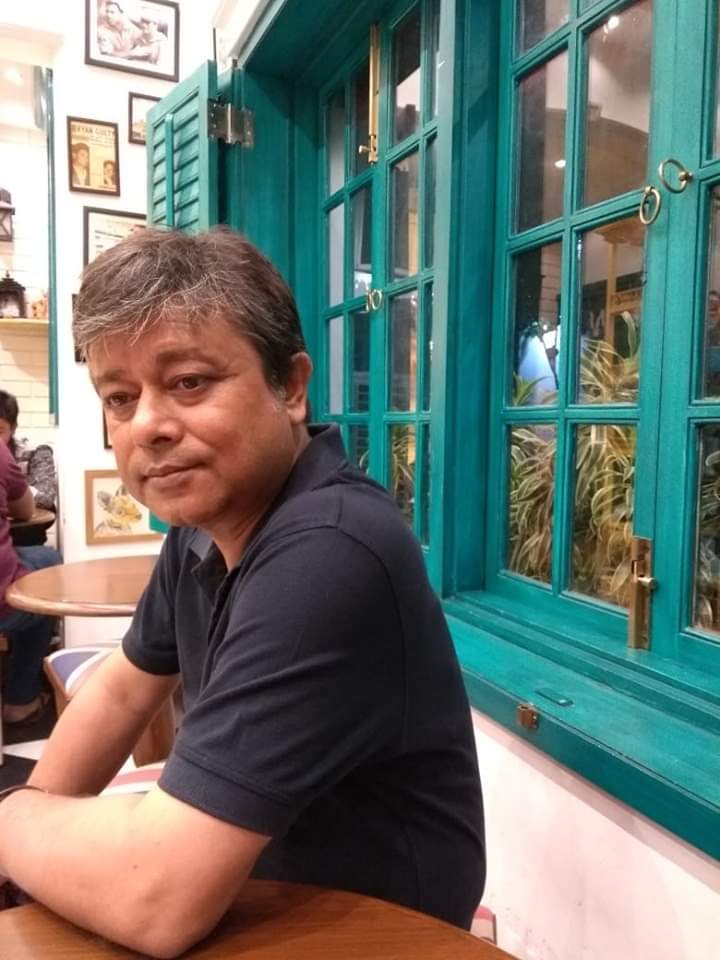
Sekhar Banerjee is an author.  He has four poetry collections and a monograph on an Indo-Nepal border tribe to his credit. His works have been published in Indian Literature, The Bitter Oleander, Ink Sweat and Tears, Verse-Virtual,  Setu, Kitaab, Borderless Journal, Better Than Starbucks,  The Tiger Moth Review, and elsewhere. He lives in Kolkata, India.

PLEASE NOTE: ARTICLES CAN ONLY BE REPRODUCED IN OTHER SITES WITH DUE ACKNOWLEDGEMENT TO BORDERLESS JOURNAL
Categories
Poetry

Colours of Words

By A Jessie Michael

DIVERSITY   

Diversity is our last name.
Born speaking three languages (or four),
We, unconscious code switchers,
created creole 
before linguists caught up with us.
Colourless and colour blind.
Playing in each other’s homes,
Their food, became ours 
 Ours, theirs.
Their foul words ours,
And our curses theirs.

We walk into temples,
Mosques, churches,
attending christenings, weddings
and funerals.
No discomfort we feel 
participating in diverse festivals
of each religion and race.
Come to think of it, 
Diversity must be our middle name.

We don each other’s costumes 
as a matter of daily wear;
no one claims ownership,
it’s all national fare.
Then of course we marry each other
Creating a lovelier mess
of bi-racial and tri-racial children
of no definite ethnicity.
Growing up bi-religious and tri-lingual,
Colourless and colour blind,

We live everywhere in this world,
Never feeling we are different
until we have to fill a form.
Asian, Indian, European, East European
Middle Eastern, African, African American,
 American and other.
How the heck do we know?
Dang those forms that ask us so,
to tick boxes to put us into boxes.
Dang the politicians of single colour 
because they cannot see the rainbow.

Actually, diversity is our first name. 


HAVE WE?  HAVE WE?        

Have we learnt another language
to challenge our little brains?
Have we walked in others’ shoes 
and learnt of their pain?
Have we shared with them a cup of joy
and freely drunk of theirs too?
Have we sat at their table and
broken bread with them?
Have we stood beside the others 
and thought them just the same?
Have we risen above ancient anger,
forgiven our fellow men,
thought them worthy of our compassion
and stretched out our hands?
Have we emptied the bitter cup
that diminishes all men?


Our colours are but geography,
our religions but pathways 
to the same universal One.
So, who is to say who is better?
It is always our own buried fear,
that we pray at the altar,
then curse the man on the street
just because he looks different 
and is from another land;
just because we will not say
he is really a God-made-Man.

A. Jessie Michael is a retired Associate Professor of English from Malaysia. She has written short stories for local magazines and newspapers. She has published an anthology of short stories Snapshots, with two other writers and most recently her own anthology The Madman and Other Stories (2016).

PLEASE NOTE: ARTICLES CAN ONLY BE REPRODUCED IN OTHER SITES WITH DUE ACKNOWLEDGEMENT TO BORDERLESS JOURNAL
Categories
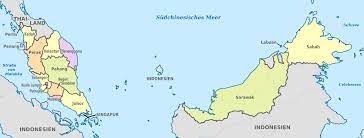
Independence Day Poetry

A False Dawn

By Malachi Edwin Vethamani

A False Dawn

We sang a song of victory.
Raised a new flag. 
Held our heads high.
Shouted new slogans. 

A new nation we said
has risen bursting 
through the dark clouds. 
Malaysia Baru. 

Then came Deceit, 
old Greed reared its ugly head,
murky waters returned
and undid us all.

 Malachi Edwin Vethamani is a Malaysian Indian poet, writer, editor, critic, bibliographer and academic. He is Emeritus Professor with University of Nottingham. More details in: www.malachiedwinvethamani.com 

.

.

PLEASE NOTE: ARTICLES CAN ONLY BE REPRODUCED IN OTHER SITES WITH DUE ACKNOWLEDGEMENT TO BORDERLESS JOURNAL.

Categories
Independence Day Poetry

Akbar Barkzai’s Songs of Freedom

Akbar Barakzai’s poetry translated from Balochi by Fazal Baloch

Freedom

Before liberating the people
Let’s liberate ourselves first
We who are slaves of our centuries’ old feuds and malevolence
Slaves of our follies and sins; malice and greed
How could we liberate the people?

How could we liberate our laborers and peasants
Shepherds and fishermen?
Before liberating the people
Let’s liberate ourselves first!


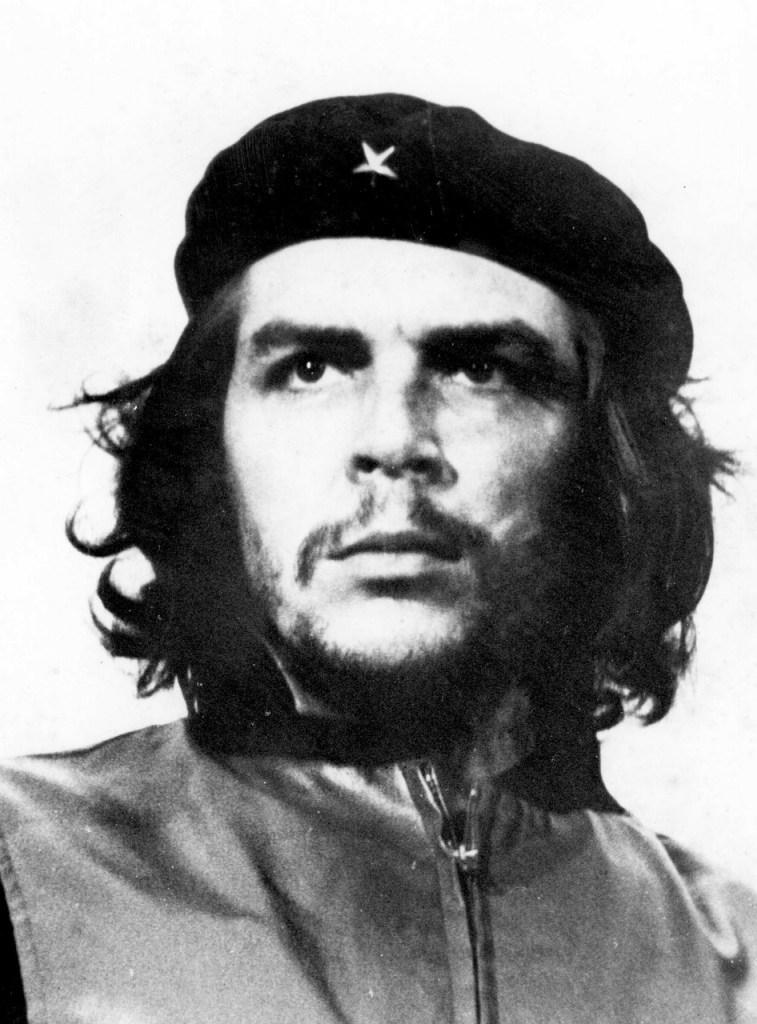
Who Can Snuff Out the Sun? 
(In Memory of Ernesto "Che" Guevara)

Who can snuff out the sun? 
Who can suppress the light? 

In the realm of the dark night 
The night-birds proclaimed 
To have snuffed out the sun
They rejoiced and revelled in trance
With wine, songs and dance

Without the glorious light 
Without Phoebus Apollo
The primeval source of light, music and poetry
The Heaven and the Earth
The moon, stars and Pleiades
Will lose their way
Into the dark void of nothingness
Without the timeless Phoebus
Life's most handsome knight
Passion will lose its spark
The sea of music will go dry
And the songs of love fall silent
Without the ardent Adonis
Life's Aphrodite wouldn't survive for a moment
Nobody can ever dare to snuff out the sun
Or suppress the light
In the dark wilderness of the night 
The blind night-birds celebrated in vain 
The triumphant sun comes out every day
spreading its radiance trough out the world
Chanting ever so gracefully
"I'm Phoebus Apollo"
"I'm Ernesto Che Guevara"
"I'm Immortal"

Everywhere in the world
It unveils Ernesto's smiling face
With splendor and grace

Who can snuff out the sun? 
Who can suppress the light? 


For How Long?

For how long
Light will languish in captivity
In vales and dales death will roam free?
For how long
Life will remain in utter distress
Handsome youths keep falling to bullets
And mirror like hearts continue to shatter into shards
For how long?
For how long?
Light -- the very essence of freedom
Will not forever remain in prison
Life will not suffer distress
The serpent of tyranny will vanish evermore
The sapling of envy and hatred will wither away
This world of mankind will blossom
Into a garden of paradise
But who knows?
How many more years will it take?
How many more eons will it take?

Akbar Barakzai was born in Shikarpur, Sindh in 1939. He is ranked amongst the proponents of modern Balochi literature. His poetry reflects the objective realities of life. Love for motherland, peace and prosperity and dignity of a man are the recurrent themes of his poetry. His love for human dignity transcends all geographical and cultural frontiers. Barakzai is not a prolific poet. In a literary career which spans over half a century, Barakzai has brought out just two anthologies of poetry, Who can Kill the Sun and The Lamps of Heads, but his poetry has depth and reaches out to human hearts with its profundity. Last year, Barakzai rejected the Pakistan Academy of Letters (PAL) award, quoting  the oppressive policies meted out to his region by the government as the reason.

Fazal Baloch is a Balochi writer and translator. He has translated many Balochi poems and short stories into English. His translations have been featured in Pakistani Literature published by Pakistan Academy of Letters and in the form of books and anthologies. Fazal Baloch has the translation rights to Barakzai’s works and is in the process of bringing them out as a book.

.

PLEASE NOTE: ARTICLES CAN ONLY BE REPRODUCED IN OTHER SITES WITH DUE ACKNOWLEDGEMENT TO BORDERLESS JOURNAL
Categories
Poetry

Poetry by John Linwood Grant

John Lintwood Grant
MANSUR, HE IS FEVERED

The light betrays, the dark conceals,
And yet we cannot pause.
Our saddles chafe,
Our bones all ache, and Mansur,
He is fevered.

These are strange horses,
Wilful and thick-necked,
With stranger ways, no desert grace.
And Mithra will not pray, nor
Praying, guide us.

My cold hands cannot grasp my thoughts.
The trees bend low, snow-heavy,
Mute as to our destination.
Harsh pines, no cedar sweetness,
No soft shelter.

More bleak hills loom ahead,
Death on their skirts of scree and tangle,
And so we turn again –
Hungry, slow, and shorn of life – 
For other roads.

That we should come so far
And find so little;
That we should persevere...
It’s been so very long, and Mansur,
He is fevered.

What wastes, unwarned, are these?
A green and pleasant land, they said,
Rich cities, rolling fields, 
Soft valleys and fair towns.
They surely lied.

This England is a bitter place,
Awash with narrow eyes;
Its rain is ice, and all around
Dead centuries
Parade their wares.

But yet if Prophet, Saint, or Djinn
Is to be born, in this grey land,
Then where the choice?
Have centuries not bound
Us to our task?

Do we not ride to each and every star,
Do we not carry wonders in our packs
And sigh each sorry time
That caul and cord are cut, only to weep
And travel on?

Thus North we ride, and West,
We three fools from the East;
Three names which change, 
And changing stay the same
In cheerless hope.

I, Sadasiva, bear my lot,
And urge my pale beast on;
Mithra comes, but will not pray,
And Mansur,
He is fevered.

John Linwood Grant is a writer/editor from Yorkshire, UK, with some seventy short stories and novelettes published during the last five years in venues such as Lackington’s Magazine, Vastarien and Weirdbook, and in several award-winning anthologies. He writes dark contemporary fiction and period supernatural tales. He is the editor of Occult Detective Magazine and various anthologies. His new collection of weird fiction, Where All is Night, and Starless, is out now from Trepidatio.

.

PLEASE NOTE: ARTICLES CAN ONLY BE REPRODUCED IN OTHER SITES WITH DUE ACKNOWLEDGEMENT TO BORDERLESS JOURNAL.

Categories
Poetry

Imagine

By Joan McNerney

Imagine

Imagine to be a bird
slicing air with wings.

Up, up over that horizon
soaring through clouds
away from solemn earth.

Shining, shimmering  
far above this sphere
into clear blue light. 

Cutting through sky
gliding over oceans
eyes open, all seeing.

Awake all day, all night
brushing rushing 
against the four winds.

Imagine to be a bird.

Joan McNerney’s poetry is found in many literary magazines such as Seven Circle Press, Dinner with the Muse, Poet Warriors, Blueline, and Halcyon DaysFour Bright Hills Press Anthologies, several Poppy Road Journals, and numerous Poets’ Espresso Reviews have accepted her work.  She has four Best of the Net nominations. Her latest titles are The Muse in Miniature and Love Poems for Michael both available on Amazon.com and Cyberwit.net

.

PLEASE NOTE: ARTICLES CAN ONLY BE REPRODUCED IN OTHER SITES WITH DUE ACKNOWLEDGEMENT TO BORDERLESS JOURNAL
Categories
Poetry

Our Long-Lost Home

By Vandana Sharma

                     Our Long-Lost Home


Lingering whiff of sodden earth,
 sprouting with new blossoms and birth,
  beginnings and endings merging together,
    here life flows on soft feathers.

      
  Shades of fresh leaves and ferns,
   a wishful abode for a heart to return,
    the forests are our long-lost home,
     where our old souls still roam.

Vandana Sharma is a researcher with PhD in Haematology. Her work has appeared in Harvests of New Millennium, Sky Island Journal, Rewrite Sunlight Anthology, VerbalArt, Catharsis Anthology, Bio Patrika (Biology Poems).

.

PLEASE NOTE: ARTICLES CAN ONLY BE REPRODUCED IN OTHER SITES WITH DUE ACKNOWLEDGEMENT TO BORDERLESS JOURNAL
Categories
Poetry

Tea and Benediction

By Rhys Hughes

A BENEDICTION

Two men go every evening
to chip shops on the opposite sides
of town and they frown
each time they pass each other
on the way back
but give no other indication
of acknowledgement
and thus there is no brotherhood
of those who love chips.
A rather sad sight,
chips that pass in the night,
but on the iron balcony high above
is a girl with oven gloves
and she is discarding the ruins
of a failed casserole
onto the dark street below.
Oh, proud men who convey chips
along the thoroughfares
of the sprawling metropolis,
may peas be upon you!


MY BABY JUST CARES
(with apologies to Nina Simone)

My baby don’t care for coffee.
My baby don’t care for brandy.
    My baby just cares for tea.

My baby don’t care for obtuse angles
that complicate the corners of academic 
      quadrangles.
     My baby just cares for tea.
Unseasonal unflappability is not in her 
     nature
and even mild crocodiles who insist they 
      don’t hate her
together with those alligators who won’t 
      actually ever see her later
are something she can’t tolerate.
      My baby just cares for tea.

My baby don’t care who highly rates her
but if you own a tea plantation you are in a 
       good position to placate her
provided you don’t try to sedate her
by committing the cardinal sin of adding a 
        tot of whisky or three
or even a lot more to her porcelain teapot
because then she would probably regard you 
        as a rotter.
    My baby just cares for tea.

My baby don’t care for grandfather clocks
that tick and tock all night even  when     
     muffled with socks
and not even finely adjusted barometers
or precision thermometers
can hold her attention for longer than the 
     briefest mention.
   My baby just cares for tea.

My baby don’t care for stress or tension
and guilt and confession are quite beyond 
     her consideration
and the tricks employed to gain mental 
     leverage
are far beneath her appreciation.
   My baby just cares for tea.
My baby don’t care for therapy
because anything connected with 
      psychology
has almost nothing to do with her favourite 
       beverage.
    My baby just cares for tea.

My baby is something of a mystery.
Only one week old and yet already a 
      connoisseur of tea.
Servants hurry back and forth with cups and 
       saucers
whenever she demands refreshment brought 
       to her private quarters
and I can’t help but worry with all this toing 
        and froing
maybe there’s trouble brewing!
      My baby just cares for tea.


.

Rhys Hughes has lived in many countries. He graduated as an engineer but currently works as a tutor of mathematics. Since his first book was published in 1995 he has had fifty other books published and his work has been translated into ten languages.

.

PLEASE NOTE: ARTICLES CAN ONLY BE REPRODUCED IN OTHER SITES WITH DUE ACKNOWLEDGEMENT TO BORDERLESS JOURNAL. 

Categories
Poetry

Why I Write

By Priyanka Panwar

Why I write


I write when the world fails to listen
I write when the self introspects
I write when there are thunderstorms raging within

I write when the list is over
I write when nothing feels right
I write when there is a blur

I write to survive

I write to feel the bounding pulse

I write to make the weathered will withstand the whirlwinds of time
I write and let meaning dissolve in the chaos
I write and fly free in the newly-discovered terrain of self worth
I write and I un-write 

the fears that seize the soul
the promises of coherence 
the ‘I’ that isn’t.

Priyanka Panwar teaches English at University of Delhi. When she isn’t reading or teaching, she likes to travel and observe.

.

PLEASE NOTE: ARTICLES CAN ONLY BE REPRODUCED IN OTHER SITES WITH DUE ACKNOWLEDGEMENT TO BORDERLESS JOURNAL
Categories
Poetry

Hybrid Gems

By Mihaela Melnic

An empirical ocean of unmetrical pearls 
rolled and crawled
like a serpentine
fluid of life
from the unconscious
up to the future's nucleus
where millions 
of bifid pens
are now entwined
with planetary algorithms
and dance in a marvelous 
arabesque

alfa - androgynous voices
spring out turning into
liquefied, crystallized hybrid gems 
endlessly 
taking shape and colour

they are meant to startle and soothe
to mesmerize and haunt
like thorny rainbow roses
that never sting
yet they make the spirit 
bleed

Mihaela Melnic, born in Romania, currently lives and writes in Rome, Italy. Her recent work was published at Dissident Voice, Setu, Lothlorien Poetry Journal and Noiqui. Other poems of hers are forthcoming this summer in different venues. Mihaela’s bilingual debut poetry collection Change of Seasons was released in 2018.

.

PLEASE NOTE: ARTICLES CAN ONLY BE REPRODUCED IN OTHER SITES WITH DUE ACKNOWLEDGEMENT TO BORDERLESS JOURNAL