Michael R Burch wrote this poem under the spell of the famed “I Have a Dream” speech by Martin Luther King Junior, an ardent practitioner of Gandhi’s ideology, a student and disciple of the Mahatma. Michael says that the iconic speech was like poetry to him.
Poet to poet

I have a dream
...pebbles in a sparkling sand...
of wondrous things.

I see children
...variations of the same man...
playing together.

Black and yellow, red and white,
... stone and flesh, a host of colours...
together at last.

I see a time
...each small child another's cousin...
when freedom shall ring.

I hear a song
...sweeter than the sea sings...
of many voices.

I hear a jubilation
... respect and love are the gifts we must bring...
shaking the land.

I have a message,
...sea shells echo, the melody rings...
the message of God.

I have a dream
...all pebbles are merely smooth fragments of stone...
of many things.

I live in hope
...all children are merely small fragments of One...
that this dream shall come true.

I have a dream!
... but when you're gone, won't the dream have to end?...
Oh, no, not as long as you dream my dream too!

Here, hold out your hand, let's make it come true.
... I can feel it begin...
Lovers and dreamers are poets too.
...poets are lovers and dreamers too...
Michael R. Burchhas over 6,000 publications, including poems that have gone viral. His poems have been translated into fourteen languages and set to music by eleven composers. He also edits The HyperTexts (online at www.thehypertexts.com).
.
PLEASE NOTE: ARTICLES CAN ONLY BE REPRODUCED IN OTHER SITES WITH DUE ACKNOWLEDGEMENT TO BORDERLESS JOURNAL.
A Poem for the Ol-Chiki

The Bengali script in Bengal
The Odia script in Odisha
I do not know the Bengali script
You do not know the Odia script
Let us agree to one script for Santhali
The Ol-Chiki is our script.
They write in the Roman somewhere
They write in the Devanagari at some places
I do not know the Roman script
You do not know the Devanagari script
One script will unite us all
The Ol-Chiki is our script.
Dear writer, for how long will you
Write your language using
Someone else’s script?
You are dividing our readers
You are making our publishers lose money
Let us all understand this
The Ol-Chiki is our script.
One language, one Script.
This is what will strengthen us Santhals
The talents of so many of us
Scattered for the want of one script
All of us Santhals, let us solve this script issue.

(First published in 100 Poems are Not Enough, Walking Book Fairs)
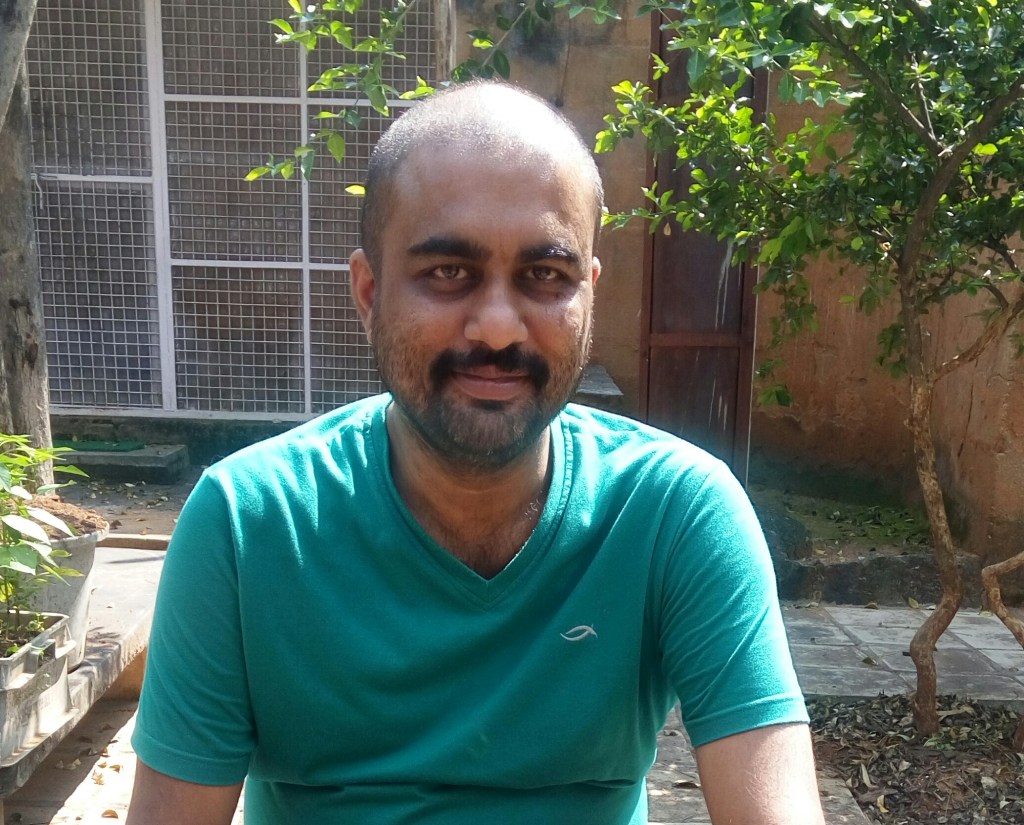
Sokhen Tudu is a Mayurbhanj, Odisha-based Santhali poet, haiku writer and Santhali script activist. He was involved in spreading the Santhali script, the Ol chiki, among Santhals in Bangladesh.
Hansda Sowvendra Shekhar writes in English and occasionally translates from Santhali and Hindi to English.
Adivasi Poetry


When the sorrow of all the directions
gathers as a whirlwind
rising high as a pillar
scattering
as it reaches the roof of the earth
making the heart shiver,
there emerges Adivasi poetry.

When there is anguish
in jungle, mountain, grasslands
in the bowels of the earth, in the waters of the rivers,
when people leave their mud huts —
like mice escaping a flooded nest —
carrying their handlachaatva*
in the crooks of their waists
in search of land
what rises with the tears in their eyes
is Adivasi poetry.

After a few drops of rain
trucks from the sugar factory
arrive and stare at the empty huts.
We toil, naked, on the earth for months
in the burning sun
without davaduri*.
Do we crush the sugarcane
or does the sugarcane crush us?

It lies like animals
at the edge of the river
on the outskirts of the village.
Just like a dog,
Adivasi poetry.

As the day dawns, standing in queues,
noses lowered, at the crossroads in cities
like cattle in cattle markets
to sell our labour.

All day and night, lying curled up
invisible, with the hungry ones,
Adivasi poetry.

Like the one who carries the weight of the house
rising with the first cock crowing
going to the jungle with axe on her shoulder
walking to the city through five villages
with the wood on her head,
pregnant, but carrying back
one kilo of flour
rice
oil worth Rs 2
salt
chilli powder.

Just like she cooks rotlo for two meals
a day, her blood turning to sweat
Adivasi poetry
is made.

*handlachaatva: Earthen cooking pot and wooden spoon
*davaduri: Medicine
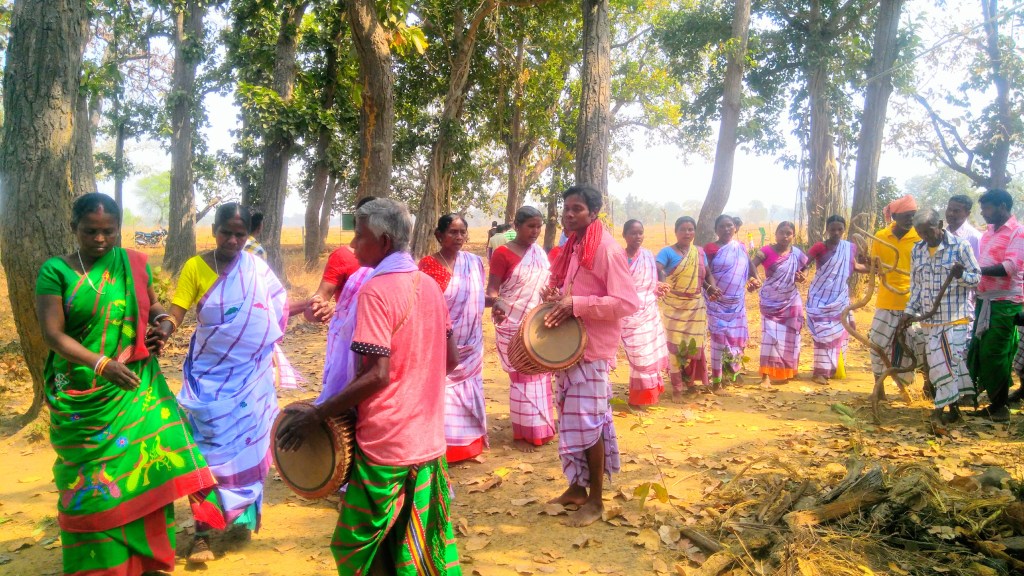
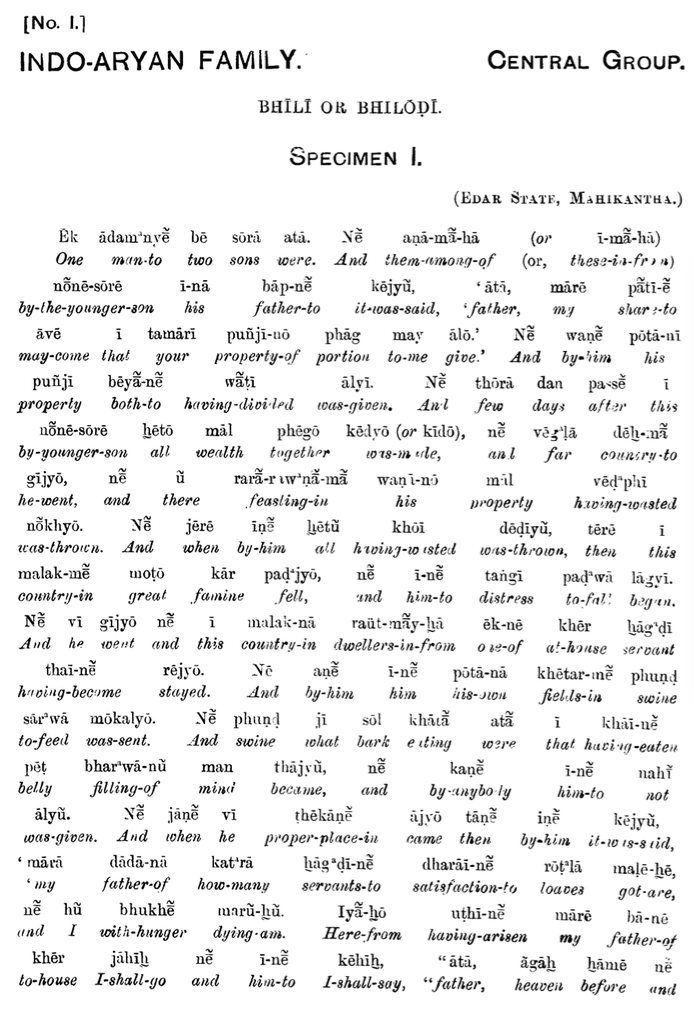
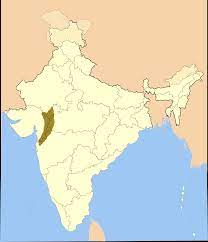
Jitendra Vasava was born in Mahupada on the banks of the river Tapi in the Narmada district of Gujarat. He writes in Dehwali Bhili, one of the few poets in Gujarat writing in a tribal language. Vasava established the Adivasi Sahitya Academy in 2014. As the president of the Academy, he has also edited Lakhara, a poetry magazine dedicated to tribal voices published by Bhasha, Vadodara. Vasava has been awarded a PhD for his research on the cultural and mythological aspects of oral folk tales of the Bhils from the Narmada district.
Gopika Jadeja is a bilingual poet and translator, writing in English and Gujarati. Gopika publishes and edits the print journal and a series of pamphlets for a performance-publishing project called Five Issues. Her work has been published in Asymptote, Modern Poetry in Translation, Wasafiri, The Four Quarters Magazine, The Wolf, Cordite Poetry Review, Cha: An Asian Literary Journal, Indian Literature, Vahi, Etad, etc. She is currently working on a project of English translations of poetry from Gujarat.
When God is a Traveller
(wondering about Kartikeya, Muruga, Subramania, my namesake)
Trust the god
back from his travels,
his voice wholegrain
(and chamomile),
his wisdom neem,
his peacock, sweaty-plumed,
drowsing in the shadows.
Trust him
who sits wordless on park benches
listening to the cries of children
fading into the dusk,
his gaze emptied of vagrancy,
his heart of ownership.
Trust him
who has seen enough --
revolutions, promises, the desperate light
of shopping malls, hospital rooms,
manifestos, theologies, the iron taste
of blood, the great craters in the middle
of love.
Trust him
who no longer begrudges
his brother his prize,
his parents their partisanship.
Trust him
whose race is run,
whose journey remains,
who stands fluid-stemmed
knowing he is the tree
that bears fruit, festive
with sun.
Trust him
who recognizes you –
auspicious, abundant, battle-scarred,
alive --
and knows from where you come.
Trust the god
ready to circle the world all over again
this time for no reason at all
other than to see it
through your eyes.
(Excerpted from When God is a Traveller, Bloodaxe Books, UK, 2014)Eight Poems for Shakuntala
1
So here you are,
just another mixed-up kid,
daughter of a sage
and celestial sex worker,
clueless
like the rest of us
about your address --
hermitage or castle
earth or sky
here or hereafter.
What did you expect?
What could you be
but halfway,
forever interim?
What else
but goddamn
human?
2
The trick, Shakuntala,
is not to see it
as betrayal
when the sky collapses
and closes in
as four windowless walls
with a chipped Mickey Mouse magnet
on the refrigerator door
or as eviction
when the ceiling crumbles
and you walk
into a night of stars.
3
Yes, there’s the grizzled sage Kanva
his clarity
that creeps into your bones
like warmth on a winter evening
as you watch
the milky jade
of the river Malini flow by,
serene, annotated
by cloud
and there’s a home
that will live evergreen
in the folklore of tourist brochures,
detonating
with butterflies.
But what of those nights
when all you want
is a lover’s breath,
regular,
regular,
starlight through a diaphanous curtain,
and a respite
from too much wisdom?
4
Besides, who hasn’t known Dushyanta’s charms?
The smell of perspiration,
the sour sharp beginnings
of decay
that never leave a man
who’s breathed the air
of courtrooms and battlefields.
A man with winedark eyes who knows
of the velvet liquors and hushed laughter
in curtained recesses.
A man whose smile is abstraction
and crowsfeet, whose gaze
is just a little shopsoiled,
whose hair, mussed
by summer winds, still crackles
with the verbal joust of distant worlds.
Who hasn’t known
a man cinnamon-tongued,
stubbled
with desire
and just the right smear
of history?
5
The same hackneyed script.
The same old cast.
Springtime
and the endless dress rehearsal --
a woman lustrous eyed,
a deer, two friends,
the lotus, the bee,
the inevitable man,
the heart’s sudden anapest.
Nothing original
but the hope
of something new
between parted lips.
A kiss --
jasmine lapis moonshock.
And around the corner
with the old refrain,
this chorus,
(Sanskrit, Greek, whatever):
It’s never close enough
It’s never long enough
It’s never enough
It’s never
6
As for his amnesia,
be fair.
He recognized the moment
when he saw it --
sun springtime woman --
and all around
thick, warm, motiveless
green.
Can we blame him
for later erasing the snapshot
forgetting his lines
losing the plot?
We who still wander along alien shorelines
hoping one day to be stilled
by the tidal gasp
of recollection?
We whose fingers still trail the waters,
restless as seaweed,
hoping to snag
the ring in the belly of a deep river fish --
round starlit uncompromised?
7
What you might say to the sage:
It only makes sense
if you’re looking for me too
wild-eyed
but never despairing,
certain
I’ll get through eventually
through palace and marketplace,
the smoky minarets of half-dreamed cities,
and even if you know
how it all ends
I need to know you’re wandering the forest
repeating the lines you cannot forget --
my conversations with the wind and the deer,
my songs to the creeper,
our endless arguments
about beginnings and endings.
Let’s hear it from you, big daddy
old man, keeper of the gates.
I need to know wise men
weep like little boys.
I need to hear your words,
hoarse,
parched,
echoing
through the thickening air
and curdled fog
of this endless city --
‘Come back, Shakuntala.’
8
And what you might say of the ending:
Yes, it’s cosy --
family album in place,
a kid with a name
to bequeath to a country,
perhaps even a chipped magnet
on the refrigerator door.
I’m in favour of happy endings too
but not those born of bad bargains.
Next time
let there be a hermitage
in coconut green light,
the sage and I in conversation,
two friends at the door, weaving
garlands of fragrant dream
through days long and riverine
and gazing at a waterfront
stunned by sun,
my mother, on an indefinite sabbatical
from the skies.
And let me never take for granted
this green into which I was born,
this green without ache,
this green without guile,
stippled with birdcall,
bruised with sun,
this clotted green,
this unpremeditated green.
And as wild jasmine blooms in courtrooms
and lotuses in battlefields
let warriors with winedark eyes
and hair rinsed in summer wind
gambol forever with knobble-kneed fawns
in the ancient forests of memory.
(Excerpted from When God is a Traveller, Bloodaxe Books, UK, 2014)
The Fine Art of Ageing
1.
It’s not that Avvaiyar* doesn’t admire
the green impertinence
of sapling bodies
or the way a middle-aged woman
can smile
at an ex-lover, an ex-rival,
and effortlessly attain a kind
of goddesshood.
She’s not against play-acting either.
She enjoys the smell of fiction,
knows it’s fun to pretend
at immortality.
She knows centuries are separated
by historians, not poets,
that now and then
are divided by
the thinnest membranes
of belief,
that there’s not much difference
really
between lush shola grasslands
stunned by a blue fusillade
of kurinji flowers
and urban jungles
moistly evergreen
with people on the make.
But she knows the journey
from goddess to gran,
sylph to hag,
prom queen to queen mum,
is longer than most,
more tortuous.
She knows also
that folklore has its stories,
newspapers too,
of old kings
dewrinkling
into young men
(a man called Yayati, for instance,
conqueror of free radicals, victor of fine lines,
high on a son’s sacrifice, women, fine wines,
collagen, spirulina, vitamin E,
macadamia nuts, extracts of green tea,
triclosan, selenium, proplylene glycol,
alpha hydroxy acids, bergamot, retinol).
Avvaiyar makes
another choice.
Spare me the desperation of the old,
she says,
and the puerility of the young.
Spare me the glamour
of being youthful wife to five princes --
Draupadi, the fruit everyone wants to peel.
And spare me the sainthood
of mad women mystics
who peel off their own rind
before others can get to them
(vaporizing
into the white jasmine scent
of hagiography).
Avvaiyar makes
another choice --
fearless friend to gods,
ally of peasants,
counselor to kings,
traveler of the darkest streets,
she walks the world alone.
And on such a path, she says,
it’s best to be
a crone.
*Avvaiyar: legendary poet and wise woman of Tamil literature. The name (literally ‘respectable old woman’) was probably accorded to more than one poet in the canon.
Arundhathi Subramaniamis a poet who has recently won the Sahitya Akademi Award, 2020, for her book When God is a traveller (2014). She has authored a number of books and won multiple awards and fellowships. She has been part of numerous anthologies and journals.
.
PLEASE NOTE: ARTICLES CAN ONLY BE REPRODUCED IN OTHER SITES WITH DUE ACKNOWLEDGEMENT TO BORDERLESS JOURNAL
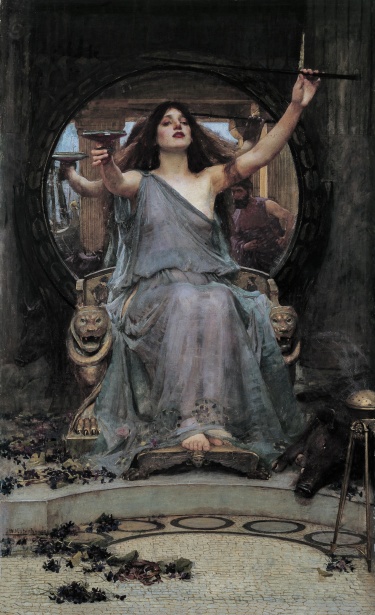
Circe
She spoke
and her words
were like a ringing echo dying
or like smoke
rising and drifting
while the earth below is spinning.
She awoke
with a cry
from a dream that had no ending,
without hope
or strength to rise,
into hopelessness descending.
And an ache
in her heart
toward that dream, retreating,
left a wake
of small waves
in circles never completing.
The Gardener’s RosesMary Magdalene, supposing him to be the gardener, saith unto him, “Sir, if thou have borne him hence, tell me where thou hast laid him, and I will take him away.”
I too have come to the cave;
within: strange, half-glimpsed forms
and ghostly paradigms of things.
Here, nothing warms
this lightening moment of the dawn,
pale tendrils spreading east.
And I, of all who followed Him,
by far the least . . .
The women take no note of me;
I do not recognize
the men in white, the gardener,
these unfamiliar skies . . .
Faint scent of roses, then—a touch!
I turn, and I see: You.
My Lord, why do You tarry here:
Another waits, Whose love is true?
Although My Father waits, and bliss;
though angels call—ecstatic crew!—
I gathered roses for a Friend.
I waited here, for You.
To Have Loved
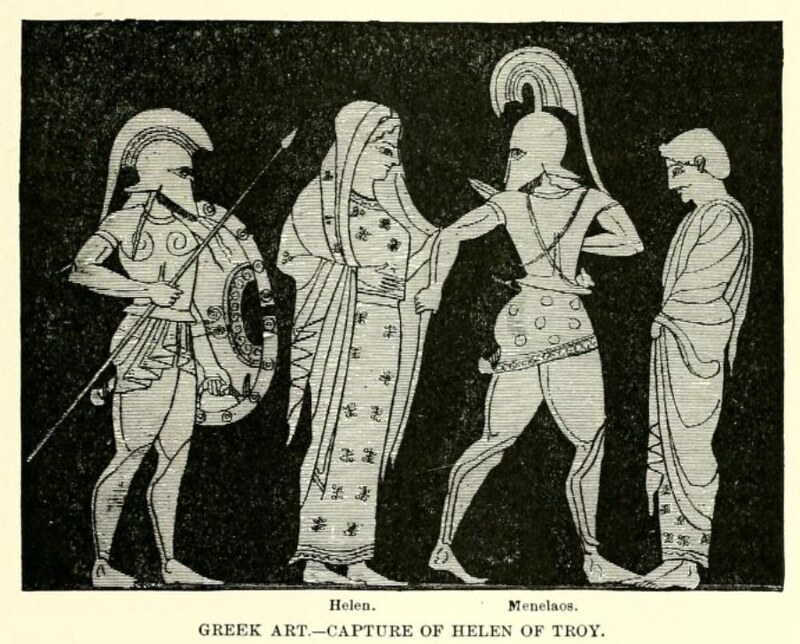
Helen, bright accompaniment,
accouterment of war as sure as all
the polished swords of princes groomed to lie
in mausoleums all eternity ...
The price of love is not so high
as never to have loved once in the dark
beyond foreseeing. Now, as dawn gleams pale
upon small wind-fanned waves, amid white sails ...
Now all that war entails becomes as small,
as though receding. Paris in your arms
was never yours, nor were you his at all.
And should gods call
in numberless strange voices, should you hear,
still what would be the difference? Men must die
to be remembered. Fame, the shrillest cry,
leaves all the world dismembered.
Hold him, lie,
tell many pleasant tales of lips and thighs;
enthrall him with your sweetness, till the pall
and ash lie cold upon him.
Is this all? You saw fear in his eyes, and now they dim
with fear’s remembrance. Love, the fiercest cry,
becomes gasped sighs in his once-gallant hymn
of dreamed “salvation.” Still, you do not care
because you have this moment, and no man
can touch you as he can, and when he’s gone
there will be other men to look upon
your beauty, and have done.
Smile—woebegone, pale, haggard. Will the tales
paint this—your final portrait? Can the stars
find any strange alignments, Zodiacs,
to spell, or unspell, what held beauty lacks?
Michael R. Burchhas over 6,000 publications, including poems that have gone viral. His poems have been translated into fourteen languages and set to music by eleven composers. He also edits The HyperTexts (online at www.thehypertexts.com).
.
PLEASE NOTE: ARTICLES CAN ONLY BE REPRODUCED IN OTHER SITES WITH DUE ACKNOWLEDGEMENT TO BORDERLESS JOURNAL.
Balochi poetry by Akbar Barakzai, translated by Fazal Baloch
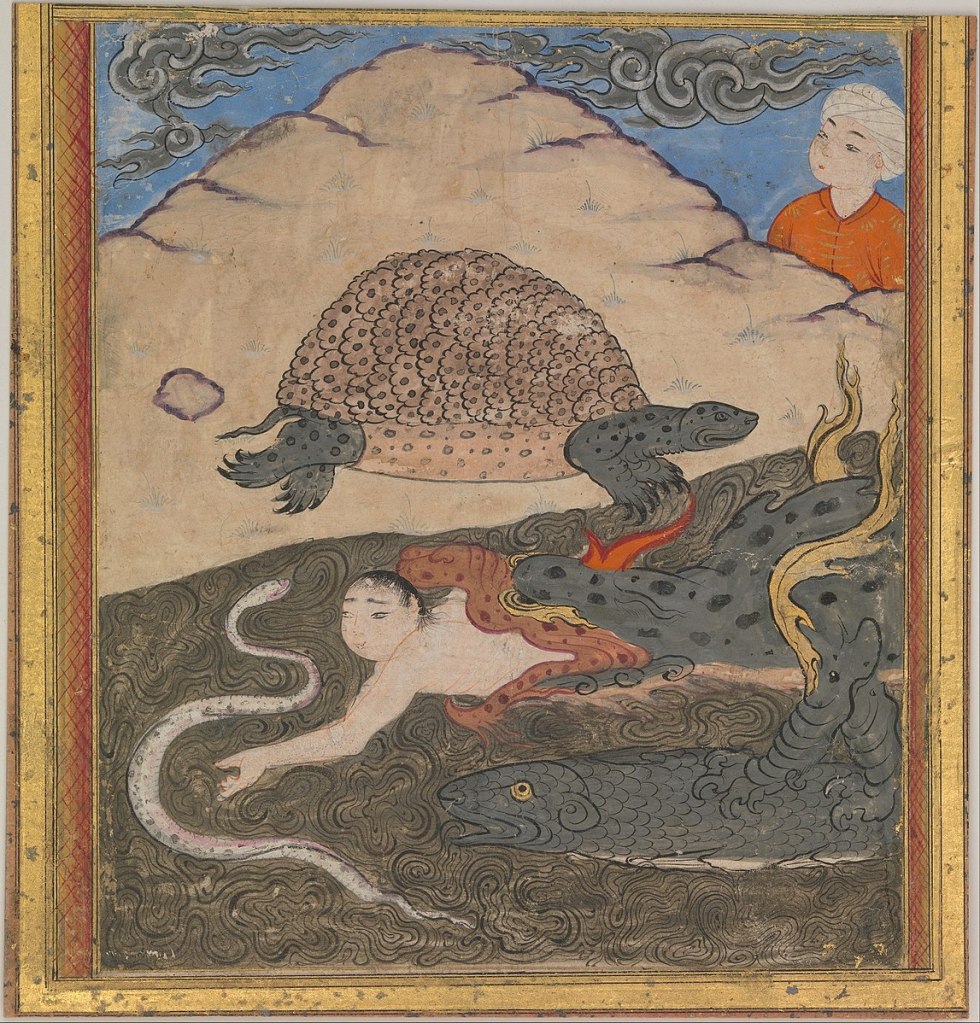
Folio from an `Aja’ib al-Makhluqat (Wonders of Creation) of Qazwini (late 16th century).Courtesy: Creative Commons
Be and it All came into Being
(A Poem for Atta Shad*)

The heavens and the earth
The moon and the sun
Stars, galaxies and clouds
Space and spacelessness
Indeed the entire creation
God created all in just seven days
All praise be to God!

On the seventh day
Tired of hard labour
He thought of heavenly delights
Of fair damsels and houries
Thus hurried to the garden of paradise
All praise be to God!

’Tis not all His fault
If unaware He is of worldly woes and worries
Of the agony of love and longing
Of the harsh nights of hunger and famine
'Tis not his fault if He is unaware
Of the monsters of tyranny and suppression
Ours is a world too far from Him
Let us not disturb Him in His heavenly abode
He must have other more important things on His mind
May the curse of Allah befall these blasphemous thoughts!
Indeed how would Akbar, a mere minion of God
Know His never ending mysteries!
A mere poet and wordsmith
He seeks His forgiveness
All praise be to God!

*Atta Shad (1939-1997) is one of the most cherished modern Balochi poets.
Akbar Barakzai was born in Shikarpur, Sindh in 1939. He is ranked amongst the proponents of modern Balochi literature. His poetry reflects the objective realities of life. Love for motherland, peace and prosperity and dignity of a man are the recurrent themes of his poetry. His love for human dignity transcends all geographical and cultural frontiers. Barakzai is not a prolific poet. In a literary career which spans over half a century, Barakzai has brought out just two anthologies of poetry, Who can Kill the Sunand The Lamps of Heads, but his poetry has depth and reaches out to human hearts with its profundity. Last year, Barakzai rejected the Pakistan Academy of Letters (PAL) award, quoting the oppressive policies meted out to his region by the government as the reason.
Fazal Baloch is a Balochi writer and translator. He has translated many Balochi poems and short stories into English. His translations have been featured in Pakistani Literature published by Pakistan Academy of Letters and in the form of books and anthologies. Fazal Baloch has the translation rights to Barakzai’s works and is in the process of bringing them out as a book.
.
PLEASE NOTE: ARTICLES CAN ONLY BE REPRODUCED IN OTHER SITES WITH DUE ACKNOWLEDGEMENT TO BORDERLESS JOURNAL
Configuration

(Glen Cooper Henshaw, American impressionist,
was born in Windfall, Indiana, in 1880 and
died in Baltimore in 1946)

What I first knew of a life of art
was what he touched last -- the summer studio
where I was allowed to wander as a child
through high-ceilinged rooms, up stairways
lined with tapestries unraveling: bronzes
gathering dust, wrought candlesticks, rows
of Chinese vases, the August light shuttered
like strands of Aunt Carolyn's uncombed hair,
the huge easels with their unfinished seascapes,
the closets thick with stacks of pastels
where mice made burrows, and damp seeped.

Beginning there, at the last turn
of the stairs, at the view of the Salute
by moonlight, in its great gold frame –
beginning with the packets of letters,
the yellowed clippings, the photograph
with the calico cat perched on his shoulder –
I followed him from farm, school, bistro,
through the sketchbooks of Market Street
and the Lower East Side, the pushcarts
and railroad flats, the life classes
in the blue cold of the old Academy rooms
in Munich, the boat trains to London,
the first commissions and sittings,
the laughter in the salons, the bare shoulders
of the soprano who stands beside the piano,
the young women with braided, coiled hair
lifting their skirts as they come up the stairs,
the afternoons wandering among the bookstalls,
the cafe conversations with Matisse –

all this rippling from a single stone –
and the force that carried it gone, leaving
only the slow parchment whispering
of old voices in nursing-homes, recollections
of places where they met and talked, seances
around an oak table, a picnic at Fontainebleau,
the crowds in Maxwell Street before the War.
Gradually the surface resumes a smoothness:
second wife buried, paintings knocked down
and scattered, studio burned, each letter
traced, each name marked off, finally
only the quiescence of paperwork – index cards
and conjectures, learned comparisons, polite
notes of inquiry from graduate students,
the curator's handwritten invitation for brandy,
spools of microfilm humming in the machine.

What I first perceived, then, wandering alone
among those vanished rooms; what I last
have come to understand, having followed
that trajectory even as it began to merge
with my own: the face in the photograph, taken
when she left Boston to come to him
on the Rue Monsieur-le-Prince
in the springtime of that fresh year,
that new century.  Her long auburn hair
enveloping that nakedness, the purl
of gas jets turned down in the hallway,
the bell curve of the lamp chimney
by the bed, the swirled perfection
of her sleeping: the configuration
of time, of love, of youth, of art
like an elaborate watermark visible
only when held up to the light.

(First published in University of Minnesota Research)
Jared Carter’s most recent collection, The Land Itself, is from Monongahela Books in West Virginia. His Darkened Rooms of Summer: New and Selected Poems, with an introduction by Ted Kooser, was published by the University of Nebraska Press in 2014. A recipient of several literary awards and fellowships, Carter is from the state of Indiana in the U.S.
.
PLEASE NOTE: ARTICLES CAN ONLY BE REPRODUCED IN OTHER SITES WITH DUE ACKNOWLEDGEMENT TO BORDERLESS JOURNAL
Versus


On a piece of paper
The work of a pen is
a complex tale
of love and war:
It is a history
of breaths, carcasses and rebirths;
And an inky body
of evidence for life
in the Mars of minds
and the Venus of hearts.
On a screen, though,
It seems a simple story,
its flow stripped
of effort and emotion:
It is a mystery
of words which haven’t fought wars;
And an empty cloud
which shrouds, like death,
the moons of mood
and the stars of thought
Srinivas S teaches English at the Rishi Valley School, India. His poems have found a home in places such as Indian Ruminations, Amethyst Review and The Hong Kong Review.
.
PLEASE NOTE: ARTICLES CAN ONLY BE REPRODUCED IN OTHER SITES WITH DUE ACKNOWLEDGEMENT TO BORDERLESS JOURNAL
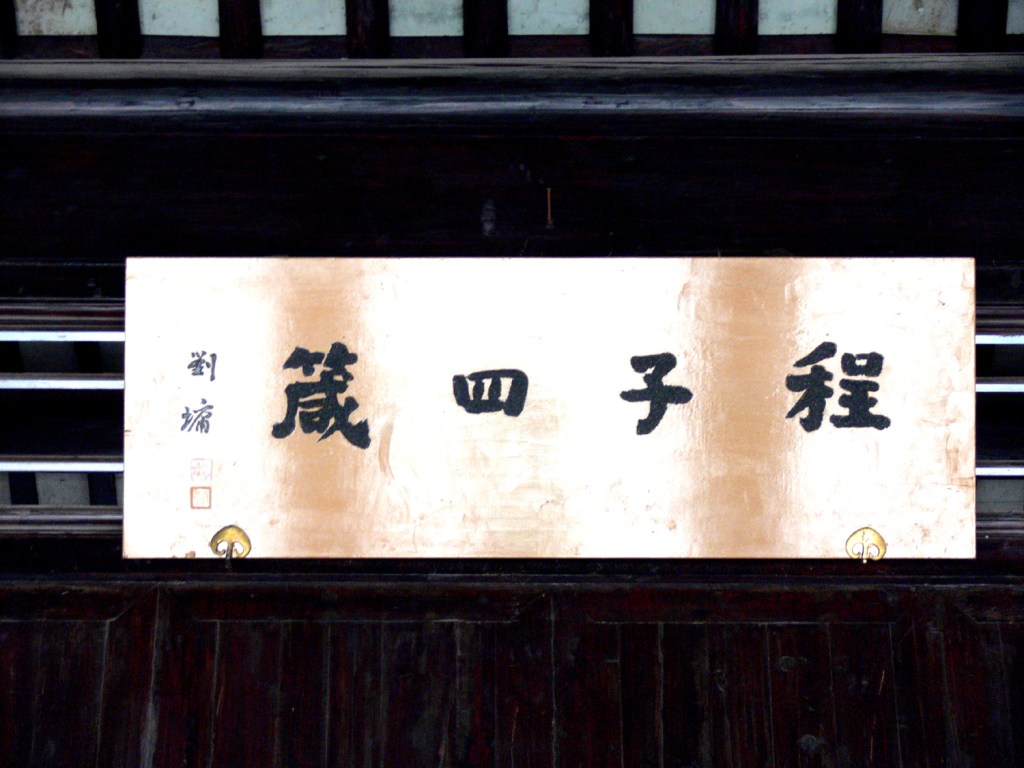
Liu Yong calligraphed an inscription on a board at Emperor Qianlong‘s travel residence in Mudu, Suzhou
Liu Yong was a minister in the Qing Dynasty and was regarded as a most influential calligrapher. Courtesy: Creative Commons.
THE TIMELESS IN TIME
(After Liu Yong)

A cold wind blows dead leaves
down the empty street,
as my faucet drips
in the dark.
My smile is like an
empty cob of corn,
half sad, half irony.
I still have my teeth,
but the future looks dim.
I think of the past,
of the friends I knew,
but friendships don’t last.
How to be strong?
It’s wrong to dwell on
what is gone. The moon
and the stars remain
in that vast empty sky.
That won’t cheer me.
I’m not a fool.
I knew that all along
George Freek’s poetry has recently appeared in The Ottawa Arts Review, Acumen, The Lake, The Whimsical Poet, Triggerfish and Torrid Literature.
.
PLEASE NOTE: ARTICLES CAN ONLY BE REPRODUCED IN OTHER SITES WITH DUE ACKNOWLEDGEMENT TO BORDERLESS JOURNAL
A Rondo-Minuet Hybrid on My Daughter Learning Tae Kwon Do

“Can one be a saint without God? – that’s the problem, in fact the only problem, I’m up against today.” Albert Camus, The Plague

Her mind’s in ready stance. A brush
With beauty is a deadly brush: what dragons
Learn too late is plush
In her. She masters poomsae. What’s that fragrance?
That’s her mastery. No push

Is hard enough to silence her skull-crushing
Keup. It’s not to brag
When I point out the sky’s concussion
Had a telling lag…
It came on the heels of her axe kick! Confusion

Hates this third-grade student’s skill,
Her dojang concentration. Every spreading
Block is logical –
Fearfully made, in fact – so punches heading
For her head wind up in school.

Elegant gales and ludicrous joules Achilles
Would envy can’t be read
By dobok-wearing silly billies.
Then she bows, and dread
Is blown into my lesser heart’s Antilles.
Jake Sheff is a paediatrician and veteran of the US Air Force. He’s been published widely, and nominated for the Pushcart Prize. His chapbook is “Looting Versailles” (Alabaster Leaves Publishing). A full-length collection of formal poetry, “A Kiss to Betray the Universe,” is available from White Violet Press.
.
PLEASE NOTE: ARTICLES CAN ONLY BE REPRODUCED IN OTHER SITES WITH DUE ACKNOWLEDGEMENT TO BORDERLESS JOURNAL








 Borderless