Categories
Poetry

Love poems by Michael Burch

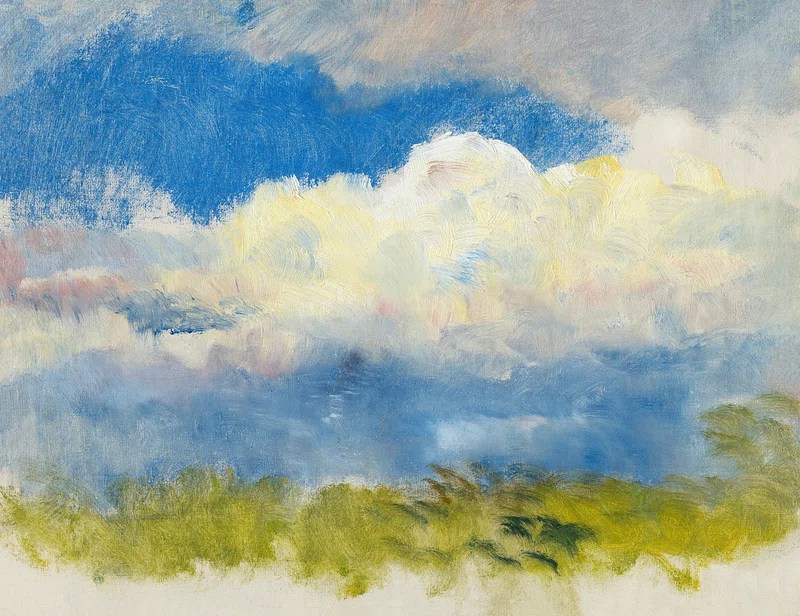
Painting by Laszlo Mednyanszky (1852-1919). From Public Domain
DESCRIBING YOU

How can I describe you?

The fragrance of morning rain
mingled with dew
reminds me of you;

the warmth of sunlight
stealing through a windowpane
brings you back to me again.

SANCTUARY AT DAWN: FORGIVENESS

I have walked these thirteen miles
just to stand outside your door.
The rain has dogged my footsteps
for thirteen miles, for thirty years,
through the monsoon seasons ...
and now my tears
have all been washed away.

Through thirteen miles of rain I slogged,
I stumbled and I climbed
rain slickened slopes
that led me home
to the hope that I might find
a life I lived before.

The door is wet; my cheeks are wet,
but not with rain or tears ...
as I knock I sweat
and the raining seems
the rhythm of the years.

Now you stand outlined in the doorway
—a man as large as I left—
and with bated breath
I take a step
into the accusing light.

Your eyes are greyer
than I remembered;
your hair is greyer, too.
As the red rust runs
down the dripping drains,
our voices exclaim—

"My father!"
"My son!"


SAY YOU LOVE ME

Joy and anguish surge within my soul;
contesting there, they cannot be controlled;
now grinding yearnings grip me like a vise.
Stars are burning;
it's almost morning.

Dreams of dreams of dreams that I have dreamed
dance before me, forming formless scenes;
and now, at last, the feeling grows
as stars, declining,
bow to morning.

And you are music in my undreamt dreams,
rising from some far-off lyric spring;
oh, somewhere in the night I hear you sing.
Stars on fire
form a choir.

Now dawn's fierce brightness burns within your eyes;
you laugh at me as dancing starlets die.
You touch me so and still I don't know why . . .
But say you love me.
Say you love me.

Michael R. Burch’s poems have been published by hundreds of literary journals, taught in high schools and colleges, translated into fourteen languages, incorporated into three plays and two operas, and set to music by seventeen composers.

PLEASE NOTE: ARTICLES CAN ONLY BE REPRODUCED IN OTHER SITES WITH DUE ACKNOWLEDGEMENT TO BORDERLESS JOURNAL

Click here to access the Borderless anthology, Monalisa No Longer Smiles

Click here to access Monalisa No Longer Smiles on Kindle Amazon International
Categories
Poetry

Steve’s Scaffolding

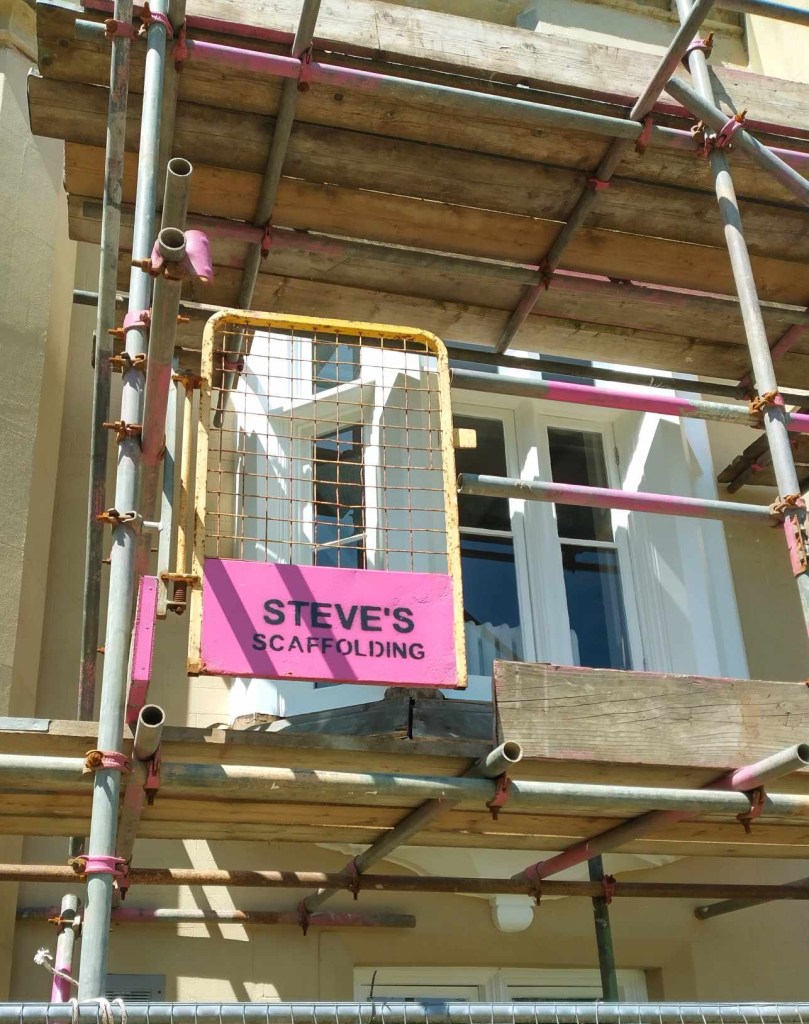
Photograph and Poetry by Rhys Hughes

Steve’s Scaffolding is firm
but fair
and more convenient
than using
the stairs to scale the façade
of a building.

Metal pipes, riveted tight
are a grid-like
sight for casual sightseers
and that is right
but allow me
to tell you what is wrong.

King Kong.
Yes, that great big ape.
See him loom?
He is the issue we ought
to discuss: he is
the elephant in the room.

But larger
than an elephant, of course,
able to exert greater
force than any other living
creature. That’s his
main feature.

He can climb
structures with such speed
and skill it gives
us all a thrill
to watch him do it.
He can succeed
in reaching the summit
without the need
for a steel lattice.
It takes a lot of practice
but it’s possible.

He won’t plummet,
his hairy grip is firm
on every ledge
and windowsill edge.
He won’t fall
and end up in hospital
with broken limbs.

And so I ask you:
What use is
Steve’s Scaffolding
to King Kong?
Who is Steve anyway?
Why should
any gorilla obey
the safety regulations?

Among the nations
of the world
there are none that
pay any heed
to what King Kong
doesn’t need.
Scaffolding is
one of those things.

But I am here to say
that if you have a building
extremely tall
that you want climbed
for any reason at all
give him a call.
He knows how to use
a telephone:
his receiver is shaped
like a banana.
He will react to your
wish without
any palaver, trust me.

No matter
the season he’ll oblige,
scaling towers
on the outside: he trusts
elevators not a jot.

And when
he gets to the top, if you
have a biplane
or two (biplanes usually
come in pairs)
to buzz the hairs on his
head, he’ll be delighted
to swipe them
like flies: his party trick.

He isn’t wise
but he’s quick to act,
which means he isn’t quite
as thick or daft
as people like to claim.

No need to harbour
a grudge because he beats
his chest too loud.
Nor should he
be blamed for shedding fur
everywhere,
near or far, here or there:
he’s a gorilla,
not Attila the Hun’s barber.

But Steve has other ideas
and now it
finally becomes clear that
Steve is a dinosaur,
a prehistoric monster, yes,
a tyrannosaur
who sings in chorus with
the tectonic
groans of geological time.

He has millions of years
of experience
to help him mangle apes.
The mystery
of his survival can wait
to be solved.
More important is what
he plans to do
next: will he try to chew
King Kong’s
limbs or head? I dread to
even speculate.

But the outcome is good,
my fears are
groundless, the joy seems
boundless as
giant ape and tyrannosaur
shake hands
unexpectedly, like friends
from long ago.

Steve’s scaffolding business
is expanding,
the work is too demanding
for one dinosaur.
He needs a partner to share
the load, his
former colleague was a toad
and not skilled at paperwork.

King Kong has come along
at the right moment.
Steve asks him bluntly: do
you want the job?
The huge ape nods his head,
keen to partake of the
entrepreneurial dream.
They will be a monster team.

Steve and Kong’s Scaffolding
is firm but fair
and more convenient
than using the stairs
to reach the softest of lights,
the inflamed moon,
or ascend the giddy heights of
fame and fortune

Rhys Hughes has lived in many countries. He graduated as an engineer but currently works as a tutor of mathematics. Since his first book was published in 1995 he has had fifty other books published and his work has been translated into ten languages.

.

PLEASE NOTE: ARTICLES CAN ONLY BE REPRODUCED IN OTHER SITES WITH DUE ACKNOWLEDGEMENT TO BORDERLESS JOURNAL

Click here to access the Borderless anthology, Monalisa No Longer Smiles

Click here to access Monalisa No Longer Smiles on Kindle Amazon International

Categories
Poetry

Hurricane Laura’s Course

By Jane Hammons

HURRICANE LAURA’S COURSE 


Backwards flow the waters of the mighty Mississippi. Unchart the chart of known courses. Rewrite maps. History. Story. Correct course of usual tellings.

Ippississim: teach your children that spell.

Reclaim mark twain*: let it mean again and only two fathoms, twelve feet.

The raft is Jim’s.

Along the shores teach: Choctaw Chickasaw Quapaw Osage Caddo Natchez Tunica Sioux Sauk and Fox Ojibwe Pottawatomie Illini Menominee Ho-chunk.

Ditch de Soto: he discovered nothing.

Over your flow under the Danziger Bridge turn bullets. Return Hurricane Katrina gunfire truth.

Flow the waters over Minneapolis St. Paul. Overflow. Ten miles from the shores to Cup Foods. Revive George Floyd. Wash away the Chauvin gang.

New Mississippi River baptisms called for. Called forth. Forthcoming.

Along shores awaiting reversal trickster water invites.

* ‘mark twain’ is in lower case as the words have been used to name the nautical measure

.

Jane Hammons has work forthcoming in Scrawl Place and The East Over Anthology of Rural Writers. She lives in New Mexico and is an enrolled citizen of the Cherokee Nation.

PLEASE NOTE: ARTICLES CAN ONLY BE REPRODUCED IN OTHER SITES WITH DUE ACKNOWLEDGEMENT TO BORDERLESS JOURNAL

Click here to access the Borderless anthology, Monalisa No Longer Smiles

Click here to access Monalisa No Longer Smiles on Amazon International

Categories
Poetry

‘Like people, winters come and go’

Poetry by George Freek


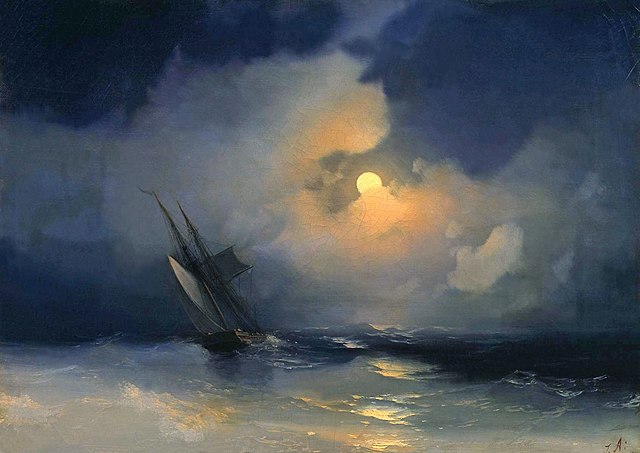
Storm at Sea on a Moonlit Night, Painting by Ivan Aivazovsky (1817-1900)
AT THIS MOMENT

The moon is a frightened bride,
with nowhere to hide.
The wind is a wolverine.
Wandering lost in a fog.
My boat shakes like a leaf of tea,
as I drift like a sodden log.
I look for a crack in the sky,
Where light can shine,
but rain falls like razors.
At such a time,
I should think of my wife,
how worried she’ll be,
but in moments like this,
afraid for my life,
I can only think of me.


IN NOVEMBER


Dead leaves fall from trees
with a cancer-like disease.
Clouds drift by
in their ordinary way,
moving too quickly to say
what they might say.
The river still flows somewhere.
I don’t know where.
I’ll never go there.
Time is only important
when you need to say goodbye.
It will soon be snowing.
Like people, winters come and go.
The snow begins falling.
I stare at my unmade bed.
It’s now been a year,
that you’ve been dead.

George Freek’s poetry has recently appeared in The Ottawa Arts Review, Acumen, The Lake, The Whimsical Poet, Triggerfish and Torrid Literature.

PLEASE NOTE: ARTICLES CAN ONLY BE REPRODUCED IN OTHER SITES WITH DUE ACKNOWLEDGEMENT TO BORDERLESS JOURNAL

Click here to access the Borderless anthology, Monalisa No Longer Smiles

Click here to access Monalisa No Longer Smiles on Amazon International

Categories
Poetry

Watching by Stuart MacFarlane

                WATCHING

I

The nurse says quietly, efficiently.
'I'm sorry but you can't disturb the chairs.'
So we push them back,
a tentative scraping;
now, regimented at the bedside,
we form a silent circle around
a patient centre.
We talk a little, laugh when we can.
The air is hot and stuffy;
and always the pungent tang of disinfectant.
In the adjacent bed lies an older man,
tubes snaking from his body to a 'Life trace' machine.
At his side his wife holds his hand;
and, as he tries to speak,
she says softly, again and again,
'I know. I know.'
His hand, in hers, struggles to squeeze
out a response.
On the screen a white line
scales small mountain peaks.
Up, down. Up and down.
Random numbers flash erratically.

II

We hear a rasping cough.
See the old man's arm swing through the air,
describing a careless arc.
His hand thumps off the bedside table,
upsetting a vase of flowers.
Slowly, very slowly, the vase tips
over the edge, sudden water
leaping at the brim.
One by one, the flowers,
daffodils, I think,
spill out.

III

Now the glass vase turns through the air,
scooping up the sunlight,
bright water gasping at the neck.
Someone moves, as if to catch it.
But no-one does.
It smashes on the hard, scrubbed floor,
scattering into a hundred pieces.
Fingers of sunlight seem to pick
at the pieces;
nimble beams on
gleaming glass.
The flowers' flaccid stems lie,
forlorn there, on the floor;
and, helpless, we can merely look on;
just watching the water spread.

From Public Domain

Stuart MacFarlane is now semi-retired. He taught English for many years to asylum seekers in London. He has had poems published in a few online journals.                                                                                                                    

.

PLEASE NOTE: ARTICLES CAN ONLY BE REPRODUCED IN OTHER SITES WITH DUE ACKNOWLEDGEMENT TO BORDERLESS JOURNAL

Click here to access the Borderless anthology, Monalisa No Longer Smiles

Click here to access Monalisa No Longer Smiles on Kindle Amazon International
Categories
Poetry

Loneliness

Poetry and translation from Korean by Ihlwha Choi

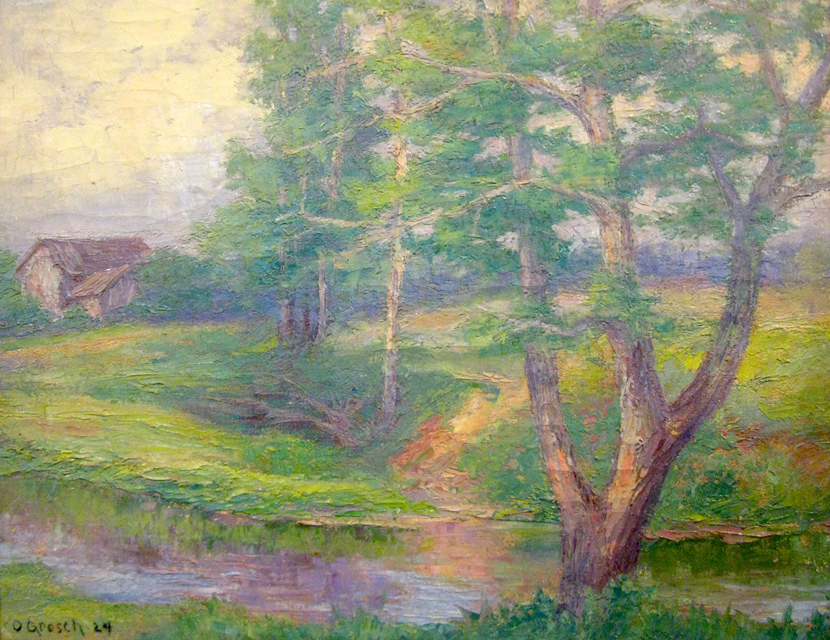
Pond near Springfield by Oscar Grosch (1863–1928). From Public Domain.
Like a breeze, I walk lightly.
Sitting in the spring sun,
Gazing at the green valley,
Life is truly a lonely thing.

Even with yesterday's memories and tomorrow's hopes,
Even with friends coming and going and daily business,
Living is truly a lonely thing.

All day today, I've been thinking of you.
Is my life lonely because I miss you?
Is this spring day lonely because you're there?

Like a breeze, I walk aimlessly.
Sitting on the grassy field, gazing at the waves in the lake,
Even this blossoming season feels lonely

Ihlwha Choi is a South Korean poet. He has published multiple poetry collections, such as Until the Time When Our Love will Flourish, The Color of Time, His Song and The Last Rehearsal.

.

PLEASE NOTE: ARTICLES CAN ONLY BE REPRODUCED IN OTHER SITES WITH DUE ACKNOWLEDGEMENT TO BORDERLESS JOURNAL. 

Click here to access the Borderless anthology, Monalisa No Longer Smiles

Click here to access Monalisa No Longer Smiles on Kindle Amazon International

Categories
Poetry

‘Where toads (nee princes) ruled in chinks…’

Poetry by Michael Burch

JOY IN THE MORNING 

(for my grandparents George Edwin Hurt and Christine Ena Hurt)

There will be joy in the morning
for now this long twilight is over
and their separation has ended.
For fourteen years, he had not seen her
whom he first befriended,
then courted and married.
Let there be joy, and no mourning,
for now in his arms she is carried
over a threshold vastly sweeter.
He never lost her; she only tarried
until he was able to meet her.


LADY’S FAVOUR

May
spring
fling
her riotous petals
devil-
may-care
into the air,
ignoring the lethal
nettles
and may
May
cry gleeful-
ly Hooray!
as the abundance
settles,
till a sudden June
swoon
leave us out of tune,
torn,
when the last rose is left
inconsolably bereft,
rudely shorn
of every device but her thorn.

(Published by The Lyric and Suravejiliz)


HAPPILY NEVER AFTER
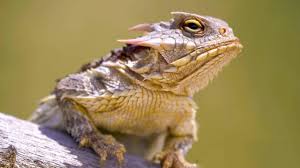
(the Second Curse of the Horny Toad)


He did not think of love of Her at all
frog-plangent nights, as moons engoldened roads
through crumbling stonewalled provinces, where toads
(nee princes) ruled in chinks and grew so small
at last to be invisible. He smiled
(the fables erred so curiously), and thought
bemusedly of being reconciled
to human flesh, because his heart was not
incapable of love, but, being cursed
a second time, could only love a toad’s . . .
and listened as inflated frogs rehearsed
cheekbulging tales of anguish from green moats . . .
and thought of her soft croak, her skin fine-warted,
his anaemic flesh, and how true love was thwarted.

(Originally published by Romantics Quarterly)
From Public Domain

Michael R. Burch’s poems have been published by hundreds of literary journals, taught in high schools and colleges, translated into fourteen languages, incorporated into three plays and two operas, and set to music by seventeen composers.

PLEASE NOTE: ARTICLES CAN ONLY BE REPRODUCED IN OTHER SITES WITH DUE ACKNOWLEDGEMENT TO BORDERLESS JOURNAL

Click here to access the Borderless anthology, Monalisa No Longer Smiles

Click here to access Monalisa No Longer Smiles on Kindle Amazon International
Categories
Poetry

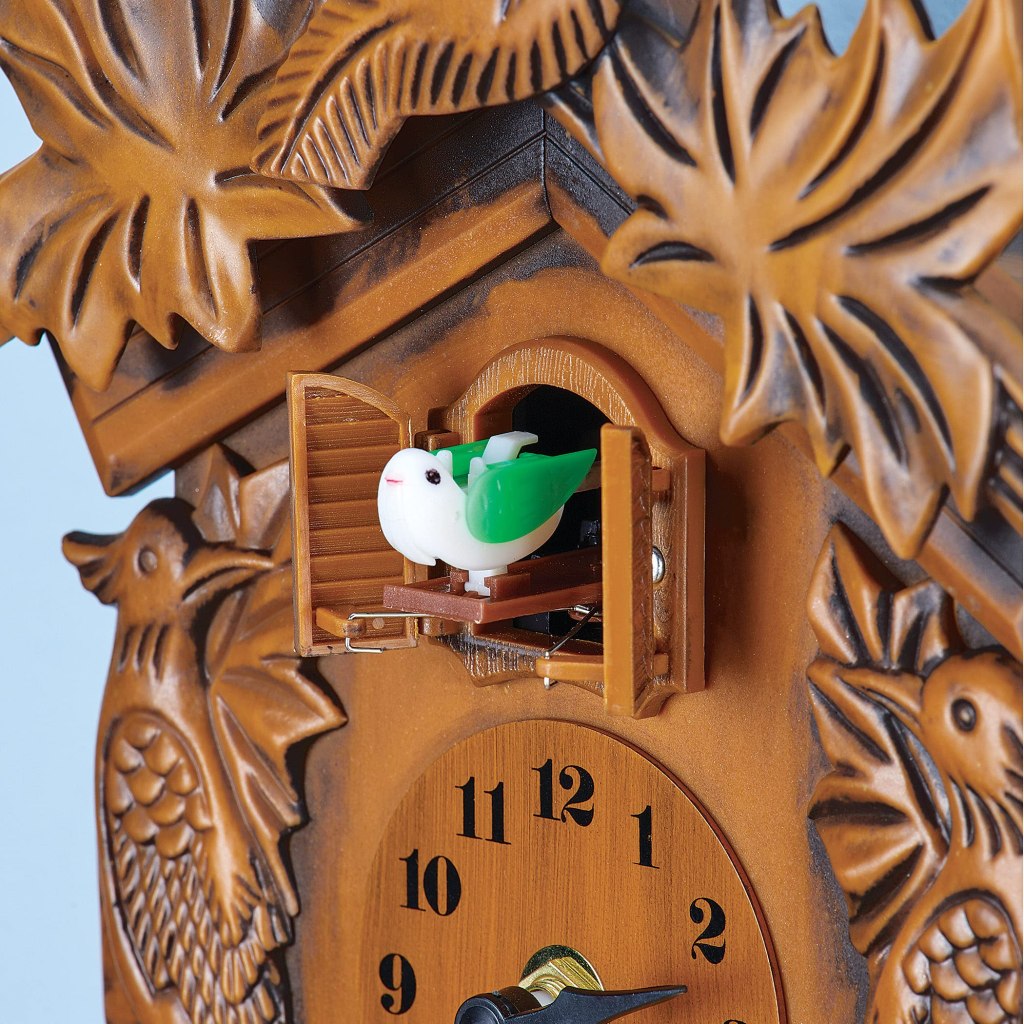
The Clock that Cuckoos

By Saranyan BV

As I was fast asleep in my bed of roses,
Someone silently moved
The cuckoo clock standing against the eastern wall
And hung it next to the awning through which I watch sunset.

As I sleep on my bed of roses,
The cuckoo comes out of the darkness every hour.
The cuckoo's breast is brown, like the pile of wood stacked on funeral pyres.
The cuckoo would look at the unencumbered nail sticking out,
And blow its honest heart out,
‘It’s not about death I am afraid, It’s about living’ –
It’s time I hang a picture of the churchyard symmetry
Where my father, my mother and my friend have gone before, sleep.
I sleep past my bed of roses.
I do not draw conclusion from the waxing of or waning of the moon
The moon passes through the window over the beads of raindrops
All night,
The good old cuckoo clock minds
‘Cuckoo…, cuckoo…’.
From Public Domain

Saranyan BV is poet and short-story writer, now based out of Bangalore. He came into the realm of literature by mistake, but he loves being there. His works have been published in many Indian and Asian journals. He loves the works of Raymond Carver.

.

PLEASE NOTE: ARTICLES CAN ONLY BE REPRODUCED IN OTHER SITES WITH DUE ACKNOWLEDGEMENT TO BORDERLESS JOURNAL

Click here to access the Borderless anthology, Monalisa No Longer Smiles

Click here to access Monalisa No Longer Smiles on Kindle Amazon International
Categories
Poetry

Malayan Meanderings…

By Sanjay C Kuttan

LIFETIME BY MAIN MAIN 

wooden blocks, wooden trains,
ageing memory still remains.
friends divide, police and thief,
evening sweat a stress relief.
Belon acah on badminton court,
cari lobang through the fort.
colourful feathers adorn chaptek,
mesti main during pagi break.
hantam bola with acrobatics,
ducking projectile, elak tactic.
rounders, imperfect diamond,
home runners jadi legend.
ceper with five bottle caps,
navigating past the 3D traps.
guli lined up without blame,
mata sempit taking aim.
tightened cord, to spin gasing,
if too loose kepala pusing,
whack the stick, gili danda,
count back jangan salah.
Hide and seek, every little nook,
hearts like pages of an open book.


Glossary
main main: play, playing
Belon acah: name of the game
cari: look; lobang: gap or hole
chaptek: featherball
mesti: must
pagi: morning;
hantam: strike / hit; bola: ball
elak: avoid
jadi: become
ceper; bottle cap
guli: marble
mata: eye; sempit: narrow slit
gasing: tops that spin
kepala: head
pusing: turn, context is disoriented
gili danda: name of the game
jangan: don’t: salah: error / mistake

You can check out more about the games mentioned in the poem by clicking here.

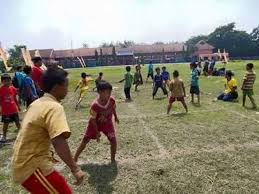
A game of Ceper

.Sanjay C Kuttan, poet, philosopher and writer, was born in Malaysia, lives in Singapore, has his poetry published in Where Fires Rage, In One Breath, Under the Spell of Flickering Lights, Quilted Sails and in other anthologies.

.

PLEASE NOTE: ARTICLES CAN ONLY BE REPRODUCED IN OTHER SITES WITH DUE ACKNOWLEDGEMENT TO BORDERLESS JOURNAL

Click here to access the Borderless anthology, Monalisa No Longer Smiles

Click here to access Monalisa No Longer Smiles on Kindle Amazon International
Categories
Poetry

Poetry by Jason Ryberg

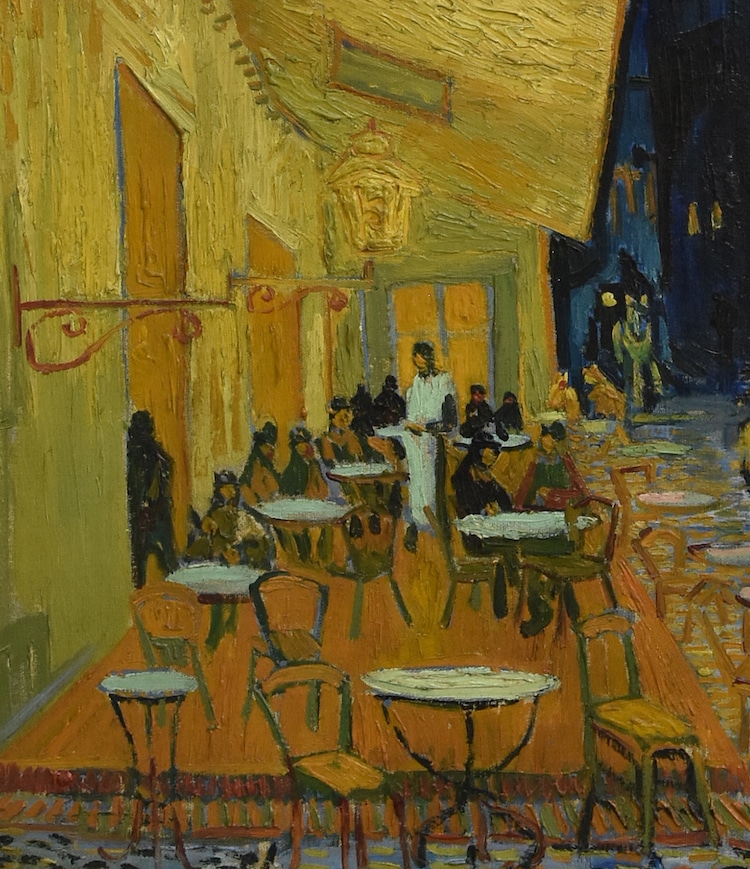
Cafe Terrace by Vincent Van Gogh (1853-1890) From Public Domain
MAKING THE ROUNDS 


You
can
see the
pink street lights
coming on at that
exact point where late afternoon
makes the exchange with early evening and you can
still smell the White Magnolias in the night wind
as it sweeps the sky clean of any last
clouds, and the streets are all deserted now except for
cats and crows and the odd patrol
car out making their
rounds. And some-
where
not
too
far
from here,
someone is
playing the cello.


ON-HOLD

Eight hours on-hold with
Public Assistance would make
the Dalai Lama
madder than a rattlesnake
caught in a hot clothes dryer.


NEVER GET OUT OF THE GODDAMN BOAT!
(Sleight Return)

It’s a wet, grey morning in mid-December, here in South
Central Missouri (the less fashionable foot-hills of the
Ozarks as it’s known by some), not exactly pouring, but
a fairly constant and consistent plip, plip, plipping, and not
exactly warm, but an unseasonably tropical 50-some-odd
degrees (almost balmy, you might say, for this time of year,
anyway) and I have only just woken from a strange surrealist
montage of dreams, broken by the sudden subterranean
trainyard rumble of thunder (though there haven’t been any
trains in these parts for decades); dreams of deer roaming
and snuffling, freely, through the sleeping streets of Kansas
City, Missouri, dreams of star charts on my inner eye- lids,
milk-white phantom dreams, blue-black storm dreams where-
in, every night, I go up the snaking circuit cable of the river,
and every night I get out of the boat and walk deep into the
sweating jungle to confront what must be my inner nemesis,
only to be stalked and devoured, again and again, by the
brightly burning tiger’s fearful symmetry.

Jason Ryberg is the author of eighteen books of poetry, six screenplays, a few short stories, a box full of folders, notebooks and scraps of paper that could one day be (loosely) construed as a novel, and, a couple of angry letters to various magazine and newspaper editors. He is currently an artist-in-residence at both The Prospero Institute of Disquieted P/o/e/t/i/c/s and the Osage Arts Community, and is an editor and designer at Spartan Books. His latest collection of poems is Kicking Up the Dust, Calling Down the Lightning (Grindstone Press, 2023). He lives part-time in Kansas City, MO with a rooster named Little Red and a Billy-goat named Giuseppe and part-time somewhere in the Ozarks, near the Gasconade River, where there are also many strange and wonderful woodland critters. 

PLEASE NOTE: ARTICLES CAN ONLY BE REPRODUCED IN OTHER SITES WITH DUE ACKNOWLEDGEMENT TO BORDERLESS JOURNAL. 

Click here to access the Borderless anthology, Monalisa No Longer Smiles

Click here to access Monalisa No Longer Smiles on Kindle Amazon International