Categories
Poetry

The Mirror

ByMaria Alam

"You're so beautiful?"
No, I’m not. At least, not the way I see myself.
Scrolling through my own pictures on social media I don't find myself lacking grace, always.

On screen, I can almost believe I’m fine.
In reality, I can’t.

They say beauty comes from within.
And I am kind,
So why doesn’t that kindness ever shine through me?

They say beauty is all about your heart.
Then is it a scam?
A colorful fabrication of a socially validated lie by which all our lives have been painted?

They say, feel confident,
embrace your flaws,
own your scars,
then you’ll be beautiful.
But is that really true?

Is it really possible for anyone to feel beautiful
when all they see are scars, acne, self-doubt,
insecurities and fear stitched into their face, their eyes, their thoughts,
woven into the core of their very being?

So, whose fault is it?
Theirs?
Or is it the society that carved rigid standards into us,
teaching us to feel never beautiful enough?

If I don’t feel beautiful, is it really me who’s broken,
or the mirror I’ve been given?

Maria Alam is an undergrad student, currently pursuing her Bachelor’s in English and Cultural Studies at University of Liberal Arts Bangladesh [ULAB].

.

PLEASE NOTE: ARTICLES CAN ONLY BE REPRODUCED IN OTHER SITES WITH DUE ACKNOWLEDGEMENT TO BORDERLESS JOURNAL

Click here to access the Borderless anthology, Monalisa No Longer Smiles

Click here to access Monalisa No Longer Smiles on Kindle Amazon International

Categories
Poetry

Poetry by Laila Brahmbhatt

From Public Domain

IN THE MOOD FOR LOVE 

Let’s exchange
our souls
like lovers trading glances.
We trace the lost walls
of our breath
in search of one another,
cursed by having loved.
Our hearts vanish,
proof that we were in love.

Laila Brahmbhatt, a Kashmiri/Jharkhand-rooted writer and Senior Immigration Consultant in New York, has published haiku and haibun in several international journals, including Cold Moon Journal and Failed Haiku.

.

PLEASE NOTE: ARTICLES CAN ONLY BE REPRODUCED IN OTHER SITES WITH DUE ACKNOWLEDGEMENT TO BORDERLESS JOURNAL

Click here to access the Borderless anthology, Monalisa No Longer Smiles

Click here to access Monalisa No Longer Smiles on Kindle Amazon International

Categories
Poetry

Your Light will Break

       By John Swain

YOUR LIGHT WILL BREAK 

Then your light will break
the amber hive
upon the tree
across the path
of sky in the flowering vines,
you remain in awakening,
powdered stones shimmer
honeyed to drink
through the beaming water,
light fires around the oil jar,
I tense a canvas sheet
to refuge
the mystery of your solitude,
we unfurl the shelter door,
we watch the burnt sky turn back
into the infinite sun.
From Public Domain

John Swain lives in Le Perreux-sur-Marne, France.  His most recent chapbook, The Daymark, was published by the Origami Poems Project.

PLEASE NOTE: ARTICLES CAN ONLY BE REPRODUCED IN OTHER SITES WITH DUE ACKNOWLEDGEMENT TO BORDERLESS JOURNAL

Click here to access the Borderless anthology, Monalisa No Longer Smiles

Click here to access Monalisa No Longer Smiles on Amazon International

Categories
Poetry

When Oceans take to Dry & More …

By Jim Bellamy

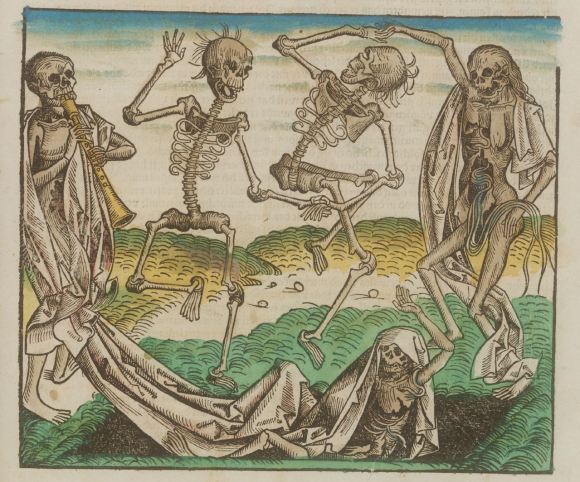
Wood block by Michael Wolgemut (1434 – 1519).
WHEN OCEANS TAKE TO DRY


When oceans take to dry whatever the madman's rib,
Through the hollows of time, where shadows pose,
We shall levitate across the Rose, so glib.

The stars, they flicker, on this darkling crib,
As night's embrace cloaks the world's woes,
When oceans take to dry whatever the madman's rib.

Beneath the moon's pale gaze, we'll imbibe the fib,
Of a world turned upside down, where chaos grows,
We shall levitate across the Rose, so glib.

The madman laughs, his mind a twisted ad-lib,
While the sea's heart beats, slow and morose,
When oceans take to dry whatever the madman's rib.

In this dance macabre, no need to transcribe,
The silent whispers of ghosts in throes,
We shall levitate across the Rose, so glib.

So let the waters rise, no need to bribe,
The fates that spin the end's close,
When oceans take to dry whatever the madman's rib,
We shall levitate across the Rose, so glib.


FOR WHEN THE ACRID MOONSTONES GROAN ACROSS GAS


For when the acrid moonstones groan across gas,
In twilight's veil, the sirens wipe away.
Beneath the stars, where shadows dare not pass.

The madcap dance, where spirits raise their glass,
To toast the dark, where light has lost its sway.
For when the acrid moonstones groan across gas.

The night's embrace, a chilling, cold morass,
Where echoes of the lost in silence pray.
Beneath the stars, where shadows dare not pass.

The moon's pale gaze, on fields of withered grass,
A serenade for souls led far astray.
For when the acrid moonstones groan across gas.

In dreams we find the gates of alabaster brass,
Where time's cruel hand can never hold its sway.
Beneath the stars, where shadows dare not pass.

Jim Bellamy was born in a storm in 1972. He studied hard and sat entrance exams for Oxford University. Jim has a fine frenzy for poetry and has written in excess of 22,000 poems. Jim adores the art of poetry. He lives for prosody.

.

PLEASE NOTE: ARTICLES CAN ONLY BE REPRODUCED IN OTHER SITES WITH DUE ACKNOWLEDGEMENT TO BORDERLESS JOURNAL

Click here to access the Borderless anthology, Monalisa No Longer Smiles

Click here to access Monalisa No Longer Smiles on Amazon International

Categories
Poetry

A Sip of a Fermented Hope

By Ahmad Al-Khatat

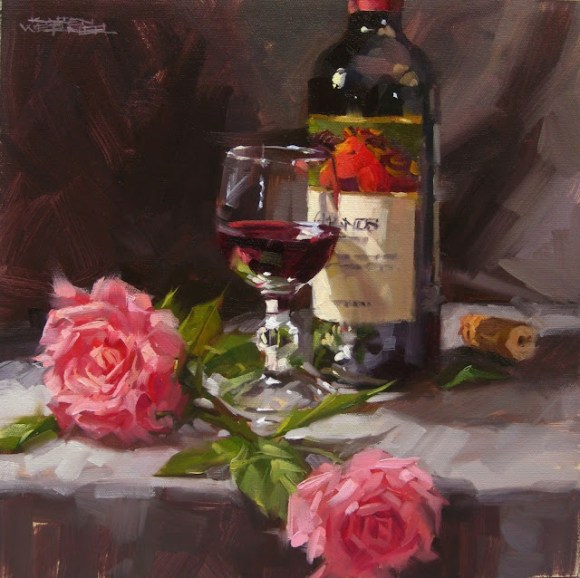
Karen Warner Fine Arts: From Public Domain
A SIP OF FERMENTED HOPE

I wish my mental health were a language
that the world could understand and respect.
I investigate the clouds and the lake up north,
I feel I, somehow, belong between them.

On the other side of the world, I see myself
in the sobbing misplaced children from countries
like my own, where we question our humanity
as if we are the only ones alive while others live joyfully.

My parents were always against my way
of drinking liquor until I end up drunk and aggressive.
Who cares about me anymore? I only hold a sip
of a fermented hope, where I dance and sing alone.

If she ever comes back, tell her he’s not interested
to walk with her or to give her what she wishes.
My depression has conquered me. Congratulations, sorrows!
I am now the man banned from falling in love again.

I cannot say I did not miss staring at women near me.
I cannot say I did not feel some healing in my wounds.
I cannot say I did not enjoy speaking to a woman like you.
I wish to know that I am truly yours, but if not,

let me fall asleep with a bullet…

Ahmad Al-Khatat is an Iraqi Canadian poet and writer. His poetry has been translated into other languages and his work has been published in print and online magazines abroad. He resides in Montreal.

PLEASE NOTE: ARTICLES CAN ONLY BE REPRODUCED IN OTHER SITES WITH DUE ACKNOWLEDGEMENT TO BORDERLESS JOURNAL

Click here to access the Borderless anthology, Monalisa No Longer Smiles

Click here to access Monalisa No Longer Smiles on Kindle Amazon International
Categories
Poetry

Found in Translation: Hrushikesh Mallick’s Poems

Five poems by Hrushikesh Mallick have been translated from Odia by Snehaprava Das

AFTER THEY LEAVE     

After they leave,
The tree in the midst of a bare field
Stands forlorn.
Not a single bird,
Nor the sound of chirping anywhere
Not a leaf flutters in the breeze,
No one speaks a word
After they leave.

The world is a meaningless void
When they are not there.
Flowers bloom and wither aimlessly.
Festive seasons come and depart.
The privileged and the poor come and go
Without making an impact.
Silence reigns everywhere and around
When they are not there.

Living in a pattern,
Like, in every moth-hour
‘Chhatu bhai’ riding back
From the village market, ringing the bicycle bell,
Or, farmers sitting on a platform in the evenings
And deciding which patch of the land
Would be plowed next morning,
Like, the moon coming up routinely
At measured intervals,
And discussions centering around
How ‘Gaya-bhai’
Escaped the wrath of the village-goddess
Last night by a sheer miracle.
Routine life continues
Like rice cooking tender in the kitchen-hearth
While cow-dung cakes are put
To smoulder in the cowsheds.
The regular pattern of living
Is dull and cheerless
In their absence.
Who are they, then? Who indeed?
They are the fragrance of the paddy-buds
In the farmlands by the hillside,
They are the Siju bushes that
Grow under the eaves in the backyard,
They are the sound of the clearing of throat
That inspires courage in a fearful heart
On a dark pathway,
They are the drumbeats floating in
In gentle waves from the neighbouring village,
They are the pallbearers that twine ropes
To make a pyre;
And, after they leave life loses its meaning!

WHEN THERE IS NO GOD

Once you join your palms
sitting on the bed
while going to sleep
or, as you wake up,
worries stop disturbing
your calm.
You are assured of the presence
of someone called God
who might break your fall.
But these are the bleak days
of God’s absence,
these days the headless bodies
saunter down the streets of the night
whispering to one another.
The dogs howl in a chorus.
The sounds of sermons or devotional songs
do not float in from the mandapa,
the air throbs instead with the siren
of ambulances.
As such belief is that
the God that holds
the trident and the mace
is omnipotent.
Why does that God stand dull
and lifeless in the temple now?
Does an idol in any temple
have the power now
even to chase away the stray dogs?
Is there a God in any shrine
who can hold open
its closed doors and by some miracle
turn auspicious
all that is ominous?
In these dark days when
God is not there,
if we take a fall,
we have to get up on our own.
We have to lean on our own mettle
and our own merit
in the moments of death or survival.
In the absence of God,
we have to commit ourselves
to the service of the distressed,
to feed the hungry
and nurse the sick,
give shelter to the homeless.
It’s time we repented our indulgences
without religious extravaganza.
It’s time we stopped
pinning blind faith in
the figures of stone.

THE LONE GIRL

The lone girl has nowhere to go,
She sits alone lamenting her loss;
Once upon a time she had
a country like we all have,
it was called Syria.
Its lofty national flag
soared to the clouds.
It had a national anthem that
sparked the spirit of martyrdom
in its people!

In the evenings,
perched on the shoulders
of her babajaan,
she watched the moon
in the sky of her homeland;
heard stories from her mother
that set her eyes rolling in wonder;
that country, her homeland is now in ruins
a vast, barren expanse,
littered with severed limbs.
Its air is sick with the smell of
tons and tons of explosives
there lay piles of disfigured childhood
in pathetic abandon
to tell the tale of a country that was!

No one had ever warned the girl
that her tomorrows will be spent
in makeshift shelters under the tents,
nor did she know that
her palms would join to make begging bowl,
and there would be merchants
to trade on
the perfumed void in her.
No one predicted that she would grow up
believing in hatred instead of love!
And when she would learn to ask
the whereabouts of her parents
the whole civilized world will
keep mute.

EYES

Just as I believed that all poems
which could have been written on ‘eyes’
are already written
your ‘eyes’ flashed before me
and what an amazing lot of trees
laden with fruits and flowers
and birds, they held!
I wondered where did you flick
your deep, boundless glance
from the corridors of the hospital
like a handful of floral offerings.
The anguish that glance held
was like the lost look in the eyes of a kid
who was rudely denied a father’s lap,
like a fresh bloom shying away
from the eyes of a honeybee
or, a streak of lightning flashing
in the overcast noon-sky
like a poor man’s last hope.
Your eyes are like the lines of a poem
that unfold a new meaning
at every other reading.
Your eyes,
like a strange horizon captures
the crimson of the dawn
and the gleam of a red silk sari
in a perfect balance!
Your eyes could transform a waste land
to a paddy field in luxuriant green,
at times they are moist with muffled sobs,
or, like a spear smeared in blood, at others!
What is more beautiful --
the bright loquacity in your eyes
or the rain-washed sunshine,
the mysterious mutter in your eyes
or a village enveloped in a wispy darkness?

THE HONEYBEE DOES NOT KNOW

The son writes poems.
His mother does not know.
‘You are rotting yourself through writing,’
She complains,
‘Did you write them?’
A girl-friend, looks at him in wonder,
‘Can you swear to that?’ she asks.
The boy writes poems
The street where he lives does not know it,
Nor does the village!
His young face does not sport a beard,
Nor have the creases appeared on his forehead.
There was not that distant look
Like the faraway stars in the eyes,
How could then he be a poet?
Who would believe that?
A man who picks up a quarrel with the fisherwoman
Could recite the brajabuli,
Or, the fellow weaving clothes at the loom
Can sing lines from Tapaswini

A poet is not supposed to have a home.
He sits under the trees
Amidst the anthills.
A poet hacks off the branch he sits on.
He does not have that worldly intelligence.
A poet is not pragmatic.
He begins a line at the wrong point
And ends it at a wrong one too.
A good poet forgets the right way of chanting
The mantra that would protect him from dangers
While actually facing them.

The mother does not know that
Her son is a poet; nor does the father.
The owner of the hut where the poet takes shelter
Does not know his tenant to be a poet.
The poet’s voice does not know
It belongs to a poet.
The reflection has no idea it is the poet’s image.
The lizard exploring the shelves
Does not know the ‘Award of Padmashree’
Carefully preserved there,
Was won by the poet.
The honeybee that circles the graves
Does not know that
The lines engraved on the tomb
Were the epitaph for the poet.

Glossary:
Mandapa is a pavilion.
Brajabuli is a dialect based on Maithali that was popularised for poetry by the medieval poet Vidyapati.
Tapaswini: A famous long poem by the 19th century Odia poet Gangadhar Meher.

.

Dr Hrushikesh Mallick is a reputed Odia poet and writer. He has 13 Poetry collections. His first book in 1987 heralded a new era in Odia poetry. He has received Odisha Sahitya Akademi Award (1988), Sarala Award (2016) and Central Sahitya Akademi Award (2021).He is also an eminent literary critic and fiction writer. He served as President of Odisha Sahitya Akademi (2021-2024). He has been a professor of Odia language and literature from 2012.

Dr.Snehaprava Das, is a noted writer and a translator from Bhubaneswar, Odisha. She has five books of poems, three of stories and thirteen collections of translated texts (from Odia to English), to her credit. 

PLEASE NOTE: ARTICLES CAN ONLY BE REPRODUCED IN OTHER SITES WITH DUE ACKNOWLEDGEMENT TO BORDERLESS JOURNAL

Click here to access the Borderless anthology, Monalisa No Longer Smiles

Click here to access Monalisa No Longer Smiles on Kindle Amazon International

Categories
Poetry

The Solitary Tempest

By Pramod Rastogi

O clouds of loneliness,
I beckon your shadowed embrace.
Drift gently into the seams of my heart,
And rain, soft as whispered sorrows.

Sweep away the filth and dust,
The clinging residue of ceaseless strife,
Etched by life's restless tumult,
And leave behind a moment's quiet clarity.

But, O clouds, be but a fleeting guest,
Do not settle as my abiding home.
The deeper you linger,
The heavier grows your weight.

You threaten to rend from me
The final thread of self,
A fragile anchor to light and hope,
Swept away in torrents of despair.

Pramod Rastogi is an Emeritus Professor at the EPFL, Switzerland. He is a poet, academician, researcher, author of nine scientific books, and a former Editor-in-chief (1999-2019) of the international scientific journal “Optics and Lasers in Engineering”. He was an honorary Professor at the IIT Delhi between 2000 and 2004. He was a guest Professor at the IIT Gandhinagar between 2019 and 2023. He is presently an honorary adjunct Professor at the IIT Jammu.

.

PLEASE NOTE: ARTICLES CAN ONLY BE REPRODUCED IN OTHER SITES WITH DUE ACKNOWLEDGEMENT TO BORDERLESS JOURNAL. 

Click here to access the Borderless anthology, Monalisa No Longer Smiles

Click here to access Monalisa No Longer Smiles on Kindle Amazon International
Categories
Poetry

Two Firsts (2 short poems)

By Joseph K. Wells

FIRST DAWN 

That dawn,
beachside after
the wedding night,
the sky was a canvas
like the bride’s forehead-
bright red smeared across,
sindoor* spread carelessly,
wet air and warm breath,
filling both their hearts
with memories to last
a few lives beyond
their own.

*Sindoor is a red cosmetic powder worn as a dot on the forehead or along the parting of the hair by Hindu women, especially as a sign of marriage.

FIRST KISS

Do you
remember how
my lips turned red,
same shade as yours,
as I tasted your lipstick
when mine pressed hard
against yours on the glass
wall, curved so delicately,
smudged slightly, when
for the first time, we
shared a goblet of
Malbec?

Photo provided by the poet

Joseph K. Wells is an American poet and healthcare executive, originally from India. Since 2016, his poems have found a home in over two dozen journals and lit mags internationally. A selection of his published works is available at https://paperonweb.wordpress.com/ .

.

PLEASE NOTE: ARTICLES CAN ONLY BE REPRODUCED IN OTHER SITES WITH DUE ACKNOWLEDGEMENT TO BORDERLESS JOURNAL

Click here to access the Borderless anthology, Monalisa No Longer Smiles

Click here to access Monalisa No Longer Smiles on Amazon International

Categories
Poetry

Poetry by Snehaprava Das

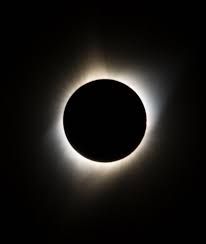
NIGHT OF THE ECLIPSE

That night a shadow spread over the
Moon's face.
The moon, heavy in its
Pain of loss became red
And shed scarlet tears
On the nocturnal earth caught in a
Warm vaporous net.

The shadow lengthened down to
A morning full of rain and river
And the waves screaming a vow
To drag the fields into
Coffins of sand even while
They still breathed in green.

The morning after,
No sun peeped through the clouds of east.
No music dropped from the wind
Or the drowsy trees.

The green lay inert in its grave
And rotted.
Dreams rotted too, eaten away
By worms swarming in grey abandon.

The shadow swallowed everything
Like a desert, like an ocean,
Like the endlessly expanding time.

Everything, like the moon
went inside the dark, crippling net.
The sparkle in a thousand pairs of eyes
sank in the shadow of the river
In a permanent eclipse.

From Public Domain

Snehaprava Das is an academic, translator and writer. She has multiple translations, three collections of stories and five anthologies of poetry to her credit. She has been published in Indian Literature, Oxford University Press, Speaking Tiger, Penguin and Black Eagle Books.

.

PLEASE NOTE: ARTICLES CAN ONLY BE REPRODUCED IN OTHER SITES WITH DUE ACKNOWLEDGEMENT TO BORDERLESS JOURNAL. 

Click here to access the Borderless anthology, Monalisa No Longer Smiles

Click here to access Monalisa No Longer Smiles on Kindle Amazon International
Categories
Poetry

Expletive by Jyotish Chalil Gopinath

EXPLETIVE

The word arrives in my inbox
screaming,
steam rising from its sizzling,
alone,
answering
a simple question.
May I send you a poem?
or simply
May I?

An all-caps no.

You do wield
your expletives
well.

But I do too.
I reply —
Thank you.

Jyotish Chalil Gopinathan is a nephrologist residing in Kozhikode, India. His poems have been published in several online journals including Muse India, Borderless Journal, Poems India, Madras Courier, The Punch Magazine, Annals of Internal Medicine, Ethos Literary Journal, Plato’s Cave Online, and The Chakkar. In August 2025 Hawakal published his second collection of poems, Almanac of the Sickle Moon.

.

PLEASE NOTE: ARTICLES CAN ONLY BE REPRODUCED IN OTHER SITES WITH DUE ACKNOWLEDGEMENT TO BORDERLESS JOURNAL

Click here to access the Borderless anthology, Monalisa No Longer Smiles

Click here to access Monalisa No Longer Smiles on Amazon International