Here is my son, as a toddler, an ice cream cone in one hand, the other signing “peace.” Here is my daughter at five, posing in front of the Inland Sea, two fingers held up in the air. Here is my son, aged ten, sitting on a park bench in Charleston, South Carolina. Peace!
From pretty much the time that my Japanese-born children learned to say “cheese,” whenever they’ve found themselves in the presence of a camera, they stuck up two fingers in a “V.” Pick up any family photo from our children’s first ten years, and you’ll find someone making this gesture.
It drove my American parents crazy. “Be natural,” they’d say. “Don’t do that!” Candid shots were nearly impossible because as soon as my kids realised they were about to be photographed, those two fingers went up in the air.
My children were not exceptions, of course. I first noticed this practice when I arrived in Japan over thirty years ago. I have a drawer full of photos of myself and various Japanese kids making the sign. Me, I sometimes did it ironically. For Japanese youth, it seemed to be a Pavlovian response.
It hadn’t always been this way. An older Japanese woman friend told me that when she was a child, no one made a “V” when having their picture taken. She lamented that her own children had picked up the same habit, that her daughter signed “peace” even in her wedding photos. When I asked her how it all got started, she couldn’t tell me. However, theories abound.
According to one source, the trend originated in a baseball manga. A character made the “V” for Victory sign in imitation of Winston Churchill. The gesture caught on, and remains.
One of my foreign friends, hoping to break her kids of the tendency, refused to take their picture if they were making the sign. I was not quite so strict. The peace sign may, in fact, be the Japanese equivalent of the smile. In the United States, whenever someone has their picture taken, the photographer tries to get a grin out of them. I’m sure that many of us have faked a smile in order to comply with custom. I certainly have.
Here in Japan, however, smiling for the camera is relatively new. Back in the day, only the very vulgar would show their teeth. In school and other formal photos, gravitas is seemingly required. Thus, in the group portrait taken at my own wedding, the Japanese guests wear poker faces, better suited to a court date. My American relatives are all smiles, though their posed grins may be frozen in place. No one, I might add, is making the peace sign. My husband and I got married in Hawaii, so everyone’s hands are raised with pinkie and thumb extended, a gesture that means “hang loose” in the islands. Shaka shaka.
These days, thanks to the influence of K-pop artists in Japan, people posing for photos are likely to use another gesture. At a recent party celebrating graduating students at the university where I teach, we all got into formation.
“What should we do?” one professor asked. “Peace signs?”
“How about K-pop hearts?” I suggested. The others agreed. We touched our thumbs and index fingers, forming hearts. The picture was taken.
Suzanne Kamatawas born and raised in Grand Haven, Michigan. She now lives in Japan with her husband and two children. Her short stories, essays, articles and book reviews have appeared in over 100 publications. Her work has been nominated for the Pushcart Prize five times, and received a Special Mention in 2006. She is also a two-time winner of the All Nippon Airways/Wingspan Fiction Contest, winner of the Paris Book Festival, and winner of a SCBWI Magazine Merit Award.
PLEASE NOTE: ARTICLES CAN ONLY BE REPRODUCED IN OTHER SITES WITH DUE ACKNOWLEDGEMENT TO BORDERLESS JOURNAL
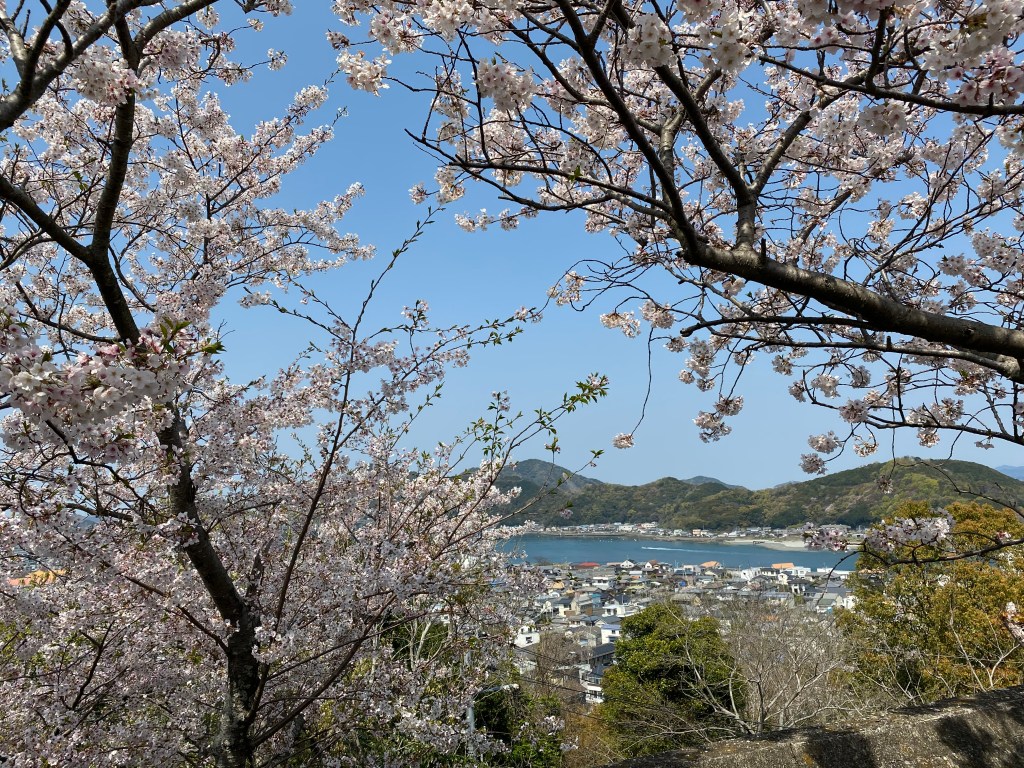
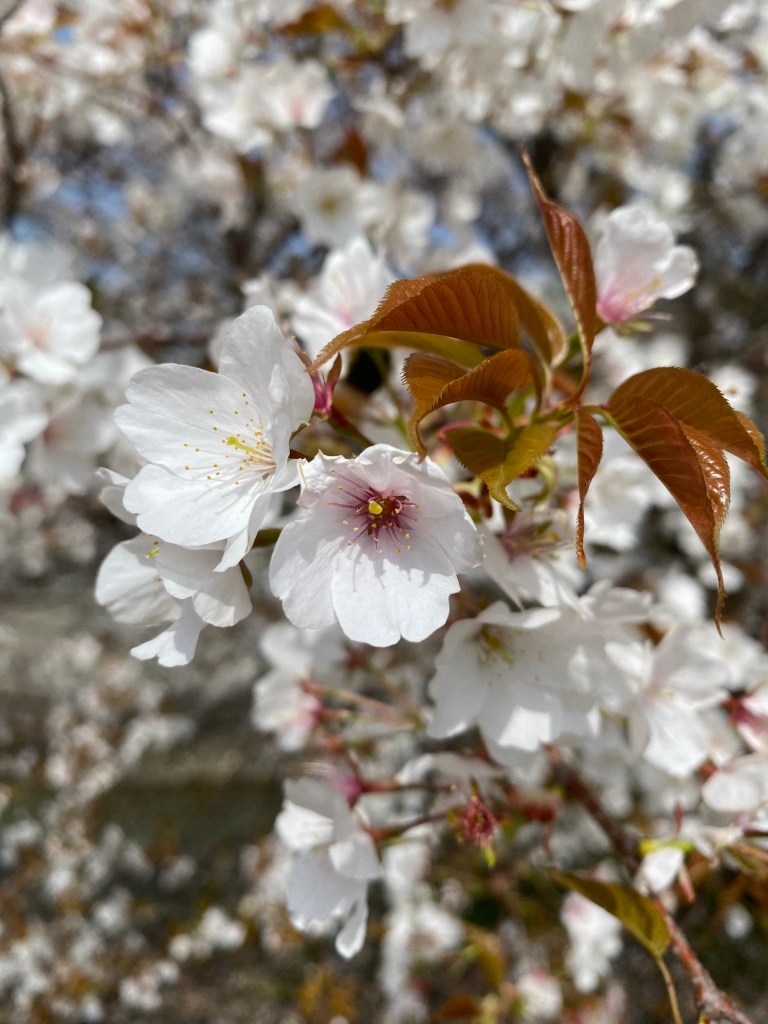
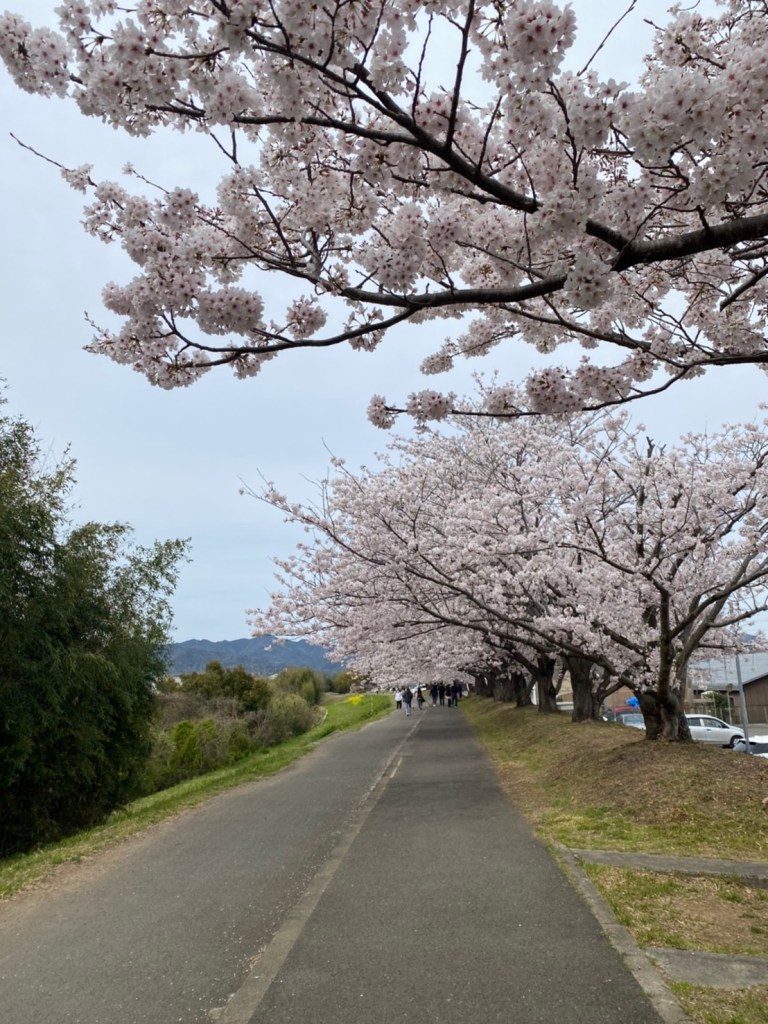
As I write this, the cherry trees on the campus of the university where I work are adorned with deep pink blossoms. There are several varieties of sakura, which bloom at different times. The earliest are the Kawazukura-zakura, which blossom as early as February in some parts of Japan. In a couple of weeks, the more commonly known frothy pale pink flowers of the Somei Yoshino will be seen. Usually, this timed to perfectly coincide with graduation ceremonies, and opening ceremonies welcoming new students. Every speech seems to begin with a mention of the ephemeral blooms.
Another kind, the Shidare-zakura (weeping sakura), is often found in traditional Japanese gardens. There used to be a Shidare-zakura across the street from my house. I enjoyed seeing the flowers, garlands swaying in the breeze, but, unfortunately, the owner of the property cut the tree down
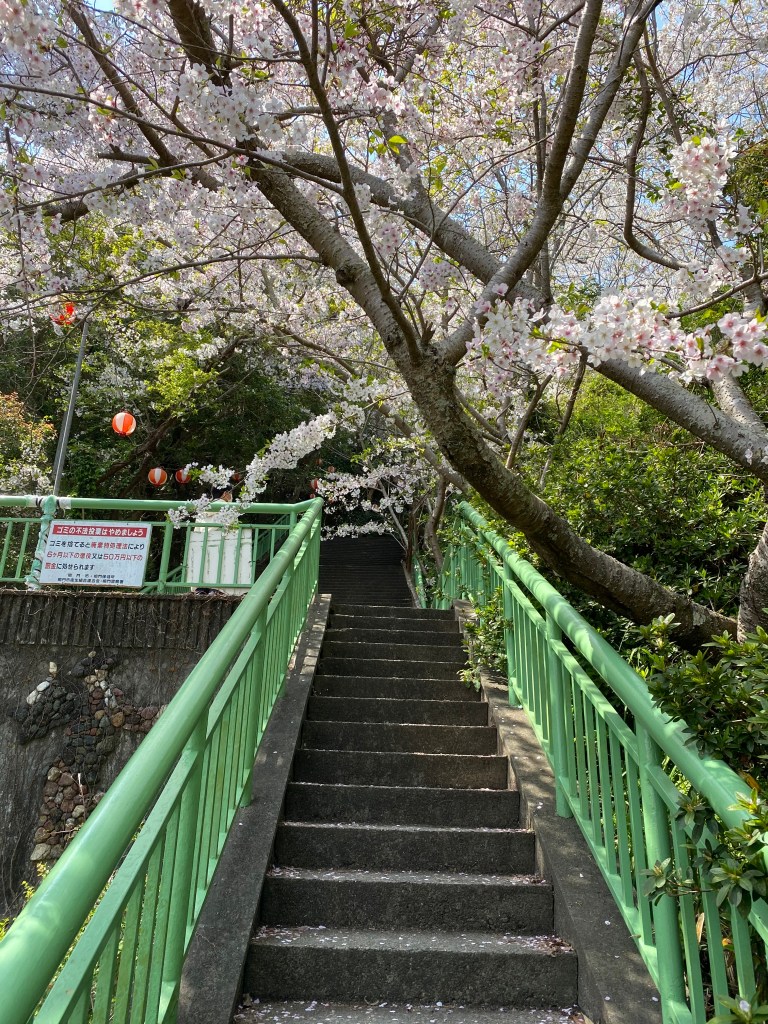
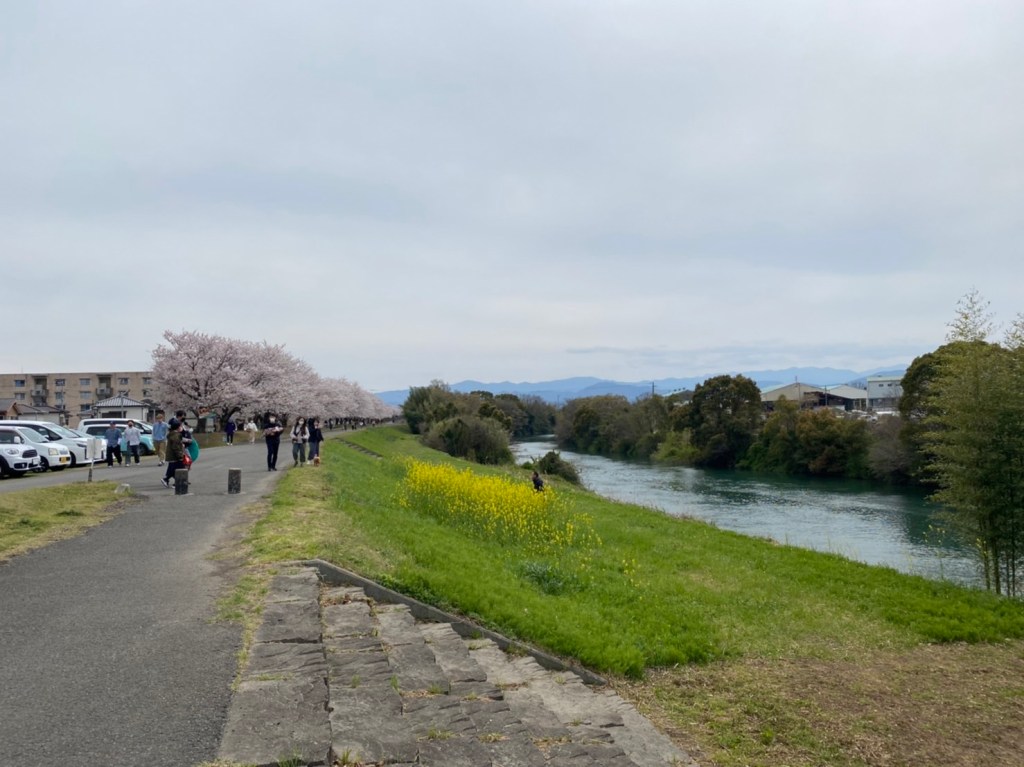
My family and I used to make at least one outing each spring to roam among the cherry blossoms. Now, it’s just my husband and me, but as I previous years, we will probably visit a park or mountainside, transformed into a fairytale landscape, and take selfies while pondering the impermanence of youth and beauty.
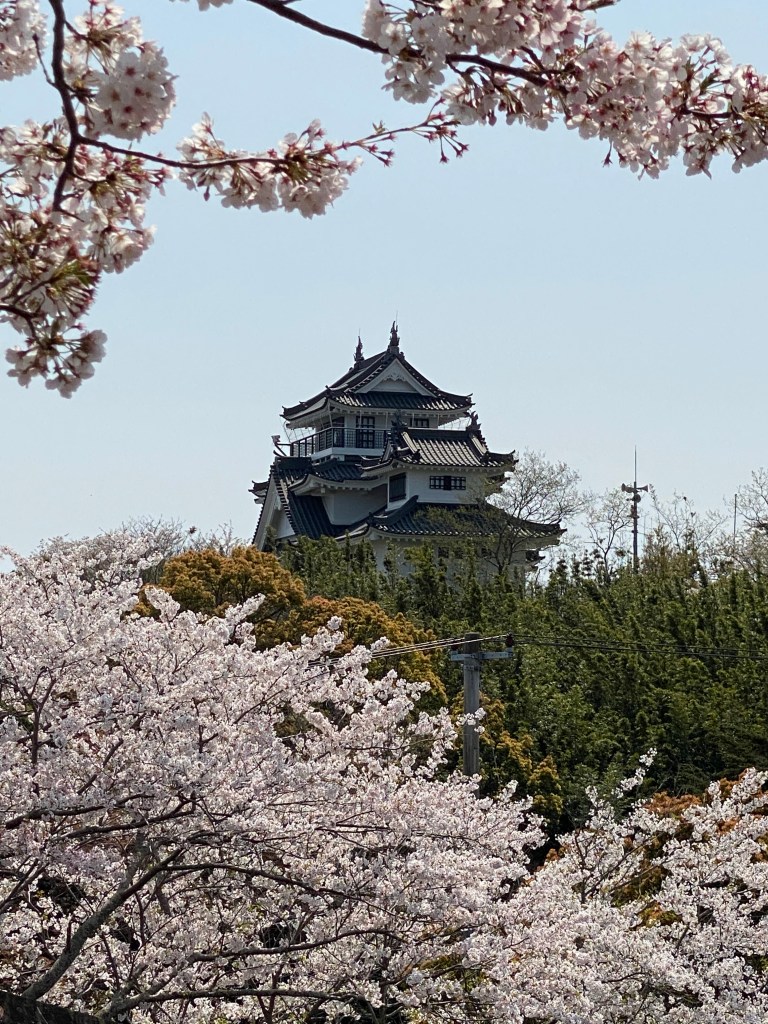
Many people will gather on blue tarp spread under boughs to partake of lavish boxed lunches and drink beer. The park surrounding the former grounds of Tokushima Castle will be thronged with merrymakers. During the pandemic, Hanami (cherry-blossom-viewing) was frowned upon. At that time, the park was eerily vacant. I imagine that for many Japanese, not being able to participate in this traditional event was one of the greatest hardships of 2020-22.
In February, TV announcers are newspapers begin to forecast the passage of blossoms across the peninsula. It goes something like this:
In northern Japan, snowflakes flutter and fall. Winter hangs on.
Cherry tree twigs stick out of bare branches like witchy fingers.
Every year meteorologists predict the appearance of cherry blossoms.
How do they know when the buds will release their blooms?
Well, from March, once a day, sometimes twice, someone checks on 58 designated barometer trees. One is near Yasukuni Shrine in Tokyo. Most people don’t know where the rest of the trees are. It’s a secret!
People from all over Japan send in photos of cherry blossom buds. Team cherry blossom examines all the photos and tracks the progress of the trees.
Tightly clenched buds mean it may be another month.
About ten days later, the tips change color – yellow-green.
And then, a deeper darker green, like moss in a forest.
When the tips become pink, get ready for cherry blossom viewing.
After five or six blossoms have appeared, the Meteorological Agency announces the start of the cherry blossom season.
In Kyushu, cherry trees may bloom in March. Gradually, buds open, releasing frothy flowers all the way up to Hokkaido, in a wave of pink and white.
Cherry blossom petals flutter and fall.
Suzanne Kamatawas born and raised in Grand Haven, Michigan. She now lives in Japan with her husband and two children. Her short stories, essays, articles and book reviews have appeared in over 100 publications. Her work has been nominated for the Pushcart Prize five times, and received a Special Mention in 2006. She is also a two-time winner of the All Nippon Airways/Wingspan Fiction Contest, winner of the Paris Book Festival, and winner of a SCBWI Magazine Merit Award.
PLEASE NOTE: ARTICLES CAN ONLY BE REPRODUCED IN OTHER SITES WITH DUE ACKNOWLEDGEMENT TO BORDERLESS JOURNAL
I was already living in Japan when Taylor Swift was born, so she was never part of my American cultural experience. I didn’t hear her songs on the radio, didn’t see her face on the cover of magazines, and because I never clicked on links about her, she never entered my online bubble.
I had a vague awareness that she was a Country and Western singer, but I’d always been more inclined to listen to “alternative” music (Kate Bush, Siouxsie Sioux, Sinead O’Connor, Bjork, and so on).
At some point, my students at a small teacher’s college in Western Japan began to mention her as their favourite singer in their self-introductions. When they asked me what musicians I liked, I struggled to come up with someone they had heard of. Finding a favorite Taylor Swift song seemed like a good way to connect.
I learned a little bit more about her: she enjoys baking and knitting; she loves cats. Every time she visits a city, its economy improves. She gives generous bonuses to the people who work for her and supports LGBTQI rights. She has inspired girls all over the world. She seems like a genuinely nice person.
My son listened to her music, and after he shared one of his playlists with me, I had “We Are Never Ever Getting Back Together” on my phone. I liked it. It was catchy and relatable, easy to sing along to. But I didn’t really become a fan until she released Folklore during the pandemic. A friend whose musical taste I trusted raved about it on Facebook, so I downloaded the album. I listened to it as I drove to my office where I sat alone at my desk all day, uploading material for virtual classes. I became enamored with her storytelling, evident in songs such as “Betty,” about a teenage love triangle, and “The Last Great American Dynasty,” which exudes Great Gatsby vibes.
Last July, I learned that Taylor Swift would be performing four shows in Tokyo. A lottery would determine who would get tickets. I had never been to a big concert in an arena—well, not since I saw the Bee Gees in Detroit, when I was in junior high school, and that was before artists began incorporating mapping and other bells and whistles. I thought it would be fun. An extravaganza. I asked my husband if he wanted to go to a Taylor Swift concert with me.
“There’s no way you’ll be able to get tickets,” he said.
I entered the lottery anyway. Lo and behold, I “won” two tickets for Thursday, February 8, the second of four shows. As the date was months away, I didn’t count on anything. A lot could happen. And it did!
A week before the concert, I got an emergency text from my sister-in-law telling me that my elderly mother had fallen down and broken her hip. She was in the hospital, about to have surgery. The last time something like that had happened (to my father), I had rushed back to America. But my dad told me that everything was under control, and my mother made it through surgery without any complications, so I decided to put off my return home.
Then, three days before the start of the concerts, a rare snowstorm hit Tokyo, shutting down transportation. Since my husband and I live in distant Shikoku, we were planning to take a plane on the day of the show, arriving just a few hours in advance. If the snow continued, we wouldn’t make it.
“It’ll melt,” my husband assured me.
He was right. By Thursday, most of the snow was gone.
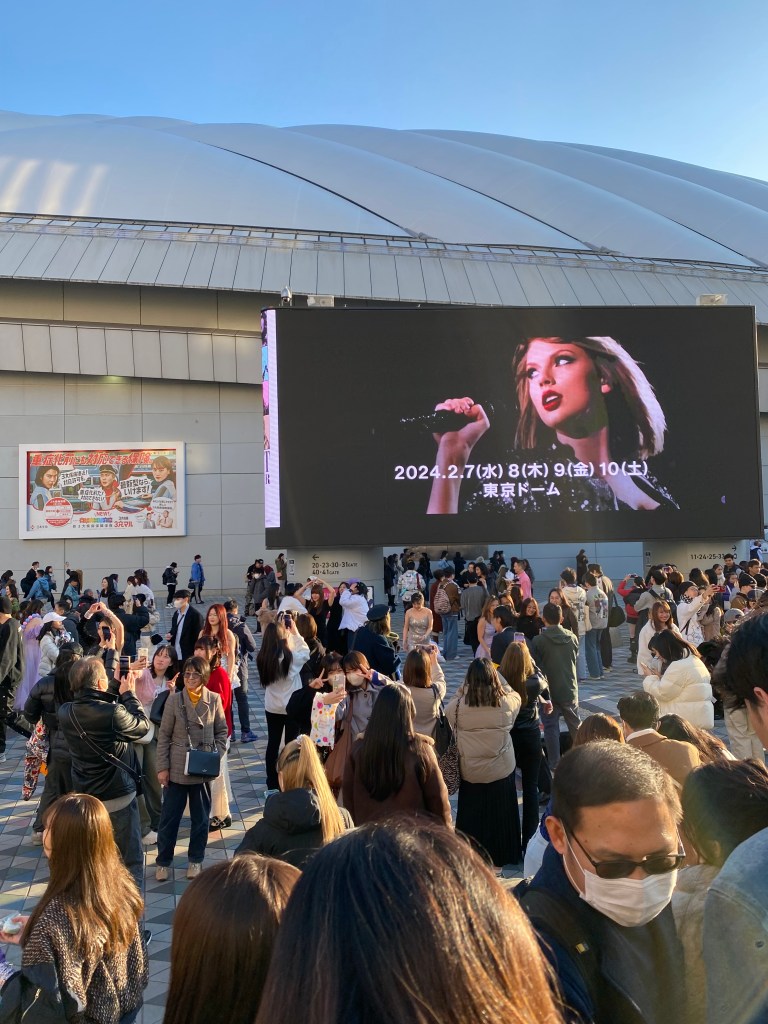
We made it to Haneda Airport, checked into our hotel in Ueno, had some sushi, and took the train to Tokyo Dome. Two hours before start time, a crowd had already gathered. Young women in spangled dresses, tiaras, and cowgirl hats, speaking various languages, posed for photos and exchanged friendship bracelets. Hundreds of people were queued up to buy merchandise related to the Eras Tour. Although my husband and I waited in line for almost an hour, when it became clear that we risked missing the beginning of the performance, we left and went to find our seats, which were high up in the rafters.
Slowly, the seats began to fill. By the time the lights dimmed, the place was packed. The music began, and dancers came onto the stage holding what looked like Japanese fans. Cheers surged. To my left, an earnest young woman, who was apparently attending alone, recorded nearly the entire show on her phone. A white-haired Japanese man, also on his own, sat just in front of me. Several young women in short dresses stood behind us, singing and dancing along to the songs that they knew. Whenever Taylor disappeared for a set or costume change, they would squeal in delight at her reappearance on stage: “Yabai, yabai, yabai[1]!”
For three hours and twenty minutes, as Taylor went through her set of 47 songs, ranging across her career, the arena was filled with joy.
Occasionally, my husband would lean over and ask, “Do you know this one?”
I confess that I didn’t know all of the songs—especially those from her early albums. I danced along anyway.
After the concert, my social media feeds were abuzz with reactions from other friends who had been there, or who’d attended the performance the night before. It felt as we had been part of something huge—and happy.
Meanwhile, back in the United States, rumors were circulating that Taylor Swift was part of some Deep State government plot to re-elect President Joe Biden in November. NFL fans were complaining that she got too much onscreen attention when she attended her boyfriend’s games (to cheer him on). Others slut-shamed her for having had too many boyfriends or attacked her for polluting with her private plane.
I was glad that none of that vitriol had reached Japan.
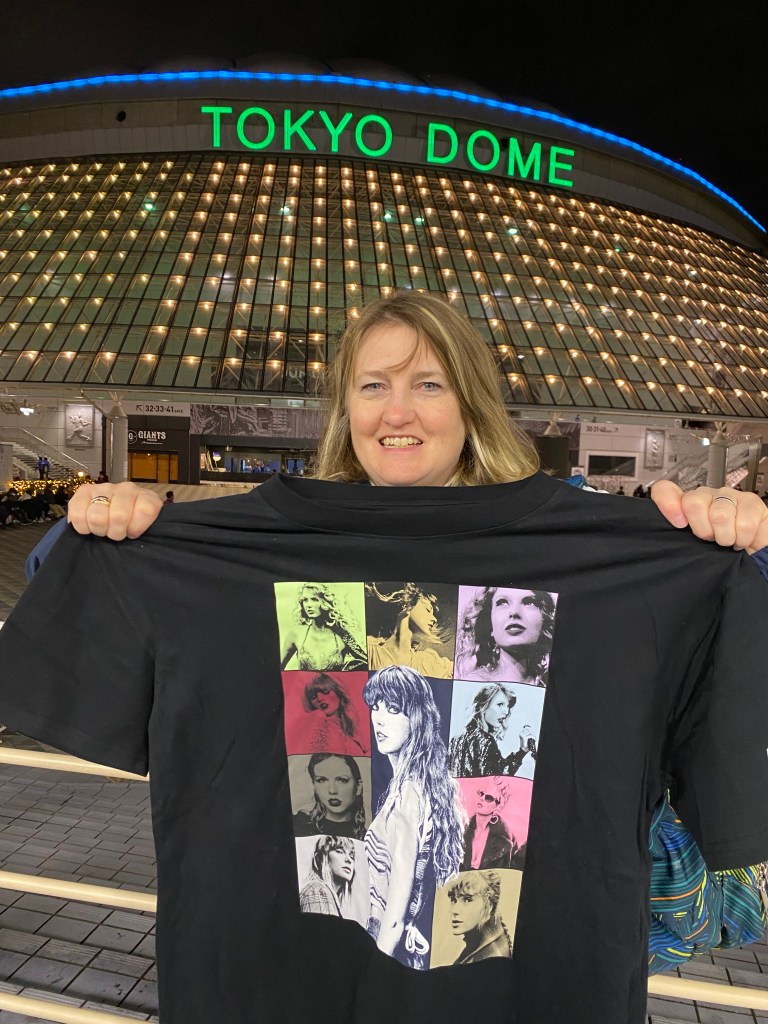
My husband and I went back to Tokyo Dome the next evening, during the concert, to buy T-shirts. At that time, the line for merchandise was blessedly short. We saw people sitting on benches outside the arena, or with their ears pressed to the walls, taking in as much as they could. It was strangely moving.
When I got back home, I downloaded two more of her albums. I’ve been listening to them non-stop ever since.
Suzanne Kamatawas born and raised in Grand Haven, Michigan. She now lives in Japan with her husband and two children. Her short stories, essays, articles and book reviews have appeared in over 100 publications. Her work has been nominated for the Pushcart Prize five times, and received a Special Mention in 2006. She is also a two-time winner of the All Nippon Airways/Wingspan Fiction Contest, winner of the Paris Book Festival, and winner of a SCBWI Magazine Merit Award.
PLEASE NOTE: ARTICLES CAN ONLY BE REPRODUCED IN OTHER SITES WITH DUE ACKNOWLEDGEMENT TO BORDERLESS JOURNAL
Unlike the rowdy reveling in my native US, the New Year’s holiday in Japan is usually a solemn and sedate affair, spent quietly with family. Usually, schools and businesses allow a holiday of a few days.
My adult children had returned home from Kyoto and Tokyo, and we enjoyed an American holiday meal complete with roast chicken, mashed potatoes, lemon-flavored squash, and cranberry sauce. The next day, New Year’s Eve, we started in on the o-sechi ryori, the food traditionally eaten on January 1, and the following days. In the past, the woman of the house spent days preparing these special foods, each with a particular meaning. For example, fish eggs are meant to encourage fertility, and sweetened black beans signify good health. The food is beautifully arranged in lacquer boxes.
In our family, my Japanese husband has been in charge of the New Year’s cooking in recent years, sometimes with help from our children. This year, however, we opted to buy already-made o-sechi ryori. We gathered at the table and sampled the various delicacies, then watched a music competition show on TV — another traditional Japanese activity. All across Japan, many other families were doing the same.
According to the Chinese zodiac, 2024 is the year of the wood dragon. In dragon years, it is said that people can harness the creature’s powers to unleash creativity, passion, courage and confidence. It is thought to be the ideal time to achieve one’s dreams, a time of hope and opportunity.
The aftermath of Noto Peninsula Earthquake in Japan that struck on 1st January 2024
My family and I awoke on January 1st, feeling renewed and refreshed, ready to continue pursuing our dreams. However, our moods changed when an earthquake occurred that afternoon in Ishikawa Prefecture. TV broadcasts were interrupted by frantic voices telling those in the affected area to evacuate immediately and to take cover. All across Japan, we were reminded of the devastating earthquake and tsunami of the Great East Japan Earthquake on March 11, 2011 which claimed nearly 20,000 souls (with many more remaining missing). I remembered, as well, being shaken awake in our fifth-floor apartment by the Great Hanshin Earthquake of January 17, 1995, during which 6,434 people were killed.
Although the loss of life in Ishikawa (still being tallied as I write this) has not been quite so severe, the devastation displayed on TV, in newspapers, and online is heartbreaking. We have heard of middle-aged parents who lost their two daughters who were home for the holidays, of thousands whose home were reduced to rubble, of hundreds of people in an evacuation center with only two toilets. The day after the initial earthquake, a Japan Airlines plane crashed into a smaller Coast Guard plane on the runway at Haneda airport. The latter was preparing to carry supplies to earthquake victims in Ishikawa. Again, my family was glued to the TV, unable to look away as the jet burned to the ground. We were relieved to learn that all crew and passengers escaped from the plane, but saddened by the deaths of five Coast Guard members who were seeking to help others.
Plane crash on January 2nd, 2024 in Tokyo
The foreign media often celebrates the resilience of the Japanese people: all those earthquakes and landslides and floods, and still they get on with their lives! However, Japan ranks only 54th on the 2022 Happiness Report, and suicide is the leading cause of death for men between the ages of 20-44 and women 15-34. The Japan Times reported in 2019 that according to a survey conducted by The Policy Institute and King’s College, London, only 24% of respondents in Japan agreed that “seeing a mental health professional is a sign of strength.”
Two of the first expressions that I learned when I first came to Japan were, “gaman wo suru” (“be patient”/ “endure”) and “shikata ga nai” (“it can’t be helped”). I came to understand that many Japanese have a sense of fatalism and helplessness, which might account for the general malaise in spite of Japan being a safe, peaceful, prosperous, orderly country with an excellent education system and exemplary healthcare.
During this past week, however, I have also been reflecting upon the changes wrought in response to disasters. After the 1995 earthquake in Kobe, schools stepped up their earthquake drills, and a disaster prevention center was established in our town. The school my daughter attended held a workshop on how to make dishes out of newspapers in the event of a disaster and began holding “disaster camps” simulating evacuation centers in the summer. Neighbourhood-wide disaster drills also increased, and signs were put up indicating sea levels and designated evacuation centers. Although it has been reported that evacuation centers in Ishikawa do not support those with disabilities, at least there is now an awareness of what needs to be changed.
Earthquakes and other natural disasters are unavoidable, but I admire the effort that the Japanese people put into mitigating their effects. My hope is that more and more people here will begin to understand that it is okay to cry, to mourn, to grieve, and to talk about our suffering. My wish for the Japanese people in the new year is happiness and the achievement of dreams.
Suzanne Kamatawas born and raised in Grand Haven, Michigan. She now lives in Japan with her husband and two children. Her short stories, essays, articles and book reviews have appeared in over 100 publications. Her work has been nominated for the Pushcart Prize five times, and received a Special Mention in 2006. She is also a two-time winner of the All Nippon Airways/Wingspan Fiction Contest, winner of the Paris Book Festival, and winner of a SCBWI Magazine Merit Award.
PLEASE NOTE: ARTICLES CAN ONLY BE REPRODUCED IN OTHER SITES WITH DUE ACKNOWLEDGEMENT TO BORDERLESS JOURNAL
                        even in Kyoto

                     I long for Kyoto—

                          cuckoo!

               --Matsuo Basho (1644-94)*
My story begins at Kyoto Station, where I alight after a three-hour bus ride. I am on my way to meet my friend Yoko for dinner in the Kitayama area, and a drink at the Kyoto Hotel Roku. She and I once worked together at the same university in Naruto, but now she is an associate professor at a small women’s college in Kyoto. I head underground, through the Porta shopping center, and get on a subway bound for Kokusaikan. In spite of the crowds up above, the train allows for elbow room, and I easily find a seat. Most of the passengers are glued to their phones, some are masked. My eyes flit to an advertisement for a display of kimono. After several stops, I get off at Kitayama and find Yoko waiting at the wicket. We have a spaghetti dinner at a nearby restaurant, and then hail a taxi via Didi, Japan’s answer to Uber.
The taxi takes us through an upscale residential area featuring traditional homes. Yoko tells me that we are near Bukkyo University, originally an institution of research for monks, but now a university grounded in Pure Land Buddhism offering degrees in a variety of subjects including English, nursing, and social welfare. We are also not too far from my favorite temple, Kinkakuji. One of the first novels that I read upon arriving in Japan was Yukio Mishima’s TheTemple of the Golden Pavilion, translated by Ivan Morris, about a deranged monk-in-training who set fire to the gilded temple and burned it down. Surprisingly, none of the visitors from abroad that I have taken to this temple had ever heard of this 1950 incident or the book.
The driver turns down a long driveway and drops us off at the hotel entrance. “Nice hotel!” he says.
I resist the urge to defend our extravagance, to say we are just here for a drink, and then the next day for lunch. I have been commissioned to write an article about the hotel, but I can’t afford to spend the night.
The Roku Kyoto, which opened in September of 2021 when Japan was off limits to foreign tourists, is one of eight of LXR luxury properties worldwide, and Hilton’s first in Kyoto. (Others include The Biltmore, Mayfair in the United Kingdom, and the Mango House in the Seychelles.) Along with a tranquil, storied setting (in the 16th century, it was a community for artists and artisans), the hotel offers bespoke experiences, such as a session of kintsugi with a local master of the craft, using cracked hotel pottery, and traditional papermaking using water from the Tenjin River, which runs through the hotel grounds. Guests can also opt for a New Year’s Eve package including a two-night stay, and a viewing of the sunrise over Mt. Fuji via private plane at a cost of \4,800,000. Nevertheless, the hotel strives to be a place where local residents can come for escape and enjoyment as well as high-flying tourists.
We are greeted warmly at the entrance and shown to the dimly lit bar. Walking along the basin at the center of the hotel complex, I take in the reflection of the full moon on the water. I feel like we should be writing haiku. The veranda would be the perfect setting for filming a period drama.
Resturant in TemujinEngawa: Non-tatami matted flooring Photos Provided by Suzanne Kamata
The day before, I had tried and failed to make a reservation, and assumed that the restaurant was fully booked. However, after verifying that we could drop in for a drink or a cup of coffee without notice, we decided to go ahead with our plans. As it turns out, we are the only ones in the bar at a little after eight.
A small lamp is placed on our table, and the bartender brings us a menu bound in leather. I had been planning on having the Hana-monogatari (flower story) cocktail made from seasonal herbs and flowers from the hotel garden, but the Pear Moscow Mule sounds irresistible. Yoko selects the Frozen Rum Chai, made with amazake (sweet sake). We also order a plate of chocolates.
Ambient music plays softly in the background as we catch up on gossip about former colleagues and update each other on current research projects. We speak softly in the hushed atmosphere which is broken only by the sound of a cocktail shaker behind the bar.
Our drinks arrive with paper straws. Mine has a slice of Asian pear hooked over the edge. The fruit changes by the season, I am told. I take a sip, taste a hint of lime with the kick of ginger: delicious.
“Mmmmm. This is so good,” Yoko says of her drink. We negotiate over the assorted chocolates, which are filled with raspberry and orange peels, among other things. Yoko lets me have the piece topped with gold.
Later, a couple more small groups enter the bar, but the area is spacious. Our privacy remains intact. We talk a bit more, finish our drinks, and agree about where to meet for lunch the next day.
Late the following morning, I take the same route from a bargain hotel near Kyoto Station, weaving between young women in yukata and a foreigner with brightly dyed, intricately braided hair, and get off at Kitayama. This time, as I emerge from underground, I take note of the electronic cuckoo sound chirping from a speaker, and I recall Basho’s famous poem about longing for Kyoto. Nearly 400 years after it was written, I imagine that the poem evokes the same emotion – a longing for the city in days of yore.
I have visited Kyoto many times since I first arrived in Japan. On the first, when I was just beginning to learn Japanese and still didn’t know quite what was going on, I spent the night at the residence where the previous Empress was trained in housekeeping, a rite of passage even for aristocratic girls. As I mentioned, I was partially motivated to come to Japan because of literature, namely the Heian court poetry that I learned about from a class in Asian history. I was enthralled with the idea of courtiers communicating via verse, and as a newly heartbroken nineteen-year-old, I identified with the intense longing in poems by Murasaki Shikibu and Ono no Komachi. Later, I read a novel set in Kyoto –Ransom, by Jay McInerney. What I remembered most about it was the funny Japlish phrases and scenes of karaoke, still a novelty in America in 1985. Flipping through it more recently, I came across this description of the Kamogawa (Duck River):
“From its source the river drained fields and paddies heavily fertilized with petrochemicals and manure. Closer in, the Kyoto silk dyers dumped their rinse tanks. The white herons that fished the shallows had purple plumage one day, green the next—weeks in advance of the women who brought the kimono silk in the shops downtown.”
Can this book really be what made me want to come to Japan? And yet, I also recall being attracted by the cuteness and kitsch, the Disney meets sci-fi vibe prevalent in Bubble Era Japan implied in, for example, Ridley Scott’s film Bladerunner. In any case, nostalgia sometimes leaves out the worst, and things seem to have changed for the better. As we cross the Kamogawa in another taxi, this time by daylight, I see no evidence of pollution.
“There are tons of ducks on the river,” Yoko says. “And ibises.”
“It’s famous.” I have come across many references to it in literature.
We arrive at the hotel a bit early for our noon lunch reservation, so we are shown to a large room with sofas and chairs, where we can drink tea or coffee while we wait. We choose to sit next to a window which looks out onto the basins. The blue sky, the changing leaves, and the still water create a calming tableau.
“I feel like my mind and brain are being purified,” Yoko says.
No other guests are around, and I wonder how many of the hotel’s 114 rooms are currently occupied. Perhaps everyone has already left the hotel for sightseeing.
A strip of moss runs parallel to the basin.
“It’s of better quality than the moss at Kokedera,” Yoko says, referring to another famous nearby temple renowned for its moss garden. “And you have to make a reservation a month in advance and pay \3,000 to visit!”
I write down her words, never having reflected upon the quality of moss before.
“You’d better write ‘as good as,’” she amends, suddenly aware of her sacrilege.
Finally, a gray-haired Japanese woman in a kimono emerges from the hotel and traverses the walkway between the two basins. A few minutes later, I see a Western woman with long brown hair pushing a baby in a stroller. And then a little later, a child wearing a fox mask, saunters across the walkway, slashing the air with a toy sword.
“He must have gone to Fushimi Inari Shrine,” Yoko says, referring to the popular tourist attraction known for its Instagram-worthy red torii gates.
Moss. Photo Provided by Suzanne Kamata
Just before twelve, we make our way to the restaurant, where we are shown to a table. The Japanese host/sommelier, suggests that we both sit on the same side, facing the window which provides a view of the fall foliage. He brings us the menu, and wine list.
I have already decided that I am having the wagyu burger. A glass of robust red wine would probably suit it best, but I am intrigued by the locally produced orange wine, which I’m told is comparable to a rose. Yoko asks the sommelier a lot of questions. Her partner works in wine in California, so she has visited many vineyards.
“It’s nice to talk to someone who knows so much about wine,” he says.
One of our two code-switching servers, both, as it turns out, from Nepal, pours a swallow of the orange wine into a glass for Yoko. She tastes it, but decides upon the sparkling plum wine, and the lunch course.
My image of plum wine comes from the syrupy homemade stuff we’d once received from my husband’s relative. “For when you have a cold,” she’d said. But this wine is something else – fruity, but light, and effervescent. Yoko asks where she can buy a bottle of it.
The sommelier explains that the hotel’s wines come from the nearby Tamba Winery, which is open to the public for tastings in the fall. It’s a short drive from where we are now. Their wines sell out quickly just in Kyoto and are mainly used by restaurants.
Yoko’s first course is pesto-dipped scallops submerged in vichyssoise made with white beans. She invites me to taste it. I dip my spoon into the shallow bowl. The bright green of the basil is a surprising delight. There is a bit of a crunch.
“What is that crunchy thing?” I ask our server. “And what kind of flower is that?”
“Just a moment,” he says, and ducks away to find out.
The answer: croutons, and linaria.
I am almost regretting that I didn’t choose the lunch course as well, but then my burger arrives, along with a generous serving of fries, and I am glad that I skipped breakfast. I probably won’t need dinner, either.
I’d imagined that all wagyu was from Kobe, but the host tells us that it’s Kyoto beef.
Yoko’s second course is marinated salmon with spinach, potatoes, onion, and amaranth flowers. The server spoons duck sauce around it.
“Is there a lot of duck cuisine in Kyoto?” I ask Yoko, my mind going to the Kamogawa.
“Yes,” she says, “But I don’t think the ducks are from the river.”
Lastly, we have dessert—a fig cradled in a chocolate shell, topped with a dollop of cassis ice cream. The plate is painted with sauces. It is exquisite to both eyes and tongue.
Before leaving the property, we stroll around the grounds taking in the lawn where morning yoga and meditation are held, the orange tree and lavender beside the thermal pool (the peels of the former are used in footbaths at the spa), the exercise room redolent with cedar and cypress with a vista of Takagamine Mountain.
As we prepare to leave, Yoko suggests that next time, we treat ourselves to a hot stone massage in the spa, followed by afternoon tea on the veranda overlooking the stream. We can come in the winter, when there is snow frosting the mountain, for a different view. Yoko says that she might come by bicycle, and I vow to wear sneakers, so that I can walk from the station. Instead of longing for the past, we look to the future.
*This translation is from Kyoto: A Literary Guide (Camphor Press, 2020), translated, collated, and edited by John Dougill, Paul Carty, Joe Cronin, Itsuyo Higashinaka, Michael Lambe, and David McCullough.
Suzanne Kamatawas born and raised in Grand Haven, Michigan. She now lives in Japan with her husband and two children. Her short stories, essays, articles and book reviews have appeared in over 100 publications. Her work has been nominated for the Pushcart Prize five times, and received a Special Mention in 2006. She is also a two-time winner of the All Nippon Airways/Wingspan Fiction Contest, winner of the Paris Book Festival, and winner of a SCBWI Magazine Merit Award.
PLEASE NOTE: ARTICLES CAN ONLY BE REPRODUCED IN OTHER SITES WITH DUE ACKNOWLEDGEMENT TO BORDERLESS JOURNAL
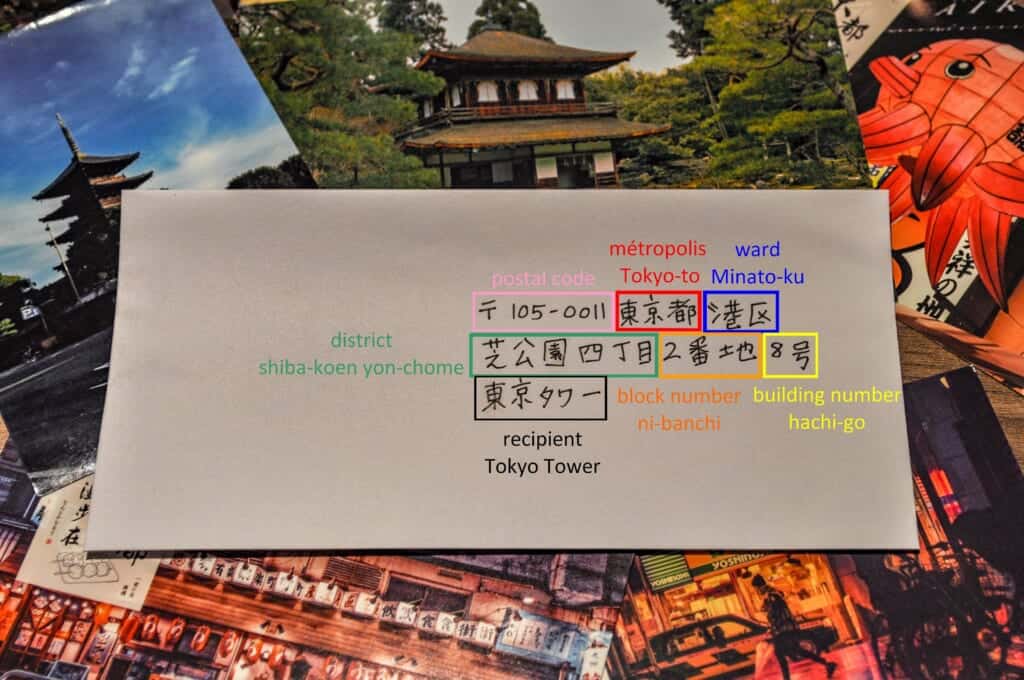
I can still remember the address of my childhood home – the house number on North Shore Road in Spring Lake, Michigan, and the five digit zip code. Short, but sweet. Here in Japan, where I’ve lived for the past twenty three years, I’ve had four different addresses, each seemingly longer than the last. I can hardly remember how to write the location of my current domicile, let alone the complicated addresses of apartments past.
Given the chance to win a bag of rice or a free trip at my local supermarket lottery, I would rather pass than take up a pen. My hand starts to cramp as soon as I see a form to fill out. At the bank, in a doctor’s office, or when having to write in the corner of an envelope, I tend to recoil. It takes such a long time to jot down my address.
Written in the Japanese style, which dates back to the Meiji Period, my address starts out with the name of the prefecture, in this case, Tokushima, followed by the county name, the name of my town, the district, and eventually narrows down to a house number. The house numbers, however, are not in sequential order, but from oldest to newest. Our street, like most in Japan, doesn’t have a name.
Postal workers seem to be the only ones to whom addresses here have any meaning, and, to their credit, they generally get mail to the right place. When I first came to this country, however, I hardly ever got letters from my friends and relatives in America. My grandma, one of my most reliable correspondents, refused to write to me unless I sent her address labels. My address was simply too long for her to write. An editor once informed me that I had the most complicated address she’d ever seen in her life.
Cab drivers, on the other hand, can never find my house. I usually advise guests coming by taxi to get dropped off at the neighbourhood grocery store, and I go to meet them on foot. Not even satellites seem to be much help. Although most every year we are required to draw a detailed map from our children’s schools to our house to enable teachers to find us for the annual home visit, one teacher tried to find his way using his car navigation system. I watched for his car from the window as rain poured down outside. Finally, the phone rang. He was lost. He was near a shrine, he said. Could I come and get him? I dashed out with my umbrella and found him a few streets away.
For convenience, I had name cards printed up a few years ago. Now, when someone asks for my address, I simply hand over a card or, more often than not, my email address. It’s easy to remember and I can write it in six seconds.
.
Suzanne Kamatawas born and raised in Grand Haven, Michigan. She now lives in Japan with her husband and two children. Her short stories, essays, articles and book reviews have appeared in over 100 publications. Her work has been nominated for the Pushcart Prize five times, and received a Special Mention in 2006. She is also a two-time winner of the All Nippon Airways/Wingspan Fiction Contest, winner of the Paris Book Festival, and winner of a SCBWI Magazine Merit Award.
PLEASE NOTE: ARTICLES CAN ONLY BE REPRODUCED IN OTHER SITES WITH DUE ACKNOWLEDGEMENT TO BORDERLESS JOURNAL
When I first came to Japan from America to teach English on the Japan Exchange and Teaching (JET) Program, I had no idea how popular baseball was in this country. I quickly found out, however. I was assigned to a high school in Tokushima, on the island of Shikoku to be an assistant English teacher. It was summer, and I was immediately informed that the school’s baseball team had won the regional baseball tournament. They had gone on to the National High School Baseball Summer Tournament at Koshien stadium near Osaka.
This event is on par with the Super Bowl in the United States. The games are televised, and the entire country is riveted for the duration of the tournament. Many star players go on to play professional baseball in Japan, and later maybe even in the Major League in America. Ichiro Suzuki, Yu Darvish, and Shohei Otani are just a few players who first claimed the spotlight at Koshien.
Once classes started in September, I discovered that the baseball players were immediately recognisable by their shaved heads. I often saw them practicing on the baseball diamond very early in the morning, sometimes dragging tires yoked to their shoulders as they ran. I noticed that they were respected by the teachers. Even if they fell asleep in class, the teachers didn’t try to wake them up. When they were awake, the baseball players were very polite. They had been trained to greet their elders in a loud voice, and to bow and doff their caps.
Another thing that I quickly found out was that in Japan, baseball season is basically year-round, at least up through high school. Japanese students can choose only one sport. While in the United States, coaches often cut weaker players from their teams, in Japan anyone who wants to join a team is welcome. The team becomes a community for players of different abilities. The bonds that Japanese kids form with their teammates tend to be very strong, since they spend so much time together.
My second year in Japan, I met the man who became my husband. He was a teacher, and a baseball coach. Through him, I became even more aware of what a big deal baseball was in Japan. I also acquired a lot of insider information. I started to write a novel about an American woman married to a Japanese high school baseball coach, which I called The Baseball Widow. I asked my husband many questions while I was writing the book.
We later had twins – a daughter, who is disabled, and a son, who began to play baseball in elementary school. He devoted himself to the sport throughout high school, sometimes waking up at five o’clock in the morning on weekends for out-of-town games. He never once complained. At one point, he asked me to write a baseball story. I did. I wrote the text for a children’s picture book, Playing for Papa, which was published in Spain and is now sadly out of print. I also wrote a middle grade novel, Pop Flies, Robo-pets and Other Disasters, featuring a boy in junior high school. I read the entire novel to my son, and made some changes following his advice.
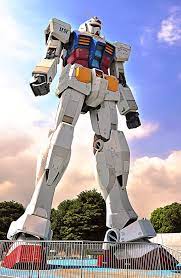
In addition to baseball, Japan is famous for its robots. Gundam is a well-known robot character, who first appeared in Japanese anime in 1979. Although many science fiction stories feature robots, they are increasingly becoming a part of daily life in Japan. This is partly because Japan’s population is decreasing. There are fewer and fewer young people to do necessary work, so machines are called upon to take up the slack.
Recently, the Japanese have developed robots which can help elderly people and others in many different ways. For example, there are robots which can help farmers pick fruit, as well as humanoid robots that can chat with people and ward off loneliness. Robot pets, like Paro (which became Mon-chan in The Baseball Widow), are also used to keep elderly people and children in hospitals company. There are special cafes staffed entirely by robots, including at least one at which the robots are controlled by people with disabilities. A nearby art museum has a robot guide which takes visitors on tours of exhibits. Robots in Japan have performed weddings and funerals. During the COVID-19 epidemic, one small university even used robots as avatars in a graduation ceremony.
I am fascinated by robots. They are not always what people expect. Sometimes they are soft and fuzzy. As soon as I learned of the robo-seal, I wanted to put it into a story. However, I sometimes feel uneasy about the replacement of humans by robots. Fortunately, at the moment, family bonds remain strong in Japan, with multiple generations living together and helping each other. Like the family in my book, we were three generations, living in the same house. We don’t have a robo-seal yet, but we do have a robotic vacuum cleaner.
.
Suzanne Kamatawas born and raised in Grand Haven, Michigan. She now lives in Japan with her husband and two children. Her short stories, essays, articles and book reviews have appeared in over 100 publications. Her work has been nominated for the Pushcart Prize five times, and received a Special Mention in 2006. She is also a two-time winner of the All Nippon Airways/Wingspan Fiction Contest, winner of the Paris Book Festival, and winner of a SCBWI Magazine Merit Award.
PLEASE NOTE: ARTICLES CAN ONLY BE REPRODUCED IN OTHER SITES WITH DUE ACKNOWLEDGEMENT TO BORDERLESS JOURNAL
When I first came to Japan, it seemed as if people were always wanting to dress me up in traditional Japanese clothing and take my picture. The kimonos were bright, with embroidered cranes and flowers, and long furisode sleeves. I was 22 or 23. I would soon learn that such garments were only meant for young women. After marriage, Japanese women typically wore kimono with short sleeves in shades of gray.
Years later, I remember going to an event at my daughter’s school in a tunic and cardigan of light blue. One of the younger Japanese mothers commented on my outlandish fashion choice. Apparently, in Japan, I was too old for pastels. Also, it is unseemly to stand out.
Women tend to stay behind the scenes in this country. In fact, the word for wife, okusan, means “interior person.” This brings to mind someone who hides out in the depths of the house. Normally wives are not mentioned. Men do things without them. I have no idea what the wife of the current prime minister looks like.
As I became older, I could feel myself fading. For many years, I was conscious of the colour of my clothes. Wanting to be taken seriously and respected, I opted for the dark and somber. But recently I am less concerned with what other people think. This, too, comes with age.
I discovered that there is a stereotype concerning women of certain vintage in Osaka. They wear loud clothing, including leopard print, and say whatever they like. I admire that attitude. I am also a fan of Yayoi Kusama, she of the red wigs and huge polka dot dresses. Why not be iconic? Why not be a little weird?
I recently came across a call for models for a project called “40 over 40.” An American photographer in Tokyo named Tia Haygood had decided to make older women visible, to let them feel glamorous and have a good time. I volunteered to be a subject.
We had a consultation via Zoom in which I answered questions about my preferences and personality. I showed her my closet, and we talked about what I would wear. The champagne sequined dress that I bought for dinner with my daughter at the Eiffel Tower? Yes! And the four-inch heeled leopard print shoes that I had bought to go with the dress? Yes! My African print dresses? Yes! Businesslike black blazer? No!
The photo session would be fun, but I also needed a professional headshot. The author photo that I had been using, which had been hastily taken by my impatient husband in our backyard, was fifteen years old. Whenever someone asked me for a photo for a conference programme or a website, I panicked. All I had were some unsatisfactory selfies.
I packed a suitcase with clothes for the photo shoot and flew up to Tokyo. I spent the night in a hotel, and then took three trains to get to the photo studio. By the time I arrived, I was hot and sweaty.
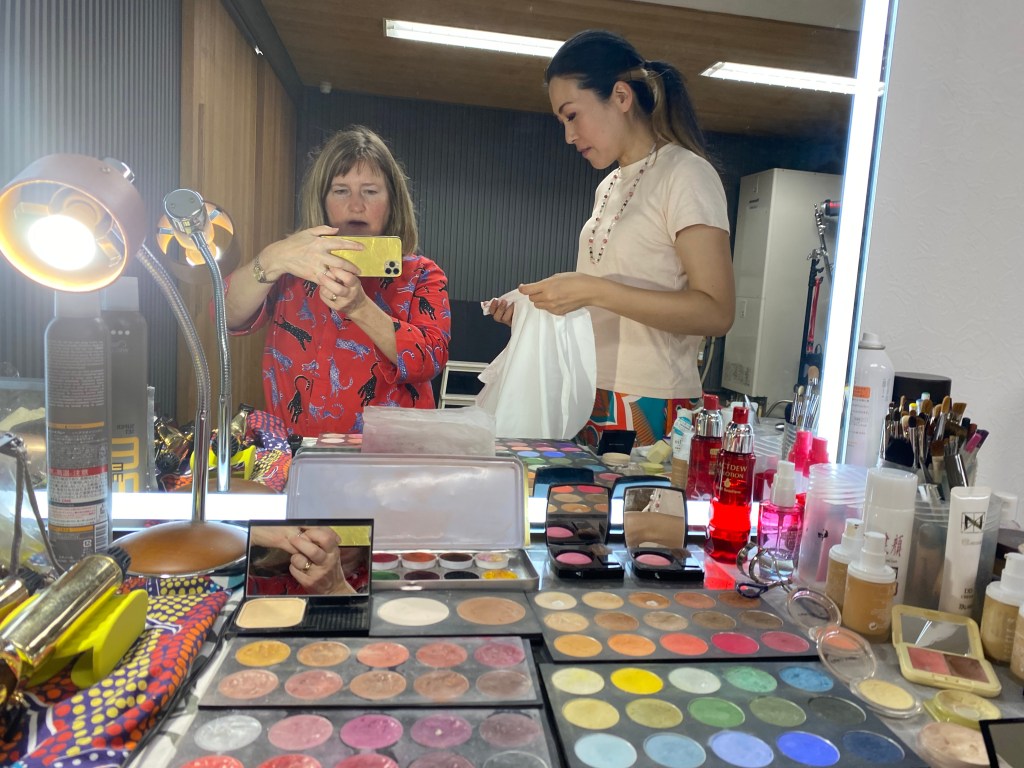
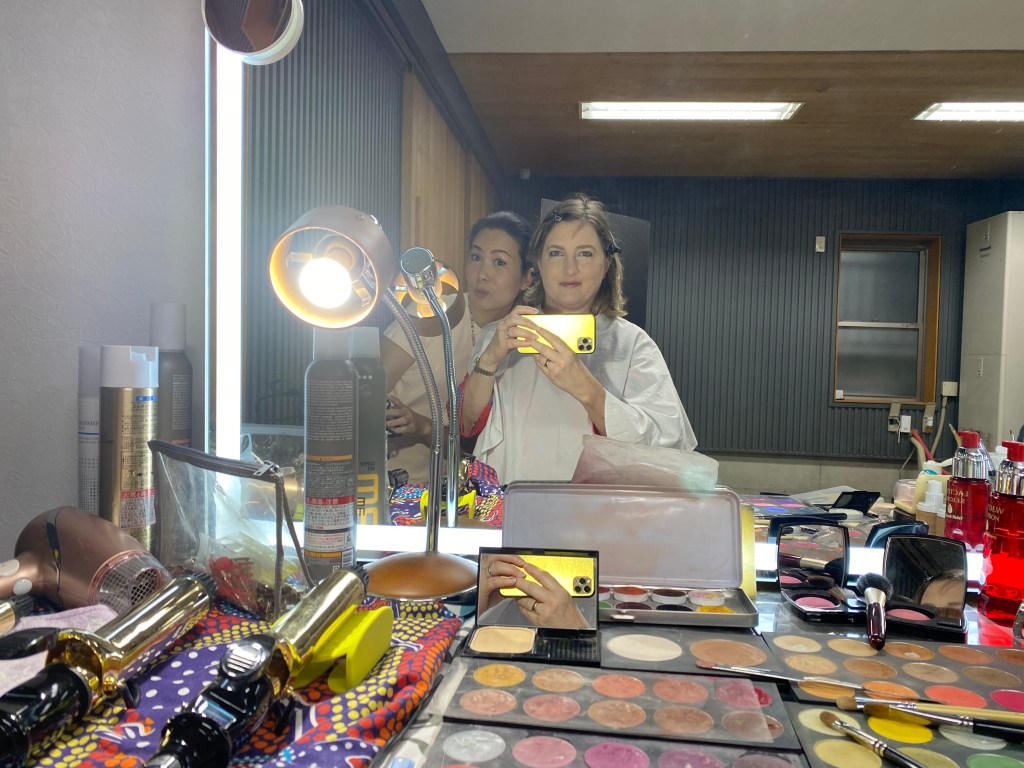
Nobue, the makeup artist, greeted me when I peeked in the door. She ushered me into the breeze of the fan. When I had sipped some water and cooled off, I sat in a chair in front of a mirror and had my face made up.
“Don’t worry,” she kept saying, as she added colour. “Trust me.”
I did.
Tia and I talked about books and people that we knew in common and about the photo project. In December, there would be an exhibition in Tokyo featuring photos of the forty subjects. It would be a celebration, and also a networking opportunity. I vowed to be there.
For the next two or three hours, she took many photos of me in different outfits and poses. Music pumped out of the speakers. She told jokes to get me to laugh. It was fun, and it felt a tad self-indulgent, but I loved it.
While I was in that studio, no one was judging me and I wasn’t invisible. I sparkled.
Suzanne Kamata being jazzed up. Photographs provided by Suzanne Kamata
.
Suzanne Kamatawas born and raised in Grand Haven, Michigan. She now lives in Japan with her husband and two children. Her short stories, essays, articles and book reviews have appeared in over 100 publications. Her work has been nominated for the Pushcart Prize five times, and received a Special Mention in 2006. She is also a two-time winner of the All Nippon Airways/Wingspan Fiction Contest, winner of the Paris Book Festival, and winner of a SCBWI Magazine Merit Award.
PLEASE NOTE: ARTICLES CAN ONLY BE REPRODUCED IN OTHER SITES WITH DUE ACKNOWLEDGEMENT TO BORDERLESS JOURNAL
I suppose it is politically incorrect to say that I was somewhat under the influence of the movie, Out of Africa (1985), which featured European expatriates living the colonial life on a coffee plantation, or that my do-gooder impulse had been activated by other films such as Cry Freedom (1987) with Biko in it. I had decided that after I graduated from college, I would join the Peace Corps as a volunteer.
I had wanted to be a writer since I was a little girl growing up in Michigan. I have especially always wanted to write fiction. However, by the time I became a student of English literature in college, I realised that it would be difficult to make a living as a novelist. My plan upon graduation was to travel the world through teaching English as a foreign language. In this way, I would accumulate life experiences which would become fodder for my stories and novels.
Earlier, as a junior, I had spent a semester in Avignon, France, on foreign study, somewhat following in the footsteps of my older brother, who’d spent a year in Germany while we were in high school. I’d been inspired by his letters telling of his adventures abroad, sleeping on Spanish beaches, skiing down Austrian slopes. When he came back home, I saw how living abroad could transform a person. I wanted that for myself.
The interview for the Peace Corps was gruelling – a four-hour grilling, sometimes quite personal. They asked me if I had a boyfriend. I winced, because I had recently broken up with someone I thought I wanted to marry. “No,” I said. They told me that the most common reason for leaving a Peace Corps posting early was a boyfriend or girlfriend back home.
In the meantime, my brother, who’d majored in business, and who was concerned that I would be working for free, sent me a newspaper clipping about something called the JET Program, a fledging one-year scheme for “native speakers of English” to work as assistant language teachers in Japanese public schools. The position came with a salary that was decent at the time. I applied to that, too, as a back-up, in case the Peace Corps didn’t want me.
To be sure, I had an interest in Japan. At t the time, its economy was thriving and Japanese companies were buying up iconic American buildings. It seemed as if Japan was about to take over the world, and that it would behoove me to know something about the country. Also, I had taken a course in Asian history, and developed an interest in Heian Court poetry. I loved the idea of a country where people had communicated by passing poems to one another. And I was intrigued by the futuristic images depicted in the movie, Blade Runner (1982) the kitschy aspects rendered in Jay McInerney’s novel, Ransom (1985).
Anyway, I was accepted into the Peace Corps and told that I would be sent to Cameroon. After some consideration, I decided that I would go to Japan for one year, and then enter into a two-and-half stint in the Peace Corps. But then once I arrived in Japan, I found that I wanted to stay a little bit longer. Just one more year. There was still so much to learn, so much to explore. I hadn’t yet climbed Mt. Fuji! I hadn’t been to Okinawa! I renewed my contract. In my second year, I fell in love with a Japanese high school teacher. And, yes, dear reader, I married him. I stayed in Japan and started a family. I have never been to Africa.
As I write this, I have been living in Japan for well over half of my life. From time to time, I wonder how my life might have turned out differently if I had gone to Cameroon as originally planned. Would I be working for an NGO in Africa? Or what if I had gone back to the United States after one or two years? Would I be living somewhere in suburbia, working nine to five at a company?
However, I also often consider what Japan has given me. Living outside my country has opened my mind, and has given me countless opportunities, including fodder for the stories that I write. And thanks to my writing, I am now employed at a small university where we have many students from around the world. I continue to nourish my heart and mind by reading literature and watching films from and about other cultures.
I find that we are not so different after all.
.
Suzanne Kamatawas born and raised in Grand Haven, Michigan. She now lives in Japan with her husband and two children. Her short stories, essays, articles and book reviews have appeared in over 100 publications. Her work has been nominated for the Pushcart Prize five times, and received a Special Mention in 2006. She is also a two-time winner of the All Nippon Airways/Wingspan Fiction Contest, winner of the Paris Book Festival, and winner of a SCBWI Magazine Merit Award.
PLEASE NOTE: ARTICLES CAN ONLY BE REPRODUCED IN OTHER SITES WITH DUE ACKNOWLEDGEMENT TO BORDERLESS JOURNAL
Community weed-pulling is one of the things that produces anxiety in me. At times like this, when we are summoned to the shrine on a Sunday morning, I miss my Japanese mother-in-law. You only have to send one person from your household, and for as long as we lived with her, she was the one to go.
Sometimes my husband takes part, but on this particular weekend – well, most weekends – he was playing golf. (He is the three-time overall champion at his golf club.)
I am an insomniac and an introvert. The evening before, I was thinking about how I would sleep in the next morning, and then I would make a pot of coffee and continue reading this wonderful novel that I had been immersed in.
“Tomorrow is weed-pulling at the shrine,” my husband said. “Sorry. You’ll have to go.”
I must admit that I did not always look at the memos attached to the clipboard circulated in the neighbourhood. (No, we did not have a Facebook group or use What’s App.) The groundskeeping had probably been mentioned, and I had ignored it.
Most of our neighbours are farmers, growing carrots, rice, and smaller amounts of other vegetables such as corn. Many families have lived here for generations, and know each other from helping out at harvest time. My husband and I are educators – him at a nearby high school, me at a teacher’s college. We moved into this neighbourhood to look after my mother-in-law, who has now passed on. I don’t really know most of the people who live in the houses nearby.
The neighbours probably know more about me than I know about them. Before she went, my mother-in-law suffered from mental illness. Her delusions included stories about me – my alleged affairs, my theft of her dishes and other things – which she shared with the neighbours. I always wonder if these rumours come to mind when the farmers look at me. Like, not only is there a foreigner in their midst, but do they also think I’m some kind of Jezebel?
My husband said that weed-pulling would be from eight thirty to nine o’clock. Before leaving very early for golf at his fancy club in the mountains, he laid out a cloth hat with a back flap to keep the sun off my neck, a pair of guntei – white cotton gloves sold in packs and used for all manner of outdoor chores – sleeves for protecting my arms from the sun, and some money – annual “dues” for the neighbourhood committee. He didn’t prepare a gardening tool for me.
I got dressed, had a cup of coffee, and fed the cats. I wondered whether I should carry a mask. Probably, yes. Although the government had put out a statement weeks earlier that pandemic protocols need no longer be followed, and the local newspaper had stopped posting the daily number of COVID-19 cases (which here, in Tokushima, had been zero for weeks at a time), most people still wore those white paper masks. They wore masks while outdoors, washing a car, alone; while driving alone; while shopping; while out walking for exercise. I had pretty much stopped wearing a mask, unless someone asked me to, like while visiting the buffet at a work-related party, but on this occasion, I figured I had better put one on.
I recalled how early in the pandemic, someone in our neighbourhood had returned from a cruise on the Diamond Princess and tested positive for the coronavirus. That person had been pelted with carrots. A window was broken in their home. They’d had to move away, at least until the furore died down. I recalled how our son had been stranded in South Carolina for months, after being kicked off campus during studies abroad. My sister-in-law had sent urgent messages wondering when he would leave her house. Meanwhile, my husband forbade him from returning to our home in Japan. What if he caught the virus en route? We would become pariahs. These neighbours would torment us, too.
I put on the hat, but since I was wearing a long-sleeved red shirt, I didn’t wear the sleeves. When I arrived at the grounds of the wooden shrine, raking and weed-pulling was already underway. Of course, everyone was wearing a mask. Women in aprons and hats similar to mine squatted on the ground, hacking at weed sprouts with small scythes. I realised that I should have brought a tool. A man sitting on the shrine steps was collecting money. I waited while he wrote out a receipt, after which he handed me a plastic bag containing coloured garbage bags (orange for plastics, pink for combustibles) and a bottle of Pocari Sweat.
I decided to take the swag back home and get a tool. Our house is only a few yards from the shrine; it would only take a minute. I thought about not going back; they probably wouldn’t really miss me. But they would notice I had been there and gone, me with my red shirt. Duty prevailed. I found a trowel in the shed and returned. I found a spot.
I’m probably doing this wrong, I thought, as I loosened the soil with my trowel and tugged at weeds. The woman nearest me — a farmer, no doubt – was pulling briskly with both hands. She wasn’t using a tool. Huh. I never did things “correctly” in Japan. There was the time when I was called out for eating curry and rice with a fork instead of a spoon. There was the time when I was helping serve lunch at my daughter’s kindergarten and I was chastised for heaping the rice too high in the rice bowl – as one would prepare a bowl of rice for the dead.
Then, an ambulance appeared. Apparently, in those few minutes when I had been gone, retrieving my gardening tool, someone had fainted or otherwise felt poorly. I looked around and saw an elderly man lying on the shrine steps. He was wearing a mask. I wondered if he had felt faint because he was exerting himself on a warm morning while wearing that mask. I wondered why he didn’t take it off. He lay completely still. From where I crouched, he resembled a corpse with a white handkerchief over his face.
I heard someone say that the man was alright, and he didn’t need to go to the hospital. The ambulance attendants dragged a gurney over anyway and took a look at him. They lingered for a while, then left. The man remained prone on the shrine steps, completely still, the white mask on his face.
The other women seemed to have no problem crouching and pulling, but I had to stand up from time to time to stretch my legs. My cotton-gloved fingers scrabbled at dried leaves and uprooted weeds, which I shook the dirt from and tossed into a net. I kept glancing at my watch. Nine o’clock came and went.
Finally, someone approached and announced that weed-pulling was over. I helped another woman carry the net to a flat-bed truck heaped with leaves. I arched my back, happy to stand up straight, and edged toward the periphery of the group, where a few younger women stood. I was done. I could go back to my book and my coffee.
“From now, we will have disaster training,” a man announced.
Oh, no. This could go on all day.
“Are you going to stay?” one of the younger women asked me.
It occurred to me that I could set an example – maybe not a good one, in the eyes of the neighbourhood committee, but I could give these women the courage to leave. I sensed they were outliers like me. We could be rebels together.
“No,” I said. “I’m escaping.”
They giggled and followed me away from the shrine.
Suzanne Kamatawas born and raised in Grand Haven, Michigan. She now lives in Japan with her husband and two children. Her short stories, essays, articles and book reviews have appeared in over 100 publications. Her work has been nominated for the Pushcart Prize five times, and received a Special Mention in 2006. She is also a two-time winner of the All Nippon Airways/Wingspan Fiction Contest, winner of the Paris Book Festival, and winner of a SCBWI Magazine Merit Award.
PLEASE NOTE: ARTICLES CAN ONLY BE REPRODUCED IN OTHER SITES WITH DUE ACKNOWLEDGEMENT TO BORDERLESS JOURNAL









 Borderless