Categories
Musings

The strays

By Rana Preet Gill

In the times of the pandemic when social distancing has become the new norm, emotional distancing has come out as a byproduct. Somewhere this conflict has delineated the boundaries, traversed species. It is evident in the way changed perceptions have led to the dwindling number of stray dogs on the homely streets. And though this is a welcome development it is not the result of a conscious effort to rehabilitate such wandering souls, it is the result of a changed attitude that fed on the guile that dogs are a carrier and spreader of the dreaded Corona virus.  

Driving along the familiar roads we had been so habituated to see some of these strays that we always remember them as we passed by their favourite haunts.

 A certain white female with a pink nose would always sit outside a particular house as if awaiting her morning nashta or breakfast. We nicknamed her the pink nosed dog. Her eyes, the shade of pale yellow, jaundiced with the desire to have more, yet unable to ask for it. But how could a modest household splurge on a stray dog. A dog that would not be a guard and yet sit outside their house. A seeker of alms. In times of pandemic this generosity of sparing the scraps seemed to have died down.

We know that a pair of brown female dogs were together day after day often making us wonder if they were related to each other by kinship. They would be found at their usual spot, a blind turn that masked a road but was the private entry to a house, early mornings, late afternoons, slouching in the sun, keeping company, sharing a territory and the benevolence of the people in the form of food and knick-knacks. They are missing. The blind turn now desecrated by the foremost fear of saving human lives have let go off the strays.

 And there was the territorial shrine dog, with a peculiar elongated face, who would stand stiff, serving as the sentry to this religious place. He became my muse for an article that ended up getting published putting him at a cherished spot on my list of favorites. I would look up to greet him with a gentle nod which often went unacknowledged. Too stiff in his demeanor, too rigid to have beneficence encroaching his life he did not like affectations bothering him.

During times of lockdown I spotted lesser stray dogs on the road and none in their regular haunts. The pink-nosed dog is missing, the sisters gone, the shrine dog sank into oblivion. Either they have been driven away or they lost out on the generosity of the hands who fed them making them move out of those places, their self-proclaimed homes.

It’s not only the strays who burnt the ire of misconceived notions but the pets in loving families too were at a risk of being labelled unwanted. A friend who owns an affectionate Labrador was faced with a dilemma when the family objected to the howling of the animal at a particular time in the night. The times of Corona, rising cases, imposition of lockdown not only necessitated the perpetuation of unusual reasoning, it lead to a strange kind of fear. The elderly matriarch drew visions of Yamraaj (the god of death) visiting their home to claim its share of life in the wails of the animal.

The relatives when consulted advised the family to consult a certain Babaji who was kind to offer advice on phone empathizing with the family and reiterating the same facts.  The dog was indeed peculiar and the howling was definitely a bad omen. It had to go. When I got call from this harassed friend   to save her dog from home displacement by prescribing a medicine to put an end to its howling I was confused. Our adopted mongrels often howl in the dread of the night when the pups in the neighboring kennel create a ruckus. They respond to a stimulus.

 There was no letup in the animosity against this dog, the family stood firm in the castigation of this canine for an innocuous crime. But after a few sleepless nights my friend had uncovered the stimulus in this case. A patrolling police van crossed their home precisely at the same time. The siren was the stimulus.

The family not satisfied with this logic has decided to call the faithful Babaji once again, this time for a personal visit. The animal in question, bereft of the impending doom, unaware, romps merrily all over the house, a place where it has thrived since its arrival as a little pup. I hope the maw of these uncertain and testing times do not swallow home of a loving animal. I hope they let it be and let it stay.

Our adopted mongrels refuse to touch the pedigree, the dog feed, some days. A crease of disappointment crosses my face when they act pricy. The feed is expensive, I take out the money out of my precious salary to buy them this treat. My resources are limited but they do not seem to care.  The crows which live on the silver oak boughs have an eye for this tasty treat. When the dogs refuse to touch their bowls, they circle around the food to have their peck. I am disappointed by this behavior of my canines. They disrespect food bought and brought with love and care.

 I let the crows have their fill not before displaying my remorse in front of the mongrels but I am not too strict to castigate them.

We do not tie them, they are living by their free will on our property, they can howl, bawl, be whimsical. We have accepted them as they are. Their soft moans at our approach and that subtle wagging of the tail tells me they are happy with us. This fear of Corona did not pervade our home, we did not drive them away. For now, their territories are safe. They future seems secure as long as they do not feel tethered in the confines of our home. Outside, the world is brutal. I wish I could explain this fact to them but they close their eyes and place their snouts on my feet, beseeching, pleading for a rub on their backs. They are not aware of the outside world around. For now, they are happy to be choosers in this house which they have adopted as their home. They have chosen us to be their benefactors and we are glad to have them.  

Rana Preet Gill is a Veterinary Officer with the government of Punjab, India. Her articles and short stories have been published in The Tribune, Hindustan Times, The Hindu, The Statesman, The New Indian Express, Deccan Herald, The Hitavada, Daily Post, Women’s era, Commonwealth writers. org, Himal, Spillwords press, Setu Bilingual, Active Muse and Indian Ruminations. She has compiled some of her published pieces into a book titled Finding Julia. She has also written two novels – Those College Years and The Misadventures of a Vet.

.

PLEASE NOTE: ARTICLES CAN ONLY BE REPRODUCED IN OTHER SITES WITH DUE ACKNOWLEDGEMENT TO BORDERLESS JOURNAL. 

Categories
Musings

New Normal & Corona Puja

 By Nishi Pulugurtha

Covid_19 has been changing a lot of things. We are trying to get used to the ‘new normal’. Most of us are still indoors, working from home, trying to deal with things in the best way we can. Those of us who are into teaching are working from home too and trying to learn new ways of engaging with our students, of being connected with them. I tried ways and means of taking online classes if and when I could, of emailing my student papers and reading material,  of getting assignments mailed to me, of correcting them and of counselling them.

I even tried various online platforms.  There is the question of network connectivity, not all are able to join in regularly. Some call and talk too. One misses out a lot when one is teaching online. I feel it is important to see my students when I teach. All I am looking at is a blank screen — their videos are off to save bandwidth. I know they do disturb in class with their fidgeting, their talking and their daydreaming but teaching online is a poor substitute to classroom teaching.

I see many of my students write poetry these days. Some of them scribbled once in a while, but these days I find them doing that more often. Some of what they write is really good. I encourage them to go on as I am impressed to see them expressing themselves in English. There are many who want me to read and comment and edit their work too. This, I feel, is their way of trying to deal with the situation they are in.

There are many who draw and paint and share their art work too. I had always wanted to have a Literary Society in the College I teach at but never actually got down to having the students work at one, so I thought I would use the online medium to create one. A platform where I could share the creative done by students of the college I teach at.  I am sure that some encouragement will make them work harder at it.

We even got down to celebrating various events online. To commemorate World Theatre Day, we shared readings of plays in the department virtual group. We shared video recordings of our readings, songs and even dance recitals on the occasion of the birth anniversary of Rabindranath Tagore too. It was nice to see many of the students joining in. The best we could do. A student compiled them all into videos and posted them online too.  

There are a number of Webinars being organized.  I jumped the bandwagon too. I have felt that they are nice ways of engaging. Yes, there are gaps, lacunae, criticisms and the like but at least for some time I think it does open us up to ideas and thoughts in a scenario where concentrating on something is becoming difficult for many of us every day. I have had people tell me that as long as they are listening to the lectures their mind was engaged in stimulating discussions for some time at least. I learnt working on a new medium in order to organise it all. Yes, there were hiccups and snags and I am still trying to navigate my way through the technical maze.

A young dancer and dance teacher told me that he had begun taking dance classes online. A friend tells me her son is taking karate lessons online. I was surprised to hear that initially, but have taken that in my stride now. This is the new normal, the way things might have to go on for some time. My nephew’s coaching classes are all held online. He was even given a test that he had to take at home. I guess, one of the important things is to be connected with whatever one is involved with.

My mother’s carer was speaking about how people in her village are reacting to ‘Corona’. She said that though there have been no cases as yet in her village but people are scared. They have been asked by the village elders to do a number of things that would help them ward off the evil eye of ‘Corona’. I could not but be interested in what she had to say.

One of the first things that they were asked to do was to get up early in the morning, before sunrise, and stand facing the East. Now they had to chop onions into round pieces, put them into their mouth and chew and eat them. They could only have water after about one and a half hours after that. She said, that her family followed all the instructions, like everyone else in the village.

Another set of instructions soon followed as more news about the pandemic trickled in. This time they had to get up early in the morning and stay unwashed. They were asked to eat five grains of rice and five wet tulsi leaves.

At another time, they had to get up early in the morning, have a bath, light five lamps, earthen diyas, which they had to make the day before, and pray to the gods. I laughed when I first heard her say all of this but soon realised that this was their way of trying to deal with the unknown disease. They had no clue about it, or what it could do. As it is the gods are goddesses are propitiated when someone in the family falls sick.

I was reminded of the Sitala Puja that is associated with sickness and disease. Maybe these village folk were trying to do the same with this new sickness as well.  She tells me that there is talk about ‘Corona Puja’ as well. I ask her details of it.

She said that her folks are awaiting news and information from the village priest. Inspite of all the blind faith and beliefs, one thing that she tells me is that they make it a point to drive home the importance of wearing masks, of washing hands and of quarantine. A local school is the quarantine centre. Her brother who has been out of work, recently returned from Coimbatore and is now housed there. Once he is out of quarantine he is going to get married to his sweetheart, she smiles as she tells me. Some new beginnings in these times.

.

Dr. Nishi Pulugurtha is Associate Professor in the department of English, Brahmananda Keshab Chandra College and has taught postgraduate courses at West Bengal State University, Rabindra Bharati University and the University of Calcutta. She is the Secretary of the Intercultural Poetry and Performance Library, Kolkata (IPPL). She writes on travel, film, short stories, poetry and on Alzheimer’s Disease. Her work has been published in The Statesman, Kolkata, in Prosopisia, in the anthology Tranquil Muse and online – Kitaab, Café Dissensus, Coldnoon, Queen Mob’s Tea House, The World Literature Blog and Setu. She guest edited the June 2018 Issue of Café Dissensus on Travel. She has a monograph on Derozio (2010) and a collection of essays on travel, Out in the Open (2019). She is now working on her first volume of poems and is editing a collection of essays on travel.

.

PLEASE NOTE: ARTICLES CAN ONLY BE REPRODUCED IN OTHER SITES WITH DUE ACKNOWLEDGEMENT TO BORDERLESS JOURNAL. 

Categories
Musings

What Can Authors Do?

By Devraj Singh Kalsi

Over years of reading, some authors are likely to emerge as your favourites for various reasons and occupy the venerated position forever. When an author enters your list of favourites, you tend to grow intolerant of criticism of his work or personal life, even on valid grounds. All the foibles are tossed aside as natural or unavoidable. There is no chance of losing respect once an author achieves that glorified status in the eyes of a reader.  

Authors of classics are favourites when you are growing-up. They are the first ones to grab your imagination – much before contemporary authors mesmerise you with their narratives and styles. Since they are no longer around, they are admired for leaving behind a wealth of creative assets.

Reading one book makes you eager to read more from the same author and you end up reading everything the author wrote during his lifetime. This fondness makes you curious to read books by the author and books on the author. You dig up the archives, read what his contemporaries wrote about him, what his lovers and friends disclosed about him. The process of unearthing the mysteries throws up shocking disclosures.

One day you discover writings from established names that project him as a brothel-visitor, sadist, voyeur, or sexual pervert. As these graphic details emerge from multiple reliable sources, you are left to wonder why such great, exalted writers had such a dark, kinky side.

Your adoration suffers a jolt as you fail to deify him further. Even though the creative side keeps you inspired to become a good writer, the shady personal life scares you like hell. You begin to wonder whether writing actually involves dilution of character. Is it going to make the lovely people in your life suffer at your hands?  

Favourite authors are often reread. They hold a special place in your heart and your bookshelf. If you are proud of displaying your acquisitions, books by your favourite authors will be displayed in front. In case you are secretive, you prefer to conceal your favourites – hide them in the back of the bookshelf to escape getting noticed by others. Many people would like to borrow such titles and you are not ready to lend it to any person – not even to your best friend.

You always prefer to buy books by your favourite authors in hardbound cover – the paperback edition is not meant for you. Your favourite authors are part of your treasured collection that you wish to leave behind for future generations.

Your favourite authors share an intimate relationship with you. You take them to your bed and bedside. You go to sleep reading their writing and wake up fresh. Their magical words would have a soothing effect on your senses.

Sometimes you think these authors should not be read casually. So, you prefer to sit straight in your study and relish the prose with all seriousness. This is also a shade of respect you accord to your favourites. You never dog-ear the pages of your favourite tomes and prefer to place roses, feathers, or bookmarks inside. The sepia pages smell fragrant even after years and you inhale the evergreen freshness and revive the pleasurable experience of reading the long cherished book.

You tell the world who your favourite authors are and the reasons why they hold this exalted status with the fond hope that the other people will agree instantly. You want all your acquaintances to know you have found your favourites and the names should make them feel proud of you.

When you want more people to read your favourite author, you behave like an influencer and hope to multiply the flock of admirers. Adulation expressed with logic or emotion – or with a mix of both – tends to surprise your family and friends who never thought it was easy to select favourites from the vast world of writing and it required some kind of scholarship to be able to do so.

As a reader, if you have simply enjoyed the prose without trying to understand what great literary insight they offered, you are likely to find your favourite authors with ease. The readability factor coupled with reader engagement. A stage when you simply restrict yourself to one concrete line of confirmed admiration: I just love his words. This closes further debate and discussion. No power on earth can stop you from loving their books.   

If any of your favourite authors happens to be a living one, anywhere in the world, you consider yourself fortunate to be living in the era of such great writers. You feel a strong urge to connect with them, wish them on their birthday, buy their signed, autographed copies and flaunt the edition.

You take printouts of their photographs and put them up on the bedroom wall just as teenagers treat their rock stars. You pick up the favourite quotes from their books and frame those in your study to inspire and motivate you to greater heights – to credit the source of enrichment of your understanding of the complex world. On many occasions you feel the urge to quote their lines and express your fondness.

Such adulation rarely turns critical because you have grown up loving literature through their works. Their esteemed position remains unchallenged even if the erudite critics have contrary views to offer. After several years if you do not manage to write brilliantly, you remain in awe of their magical powers of expression. 

Sometimes, you pick up a few favourites but they are not quite the famous kind. They have not written much but their output appeals to you. The inhibition to mention their names remains within you but your clandestine admiration also stays alive.

Having a favourite author who is not famous is not an aberration. After all, it is an intimate relationship between the author and the reader. In case your list of favourite authors comprises some lesser known types, you sometimes feel the strong urge to pronounce their name and make the world know these writers deserved to be on the top list but they could not make the cut.

Your repeated thrust on those names does not change public perception but if your voice counts, you can surely evoke interest in some people who visit their works to find merit in your observations. As a sincere reader, you have the freedom to get them back in the reckoning – even if the outcome fails to meet your expectations. Your homage and tributes certainly go a long way in reviving the long-forgotten authors who slipped into obscurity.  

Favourite writers from your familiar world – the world you live in – and from distant lands leave you with a similar set of experiences. Space and time cease to matter and the reading experience alone decides the worth. When you have favourites from both the worlds, it shows you have no borders in the land of imagination and you respond with emotional force depending on the power of the prose.

Advice doled out by your favourite authors is revered and followed if you harbour literary ambition. You know these literary heavyweights share pearls of wisdom and hope the worth of their words gets recognised by people across boundaries and generations. Some people tend to keep one favourite, some have many favourites and some keep adding to their favourite list from different genres and countries. Whatever be the basis of cherry-picking the favourites, the installation is supposed to remain rooted in the fertile soil of your creative mind.  

Sometimes you notice a trend to honour great literary names by picking on famous names and quoting them in your work. Sometimes you begin to like real people with same names as those given to characters of your favourite writer, and sometimes you rename them with those dear names. When a character becomes famous like the author, there is definitely more life in the creation.  

Talking about my choices and the kind of relationship I share with my favourites, I must clarify that the choice was made on the basis of reading comfort alone. I had no idea about how great writers are judged and the parameters to define them. It was purely on the basis of pleasure of reading. Pleasure sounds a petty, sinful word for enlightened minds – a basic urge not worth writing about. As I derived pleasure from reading certain authors, I began to read more of them and that is how the relationship grew over the years.

Apart from the pleasure of reading a good story told in a lively manner, in refreshing prose, no other factor made me return to any author. Indulgent writing to show off literary flair put me off. Simple writing appealed a lot. Some living authors entered my system for these qualities. I do not say these alone should be the reasons to select your favourites, but in my case these became the glue factor. When I read A Suitable Boy (less than half), I realised simple writing is not easy. When I read A Fine Balance (just half), I realised simple writing is not easy. When I read The Guide (more than half), I realised simple writing is not easy.

Being a writer you aspire to become someone’s favourite one day and you keep working in that direction. You want a reader to confess your book transformed his life or made him look at writing in a fresh way. The list of favourites will continue to occupy the same slot in my mind. Even if respect does not come out in glowing terms, I feel inspired to write a book with such amazing simplicity some day. More than the name of the author, the name of the book leaves a lasting impact.  

I do not foresee the expansion of the list of favourites any further even if there is genuine merit in doing so. Right from early years of my growth as a reader, they have fired my imagination. So I prefer to be guided by the benchmark already set high. Being far, far away from that, despite years of reading and writing, generates a sense of remorse within. The intent is not to surpass these great works but to produce something that celebrates the inclusion of the strengths these works carried. There is no sense of competition of any kind – just the desire to give a new life to the qualities these works were raised with.

.

Devraj Singh Kalsi works as a senior copywriter in Kolkata. His short stories and essays have been published in Deccan Herald, Tehelka, Kitaab, Earthen Lamp Journal, Assam Tribune, and The Statesman. Pal Motors is his first novel.  

.

PLEASE NOTE: ARTICLES CAN ONLY BE REPRODUCED IN OTHER SITES WITH DUE ACKNOWLEDGEMENT TO BORDERLESS JOURNAL.

Categories
Musings

Kenopsia & Me

By Sangeetha Amarnath Kamath

KENOPSIA

(.n) a place which has a bustling atmosphere otherwise, has become deserted, abandoned and eerily quiet suddenly.

It’s a new-fangled word which I chanced upon quite recently, all thanks to the pursuits propounded during downtime and this inescapable lockdown. I took upon one of them to building my vocabulary. Though this word was a novel one, the sentiment associated with it was not alien to me. I just didn’t have a name for it back then.

Looking back, in my school days, I had always dilly-dallied on the last day before it closed down for the academic year. While everybody just couldn’t wait to rush home or to hang out with their friends, the arcane sentimental in me would always wait it out until a major part of the crowd had dwindled. I would get captivated and drawn to the emptiness and vacuum of the classroom, which at one point of time would have been bustling with my frolicsome friends and classmates, my schoolmates and their full of beans laughter and cheerful screams all year round.

The hardest challenge to overcome emotionally was when I had to pass out of primary school and no longer had any reason to enter the place the coming year.

This obscurity overwhelmed me so much that I took a walk up and down the old wooden staircase to the floors above where I had first started my primary school journey and relived each classroom and the people I had come to know there and grow fond of.

 Oh, talk about mush! The memories—The Good, The Bad and The Mischievous and also that I would never meet my teachers in the same way again swamped me.

That made me wake up and smell the coffee. This was just one phase and more were likely to come…and go.

And it did, three years later when I passed out of High School. A similar vagueness, but I had already familiarised and braced myself for it. Nonetheless, a strange sadness overran me. Standing there and gazing; pondering about how a place of an exuberance of a magnitude this large could possibly transform itself into one of an icy hush in a matter of minutes.

 KENOPSIA it was! I was not an oddity. My emotion did have a name.

Today, history repeats itself, though I’m not a school-girl anymore. A short walk after lunch took me providentially to the space where I used to have one of my cardio Zumba classes before it got suspended by the awful coronavirus scare, and now it has been cordoned off… like a crime scene! The upbeat music, the catchy tunes, the energetic dancing group, our bouncing steps, our lively chatter during break, the boundless enthusiasm… our happy place had been rejigged into a dead zone?!

 It looked like a surreal ghost town!

Adding to the effect were dried fallen leaves, windswept grounds and unkempt grass around the area. It was KENOPSIA all over again.

Old habits die hard, but after three decades, technology had made it possible for me to articulate and immortalize this.

.

Sangeetha Amarnath Kamath did her schooling from St.Agnes Primary and High School, Mangalore, India. She is a B.Com graduate form St.Agnes College, Mangalore. She is an aspiring self-taught creative writer.

.

PLEASE NOTE: ARTICLES CAN ONLY BE REPRODUCED IN OTHER SITES WITH DUE ACKNOWLEDGEMENT TO BORDERLESS JOURNAL.
Categories
Musings

Observations at the Airport

By J.O. Haselhoef

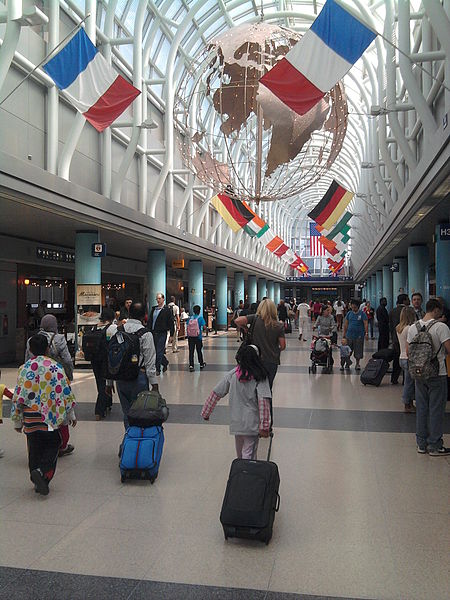
Chicago O’Hare Airport

Chicago O’Hare’s international terminal offers street theatre.

I arrived recently at Terminal 5 to meet a friend, coming from Kathmandu, Nepal, via Abu Dhabi, UAE. Henry sent numerous texts once he landed as to where I might meet him and his luggage. He encouraged me to wait in the quiet of my car till he arrived. True, it was our nation’s busiest airport and often chaotic. But I refused. It was the drama of the arrivals gate that fuelled my 90-minute drive — not souvenirs that he brought back from his time in Kathmandu, Nepal.

The entertainment started immediately. Two middle-aged women from India, dressed in hot-pink saris, walked toward me and tried to exit through the automatic door to their left at Chicago O’Hare’s Terminal Five. Those doors would have been correct in India. But at this American airport’s international arrivals gate, it was the wrong door. It was my entrance, not their exit. I feared my step would trigger the glass portal to swing into their faces; I took a step back. They saw my look of fear and sensed their mistake. They, too, stepped back. We stood on either side of the glass, in a standoff. What should happen next? A porter, watching the narrative unfold, ran to their help and guided them to the right side of the hallway and the proper exit door. As we passed one another, we looked and smiled.

I found Henry’s arrival gate inside. The passengers on the connecting flight from Abu Dhabi began their travel two or three days before, perhaps in a mountainous village or maybe an apartment in a city of 20 million. They came not just from Nepal but India, the Middle East, and all of Africa.

The flight brought many ethnicities, cultures and religions together as they walked the lengthy concourse from the plane, passed through immigration, and gathered their belongings at baggage claim.

Families and friends waited. We served as a kind of reward for the travellers, standing patiently, excitedly, behind two sets of restricting ropes and a gap of 20 feet. Many of our impromptu group pushed towards the front to get a better first view of a loved one’s face — not unlike my father with his brother.           

There was room to move behind the group of us waiting. A young woman, who wore a Muslim headscarf, pushed a baby carriage in a small circle. She kept her eyes focused on the baggage area. Her arms went up in a double wave when she saw the person she waited for. She clutched the handles and cried. A few moments later, she walked with more vigour while she pushed the pram. 

 A passenger claimed the first bag from the flight and walked toward the rope barrier. His family rushed into the exit way to embrace him and clogged the entrance funnel.

A small man negotiated his way through that tight exit sleeve. A tall woman grabbed him and they shared a passionate kiss. They turned to go and caught me staring at their togetherness. They smiled. Guilty, I smiled too.                 

I looked back to the woman with the baby carriage. Her traveller had not yet joined her. She stopped moving in a small circle and rocked the carriage in one place instead. I moved closer and asked how old the infant was. “Three weeks,” she told me. “His father has never seen him.” She told me he had not been in the U.S. for two years.

That didn’t make sense. “What about nine months ago?” I asked.

 “Oh!” She giggled. “Yes! I went to Jordan to see him.” The couple flew to the U.S. where she was a citizen, but he was not. Officials stopped him in Chicago and sent him back to Jordan.

This time, he went through immigration in Abu Dhabi, so they knew there would not be difficulties. “He will get through this time,” she said.

 We stood together, waiting, discussing baby names, immigration processes, when the child began to cry. “He’s hungry,” she said as she changed the angle of the pacifier and rocked him faster. “But I doubt I have time to nurse him.” 

Just then, she saw her husband leave the baggage area and start through the funnel. Politely, she excused herself and wished me well. Again, I couldn’t help myself as I watched this moment of intimacy. Like with my father and his brother, the moment was full of joy.

Finally, I saw Henry head in my direction. He wheeled one large roller bag with his right hand and, with his left, carried a duffel bag. He grimaced as he tried to manipulate his way around a family reuniting in the middle of the narrow walkway. He looked tired, dark circles lay below his eyes. After our hug, we walked the distance to the car lot and he complained to me about his long-haul flight. He started with the frustrating behaviours of his seatmates — the women talking incessantly followed by the man across the aisle snoring loudly. He continued about a child kicking his seat in the row behind him. He described the difficulties flying without a common language.  And he ended with, “The airline served the worst curry!”

I expected him to be positive, given all the thumbs up he had posted on Facebook during his visit, but 48 hours without sleep and 14 hours in one seat interrupted that flow. He was tired and intolerant. 

He flew more than 7,000 miles. I drove only 60. We both spent time with the same passengers. Oddly, mine was the savoury souvenir.

.

 J.O. Haselhoef is a social artist who writes and travels. Her work appears in Swamp Ape Review, Re-Creating Our Common Chord, Evening Street Press, and Fiction Southeast. Her book, GIVE & TAKE, Doing Our Damnedest NOT to be a Charity in Haiti was published in 2015. She is online at http://www.JOHaselhoef.com.

.

PLEASE NOTE: ARTICLES CAN ONLY BE REPRODUCED IN OTHER SITES WITH DUE ACKNOWLEDGEMENT TO BORDERLESS JOURNAL. 
Categories
Musings

Flash Fiction: The Discovery

By Sushant Thapa   

Ray copied all the questions from the question paper and looked out of the window. Twenty minutes had passed, and he wasn’t able to answer any question. Mathematics had always been very difficult for him. He always failed in mathematics but passed other subjects. He managed to get promoted to higher classes. He had reached the highest class of school with the lowest grade in mathematics.

“What do you expect out of me?” he would question his mother in an arrogant manner.

“Why don’t you study mathematics during your exams?” his mother would ask.

“Even if I study it, I wouldn’t make it,” he would reply, and scribble poetry.

He had a diary in which he wrote poems. On top of every poem, he would write proverbs, and those proverbs related to his poetry. Writing poems was the only virtue he was gifted with. He wasn’t good at sports either. During the whole duration of a game of football, he would not get a chance to touch the ball — leave alone to kick it.

Ray would question his existence in his poems. He would lament about his life, the life which he had not seen nor lived. He created mountains of words and he lived his life vicariously through his poetry. The thought of writing poems made him feel alive.

Many times in the examination hall he would scribble poetry in rough sheets. His class teacher who was also the examiner was aware that Ray could only copy questions in mathematics but solving them correctly was another matter. He was not the only one who was weak in mathematics; there were many of them in his group. But he was the only one who wrote poetry, and that made all the difference.

Ray would try to solve the questions in mathematics, but his answers never matched with the answers at the back of his book.

Poetry was his only hope.

How fragile his life was without it? Reflections in poetry were like life itself. Poetry could reflect happiness, pain and illusion in life. Mathematics was very abstract for him. The answers never matched and sometimes he doubted the questions too.

On the other hand, poetry also questioned his existence, but always provided him with answers. It made him think and ponder upon the questions of life. And the best thing about poetry was that answers were different for each person and they need not match and be the same. This openness made all the difference.

Ray was finding answers to life in poetry and the answers were his own. The answers did not need to match with the answers in the books. It was unlike the mathematics they taught in school in every sense.

Poetry could be contemplative in nature but mathematics in school was derivative in nature — derived from facts and laws in form of numbers.  However, while trying to solve math problems, he glimpsed poetry could be like mathematics and only the ways of finding or reaching conclusions were different. He felt mathematics and poetry were two different paths to examine life and to prove that life exists. The process and methods might be different, but the conclusion was always similar. Both the subjects had a similar derivative – to explain life around us.

He even felt that zero, the smallest number in mathematics could also be meaningful. Zero was capable of having meaning on its own – it could mean nothingness. Yet, when combined with other numbers it could still be meaningful. Similarly, in poetry words were capable of providing infinitesimal meaning when they were on their own but when combined with other words, they could provide infinite meanings.

Mathematics explained the laws of universe in numbers and poetry explained it in words. Mathematics could elaborate a new dimension of time and space. Poetry could also elaborate a new dimension of time, thoughts and space. Senses could be unbound with words and with numbers too.

Mathematics surpassed time in its calculation and poetry was immortal in words. Mathematics could calculate in numbers the wholeness of the universe: poetry could describe the idea of the universe in words. Mathematics helped to create inventions with precision: poetry also invents with words – with brevity and precision.

Ray was only trying to solve the equation of life and draw conclusions in his own way. He felt and saw the subtle differences in both the subjects and yet both had some strains of similarity.

Poetry had brought him to limelight in his class and in school. Since he was good at poetry his teacher felt the urge to help him with his mathematics. He was the same examiner who always noticed Ray while he copied questions in the examination hall.

Ray had begun by copying questions of mathematics, but eventually he was all set to find his answers too. It took him time to find his answers through numbers, but eventually he succeeded to pass his mathematics exam of tenth grade. The difference worked out pretty well for him.

Ultimately, Ray realised the difference between poetry and mathematics. The difference which he realised brought different modes from life together and produced a meaningful ending for him. His teacher read few lines of poetry from Ray’s diary to the class:

For, what is it that Poetry can do?

It can make tremble a single leaf of a tree among many, and make you its master

It can let you climb on clouds while you are on the ground and are finding your stand

When your heart aches and you find pain in others

When you stumble and see others falling too ….

.

Sushant Thapa is an M.A. in English Literature from Jawaharlal Nehru University in New Delhi, India. His poems, essays, short stories and flash fictions are published in Republica Daily, The Writer’s Club, Kitaab.org, firewordsdaily.com, Sahitya Post, Udghosh Daily of Biratnagar and Borderless Journal. Sushant revels in rock music, books, movies and poetry from his home in Biratnagar, Nepal.

.

PLEASE NOTE: ARTICLES CAN ONLY BE REPRODUCED IN OTHER SITES WITH DUE ACKNOWLEDGEMENT TO BORDERLESS JOURNAL. 
Categories
Musings

“I have reached an age when, if someone tells me to wear socks, I don’t have to” : Einstein

By G.Srinivasan

Personal experience is always a milestone to reminisce in life as its memories evoke mixed feelings of euphoria or exasperation, depending upon the incident that wrought that at the first instance. Though this one occurred a couple of years ago, it flashes in my mind quite often, pushing me to set my thoughts on paper so that I could relieve the feelings I sustained and shift the same to readers for them to partake of the pleasure or pain such narratives impart. With this preliminary let me begin at the beginning.       

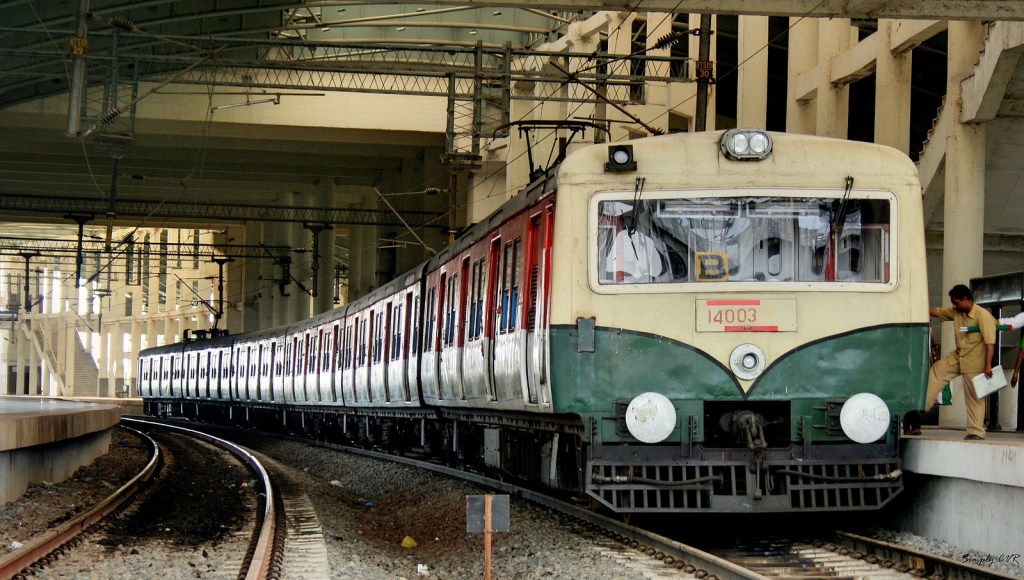
On a sultry forenoon I boarded a suburban train at the Park Town traversing between Beach Station to Thiruvanmiyur a couple of years ago in the summer when I visited Chennai, Tamil Nadu from Delhi. For a person given to enlivening the evening of existence from the fragrantly sweet blast of the past to derive simple pleasure in such journeys, this trip too was nostalgic and reminiscent of the days I used to travel decades ago between Egmore to Tambaram in the suburban train. I would go to meet a faculty member in the Madras Christian College (MCC) once a fortnight in my pursuit of a post-graduation in English. I would also meet and catch up with  friends and relatives who were dispersed across the city in those halcyon days with a little income but a long laundry list of expenses.

The generous academic volunteered to give me wrinkles on how to prepare for the examination untutored as I was then working as a state government employee gathering statistics on the small scale industries in Chennai and its outskirts. He had also been unacquainted with me till my former head of the English Department in Madura College, from where I graduated, introduced us. Throughout my more than three scores of years, I was always a beneficiary of the kindness of strangers, though they are a fast vanishing breed under the blue domed umbrella.

In the current day, most have no time to talk face to face. They are content with selfies, besides chatting online and, occasionally, talking on their smart-phones. Well, this digression from the main track of my journey in the suburban train aside, what transpired subsequently during my less than half-an-hour trip that it remained memorable?

As I had a small handbag and the train was not over-crowded enough to intimidate passengers entering the carriage, I got in. I spotted the last row where a few tech-savvy young fellows going to their shift-duty somewhere in Taramani (the IT hub) area, were in the process of settling themselves. I found a seat vacant between two gentlemen. I went to occupy it but one person on the right side told me that the seat was reserved for his friend who would be there soon!

Other seats in the compartment were occupied and a few people were still pouring in when I thought that the common practice of the first-come-first served commuter was being turned topsy-turvy by this chap who was making a reservation for his own crony. But he was unrelenting in not letting me occupy the vacant seat, obdurately obstreperous in his rage and resentment   Exasperated, I coolly asked him ‘empa ni oru ambilaya?’ (In just common parlance in the vernacular, it meant ‘are you a man?).

This set off a flutter in the dovecot and the person so addressed got enraged enough to threateningly question if I could bear even one blow from him for having questioned his manhood?  If a youngman is asked whether he is a man, the immediate inference perceived by an impressionable youth is a direct assault on his virility!

Even as the verbal punch and counterpunch got under way in the humid weather, I sat sedately between the two gentlemen and occupied the treasured seat. But not before asking the youth (who challenged me that I could not bear one blow from him) whether he would stomach his dad to be treated in the fashion they were treating me. This made every one aghast and the person who threatened to thrash me was left speechless.

When I was a news agency journalist in the early 1990s in Delhi, I told him how the top official of the Election Commission was peremptorily asked by a journalist at a news conference whether the chief election commissioner was “a man or a Congressman?”  Since he put a pause between man and a Congressman, the official was livid with anger as he misconstrued it. That was the last question in the press conference and the  matter did not assume any uglier shape to the detriment of all the ones assembled there.

I purposefully recounted this to the intimidating youths. Probably, they would have have misunderstood that famous verse of the Scottish bard, Robert Burns, “A Man’s A Man For A’ That” (a man is a man for all that). Burns spoke of egalitarianism as the hallmark of manhood but modern man equates that to his being virile and robust to fight anyone who cocks a snook at him sans any second-thought!

Then I placidly put before him and his friends the issue in perspective of what I meant when I questioned his being a man, it was a comment on his basic civic responsibility to be gentle, kind and generous in spirit to show respect to people who had transited towards the more ancient stage of existence. They deserved and get reserved seats as senior citizens in public carriers, supported by the government itself.

Heroism is not only any act of bravery but also about being affable, gentle and generous in spirit and in demeanor especially when you are strong. I also told him that I was no match for him; leave aside the combined heft of his muscular chums who could make mincemeat of me. None of the youth went into an offensive mode but kept silent on my plain-speaking. I apologised to the young man but advised him not to hurt elders in public places when civility is an option.

As I reached the end of my journey, the person who threatened to beat me himself, apologised with others in his orchestra and bid me goodbye. I felt relieved that nothing untoward happened in the heat of arguments, compounded by the hot and humid weather!

Did not the oldest philosopher Aristotle say ages ago aptly, “it is the characteristic of the magnanimous man to ask no favor but to be ready to do kindness to others?”  Let us not dry up the milk of human kindness in simple gestures to the old without recognizing that youth is but evanescent and human values are eternal.  

G Srinivasan is a free-lance journalist from Delhi.

.

PLEASE NOTE: ARTICLES CAN ONLY BE REPRODUCED IN OTHER SITES WITH DUE ACKNOWLEDGEMENT TO BORDERLESS JOURNAL. 

Categories
Musings

Relatives in a Writer’s Life

By Devraj Singh Kalsi

When condemnation comes from a decorated officer with eight medals in his kitty, you are left without any defence. He throws one salvo after another, bombards you with criticism – your self-esteem blown up in smithereens. Being one of the most successful among all your cousins, his fusillade is not dismissed as the rant of a demented relative. Every single word he uses without caution is accorded profound respect.

When such a relative decides to pour scorn on your ordinary life stripped of the essentials such as achievements and recognition, you have the entire cabal of relatives including maternal uncles and aunts echoing similar sentiment, rallying behind him with unequivocal support, attacking you for not choosing a proper career, for not taking life seriously, for not working hard to achieve success.

Yes, he did nothing worthwhile in life. All these years he was writing. But what did he write? Did he produce anything worthwhile? Wasn’t he aware that writing is a hobby? Has anyone ever made it a career choice? Absolutely lazy, crazy idiot! Writing is not for the middle-class people. Does that moron really think life is so easy that writing can sustain it?  

These are some common – and caustic – comments that my relatives have shared to define my existence as a hopeless writer. Some sympathisers and gossipmongers have forwarded these Whatsapp exchanges to me – perhaps to stoke further enmity and enjoy a crossfire.

Earlier, such poor assessment used to affect my peace of mind.Over the years, I have learnt to ignore it all. Most of my relatives – elders and peers – are blatant in rejection of my pursuit. My litany of failures has given them the courage and space to doubt my skills.

One relative took a jibe the other day, saying her college-going daughter has started writing stories. She clarified it is her passion to write, and she is interested to build a career in law. She made it clear that a second-year law student has the maturity to decide that writing is not meant for a living and one needs a full-fledged career for that. I should understand the clear and powerful message conveyed through the example of her daughter. She could not have put it more directly. Bang on!

As I was yet to gather myself and say something, she sprang up with another well-crafted one. Pretending to take interest in my writing, she suggested I should share the manuscript I was working on with her daughter for editorial assessment.

Well, she could be one of the trainee editors in publishing houses who rarely read from the slush pile and promptly write rejection notes to those who think they have produced literary gems. Despite my battered, residual ego that I had preserved to keep my self-respect alive, the relationship we shared and the yawning age gap, perhaps as wide as generation gap, I expressed willingness to share my work in progress with her daughter.   

If you want to pursue writing, make sure you are able to become successful around the time people from other professions become successful and stable. If you are not able to garner success within that time frame, you are a miserable loser, an awful misfit. Relatives find it difficult to introduce you in their circle of friends when you visit them. Some even do not feel like shaking hands with you – those corporate, ring-studded hands always ready for movers and shakers from around the world.

I was foolish to offer my hand to a relative who worked as a successful manager. He refused to accept the proffered hand in front of a fairly large crowd and simply walked away from me. Such humiliation – in the presence of other relatives – did not shake or stir me. I have learnt to digest insults very well.

Since then, I am careful not to offer my unsuccessful hand for a handshake. I live with the fantasy of the hand being kissed on book covers, the fingers that crafted sensitive prose feel like tender skin on the pages.

My long-drawn struggle brought sympathy from a clutch of superannuated relatives. Uncles warned me of the dangers looming ahead as middle-age was approaching fast like a thunderstorm to rampage me. It would be fair to switch to an alternate career before things went haywire. I should perhaps think of setting up a small restaurant, become an insurance or property agent.

None of these professions are bad per se. But by the manner in which the shortlist of career options was prepared and laid out, it was a clear attempt to suggest I was not worth anything more than this and there were limited options available for me at this stage of life. These relatives wished to be considered my well-wishers, but this was a polished way of taking potshots. Their pearls of wisdom scattered and bounced on the rugged floor of my mind, sending short, sharp, tinkling spasms of pain to my almost-deaf ears.   

As a writer, should I engage in a war of words or retreat? When it is most unlikely to change their perspective, it is better not to respond and aggravate the situation. They will surround me on all sides and attempt to weaken my position and resolve. Focus on the work and forget the noise around. Your best output will silence all critics at home and outside. This brings temporary relief like a painkiller administered to treat a chronic ailment.   

Now I prefer to isolate myself and this helps me recover faster. I do not bother to call them or message them. Because there is very little worth exchanging with them after health and weather queries get exhausted. They have the same set of questions and I have the same answers to offer. When will this era of struggle end? When will I wake them up with the disturbing news of my success in writing? From when, the question has now become will I ever?   

Those who have by now grown fairly accustomed to my long list of failures will find themselves in discomfort zone, will have to review my status and think of adding a rich, smooth and creamy layer of respect that appears appetizing. 

They will be faster than chameleon if they find me published. They will say they always knew I had the innate potential to write and I wrote really well. They will say I was just an unlucky writer ignored by lady luck all these years. From sheer rejection to complete acceptance not only from publishers but also from relatives proves success is what matters everywhere, in every profession.  

If you have faced tough times and still not contemplated giving up your struggle, you have the genetic code of a writer. If repeated insults have not made you think of suicide, you have already succeeded as a writer. Remember, your reason to write is not the same as what they think you write for.   

A life without relatives is what you are compelled to seek at times. Would it be a better life if your relatives had not misbehaved or snubbed you? Think from a different perspective. These episodes have vaccinated you in multiple ways and you should be thankful to them for making you develop a strong immunity as a writer who has to face criticism throughout his life’s work. They are your god-gifted critics before critics enter your life. This training is so essential and when it comes from your own people, you understand how the literary world full of strangers behaves and functions.

Ideally speaking, you should not seek encouragement or support from others to write – that should always come from within just like creativity. Rejection from others in your group of relatives is far more enriching as it hurts you, but you still carry on writing. Because you know there is a voice of a writer inside you and you will not kill it – no matter what others say. You will surely bring it into this world. May not be at the end of nine months, maybe in nine years.  

Swallow all the crap that comes from relatives, let them throw more rubbish at you. These are what you need more – to get toughened, to become a writer with a heart of gold. It is true they criticize you for their enjoyment, to feel superior, to get a boost, but it  actually benefits you a lot in the process. Their gains are petty and superficial. Yours are permanent. Convey heartfelt thanks to acerbic relatives in your prayers.    

When you publish a book that is hailed as a success in the world of writing, their loaded guns will automatically fall silent. Wait for that day!

.

Devraj Singh Kalsi works as a senior copywriter in Kolkata. His short stories and essays have been published in Deccan Herald, Tehelka, Kitaab, Earthen Lamp Journal, Assam Tribune, and The Statesman. Pal Motors is his first novel. 

.

PLEASE NOTE: ARTICLES CAN ONLY BE REPRODUCED IN OTHER SITES WITH DUE ACKNOWLEDGEMENT TO BORDERLESS JOURNAL. 

Categories
Musings

Impact of the Pandemic on Nepal’s book market

By Bhupendra Khadka


Taranidhi Regmi, 37, of Morang, lives in Kathmandu and runs Sunbarshi bookstore in Dhapasi and delivers literary books to about 90 bookstores across the country within two or three days of its publication. When Covid-19 started to linger a month ago, he posted a photo of himself milking a cow in his home on his Facebook page. During this time, he was asking publishers which books were to be popularised for the new season, and was promoting some of the books published earlier. He was also expecting to open the market that had been sluggish since last year. However, that did not happen. The world was shaken by the pandemic of COVID 19.

Printed books by authors from around the world did not reach the market and the books that were about to be published got stuck in the printing presses. Thousands of literature festivals as well as book-tours were put on hold. As Nepal went into lockdown, all sectors and industries were locked down too. Citizens were seen returning home from east to west and from west to east, dreading an uncertain future.

How would the world economy fare? How would the developed countries revive their collapsed economies? When would the land ports and airports open? At the same time, there was the speculation that the pandemic may push about 40 percent of the world’s population into starvation.

You may think that this is not the time to talk about books but rather to talk about lentils, rice, vegetable or to talk about how to earn a living! But, it is essential that we should talk about the mind too.

What will people do inside their house during the lockdown? It is natural that people will spend time with their family members.

I also watched movies and read books. The pace of reading seemed to be such that after going through the books that had been lying at home for so many years, many people repeated them; e-books on various sites and on social media gained popularity. This time, it has been proven that books are really an integral part of human lifestyle. It is almost impossible to imagine a home, a school, a society and a person without books in today’s world.

Nepal’s book market is badly hit by the pandemic. Literary books account for only 10 percent of the NPR 4.5 billion book trade which also includes textbooks. It accounts for 75 percent of textbooks and stationery and 15 percent of imported and research related books.

Nepal’s literary book market is small with a total investment of around US $2.6 million. Nevertheless, the publishers who have invested in it are not in a position to even pay the rent due to the slowdown and near closure of economic activities during the pandemic. Likhat Pandey, President of the Nepal National Book Dealers and Publishers Association, says, “If the lockdown continues for long, most bookstores will close for not being able to pay the rent.”

As Pandey said, book publishers are also in trouble at the moment. Books printed are stuck in the warehouses and the ones ready for printing are on computer files. It is becoming difficult to get money from the sellers due to adverse conditions. In such a situation, new books cannot be published. It is very difficult to run a publishing house. Many publishers are saying that they will choose an alternative trade if the book market does not open for about six months.

Many may think that it is foolish to talk about books in the absence of a secure livelihood. But books are necessary to keep society moving, to entertain and to raise education levels. Books, as I pointed out earlier, have proven to be an indispensable asset through the pandemic.

The Ministry of Finance in Nepal has also transferred the budget allocated for the purchase of intellectual property to the Corona Fund during the lockdown. This clearly will impact the purchase of literary books by government schools. It is increasingly unclear if the NPR 6 billion in the President’s Education Fund will now be spent on buying and selling computers, school furniture and books.

The market for Nepali books, which has been on the decline since last year, was also hit by the government’s customs duty on imported books. The only alternative seems to be e-books.

Rakuten Kobo, a Canadian multinational company, did well in the global market for e-books and audio-books during the pandemic. Similarly, Amazon, Apple Books, Google Play and others also made a profit in the book trade during this time. At a time when the sale of printed books is difficult and the world is advancing in digital technology, it is necessary to find a market for it in Nepal too. I wonder if any company in Nepal will be able to do business as these multinational companies are doing.

A few companies in Nepal have been trying to test its feasibility and some books are being digitized. Publishers in Nepal are, thus, optimistic about the sale of books from such digital platforms. If such efforts find fruition, the few technology-loving and technology-friendly readers will benefit. However, about 90 per cent of Nepal’s readers depend on printed books as ebooks are not popular with them.

According to the Wall Street Journal, best-selling books sell at least 3,000 to 5,000 copies. The Publishers’ Weekly states that books which sell 1,100 copies a day for about a month after its publication can be categorised as one of the top five best-selling books. Whatever the international rules, good books usually sell 3,000 to 6,000 copies in all in Nepal.

Publishers overwhelmed by the current situation brought on by the pandemic and the lockdown would not dare to publish books by any random authors. Also, the numbers of writers who write poorly but publish books by investing on their own will be reduced due to financial constraints.

Only high quality books in fiction and non-fiction will be written and published due to all the above constraints. We can only hope that that the market for Nepali literary books will become bigger and wider, even if it takes a little longer.

.

Bhupendra Khadka is the CEO of Book Hill publications, one of the leading publishing houses in Nepal. Khadka not only leads a publishing house, he himself is a poet, a popular radio jockey, a public speaker, book editor and a national award-winning lyricist. Having written songs for more than 5 dozen movies and also recorded more than 350 songs, he also holds a record in bagging almost all prestigious music awards in Nepal.  Email: bhupikhadka@gmail.com, Twitter: @KhadkaBhupendra

This article has been translated by Sangita Swechcha. Sangita Swechcha is a Communications Professional, Researcher and a Fiction Writer. Email: sangyshrestha@hotmail.com, Twitter: @sangyshrestha

.

.

PLEASE NOTE: ARTICLES CAN ONLY BE REPRODUCED IN OTHER SITES WITH DUE ACKNOWLEDGEMENT TO BORDERLESS JOURNAL. 

Categories
Musings

Happiness: Heart in a Casket

By Rana Preet Gill

I look up to find the evening sky stretch out like a canvas with a multitude of hues, change like a kaleidoscope of colours. It is the like the work of an artist, our Creator. I have often been startled by the beauty of life amidst my own fake despair.

I do not have many concrete problems in life. Not the ones that could be touched with bare hands, seen with naked eyes. Not the ones that could be described with a flourish. Not as if problems could ever be explained.

The world is a living, breathing cauldron. A little whimper gets turned into a moan, a slight regret gets carried into a lament, an awkward glance becomes a fleeting affair and dissatisfaction with life snowballs into melancholy.  Disclosures of unhappiness are difficult to make. Affability comes with ease. Life is often dictated by societal norms. And the mind is in constant harmony as one amongst them.   

The evening sky beacons for an escape. The birds wielding their wings high up in the sky, pumping the air beneath their wings, soar high, up and up away. I wonder what it takes to be happy, to be alive for them. I wonder if they suffer the throes of existential chaos.  I wonder what life would be like, bereft of any problems, of any conflict, of misery. Why cannot it be a perpetual ride of ease and comfort?

I am not particularly unhappy. I am positive, rearing to go. I can talk endlessly about my dreams. My dreams about my life, my future, security, approval, turning the negatives into positive in times of lockdown and much more.

I have a privileged life. I have the money, enough to satiate the needs of my life. Enough to buy me clothes of myriad shades of colors and designs.

Yes, not the very expensive ones. I know my reach. Salaried middle class. But there have been days I have spent thousands of rupees on things I never cared to wear. The money trapped in my greed for something new had lain in the closet for months and sometimes years. It’s only when the cloth have aged enough, humbled by its disregard that I have picked it up and given it an audience.

My tendency has been only to hoard. I have not felt any concrete need or significance of that particular object in my life. My happiness has been short lived. It has dazzled me with its existence but it only turned out to be a mirage.

Happiness can never be found in what you wear. It gives you a momentary delight to be dressed in the choicest of clothes. But for that prolonged calm and poise clothes are a far cry. The closets are full of clothes new as well as old yet somedays there is nothing to wear.

The stark nakedness of the soul shines on those days. This depravity, the greed for more reflects on me. There are people who have nothing to wear yet brave life with a smile embarrassing us with their unseemly flesh on display. And here I am all covered in swathes of sequined clothes yet I am unhappy, grumbling, complaining about an imaginary chaos in my life. I will only be able to see clearly when the dust settles. But I never stopped spinning like a top around my axis. How will I ever see what my mind tells me to see? It’s the haze that whirrs around me unsettling me with the frivolous.

Food!  I wonder if that provides a semblance of happiness. We eat to live or we live to eat! Making a living to buy the essentials or splurging it all on mindless eating leading to flabs of flesh. How much meat do I need around my bones?

The aroma of food being cooked at home fizzles into my nostrils but when I sit down to eat I am not hungry at all. As if the very thought of food has inundated my palate filling it up to the brim.

I am often enamoured by the colorful paraphernalia of junk present on display in shops. The packet of chips, biscuits and other knick-knacks in iridescent colours; red, blue, green, neon, beckon with delusions. Just one wafer thin chip can bring dollops of pleasure with the crunchiness alone. As long as the packet tempts me I think about the buying it and parting with a few rupees from my wallet.

I keep on putting this momentary satisfaction away, of being able to possess them is madness. What food value does this frivolous entity have?  It is not the worth my money. But the temptation of the color and taste finally leads me to the shop.

The packet unopened, uncared will lie in the drawer for many hours before I decide to open it. I look for the promised happiness displayed on the cover of the packet. A smile of a nondescript man, so profuse, deep, enchanting, carrying assurances unbeknown. And yet the savory did nothing to fulfill the promise of that happiness.  

I grab the packet and give it away to the household help. Her children would be grateful for this treat. Food does not give comfort. When you do not have the means to buy it, it becomes the single motivating factor in your life. When you have the luxury of choice, the comfort of having too much on your plate, you lose the narrative. Enough money can buy enough food but not a healthy appetite.

I live in a big home. Big enough to the eyes of the outsiders who would often throw a casual remark just looking at the façade. There are two floors and a couple of rooms. I often do not have the place to keep my stuff which lies on bed and chairs, crying for my attention. There are not enough cupboards? I rue the lack of storage facilities. I take my home for granted.

While the homeless of the world scourge for a roof above their heads, I pompously shun the comfort of my abode to look for more privacy inside my home.  I need a snug home, like a kennel, something to wrap around myself. Something too close for comfort yet close enough to fill my senses.

Those with bigger houses are oblivious to the luxury of space while those with smaller homes keep on pandering about their desires. Life becomes a never-ending desire to escape from the real.

A mad dash to be somewhere else. In some other country, state, city, village, travelling to far off places — all the while contemplating the comforts of home. Comparing, making notes, concluding that life is best lived in the sanctity of home. And once back, the confined existence of home is repressive. Start another search, home if far away.

There is no comfort and joy to be found living in well-furnished big houses. Home is where heart is! And the heart needs to be molded to fit in a casket to be cared for a life time.

Home is valuable yet not valued enough, heartfelt desires often soar high escaping the restraints of one home. I have multiple homes in a surreal world and I often flit from one to another. Only there is no comfort grand enough to chain me to one amongst them. In the real world, home looks miniscule, a tiny room, a tinier closet, a heart in the casket. Some days I gasp for breath and rush out of my house.

I have often searched for the meaning of being happy. A comfortable home, lots of material comforts, oodles of tasty and expensive food, money in the wallet as having a limitless purchasing power is never a guarantee of bliss. It’s a reason for dissatisfaction for some.

Why we have it all when there are people who do not have anything and yet they are living with an aplomb, a carefree life?  Their remorse at living ill-equipped lives does not reflect on their faces somedays depriving me of the perverse pleasure which I derive while making comparisons. An absence creates a want, fulfillment of that particular need. The alleviation of it becomes the sole purpose of life promulgating happiness. But then what do I know about the needs of those who sleep on the roads with an empty stomach, search for shelters during the rain, garble for morsels of food, for them home is a distant dream.

I wonder if happiness is empathy. Only being sympathetic yet not taking any concrete steps to alleviate the suffering. But then I do not think about the destitute of the world all the time. My mind is crammed with my very own self. My own attempts at navigating my life seems gargantuan. My own attempts to find peace, hope, salvation outwit me into thinking as I assume that my problems are larger than life yet they are not.

As I sit in the verdant lawn in front of my home wondering about life and happiness, a world of silver oak trees, palm spruces, rose bushes, peaches and plums in full bloom, ripe with fruit, fecund, living, breathing reach out to me. The honey bees buzz around collecting nectar of flowers. The butterflies flit from one bloom to another.

For a fleeting moment, one with silken wings alights on my shoulder. It has pink and yellow wings, a combination so strange. It looks hideous and, yet, I wonder if it is blessed with the knowledge to castigate itself.

It is happy. And for a moment, just for that brief moment that happiness is transferred to me. Amidst constant movement the unassuming insect gives stillness to my mind.  Shrouded in the constant chaos of nature, my mind feels at peace. The butterfly on my shoulder with its fluttering motion lends me its momentary joy before making its way towards the evanescent dusk.

A brief snitch of happiness before I start the tireless journey full of recriminations. But I am glad there was a moment to escape. I wonder if the constant fluttering of its wings unsettles the winged one as it seems to be on perpetual move. A life in motion yet in peace. I spread my dormant wings to give myself a push. I make them flutter only to imagine myself taking that giant leap towards the sky.

It is constant work to keep myself above the ground but I guess this is what life is all about. Working, moving, flying, spreading your wings, striving to meet the horizon, dreaming, desiring the beautiful, happiness untamed. As I close my eyes to let myself soar I could see million butterflies let lose in the sky. Living, breathing, jostling to color the evening sky.

To give untamed hopes and dreams, wild desires, unleash the madness yet guide it with a serenity to halt that drive with a serene composure — what is it?

Happiness is above all a search, a thought, a way to live amidst constant contemplation.

.

Rana Preet Gill is a Veterinary Officer with the government of Punjab, India. Her articles and short stories have been published in The Tribune, Hindustan Times, The Hindu, The Statesman, The New Indian Express, Deccan Herald, The Hitavada, Daily Post, Women’s era, Commonwealth writers. org, Himal, Spillwords press, Setu Bilingual, Active Muse and Indian Ruminations. She has compiled some of her published pieces into a book titled Finding Julia. She has also written two novels – Those College Years and The Misadventures of a Vet.

.

PLEASE NOTE: ARTICLES CAN ONLY BE REPRODUCED IN OTHER SITES WITH DUE ACKNOWLEDGEMENT TO BORDERLESS JOURNAL.