According to the Online Etymology Dictionary, the root of the verb protest is “to make a solemn declaration” or as a noun it refers to a pledge. Throughout The Story of My Experiments with Truth, Mohandas Gandhi notes the oaths he carried with him at various lengths. In Part One: Chapter VIII, he resolves to never steal again after he began atonement and reconciliation with his father. At a young age, he shows devout courtesy to truth. He dedicates experience of life to the pursuit of truth hence the book’s subtitle.
Later he swears an oath to his mother to not consume meat while visiting England. His Hindu faith, of which he claims ignorance, requires vegetarianism. He studies and reads on his visit to learn dietary regulations on his own that keeps his promise. When he returns home, he learns of her passing. Throughout his life he continues a strict diet without meat or milk, and his wife Kasturbabai, is also expected to abide. Even under severe threat of losing her life, Kasturbabai refused the doctor’s advice to have beef broth. Gandhi demonstrates such commitment to his ideals that he writes, “Let no one cavil at this, saying that God can never be partial, and that He has no time to meddle with the humdrum affairs of men.” His abidance to truth and oath seem to uncover God’s existence within the human sphere.
The land of India has not changed much since Gandhi’s protests and life devotions. What then is the purpose of a man of God? Gandhi notes the lack of sanitation and negligence of the poor. He is appalled that Indians would defecate in the sacred of river Ganges. He opposes the caste system and refuses to wear the sacred thread until Hinduism improves and serves the people’s well being. However he is not a bigot as he notes, “In matters of religion beliefs differ, and each one’s supreme in himself.” Gandhi’s dedication to moral improvement becomes a passion he shares with his fellow countrymen by founding schools to eradicate prejudice and ignorance so that the poor can become stronger in their self-reliance. Gandhi is not just a political activist as we understand it, but he is also a moral leader and a clear signal that God indeed exists and is concerned with human affairs.
India’s national life and character may not have improved according to Gandhi’s liking or expectations. He frequently suggests that God allows his efforts to flounder. He cannot explain why but suffers his disappointment gladly. He offers this piece of wisdom that all religions aspire to express, “The salvation of the people depends upon themselves, upon their capacity for suffering and sacrifice.” The people of India have their leader and learned to love him—however, the next important task for them is to learn to reverence each other in their habitude. It is always up to a people to secure their own blessings and reconcile with the Spirit.
Satyagraha, or passive resistance, is not a tool of destruction or self-interest. In the Autobiography, Gandhi expresses that passive resistance intends to improve the enemy’s well-being also. This is a powerful statement of political reality, that to resist you must hold the deepest compassion for the opponent and maintain moral strength and fearlessness. In the world today, such moral sacrifice and leadership appears to be absent.
In the United States, riots and violence broke out in protest of police brutality and racial injustice. The movement Antifa, a decentralised ideology and tool, wages violence with right-wing counter protests in a display of moral cowardice. Without securing blame, these street battles escalate and small businesses are ravaged. Government buildings are burned to the ground. A legal analyst on CNN requested that the viewers not focus on the destruction of property because the pain of the Black community is of greater importance. This response was in reference to the killing of Rayshard Brooks in Atlanta, Georgia. In his drunk fear of being sent back to prison, Brooks stole a taser from police and resisted arrest, eventually being shot by the officer who then tried to administer CPR.
Some scholars of literature compare Black American fiction to dalit fiction. Dalits are the untouchables of the Indian caste system. Gandhi’s social mission was to unify people of all castes, faiths, and walks of life. Frequently meeting with people of different faiths, his life effort was in understanding and showing compassion even to those with whom he disagreed. The caste system was something he wished to see overcome so that Hinduism could bear equal measure to other faiths. As mentioned earlier, he would not wear the sacred thread because he felt it was a symbol of superiority. He disavowed himself of self-righteousness.
His ideal State is one without violence, yet he maintained realistic understanding of the nature of the State. He wrote, “If national life becomes so perfect as to become self-regulated, no representation becomes necessary.” For this writer, such anarchism is the height of mature political ideals. Gandhi served this ideal of a nonviolent state with utmost clarity and dedication.
Finally I must refer to the great statement in the Autobiography on language. As a poet, I am deeply engaged with the thought presented, “Human language can but imperfectly describe God’s ways.” The devotee of Truth must recognize that our world is predicated on falsehood and deceit. Truth, it seems Gandhi suggests, is a lifelong pursuit in virtuous effort and suffering. Sincere willingness to undergo the difficult pursuit of Truth was Gandhi’s mission: however, in no way has he completed it for us. After all, it is our own choice to renounce the world and defy it’s injustices.
.
Dustin Pickering is the founder of Transcendent Zero Press and editor-in-chief of Harbinger Asylum. He has authored several poetry collections, a short story collection, and a novella. He is a Pushcart nominee and was a finalist in Adelaide Literary Journal’s short story contest in 2018. He is a former contributor to Huffington Post.
.
PLEASE NOTE: ARTICLES CAN ONLY BE REPRODUCED IN OTHER SITES WITH DUE ACKNOWLEDGEMENT TO BORDERLESS JOURNAL.
.
Disclaimer: The opinions expressed are solely that of the author.
Sekhar Banerjeeexplores the relevance of D H Lawrence’s utopia … a tribute to the great writer who was born on 11th September 1885
D H Lawrence
“I want to go south, where there is no autumn, where the cold doesn’t crouch over one like a snow-leopard waiting to pounce. The heart of the North is dead, and the fingers of cold are corpse fingers. There is no more hope northwards, and the salt of its inspiration is the tingling of the viaticum on the tongue.” – writes D.H. Lawrence, or rather, D.H.L, in a letter to J.M. Murry in October, 1924 from a ranch in New Mexico. His death was then only six years away.
Lawrence always wanted to go somewhere. As we often do. But, classically, DHL’s escape was never a tour. It was a flight; a refuge; an escape to an alternative space. We do not do it always. However, we, at least some of us, do it sometimes. We go from North to south and, again, from South to North with a secret intention of a flight even to the East and the West. His letters reveal that it was neither a romantic wish nor a search for a place to live happily ever after. It was a desire, a fate, an ending ordained. This mortal wish was neither aggravated by a logical conclusion to live happy and healthy for another seventy years and write more on ways of the world, intimacy and relationships in a secluded place, nor by a wish to be immortal. He, actually, sought a comfortable place to live and die, unmasked. All he wanted was to unbound, to unfurl himself like a flag of his being — a flag of DHL. It would have been his republic.
However, deciding on a direction depends solely on where you are, and how geography and, to some extent, your perspective affect you. A north can be a north just beside your house, a south can be a south beyond your town or the continent, and a west is something which is just opposite of the east and vice versa. But directions, rather than your perception of a place in a desired direction, dictate how you interpret directions and places. Lawrence, for that matter, went almost to the end of directions — Australia to the south and Mexico to the west. And he had tried to measure such kilometres and latitudes that encompass Sri Lanka, India, and Vietnam in Asia besides some major cities nestled in sunshine in Europe and, obviously, in America. Why had it become so imperative to traverse so many miles for him, mostly in sea from 1913 till his death in Venice in 1930 like an unhappy fish?
Aldous Huxley writes: “I remember very clearly my first meeting with him. The place was London, the time 1915. But Lawrence’s talk was of the geographically remote and of the personally very near. Of the horrors in the middle distance – war, winter, the town- he would not speak. For he was on the point, so he imagined, of setting off to Florida- to Florida, where he was going to plant that colony of escape, of which up to last he never ceded to dream. Sometimes the name and the site of this seed of a happier and different world were purely fanciful. It was called Rananim, for example, and was an island like Prospero’s. Sometimes it had its place on the map and it was Florida, Cornwall, Sicily, Mexico and again, for a time, the English countryside. That wintry afternoon in 1915 it was Florida.”
The search for such Rananims gets more pressing when faced with constrictions — of war, of societal regulations, of totalitarian regimes, of rigid beliefs, of weather and of health — mental or physical, or, for that matter, a pandemic of world war proportions. Don’t we all now harbour a wish to escape to a sanctuary of safety of eternal sunshine and quietude?
The desire and resonance for a Rananim is as old as the birth of fire and use of iron. For Lawrence, it started as early as when he was seventeen or eighteen. All he wanted at that age was to take one of the big houses in Nottingham where he and all the people he liked could live together. This idea of a Rananim, a safe sanctuary of emotions and wellbeing, surfaced in DHL’s mind throughout his life. Beginning as a child’s wish to an indistinct political philosophy to a romantic idea of a promised, virgin haven to, ultimately, a dystopia of his own psyche, the Rananim he harboured inside the recess of his colourful mind changed its place , shape and essence with the changing realities of the world and the standing of his mind. But he held on to it like a piece of wood which he would use to make his own chair and would sit comfortably under the shade of a tree in a place only to be soothed — free and happy. In a letter to S.S.Koteliansky (January 3, 1915), Lawrence writes:
“We are going to found an Order of the Knights of Rananim. […] I want to gather together about twenty souls and sail away from this world of war and squalor and found a little colony where there shall be no money but a sort of communism as far as necessaries of life go. […] We keep brooding the idea – I and some friends.”
This was a pure, almost naive, wish to escape to someplace else.
Do we have our Rananims ? Don’t we all have a faint trace of an idea of living a ‘full’ life in another place, another time, as if, it is a memory of the past life? Don’t we actually have a sense of a perfect place etched in our skulls like a sense of proportion or a sense of aesthetics? How many times did we say while visiting a place that we would have loved to settle here or how many times did we look for pieces of land for a perfect dwelling – mostly in the countryside? What, then, compels us to think in a certain way for a paradise which might be lost forever? Is it the endlessness of wars, violence or a pandemic? Is it a Sylvania (Latin: forest land ) printed in our genes since pre-historic times? Or, rather, is it a monolith of a society which, slowly but surely, bypasses the individual and his or her otherness? The more ‘other’ you are , the more you are excluded , and that, in turn, like the stereotypical third law of Newton, forces one more to dream up a parallel world, a civilisation of his or her own like an exclusive club with limited members. It’s either a Prospero’s Island or a Rananim of D.H.L.
We all have our republics within ourselves. And there are definite yet illegible directions inside our lingering thoughts to reach those Utopias. In another place, in another landscape, in another country, in another time, or in another society. We also, intrinsically, know that these Utopias are also destined to fail. They are always conceived to fail. Still we wish to find one.
Sekhar Banerjee is a bilingual writer. He has four collections of poems and a monograph on an Indo-Nepal border tribe to his credit. He is former Secretary of Paschimbanga Bangla Akademi under the Government of West Bengal. He lives in Kolkata, India.
.
PLEASE NOTE: ARTICLES CAN ONLY BE REPRODUCED IN OTHER SITES WITH DUE ACKNOWLEDGEMENT TO BORDERLESS JOURNAL.
Dustin Pickering argues that Joyce is what we need during this pandemic
James Joyce’s oeuvre is an extravagant literary experiment in stretching the bounds of language. Ulysses, for instance, is colourful and surreal in its use of stream-of-consciousness as we walk with the central characters through an actual Ireland Joyce recreated from memory. Finnegans Wake is linguistically complex yet satisfying to read only for enjoyment. These works are often criticised as being too obscure for readers, but I will argue that such obscurity is an essential force of the novels which resonate in today’s reality as much as in the times they were written. Ambiguity grants flexible interpretations, so in the spirit of Joyce, I will define how his work could relate to contemporary conflicts. This essay will present critical ideas that balance opposing approaches. Joyce’s literature is in dialogue with works of the past which present similar conundrums.
Structuring his novel Ulysses against The Odyssey creates a full loop culturally from the ancient western literature to modernist fixtures such as T S Eliot and Samuel Beckett. The novel was put on trial in the United States in a famous case that helped liberate literature from rigid legal definitions. Ulysses also challenges old fashioned perceptions that define a human being and suggests pivotal questions that flood the reader with exciting emotion. In and of itself, the use of image, myth, and form make the novel a tricky read but challenging as well. Any reader who decides the novel is worth exploring may find that he or she is Odysseus himself in the Protean sea of literary accomplishment.
Chapter three, the Proteus chapter, can be construed as Dedaleus’ philosophical confrontation with identity. However, identity is interrogated philosophically, not politically, and the young Stephen presents the adolescent’s crisis of personal growth. He is sharp and inquisitive but not afraid of the tough questions. His perceptions suggest androgyny and continuous flux to identity as the narrative courses between thought and material reality. His interrogations are not just philosophical refutations. The use of stream-of-consciousness stylistically may serve an alternate purpose.
Nicolas Berdyaev writes in The Destiny of Man, “It is with the greatest difficulty man learns to discriminate between personal and collective responsibility.” The question of the measuring rod of reality is brought to trial—was George Berkeley correct in asserting the primacy of the ideal world thus negating the material world? Does external prodding of self-image from peers and strangers construct identity socially? In a time that has turned this question upside down, the 21st century can benefit from this healthy skepticism.
Sartre writes in the essay Existentialism, “We definitely wish to establish the human realm as an ensemble distinct from the material realm.” As moral creatures, humans establish value systems on principles of free will. Kant writes in Critique of Practical Reason, “For the moral law in fact transfers us ideally into a system in which pure reason, if it were accompanied with adequate physical power, would produce the summum bonum, and it determines our will to give the sensible world the form of a system of rational beings.” Perhaps Stephen’s own deliberations lead us to accept the premise that moral law is ultimately social. Human ability to reason and develop complicated societies is mimetic, but the final question is where do we derive our freedom—in the absence, or in the presence, of divine omnipotence? Meaning itself seems derived from moral foundation.
Kant further suggests that material principles cannot lead to the moral law, and thus places moral foundations with a transcendental order that also creates freedom. Through these constructions we are granted the “categorical imperative.” Kant recognises the division of our nature into personal and social responsibility, but also that individual choice is founded through free choice.
Stephen Dedaleus is plagued with guilt and restless yearning for truth, but that yearning is his own. The social world shapes it to a degree. However, Marx would offer that the individual is free only through the foundation of social relations, centrally the means of production. These questions are disputed fervently throughout western history. The previous century is rife with argumentation on this subject. In the world today we come in confrontation with this abstract freedom of will and are closer to renouncing it in favour of collective moral purpose. Ulysses provides a imaginative perspective for thought. Joyce’s life work is centred on language and its social reality.
In Finnegans Wake he explores the construction of language, but in Ulysses literary device does not offer conclusive formulations. The progress of the novel is embedded with this conflict. Even in Bloom’s moral crisis with his cheating wife, he appears to be alone with his emotions, yet we recognise that humanity’s struggle for freedom and happiness are universal especially when we don’t recognise the collective existence.
My own reading of Ulysses was without assistance from annotated guides. I enjoyed the language and the depth of imagination. Its impact is emotional and leads to intriguing self-discourse. In and of itself the book is worth examining for its carefully wrought structural dynamics. The Protean chapter plays interesting logical games with the reader. Perhaps the purpose of confounding so many questions into one literary space is to demonstrate their futility. The sea is described by Buck as Stephen’s “mother” although Proteus is male. Perhaps this skilful tactic of ambiguous symbolism anticipates many of the same questions asked today concerning sexuality. Gender is conceived as “fluid” rather than fixed by a growing swath of intellectuals.
Stephen Dedaleus lost his mother in Portrait of the Artist as a Young Man and is probably burdened by guilt for his defiance on his mother’s deathbed. “I will not serve” is Dedaleus’s rejection of orthodoxy; however, clearly his emotions are hither and thither. In the opening chapter, Stephen is in Martello Tower with two boarding mates. In the characterisations of these young men we observe differing understandings of time. Mulligan is insensitive and only recognises the near future while Stephen is more reflective and seemingly harmless in his introversion. We learn that Stephen is a deeply conflicted man, apparently searching for a kind of surrogate masculinity. In today’s world we are also questioning what masculinity means and how it affects men’s interpersonal behaviour.
We see that Ulysses is almost a herald of today’s confused and hostile world in transformation. Today’s sociopolitical reality is lost within violent flux. Ulysses portrays a mock-heroic venture to define one’s reality in spite of turbulence. The novel also characterises Irish history and culture. By uniting the particulars of Ireland within the general presentation of complex reality, this literature challenges the reader in philosophical, not just literary, terms.
Joyce also employs stream-of-consciousness in his most difficult work Finnegans Wake. World languages are synthesised into brilliant puns as Joyce explores Irish history with mythical grandeur. The title comes from an Irish ballad about a drunk named Finnegan who falls from a ladder and is assumed to be dead. He comes back to life when whiskey is accidentally spilled on his “corpse” at his own funeral. The cyclical structure of the book indicates a surreal resurrection. The central dreamer, HCE (Humphrey Chimpden Earwicker), is buried by sleep only to wake into the world of the damned again. A strange variety of theological, philosophical, and scientific explorations are developed within 12 years of writing. In essence the novel demonstrates the baptism of languages in their own fire. Finnegans Wake is Menippean satire and parodies much of the frailty of human incompetence or hubris. Several extenuating allusions to war and political fratricide coexist within the pages. The complexities of language are apparent as the reader experiences HCE’s dreamworld.
In Teaching and Researching Listening, Michael Rost writes, “Whenever multiple sources, or streams, of information are present, selective attention must be used. Selective attention involves a decision, a commitment of our limited capacity process to one stream of information or one bundled set of features.” Perhaps the name of the protagonist (Earwicker) signifies the nature of the unconscious as an ambiguous language, a system of thought unavailable to the conscious mind. In itself, the inner ear practices selective attention as the reader by nature also selects particulars of the created dreamworld.
William James wrote, “Everyone knows what attention is. It is taking possession of the mind, in clear and vivid form, of one out of what seems several simultaneously possible objects or trains of thought. Focalization, concentration of consciousness are of its essence. It implies a withdrawal from some things in order to deal effectively with others.” Consciousness in itself is perhaps selective hearing of the mind. The modern world is assailed with continuous information and data, most of which is useless. In reading this masterpiece of Western literature, we see our unconscious realm as thick and convoluted. This potentially admonishes the reader into carefully considering valid input from the external world. Again, we see how much of ourselves is left in the dark, yet we recognise the importance of the individual mind, and reflect on our massive blindness to how much we don’t know of what we don’t know. The conundrum is bare before our eyes through the Finnegans Wake text.
Joyce’s wife once pointed out that his writing is too obscure even for her reading. However, the obscurity is its carnal delight in facing reality and truth. Obscurity should not deter us from our own experience in reading these two masterpieces. Today’s world is more in need of obscurity in literature. Mystery encapsulates the world and literature is a powerful force to help define and interrogate it.
Joyce’s literature is certainly not the exception but rather the proof of this rule. His literature abounds in ambiguous logic and allusion, thus making it fruitful for our ripening contemporary minds. Using complex but intriguing language concealed in moral and philosophical contemplation serves as powerful incarnation of truth. For the truth itself is dialogic. As he defines the distinct characteristics of the novel, Bakhtin writes, “A crucial tension develops between the external and the internal man, and as a result the subjectivity of the individual becomes an object of experimentation and representation.” Bakhtin also elaborates on humour’s ability to bring its object closer to us so we are able to laugh and mock. In this act, we liberate ourselves from the things that we least understand and wish to confront.
These imaginative and complex novels of James Joyce present the noblest truths of human existence in a light that is not cruel or pretentious. For these reasons, they are fascinating books to read and enjoy even in the confused and hostile contemporary atmosphere. In fact, such perilous times are the greatest of times to appreciate literature.
.
Dustin Pickering is the founder of Transcendent Zero Press and editor-in-chief of Harbinger Asylum. He has authored several poetry collections, a short story collection, and a novella. He is a Pushcart nominee and was a finalist in Adelaide Literary Journal’s short story contest in 2018. He is a former contributor to Huffington Post.
.
PLEASE NOTE: ARTICLES CAN ONLY BE REPRODUCED IN OTHER SITES WITH DUE ACKNOWLEDGEMENT TO BORDERLESS JOURNAL.
Soma Das explores comfort reading during the pandemic
I have always enjoyed curling up with a mystery novel, especially on days when nothing seems to go right. But over the last few years, I started experiencing a vague sense of guilt every time I would read a non-academic book.
All that changed thanks to Covid-19. In Mumbai, the lockdown (in place since March) has meant limited mobility and life coming to a standstill. Exams have been postponed or cancelled, work is now largely done from home, and there is little incentive or safety in stepping out or travelling.
Reading is the best antidote to unpalatable things in life, including uncertain times. So, I started browsing through my bookshelf and tentatively selected a few dusty titles. The books, however, didn’t speak to me. I would keep reading the same passage over and over again, without being able to decipher the meaning hidden in the text.
So, I turned to the only thing that didn’t tax my brain: a cozy mystery. Also referred to as the cozies, this is a type of crime fiction where an amateur sleuth (usually a girl/woman) investigates a particular incident — it can range from arson to blackmail, a haunting, or a murder.
The plot is set in an idyllic location, such as a small village in England/France, or at a seaside resort. The stories are often humorous and tend to feature pets (mostly cats). There can be a culinary angle to the story, as the sleuth may be working/frequenting a cafe, or a crime may take place there. While some of the novels stand-alone, others are part of a series.
The titles of cozy mysteries tend to be strangely alluring, and hunger-inducing: Chocolate Cream Pie Murder, Mystery at Apple Tree Cottage, Murder over Cocktails, Profiteroles and Poison, Cookies, Spells and the Tolling Bells, Feral Attraction, More Cats, Cupcakes and Killers, A Sprinkling of Murder…
Unlike regular crime thrillers or mystery novels (where the goriness of the crime takes centre-stage), in cozies, the actual criminal act is not graphically described. And there is rarely any use of profanity. In other words, these are the non-PG (parental guidance) versions of sordid mystery novels.
The usual plot for a cozy mystery involves an idyllic locale where most people know (and trust) each other. The sleuth (usually someone resourceful and quick-witted, but not a trained detective) makes an entry. Just in time, a crime occurs. The amateur sleuth is somehow connected to the incident and must investigate. There may be a romantic angle as well. Several characters appear suspicious, but eventually, the sleuth eliminates the false leads and points out the real culprit. Interestingly, in these stories, most of the culprits are victims of circumstances and not serial killers.
Most of us have read cozy novels, but we perhaps never identified them as such. Some good examples are MC Beaton’s Agatha Raisin series, Agatha Christie’s Miss Marple series, and Alexander McCall Smith’s The No 1 Ladies’ Detective Agency series.
For me, an additional incentive to read these stories came from a simple fact: Kindle has a large number of cozy mysteries available for free. The pricing changes over a period of time (and what’s free today may not be free tomorrow), but there are always a few cozies available at any point of time.
Cozy novels are one of the most popular forms of crime writing. Novice authors along with seasoned ones often take a stab at it (pun intended), which accounts for the extensive range. It is safe to say we will never run out of cozies.
In terms of quality, some of the books can be boring and average, as the authors come up with improbable storylines or lose their hold on the plot during the denouement. But there are some works that are able to build suspense and keep you hooked till the very end. To save precious time, I would advise you to read the reader reviews and steer clear of the terrible ones.
Writing in Psychology Today, author David Evans described murder mysteries as “fairy tales for adults”. And therein lies their charm. While the stories talk of all kinds of evil things and people, it also offers a template on how to deal with your fears, as well as a reassurance that things will some day return to normal. More importantly, it tells you to trust your intuition and bravely face the challenges that life may throw at you. That is priceless advice in times like these. And all included within the price of a cozy!
Soma Dasis an independent journalist and lecturer at the Department of Mass Media, Kishinchand Chellaram College, Mumbai.
.
PLEASE NOTE: ARTICLES CAN ONLY BE REPRODUCED IN OTHER SITES WITH DUE ACKNOWLEDGEMENT TO BORDERLESS JOURNAL.
But if you happen to find yourself in Abu Dhabi at this moment, and are planning to take a flight back home to Delhi, you might be advised to try Etihad Airways, especially in these pandemic times. To check in via their ‘Fit to Fly’ application, just stand in front of the monitor, remove your mask, and the system will scan your health particulars within seconds. The application will then quiz you on your activities over the past fortnight, to each of which you reply with a simple ‘yes’ or ‘no’. An algorithm at the back-end analyses the information, issues an all-clear, prints out your boarding pass, and you drop your bags off at the counter. You’ve not met a single person among the airlines staff, let alone be within contamination distance. From the moment you entered the airport, your experience thus far has been as risk-free as possible. The application has replaced check-in executives, most of whom may never be coming back – but it’s a relatively small price to pay, for saving lives.
And as your journey becomes a montage, from the white-heat glare of an Arabian sun outside the window, through a somewhat claustrophobic, masked-on slumber, to the thick drapes of nimbus covering the sky at your destination, imagine that the same risk-free application that checked you in, has been implemented in all airports and airlines across India. This thought-experiment has just added to the toll of the estimated 2.9 million jobs already affected in the immediate term, across Indian aviation and allied sectors, as a direct result of the ongoing pandemic.
While it’s hoped that a significant number are expected to regain employment, in the wake of a vaccine, herd immunity and economic recovery, those employees that are displaced by superior, robust, cost-effective technology, will have no cause to be recalled to their counters. And once you reach home and begin to adjust into your self-quarantine regime, consider that if you’re working in real estate, retail, hospitality, travel, tourism or for that matter, even information technology, the odds are in one in six you may not have a job to go back to.
The effect of innovation and improvement in industrial processes on employment and jobs is both well-researched and documented. Conceived in the intellectual shadow of Marxian constructs, the Austrian-born economist, Joseph Schumpeter, writing in 1942, introduced and developed the concept of ‘the gale of creative destruction’, in his book, Capitalism, Socialism and Democracy. According to him, creative destruction was an integral part of the way that capitalism functioned in the modern world. A fait accompli, it was “the process of industrial mutation that continuously revolutionizes the economic structure from within, incessantly destroying the old one, incessantly creating a new one”. Over the subsequent decades, theoretical models of growth, as well as empirical studies evidence and models have very largely converged to the conclusion that the process of creative destruction is an inevitable concomitant of economic growth and fluctuations.
In his book, Schumpeter argued that the unending cycle of creative-destructive forces in a capitalist system would eventually lead to its demise. History, to date, has however not borne out his prognosis, and in fact his term, creative destruction, has been enthusiastically adopted by generations of business gurus and industry magnates, to justify downsizing in the workplace, in favour of efficiency and innovation.
As a concept, its intellectual successor, ‘disruption’, has carried the argument to its logical and inalienable conclusion. The march of ground-breaking, innovation cannot be arrested. The giddy rate of technological advancement witnessed in a remarkably short span seems to support this view, hurtling an essentially analogous world into one where machines, algorithms and automated processes vie with, and increasingly, surpass their human counterparts at a range of tasks. The ramifications on employment are massive for labour-intensive economies such as India, where an estimated 30 to 40% of the current workforce cannot be readily re-skilled.
Alarm bells about the effects of automation started to ring early in 2017, when a report by the consulting firm McKinsey & Company, was made public. The report indicated that 600,000 people working in Information Technology (IT) services firms across the country might lose their jobs over the coming three years. This amounted to 200,000 jobs lost on average, per year – to automation. McKinsey urged IT service providers to explore new models of man-and-machine working in conjunction, and re-skilling employees with emerging technologies. Corroborating this view, a report by US-based research firm HFS Research, stated that around 700,000 ‘low skilled’ professionals in IT and Business Process Outsourcing (BPO) industries in India could lose their jobs to automation and artificial intelligence, by 2022. For those reading between the lines, it’s apparent that while the initial brunt of automation would be borne by IT and BPO, sooner or later, other sectors would also be affected. As with most things in economics, there’s a tradeoff – the benefits in costs and efficiency of jobless growth, powered by technology that replaces labour, versus the social and moral responsibility of mass-scale retrenchment.
The COVID-19 pandemic has thrown all projections out with dishwater, and disrupted the prevalent ecosystem irrevocably, in two significant ways. First, faced with the outlook of forced social distancing sustained over an indefinite period of time, industries would scramble to replace current methods of running the business with means that are capital and technology intensive, at the exclusion of labour. Second, and even more telling, the whole moral argument of retrenchment has been turned on its head. Employers are safer when not in contagious distance within each other, even if it means there are significantly fewer of them left on the rolls. And customers would understandably like to shop in an environment where the prospect of any tactile interaction with salespersons is minimal to zero. The same organisations that would have held back on cutting jobs for its debilitating effect on lives may now be compelled to introduce technologically advanced processes of production, storage, distribution and sales, to reduce manpower across the board, from the workshops to warehouses and retail outlets.
The 2018 World Economic Forum report on the Future of Work indicates that two distinct streams of skills and attributes are coming into greater demand, as technological innovation, powered by artificial intelligence and automation, deepens across industries. First, there are those skills that involve a high degree of mathematical and technical ability, catering to the niche requirements of the AI industry. Such jobs will be limited in number, compared to programmers and testers in the previous scenario. Also, the ability of professionals to upskill themselves suitably to the required level will be limited. At the same time, there’s a growing need for a range of skills along the human dimension, including creativity, imagination, innovation, design thinking, and increasingly – empathy. Expertise in these attributes greatly increases the chances of sustained work for individuals, even in a largely automated workplace.
The ongoing pandemic has only increased the urgency of reskilling the existing workforce along the emergent technologies and also more evolved behavioural attributes and competencies. At some point in the future, the world may well gravitate to a new equilibrium where goods and services are more readily available and general living standards are higher than before. But the road will be rocky and painful. In the meantime, the sweep of the resultant unemployment will be as endemic as the virus that has caused it, from migrant wage labourers who represent the poorest section of society, to college-educated, middle-class professionals aspiring to become corporate managers and startup entrepreneurs. When savings run dry and children can’t be fed, the collective bewilderment of the dispossessed often turns to rancour.
From the earliest days when it began centred around the textile mills in Nottingham, the Luddite movement has come to epitomise all form of concerted protest against technological advancements and machinery that threaten to rob workers of their livelihoods. The movement came into being as a series of protests by traditional textile weavers, who feared, not without cause, that the newly introduced machines in the mills would replace them. The protests swiftly degenerated into arson and destruction of property, as groups of armed men stormed factories and destroyed the looms and machinery at hand. The Luddite rebellion ended in 1816, but the legacy of their revolt has sustained as a symbol of opposition to hyper-industrialisation and automation, that leave masses of people unemployed. If the dispossessed of the present times turn into Luddites, how are their protests likely to be met?
The answer, entailing the exact same method deployed to quell the original revolt, is to be found in Eric Hobsbawm’s 1952 essay, The Machine Breakers. By means of the state. At the height of the Luddite movement, 12,000 soldiers of the British Army were deployed against the so-called ‘machine-breakers’, a considerably greater number than what the intrepid Duke of Wellington had managed to muster in 1808, to give battle to Napoleon’s forces in the Iberian Peninsula. Fast forward to the grunting shuffle and press of 1st November 2019, when 80,000 police officers in France were deployed under “Act 9”, to counter the swell of the nation-wide Giles Jaunes protesters. And now, finally, imagine for a moment that all the 21st century Luddites across the world, displaced by the vagaries of the pandemic, and the automated, smarter-than-thou technologies that have emerged as a response to it, have come out onto the streets, in protest.
What will it take this time?
.
Avik Chanda is a bestselling author, columnist, business advisor, entrepreneur and educator. His book, From Command To Empathy: Using EQ in the Age of Disruption (HarperCollins, 2017), was selected for Amazon India’s Best Reads, under the category, ‘Business, Strategy and Management’ . His latest book, Dara Shukoh: The Man Who Would Be King(HarperCollins, 2019), garnered rave reviews from academics, authors, the national press, and general readers. It was in the Top 10 Non-Fiction Bestsellers List, for 10 consecutive weeks, post its publication, and has recently been released as an audiobook, by Audible.
.
PLEASE NOTE: ARTICLES CAN ONLY BE REPRODUCED IN OTHER SITES WITH DUE ACKNOWLEDGEMENT TO BORDERLESS JOURNAL.
If any diagram were even to suggest my meaning, it would be a spiral, with unity to begin with, a spiral enlarging itself as a consequence of its selective open-ness to the press it responds to. The image of rings of growth in a tree would be helpful if they did not suggest more or less even growth around a center, when in fact concrescence witnesses to the fact of its uneven career in the environment. Thus, the ground for affirming the continuity of the datum-person (a) with the subsequent growth now (b) is that (b) is a unity with datum-person (a) with (b) as its new change growth. The route or series of successive experiences is possible because each moment in the succession is the original and creative unity that is able to maintain its essential activity-potentials as it interacts with its ambient.
— Peter A. Bertocci, “The Essence of a Person”
In truth, in the actual present the self transcends change or mutually external time-lapses, through the act of synthesis by which it grasps a succession as one and continuous. The simultaneity, or so-called timelessness of a self, consists in this power of continuous synthesis.
— Joseph A. Leighton, “Time, Change, and Time-Transcendence”
Our notion of time, then, is the empty form into which we project from the living present the continuity of our interests, aims and values. Actual time can have no more continuity than human ideas and purposes and the ideas and purpose of other psychical beings may have. Time is the shadow cast by the unsatisfied will of man across the world of becoming. It is the mark of the incomplete moving towards completion. And the so -called direction of time’s flow is determined by the tensions of human interest and aim. Hence, the movement of history and biography appears as an irreversible series of qualitatively individual acts and never-to-be repeated events, in contrast with the reversible character of a purely mechanical system.
— Joseph A. Leighton, “Time, Change, and Time-Transcendence”
The doctrine of the Trinity is difficult and perhaps there is no way to firmly master it. However, the creative potentiality in the human mind enables reflection and steady thought on deep subjects. If we apply our reflections to God as essentially one in essence but three in Personhood, we can arrive at a few conclusions concerning the nature of time, the limitations of Being, and the wisdom of our destiny.
The human mind is both conservative and liberal in its tendencies. It both desires static predictability and motion forward. Our minds individually are therefore two value sets within one another. We want motion and change yet long for the past and its certainty. Time is an empty concept without its tensions. Its ability to both Be and Become, to sustain moments while lifting out of them to the next enjoyment, is something unique about the experience of living. These steady tensions make advancement possible and preserve the good foundations of our being.
It must be noted that these tensions originate somewhere. We can safely attribute them to motion and flux throughout time—that is, Becoming. Yet we know Being has its place too. The present moment is composed of the fading past and the emerging future. This seems to imply that time can be both divided and united through the same dichotomy.
This dichotomy is the dissolving crux of Being. The continuous flexing of moment after moment offers an array of possible definitions. We “will” them into existence. Time creates its own environs but it is the human mind that interprets and decides the fact from the excess. History is an accumulation of determined patterns reconciled with human nature. The facts are arranged to suit narratives that are pre-assumed by values. These values shape our thinking and organize events into lucid structures. We are able to affirm and imperil powers depending on values we choose. Our constructs serve a larger purpose of arranging and envelope planning and expectation. We are thus limited on how we imagine events because our nature is confined.
Perhaps it is possible that the Trinity creates an environment of divinity similar to how time creates one for us? The three-in-one essence defies logic on first glance. But what if these three persons create a set of relations: that is, an environment where creativity emerges? There is more to divinity than mind or thought. Essence is an all-encompassing question that ambitiously defines selfhood. An environment is a structure one relates to and with, and it also limits the person within it. Will is free but also limited. You must circumcise your dreams before they can fly.
The Trinity then, by being three Persons united (and thus creating Selfhood), initiates a constructive conversation between the Godhead and His separate aspects. Are these roles chosen for the Ultimate? No, because then they are chosen by the Ultimate. What after all is timeless existence? In one verse, God is described as “the Alpha and the Omega.” Beginning and end are the determinants of causality and God is the Ultimate. Therefore, the end of time is the final recognition of all that takes place—that cyclical, static embrace. Time is shot like an arrow and as in the poem, “falls I know not where.” The seemingly aimless nature of time is actually due to its hidden dimension as God. God is an extension of reality rather than the embodiment of it. An appropriate analogy is the unconscious mind that conceals yet drives being overmuch.
Time then, as we know it and conceive it, is a phenomenon chained to itself and unable to escape the influence of our creative mind. Mind (is it true?) is a substance, a mere signifier for material processes. Language structures are hardwired into the brain and form a complex sum of orientations. If language is mind’s product, then it is a product developed and sustained by the neural structures of the brain. Their patterns of being and developing are what make language possible for an individual.
Now I may interject that I believe God is a substance. That is, what T. S. Eliot called a “stillpoint.” It is a feathery substance but a highly charged, hyper-velocity, moment in the purity of being itself. Its fundamental nature, however, is as we described. Underneath the dense layers of our physical existence, within them, is an intense reverberating energy that individuates all things. Although the human capacity to think is granted in our divine nature, self-awareness stops short of perceiving its source. Limitations are natural to that which is created but not to that which is self-created. All is the fluctuation of mind, yet the mind is not ours. Our imperfect ability to perceive, understand, and know is due to being separate of God yet of the same essence. We know the Tree of Immortality is guarded by a cherub with a flaming sword.
This individuation is the product of a triple tension: a tension that springs from duality, and a third that releases creative potential. The third tension is the Son released into the world. All three have existed since time immemorial but remain within the material our known being constitutes. This divine conversation is the height of what is holy. In Hinduism the Trinity exists as three separate beings known as Brahma, Vishnu, and Shiva; together, they form the essence of Godhead which is Being that unites, calibrates, and also tears apart order to restore it. The Godhead floats through being as Being itself. The supreme Godhead is never found. Rather it is felt through its powers. It’s being is substance, but its actions and motions are ephemeral and glorious. Is Desire something transformed, or something we can understand logically?
Holiness is something beyond our own understanding because our being limited through its engagement with the divine. This dialectical understanding is a communication between Creator and Created. It is this relationship that develops our free will and determined existence. All things must have foundation for the sake of stability. The foundation of Godhead is groundless being. It restores and spans eternity. To communicate with it through your individual existence is the most powerful and blessed thing offered to the human frame.
.
Dustin Pickering is the founder of Transcendent Zero Press and editor-in-chief of Harbinger Asylum. He has authored several poetry collections, a short story collection, and a novella. He is a Pushcart nominee and was a finalist in Adelaide Literary Journal’s short story contest in 2018. He is a former contributor to Huffington Post.
.
PLEASE NOTE: ARTICLES CAN ONLY BE REPRODUCED IN OTHER SITES WITH DUE ACKNOWLEDGEMENT TO BORDERLESS JOURNAL.
‘Writing comes spontaneously from the heart, from one’s own experience, from search for truth and by empathizing with characters and grappling with incidents.’ — ‘Meet the Author’ programme by Sahitya Akademi
When eminent author Binapani Mohanty was recently conferred with the prestigious Atibadi Jagannath Das Samman –- Odisha’s topmost literary award — at her Cuttack residence in the midst of the pandemic, it was only a fitting compliment by the Odisha Sahitya Akademi to an author who has immensely contributed to Odia literature and enriched it.
In a literary career spanning six decades, Mohanty has carved a niche for herself in the field of Odia fiction writing. She was awarded the ‘Padma Shri’ this year. Numerous other awards have come in her way during the long career.
Born to Chaturbhuja Mohanty and Kumudini Mohanty of Chandol in an otherwise politically sensitive district of Kendrapara, the eighty-four-year-old Binapani Mohanty is a retired professor of Economics at Cuttack’s Sailabala Women’s College — an exalted institution that has added a glorious chapter in the realm of women’s education in Odisha. Mohanty had also been a chairperson of Odisha Lekhika Sansad — the women writers’ group.
Binapani Mohanty’s career as a story-teller began with the publication of ‘Gotie Ratira Kahani’ (Story of a Night) in 1960. Some of her best-known stories are ‘Khela Ghara(Doll House),’Naiku Rasta’(Road to a River), ‘Bastraharana’(Disrobing), ‘Andhakarara Chhai (Shadow of Darkness), ‘Kasturi Mruga O Sabuja Aranya’(Kasturi Deer and the Green Forest).
But it was Pata Dei and other Stories that won her the Kendriya Sahitya Akademi Award in 1990. Mohanty’s oeuvre has been ever-expansive: thirty short story collections, three novels (Sitara Sonita, Manaswini and Kunti, Kuntala, Shakuntala); autobiography; translated Russian folk tales from English to Odia. She has also a one-act play entitled ‘Kranti’ to her credit. Several of her short stories have been translated into different Indian languages: Hindi, Kannada, Malayalam, Marathi, Bengali, Urdu, Telugu and obviously English and Russian.
If Odia short stories have evolved over time and kept pace with the changing trends, writers like Binapani Mohanty have experimented the form in all its hues and colors. A feudal society with all its specious characteristics, Odisha has been a fertile ground for literary exploration and the short story genre has only facilitated that quest.
Social injustice, women’s rights, and the caste system have been the central themes of Mohanty’s short stories. The focus has, all along, been on the storyline and the circumstances rather than the new-fangled aspects of syntax and language.
‘Pata Dei’ essentially talks of how women are expected to conform to societal norms and are taken for a ride by the very people who take advantage of their hopelessness.
The story begins somewhat like this:
“Nobody had ever seen Pata dei (1) after that fateful night of Dola purnima. It seemed as if the night itself had engulfed her. The moon was spread clear and bright all over the village. After the ritual journey from house to house the deities were being gathered in the field. The air was thick with the swelling crowds, the sounds of cymbals and bells, and the children smearing colours on one another. The excitement of the purnima night is very different from what follows the next day – the Holi celebrations. This night comes once a year, only to disappear before one realizes it was there. But the experience generally settles down like dust, like the colours, unnoticed by all. It clings to the body and mind the whole year long – piled up inside. That is how, maybe, behind her pleasant smile Patadei had layers of worries spread like slime inside her.”
Mohanty’s Pata Dei (Elder Sister) tackles the hypocrisy that surrounds sexual assault in society. As Pata Dei — the protagonist — returns to her father’s home with a child, slanderous accusations are hurled at her and the villager’s question who the child’s father is. Defiant and fearless, Pata Dei narrates to the villagers the trauma of the night when a group of her own village men had raped her.
“You want to know who the father of this child is. There, they are all standing here. Ramu, Veera, Gopi, Naria and a couple more of them later. How can I tell whose child this is? That night, during the Dola festival when the mock fight was going on, these people had stuffed a cloth in my mouth and carried me away to the edge of the graveyard. There, behind the bushes, they had chewed me up alive…like plucking out flesh from bones. My mouth was closed but before losing my senses I did recognize them all by the moonlight. How can I tell whose child this is? Ask that Hari Bauri. He took money from all of them to leave me at Cuttack. I didn’t come all these days because I didn’t want to bring more shame on my father. After returning too, I’ve revealed nothing. But ask them all now. Let them swear on themselves and decide who the father of this child is.” (Translation by Sunita Mishra*)
Then she turns to her infant son and says, “…Why should you cry, dear? Don’t be afraid of these people. None of them is man enough to stand up and admit to being your father. But your mother is always there for you…”
Pata Dei was serialized as ‘Lata’ in the now extinct Femina in and around 1986. In 1987, its Hindi dramatization was telecast on Doordarshan as a series entitled Kashmakash.
Many of Binapani Mohanty’s stories are grim tales where characters refuse to bow down to social prejudices, despite undergoing extreme torment. But then the reader does not lose all hope and there is a silver lining at the end of each story.
*Sunita Mishra teaches in the Department of English, University of Hyderabad.
.
Bhaskar Parichha is a Bhubaneswar-based journalist and author. He writes on a broad spectrum of subjects , but more focused on art ,culture and biographies. His recent book ‘No Strings Attached’ has been published by Dhauli Books.
.
PLEASE NOTE: ARTICLES CAN ONLY BE REPRODUCED IN OTHER SITES WITH DUE ACKNOWLEDGEMENT TO BORDERLESS JOURNAL.
A common concept today about the children portrayed in Victorian literature is that they are innocent in spite of their sufferings and brutalization by the society. One can refer to an apotheosis of childhood innocence through characters like Dickens’s Oliver Twist, Little Nell in Old Curiosity Shop, and Pip in Great Expectations, or Charlotte Brontë’s Jane Eyre. During the Victorian era morality and didacticism were appended to the Romantic imagination, and these childhood victims of social injustice were redeemed by their inherent sense of goodness and modesty. Consequently, later on in life these victims of tyranny did not turn into tyrants themselves.
Emily Brontë’s Wuthering Heights, however, treats children and their sufferings in a very different manner. Peter Coveney observes, “the symbol which had such strength and richness in the poetry of Blake and some parts of the novels of Dickens became in time the static and moribund child-figure of the Victorian imagination” (33). Emily Brontë perhaps captures this idea more acutely than any other of her contemporaries.
When it comes to the novel, most people visualize a grand romance on the Yorkshire moors as portrayed in Hollywood movies by the same name. But I wonder how many actually realize that the heroine of that romance died when she was just over eighteen and Heathcliff had left home three years before that. Doesn’t that make it more of a romance of adolescence or even childhood?
The pain and anguish represented through the two characters is more about the loss of a love that belonged to the freedom of childhood and was lost as they encountered social segregation and class-conflicts as they grew older. In this article, I have chosen to look at those troubled children of Wuthering Heights whose childhood was virtually disrupted by the adult figures surrounding them. The sufferings they encountered as teenagers or adults are rooted in the cherished and tortured existence they led as children.
The popular belief today is that the horrors of the World Wars, concentration camps, and other nightmarish situations took away that world of innocence from the modern child. Such an assumption suggests that nineteenth-century children were more innocent than the children of the twentieth century because they did not experience the horrors of the Great Wars. But standing in mid-nineteenth century England, Brontë shows with brutal honesty that a child’s world might be simpler and less complicated than an adult’s but is still far from being innocent and guiltless.
In ‘Le Chat’, one in the collection of The Belgian Essays, she draws an analogy between a cat and a child. When a child comes to his mother with a crushed butterfly in hands, she hugs him praising his efforts. For Emily Bronte, however, the scenario is reminiscent of a cat “with the tail of a half-devoured rat hanging from its mouth” (58). Using the metaphor of a predator she thus brings forth another aspect of “childhood innocence” which can be cruel and terrifying. And hence, the youngsters in Wuthering Heights torture and kill helpless animals on different occasions. They are reported to kill birds by hanging traps over their nests, and to strangle puppies from the back of chairs.
Early in Wuthering Heights the uninvited guest Mr. Lockwood has a nightmare during his stay at the Heights which in crucial ways sets the tone of the novel. He dreams of someone or something knocking on his windowpane, and when he tries to close the window, a cold little hand grabs his wrist and begs for entrance:
Terror made me cruel; and finding it useless to attempt shaking the creature off, I pulled its wrist on to the broken pane, and rubbed it to and fro till the blood ran down and soaked the bed-clothes: still it wailed, “Let me in!” and maintained its tenacious gripe, almost maddening me with fear. (20–21)
The dream, or rather the nightmare is fearful in its realistic description and neither the author nor the narrator attempts to interpret it except in incoherent blabbering. His fear makes him act irrationally and thus the readers are made to enter a world where children are treated unkindly, cruelly even.
While cruelty toward children is not all that unusual in Victorian novels, the problem with Wuthering Heights is that here it seems rampant. The houses in Emily’s novel are not work-houses or orphanages as one can find in the novels of Dickens. And yet the way children are reared and treated here can hardly be described as benevolent or nourishing.
The idea that children are to be treated kindly, a theme repeatedly emphasized by the Victorians, seems to have gone completely awry in Wuthering Heights. Children are mostly treated whimsically by adults as if they are mere playthings. Moreover, because the purveyor of ill-treatment is a parent or guardian, there is nobody to interfere, nobody to question the authority of the wrongdoer.
Old Earnshaw takes a fancy to the foundling Heathcliff but turns against his own son, Hindley. So much so, that in order to have peace in the house after his wife’s death he sends Hindley away to college. Not once does he consider the way he as a father has allowed an outsider to usurp his son’s rightful place. On the contrary, he blames Hindley for unruly behavior. Naturally, when Hindley returns home after his father’s death, he has no compassion for his usurper of a foster brother, Heathcliff.
Then we have old Mr. and Mrs. Linton, generally known as kind and just people. And yet during Catherine and Heathcliff’s nocturnal adventure at the Grange, they are unperturbed by Catherine being bitten by their watchdog, Skulker. It is only later when Edgar identifies her as Miss Earnshaw, they tend to her wound. Mr. Linton allows young Cathy to be welcomed inside, but Heathcliff is turned out because he does not conform to the behavior or appearance of an ideal child as Mr. Linton observes:
“Oh, my dear Mary, look here! Don’t be afraid, it is but a boy—yet, the villain scowls so plainly in his face, would it not be a kindness to the country to hang him at once, before he shows his nature in acts, as well as features?” (39)
Instead of the angelic golden looks of Oliver Twist, or Edgar Linton, Heathcliff possesses the dark appearance of a gypsy; he swears, and often speaks gibberish instead of clear English. To be welcomed as a cherished child, however, one would have to appear and act as a perfect child, and not just have the size and looks of any child. He is younger than Edgar, is still in his adolescence, yet the Magistrate of the province wants him hanged—Linton’s real feelings here survive his irony—based on his gipsy-like looks.
Oliver with his innocent appearance earns occasional compassion even from the master criminal Fagin, but Heathcliff with his dark countenance fails to gain an iota of sympathy from either Mr. or Mrs. Linton. They never attempt to understand Heathcliff’s plight or Hindley’s tyranny. On the contrary, they also seem to feel that the “little Lascar” deserves that kind of treatment because of his unbecoming appearance and unruly behavior. Such an attitude toward children indicates a problematic aspect about Victorian England. Often characters were decided based on physiognomy, just as Mr. Linton assumes Heathcliff to be a criminal.
Nelly, who presents herself to be better than most in her appreciation of Heathcliff, admits that Hindley’s treatment of Heathcliff “was enough to make a fiend of a saint” (51). And yet she too often confides in her audience that Heathcliff might very well have been a devil’s child, as she says, “where did he come from, the little dark thing, harbored by a good man to his bane?” (252). Such concerns against Heathcliff are uttered by almost all characters of the novel on different occasions, throwing light on a very provincial attitude of contemporary England. Even children could not escape the clutches of such convictions, and therefore, were treated accordingly. The problem with Heathcliff is not just that he is a foundling, but also that he is a foundling with non-English physical attributes. Moreover, he often resists social decorum and takes a perverse joy in acting wicked. It matters little, therefore, that he is a child; more important is the fact that he does not fit the criteria set for an adorable child.
Thus, it obviously seems that in spite of promoting innocent childhood, nineteenth-century England could very well have been a challenging sphere for children. Religious beliefs encouraged strict discipline but there was nobody to oversee the tyranny practiced in the name of religious teaching. So, while young Heathcliff and Catherine are bullied into reading the Bible by Joseph in a cold fireless room, Hindley and his wife enjoy themselves in idleness, resting by the fire.
Furthermore, Emily Brontë questions the traditional understanding of a good child and a bad one. Heathcliff tells Nelly that the reason behind his and Catherine’s nocturnal visit to the Grange was to find out if the Linton children are treated as badly as they are. When Nelly sinks into the purely conventional again [and], says that they are good children and therefore do not need punishment, Heathcliff scoffs at her for being partial to the Linton children because she thinks it is acceptable: “‘Don’t you can’t, Nelly,’ he said. ‘Nonsense!’” (38). Soon and often it becomes apparent that there is nothing so extraordinarily good about Edgar and Isabella. They are the children of a local, influential man, and therefore, petted by everybody around them. They are taught to be polite in company and dress well. In spirit, however, they are no better than the children of Wuthering Heights.
Another interesting aspect about the children of this novel is that they are all are left without the care and protection of their mother. Not a single one of them approach adulthood with their mother to protect them.
It indeed seems that Emily Brontë’s world is a place where children are left without the protection of their guardians, and “normal” emotions are reverted (144). In some significant ways, they pose as a commentary on the children of Charles Dickens who are idolized as perfect children. This is how even some of Brontë’s contemporaries looked at her work, and failed to understand the meaning of such random atrocities. The Victorian mind probably expected a kind of pattern of stable life which Emily’s novel refuses to provide.
Sohana Manzoor is an Associate Professor of English at the University of Liberal Arts Bangladesh.
.
PLEASE NOTE: ARTICLES CAN ONLY BE REPRODUCED IN OTHER SITES WITH DUE ACKNOWLEDGEMENT TO BORDERLESS JOURNAL.
Human beings have always told stories. However, in the course of history, the voices of many groups fell silent, their lives — and their stories-hidden from ‘his’ story. Before the story of women’s writing can be recounted, we have to look at the term itself.
Why are we still using the term Women’s Writing? Do we use the term mens’ writing?
Is the conceptual category of women’s writing a description , a prescription or a ghettoization?
When we say women’s writing, are we marking out women as a group whose gender identity needs to be declared in order to evaluate their writing? Or are we saying that the writing will lead us to a revelation of the gender identity of the writer?
Does it then, or can it then become a reductive activity, an “intellectual measuring of busts and hips”, as feminist and literary critic, Elaine Showalter, writes in one of her essays ?
Or are we making an allowance for them, much in the spirit we view any kind of affirmative action, as a sort of acknowledgement of past wrongs? And reparation of the kind we make towards historically marginalised or oppressed groups?
In a sense, women have always written, albeit in an environment where a large part of their work has been hidden from history, not acknowledged or documented. Another problem is that their writing and its evaluation has not only been framed by, but completely explained away in terms of the gender of the writer, leading to generalisations and gender stereotyping. This is a reductive and circular view where every detail in the text is sought to be explained with reference to the gender of the writer. So the statement that emerges is “she writes like this because she is a woman” or “only a woman can write this or this way” and that too not in a tone of approbation.
The goalpost for the woman writer was set by male critics, often the self-appointed custodians of literary traditions where the gatekeepers were all men. In a sense women writers were being pushed towards adopting the honorary status of men, (the incidence of the male pseudonym) or to forget their femininity and become a frump. Another image was also that of the virago or the “hyena in petticoats”, a form of labelling to undermine strong, strident and opinionated women. Here I am deviating from Showalter’s idea of the ‘feminine’ phase by suggesting that the woman writer of the 18th and 19 th century were actually challenged to forget their femininity.
It was deemed inappropriate for women writers to write about sex and sexuality, as is evident from the discomfort and disquiet around Radhika Santwanam, described in the Introduction to Women Writing in India: 600 BC to Present (2009), edited by Susie Tharu and K. Lalita. Interestingly this censorious attitude to women’s writing was not a historical but a product of relatively recent ideas of gentility and appropriate womanhood enshrined and embedded in Victorian morality, which were appropriated by the newly-emerging middle classes who had received western education.
Sumanta Banerjee in his The Parlour and the Streets (1989) traces the loss of a vivid colourful idiomatic oral language drawing from the popular culture of the streets. As this vigorous colloquial idiom was deemed inappropriate and unfit for literary usage, it did not find any place in the new respectable national literatures in the regional languages that were emerging in the 19th century. So the ‘literary’ got marked off from the colloquial where the baby (women’s literature –oral and written) was literally thrown out along with the bathwater.
Prior to the 19th century, in England , one reads not just Mary Wollstonecraft, but also Aphra Behn, and other signposts to alter an otherwise barren landscape of women’s writing. Here as we probably know already, the anxiety of ‘influence’(pointed out by Harold Bloom) is replaced by the anxiety of authorship, where the woman writer is made to feel orphaned and alienated, a Jane come lately since she has no genealogy or tradition to which she belongs. Thus we see the attempts in many instances, where writers claim their mother’s heritage.
Alice Walker’s In Search of Our Mother’s Gardens (1983) is a case in point. While the figure of the mother is very important even for male writers, there is a special poignancy in which this relationship is signified in women’s writing. Thus there is Rashsundari Debi’s autobiography, Amar Jiban ( 1876, one of the first autobiographies in Bengali), Zora Neale Hurston’s autobiography, Dust Tracks on a Road (1942), and Carolyn Steedman’s Landscape for a Good Woman (1986) , all autobiographical texts where the mother’s death becomes a moment of unusual poignancy, helping shape the contours of the writing self.
Another problematic issue is obviously the seemingly unified and homogeneous category of ‘women’, which is an imposed unity for a heterogeneous and diverse cross-section of people. So when we refer to ‘women’s writing’ as a category, we have to think whether we are being just or fair in clubbing such a diversity of voices under one rubric or template. What tends to happen is that a diversity of voices tend to get homogenised and flattened out and specific issues are lost or get submerged depending on power dynamics, on factors like access to vectors of power related to race, class, caste, socio-economic status and sexual orientation.
Some of these issues were flagged by women of colour or Afro-American feminists and also by ‘third world’ academicians. They felt that the unmarked category of women, while seemingly inclusive, actually excluded them in fundamental ways. They rejected the term ‘feminism’ and instead replaced it with their coinage, ‘womanism’. They also compared women’s writing to a patchwork quilt, where ever bit is both an individual piece as well as part of a collective and bigger creation and endeavour.
Now what do we see in terms of the situation on the ground of or for the women writer? One is Virginia Woolf’s vignette in ‘Shakespeare’s Sister’( excerpted from A Room of One’s Own, 1929). Nearer home, we have the narrative of how Rashsundari teaches herself to read and write. I would go so far as to say that one of the themes of women’s writing seems to be a thematising of women’s writing itself, their coming to voice, textuality and affiliation, about the pangs of growing up female and about the process of gendering across societies.
However, while these themes and issues maybe crucial to women’s writing , they may not always be framed as belonging to the category of the ‘literary’, according to the rules put in place by its custodians. So even though a lot of novels by women circulated in the marketplace, they are missing in the archive.
Therefore one obvious way of approaching women’s writing is to do so through the non-formal, the informal, the non-canonical, through modes and forms which slip under the radar of the ‘literary’. Thus the memoir, the diary, letters autobiographies or hagiographies, the poetic fragment are also aspects and forms that we need to take into account while discussing women’s writing.
There is a fair amount of material on women and the novel, how women were peculiarly suited to the exigencies of novel writing and consumption, and how they are more shadowy figures when it comes to poetry. If we see the poetry section in the usual courses, we see a handful of poems (in a somewhat tokenistic way), many of them deeply personal, confessional and autobiographical. Some poets like De Souza seem to use irony quite a lot, for example in ‘Marriages are Made’. If we were to isolate stylistic features of women’s poetry as specifically gendered , relatively short verse forms, brevity, tightness of language and syntax, are all evident in women’s poetry and one of the most anthologised female poets, Sylvia Plath, eschews the elaborations of an intricate style and sticks to flat statement, staccato rhythms and colloquial tones. As Dickinson frames it, they “shut me up in prose/because they would have me still.” We can only speculate about the ‘they’ in these lines.
Women’s experience on the stage and as playwrights were also dictated by certain social norms. Women’s visibility on the stage and their occupying the public domain represented a kind of transgression, as is evident both in theatre journals and in the autobiographical writings of actresses like Binodini Dasi, known to generations of Bengali theatre goers as Nati Binodini. The stage raises a question about the ‘proper’ legitimate domain of women, who were viewed as violating the boundaries of morality and respectable and acceptable behaviour.
The story of women’s writing is still in the process of unfolding. From learning to read and write in secret, as showcased in Rashsundari Debi’s autobiography (since literacy in women, it was believed, was a sure precursor to widowhood) because of the taboo on women’s literacy, many women have emerged as powerful voices-and presences-both in the archive and in the marketplace. The hand that supposedly rocked the cradle can also hopefully rock the world, challenge the existing order of things and write a better world into being.
Dr Meenakshi Malhotra is Associate Professor in English at Hansraj College, University of Delhi. She has edited two books on Women and Lifewriting, Representing the Self and Claiming the I, in addition to numerous published articles on gender and/in literature and feminist theory. Some of her recent publications include articles on lifewriting as an archive for GWSS, Women and Gender Studies in India: Crossings (Routledge,2019),on ‘’The Engendering of Hurt’’ in The State of Hurt, (Sage,2016) ,on Kali in Unveiling Desire,(Rutgers University Press,2018) and ‘Ecofeminism and its Discontents’ (Primus,2018). She has been a part of the curriculum framing team for masters programme in Women and gender Studies at Indira Gandhi National Open University(IGNOU) and in Ambedkar University, Delhi and has also been an editorial consultant for ICSE textbooks (Grades1-8) with Pearson publishers. She has recently taught a course as a visiting fellow in Grinnell College, Iowa. She has bylines in Kitaab and Book review.
.
PLEASE NOTE: ARTICLES CAN ONLY BE REPRODUCED IN OTHER SITES WITH DUE ACKNOWLEDGEMENT TO BORDERLESS JOURNAL.
Independence Day Celebration in Centre Square, Philadelphia, by John Lewis Krimmel, 1819
“…rather these question marks arise when the human condition is so improved and ameliorated that the inevitable mosquito bites of body and soul are found to be altogether too gruesome and gory, and in the poverty of their experience of actual pain, people will even take being troubled by ideas to be suffering of the highest order.”
Friedrich Nietzsche, The Joyous Science trans. R. Kevin Hill
This essay is a reflection on the current crises and my own proposed approach to handling them positively. I also attempt to offer some meaning to them while keeping within the tradition of American constitutional liberty. I also invite the reader into my own experiences.
If the reader is adverse to controversial ideas that challenge prevalent assumptions, then I suggest passing on this personal essay. I plan to shake assumptions concerning the direction of the United States and talk about things that matter and how our country and culture are reckoning with them.
Trump emerged as a Black Swan President in 2016, completely shattering liberal hopes of the first female president. Most of his supporters were white, seen as uneducated rednecks and put on display for ridicule. He was the anti-immigrant candidate, the one saying that “bad, bad hombres” were crossing the border. He told us that he could shoot someone on the street and his constituents would still love him, demonstrating a casual arrogance found in every other politician we have come to know. What makes him different?
President Trump is an arrogant man who has courted authoritarian regimes of various stripes including North Korea, India, and even the Russian government is pleased to have him in power. This could signal a global paradigm shift in power relations altogether. Trump is not the problem, but he is the response. By reflecting the face of Caliban back to our souls, he leads us to think on matters of importance.
After President Obama created the Syrian refugee crisis with the aid of Secretary of State Hillary Clinton, what sort of leadership was needed to counteract the ensuing instability? Bernie Sanders suggested importing thousands of people as climate refugees and writing a blank check to cover expenses of an increasing welfare state. Even the controversial Rep. Alexandria Ocasio-Cortez (who this writer admires) suggests major changes in fiscal policy guided by Modern Monetary Theory. Infrastructure needs dire improvement as it crumbles. What better time to create something entirely new from the old patterns?
Let’s also talk about injustice. How we have treated others historically. How we continue to marginalize people. Why are we only now reckoning with our own hideous reality that we created?
Society needs a culture to help it identify itself. It requires art, both commercial and fine arts. It requires attitudes and stereotypes to fit our lazy thinking habits. It requires political economy, adjustments to government and its relations to industry. A country is a thing much larger than itself.
Nationalism, a word I have often despised, means what a country identifies as should be held at high value by its citizens. Pride in one’s country is not inherently exclusive. Critics of the United States on the left have offered a great number of reasons to reconsider our global supremacy. Post-globalization society will be much different; it will need to be strong and fit to survive, but it will require openness. It will need to be robust, but multicultural. Open criticism helps us adapt to growing cultural pressures.
*
July 4th, Independence Day, is a celebration of the penning of the Declaration of Independence which declared the 13 colonies of America separate from the tyranny of British monarchial rule. Later the founders were to establish a new government after coming short with the Articles of Confederation.
In creating a stronger central power capable of collecting revenue to pay the debts of the Revolutionary War, the United States engaged in a radically new political mode of being in the world. After centuries of European wars over religion, the Enlightenment sought to empower the individual and empirical science. The ideas of the Enlightenment from thinkers such as Rousseau, Locke, Voltaire, and others established a new precedent which emboldened culture and science.
The founders were familiar with these ideas. After rational debates concerning the new government, the United States Constitution as we know it was written. The ideals presented of rational discussion, free speech and assembly, not only founded this majestic country, but were the very staples of its founding. Free press was established to help circulate ideas. Common Sense by Thomas Paine was a leading factor in persuading the colonists so free press was also beneficial to the American Revolution. These ideals are something to make us exceptionally proud.
*
This writer is a left-libertarian when it comes to ideology, but we must look beyond ideas. The metamodernists convey that reality and text are different things, but not mutually exclusive. How we conceive ourselves matters. With Donald Trump in the White House, a man who has shady dealings in the past as everyone does, a political outsider whose rhetoric is extreme but powerfully honest, a reality TV host who admittedly has helped our culture decline into laziness, we have come to firmly reckon with not just our history but our present as well. There has never been more open, honest discussion in the public domain as now. I see people defying the conventions that have long held them down. Ideology is an enemy, a bad conscience. However, it is a necessary component to our being. It contextualizes and celebrates our caveats.
President Trump has put in front of us what so many past presidents have hidden in private. In doing so, he is caused us to think more deeply on our predilections. Broad cultural shifts are taking place that wouldn’t have without such an impetus. The mobilization against Trump is as powerful a catalyst as he is himself. Let’s not be dogged by ragged assumptions.
With this said, I plan to vote for Libertarian Party candidate Jo Jorgensen to make a point that I want to preserve the ideas of liberty, independence, and freedom of thought. I cannot empower the left or the right in my vote with reasoned conscience. Identity politics has triumphed as a reaction to racism, sexism, and the various evil isms setting one’s “identity” as political collateral in a battle against history. This leftist dogma does not suit me, and I cannot empower it by voting to uphold it and its culture.
I respect Trump and admire some of his accomplishments. I have discussed them in writing. However, I cannot vote to uphold Trumpism either. With writers such as Anis Shivani I believe Trump is a man of the people, although his responses to coronavirus and the Black Lives Matter movement are tepid. A recent NPR (National Public Radio) article discussed by FEE (Foundation for Economic Education) suggested that experts have failed to properly address an issue yet again, and making comparisons to the expertise that lead to the Iraq War. Government authority clearly is human, and not divine.
I was an atheist after hearing Bad Religion for the first time at age 13. Raised strict Catholic, I merged my traditional and revolutionary tendencies into Christian humanist anarchism, my own variety of metamodernism.
*
My mother, also an atheist, lost her mother to a drunk driver at age eighteen when I was a toddler. She and my father separated. Courts ordered my father to pay child support for which he never took responsibility. Custody was granted to my grandmother and aunt. Court documents from the Chancery Court of Monticello, Mississippi I dug up a few years ago reveal that my grandmother was given custody because she would raise me in a “Christian atmosphere suitable to the court.” She raised me exceptionally well, but held strong patriotic tendencies and for many years I despised her politics. She read Ann Coulter as she was passing away and I selfishly argued with her. Independence Day was always cause for argument over American Empire.
She had a heart of gold. She had an intellect that the world did not fully glimpse, and I only understood in retrospect. An independent woman can take many forms.
My father hates liberals so I grew into one, naturally. Now I renounce the left as a sworn leftist. I will not stand for attacks on free expression. I will not passively watch our country slide into extremes. I will not, I cannot, let this happen now. I will pray for my own redress. The world needs God. I need God.
It is often said that the founders did not like religion. This is only partially true. Jefferson’s own writings mock the clergy. However, Madison was a devout Anglican. Washington was a Mason. Even the radical democrat Jefferson praised religious tolerance as the means to spread truth, thus the creation of separation of church and state.
Is it time to separate church and hate? Enough of the religious supremacy. It turns people away. Embrace the shifting world. One can be strong in faith and reasonable in heart.
*
It is time that we celebrate independence of thought, free discussion, and individual liberty again. These ideals must be vindicated. The Enlightenment emboldened science, elevating it to a cause of its own. However, it did not leave a strong legacy of criticism of science. Science, however, offers criticism of itself. As it creates its own church with dogmatic expertise in the name of consensus, we sometimes forget that it’s mind is human.
*
I released a poetry collection called Salt and Sorrow several years ago. I even boldly sent a copy to the White House as a gift to the new president, asking him to end the longest federal shutdown in American history. The book’s basic idea was to restore Western values to their Platonic Idealism. After reading an introduction to Plato’s Collected Dialogues that notes how these values have saved Western civilization over centuries when it was at its most crucial moments, I thought to add some Christian humanist Idealism to our culture. The book was well received. The President sent me a thank you card which he signed personally. I have it hanging on my bedroom wall. The book is an easy but thoughtful read and worth discussing.
I announced to the Cosmic Poets Society that I had sent the gift to the president, and the day after the tracking number showed it was received the shutdown ended. Many people suggested I may have persuaded the president, although I humbly doubt it.
*
In the aftermath of Black Lives Matter and the ongoing battle against all forms of bigotry, lightning struck the Washington Monument. The monument stands as one of the world’s tallest structures in memorial to the United States’ first president, General George Washington of the Continental Army.
For years, I prayed justice would come to halt the world. I know God knows what He is doing as He has been doing it for an eternity and will continue to do it. The world stands.
Perhaps the astounding loneliness penetrating my soul and the soul of humanity found a course for its reckoning.
*
Again, all ideas have their faults and we should be willing to critique them. Ideals are important especially in the United States where slaveowners boldly declared independence from tyranny. Words are powerful. Over the course of American history, movements have developed to challenge bigotry and discrimination. When we fail to honor “life, liberty and the pursuit of happiness,” and forget that “all men are created equal” (even the language is a tad sexist, though the idea is powerful), we relinquish our ideals to the dustbin. The founders were imperfect, and they were trapped in world history with all its faults.
We can discuss slavery in 1776, and forget that sex slavery still exists in this country. Children are sold and trafficked across the border. We can continue reckoning with our history, and forget that its spectre still haunts us in myriad shapes. It is important that we shape our identity to suit the growing multicultural globalism before us.
Liberal democracy is a faith. It has proved to help us ascertain the human condition and address it assertively. Ideals are to be cherished; they guide us. Independence is not to be relinquished.
.
Dustin Pickering is the founder of Transcendent Zero Press and editor-in-chief of Harbinger Asylum. He has authored several poetry collections, a short story collection, and a novella. He is a Pushcart nominee and was a finalist in Adelaide Literary Journal’s short story contest in 2018. He is a former contributor to Huffington Post.
.
Disclaimer: The opinions expressed are solely that of the author.
.
PLEASE NOTE: ARTICLES CAN ONLY BE REPRODUCED IN OTHER SITES WITH DUE ACKNOWLEDGEMENT TO BORDERLESS JOURNAL.

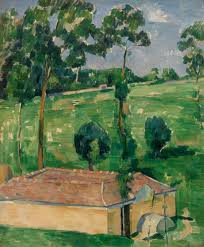
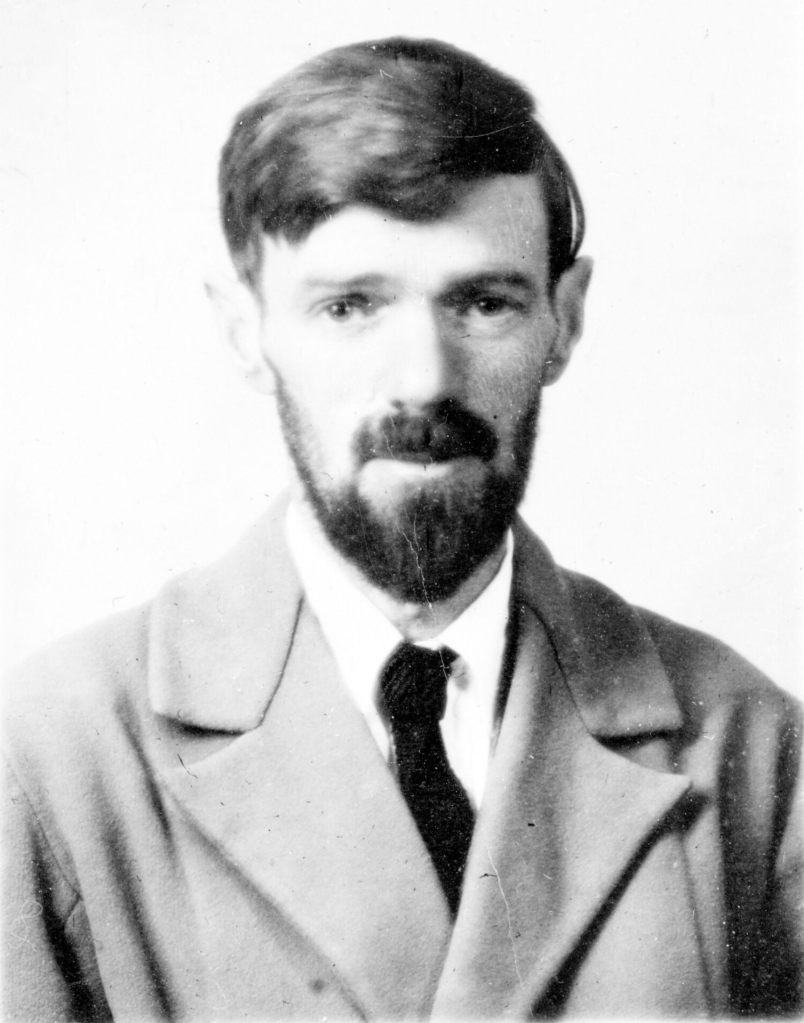
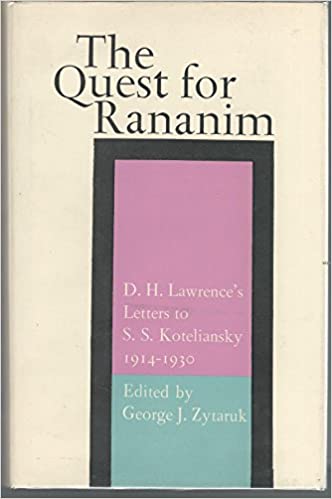
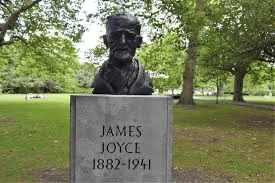





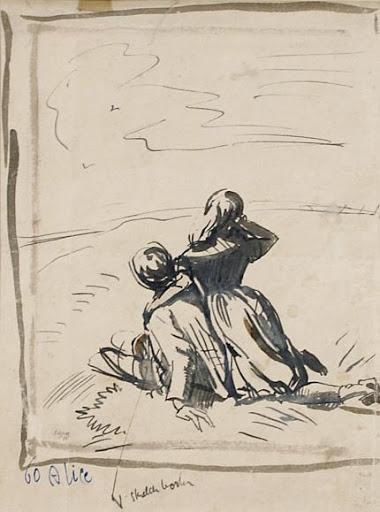
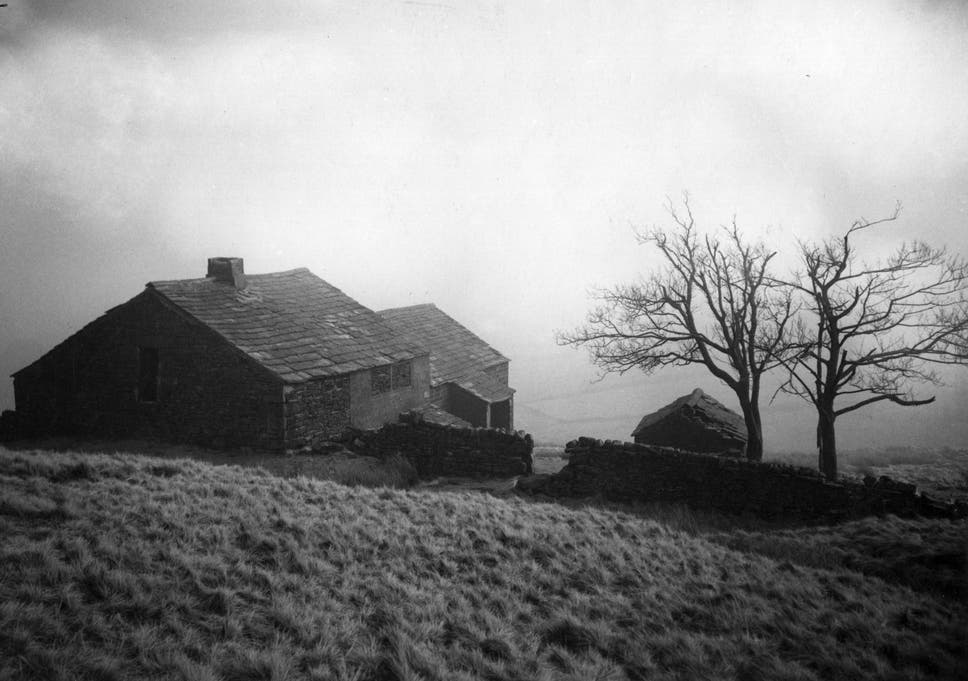

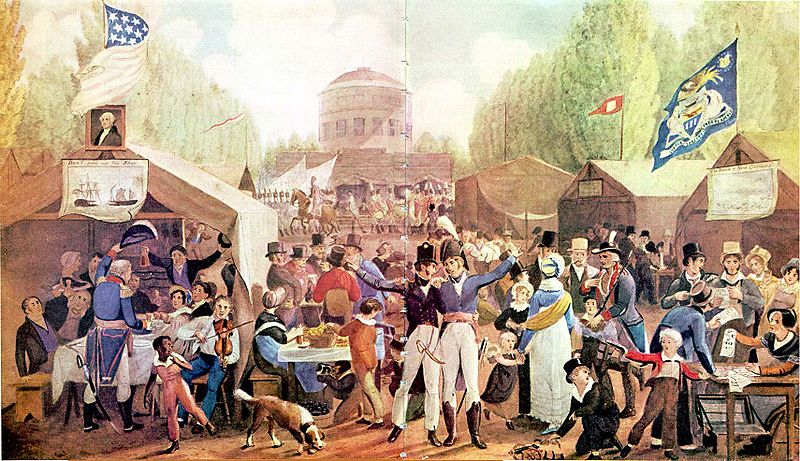
 Borderless