I mostly read commercial fiction and novels the first eight to ten years after I started reading. At that time, I was not familiar with the concept of genres and didn’t know – much less cared – about them. I was taking my first steps into the world of books and reading a new novel and finishing it was all that mattered. A decade or so later, now much more comfortable in the bibliographic world, I started experimenting with other types of books. Freakonomics (2005) by Steven Levitt was my first foray into non- fiction. Then I experimented with a few more history non-fiction books (history was one of subjects in graduation) mainly by William Dalrymple and Jawaharlal Nehru but also by other writers. Keen on territorial conquests of another kind, I experimented with Khushwant Singh, Anita Desai, RK Narayan and a few works by a few more Indian writers. Further from home, I tried out Charles Dickens (had read some abridged versions of his novels in school), Thomas Hardy, EM Forster and more. I read their novels, short stories and essays whatever I found.
I had travelled very far from where I had started many years ago, crisscrossing genres. But my idea of what makes a good read had hardly changed. Whether it came to fiction or non-fiction, contemporary or classic, it still revolved around ‘a story well told’. Of course, some characteristics had changed. I had become more patient with slower narratives, more adept at handling complex narratives, more comfortable with narrative calisthenics and more at ease with diverse types of writing. I had also developed an understanding about the basic differences between literary and commercial works. Even so, my idea of a good read had remained resistant to transformative changes, engendering the question in my mind: “Do genres really matter?”
The answer is both yes and no. Genres help categorise books based on what the reader can expect of them. There are millions and millions of books in the world and just imagine there being no basis to separate one book from another. The reader would have to go from the beginning to end of a book to understand what it was all about or start a journey without knowing what lay ahead. As much as it could be a delightful experience, it would bring in its own challenges. One of them would be to market the book.
Even if we don’t want to overlook the importance of commerce to art, let’s admit that no two things in the world treat each other with as much suspicion. Be that as it may, writers have, from to time, expressed their derision for genre. Kazuo Ishiguro, who has written many genre benders, once said in an interview that genres have no profound literary purpose or any substantial contribution to literature. They are creations of book marketers and their purpose is solely to sell books.
But is literary genre’s relevance to literature only archival and commercial? Maybe a minor digression will bring in a new perspective.
In Hindustani music, genre plays a vital role: it adds variety and richness. There are multiple gharanas (schools) in Hindustani music. Their identity is based on their geographical regions (Lucknow gharana, Carnatic gharana) they come from, the distinct musical heritage and ancestry they represent and the musical form they practice. However, the uniqueness of each gharana is determined by the raga it engineers by combining several suras (pitches). There are seven suras (notes) in Hindustani music.
Film genres contribute to films, of course, in terms of variety but also by creating slots based on audience preferences, social anxieties, aspirations and various other factors which allow filmmakers to address the associated emotions by placing their films in the predefined categories which helps to find a ready audience. Film genres are more fluid than Hindustani music genres. They come and go and also get clubbed creating a hybrid genre where different genres are built into one narrative to appeal to a wider audience.
On the other hand, traditionally, book genres have had rigid boundaries with very minimal or no cross-genre exchanges. In fact, the boundaries have been so rigid that authors of one genre have never shied away from expressing their disdain for their counterparts in another genre. Broadly speaking, the two warring factions have been literary and commercial fiction.
In The Naive And The Sentimental Novelist (2011), Orhan Pamuk says commercial novels (detective, crime, romance, sci fi novels) lack a ‘centre’ – a profound reflection on the meaning of life – which is integral to literary novels. This absence of a centre in commercial novels makes almost all of them same with nothing substantial separating one genre novel from another except their characters, plot twists and the murderer. This lack of substance makes it important for genre novels to always provide excitement to their readers, he alleges. On the contrary, according to Pamuk, a literary novel is a constant quest for the centre not just for the reader but also for the writer.
Some writers may not know the centre to start with discovering it while writing the novel as an act of serendipity. Some may structure their plots such as to illuminate the centre. Tolstoy had to change War and Peace (written in 1869, Translated in 1899) many times to discover its centre. Pamuk informs that Dostoyevsky had suffered epileptic attacks, after writing The Devils (1871-72, translated 1916), when he had realised that he had made a mistake leading to the sudden appearance of a new plan. And he had changed everything radically, Dostoyevsky had claimed.
Howevee, in The Miraculous Years, Joseph Frank, Dostoevsky’s biographer had said Dostoyevsky was exaggerating. The new plan had indeed changed the novel from a mediocre novel with one dimensional characters to a brilliant political one, but Dostoyevsky hadn’t changed more than forty pages of the 250 pages he had written the previous year. Apparently, it’s the ‘centre’ of the novel the great writer had referred to when he had said he had radically changed it, Pamuk concludes.
In The Great Derangement: Climate Change and the Unthinkable, Amitav Ghosh blames this obsession of serious literature with daily humdrum, or the ordinariness of life has traditionally kept it away from dealing with subjects which are not considered ‘serious’ leaving them for the humbler genre fiction. Climactic events like a gale flattening a town or massive rains drowning it were considered too incredulous, not making the cut for nineteenth century literary gravitas.
Until 19th century the division between fiction and non-fiction was fuzzy. In the 19th century, thanks to Industrial Revolution, there was a profusion of factories – moving workforces from unorganised, ruralized setups to more disciplined and controlled environments. What followed was people constructing their lives around their workplaces. This transformed rural and agricultural societies into orderly and urbanised ones bringing about a new kind of society which was far more cloistered, sober and unexciting than earlier societies which, being agricultural and rural, were far rougher and exposed to vagaries of life and nature. The colourful stories of pre 19th century couldn’t adequately capture this new reality; it needed a new kind of literary tool. In came the serious fiction or what we call today the literary novel.
Pamela by Samuel Richardson (1740), Shamela by Henry Fielding (1741) and Tristram Shandy by Laurence Sterne (1760) were the first attempts at literary novel dealing with such solemn themes as social differences, inner conflicts and women’s sexual autonomy. This style of writing travelled far and wide. Among others, it was adopted by Bankim Chandra Chatterjee, among the earliest practitioners of the novel in India, digressing from the earlier traditions of storytelling in India, the Jataka tales and so on, informs Amitav Ghosh in The Great Derangement: Climate Change and the Unthinkable.
Over a period of time, puritanism around contours of literary fiction set in, and it’s difficult to say when the wall between serious and literary fiction collapsed – in fact one can say it never did. But just as literary novels had emerged to accommodate a new kind of reality in 19th century, breaking away from genre fiction, genre benders have accounted for another kind of changing reality which is presenting challenges hitherto unimagined within the conventional boundaries of human life, like the effects of climate change and technological advances like artificial intelligence and machine learning.
To capture the idiosyncrasies of modern life, many literary writers have flouted the boundary between literary and genre novels by setting their plots in the genre format while retaining the treatment of literary fiction. In Kazuo Ishiguro’s When We Were Orphans (2000), Christopher Banks, now a private detective in London, sets out to investigate how his parents disappeared from Shanghai during the Second Sino-Japanese War. The novel is about life’s profundities like memory, nostalgia at its heart, although it’s written like a detective novel. The plot constantly moves from one incident to another keeping the reader waiting for the end, even as it draws a detailed picture of Shanghai society during the war. In Ishiguro’s recent book – Klara And The Sun (published in 2021) – he explores what separates human from robot even after the robot has acquired human-like intelligence. The book has a children’s book like element to it which is its main charm.
Many writers have experimented with multiplicity of forms, but among the notable books are Kobo Abe’s 1950s novel, Inter Ice Age 4, which starts as a hardwired sci fi but slowly evolves into a political thriller and Italo Calvino’s If on a Winter’s Night a Traveller (1979) whose plot bifurcates into two in the middle of the novel. There on, in some chapters, the reader is solving literary mysteries while the other chapters are the first chapters from other novels of varied styles.
The novel like any other art form has survived and moved ahead through adoption from within its various forms or external influences. When a new form arrives as a reaction to a social change or occurrence or an enterprising writer pushing back the boundaries, puritanism sets in to preserve the form in its purest state if it achieves literary acceptance and fame. Novels with magic realism and migration are some examples. When the form outlives its utility or is made obsolete by emerging trends or excessive repetition, it gets subsumed by another form and survives as part of it or slowly dies out. And thus, a new form, a mix of the two or many more, emerges. And the novel lives to fight another day.
.
Indrasish Banerjee has been writing and publishing his works for quite some time. He has published in Indian dailies like Hindustan Times and Pioneer, and Café Dissensus, a literary magazine. Indrasish is also a book reviewer with Readsy Discovery. Indrasish stays and works in Bangalore, India.
.
PLEASE NOTE: ARTICLES CAN ONLY BE REPRODUCED IN OTHER SITES WITH DUE ACKNOWLEDGEMENT TO BORDERLESS JOURNAL
Rakibul Hasan Khandiscusses Sofiul Azam’s poetry collection Persecutionfrom a postcolonial perspective
Soiful Azam
Sofiul Azam is one of the most important English language poets from Bangladesh. Persecution (2021) is his fourth poetry collection, which has recently been published by Salmon Poetry (Ireland). His poetry has already appeared in some of the leading poetry or literary journals across the globe, including Prairie Schooner, North Dakota Quarterly, The Ibis Head Review, and Postcolonial Text, to name a few. In Persecution, Azam shows an astonishing poetic talent, offering some wonderful poems on the themes of love, war, and politics, among others. If we read the poems of this volume purely from an artistic viewpoint, we will find most of them as what might be called “perfect” poems, but we may find the same poems somewhat problematic if we read them from certain political perspectives.
The volume has recently come to me travelling a long distance from its publishing house in Ireland to my present residence in New Zealand. This journey, which began in Bangladesh where Azam lives, has covered three different countries of three continents. Such a transnational breadth is the main motivation for writing in English for many South Asians today, who have internalised English as a language of their own for their creative expression, inherited from their colonial past.
These poets capture the complexity and multiplicity of South Asian life with the common thread that binds them all — the language, English. Their expressions are somehow distinctly South Asian. This fact makes Azam stand apart from many of his counterparts in Bangladesh. Very few English language poets from Bangladesh, especially those who were born and brought up there, write such “perfect” poems in English. But Azam’s perfectly written poems in “native” like English with somewhat Western outlook and a poetic expression deriving from Western literary canon make some poems of Persecution incongruous in the South Asian context. In this essay, I will shed light on this incongruity while exploring some other features of his poetry.
The most obvious influences on Azam in this collection are Eliot (1888-1965), Auden (1907-1973), and Walcott (1930-2017). Perhaps, among them his true poetic inspiration is Walcott, who is sometimes alleged to be more an English poet than a Caribbean. This is somewhat true about Azam as well, but his situation is, of course, unlike Walcott. Azam is a self-made poet who has mastered his art of writing poetry in English through reading, overcoming his spatial “limitation” of living his whole life in a Bangla dominant country like Bangladesh where English is no more than a foreign language. Therefore, it would be an injustice not to recognise his extraordinary achievement in mastering the language to write like a ‘native’. But his poetry is not all about language. Azam’s success in Persecution lies in the fact that almost each poem is neatly written, maintaining outstanding poetic and artistic expressions. If the poems were decontextualised from their social, political, cultural, and historical backgrounds, this would be a collection of “perfect” poems. Azam in Persecution is like Walcott – more an English poet than a Bangladeshi! It is, of course, an overstatement, but there are some truths behind this assertion. To illustrate my point, I quote some lines from his poetry:
I tell myself that I can afford to be happy
like a grizzly bear only having to feast on salmon
moving upstream through shallow creeks to lay eggs and die.
I need to act like a hiker does, getting all he needs
On the wild shrubbery dense paths in Yellowstone.

(“The Capitoline Wolf,” 14-18, pp. 15)
In the quoted lines, no one can doubt the mastery of Azam’s versification. If one is not informed of who is the writer of these lines, it would be hard to imagine these were written by a Bengali (English) poet. Objects and images like “grizzly bear”, “salmon fish”, “hiking” and “Yellowstone” are so foreign in the Bangladeshi or even in South Asian context that they seem to be incongruous in an otherwise perfect poem.
But Bangladesh is not untraceable in Persecution, particularly in the part entitled “Heat of Interrogations”, where Bangladeshi landscapes reappear time and again through the poet’s nostalgic recollection of his childhood life in his hometown near the Garo Hill. The hill and a backyard pond in his grandparents’ house are the two most frequented places for the poet to escape from the complexities of metropolitan life of Dhaka where he lives. There is a clear undertone of English romantic poetry in the poems of this section. The quoted lines below may clarify my point:
I grew up picnicking in the Garo Hills.
In summer, I saw trees and clustered vines
dance in the wind and get covered with red dust.

One day we will go there, to see together
the rain falling and washing the dust
off their green foliage.

(“Rain,” 28-33, pp. 17)
This superb poem somehow reminds me of Yeats, especially the early Yeats of romantic phase. I quote some lines from “Coming of Age,” another poem from this part, which casts a shadow over a nostalgic recollection of childhood event through the experienced poet’s realisation of its innocent cruelty:
Even as a child, I did atrocities like floating rat pups
in a coconut shell on a pond’s calm water.
I hear their sqeaks though I’m not degaussed
to such evils yet, drifting far from atonement.

(11-14, pp. 12)
Such memories are the backbone of his poetry. In retrospect, he offers a profound insight into his life, which has a general appeal: “What am I but an accumulation of memories, / each of which is surmounted with unsuccess?” (16-17). It is true that every individual is an accumulation of memories.
This is a prominent feature of Azam’s poetry to attempt to give vent to some sad truths of human lives in general terms, especially in this part of the volume. The following lines from “The Pond at Grandpa’s House” may support my claim:
                       But I
Remain tensed like a hyacinth
Worrying about the lowering water.

(17-19. pp. 19)
This “lowering water” perhaps makes all of us tense, humans whose existence is as uncertain as that of a hyacinth and threatened by the drying up of water – the most vital source of existence. It is more so for Azam who does not want to strike his root in any particular place:
                              I don’t ever relish
the singular idea of being rooted in just one spot;
I rather feel like a rhizome branching out new roots
from its nodes, trying out its various potential climates
for the plurality is itself a self-renewing adventure.
Losing faith in those too preachy about the singular,
I prefer to be an unpaired jerk lusting for the plural.
If I say this planet is where I began and my windows
open into the universe, would I be allowed to belong?

(“Earth and Windows”, 22-30, pp. 30)
This is an unequivocal statement of Azam’s internationalism or transnationalism, renouncing any specific national identity.
Azam’s preference for a transnational identity is a common choice among many poets and writers of the so-called postcolonial world. It makes them different from the traditional postcolonial poets who usually express their deep desires to be rooted in their lands and cultures. Therefore, Azam’s choice of a transnational identity, against the backdrop of his ancestral home that he often revisits, can be interpreted as the conscious choice of a poet whose writing in an adopted language opens up before him an outstanding opportunity to explore other horizons. But there are scopes for raising questions about the intention of such transnationalism. Is it an opportunity for the poet to make his poetry more presentable to an international audience, since creative writers in English from Bangladesh and South Asia in general inevitably sense the shadow of an international as well as an unknown readership at the back of their minds?
I am aware that I am making a clichéd and contentious claim, and I may even be charged for being a nativist for raising such questions. Therefore, I must clarify my discomfort in coming to terms with the idea of transnationalism, which I think is largely confined to privileged people who can afford to assume multiple identities. This is perhaps a narrow and simplistic view of transnationalism, but it cannot be denied that those who adopt transnational or multinational identities are generally from privileged social positions. However, one particular feature that intrigues me the most is Azam’s romantic recollection of the past often with a profound attachment to nature. It makes him, to me, the last romantic of the post-postmodern age!
Part two of the book, “The Flames of Desire,” also exemplifies his romanticism. It is the spiciest part of this volume, but some of the poems in this part slightly disappoint because they do not fulfil my expectation of capturing the complexities of human relationship that I expect from the twenty-first century love poems. I am quite sure that many readers will differ and I admit that what makes me critical of Azam in this volume is essentially because of our ideological differences; his poetry as a form of art has mostly nothing to do with it. However, an exciting feature of this part is Azam’s experiments with metaphysics. This part brings out the influence of English canonical literature in shaping his poetic sensibility and artistry. On the one hand, the erotic and sensual images that he creates with an abundant use of conceits may remind one of John Donne, on the other, the rendering of the metaphysical elements in a modernist vein will remind one of T.S. Eliot who rejuvenated metaphysics in modernist poetry. The following lines from “Krishna’s Return Home” show evidence of his use of metaphysics:
As I reluctantly walk out of your woolen warmth
far worthier than the promise of a kingship
in heaven, I see washing on the line under the sky
with a few stars peeping like pot-bellied spies
through the curtains of dark clouds. (1-5, pp. 37)
These lines, once again, reflect the impressive craftsmanship of Azam who succeeds in matching the poetic talents of the English poets who influence his poetry.
The extramarital sexual trysts that Azam accumulates in this part may titillate readers. But while emulating the erotic art of a seventeenth century poet like Donne who is notorious for his misogyny, Azam also falls into the same trap of presenting women as an object of men’s sexual pleasure, without any agency. The poem “Who Doesn’t Want to Make Love to Someone’s Wife?” is a case in point, from which I quote the following lines:
Could I borrow you?
I promise you will be returned unhurt to him
who’ll know nothing of rain’s work on a taro leaf.

(10-12, pp. 47)
This wonderful poetic expression is problematic for its gendered undertone. Although it may sound like making a gross interpretation of a love poem, I cannot overlook the fact that the quoted lines’ that show women are men’s possessions and they can be borrowed like any other objects. It sounds like a very offensive idea to me. Similarly, in some other poems, he compares different parts of a female body with fruits to be consumed by men.
The third part of Persecution, “Embers of Disappearance,” contains the most politically conscious and powerful poems. I enjoyed the poems of this part the most, but some of those are, unfortunately, problematic for being Eurocentric in outlook. One example of Azam’s Eurocentrism or a Western attitude is his treatment of wars, which is a recurring theme of this part. Surprisingly, Azam does not look beyond the world wars of the twentieth century to reincarnate the horror of war, assumably because of his politically apolitical and liberal humanistic Western outlook. Here lies the main incongruity of his poetry, at least from my ideological perspective. I think it is incongruous of a twenty-first century Bangladeshi poet to rely so heavily and uncritically on the World Wars to reflect on the horrors of wars, whereas there are so many ongoing and past wars in his part of the world, so many struggles of the oppressed.
Even his so-called transnationalism and lack of belonging to any particular place perhaps do not justify his stand because there are also many poems in this volume that reflect his awareness of place and time. Therefore, his position is curiously ambivalent in relation to his homeland. This kind of ambivalence is often considered to be a quintessential characteristic of the so-called postcolonial poets, but the paradox is that Azam does not seem to be very keen to identify himself as a postcolonial poet.
Azam’s treatment of wars also indicates the influence of modern English poets on him. The following lines from “Requiem for the Undead” reflect his reminiscence of Eliot’s rendition of the horror of the First World War in “The Wasteland”: “A desert greens with corpses planted as seedlings. / Did dry sands wish to be washed out with blood?” (11-12, pp. 76). In the same poem, Auden’s account of his devastating experience of the Second World War in “The Shield of Achilles” is echoed:
Weary footfalls, the oars knifing the watery flesh.
The dreams that linger are burst-out bubbles
or hollowed-out conches washed on alien shores.
Batons, barbed wares, and the cold greet the future.

(21-24, pp. 76)
Similarly, in another poem, he echoes the final line of Walcott’s famous poem “A Far Cry from Africa.” Walcott writes “How can I turn from Africa and live?” and Azam writes “How can I write poems and think of beauty alone?” (“Worries at a Hilltop Resort”, 27, pp. 89). Such kind of “intertextualities” are often intentional. They are undoubtably very artistic and evocative expressions, but the problem is neither the intertextuality nor the art, rather the context of the time and place when he wrote these poems. Do I sound like a nationalist now? I would rather call myself a postcolonialist. However, the influence of classic English war poets like Wilfred Owen or Keith Douglas, or the Cold War period’s poet Boris Pasternak, or the holocaust theme of Auschwitz in his poems indicates not only his inclination to present twentieth century modernist themes but also his Western point of view of meditating on his own experiences and perspectives. In this sense, he is a twenty-first century modernist poet from a postcolonial location, although it is not unusual among the Anglophone postcolonial poets to embrace Western modernism as Jahan Ramzani explains in his comprehensive study on such poets in A Transnational Poetics (2009). The irony is that Azam and many others seem to reject the identity of the “postcolonial,” but that identity persists to hang stubbornly around their necks like the dead albatross.
The most ambitious poem of this volume is “Prayers to the God of Jihadists.” In this poem, Azam deals with the issue of Islamic radicalism, which is a pressing concern for the contemporary world, particularly for the West. Azam also writes the poem largely from a Western perspective, which is evident in his use of the word “jihadist” – a popular Western coinage to describe the radical Muslims, and it is sometimes indiscriminately used to label Muslims in general. For many in the West, Islamophobia has ominously led to suspect every Muslim as a potential jihadist, and by writing this poem from their perspective, Azam seems to simplify a complex issue. The poem thus turns out to be a problematic one despite having enormous potentialities to become a great poem.
Nonetheless, there are many poems or short expressions in Persecution which save Azam from doing injustice to his poetic merit. “Persecution” and “The Photographer” are two such poems. In these poems, Azam offers exemplary political consciousness, being fully aware of his time and place. I quote some lines from “Persecution”:
In the wake of the Confederate flags flying
o’er the land of the free and the home of the brave!
I know brown won’t ever be de-browned to white.

I’m a genealogist, cracking the encryption codes
of all those suspicions under my critical lenses.
Oh, don’t let colour and culture make distance between us.

Elsewhere lines of sanity are now increasingly blurred.
Erich said Hear, O Israel! A new Holocaust is raging on.
So between an anvil and a hammer I stammer:

For Jews in Hitler’s war my sad tears drip,
Also for kids bombed out in the Gaza Strip.
Not anti-Semitic but you know Zionists never get it.

(43-54, pp. 93)
Whereas the above lines from “Persecution” express Azam’s consciousness of international politics, the “The Photographer” represents his awareness of national politics. In the latter poem, Azam makes a bold statement about political persecutions in Bangladesh. The photographer in the title of the poem alludes to a renowned photographer and political activist in Bangladesh named Shahidul Alam, who was arrested on the ground of sedition during a time of political unrest in 2018. In the following lines from the poem, Azam asserts his support for the photographer, protesting the repressive political regime that restricts freedom of speech:
                         I want caged birds
to sing their dreams out loud so that captors

feel the horror of wings being of no use.
Palmyra palm trees, though rooted,
make wings of their fronds. And only freedom

gets us on the wing. But in this country,
rules from their laboratory rain down on us
clay subjects and wash away what we made

solid with labour. I wonder if they’ll wise up
to the light brewing under darkness.
Those mute photographs will be vocal soon.

(“The Photographer”, 17-27, pp. 104)
Thus, Azam expresses his solidarity with an artist who fights for freedom of thoughts and expressions through photography. This poem of a national subject matter has an international significance, for nowadays persecutions for dissents are very common everywhere around the world. It also justifies the titling of the volume.
In fine, I repeat that Persecution is a collection of “perfect” poems. There are some problematic areas in this volume, but those are hardly because of any artistic weakness of the poems; rather, Azam’s ideological position sometimes weakens his political stance. His over cautiousness with form and expression is probably another reason of his political compromise. There is hardly any contemporary issue that he does not deal with in this relatively thin volume. Though I have not mentioned it in my discussion, his ecological consciousness is another highlight of this book. Therefore, I warmly accept this collection, keeping in mind the way the speaker of one of his poems asks his beloved to accept him with all his imperfections:
                        I am not

requesting you to accept me as a gem
you might have lost by mistake on the way,
rather as one humanly rife with imperfections.

(“Who the Hell Benefit from Denials?,” 51-54, pp. 60)
Rakibul Hasan Khan is a PhD Candidate in English at the University of Otago, New Zealand. He can be reached at rakib.hasan82@gmail.com.
.
PLEASE NOTE: ARTICLES CAN ONLY BE REPRODUCED IN OTHER SITES WITH DUE ACKNOWLEDGEMENT TO BORDERLESS JOURNAL
Suvrat Aroramuses on the impact of a classic that seems coloured with biases. On the other hand, it showcases historic prejudices that should have changed with time, learning from the errors of the past… as humankind should have revered many other historic books…
The title page printed in the Second Folio of 1632. Courtesy: Creative Commons
Literature, especially fiction, can inarguably exist without any caveats unless it endeavours to loosen the rudimentary threads of morality and integrity that constitute the society’s fabric. When works of imagination are ingrained with concrete bigotry and unethicality, they slink into reality and contaminate peoples’ opinions to fuel contemporary predicaments.
For the past four hundred years, Shakespeare’s comical play, The Merchant of Venice, has been widely absorbed — in various the formats like academic readings, stage performances or movie adaptations. While stage performances and movie adaptations might mask and mend the ruthlessness against the play’s Jewish ‘villain’, a scrutiny of the original text reveals Shakespeare’s gruesome treatment of his Jewish characters in the play.
The plot of this classic narrative follows the titular merchant Antonio who, in order to aid his friend Bassanio, takes a loan from a Jewish moneylender, Shylock, with whom he had had an occasional exchange of invectives. They sign a bond that a failure to repay the loan in time will lead to Shylock cutting a pound of Antonio’s flesh. Bassanio, meanwhile, uses the money to participate in the lottery of caskets that Portia’s father had devised for her marriage. While Bassanio smoothly outdid the long queue of Portia’s suitors to marry her, Antonio’s fate refused to favour him. Antonio’s inability to repay the loan leads to the iconic trial scene. When the trial of the case was up in the Venetian court, Portia disguised herself as a male doctor of law and fought Antonio’s hopeless case. While Shylock was all set to cut a pound of the merchant’s flesh and had simply denied all pleas for mercy, Portia’s witty interpretation of the bond turned the tables — the bond clearly spoke of ‘a pound of flesh’ that Shylock shall get upon untimely return of his money, it did not speak of any blood. So, if Shylock would ‘shed one drop of Christian blood’, he would be subjected to punishment. Further, the court charged Shylock with attempts to seek the life of a Venetian citizen, under which his lands and goods were confiscated, and he was forcibly turned into a Christian — after which there’s no mention of Shylock in the play.
This convoluted plot with escalating tensions leading to the intense climax has continued to drive esteem from literary scholars and global audiences. However, all the applause cannot silence the echoes of prejudice and racial intolerance entrapped within the play. “One would have to be blind, deaf and dumb not to recognize that Shakespeare’s grand, equivocal comedy The Merchant of Venice is nevertheless a profoundly anti-Semitic work,” stated the literary critic Harold Bloom in Shakespeare: The Invention of the Human. Not only literary brilliances like Bloom but even a naive eye cannot fail to spot these specks of discrimination scattered all over the play.
From the beginning of the play, the characters have perpetually referred Shylock as ‘the jew’, suggesting his religion outdoes his identity or as if he did not belong to a typical class of Venetian citizens. This reference ‘the Jew’ has, at times, been preceded by reproachful modifiers — ‘the currish Jew’, ‘the villain Jew’, ‘the dog Jew’ to name a few. Shylock lending money on interest is another reason he was subjected to hatred as it was considered an ‘unchristian’ way’; this further amplifies the notion of portraying Jews as greedy Christian killers. In the dramatic trial scene, Shylock was gratuitously forced to adopt Christianity. Besides, Shylock’s daughter, during the course of the play, who had eloped with Lorenzo, also turned into a Christian. Two of the significant Jewish characters converting into Christians by the end of the narrative in the guise of a happy ending exclaims out aloud Shakespeare’s religious biases.
The lack of ethical sensibility is not circumscribed to the mistreatment of Jews; it stretches further into other forms of discrimination. When Portia encounters one of her competent suitors, the Prince of Morocco, she bears bitterness towards him owing to his dark complexion. When the Prince of Morocco fails to choose the right casket in the lottery, Portia sighs in relief, saying, ‘Let all of his complexion choose me so’ – clearly symbolizing her disgust for dark colour, which was her mere metric for disregarding the Prince of Morocco.
At this juncture, the flagbearers of sacred Shakespearean literature might defend him, citing that Shakespeare’s intent was to depict the cruelty against the Jew in order to fetch them some sympathy. Yet the lack of explicitness in such depiction and absence of any Pro-Jewish forces combating all the injustice, slaughters to pieces any such counter-argumentation. Although it cannot be denied that the play sheds a dim light on Christian characters’ unjustified deeds, it does not balance out the severe brutalization of the Jews.
Shylock has undoubtedly managed to conquer a sympathetic corner in the hearts of his contemporary readers, but the peculiar language and word choice of the text suggest Shakespeare’s intentions as otherwise. The evident endorsement of prejudice, discrimination constituted upon race and colour, and justification of enforced religious conversion dargs the play’s usage as an academic substance, a mere recreation and even a centre of literary admiration into a huge interrogation — and demands us to contemplate on the complicatedness of the narrative, listening to the howls of its immoralities that reverberate even today.
Suvrat Arora is a Junior at Thapar University pursuing Computer Engineering. An avid reader and hobbyist critique of literature, he reviews books under the name ‘bookish blurb’ and can frequently be found writing or editing for various society publications within the university.
.
PLEASE NOTE: ARTICLES CAN ONLY BE REPRODUCED IN OTHER SITES WITH DUE ACKNOWLEDGEMENT TO BORDERLESS JOURNAL
“…most lawns within
the limits of the municipality
are to be grown
on billiard tables—
fertilized by the organic matter
that is commonly
trapped in pinball machines
when the marbles
sit on their commodes.”
-- Marjorie Hawksworth, Urban Renewal
When my home grew old, its windows started chattering in the wind like teeth. My younger siblings would remember it only as they would a distant grandparent near twilight years. They would remember the impressions of dusted off termite nests looking like brown, dried-up river routes on a map. I was impatient with such memories. I liked to reminisce the angsty drawings I painted at whim in my teenage years on the walls, or scribbles made by my sister when she was five, both of which had gotten layered over with whitewash. In memories younger than mine, home was a description of what it would turn into.
Even neighbours who came to live in houses vacated by older neighbours from my childhood had relatively young memories. There was a real estate dealer who remembered everyone’s homes in terms of what they would fetch when the nearby flyover to the highway was constructed. When he saw someone strolling in the street, he would hint the value he put on their plot with the width of his smile. There were also other people concerned with this make-believe flyover. Some folks whose ancestors had missed out on the land grab of the early years in the city and who had now been compelled to build up from benami land as a collective, and who had now declared this place a small ‘village’ with its own municipal councilor, were preparing to lobby shifting the flyover by a few yards, so it just missed stomping out someone’s house. The optimal outcome was to make the construction cut through a nearby square plot which made everyone suspicious. This patch had a boundary circumscribing it with names of four different owners in white chalk on each side. Benami: under no one’s name. Here, under more than one name.
Most real estate projects in the city had an underbelly that lay bare like a demo surgery for medical freshers, but concealed in plain sight. The underbelly of our home, the surrounding apartments, the real estate broker’s house, and the old and new neighbours’ homes was the settlement along the bottom edges of the area of migrant labourers from faraway states, dragged here on the same wind that entices investment in real estate.
Successive winds had made these populations denser, trickling their living spaces down precarious slopes where land descended into ravines of seasonal rivers. These rivers overflowed with mud and plastic in the monsoon, taking with it a limb or two of these makeshift settlements, like the sea dilutes the durability of a sand castle with every wave. From them, our homes sourced domestic helpers and those who wanted to build more homes sourced their workers. They were the gears of going-on-ness. A well-intentioned administrative servant had, before retiring, laced the margins of the enclave with bamboo plantations. Bamboo roots kept soil steadfast. Bamboo was a mute saviour for informal settlements. Below the bamboo shoots, iron rods jutted into the ground to lay foundations of large infrastructure, like a bed of a thousand arrows from the Mahabharata. The imposing character of Bheeshma breathed his last on a similar bed amid the battlefield. He had the boon of dying only when he willed.
When my home grew old, the sight outside its windows became weak. The eye could not wander far without colliding into a concrete block, manifestly an apartment structure called either ‘Mountain View’ or ‘Mount View’. Most of the flats in these apartments came in the way of each other’s view. For a couple or more square kilometres, residential complexes grew competing for the remaining thin sliver of sight of the nearby hillock.
Higher-end, dissatisfied customers then began shifting closer to the mountains to catch a better glimpse. Younger memories are not tempered with the punitive side of things. Between widening smiles of brokers and narrowing views of mountains, the remembrance of harrowing disasters is dissolved. In fact, the dissolution is all the more profitable. The aftermath of a natural disaster is a levelled playing field for real estate and repair to begin its game anew. Its anticipation marks the desire for a smarter city, a renewed city, a resilient city, a city that has gone on record trying to be the best version of itself.
Old houses in this city are nails in the imagination of the future. The people who own them refuse to ‘develop’ them—adding a floor, remaking the shape, clubbing two plots, encroaching extra space through a fence, rejigging the drainage, and so on. The view, finally, can be of state-of-the-art high-risers as good as the mountains themselves, often a cause of envy for them because they house more greens, lawns and gardens.
Bamboo, and many species of trees growing on sloping land have a packed network of rhizomes in the soil. These roots ought to tell us something; when the land yawns and shifts, all these interconnected rhizomes cling and stay. For narrow rods that penetrate deep, like flimsy taproots, the slightest tremor will send up magnified vibrations that reinforced concrete may be too rigid to bear. It could move when shaken. Or stand still and fall.
The city bureaucracy is like Mahabharata’s Bheeshma—of lofty character, having trained in the academy not far from here, and unwavering in commitment to the law, the Dharma, the golden rule of do unto others. The Dharma calls for moulding a supercity out of this virgin land, this plot-sized town at the scale of the nation. Uproot these cobweb-like rhizomes from the soil, make some fancy wood-furnished cafés from the barks, provide them with a natural aesthetic, and carpet the remains with rubble and concrete. Chase away the birds and install some ambience music, pigeons can stay, and someone will need to be employed to clean their droppings from the massive glass windows. Someone not from here, preferably — who share no votes here. The visionary gentle people who gave us ‘Mount View’ can give us our own sequestered enclave, replete with trees so our domain is secure at least.
Land title is presumptive in India. No one knows if you do own a plot, if you do, you may have some papers, these may be real or fake. The public record registers a few transfer transactions. The rest is too hard, too long, too complex, too silly. There is no land to give and take. Everything is already transacted. Unless the government seeks to flatten another forest. Land is assembled by real estate, by law, by settlement, by business, by the bureaucrat, minister, broker, resident, worker, shopkeeper, caretaker, priest and peddler. No one knows if someone else owns a plot, yet everyone continues to own more. When my home grew old, many people started pouring in to see if in fact they were the ones who owned it all along. Or if they could. Or if they couldn’t but wanted to. When my home grew old it became a thing to be cross-checked with our older memories, to see if it had been there at all. The second-guessing might prove too much for us.
Jayat Joshi is a researcher of urbanisation, especially the politics of land in India. He is pursuing a Master’s in Development Studies from the Indian Institute of Technology Madras.
.
PLEASE NOTE: ARTICLES CAN ONLY BE REPRODUCED IN OTHER SITES WITH DUE ACKNOWLEDGEMENT TO BORDERLESS JOURNAL
Disclaimer: The opinions expressed are solely that of the author and not of Borderless Journal.
When iconic Urdu writer Ismat Chughtai (August 21, 1915-October 24, 1991) wrote ‘Lihaaf’ (quilt) and made waves by portraying alternative sex in 1941, second-wave feminism was still around two decades away. Her feminist subversion of patriarchy with the portrayal of a woman’s conditioning vis-à-vis her body had no parallels in the West then. ‘Lihaaf’ predated Simone De Beauvoir’s The Second Sex by five years. Chughtai’s journey to becoming South Asia’s top feminist writers began in Aligarh where she had her literary grounding at a school affiliated with the prestigious Aligarh Muslim University (AMU). The school was upgraded to a college in 1937, nineteen years before Delhi’s premier Lady Shri Ram College was founded and when the literacy rate among women was just three per cent in India.
The AMU Women’s College was the labour of love and realisation of the dream of its founders, Sheikh Abdullah and his wife, Wahid Jahan, of educating and empowering women in a dusty inland town while western education had just begun to flourish in far off coastal centers. It was not an easy task for them. Both Hindus and Muslims opposed Abdullah’s movement to educate women, fearing it would lead to ‘immorality’. Many years later, he told the students of the college with a sense of triumph and pride: “When, after innumerable odds, we came out of the darkness, it was found that education had the same bright effect on them as silver polish has on pots and pans. Educated girls have illuminated our society.”
The movement for educating women in Aligarh started during the lifetime of AMU founder Sir Syed Ahmad Khan, who, in celebrated historian Ramachandra Guha’s words, ‘propagated liberal values and rational outlook to oppose blind adherence to traditional values’. As a result, the Muslim Educational Conference formed a separate department for women’s education in 1898. It promoted the idea through Aligarh Institute Gazette. Abdullah, who was close to Khan, was appointed to look into the women’s educational project in December 1902. A special ‘Aligarh Monthly’ issue was published in November 1903 for the purpose. Abdullah, who was educated at AMU after migrating from Poonch in Jammu and Kashmir, later started a dedicated journal Khatoon (woman) for the promotion of women’s education in 1904. He simultaneously founded Female Education Association in 1904 to promote his cause and provide support to institutions working for it. Abdullah got a shot in the arm when Bhopal’s ruler, Begum Sultan Jahan, offered him a grant. Thus Aligarh Girls School took off with five students and a teacher on October 19, 1906. Science and social science were part of the initial syllabus.
The school was the first for Muslim girls in north India, where Abdullah’s daughter Rashid Jahan honed her rebellious streak. Rashid was trained as a doctor, who chose a radical path of a communist and a rebel. She went on to study at Lucknow’s Isabella Thoburn College after her schooling in Aligarh. Rashid was among the first Muslim women to be trained as a doctor at Delhi’s Lady Hardinge Medical College. She was a woman ahead of her times — both in personal life and the literature she produced. Rashid was unusual in the choice of her profession of a gynaecologist, her dress — a khaddar sari with sleeveless blouse — and style — short hair. She travelled to far-off places to treat the needy and the poor. All this was rare for any woman of her generation particularly in Uttar Pradesh in the first half of the 20th century before independence.
Rashid was one of the four authors of a polemical collection of stories, Angaarey (embers), which provoked outrage in 1932 with its attack on religious conservatism and British colonialism. The collection was banned in March 1933. But it led to the formation of the Progressive Writers’ Association, which attracted the likes of Kaifi Azmi, Ali Sardar Jafri, and Chughtai and revolutionised Urdu literature. Rashid wrote about female bodies with the exactness that only a doctor with intricate knowledge of human anatomy would. She attacked purdah, patriarchy, and misogyny. Rashid influenced Faiz Ahmed Faiz with Marxist ideas along with her husband Mahmuduzzafar, while the latter was Amritsar’s Muhammadan Anglo-Oriental College principal while the poet taught English there.
Besides Faiz, Rashid influenced successive generations of Indian and Pakistan feminist Urdu writers and inspired them to explore forbidden subjects such as love and sex. This included her junior at school, Ismat Chughtai. Like‘Angaarey’, ‘Lihaaf’triggered a storm as it humorously dealt with lesbianism and sexual desires of women. The British colonialists charged Chughtai with pornography and she was summoned before a court over it. Yet years after her death her legacy lives on. According to Chughtai’s translator Tahira Naqvi, in nearly every department where South Asian Studies, Women’s Studies, Feminist/Gender Studies, and South Asian literature are taught, her work draws as much attention as her Western peers. Chughtai is often described as one of Urdu fiction’s pillars. She has deeply influenced the likes of Khadija Mastur, Hajira Masroor, Bano Qudsia, etc. Naqvi believes Pakistani poets like Kishwar Naheed and Fehmida Riaz have ‘derived inspiration from her bold, uninhibited style of writing’. Other notable alumni of AMU Women’s College included artist Zarina Hashmi, Pakistani film actor Nayyar Sultana, and writer Kusum Ansal, etc.
Many AMU Women’s College alumni may not have realised their full potential had not it taken its present shape in 1937 when India’s female literacy rate was less than three per cent. This is up to 65% now. Much credit for this goes to the pioneers of female education in India. Among them, Abdullah would be in the same league as the founders of India’s first women’s college, Calcutta’s Bethune College, in 1879 and Lucknow’s Isabella Thoburn College (1886). Abdullah’s efforts were recognised in 1964 when he was awarded the country’s third-highest civilian award — Padma Bhushan.
This is a slightly edited version of a piece published in The Times of India, the author’s former employer, in 2014. And then republished in his blog. Republished with permission of the author.
Sameer Arshad Khatlani is an author-journalist based in New Delhi. He has been a Senior Assistant Editor with Hindustan Times, India’s second-biggest English newspaper. Khatlani worked in a similar capacity with The Indian Express. Penguin published Khatlani’s first book The Other Side of the Divide: A Journey into the Heart of Pakistan in February 2020.
.
PLEASE NOTE: ARTICLES CAN ONLY BE REPRODUCED IN OTHER SITES WITH DUE ACKNOWLEDGEMENT TO BORDERLESS JOURNAL
Ratnottama Sengupta, who has edited an encyclopaedia on culture and is a renowned arts journalist, gives us the role ‘kanthas’ (hand-embroidered mats, made of old rags) played in India’s freedom struggle
Sarcasm dripped from every word when the Bengali proverb was missiled at a person who might have ignored his limited means when planning a revolution. But revolution indeed was wrought by the womenfolk of Bengal in the late 1890s and early 1900s when they discarded the brightly coloured drapes from factories across the seas and opted for the desi taant or handloom cotton saris that were less vibrant, even coarse. They were rising in response to Chaaran Kavi Mukunda Das, the itinerant singer who appealed to them through ballads such as “Chhere dao reshmi churi, aar poro na Banga nari (Leave behind silken threads, do not wear these on Bengali women)”. On the streets, in response to Gandhi’s call for Non-cooperation, men were burning clothes from the mills of Britain. The womenfolk, though confined to the inner courtyard, were not to be left behind in the struggle for the dignity that is freedom.
Subarnalata by Ashapurna Devi
Jnanpith winner Ashapurna Devi, in Subarnalata – the second part of her timeless trilogy on women’s struggle for empowerment which begins with Pratham Pratishruti (The First Undertaking) — records Haridasi, the housemaid who washed dishes round the clock in the wealthy joint family, bring back the expensive vilaiyati (foreign) sari she’d been given for the Durga Pujas. “Here, even if you can’t replace it, please take this back as this is an absolute no-no in our basti (colony) now,” she tells the karta, head of the tradition-bound family. Muktakeshi is stung by this insolence and threatens to sack Haridasi. But her daughter-in-law Subarnalata uses the incident as an excuse to make a bonfire on the terrace, with all the foreign made clothes the family elders and children had been gifted. If she’s chastised for this, so be it! When even little boys were submitting to police atrocities and men were sacrificing their all to sing Vande Mataram (Salute Motherland, authored by Bankim), how could the walls lock out the liberation cry?
Subarnalata, born and raised in the City of Palaces, is not alone in the silent war. Phuleswari, an elderly aunt-in-law she visits in the countryside, asks her if she has the borders of discarded saris. She needs two colours, black and red, to complete a kantha she has worked on. “But make sure these are not from vilaiyati saris,” she tells Subarna. “Those are far more attractive. The desi (Indian) ones are not half as shiny. But if I fall for the shine, my son Ambika will be offended. He told me, ‘It’s only because you have embroidered Yashoda-Krishna, else I would have fed this half-done kantha to fire!’” Subarna, who has not come armed with worn out saris, takes out her newly acquired hand-woven saris, tears off the desi borders and gives them to Phuleswari.
*
Yashoda chastising Krishna, gopinis (women friends or the milkmaids) pleading for their clothes, or dancing the Raas with Krishna, Duryodhan disrobing Draupadi, Durga slaying Mahishasura, Jagannath on the Rath with brother Balaram and sister Subhadra, Dasarath in a forest, Rama hunting the golden deer, Royal Bengal tiger, alligator, rows of elephants, horses, peacocks… Legends and icons were the major themes tackled by the ladies who inherited the evolved art of the needle from their mothers and aunts and grand aunts in the Hindu families. But these intricate lores were for the especially worked ‘lep’ kathas or sujnis – bedspreads primarily meant to be quilts or perhaps light wraps. Since these were given at marriages or at childbirth, soon ‘secular’ motifs such as boats and palanquins too entered the rectangular ‘playfield’, as did jewellery and ornaments like bajubandh which lent itself to the snake motif, and paati-haar or mat-patterned necklace.
But what kept the womenfolk busy round the year was the khoka (baby) kanthas used in the days when diapers were unknown, and every branch of the family tree became proud parents several times over. These small sized kanthas widely used the central motif of lotus and water lilies that were seen all around in the land of rivers, ponds, jheels or lakes. Surrounding the flora would be vines, the betel leaf, hand fans, fish, parrots, sparrows or some other small birds.
Then, there were the Aasan or carpet-like spreads meant for sitting on the floor. If they were to be used at mealtime, they would be patterned with kitchen utensils like ladle, kadhai, boti – the Bengali all-purpose knife, sickle or kaita, coconut dessicator, and fish that spells prosperity. The ones meant for daily pujas in the prayer room were adorned with floral motifs, leafs from nature, the paisley off a mango or recurrent curvilinear swastikas to ward off the evil eye. Such kanthas also served as covers for the mirror, on pillows, or even as rumal (kerchiefs).
In households that would spread out the jainamaza (prayer rug), dastarkhan (for mealtime spread) or gilaf to cover the Quran, the running stitch — mostly in red and black or green and blue thread drawn from worn out clothes — would conjure the tree of life, the pond laden with lotus, or simply abstract the rippling effect of water and of chatai, the mat in every Bengal home. In short, the craftsperson’s aesthetics built upon utilitarian objects of every shape from the landscape of everyday life. In this respect, kantha shared a kinship with Alpana, the art of drawing patterns on the earthen floor with rice powder.
*
The coming of the British changed the age-old tradition that is believed to have originated with the famished Buddha lying in the open, covered by patchwork rags or quilted cloth. Until, roughly, the 1800s the rag and the needle accounted for only the material half of the kantha: the hand that stitched and the imagination that determined the pattern to be embroidered spelt the other half. Both, the material and the motif were altered, subtly and gradually, by the historical and social metamorphosis that set in with the advent of the Europeans. For, with the imperialists came the tapestry inspired art and the needlework on matte cloth that relied upon the cross-stitch for its staple.
Now, this form of crafting spreads – be it for the bed, the table, or the floor – used designs that were published in books that came from England, France, Germany, and depicted European floral bouquets, pups and kittens, girls in bonnet or with umbrella, fairytale cottages, Greek warriors, even Zodiac signs. These mirrored the social reality of the landscape in which the rulers had grown up and left behind when they set out to conquer and rule. So, for the ‘natives’ this was as remote geographically as it was historically or in terms of tradition.
When the British rulers set up schools for girls and colleges for ladies, the students naturally took to crafting cross-stitch tablecloths and napkins, hand towels, tray cloth and tea cozy that were a part of the colonial lifestyle. The more enterprising ones even stitched the yardage together to make bedspreads and wraps but the amount of labour that went into it was immense. More importantly, the kantha was a unique, creative way of recycling that simultaneously conveyed the love of the elders who would make them in their minimal spare hours. Their kanthas may not have been autographed – though some were, but they certainly were ‘Stay Happy’ blessings even when the words ‘Sukhey Thako’ were not embroidered in by the unlettered grand aunts when the monsoon showers forced them to cut down on the outdoor rituals of preparing vadi, papad, achaar(pickle), kashundi(sauce) and sundry items for consumption round the year, or by widowed aunts with little wherewithal.
In later years, the creatively endowed craftswomen who could stitch layers of cloth without using a single knot, would also start stitching Radha Krishna, Shiv Parvati or Ram Sita on the matte. But by this time the Kantha had also come to grips with the social upheaval and had started depicting guns and cannons on the quilt! By this time, the Bengal Partition of 1905 had been reversed and the Nationalist movement had surged. Durga slaying the Bull Demon had acquired a renewed meaning as Sarbajanin Durgotsab – people’s celebration – took on a nationalist fervour. At the same time Khudiram, Netaji and Tagore gained wide popularity as icons to be mounted on the wall or even to be gifted as swaddle cloth for newborn to signify such blessings as “May you be like them!” or “May you live in a Free Country”. Gandhi’s charkha (spinning wheel) also gained popularity as a motif along the border of the kantha – this was another quiet way of joining the bandwagon of khadi that was spreading the unarmed war against the rulers into the interiors of the land.
As collections in some Museums of Folk Art such as Gurusaday Dutta’s show, the change in motif also saw the head to toe ‘Gora Sahib’ – a white-skinned European, as Bengal had also gone through periods of French domination – make his appearance in kanthas. This was not unique to the needlework art, though. The coveted Balucharis of Bishnupur and Murshidabad that were conventionally identified by their depiction of battle scenes from Kurukshetra or nawab-begums smoking hookahs or driving horse carriages were now sporting Europeans – suited booted and donning hat, and sometimes along with their automobiles!
This change carried itself into the terracotta tiles too: the terracotta temples of Bankura and Birbhum that stand to this day, singing paeans to the heroism of the Devatas who vanquished the Asuras, or of Radha Krishna, Shiv Parvati and Sri Chaitanya, now showed Bengali Babus wearing ‘chapkan’ like the ones we see on social reformer Raja Rammohan Roy or litterateur Bankim Chandra.
There is another, more subversive side to the use of motifs on kanthas. At the peak of the Nationalist movement, when almost every house in Bengal Province was proud to see their youngsters follow Shahid Khudiram’s way, when Master-Da Surya Sen and Binoy-Badal-Dinesh were inspiring the curbs to join organisations like the Bengal Volunteers, and when women like Bina Das, Kalpana Dutta and Pritilata Wadedar too were picking up guns and bhojalis (daggers), the preteen girls played messengers and couriers. Often, when they could not openly send out a message, the revolutionaries would code it through the motifs on the innocuous kanthas that would be draped on babies in arm.
*
This last bit of history comes from my personal family. My father-in-law Kshiti Prasanna Sengupta, first cousin of Shahid Dinesh Gupta and active member of Bengal Volunteers, was jailed in 1933 right after his Matriculation Examination to be released only at the crack of 1947. His incarceration followed the bombing of three consecutive District Magistrates in Midnapore – of James Peddie in 1931, Robert Douglas in 1932, and B E J Burge in 1933. His sister Rama, then in her pre-teens, was often one such unaware courier as she was asked to reach innocuous objects to one or the other household – among them, baby kanthas.
Kantha, as mentioned before, were crafted by women in their moments of leisure carved out of a daily household routine that enjoyed little assistance from mechanical tools and kitchen gadgets. Stitching together three, five or seven layers of saris or dhotis was an arduous pastime to say the least. Yet they took pride in this pastime as the result was their very own creation, not only putting to good use what would otherwise be considered waste but also adding to the wellness of family members, many of whom would not even have the comfort of sleeping on a charpoy. Away from any thought of carrying forward a heritage, our grandmas were not even doing it for economic benefit or ‘self-help.’
Then came the generation of my mother Kanaklata, mother-in-law Aparna and aunt Smritikana, who had gone to schools where they mastered the art of cross-stitch on matte and knitting woolens that would then be sent off to British soldiers on the Burma border of 1944. They were game for the simple art of running stitch; they were adept at crotchet and could weave silken laces by using the hook that interlocked yarns or thread. No longer were they confined to the inner courtyard although they did not have the compulsion to go out to earn their bread. Neither did they crave for an identity in the world out there save by preparing their offspring to usher a brave new world. For these mothers and aunts, the needlework creations were a matter of self-dignity alone: they took pride in preparing the trousseau of their daughters and daughters-in-law with the labour of their own nimble fingers.
The turbulences in the outer world are the stuff of history. The luminescence and crevices, the glories and betrayals of those events mould the rock bed of idealism for the generations that follow. But do we realise how the hand that rocked the cradle helped us rule our own nation? Until recent times we failed to take note of the demolitions and reinventions witnessed within the inner courtyard. The turmoils our mothers and aunts lived through changed the complexion of society, of their age, of the way people of their times thought. So much has changed since, too. But women like Ashapurna Devi started relating the story of Subarnalatas, we too were indifferent to the significance of such restructuring. It is time to celebrate those brave women who fought with bare needles and midwifed liberation in the dark quarters where maids would lose their jobs for refusing to wear foreign clothes.
Ratnottama Sengupta, formerly Arts Editor of The Times of India, teaches mass communication and film appreciation, curates film festivals and art exhibitions, and translates and write books. She has been a member of CBFC, served on the National Film Awards jury and has herself won a National Award.
(This essay will be published in Traditional & Contemporary Kantha, edited by Jasleen Dhamija, made possible by the effort of Siddharth Tagore. It has been shared by the author with permission of the editor and publisher.)
.
PLEASE NOTE: ARTICLES CAN ONLY BE REPRODUCED IN OTHER SITES WITH DUE ACKNOWLEDGEMENT TO BORDERLESS JOURNAL
Meenakshi Malhotra demystifies the autumnal celebration of Durga Puja as a time of homecoming for married daughters through folk songs that are associated with the festival
It is that time of the year again… a time of magic and enchantment when the air comes wafting with the fragrance of shiuli flowers, a species of night-flowering coral jasmine also known as the parijat. Legend has it that this flower is from a heavenly tree that was brought to Earth by Lord Krishna, one of the central gods in the Hindu pantheon. Interestingly, in a somewhat unusual twist, this tree is considered so sacred that its flowers picked up from the ground are also deemed appropriate for worship, to make sacred offerings. This is rare, given that flowers offered for worship are usually to be plucked from the tree and not picked up from the ground.
In Hindu mythology, the parijat tree is the tree of the universe which is owned by Indrani, the consort of Indra or the king of the Gods in Hindu mythology. Apparently Krishna stole it from Indra’s consort, Indrani and planted it in a region located between heaven and earth. The tree, also known as “kalpa-taru” or wishing tree, is one which grants all objects of desire.
From the sacred texts like Bhagawat Purana, the Vishnu Purana and the Mahabharata, we learn that the elaborate process of samudra manthan (churning of the ocean of milk) yielded the parijat tree as one of the three valuables. This tree is said to have blossomed atop Mount Meru, the garden of paradise. It was claimed by Indra when it rose to the surface and emitted its fragrance.
Krishna steals the Parijat tree from Mount Meru. Water colour India, app 1525-1550 CE. Courtesy: Creative commons
This is only one of the many gifts of nature, the exquisitely fragrant flowering tree which sheds blossoms and carpets the Earth around it. Autumn, that season so famously invoked as the time of “mellow fruitfulness”, carries hints of ripening and a mature fecundity. For many sections of Indians, it is the time of the goddess, a time that a lot of us associate with the advent of the goddess Durga, who signifies the triumph of good over evil. In Durga, we have the divine represented both in terms of mythic abstractions and the material everyday, as power and poetry, as divine and human, as mother and daughter. Similarly the goddess Durga’s descent on Earth for the days of the festival, is also the advent of the daughter to the house of the mother, a moment which overflows with affection, feelings and emotions.
The event happens at a certain time in the Hindu calendar and participates in linear time, as well as being a part of time imagined as part of a larger ongoing cycle of temporality. Similarly, it participates in mythic and magical time or eternity as it were. For the daughter, longing to be enfolded in the mother’s arms, who counts the days till she can go back to her natal home, albeit for a few days, this is also a special time indeed.
It is this note of longing, dispossession and exile that is captured in the folk songs in the Bengali or Bangla language, which were documented in the 18th century. These songs are called Aagamoni which translates into advent, here referring to one who arrives. Why this gains a certain poignancy is that girlhood in Indian and many traditional cultures was viewed as a fleeting and fugitive time, haunted by transience. Female children were in the past often regarded as temporary occupants in their natal homes and were characterised as ones who do not belong or belong to someone else, whose real home is with their in-laws.
In the Hindu pantheon, Durga, Uma or Parvati is a prominent mother goddess, the consort of Shiva. Her names refer to split roles of the feminine imaginary. As Durga she is the fiery slayer of demons. But– and this is the central theme here– she is also the gentle daughter Uma. It is in her form of the daughter who is separated from her parents, that the songs of Aagomoni and Bijoya emphasise. Bijoya translates as victory and starts with the return of the Goddess to her spouse, Shiva. Aagomoni and Bijoya are genres of Bengali folk songs celebrating the return of the Goddess Durga/Parvati to the home of her parents on the eve of the autumn festival of Durga Puja. The Aagomani songs describe the return of Parvati to her home in rural Bengal, not as Goddess but as daughter, and are followed by Bijoya songs which describe the sorrow of parting three days later as Parvati returns to her husband Shiva. Aagomoni songs can be interpreted as an expression of collective feelings, experiences and aspirations, another way of rethinking or reimagining the self-inscription of a collectivity.
In one of the best known and common Aagomoni songs, ‘Ogo amar agomoni’ (‘The Advent of Durga’):
The Advent of Durga

I herald the advent of the Goddess
With the lighting of my lamps
During the autumn whirlwinds.
At the end of night, the sun bursts forth.

In the swirling storm,
At the end of the night,
The light in my path is turned off.
The beacon of my life has turned off.
I herald the advent of my Goddess.

The lamp that reveals my path,
Brightens my life by pouring
The nectar of your presence.
I am lost in the blackness of fear.
When you come in your radiant chariot,
Your refulgence will shatter the
Deep darkness in all directions.

Play the aubade of aurora.
It will all be divine.
I herald the advent of my Goddess
With the lighting of my lamps.
I herald the advent of our Goddess.

(Translated by Mitali Chakravarty)
The song is full of the imagery of light and refulgence. My goddess “light of my life’’ could be both a reference to the divine mother, as well as to a daughter, who was very often referred to as ‘Ma’ as a term of affection. While this song maps the emotional link between the mother and the daughter and can be seen in terms of affect, the focus is on her refulgence and divinity. The reference to the goddess in terms of the mother/ daughter trope is much more evident in other songs, which narrates the saga of dispossession — the fair princess who has to live in disorderliness and poverty.
Go Get Gouri

Go, go Giriraj
To fetch your daughter Gouri
Uma is in deep sorrow
Uma has cried for her mother
Living in misery

Bhang consuming Shiv
Ash-smeared and wild
Sold off her finery
All her jewellery
To fund his addiction

Bhola revels in intoxication
He has collected hashish from
The three realms….heaven, hell and earth.

Bhola put the intoxicant, bhang
Made with crushed
Datura seed on my Uma’s face.

Go lord of the mountains go
Go to fetch Gouri
Uma has cried herself hoarse.

(Translated by Mitali Chakravarty)
In another evocative song, the mother cries –“Ebaar Uma ele/Aar pathabo naa ( This time when Uma comes/ I will not send her back)”.
When My Uma Returns…

This time when my Uma comes,
I will not send her back.
If people call me bad, let them.
I will not listen to anyone.
This time when my Uma returns,
I will not send her back,
This time when my Uma comes.

If the conqueror of death comes
To talk of taking Uma back,
If Mritunjaya comes
To talk of taking her back,
We, mother and daughter,
together will quarrel with him.
I will not agree because
he is my son-in -law

This time when my Uma returns,
I will not send her back,
This time when my Uma comes...

The poet says
Can life tolerate such wounds?
Shiva roams the cremation grounds,
And does not think of his own home.

This time when my Uma comes,
I will not send her back.
If people call me bad, let them.
I will not listen to anyone.
This time when my Uma returns,
I will not send her back,
This time when my Uma comes...

(Translated by Mitali Chakravarty)
Here, the mother vows not to send Uma back to her wild and undomesticated husband when she comes visiting. This articulates a resolve uttered by the mother not to jeopardize or endanger her daughter by ‘giving’ her to an undeserving husband. The anxiety, insecurity and fear for the daughter’s safety is clearly evident in these lines. Maternity and maternality is here described as a tortuous and beleaguered state. In all these lines, we see a shift from the narrative account of arming and empowerment of the goddess to a more human and humble register. Begging, cajoling, importuning-the mother’s pain and anxiety for the daughter, married to that strange and alien figure, the untamed and undomesticated God Shiva, is evident in every line.
The narrative of mother and daughter pining for each other, appears to have similarities with the Greek myth of Demeter and Persephone. In some, the daughter is imagined as asking her husband for permission to visit her mother: “It has been so many days since I went home and saw my mother face to face ceaselessly… she weeps for me…” (Bhattacharya, in Mc Dermott 2001:132). The men ( both father Giriraj and husband Shiva ) emerge as emotionally unreceptive. (Kaul 2022:9) We hear Menaka bemoaning an emotionally unresponsive husband who won’t fetch the daughter:
“Whom can I tell
the way I feel for Uma?"
Thus the story of the festival of Durga embraces not only the radiant, refulgent and resplendent image of the goddess; behind it lurks the secret sorrows of generations of mothers and daughters caught in the inevitable dance of life as they play out sagas of dispossession. As autumn is the season of liminality poised between summer and on the cusp of winter, the goddess visiting her natal home, is poised between humanity and divinity, both as a daughter in exile and as a slayer of demons. From this paradox, this spectacle that hovers between the majestic and the everyday, a sublime beauty is born.
.
Dr Meenakshi Malhotra is Associate Professor of English Literature at Hansraj College, University of Delhi, and has been involved in teaching and curriculum development in several universities. She has edited two books on Women and Lifewriting, Representing the Self and Claiming the I, in addition to numerous published articles on gender, literature and feminist theory.
.
PLEASE NOTE: ARTICLES CAN ONLY BE REPRODUCED IN OTHER SITES WITH DUE ACKNOWLEDGEMENT TO BORDERLESS JOURNAL
Generally, a Westerner shouldn’t try to dabble in writing about Indian great men because it’s that kind of appropriate-ism that caused so much misunderstanding and damage to begin with. The idea the West had all the answers, which clearly it does not. The idea someone whose country used to be a colonialist-force, had the right anymore to discuss countries that were colonized, can smack deeply of appropriate-ism or worse. However, there are also ways we can appreciate what we know and transmit that without being patronizing or culturally insensitive.
I choose to consider Gandhi and his impact on the world, to remain in the middle ground. Neither applauding Gandhi without reservation, nor ignoring his incredible impact and influence on India and beyond. I don’t always do this, in the case of someone like Woody Allen or Charles Bukowski (hardly comparable) I cut them off immediately because despite being talented, their talent simply doesn’t measure against the harm they caused. With someone like Friedrich Nietzsche I would say, he has some brilliant perspectives, but his over-all views were too harmful for me to support him. Revisionist thinking is necessary, but sometimes like anything else, it can go too far and condemn significant people based on modern thinking that doesn’t take into account the mores of the time.
One of the hardest things in the world is when your heroes appear to fall. But in this case, there is so much positive about Gandhi I believe (and this is a personal belief), that his goodness encourages us to retain his relevance and enduring impact.
Firstly, Satyagraha – belief in using truth to resist evils with non-violence. Not the same as simply ‘truth’ or ‘verité’ as I would say in French. But more the ideal of believing in truth rather than being deceived or unable to believe. This is not just valuing truth, but believing in truth and thus, through that belief, knowing what is true (and reasonably, what is not).
I find this very interesting because whilst we all ‘think’ we know truth, obviously most of us do not. When does opinion and truth come together? Really holding an opinion has nothing to do with truth but with multiple versions of truth, how do we ever know which one is right? This is a discussion I have had many times in my life with friends of differing views. For a time, I wanted to be a Christian because I needed to believe in something and so many whom I knew were Christian would try to persuade me that was the ‘right’ (true) path. I was not convinced, despite my own attempts to be and it did not strike me as ‘truthful’ or ‘the truth.’ But the question is if people ‘doubt’ another’s truth then where does that end up?
I think of what Gandhi might have said; that truth is beyond conjecture, difference and trying to be ‘right’ the truth is there all along, it is immutable, transformative and fluid at the same time. And by truth he is not speaking purely of a particular faith, or a particular creed, but a universal truth. That is pretty esoteric for Westerners, I think overall Western thinking is prescribed, it feels comfortable having absolutes to follow and only demurs when it’s considered socially ‘trendy’ to disagree. While there may appear to be diverse thinking in the West, I would say it’s no more diverse than closed societies like China, the propaganda is just less obvious. After all, it’s not a societal dictate that has people unquestioning, it’s the mandate of the individual which links with the concept of Swaraj – self-rule which ultimately led to home rule, the idea that led to an independent India.
If I think of his ideals today, how many of us believe in truth by considering how this lies within us and then without us. Isn’t it more common for us to be spoon fed a ‘truism’ from our respective societies, and even if we question that truth, we do so with groupthink, subscribing to a ‘truth’ without considering what believing in truth means in relation to ultimate truth? Thus, without individual self-policing (or by proxy, the questioning of something outside ourselves) and perhaps by being so busy, we take the easy road because to question everything can be an exhausting enterprise, and as Marx would say, we’re distracted by how busy we are in the machine of work. Leading to at times, mass delusion, or mass indifference, but definitely not an understanding or questioning of how to cultivate a belief in truth.
In fact, how important is truth to us? We bandy around the words, paying lip service to the idea, but without going further to consider the idea at a more personal and then social level. Truly believing in truth would be almost like letting go of everything and beginning over (as one could say Gandhi did) and as you rebuild, doing so with belief in truth in a pure sense of the word. I believe in truth and therefore reject attempts of subterfuge in favour of increasing my belief in the existence of truth. In many ways this is like believing in God without it becoming all about the details (scripture, deity, icons etc). It seems to have a lot in common with the pure heart of Buddhism too,
This leads to another principal of Gandhi’s — simplicity. Simplicity of an idea clears the clutter to reach at the truth. That simple. Practice simplicity and you will see more clearly. How many of us truly practice simplicity? I may try, but I fail, as most of us do, with this increasingly complicated pull and push of modern society, where I might rail against absurdities because I’ve been sucked into thinking they matter. Maybe some of us don’t have the luxury of opting out and going back to basics, maybe our lives are too interwoven with an unnecessarily complicated society that ‘demands’ we brush our hair, shine our shoes, iron our clothes, wipe our faces and face the world a certain way.
The perennial question has always been: is this the only way to live? And as we lose more and more of our simplicity, we may no longer care about other options, in favour of following the status quo. Furthermore, we may believe a complicated life with stress and demands, is the only way we can live, the only way things can work. I would think Gandhi could see, by giving things up, you gain more than by taking on more, and whilst his message may seem inapplicable to many, we can all learn something by doing less, wanting less, needing less.
After all, we cannot take what we accumulate with us, so the ideals of physical wealth seem less important than spiritual health. Many of us may brag about the car we drive, the house or neighborhood we live in, where our kids go to school or university, what they do for a living and so it goes on. Even in India, this is true, as the upper and middle classes seek to emulate what they have seen dominate the rest of the world and define themselves by those status markers that mean so much (and conversely, may mean so little). It is easy to get caught up in it.
I was never an acolyte of the materialistic world, but like most people, I had my insecurities and wanted to jump through few hoops that I felt defined you as a success in society. When I became sick, it really showed me in a shocking way, how little those things mattered. I recall one day in hospital, my hair matted from throwing up, I just reached for my ponytail and cut half of it off. I had always been vain of my hair as it was thick and long and yet, it felt absurd to hold onto something for vanities sake when I was so sick and bereft of any normalcy. Likewise, when I went out into the common area of the hospital, I saw people sicker than me, and as we talked, I saw they were friendly irrespective of my not wearing make-up, or shoes (!) and in a gown with a green face. They saw ‘me’ and it felt like being a child again, liked for being ‘me’ instead of the ‘me’ I had become used to showing the world which was a counterfeit version. This principle then applies also to the notion of truth, and self-policing. Without an inflexible doctrine like religions, Gandhi’s philosophy was free to consider the whole rather than the individual steps toward being whole.
9/11 has just passed here in America my adopted country, and at its 20-year anniversary there has been much made of our withdrawal from Afghanistan, the country America invaded after 9/11 for sheltering the terrorists who were involved in the murder of so many people. Whether you are a Democrat, or Republican, many Americans believed someone had to pay for the atrocities committed on American soil. I recall at the time understanding both perspectives: the felt need for revenge or justice, and also, the need to lean towards understanding the how and the why of the incident to prevent it from recurring again.
When America withdrew from its longest and unsuccessful war against the Taliban, only to find the Taliban and Isis took over Afghanistan as if America had never been there, it did strike many as being a truly futile war (and we can argue, all wars are futile to some degree). How blatant was the takeover of a country America had wrongly thought was tamed from its former ‘enemies’. Over time, it had just felt a lot like other wars (Vietnam etc.) where so much death, destruction and expense wrought no change, certainly not as Americans had visualised. Furthermore, did the taxpayer really want to leave behind US$ 2.26 trillion of their hard-earned money to equip Afghanistan? Yet that is exactly what happened along with the providing a free access to the very latest technology in the abandoned US embassy.
Why doesn’t America learn this lesson? That going to war doesn’t really change the ideology of an invaded country, that small bandit terror cells continue to thrive and even increase, because the promotion of American ideals isn’t always universal or accepted, and promoting them whilst invading a country, breeds as much resentment as it does thankfulness. By this I am not suggesting everything America did was negative, they truly tried to help the Afghani people, but at what cost? And did it work? I would say it did not. That’s perhaps because it is not the role of any one nation to police another or dictate to another.
But what do you do if you are a military person, and your country is attacked? It’s hard to imagine sitting there and debating how to have a non-violent discussion with the enemy. Yet that is exactly what Gandhi is most famous for. Satyagraha may seem a very outdated term, or it may appeal as a modern notion, either way it’s so laden with symbolism we hardly understand its core anymore. On the one hand, there is the Old-Testament idea of ‘an eye for an eye’ and then as Gandhi followed ‘An eye for an eye leaves the whole world blind’.
Personally, I find truth in both, maybe truth can have a duality or not be as black and white as we often want it to be, but either way, non-violence is erasing the option for any kind of vengeance or payback, not an easy thing to accomplish when your enemy is being deeply unfair, as was the case with Gandhi watching the treatment of Indians in South Africa and then again with the colonial invading forces of the British in India. Gandhi founded the Natal Indian Congress in 1894, where he campaigned for the rights of indentured labourers in South Africa and protested against the system of requiring passes for Indians. Gandhi went on to organise the local Indian community, of all income brackets, into a passive resistance against this inequality. With these early eye-openers, Gandhi began his first experiences of community building into protest, utilizing peaceful means, against entrenched inequality and racism.
But every situation is different and 9/11 did not happen out of the blue, it came about as a result of decades of fighting between Christian and Muslim extremists on both sides. It also came about because the West wanted the Muslim world to accept some things, they found unacceptable. When asked why he caused the 9/11 attacks, Osama Bin Laden said because Saudi Arabia, his homeland, was in bed with America in going after Saddam Husain and others in Iraq. Why did he find this so offensive? In part because he didn’t like American military in his country, especially women soldiers. His brand of extremist Islam did not believe women equal to men and found that an abomination.
What is ironic about this extremist thinking, which can be found in all faiths, is how hypocritical those who believe it seem to be. All the terrorists who came to America to attack on 9/11 visited brothels and took full advantage of the Western ‘evils’ they preached against. They would argue that they had no respect for those people because they were ‘evil’ – in essence justifying their behavior based on a greater sin. But who are we to dictate who is more ‘sinful’ than another, and surely, if we believe in truth, we don’t break it when tempted by the very thing we condemn? Going back to Gandhi’s ideal of belief in truth, one who does, would not be hypocritical.
Yet so many humans are. Some people who condemn homosexuals have secretly practiced homosexuality. People who condemn women might be profiting from their exploitation. Those kinds of hypocrites negate the truth of their original argument. If we simplify the argument, we have no legs to stand on. Oppression of others goes against all religions but is practiced by all religions. I think Gandhi saw this palpably and was trying to redirect us to see how absurd this was. And what greater way than to practice non-violence against a violent oppressor? It literally was an act of faith, and incorporated belief in truth, and political self-policing. Is this not the ultimate reality? ‘Ahimsa’ isn’t just ‘non-violence’ because no one principle exists in isolation from ‘other’ in this case, love. Without love there is no mercy, there is no wish for non-violence. It is the connection between the intension and the outcome that produces Gandhi’s ‘Ahimsa’ (non-violence).
If all life is one, then all violence perpetrated against self or other is experienced as a whole, the welfare of human beings at the core. The very opposite of the competitive consumerism of Capitalism, which America is known for. And with this, Gandhi predicted the future, a practical need to eat less meat, (vegetarianism) or to respect life (by not consuming animals or exposing animals to suffering) relating back to the idea all living things are connected. I recall as a child being deeply impressed with this concept and it was one reason I myself became a vegetarian at a very young age. To many in the West, vegetarianism is considered the purview of the privileged, and I now understand that, because if you live a very simple life, it’s often very hard to be vegetarian and consume enough calories. To an extent, being vegetarian is abstinence. Many people with eating disorders become vegetarian or vegan as a form of orthorexia. Many middle-class kids have the ‘fad’ of vegetarianism. But the core behind Gandhi’s form vegetarianism or veganism is more in line with Hindu/Buddhist perspectives of respecting living things and causing no suffering.
The hardest principle of Gandhism I have encountered is faith. For some, this is the easiest as they already possess faith, as Gandhi did. He said: “I must confess that the observance of the law of continence is impossible without a living faith in God, which is living Truth. It is the fashion nowadays to dismiss God altogether and insist on the possibility of reaching the highest kind of life without the necessity of a living faith in a living God. I must confess my inability to drive the truth of the law home to those who have no faith in and no need for a Power infinitely higher than themselves. My own experience has led me to the knowledge that fullest life is impossible without an immovable belief in a living law in obedience to which the whole universe moves.”But unlike the shaming faith separating gender and men and women, Gandhi didn’t impose those divisions: “It is not woman whose touch defiles man, but he is often himself too impure to touch her ……” As a woman who disliked the inferior status given women in most mainstream religions, I found Gandhi’s perspective on this, refreshing and egalitarian. I cannot speak on faith as I do not possess it adequately, but I can see its place in Gandhi’s principles and understand it didn’t come to him all at once, but through the experience in part of the other values he lived with. They built into on one another and are interconnected.
Gandhi’s belief included celibacy. “Brahmacharya … means control in thought, word and action, of all the senses at all times and in all places.” The conclusion in some ways to the fulfilment of all the other principles. Those who find ways to condemn Gandhi, point to the potential for scandal by Gandhi’s relationship with Sarla Devi Chaudharani, daughter of Rabindranath Tagore’s elder sister owing to materials where Gandhi called Sarla Devi his ‘spiritual wife’. Yet in Gandhi’s letters to his friends, Gandhi explained that he called Sarla Devi his ‘spiritual wife’ because theirs’ was a ‘wedding based on knowledge.’ Why this matters, is Brahmacharya is related to celibacy and people often question whether any man is capable of celibacy or whether it was just the outward appearance of.
Personally, I’m not sure it’s as important as others feel it is, to discern whether Gandhi remained celibate, because I do not place importance on celibacy, but I understand if you are literally reading Gandhi, you would hope he did what he said he did. I wonder why this matters so much and why sex with a woman (or man) would be such an issue for those who love Gandhi (or for that matter Jesus, because many thought, he had a wife and this idea alone, scandalized others). Perhaps when it doesn’t matter if a spiritual leader has sex or not, we’ll really be free of all shame attached to sexual relations. Although for Gandhi it was more about control over impulses that could sway him from his path. Gandhi wrote in a letter on the subject; “I have reached a definition of a spiritual marriage. It is the partnership between two people of the opposite sex where the physical is wholly absent. It is therefore possible between brother and sister, father and daughter. It is possible only between two brahmacharis in thought, word and deed.”
I understand for him, perhaps passion was an inflammation of sense and morality, and this would distract him. Gandhi was thought to have developed his perspectives on carnal passions by concluding a person cannot selflessly serve humanity without accepting poverty and chastity. This seems an enduring theme among many holy men and I’m not one to dispute it, although I think it’s different for a woman. When Gandhi said: “physical union for the sake of carnal satisfaction is reversion to animality,” he may have set himself up to be perceived as unrealistically idealist and unrealistically puritanical.
On the other hand, like anything, we have to take the influences of the time-period into account; what Gandhi was responding to, what he witnessed, what he saw occur, how those played into his striving for inner-strength. I see it like trying to translate what a great painter meant by their painting, hundreds of years later. Ultimately, we do, but that painter if alive today, may say; ‘oh no you got it all wrong.’ So, when people point to the strange things Gandhi did in his Brahmacharya experiments, they could be very right, or it could be one piece of a much larger puzzle. We are all twisted by our life experiences, but we expect Gandhi to be free of this, even as he said he wasn’t. Perhaps the shame of not being with his father during his last moments as he went to his bedroom to have sex with his wife, was among some of the reasons he embraced Brahmacharya, Gandhi was after-all, human.
Trying to understand the motives of someone born in another era involves taking into account their worldview as influenced by that era. Gandhi was from a middle-class family, and we know those born into higher classes are often received differently to those from other classes. This isn’t right, but it’s the way the world has operated and blaming the person born into that family is blaming the wrong person. It is the system that perpetuates this, just as now, most ‘notable’ people come from some degree of privilege than obscurity (with significant exceptions). Gandhi was a product of that privilege but that’s not quite the same as being privileged in thought. Likewise, it’s easy to say, he got married at 13 and had 4 kids, so it was relatively easy to become celibate, but without experiencing that personally, that’s an assumption based on reaction, not fact.
I can understand the unease of revisiting historically important figures, the desire to applaud them but also the need to criticize their failings. I think if Gandhi were alive today, he would say ‘have at it’ and be open to criticism, although possibly he would find today’s world untenable, for who really knows how a historical figure would greet the future? We become the future by evolving. Only 20 years ago, the idea of gay-marriage would be abhorrent to most, so much transforms with acceptance and shifting of ideas. Some of that actually comes from thinkers like Gandhi who perhaps paved the way in some form, for the future, even if that future is quick to criticize him. But just as we must respect our grandparents view things differently from us, often through no fault or hate on their part but their upbringing, we cannot always realistically expect people, however smart, to transform on par with our own insights; that’s just not realistic or how we work as humans.
Either way, whether you are successful in incorporating the principles of Gandhi-ism in your life, or not, value lies in taking a leaf out of some of his philosophies. I don’t agree with everything I have read of Gandhi’s beliefs, but he was the first one to say, we contradict ourselves, as we grow, and nothing we do is set in stone. He was continually questioning and evolving, and that to me seems far more realistic than to be a static deity demanding fealty without question.
I remember buying my Goddaughter the kids book; The Lion The Witch and The Wardrobe and worrying that her generation may not find it as bewitching as mine did. Some things don’t age well. Others endure. But on average, there are always parts that last the test of time. Instead of being precious about Gandhi, we should be open to questioning his perspectives without rancor, because he would have wanted us to. At the same time, dismissing him because he held some views that at the time were considered normal but are now unfashionable, is to dismiss the value he brought to the table when we discuss faith and philosophy. If we demand perfection, we’ll not find anyone to be inspired by, at the same time it is not wrong to want to redefine norms as we evolve as a society, just the way Gandhi hoped we would.
Candice Louisa Daquin is a Psychotherapist and Editor, having worked in Europe, Canada and the USA. Daquins own work is also published widely, she has written five books of poetry, the last published by Finishing Line Press called Pinch the Lock. Her website is www thefeatheredsleep.com
.
PLEASE NOTE: ARTICLES CAN ONLY BE REPRODUCED IN OTHER SITES WITH DUE ACKNOWLEDGEMENT TO BORDERLESS JOURNAL.
In his book Every Man His Own Detective (1887) former Police Inspector R. Reid describes a case that was a cause célèbre in its time and is largely responsible for the formation of the Detective Department of the Calcutta Police. At 3 o’clock in the morning of 1st April, 1868, an Indian constable patrolling his beat in Amherst Street saw by the light of his bull’s eye lamp “something resembling a heap of female wearing apparel lying on the west side of the main street.” On closer observation, he found it to be the corpse of an Indian woman, recently murdered. A gas lamp was burning across the road opposite the spot where the body was found. The constable had passed the spot just an hour earlier finding the space clear and during his patrol through the adjoining lanes and by-lanes had not heard any voices or any sounds of carriages. The Inspector of the local thanna (police station) arrived at the scene just as the clock of the Trinity Church on Amherst Street was striking 4 a.m. Reid’s description is gripping for the almost tangible sense of atmosphere and topography it evokes.
The body was duly examined by the Police Surgeon and lay unidentified at the dead-house of the Medical College Hospital for four days before being buried, but it had been photographed by M/s Saché and Westfield on 2nd April. Copies of the photograph were circulated throughout Kolkata and the suburbs and a reward of 100 rupees was announced “by beat of tom-tom” for any relevant information. This proved to be the first case in India where photography was successfully used by the police for the identification of a victim. Dr. Norman Chevers, Principal of the Calcutta Medical College, includes the photograph of the cadaver in his learned volume A Manual for Medical Jurisprudence in India (1870). He notes that the body was identified based on “the presence of a small pointed supernumerary tooth, between the middle incisors of the upper jaw.”
The deceased was revealed to be one Rose Brown, an Indian Christian woman. Further investigation led to the arrest of her paramours, named Kingsley and Madhub Chunder Dutt. Reid relates in detail Madhub’s statement, describing his stroll with the victim on the fateful night along gas-lit streets of central Calcutta, from Baithakkhana Lane through Bow Bazar Street, Wellington Street, College Street, Colootollah Street, Chitpore Road, Lall Bazar and back to Bow Bazar. Madhub reported that they had been surprised by Kingsley during their promenade and he ran away for his dear life. Hidden in an alley, he watched Kingsley and Rose walk slowly towards Amherst Street.
After this tremendous build-up, Reid brings his story to an abrupt halt. He tantalizingly decides to “leave the solution of the problem, which of these two men, Kingsley or Madhub, murdered Rose Brown? [sic] to the intelligent police officer.” As if this was not frustrating enough, one learns from Dr. Chevers’s book that “the accused escaped”. Chevers discusses in detail the report of Dr. Colles, who had conducted the autopsy, and supports the court’s decision that Rose Brown was not murdered but committed suicide. As for Reid’s account of the case in his book, he not only omits the official verdict on the case but also withholds his own judgment. His agenda is to provide a do-it-yourself lesson in detection and not to serve a whodunit on a platter.
Reid’s account appears like an unfinished Victorian mystery, falling just a bit shy of supplying the requisite number of clues. Reid advises his pupils that the procedure to be followed for cracking the Rose Brown case is that of the previous case described in the book and analyzed by himself clause by clause for their benefit. The previous case is incidentally that of Leah Judah of 5 Pollock Street, wife of a Jewish opium merchant, who was murdered by her paramour Nasseem Shallome Gubboy and his accomplice Ezekiel Shurbanee in the wee hours of 30 September 1868.
The Detective Department of the Calcutta Police came into existence on 28 November 1868, in the same year as the Rose Brown and Pollock Street murder cases. It was the first time that a permanent and designated elite contingent of specialised investigators was formed in India, a decade before an equivalent body, the Criminal Investigation Department, was set up at the heart of the empire in Scotland Yard. Reid rose to the position of the Superintendent of the Detective Department and was also appointed as the Prince of Wales’s personal bodyguard during his sojourn in Calcutta in 1875-76. Reid published Every Man His Own Detective eight years after he had resigned from the post of the Superintendent of the Detective Department of the Calcutta Police. His other publications including Romance of Indian Crime (1885), Revelation of an Indian Detective (1885), Reminiscences of an Indian Detective (1886) attest to his continuing sense of vocation.
Reid in this book deals with various types of swindling and theft, apart from murder. A common motif set by Reid’s accounts is that criminals exploit Calcutta’s status as the hub of administrative and commercial networks and the detective chases them beyond the city’s limits to bring them back to the colonial capital for their trial and punishment. For example, Reid narrates the case of a Dunbar who swindled several leading firms of Calcutta and absconded, constantly changing his location and adopting new identities as he went on cheating more people. At one point he impersonates one Mr. Reid of the Calcutta Detective Police, and causes Reid to be briefly detained as Dunbar himself. Reid follows his scent to Allahabad, Muzaffarnagar, Roorkee, Jabalpur and Shapore, before arresting him in Bhopal.
In another case, Reid and his team sail in a luxurious boat to Chandernagore, then a French colony about 45 kilometres north of Calcutta, in order to capture an absconding swindler. The criminal is lured aboard with dance and music, and the arrest is made just as the pleasure boat is drifting away from the French soil. Reid also reports an ingenious case of salt smuggling on the Hooghly River and an illegal sale of postage stamps carried out by a Jewish merchant in Howrah just off the city limits.
A notable feature of Reid’s accounts is their cross-cultural or multi-ethnic ambit. The peculiarity of his vocation provided the detective a unique vantage of Calcutta, cutting across ethnic and class boundaries. Reid, for example, interacts with a wide range of people from Indian servants and gentlemen to the movers and shakers of the colonial administration.
Reid sets great store by “physiognomy,” the then-fashionable art of judging characters from facial expressions, although it has long been discredited as a pseudo-science. He devotes an entire section of his book to physiognomy and smugly observes that almost every face in “the opium dens and gambling hells of Calcutta” shows a “grotesquely hideous mixture of imbecility with low cunning, greed, and cruelty”. He hastens to add with what seems to be the literary equivalent of a knowing chuckle, “If a man is wanted for the murder of a child for the sake of a silver ornament worth, perhaps, only a few annas, you find him here.”
Reid has hardly any qualms about the ingrained racism of his outlook. While discussing the Pollock Street murder, he observes, “The phlegmatic Englishman may seek satisfaction in the Divorce Court, and the susceptible Frenchman secure it at the point of his rapier, but the Hebrew will be satisfied with nothing less than the life” of the disloyal woman. Besides, Reid is irritated by the deceptive stupidity of Indian domestics and does not think much of Indian policemen either. He uses the term “native” for the Indians throughout. Nevertheless, he is quick to honour merit when he sees it. Once, a lost child of two and a half years was placed at the police station and was seen arranging a handful of grams like the breaking and distribution of type in a printing press. An Indian constable came to the decision that the child’s father was a compositor, which was subsequently found to be true. Reid recommended the constable to be attached to the detective department, and felt thoroughly insulted when his suggestion was brushed aside by the higher authorities.
Reid’s narratives refuse to grant the upper hand to crime. If they accept crime to be integral to life in the bustling, chaotic second city of the empire, they also project the detection of crime to be an equally remarkable part of the less-than-perfect urban experience. A Bengali translation of the book, Engrej Detectiver Chokhe Prachin Kolkata (Old Calcutta in the Eyes of an English Detective, 1966) by the journalist and belle-lettrist Parimal Goswami did not find much favour in its time and its reissue in the new millennium has gone equally unnoticed. Reid’s wise saws, avuncular attitude and readymade formulae for investigation may appear quite off-putting, but Every Man His Own Detective has a fair share of thrill and old world charm to make for a memorable read.
Parimal Goswami’s translation of R.Reid’s Every Man His Own Detective
Abhishek Sarkar teaches at the Department of English, Jadavpur University. His research interests are the literatures and cultures of early modern England and colonial Bengal.
.
PLEASE NOTE: ARTICLES CAN ONLY BE REPRODUCED IN OTHER SITES WITH DUE ACKNOWLEDGEMENT TO BORDERLESS JOURNAL
Have you ever heard that happiness is much like a drug? This can be seen as a positive (euphoria) or a negative (addiction to) and like with most things, there are differing ways to consider the concept of happiness, which I will examine here, ultimately concluding, the value lies in reframing the concept of happiness, rather than abandoning it or over-emphasizing it.
The myth of happiness is simple. Our society pressures us to be happy all the time. Anything less is failure. Obviously if someone we love dies, we are ‘allowed’ a period of mourning and then we’re supposed to move on. We pay lip service to mental health and familial dysfunction and abuse and rape and other factors that can cause/worsen depression, but we mostly minimize them. The approach is — get on with it, be strong, anything less is weak.
This only builds up inside of us, a feeling of shame, and failure, even before we’re out of our teen years. Like a felt fulfilling prophecy, we lunge toward extremes as a way of coping when we cannot cope, and often this is why vulnerable at-risk teens get into risky behavior that leaves indelible scars. Again, many do not receive counseling or help, but are stigmatized as ‘bad kids’ and most of what has caused this behavior is ignored.
The dysfunction if it goes on, can wreck futures. Kids can grow up to be filled with shame and self-loathing, the health consequences are obvious, but the mental health consequences usually considered a ‘choice’ instead of being seen as the result of years of shaming and judging. What do we do with these then adults who cannot function in our society? We blame them for not being happy!
For the first five years of my life, I grew up with two parents. One happy. One deeply unhappy. My father had a brain injury from a road accident as a child that gave him a degree of brain damage that caused many life-long troubles. My mother grew up with trauma in her life but decided to be a positive person who would not let anything stop her and truly she lived up to that. As an only child I watched them closely and was deeply influenced by them. Perhaps because they were so busy with work I over compensated and had more vested interest in them than is normal.
I tried to take my cue from my mother. To be excellent at everything I did, to be unfailingly happy and sociable and forward thinking. I was afraid of inheriting depression. I thought childishly I was doing relatively well but looking back I can see how being an only child without siblings or extended family and at the age of six, living with a single parent (my father) I spent too much time alone and had too much time to go inside myself. Whilst I was outwardly happy, I think those years of isolation were internalized and not healthy. Also seeing my father’s depression whilst I was the perennial ‘fixer’ was hard.
In my teen years I developed depression, which is typically when it hits, if it’s going to. I began to have catastrophizing thinking and felt lost. This is when therapy would have been helpful, but nobody knew I was experiencing this, not even myself. You can hide things you are deeply ashamed of for years and people don’t know. Instead, I chose non prescribed means of coping, which weren’t of course, the best choices, but were instinctively a way to cope with what I wasn’t yet sharing with anyone. Only my closest friends knew I struggled, and many of them struggled too, in secret.
I was fortunate that the level of depression I had allowed me to continue functioning. This gave me the financial stability and confidence to keep trying to find ways to improve my life. In some ways, being less mentally ill than say, someone with Schizophrenia or Bipolar, I was able to function with depression and continue to keep it secret. Eventually though everything catches up with you and intermittently I struggled severely with it. I had no one to turn to, because I had kept it secret, but I explored therapy and found it did help me. More than medication, which only works on around 35 percent of people and doesn’t consider the causes of depression just how to change your brain chemicals. Along the way I saw a few of my friends commit suicide and end up as drug addicts or worse, because of undiagnosed or untreated mental illness. I became after that, an advocate for mental illness.
My mother believed not being happy was a weakness of character, a choice. My father opted out of life to a large extent and shut down and retreated. The levels of dysfunction in my small family were staggering and yet, after years of practicing as a psychotherapist I cannot say my story is unusual in any way, but really quite typical. Not only that, but we must also separate the idea that those who are not happy are always mentally ill. Sometimes they’re just unable to easily be happy. Equally, of my two parents, my father was the most compassionate and loving, because happiness does not guarantee someone will be kind and loving just as not being happy doesn’t mean someone is uncaring. Often those who suffer the most are the kindest. From this, I learned the value of compassion and to this day believe those who are kind, benefit this world more than the most popular happy person can.
I’m no success story, I have been held back by whatever it is that doesn’t work in my brain. I try to cope by helping others, as that gives my life a meaning I would not otherwise find. But happiness? Frequent happiness has been very elusive. I cannot say I have been happy very much in my life. At times I feel a massive ingrate because comparatively speaking I am fortunate. I may have had a bad childhood, and have no family to turn to, but I live in a Western country, I have a home, I can earn a wage, I can eat and clothe myself, I feel that I have a lot to be thankful for.
This may shock some, who subsist in relatively regular happy states, but studies show it’s not as uncommon as we think. Maybe admitting it just too hard. After all, who wants to admit they are not happy or that they do not live in a happy state? Most of us want to be happy and most of us do not want the vulnerability of admitting we are not. But maybe, just maybe, we put too much pressure on those of us who are not able to be easily happy, instead of shaming us for our inability to appreciate life and be as happy as is prescribed, we should revisit the notion of happiness.
For some happiness is simple. They find happiness in their gardens, their children’s faces, looking after their ageing parents, eating their favorite meals. But for others, happiness just isn’t a daily or even weekly occurrence. Is this a linguistic misinterpretation, a cultural one? Or just differences in people? I think the answer is multi-facetted, we’re all different, so our reason(s) vary.
Take Jane* a former client of mine. She is unhappy most of the time. Her parents died of dementia a decade ago. She lost her brother in her teens. Her grandparents are dead. She feels her life is empty of people, she tries to make friends but with her experiences, making deep friendships in adulthood is no easy task. Jane doesn’t have children because her husband divorced her and went off with another woman. Jane has a great job, she earns a lot of money, she works long hours, she has a great house and three dogs. But Jane is by her own account, rarely happy. She often questions ‘what’s the point?’ and chides herself for putting all her meaning into work and status, when she has no friends or family and feels very lonely and unfulfilled.
Take Luis* another former client, who lost his young wife to breast cancer, and cannot bear to re-marry. He felt she was ‘the one’ and doesn’t want to tarnish that faith in ‘one love’ by being with anyone else. He is only in his early 40s. He has a large family but does not feel he can relate to them. He describes them as ‘family focused and positive’ whilst he feels depressed most of the time. He was diagnosed with Major Depressive Disorder and has been on medication and in counseling for five years. He says he doesn’t feel he will be happy again.
These two examples illustrate why some people do not experience regular happiness. The shame felt by such persons, is obvious in all clients I work with who struggle with unfulfillment. They feel guilty, ashamed, embarrassed, ungrateful. Most of all they feel they are the only people in the world who feel this way. Being in group therapy can be useful for this, as it shows individuals that they are not alone, that their suffering is not unique, which can take the focus off them and help them see many people experience this.
But our society here in America doesn’t really help with that. Our society shames and belittles those who don’t feel happy ‘enough’ and there is definitely a happiness cult, which might be a great idea, where it not for the statistics that show America is one of the least happy countries on earth. So, we have the dichotomy of a happiness cult, and drive to be happy, set against the outcomes, which speak for themselves, American’s are over worked, under paid, underappreciated (at work) in debt, without savings, without access to (affordable) reliable health care, and generally less happy than they are ‘told’ to be.
Despite this, or because of this, American’s perpetuate the myth that happiness will ‘cure everything’ and anything less than happiness is failure. It’s clear why things aren’t working but not so clear what can be done about it. Coming from Europe originally, I didn’t feel as much pressure in Europe to be ‘happy all the time’. In fact, you could say, the Europeans, on the whole, have a more realistic idea of life. They strive for happiness but do not expect it all the time. They don’t reject people who are unable to be happy as readily. In fact, if you watch European TV, it’s almost ‘a thing’ (the grumpy detective, the dysfunctional police officer, the maudlin mother, the mad scientist genres etc.).
This is changing, as social media homogenises the world, Europe has within a very short time, embraced so many of the American ideals that it’s hardly recognisable from when I lived there. Now England has ‘Prom’ which was exclusively an American ideal, and you see far more women getting plastic surgery than ever before. There are of course, good things about cross pollination, but it can be argued that changing a culture loses more than it gains. When we emulate someone who is different to us, and invariably don’t succeed because we are different, instead of accepting that difference, we can feel inferior or worthless, without understanding difference is normal and we’re not all going to respond the same way to the same thing. Hence the Prom Queen and the Emo.
In this case the cult of happiness has swept the world. For some, it works, being positive, focusing only on the good, ignoring any negativity etc. For others, it’s a way of being stifled, obviated, alienated. After all, mental illness isn’t going to go away. Neither are the other reasons for not feeling happy. For some, tragedy and abuse can inspire and cultivate a positive attitude despite everything, and they are considered ‘the winners’ whilst for others, those same things cause a loss of happiness that doesn’t come back easily. Are they really less than those who find ways seemingly easier? Or just different?
For those like myself who find happiness relatively illusive, therapists may have explanations, but not answers. Those with very difficult childhoods, often with abuse, can struggle to find happiness as adults. They often try harder than you can believe, but onlookers wouldn’t know it, and only comment on their apparent failure to be (happy). Psychiatrists believe an extreme lack of happiness, (known as Anhedonia, from the Greek, ‘Without Pleasure’) is actually quite complicated. It can be the result of a deficiency of brain chemicals or misfiring in the pre-frontal cortex of the brain, which can sometimes be corrected, but often not) it can be inherited (a trait, a learned behavior or just DNA) or it can be learned through epigenetic experiences. It’s not always persistent depressive disorder (or Dysthymia) but can often be a trait within an individual that doesn’t meet a mental health diagnosis. After all, why pathologize everything? In addition, Psychiatrists think some people are just unable to find joy in life, even if they try twice as hard as ‘normal’ people, or as some suggest, stop trying and try to embrace it. Even the labeling of ‘abnormal’ versus ‘normal’ has a shaming effect.
We don’t have exact figures on how many people don’t experience joy or happiness, and of course, like with anyone who has a chronic illness, there will be days of apparent normalcy or feelings of happiness, whether real or faked, giving the impression to others, that there are no such things as a lack of happiness. The degree to which you feel a lack of happiness is one measure of whether you fit a mental health criterion or not. This can be useful in knowing whether treatment is necessary. The average person does experience happiness and doesn’t have to endure a total absence of happiness, but they may still feel a pressure to be happy more than is realistic. After all, happiness is a modern term, it’s something you could almost say was privileged, if you consider how life was in the past, where happiness was less common, tragedy more common and survival and endurance, the norm.
Perhaps, herein we find the real answer. Let us sometimes strive less for total happiness and more for peace of mind, or contentment or being ‘okay’ and not feel that we have to be on cloud nine to be all right. Being all right is quieter than happiness, it’s less dramatic, and maybe by striving to be happy 24/7 the pressure we put on ourselves, causes us to feel it less, and feel more that we miss our target. By changing our target to being all right, we have a better chance of being content, which may not sound very sexy, but it’s a heck of an improvement on feeling you failed to be happy.
This is what I have learnt in my time on this planet thus far. I realise that I am capable of happiness but not usually if I seek it. I seek instead, contentment, peace, and to be all right. Being all right is actually very understated! As you get older and you have health concerns, and losses in your life, you realise that being all right is sometimes really hard because of all the pressures and unexpected things that can occur, and when you are all right it’s such a sense of relief!
For me, I have grown to accept my limitations, that’s not very American of me I know, because it sounds defeatist. However, it’s been anything but that. I am more realistic, less aspirant, which wasn’t working for me, and less focused on proving myself as being true to myself. Maybe I won’t win a prize for this relatively non-competitive approach to life, but I may find peace of mind and for me that’s invaluable. This is why I think happiness is more a myth than a daily occurrence and for some of us, the attainment of ‘all right’ status, is what gives us the energy to keep going, even when the going gets tough. And for what it’s worth I do feel happy, sometimes, and when I do it’s all the more a miracle, because it’s not the norm and this to me, seems a good balance.
In other words, happiness can be found, when we stop prescribing what it is, and allow ourselves to feel it in less obvious, socially constructed ways, by putting pressure on ourselves to be a certain way that’s inauthentic to us. Your happiness may not be like your neighbors or even seem like happiness, but maybe in its illusiveness, there is a whole new idea of what happiness actually means and how to locate it within our lived experience. Let’s shrug the label and the social pressure to conform to a narrow ideal and embrace authenticity and diversity of experience, whilst retaining what really matters most, compassion for others and ourselves.
(*names and pertinent details changed to protect anonymity and abide by the confidential client/patient agreement).
.
Candice Louisa Daquin is a Psychotherapist and Editor, having worked in Europe, Canada and the USA. Daquins own work is also published widely, she has written five books of poetry, the last published by Finishing Line Press called Pinch the Lock. Her website is www thefeatheredsleep.com
.
PLEASE NOTE: ARTICLES CAN ONLY BE REPRODUCED IN OTHER SITES WITH DUE ACKNOWLEDGEMENT TO BORDERLESS JOURNAL.



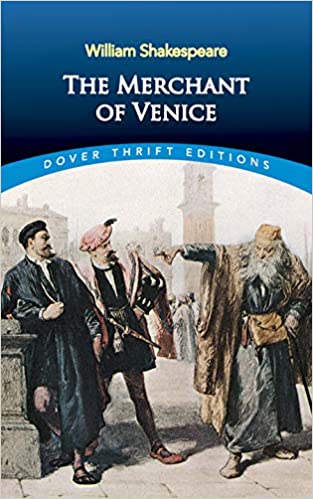


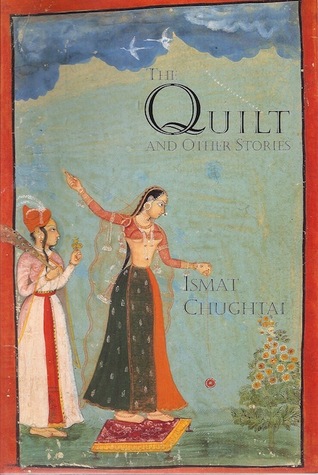


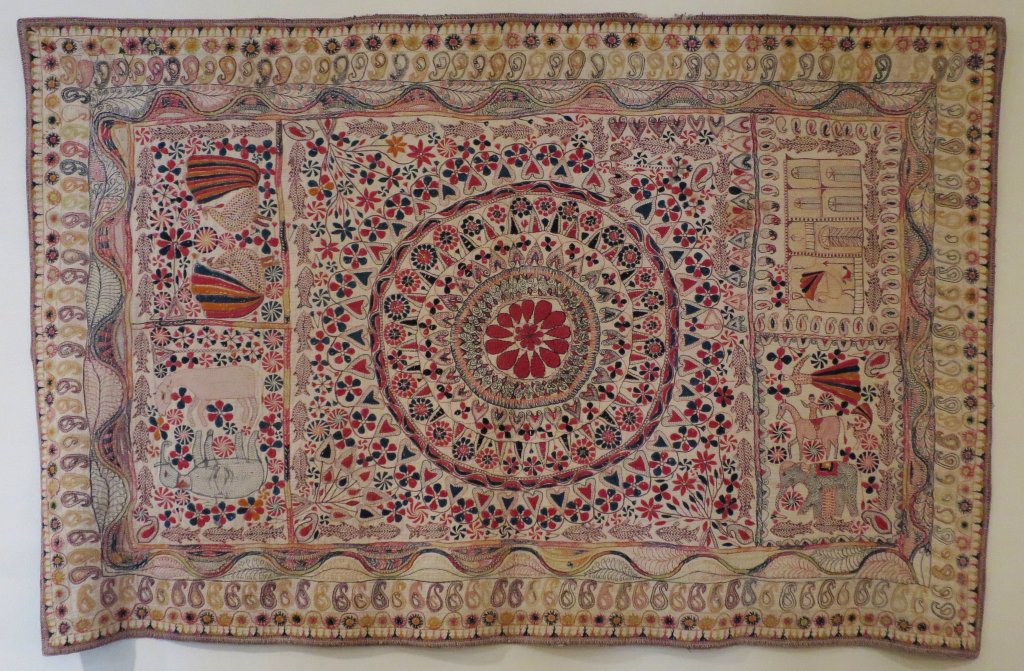



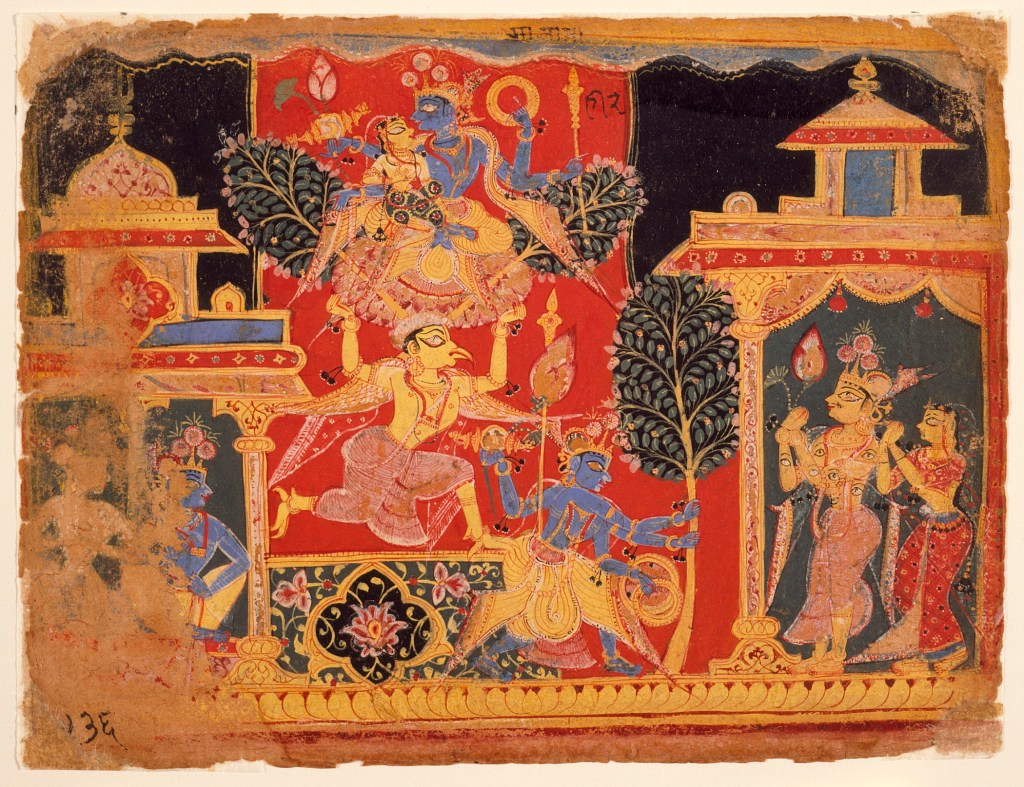

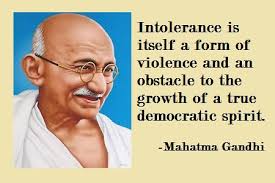



 Borderless