Categories
Stories

When Two or Three are Gathered

By Tan Kaiyi

“Are you sure it’s safe for us to be this close?” Anushka asked.

“I don’t know. They said it’s not over,” Rizwan said.

“Who says it’s not over?”

“It’s all over the radio,” Cheng said.

“All over?” Rachel asked.

“It was on every channel I was scanning this morning.”

“You can’t believe everything you hear.”

“It’s from the Ministers. The 6Gs.”

“We don’t even know who they are. All we hear about them is from the radio,” Anushka said.

“But everything they said had turned out to be true.”

“We aren’t sure of that. All we hear is the numbers of people who disappeared from some voice who claims to have the mandate to govern,” Rachel said.

“The voice had been right about the virus,” Rizwan said.

“If it’s a virus.”

“I don’t know what else to call it. It makes logical sense that the government would have a continuity plan, some kind of team after things fall apart.”

If the government was smarter, it wouldn’t have needed a continuity plan, Cheng thought. But then again, no one has seen anything like this. Who would be smart enough to know that people would start turning when two or three were gathered. Physical contact seems to be the main trigger, but reports had come in of people mutating even when they were near each other.

“Hey, watch the distance!” Anushka yelled.

“Sorry, let me move a bit,” Cheng said.

“I don’t want to become one of them, not at a time like this. Sorry, I don’t mean you have it.”

“I know, I know, I’m sorry.”

“It’s okay. Are you sure this is going to work though?”

“I don’t know,” Cheng said.

“We have to hold hands. I don’t think it’s a good idea,” Rizwan said.

He looked at the symbols they have set up for the ritual. Five stars and a moon drawn in blood and white chalk on the ground. The four of them had seen it in their dreams, a city of glistening mirror colossi, glistening with the reflected sun under clean blue skies. It was so vivid that they could smell the aroma of the air and the soothing embrace of the heat. And the people! None of these horrid mutations that flailed and shrieked about. What they would have given to just walk down the street without the risk of getting mauled by their twisted limbs or infected by their touch! If they did the ritual right, that’s where they would be — or at least that’s what they thought.

“We don’t even know if it’s going to work,” Anushka said

“You’ve seen it. You’ve seen it in the dreams,” Rachel said.

“It could be that. Just dreams. Nothing more.”

“We’ve come this far, we’ve got to give it a shot.”

Rachel looked at her friend from secondary school. She wanted to tell her that it was alright, that once it was done, she was sure that the ritual would open up a better world for them. But she wasn’t sure. The legend had been circulating after the mutations spread throughout the world. The sickness was biological, but it was something more. There was talk that it could bend reality, which explained how the virus warped human physiology. When this idea spread through the airwaves, it led to several theories about a hidden gateway to a parallel world — similar to theirs but with a brighter fate.

“Lots of people have died to come to this place. We got lucky, we’re here now,” he said, remembering the many moments in their journey when they narrowly escaped death. Mid-way, Cheng had caught a bad case of fever and breathlessness, and he felt that his body was turning inside out. It was the most fearful experience he had in his entire life. Just put a bullet in my head, he told Anushka. He heard her refusals through her soft sobs, but he didn’t want to end his life as some kind of inflamed monstrosity. No one dared to go near him, and that sense of isolation fuelled his anguish. He didn’t know how they got through it but the fever faded after a week. It delayed the entire journey, and depleted their rations ahead of time.

Johnson, one of their original companions, died of hunger a few days after that. Since then, Cheng hadn’t been able to sleep well. Even if they succeeded in getting out of this place, he knew his feeling of partial responsibility over Johnson’s death would continue to demonise him for the rest of his life. The four of them readied the items. The candles were set around the six symbols painted.

“It looks a bit like our flag, isn’t it?” Rizwan asked.

“A little,” Cheng said.

“What do you think we saw?”

“I don’t know. But it sure looks better than here,” when those worlds rolled out of Cheng’s tongue, he realised how absurd it sounded. It didn’t bode well for hope. He was beginning to think that this was all a mistake. He tried to comfort himself by thinking that that the distance between them and freedom was that one metre which prevented transmission, but his heart began to tremble and he prayed that his fear wasn’t showing.

“That’s it. All we need to do is to hold hands and close our eyes,” Cheng said.

“How long?” Anushka asked.

“I don’t know. What did the stories say?” Cheng asked.

“They say you will hear crackling in the air and the stench of death will be gone,” Rizwan said. He was haunted by hesitations, but they had come this far. If ahead lay death, it was nothing better than what they were leaving behind.

“Are we ready?” Cheng asked.

“I don’t know,” Rachel answered.

“Let’s start with the first step.”

The first step could be the deadliest. They stared at each other for what seemed like lifetimes, before they slowly reached out with their hands. When their fingers touched, an icy sensation crept up their arms and spine. Cheng cursed. The foul words released the tension from his shoulders and throat like a magical incantation.

“We’re still normal,” Cheng said.

“That’s a good start,” Anushka said.

“Okay, then we just keep repeating the chant?” Rachel asked.

“Yes,” Rizwan said.

And they begin to sing. The words and melody filled their minds and the room. The lyrics and music were familiar, they sang it every morning before school started — though the tune of this version was slightly distorted.

Eyes closed, it was hard to tell how much time had passed.

They were lost in the words. As they became more absorbed into the verses, they felt themselves dissolve. But without opening their eyes, they couldn’t know what was going on. A thought came up in Rizwan’s mind. He felt removed from the entire process — like a disembodied eye that watched over them. They were still in the room, he felt.

 There was nothing left to do but to carry on. And so they continued — drowning in the sea of words and time, waiting and waiting, only coming up to grasp the scent of fresh air.

.

Tan Kaiyi is on a literary odyssey to unearth the wonders and weirdness within the mundane. His poems have appeared in the Quarterly Literary Review Singapore (QLRS). His play, On Love, was selected for performance at Short & Sweet Festival Singapore. He has also been published in Best Asian Speculative Fiction (2018), an anthology of science fiction, fantasy and horror stories from the region.

.

PLEASE NOTE: ARTICLES CAN ONLY BE REPRODUCED IN OTHER SITES WITH DUE ACKNOWLEDGEMENT TO BORDERLESS JOURNAL. 
Categories
Poetry

Three Poems

By Paresh Tiwari

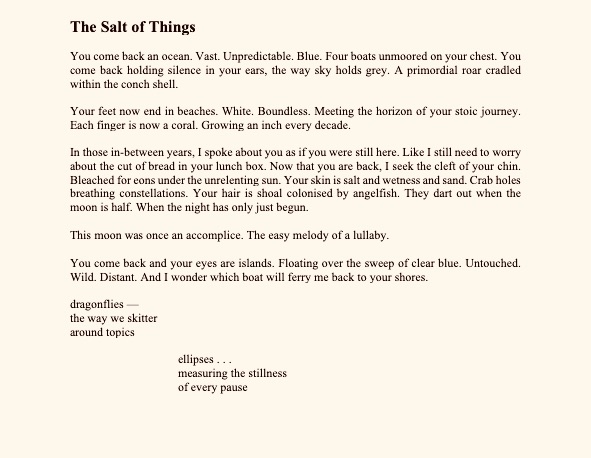
The Salt of Things 

You come back an ocean. Vast. Unpredictable. Blue. Four boats unmoored on your chest. You come back holding silence in your ears, the way sky holds grey. A primordial roar cradled within the conch shell.

Your feet now end in beaches. White. Boundless. Meeting the horizon of your stoic journey. Each finger is now a coral. Growing an inch every decade. 

In those in-between years, I spoke about you as if you were still here. Like I still need to worry about the cut of bread in your lunch box. Now that you are back, I seek the cleft of your chin. Bleached for eons under the unrelenting sun. Your skin is salt and wetness and sand. Crab holes breathing constellations. Your hair is shoal colonised by angelfish. They dart out when the moon is half. When the night has only just begun.

This moon was once an accomplice. The easy melody of a lullaby. 

You come back and your eyes are islands. Floating over the sweep of clear blue. Untouched. Wild. Distant. And I wonder which boat will ferry me back to your shores.

dragonflies —
the way we skitter
around topics

ellipses . . .
measuring the stillness
of every pause


Translating Rain

the window is a wound pried open. 
and when the rain comes down,
it’s a traveller of new roads.
the rain song hovers over the neon
neckline of Bombay. hangs from leaves 
and streetlamps. unsure. lost. orphaned 
in this city of vertical cardiograms. 

sitting across each another. there are no words to place on our tongues. to say that we can only make love in approximations. in the irrationality of never quite there. you reach out and take my hand. guiding it along, one breadcrumb at a time. to your breasts. rising and falling.

rain remembers falling. 
warbling in the throat of a chaatak. 
sloshing under the feet of a young girl.
rain remembers the time it wasn’t
when the womb of its cloud was empty.
and when the rain comes down, 
it’s a tapestry of mist and desire.

your name is half-moon on my lips. whispered in nastaʿlīq. the arch of your back, the gentle curve of a Ming bowl. blue. bluer still the softness of your moan stretching over seven syllables. each with a life of its own. sometimes the distance between two breaths could be a way to measure eternity. 

rain knows eternity.
it’s a child leaping over culverts
a deluge of laughter and 
wings and a rallying cry of dissent.
and when the rain comes down, 
it soaks into the lime-washed walls 
now a map of smudged borders.
 
The Anatomy of Violence

I unlatch the door and step inside to the heavy wag of a black tail. I stroke the now rough hair of the old dog, take an ear in my hand, fold it over, and run my fingers across his muzzle. He closes his eyes and leans into my hand. I can feel the weight of his head as I hold it up so I can blow over his damp nose. All part of the dance we taught each other long ago. 

There’s a pistol in the pocket of my coat. I pull it out and raise it to the dog’s long brow now peppered with the grey of time and place it between his sad eyes. The dog is impervious to the terror of cold steel. 

He continues to wag the tail. Thump. Thump. Thump.

protests
the taste of blood
in my mouth

.

Paresh Tiwari is a poet, artist and editor. He has been widely published, especially in the sub-genre of Japanese poetry. A Pushcart Prize nominee, his work has appeared in several publications, including the anthology by Sahitya Akademi, ‘Modern English Poetry by Younger Indians’ released to celebrate 200 years of Indian English Poetry. ‘Raindrops chasing Raindrops’, his second haibun collection was awarded the Touchstone Distinguished Books Award in the year 2017. Paresh has co-edited the landmark International Haibun Anthology, Red River Book of Haibun, Vol 1 which was published by Red River Publications in 2019. He is also the serving haibun editor of the online literary magazine Narrow Road.

.

PLEASE NOTE: ARTICLES CAN ONLY BE REPRODUCED IN OTHER SITES WITH DUE ACKNOWLEDGEMENT TO BORDERLESS JOURNAL. 
Categories
Slices from Life

Singapore’s Secret Recipe

By Aysha Baqir

It was an early Saturday morning when I dropped my eleven-year old for a race in northeast Singapore. My son was excited to find his friend and I was anxious to find a coffee shop and nose-dive into the novel I had started last night. The race, I had been told, would last for over an hour. As we waited on the sidewalk for the light to change, I cheered up sighting a small mall on the left. Suddenly, the clouds cover shifted to reveal a clear blue sky. In the horizon, misty clouds shimmered and spun gold.

We entered the lush grounds and my sneakers made a squelching sound. I grimaced. It must have rained last night. How were they going to run?

“Mama,” My son tugged my hand to let me know he’d spotted his friend.  And in the next instant, with a quick “Bye, will call you when it’s over,” he darted towards the long cue in front of the uniform booth. For a few moments, I stood there. My eyes followed him until he joined his friends, and I forced myself not to walk after him to demand a goodbye hug. Catching the second, “you can go away now” look from him I turned around and trudged back.

I crossed the road and headed straight for the mall already anticipating the strong aroma and the smooth taste of a cappuccino, and then stopped, stumped. The glass doors were shut. I stared through the glass doors trying to get the attention of the cleaners who mopped and vacuumed. No luck. I stepped back and caught the sign for opening and closing hours. The mall would open at 9 AM. Impossible. This was supposed to be the “me” time. I peered again into the glass doors but when it was clear I would get no attention, I turned around and debated my options. I could head back to the park and wait it out, or explore the area. Pushing away the thoughts of the page-turner in my tote, I opted for the latter. In a few minutes I had crossed a few blocks and found myself in a quaint neighbourhood.  I walked along a narrow road with colourful buildings on either side. Red and gold decorations adorned many doors. Some grocery and home supplies shops were already open.

I continued to walk further, and hearing chatter, turned a corner, stopped, and stared.  It was a small hawker centre with a row of stalls and a few dozen tables. All the tables were full. Grandparents, parents, and children gathered for the morning meal. Glasses and plates clinked and clanked.

Young and old and ate together. In one corner, a mother helped her son with his homework. In another corner a man helped to feed his aged mother. Some families exited, and more entered. They knew each other and stopped to talk and share news. Two young children played a game in a corner.

I moved forward drawn by the whiff of strong black sweet coffee mixed with the aroma of fried roti paratas, and creamy coconut laksa. My eyes lingered over mounds of white rice on fresh green pandan leaves, crisp leafy vegetable heaped on steamed noodles, stacks of butter toasts, bowls of soothing ayam sotto, and moist carrot cakes.

Spicy. Savory. Salty. Sweet. Flavors and colors blended and melted together. They ate different food, but they ate together.

Food brings people together.

Had I read it somewhere or heard it from someone? I didn’t remember. But in that moment, something shifted. The easy banter, the jokes, and laughs made me pause. I saw an old Chinese man offer a bowl of noodles to his friend. I saw an Indian dad urge his daughter to finish her vegetables. I saw a little Malay boy perform magic tricks to make his grandmother smile. Frowns faded. Faces beamed. From the ease with which they interacted, I sensed they knew each other and lived close by. Had they grown up together, shared life events, and supported each other through difficult and challenging times? Their differences ceased to matter when they ate together and shared food. In that one moment in a small hawker centre, I saw Singapore, a nation of approximately 5.7 million people and diverse ethnic groups become one. Warmth and love wove around them like fairy dust.

The Uncle at the coffee stand beckoned, and I ordered a black coffee. A distant memory tugged. I had seen this in my home country once upon a time, when neighbors knew each other and looked out for each other and when they ate together. Men, women, children, all together. No more. I remembered years back when my cousin had wandered outside our gate and walked to the nearby market and the fruit vendor had brought him back. The time was gone. But it existed here in this instant, where the individuals fused into families, merged into a vibrant community, and cemented into one strong nation. When people ate together, meal after meal, day after day, year after year, they became one, one nation.

I smiled at the Uncle as he handed me my coffee and decided that my son and I would have breakfast together before we headed home. I turned knowing I walked away something special, glanced back one last time and blew a prayer. Peace. Protection. Prosperity.  

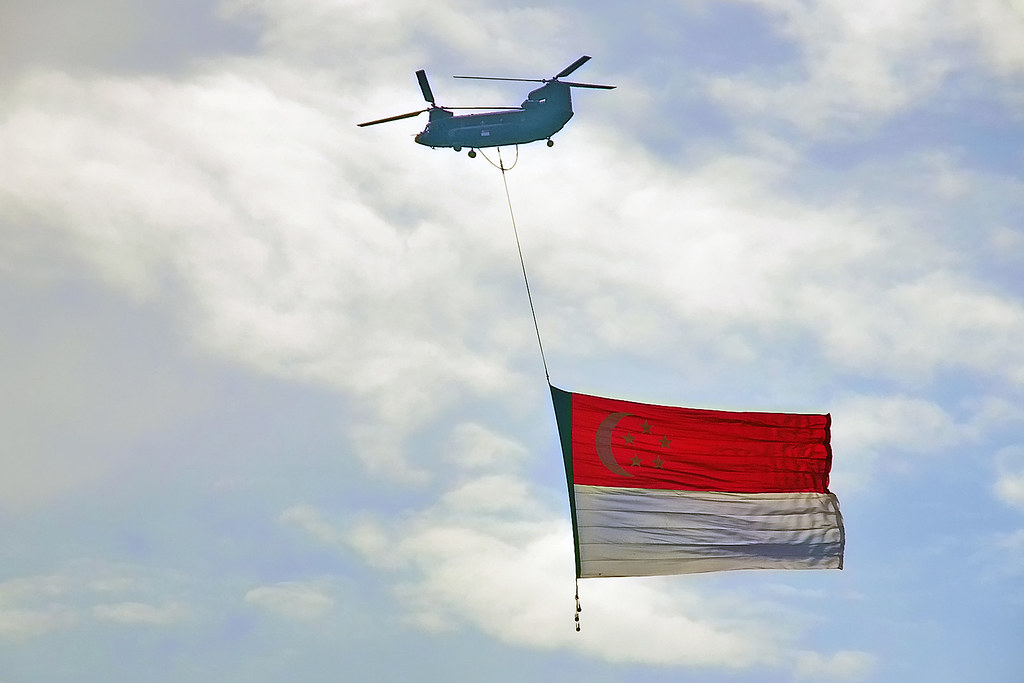
Happy National Day, Singapore.

Aysha Baqir grew up in Pakistan. Her time in college sparked a passion for economic development. In 1998 she founded a pioneering not for profit economic development organization, Kaarvan Crafts Foundation, with a mission to alleviate poverty by providing business and marketing training to girls and women in low-income communities. Her novel Beyond the Fields was published in January 2019 and she was invited to launch her book at the Lahore and Karachi Literary Festivals and was featured in the Singapore Writers Festival and Money FM Career 360 in Singapore. Her interviews have appeared in Ex-pat Living, Mount Holyoke Alumnae Quarterly, Kitaab, and The Tempest.  She is an Ashoka Fellow. www.ayshabaqir.com

PLEASE NOTE: ARTICLES CAN ONLY BE REPRODUCED IN OTHER SITES WITH DUE ACKNOWLEDGEMENT TO BORDERLESS JOURNAL. 

Categories
Poetry

Poems from Kashmir

By Ahmad Rayees

Unsettled Agonies

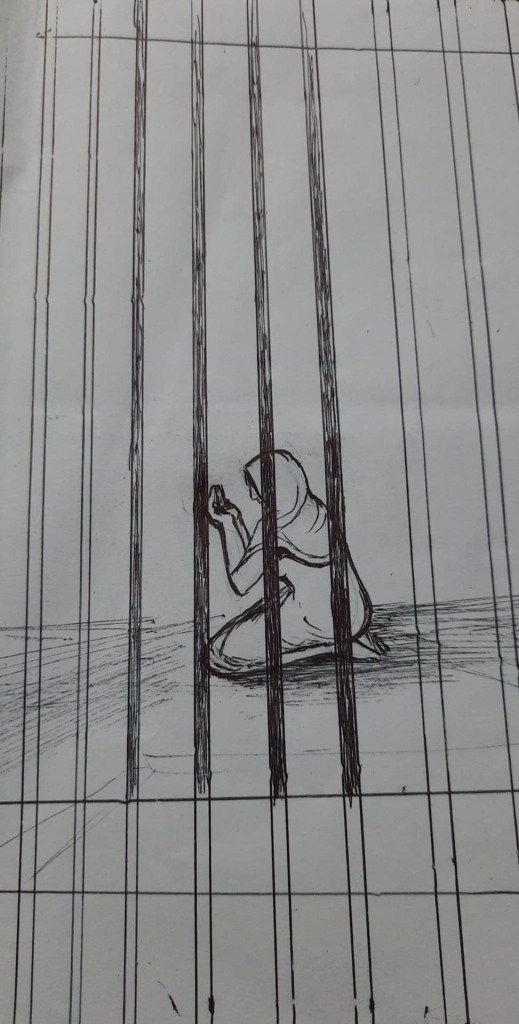
We lived — yes we lived in confinement

We lived in solitary confinement…

We were living in it yesterday and today.

We may be living in it tomorrow also.

.

I looked at the darkness that slowly grew around me

.

Spring suffocated in the gardens.

Flowers died on branches on their own

As the unborn died in the womb of a dead mother.

Faraway a little bird fluttered in pain and agony…

.

I sadly captured the hues of autumn…

.

The wild wind blew away a heap of dried leaves

And dust swept away dreams of daffodils,

Withering the petals to be embraced by winter.

Naked branches helplessly stretched out their longings towards the sky

.

I sat alone looking at the turbulent future in time

.

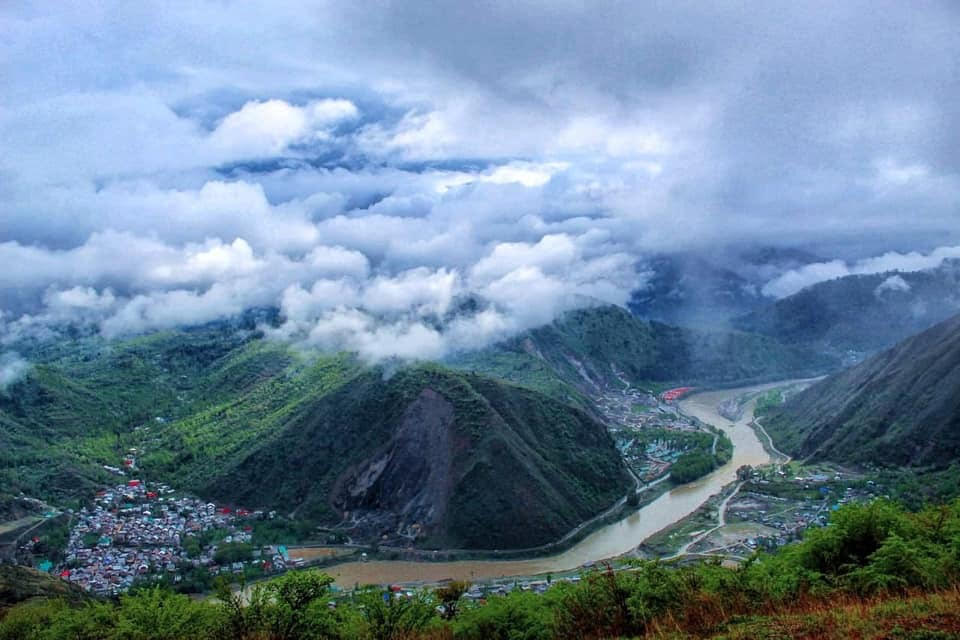
The river saturated into white snowy silence…

And the lonely boat half drowns into that cold aloofness.

Like the half- widows — half-dead, and half-alive

Suspended in life with a trickle of hope and deathly grief

.

I sat down on the horizon and looked at the sky.

.

It seems the Earth was angry with the sky

Just as the moon was angry with the sun and the stars.

Maybe Nature itself is slowly coming to a halt   

Oh God,  are you also in pain and despair?

.

The countries busily build walls of hatred and tyranny

While little Alan slept endlessly on the shores of the great sea

The angels are whimpering and awakening their dead ones

Remember that no amount of candies can wash away their pain

.

I’m still walking through the rubble of the city of hatred —

.

Here every soul is thirsty and everybody is hurt in the mayhem.

Here everyone seems to be oppressed  and enslaved.

Here everyone seems to be lonely, the rich and the poor.

Here everyone seems to be strangely normal and silently crying…

.

I searched like a wailing morning breeze of the mountains.

.

Today I know the pitcher of love is broken and dried

Today I am standing here and waiting for you my Prophet!

Bring us the magical verses that will melt our stoned heart.

Sing for us the song of sparrows, the songs of love and peace.

.

Sing for us the song of life, song of your eternal gardens……

.

Warrior Of Light: A Tribute To My Mother

 Mother, Oh mother, you are my  guardian angel, epitome of love.

All mothers are precious to their children, she’s the goddess of life

And my mother is my everything , she’s is the light of my eyes

Without her I will not exist, without her I will not sustain

My mother is the most courageous woman of our valley

She’s is the most ferocious , most beautiful angel of this paradise

Like the torrential waters of Jhelum, she went beyond the mountains and valley for truth

She’s is not afraid of anything or anyone when it comes to protect her children

Come soon mother the home is desolated in your absence

Reminiscence of your caring persona , your touch , your smell ,

Again and again resonating the sense of loss and sense of vacuum

Now we are the orphaned lambs of the meadows lost without our shepherd

When will you be back mom , Eid is here Muharram is gone

Years are passing in gloom without you in our life

Our screams are suppressed our pain is been ignored and forgotten

Our prayers, our shrines are vandalised by pellets and bullets

But your voice echoed in us , your shadow loomed around us

Your infinite love and compassion for humanity is our strength mother

You keep the promises of tomorrow , fighting injustice alone in the dark cell

Your persistence your determination is the vast silent Himalayas

Tall as the heavenly seraph slayer of evil, hold us in your encompassing wings

Mother you are my rock, you are my sword and shield

Mother come for once, make me sleep inside your warm “Phiren”

Make me sleep next to your heart, the pot of red embers.

.

Rayees Ahmad is a budding writer and poet from Kashmir. He has bachelor’s in mass communication and masters in Peace and Conflict Studies. He hopes to add a new colour to Kashmir and the conflict it faces through his poetry. He has written many poems and articles on the Kashmiri diaspora. 

PLEASE NOTE: ARTICLES CAN ONLY BE REPRODUCED IN OTHER SITES WITH DUE ACKNOWLEDGEMENT TO BORDERLESS JOURNAL.
Categories
Musings

Playtime

By Nishi Pulugurtha

I see more of the sky these days. A beautiful blue sky, some clouds here and there. I try to figure the shapes in my head, something that I did as a child. I see the light from the rather dimmed sun endowing the clouds with some colour, at times bright, at others, dull and dim. There seems to be some play at work, the sun, the sky and the clouds. I used to walk in the gated compound that houses my apartment only to be largely disturbed by mosquitoes and other insects. As these creepy crawlies cause an allergic reaction on my skin, I decided that I had to find some other place to walk. A climb up some stairs to the terrace and the discovery of a small, restricted place to walk and an open, sprawling space around me (beyond the walls) and above me — this is where I walk most evenings now.

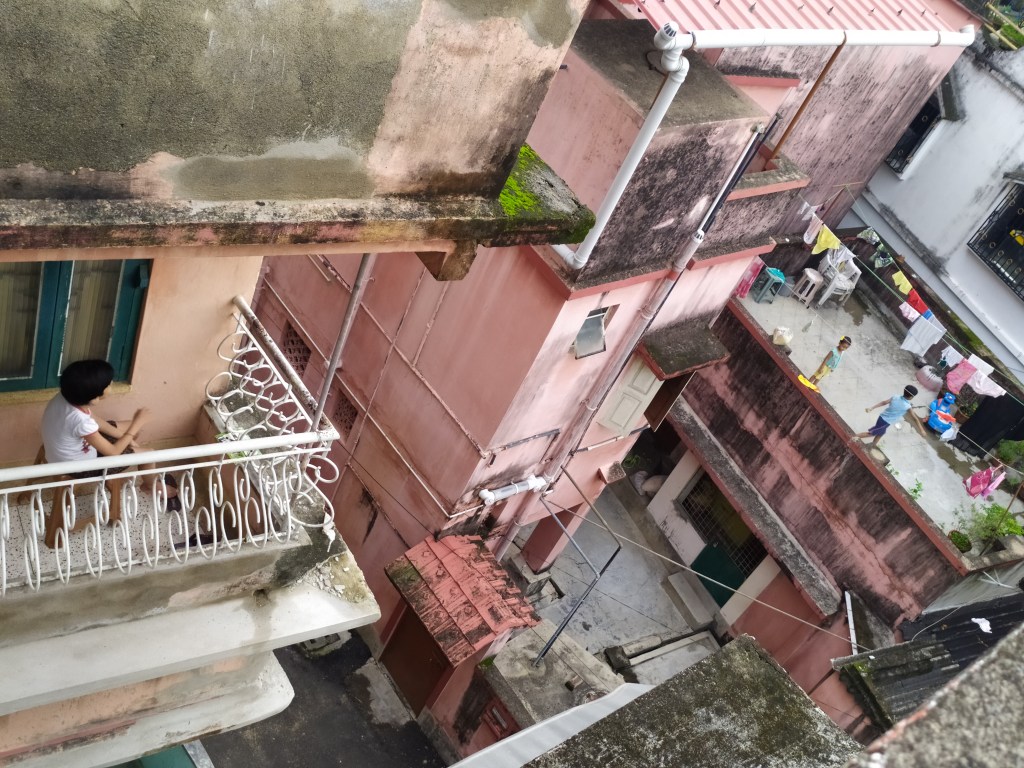
The other terraces around me also seem to have some activity. Just beyond the compound wall are two buildings, yellow and green. I see people there — an old gentleman leisurely walking alone. After some time, a lady joins in on a brisker walk. The old gentleman moves to one side and looks at children playing on the opposite terrace. He has a toy in his hand which he throws. It is caught by the little girl who is out at play. She runs, hops, jumps, and plays. At times she has company, another small one. But mostly, she is there with her father. I see her learning to ride a bicycle. He is there holding on, trying to teach her, reaching out to lend a hand if he thinks she needs help. I am sure she will learn it soon.

The red house next door is usually quiet. As I was looking around, I heard someone calling out my name. I turned to see a young girl of about eight. There was another little one behind here, about two years old. And then I saw their mother and we start catching up. She decided to visit her mother and that is the reason why the quiet house has so much activity now. Moreover, she said that kids were getting restless. She had come for a week, she said. A small break for the kids. Well, not much of a break for the older one, though – online classes were still on. The kids moved on to play. They were not playing among themselves.

Right opposite the red house was another pink one with a terrace adjacent to rooms on the first floor. Two small boys played there each evening – riding a small car, playing with plastic cricket bats, running about and the like. Their mother is a nurse and has long hectic hours. I hear their voices every day, they wave to me when I look out too. I noticed a new game these days with the kids talking across buildings, not just talking but playing as well – the girls in the verandah of the red building and the boys just opposite. I hear their voices, I notice their games too. It is mostly a kind of a dumb charade – the eight year girl mostly deciding on the nature of the game. She is the oldest of the lot.  The girl in the red house enacts a scene and the boys have to guess what it is all about and vice versa. As I look at them at their ‘game’ I find it sad, I smile too. They have managed to find a way to ‘play’. Sad, because their ‘play’ reveals the situation we are in at the present times, stuck in our respective homes, trying to deal with the present scenario.

I am reminded of our games and play too. As kids we played on the road in front of our homes. We ran about, played ‘hide and side’, hiding in lanes, behind houses – we had a particular demarcated zone of play. We had our fights, our quarrels too. Those were days when there were not too many cars on the streets and hence it was safe playing on the street.

We had spectators then too. There would be Pishima* sitting on her tall stool upstairs, her afternoon nap done, with a cup of tea and a biscuit in hand. There would be Bubun’s mother who took an active interest in all what we did, at times even interfering in our play — Bubun was one of our playmates. There would be the Dida* in the opposite house, alone in that big house, looking out and delighting in our play. We played every day, after we got back from school, after our homework was done. As we went on to middle school, we played only on Wednesdays and Thursdays (school was off on Thursdays) and on the weekends.

There would be some weekends when there was no company to play outside, my playmates were off to their grandparents’ place. However, my sister and I played at home, in our long verandah. We managed to keep ourselves busy. Yes, we did complain that all our playmates were away. It was not possible for us to travel to Ammamma’s place on weekends, she was in Kakinada and later moved to Hyderabad. We had to wait for our vacations to visit her – and we longed for that, looked forward to it with so much excitement and anticipation. That excitement of going to Hyderabad still persists in both of us even today.

As I climb the stairs this evening and come into the open, there I see a long cloud, fluffy, a bit dark just behind that skyscraper, almost as if holding it up, supporting it. It remained like that for quite some time. A languid, beautiful scene that filled my senses for quite some time, filling me with a Wordsworthian sense of delight in the simple things of nature. I rest for a while after my walk is done, mostly to take a few photographs of what the city offers me. Tall buildings in the distance, familiar buildings I am able to identify, houses, water tanks, pipes and crows on them, many buildings I am unable to identify. I try to locate the directions as I look around.

The birds seem to be pausing for a while, catching up with their conversations, before heading home, the day done. I notice a few pigeons on a maze of pipes, perched away from each other, almost as if in keeping with the times. The play of the little children continues. I can hear their laughter and talk as I move indoors. As we approach another 15th August, another Independence Day, I just hope that we are able to create a place where these young ones are able to think freely, to give voice to their thoughts freely, to live the way they want to, in a place where “their head is held high”. 

*Pishima – Aunt

*Dida – Grandmother

Dr. Nishi Pulugurtha is Associate Professor in the department of English, Brahmananda Keshab Chandra College and has taught postgraduate courses at West Bengal State University, Rabindra Bharati University and the University of Calcutta. She is the Secretary of the Intercultural Poetry and Performance Library, Kolkata (IPPL). She writes on travel, film, short stories, poetry and on Alzheimer’s Disease. Her work has been published in The Statesman, Kolkata, in Prosopisia, in the anthology Tranquil Muse and online – Kitaab, Café Dissensus, Coldnoon, Queen Mob’s Tea House, The World Literature Blog and Setu. She guest edited the June 2018 Issue of Café Dissensus on Travel. She has a monograph on Derozio (2010) and a collection of essays on travel, Out in the Open (2019). She is now working on her first volume of poems and is editing a collection of essays on travel.

.

PLEASE NOTE: ARTICLES CAN ONLY BE REPRODUCED IN OTHER SITES WITH DUE ACKNOWLEDGEMENT TO BORDERLESS JOURNAL. 
Categories
Poetry

Kolkata Poems

By Gopal Lahiri

Kolkata Scene-1

The mansions reach out to the sky-

in their shadows leaning are mud walls,

.

Darting spots of light, dust is in cryptic shade

love and death stay together,

.

Cricket on the narrow alleys, pan-shops prompt scores,

selling among other things, the bidis,

.

Evening glows here like an earthen lamp

the dry leaves gather on the tram lines,

.

Smoke rises above the bus shelter

road side stalls display Kalighat Pat paintings

hooded faces of slums breath through

the holes of the worn blankets.

.

The temple is filled with blowing of conches

the clamour of visitors,

.

The evening ushers in mystery and suspense

strings of jasmine welcome you to the earthly paradise.

Kolkata- Scene 2

The rosy daydreams can choose for themselves

how much they want to float away in the blue.

.

Missing smile, miss the hugged hello of my city

miss the traffic at rush hour, the mass of people.

.

Seasons will not be one of smoke and dust in lockdown,

sparrows and pigeons start revising the city-profile.

.

The red-brick building, anarchic roadways write sitcom.

silence is the new normal here, so is the boredom.

.

The sound and aroma-spice and sweet are absent. a diary

deletes the bells of rickshaws, horns of old buses.

.

Café wall will no longer store the hush and whisper,

those high notes of peppy music, unedited voices.

.

Each is a dash of colour, a healer, a layer of varnish,

chaos is a privilege now, noise is prized.

.

Gopal Lahiri is a Kolkata- based bilingual poet, critic, editor, writer and translator with 21 books published 13 in English and 8 in Bengali, including three joint books. His poetry is also published in various anthologies and in eminent journals of India and abroad. His poems have been published in 12 countries and translated in 10 languages. He has been invited to several poetry festivals across India.

.

PLEASE NOTE: ARTICLES CAN ONLY BE REPRODUCED IN OTHER SITES WITH DUE ACKNOWLEDGEMENT TO BORDERLESS JOURNAL. 
Categories
Poetry

The Girl on the Rooftop

By Mosarrap Hossain Khan

In this colony of refugees, history is lived
in the unpaved streets lined with open sewers,
in the molten iron of the factory spitting out
shiny Ambassadors and Contessas, in the stories
of old women with sandalwood paste on their
forehead, in the muddy cataract-filled eyes
of old men dozing off in the winter sun.

.

My small grilled window frames a patch
of sky and the sloping asbestos roof of the
un-plastered house. The girl in a white sari,
her eyes luminous with the blue of the sky
of her village, searches for home
amid shabby concrete rubbles
of this colony. She crossed a border too
like those who came before her.

.

My eyes seek out her loneliness. A Muslim man
reminds her of home. In this colony of
refugees, history is relived in longing for the
wrong man.

.


Mosarrap Hossain Khan teaches at O.P. Jindal Global University, Sonipat, Haryana, India. He is a founding-editor at Café Dissensus magazine.

.

.

PLEASE NOTE: ARTICLES CAN ONLY BE REPRODUCED IN OTHER SITES WITH DUE ACKNOWLEDGEMENT TO BORDERLESS JOURNAL. 
Categories
Essay

Schumpeter, the Luddites, and the Post-COVID Workforce

By Avik Chanda

This is not a commercial.

But if you happen to find yourself in Abu Dhabi at this moment, and are planning to take a flight back home to Delhi, you might be advised to try Etihad Airways, especially in these pandemic times. To check in via their ‘Fit to Fly’ application, just stand in front of the monitor, remove your mask, and the system will scan your health particulars within seconds. The application will then quiz you on your activities over the past fortnight, to each of which you reply with a simple ‘yes’ or ‘no’. An algorithm at the back-end analyses the information, issues an all-clear, prints out your boarding pass, and you drop your bags off at the counter. You’ve not met a single person among the airlines staff, let alone be within contamination distance. From the moment you entered the airport, your experience thus far has been as risk-free as possible. The application has replaced check-in executives, most of whom may never be coming back – but it’s a relatively small price to pay, for saving lives.

And as your journey becomes a montage, from the white-heat glare of an Arabian sun outside the window, through a somewhat claustrophobic, masked-on slumber, to the thick drapes of nimbus covering the sky at your destination, imagine that the same risk-free application that checked you in, has been implemented in all airports and airlines across India. This thought-experiment has just added to the toll of the estimated 2.9 million jobs already affected in the immediate term, across Indian aviation and allied sectors, as a direct result of the ongoing pandemic.

While it’s hoped that a significant number are expected to regain employment, in the wake of a vaccine, herd immunity and economic recovery, those employees that are displaced by superior, robust, cost-effective technology, will have no cause to be recalled to their counters. And once you reach home and begin to adjust into your self-quarantine regime, consider that if you’re working in real estate, retail, hospitality, travel, tourism or for that matter, even information technology, the odds are in one in six you may not have a job to go back to.

The effect of innovation and improvement in industrial processes on employment and jobs is both well-researched and documented. Conceived in the intellectual shadow of Marxian constructs, the Austrian-born economist, Joseph Schumpeter, writing in 1942, introduced and developed the concept of ‘the gale of creative destruction’, in his book, Capitalism, Socialism and Democracy. According to him, creative destruction was an integral part of the way that capitalism functioned in the modern world. A fait accompli, it was “the process of industrial mutation that continuously revolutionizes the economic structure from within, incessantly destroying the old one, incessantly creating a new one”. Over the subsequent decades, theoretical models of growth, as well as empirical studies evidence and models have very largely converged to the conclusion that the process of creative destruction is an inevitable concomitant of economic growth and fluctuations.

In his book, Schumpeter argued that the unending cycle of creative-destructive forces in a capitalist system would eventually lead to its demise. History, to date, has however not borne out his prognosis, and in fact his term, creative destruction, has been enthusiastically adopted by generations of business gurus and industry magnates, to justify downsizing in the workplace, in favour of efficiency and innovation.

As a concept, its intellectual successor, ‘disruption’, has carried the argument to its logical and inalienable conclusion. The march of ground-breaking, innovation cannot be arrested. The giddy rate of technological advancement witnessed in a remarkably short span seems to support this view, hurtling an essentially analogous world into one where machines, algorithms and automated processes vie with, and increasingly, surpass their human counterparts at a range of tasks. The ramifications on employment are massive for labour-intensive economies such as India, where an estimated 30 to 40% of the current workforce cannot be readily re-skilled.

Alarm bells about the effects of automation started to ring early in 2017, when a report by the consulting firm McKinsey & Company, was made public. The report indicated that 600,000 people working in Information Technology (IT) services firms across the country might lose their jobs over the coming three years. This amounted to 200,000 jobs lost on average, per year – to automation. McKinsey urged IT service providers to explore new models of man-and-machine working in conjunction, and re-skilling employees with emerging technologies. Corroborating this view, a report by US-based research firm HFS Research, stated that around 700,000 ‘low skilled’ professionals in IT and Business Process Outsourcing (BPO) industries in India could lose their jobs to automation and artificial intelligence, by 2022. For those reading between the lines, it’s apparent that while the initial brunt of automation would be borne by IT and BPO, sooner or later, other sectors would also be affected. As with most things in economics, there’s a tradeoff – the benefits in costs and efficiency of jobless growth, powered by technology that replaces labour, versus the social and moral responsibility of mass-scale retrenchment.

The COVID-19 pandemic has thrown all projections out with dishwater, and disrupted the prevalent ecosystem irrevocably, in two significant ways. First, faced with the outlook of forced social distancing sustained over an indefinite period of time, industries would scramble to replace current methods of running the business with means that are capital and technology intensive, at the exclusion of labour. Second, and even more telling, the whole moral argument of retrenchment has been turned on its head. Employers are safer when not in contagious distance within each other, even if it means there are significantly fewer of them left on the rolls. And customers would understandably like to shop in an environment where the prospect of any tactile interaction with salespersons is minimal to zero. The same organisations that would have held back on cutting jobs for its debilitating effect on lives may now be compelled to introduce technologically advanced processes of production, storage, distribution and sales, to reduce manpower across the board, from the workshops to warehouses and retail outlets.

The 2018 World Economic Forum report on the Future of Work indicates that two distinct streams of skills and attributes are coming into greater demand, as technological innovation, powered by artificial intelligence and automation, deepens across industries. First, there are those skills that involve a high degree of mathematical and technical ability, catering to the niche requirements of the AI industry. Such jobs will be limited in number, compared to programmers and testers in the previous scenario. Also, the ability of professionals to upskill themselves suitably to the required level will be limited. At the same time, there’s a growing need for a range of skills along the human dimension, including creativity, imagination, innovation, design thinking, and increasingly – empathy. Expertise in these attributes greatly increases the chances of sustained work for individuals, even in a largely automated workplace.

The ongoing pandemic has only increased the urgency of reskilling the existing workforce along the emergent technologies and also more evolved behavioural attributes and competencies. At some point in the future, the world may well gravitate to a new equilibrium where goods and services are more readily available and general living standards are higher than before. But the road will be rocky and painful. In the meantime, the sweep of the resultant unemployment will be as endemic as the virus that has caused it, from migrant wage labourers who represent the poorest section of society, to college-educated, middle-class professionals aspiring to become corporate managers and startup entrepreneurs. When savings run dry and children can’t be fed, the collective bewilderment of the dispossessed often turns to rancour.

From the earliest days when it began centred around the textile mills in Nottingham, the Luddite movement has come to epitomise all form of concerted protest against technological advancements and machinery that threaten to rob workers of their livelihoods. The movement came into being as a series of protests by traditional textile weavers, who feared, not without cause, that the newly introduced machines in the mills would replace them. The protests swiftly degenerated into arson and destruction of property, as groups of armed men stormed factories and destroyed the looms and machinery at hand. The Luddite rebellion ended in 1816, but the legacy of their revolt has sustained as a symbol of opposition to hyper-industrialisation and automation, that leave masses of people unemployed. If the dispossessed of the present times turn into Luddites, how are their protests likely to be met?

The answer, entailing the exact same method deployed to quell the original revolt, is to be found in Eric Hobsbawm’s 1952 essay, The Machine Breakers. By means of the state. At the height of the Luddite movement, 12,000 soldiers of the British Army were deployed against the so-called ‘machine-breakers’, a considerably greater number than what the intrepid Duke of Wellington had managed to muster in 1808, to give battle to Napoleon’s forces in the Iberian Peninsula. Fast forward to the grunting shuffle and press of 1st November 2019, when 80,000 police officers in France were deployed under “Act 9”, to counter the swell of the nation-wide Giles Jaunes protesters. And now, finally, imagine for a moment that all the 21st century Luddites across the world, displaced by the vagaries of the pandemic, and the automated, smarter-than-thou technologies that have emerged as a response to it, have come out onto the streets, in protest.

What will it take this time?

.

Avik Chanda is a bestselling author, columnist, business advisor, entrepreneur and educator. His book, From Command To Empathy: Using EQ in the Age of Disruption (HarperCollins, 2017), was selected for Amazon India’s Best Reads, under the category, ‘Business, Strategy and Management’ . His latest book, Dara Shukoh: The Man Who Would Be King(HarperCollins, 2019), garnered rave reviews from academics, authors, the national press, and general readers. It was in the Top 10 Non-Fiction Bestsellers List, for 10 consecutive weeks, post its publication, and has recently been released as an audiobook, by Audible.

.

PLEASE NOTE: ARTICLES CAN ONLY BE REPRODUCED IN OTHER SITES WITH DUE ACKNOWLEDGEMENT TO BORDERLESS JOURNAL.

Categories
Poetry

Kargil

By Prof Dr Laksmisree Banerjee

KARGIL
by
Laksmisree Banerjee


Our tears have washed the Tricolour, intensified the ruddy blaze
Of rocks, rivers and streaming veins
                        With our white now gone stained and colourless
Our green has crossed mountains of flinty black pathos ------:
Vijay-Divas, our conquering day with no souls conquered,
Flags off or does it, to a better day perhaps!
.
The hills of Kargil touch the skies with tired hands,
With fingers gnarled, stony and eternally skeletal,
The summits weep with entrenched virulence in their wombs,
The azure mirrors the red fierce, gushing bruised wounds.
Cannons piercing the fluttering silenced throttled blue 
With the darkness of bloodstains gone dry, acidic.
.
Kargil and the martyrs, who sleep endlessly
On its forsaken beds of history waning into nothingness,
Our weeping songs praise their heights and heroism
With the blank stupor of choked voices, 
Damp hearts, with cascades of flowing tears and hues, 
In frail dreams of re-births, of possibilities or no hope.
.
We hear and speak the lessons of life in languor,
Of terror and trauma recycled forever,
                        With a soulful yearning for peace, that moment of the flower
Yet drowned deep in the ceaseless waves of love 
Perhaps, just perhaps, in the centuries to come,
We may return with the flying doves, to hold hands once more.

*********************************

This poem was first published in Peahen Passions (Author’s Press) in 2013

Prof. Dr. Laksmisree Banerjee, a Poet-Professor, a Scholar-Vocalist, has been widely published and anthologised across continents. She is a Sr. Fulbright (USA) and Commonwealth Scholar (UK) and a National Scholar and Gold Medalist of the University of Calcutta. An Ex-Vice Chancellor and University Professor of English and Culture Studies, she has Five Books of Poetry with One Hundred Twenty Research Publications, two Academic Books on Romantic and World Women Poetry, her focal areas of specialization. A Rotarian & Multiple Paul Harris Fellow, she is the Indian Rashtrapati’s Nominee on Boards of Central Universities. She has lectured and recited her Indian-English Poetry and Vocal Indian Music in premier Universities, Literary Festivals and Conferences across the globe.

.

PLEASE NOTE: ARTICLES CAN ONLY BE REPRODUCED IN OTHER SITES WITH DUE ACKNOWLEDGEMENT TO BORDERLESS JOURNAL.
Categories
Review

Dara Shukoh: Where would we be if he were King

Book Review by Meenakshi Malhotra of a historical narrative that continued in the Top 10 Bestsellers List for 10 Consecutive weeks, on publication. Recently, Audible has released an audiobook version of this book.

Title: Dara Shukoh: The Man who would be King

Author: Avik Chanda

Publisher: Harper Collins, 2019

Scanning the list of books already written on Dara Shukoh, I wondered why the author had chosen to write yet another book about Dara Shukoh, but that was before I came across Avik Chanda’s impressive work. A magnificent tome, it is richly palimpsestic and multi-layered and articulates the many complex layers of its protagonist’s personality and the forces that he had to grapple with. The book also displays an impressive array of materials and archives that were sourced by the author in putting together this fascinating chronicle.

In adding to a genre of what is known as popular history, the author has left no stone unturned. In doing so, he neither puts Dara on a pedestal, nor does he vilify him. Instead, he shows his protagonist’s limitations in his military campaigns, his aloofness and withdrawal from much of court politics, his intellectual leanings and his impatience with the petty nitty gritty of everyday politics on the ground, which often came across as arrogance to the people surrounding him.     

Avik Chanda’s prodigious research helps him write what seems like the definitive version on the tragic prince.. About Dara Shukoh, he writes:

The emperor’s Shah Jahan’s favourite son, heir-apparent to the Mughal throne prior to his defeat by Aurangzeb, Dara has sometimes been portrayed as an effete prince, utterly incompetent in all military and administrative matters. But his tolerance towards other faiths, the legacy of his philosophy and the myriad myths surrounding him, have far outlived him and continue to fuel the popular imagination. In truth, the Crown Prince was a highly complex person: a visionary thinker, a talented poet and prolific writer, a scholar and theologian of unusual merit, a calligraphist and connoisseur of the fine arts, and a dutiful son and warm –hearted family man.

He also goes on to add:

…he was also cold and arrogant to the mass of courtiers and commanders, whom he felt were inferior to him, intensely superstitious by nature, easily swayed by mystery and magic, an indifferent army general and shockingly naïve in his judgement of character.

Chanda thus sets the record straight; there are no heroes and villains in his version. Instead, we are presented with a complex, multi-faceted scholarly man whose aesthetic taste and judgement were impeccable and one who could participate in scholarly debate and disputation with the best scholars  of his time. A man of eclectic tastes, entrenched in his faith, deeply spiritual and almost other-worldly, Dara Shukoh did not like the strict asceticism of the mendicants. Instead, he believed in a faith full of love and compassion, and experienced nothing but supreme disdain at the Machiavellian machinations of the nobles and courtiers surrounding the king. Interested in mysticism, he was also open in his pursuit of religious knowledge, heterodox rather than orthodox.

Biographies can be of many types, hagiographical, celebratory, laudatory and critical. The best biographies are the ones which show not only fidelity to fact, but also stop short of creating two-dimensional cardboard cut-outs of its protagonists as heroes. Instead, the author undertakes a prodigious amount of research  and steers clear of the epistemic trap of producing historical stereotypes. Rather than depicting heroes and villains, who are judged based on present standards of morality, we have historically dense, nuanced characters whose impulses and motives are subjected to psychological scrutiny. Thus Dara writes of his encounter with Mullah Shah, an experience so profoundly moving that he felt it had to be recorded:

The doors of divine bounty and mercy were opened upon my heart and he(Mullah Shah) gave me whatever I asked.   Now even though I belong to the people of the world…..I am not one of them, for  I have known their ignorance and affliction. Even though I am far from a dervish, spiritually I belong with them.

Dara Shukoh goes on to add:

In the discipline of the school to which I belong, there is  contrary to the practices laid down in other schools, no pain or difficulty. There is no asceticism in it, everything is easy, gracious and a free gift. Everything here is love and affection, pleasure and ease.

Dara is an avid notetaker, and wonders, whether like his grandfather, Jahangir, he too, should keep a detailed journal. We remember also the richly woven narrative and sensuous details of the Baburnama (written originally in Persian by Abdul Rahim, 1589-90, and translated later from the nineteenth century onwards), which has come in for a fair amount of appreciation and critical work.

 It is in these moments that we see the panoramic sweep of monumentalist history and historiography interspersed with jewels like these, little vignettes which record the still, small voice of history. This massing of small but telling details, like  Dara’s relationship with his wife, and his sister, Jahanara  Begum, shows a man to whom humanity is of paramount value, a man who seemed to have an understanding of the bedrock of our common humanity. While Dara’s understanding of the nuances of his  faith, especially Sufism, is truly remarkable, with its notions of tawhid and dhikr/zikr, fana (love and devotion), ideas that are similar to many ideas within the contours of Bhakti devotion. We are in danger of losing sight of this substratum of a common devotional and cultural imagination in the present climate of intolerance that seems to sweep across the world.

Even as he extols Dara Shukoh’s understandings of these nuances, Avik Chanda also mentions, in almost the same breath, that his immersion in the biography of Sufi saints, Nafahat-al-Uns, results in his neglect of state affairs and administration of the empire. His ignoring the call of duty is overlooked by his doting father but noticed by the courtiers.

Historical agency and history’s inevitability are both in evidence here. Further, it is noteworthy to see the intelligence and capabilities of Dara’s sister, Jahanara Begum. Apart from remarkable women like Mehr-Un-Nisa or Nur Jahan, there were many notable women in the Mughal court. It is interesting to speculate if there could be a ‘her story’ (or her stories) that we could wrest from the margins of  this historical and biographical discourses. There are more stories here, not only the tragedy of Dara but of his handsome, noble , dignified son, Suleman Shukoh, which leaves a lasting impression on Zebunissa, Auranzib/ Alam’s daughter who had been betrothed to her cousin and then turns rebellious, penning verses that reek of apostasy, as if to avenge his execution. Aurangzeb may have won the throne, but that victory certainly comes at a cost.

The book ends on a note where there are no absolute winners or losers. As Aurangzib/Alamgir realises, with hardly and inheritors who are both competent and trustworthy, his earthly achievements fade before Dara Shukoh’s reputation, which seems to grow in posterity/ posthumously. In a sense, all historical events are but wrinkles in time, as viewed from the perspective of eternity.               

Reading through Avik Chanda’s account, it is worthwhile to pause for a moment and think about the purpose and function of history, both in narrativising as well as studying it. History is not just a compendium of facts about the past, but a revisiting of the past in the light of the present. Further, there is no one overarching historical truth, but a series of facts which are woven into narratives with different and varying interpretative twists, from varying ideological perspectives and vantage points.

To that extent, the history and biography of a man who stood for a confluence of Indo-Islamic tradition and culture, went beyond its doctrinaire aspect, and embraced mystical traditions which embodied the richest motifs of Sufism, so remarkably similar to that of the  Bhakti movement calls for varied interpretations. It is interesting — and at times tempting — to speculate, in a counterfactual way, whether history would have been any different if Dara Shukoh, and not his brother, Aurangzeb, had ascended the Mughal throne. Perhaps not, since history is the great leveller, devouring good and bad alike as it races and hurtles through time and space.  

  .

Dr Meenakshi Malhotra is Associate Professor in English at Hansraj College, University of Delhi. She  has edited two books on Women and Lifewriting, Representing the Self and Claiming the I, in addition  to numerous published articles on gender and/in literature and feminist theory. Some of her recent publications include articles on lifewriting as an archive for GWSS, Women and Gender Studies in  India: Crossings (Routledge,2019),on ‘’The Engendering of Hurt’’  in The State of Hurt, (Sage,2016) ,on Kali in Unveiling Desire,(Rutgers University Press,2018) and ‘Ecofeminism and its Discontents’ (Primus,2018). She has been a part of the curriculum framing team for masters programme in Women and gender Studies at Indira Gandhi National Open University(IGNOU) and in Ambedkar University, Delhi and has also been an editorial consultant for ICSE textbooks (Grades1-8) with Pearson publishers. She has recently taught a course as a visiting fellow in Grinnell College, Iowa. She has bylines in Kitaab and Book review.

.

PLEASE NOTE: ARTICLES CAN ONLY BE REPRODUCED IN OTHER SITES WITH DUE ACKNOWLEDGEMENT TO BORDERLESS JOURNAL.