Categories
Poetry

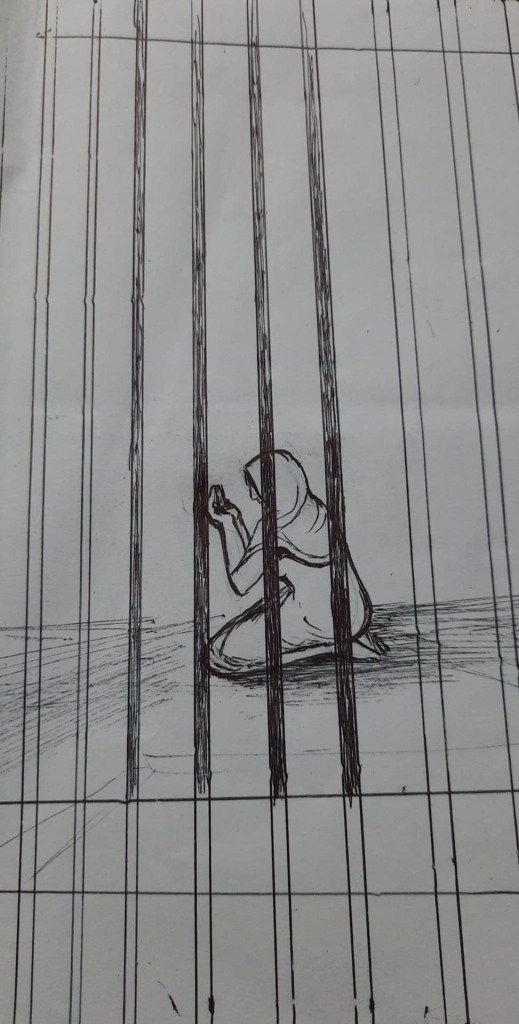
We, the Sojourners

By Dr Santosh Bakaya

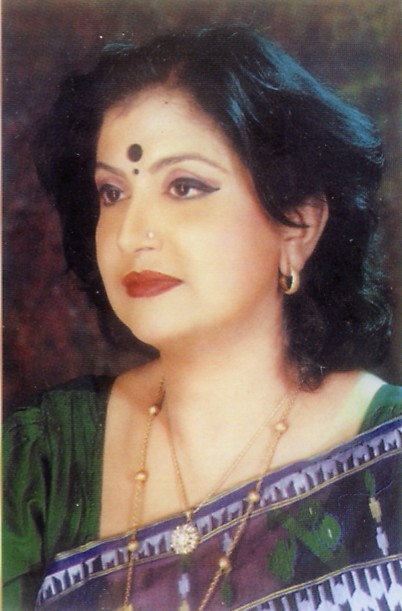
Dr. Santosh Bakaya is an academician, poet, essayist, novelist, biographer, Ted Speaker and creative writing mentor. She has been critically acclaimed for her poetic biography of Mahatma Gandhi [Ballad of Bapu]. Her Ted Talk on the myth of Writers’ Block is very popular in creative writing Circles . She has more than ten books to her credit , her latest books are a biography of Martin Luther King Jr. (Only in Darkness can you see the Stars) and Songs of Belligerence (poetry). She runs a very popular column Morning meanderings in Learning And Creativity.com.

.

PLEASE NOTE: ARTICLES CAN ONLY BE REPRODUCED IN OTHER SITES WITH DUE ACKNOWLEDGEMENT TO BORDERLESS JOURNAL. 
.

Categories
Poetry

Harmony

by Christopher Manners

.

Amidst the crowded cacophony of chaos,

this sweet perception fleetingly crystallized,

in these suddenly calm, pristine waters,

as I no longer perceived each ego clashing,

but a united chorus of the countless cascading

with those blazing harps of blissful harmony

trumpeting beyond all the mundane misery,

as each valiantly distinct and voyaging voice

was a dear resonance of deathless radiance

all vastly imagined by the boundless artist.

.

Christopher Manners has had 2 poetry books published by Sophia Perennis.  He has also had poems published by Harbinger Asylum. Born and residing near Toronto, Canada, he has a Bachelor of Arts with Honours from York University.   Manners is the founder of poetryimmortal.com, a poetry blog and encyclopedia dedicated to the classics. 

.

PLEASE NOTE: ARTICLES CAN ONLY BE REPRODUCED IN OTHER SITES WITH DUE ACKNOWLEDGEMENT TO BORDERLESS JOURNAL. 
.

Categories
Poetry

Heredity

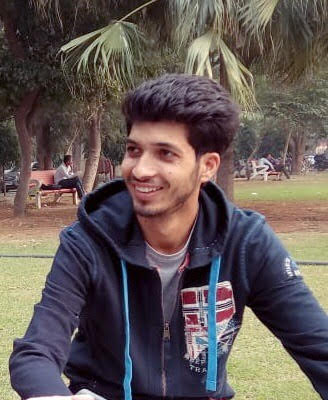
By JGeorge

The way a cracker fires up to the sky, and then blooms into scattered pieces of joy;

Like sprinkling water, is exactly how my father’s hand moves in hopelessness.

He raises his hands upwards, a little higher slowly,

and then throws his fingers from its closed bud, to the air opening up,

“Ohh…Onnulla” (Oh! Nothing) ,

with the “Ohh” dragging itself to the top and in “onnulla”, all that agitation and frustration

cracks up open, falling back to his lap.

I really don’t remember how she initiated a hug or being in her embrace,

her, she – my grandmother, his mother;

was it firmer, with left hand holding and right patting, or the other way, I wonder.

But this piece of movement, is so familiar to me, like the signature end note of a musician,

it was hers and now, I see it all growing in you, father.

The lines of worry piling up, just like the ones on your forehead;

how that lips down turn themselves, after nothing (Onnulla) and

how she turns her head sideways away from me.

All in you, I see replicated well, the worry, the anxiety,

the deep sadness dwelling behind those heavy eyelids.

She was sixty when I went to stay with her,

and now, you are in your sixties while I am here for this extended lockdown stay

and maybe it’s this inacqaintance that I notice as a bare connection.

Or maybe all I want to ask you is to open your fingers a little more widely to a hug,

and watch joy sprouting from hope, in a million faint moments around,

something she never understood.

.

JGeorge’s poems appear or is forthcoming in several online and print journals, most recently in “Mookychick”, “The Initial Journal”, “Active Muse”, “TROU Lit Mag”,”Peach Street Mag”, “The Martian Chronicles”, “FishfoodMag”, anthologies of “Boundless”(Rio Grande Valley International Poetry Festival 2019) and “Love, As We Know It” (Delhi Poetry Slam). Currently, she lives in Pondicherry, pursuing research at Pondicherry University.

.

PLEASE NOTE: ARTICLES CAN ONLY BE REPRODUCED IN OTHER SITES WITH DUE ACKNOWLEDGEMENT TO BORDERLESS JOURNAL. 
.

Categories
Musings

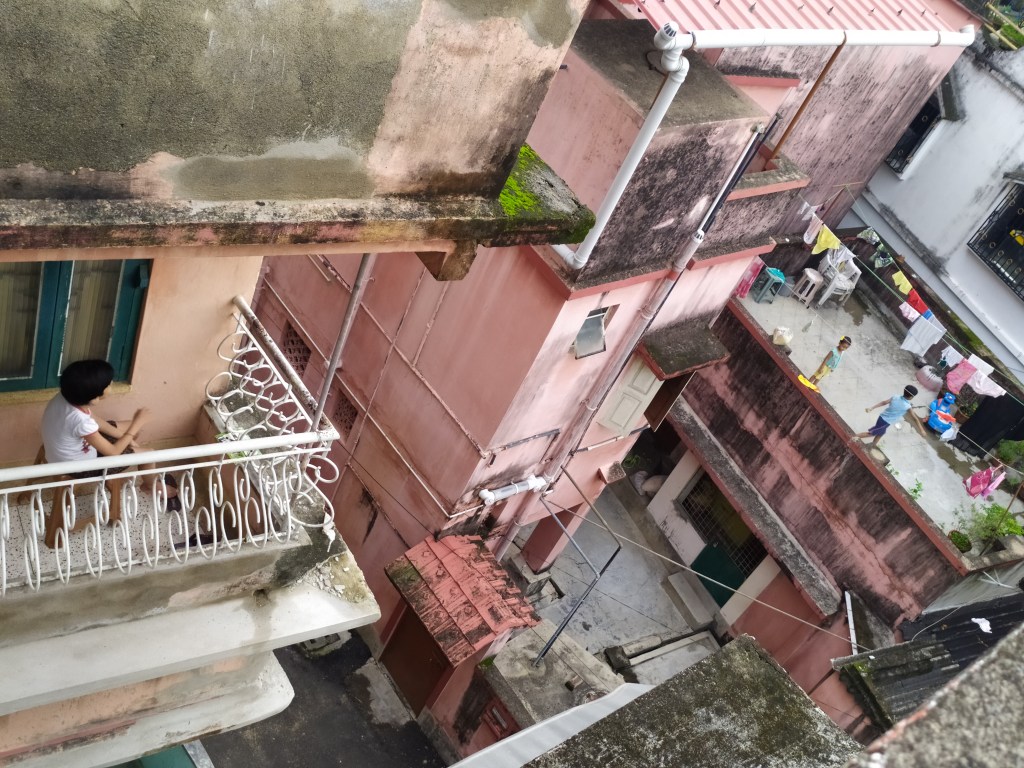
New Normal & Corona Puja

 By Nishi Pulugurtha

Covid_19 has been changing a lot of things. We are trying to get used to the ‘new normal’. Most of us are still indoors, working from home, trying to deal with things in the best way we can. Those of us who are into teaching are working from home too and trying to learn new ways of engaging with our students, of being connected with them. I tried ways and means of taking online classes if and when I could, of emailing my student papers and reading material,  of getting assignments mailed to me, of correcting them and of counselling them.

I even tried various online platforms.  There is the question of network connectivity, not all are able to join in regularly. Some call and talk too. One misses out a lot when one is teaching online. I feel it is important to see my students when I teach. All I am looking at is a blank screen — their videos are off to save bandwidth. I know they do disturb in class with their fidgeting, their talking and their daydreaming but teaching online is a poor substitute to classroom teaching.

I see many of my students write poetry these days. Some of them scribbled once in a while, but these days I find them doing that more often. Some of what they write is really good. I encourage them to go on as I am impressed to see them expressing themselves in English. There are many who want me to read and comment and edit their work too. This, I feel, is their way of trying to deal with the situation they are in.

There are many who draw and paint and share their art work too. I had always wanted to have a Literary Society in the College I teach at but never actually got down to having the students work at one, so I thought I would use the online medium to create one. A platform where I could share the creative done by students of the college I teach at.  I am sure that some encouragement will make them work harder at it.

We even got down to celebrating various events online. To commemorate World Theatre Day, we shared readings of plays in the department virtual group. We shared video recordings of our readings, songs and even dance recitals on the occasion of the birth anniversary of Rabindranath Tagore too. It was nice to see many of the students joining in. The best we could do. A student compiled them all into videos and posted them online too.  

There are a number of Webinars being organized.  I jumped the bandwagon too. I have felt that they are nice ways of engaging. Yes, there are gaps, lacunae, criticisms and the like but at least for some time I think it does open us up to ideas and thoughts in a scenario where concentrating on something is becoming difficult for many of us every day. I have had people tell me that as long as they are listening to the lectures their mind was engaged in stimulating discussions for some time at least. I learnt working on a new medium in order to organise it all. Yes, there were hiccups and snags and I am still trying to navigate my way through the technical maze.

A young dancer and dance teacher told me that he had begun taking dance classes online. A friend tells me her son is taking karate lessons online. I was surprised to hear that initially, but have taken that in my stride now. This is the new normal, the way things might have to go on for some time. My nephew’s coaching classes are all held online. He was even given a test that he had to take at home. I guess, one of the important things is to be connected with whatever one is involved with.

My mother’s carer was speaking about how people in her village are reacting to ‘Corona’. She said that though there have been no cases as yet in her village but people are scared. They have been asked by the village elders to do a number of things that would help them ward off the evil eye of ‘Corona’. I could not but be interested in what she had to say.

One of the first things that they were asked to do was to get up early in the morning, before sunrise, and stand facing the East. Now they had to chop onions into round pieces, put them into their mouth and chew and eat them. They could only have water after about one and a half hours after that. She said, that her family followed all the instructions, like everyone else in the village.

Another set of instructions soon followed as more news about the pandemic trickled in. This time they had to get up early in the morning and stay unwashed. They were asked to eat five grains of rice and five wet tulsi leaves.

At another time, they had to get up early in the morning, have a bath, light five lamps, earthen diyas, which they had to make the day before, and pray to the gods. I laughed when I first heard her say all of this but soon realised that this was their way of trying to deal with the unknown disease. They had no clue about it, or what it could do. As it is the gods are goddesses are propitiated when someone in the family falls sick.

I was reminded of the Sitala Puja that is associated with sickness and disease. Maybe these village folk were trying to do the same with this new sickness as well.  She tells me that there is talk about ‘Corona Puja’ as well. I ask her details of it.

She said that her folks are awaiting news and information from the village priest. Inspite of all the blind faith and beliefs, one thing that she tells me is that they make it a point to drive home the importance of wearing masks, of washing hands and of quarantine. A local school is the quarantine centre. Her brother who has been out of work, recently returned from Coimbatore and is now housed there. Once he is out of quarantine he is going to get married to his sweetheart, she smiles as she tells me. Some new beginnings in these times.

.

Dr. Nishi Pulugurtha is Associate Professor in the department of English, Brahmananda Keshab Chandra College and has taught postgraduate courses at West Bengal State University, Rabindra Bharati University and the University of Calcutta. She is the Secretary of the Intercultural Poetry and Performance Library, Kolkata (IPPL). She writes on travel, film, short stories, poetry and on Alzheimer’s Disease. Her work has been published in The Statesman, Kolkata, in Prosopisia, in the anthology Tranquil Muse and online – Kitaab, Café Dissensus, Coldnoon, Queen Mob’s Tea House, The World Literature Blog and Setu. She guest edited the June 2018 Issue of Café Dissensus on Travel. She has a monograph on Derozio (2010) and a collection of essays on travel, Out in the Open (2019). She is now working on her first volume of poems and is editing a collection of essays on travel.

.

PLEASE NOTE: ARTICLES CAN ONLY BE REPRODUCED IN OTHER SITES WITH DUE ACKNOWLEDGEMENT TO BORDERLESS JOURNAL. 

Categories
Poetry

Resurrection & more…


By Aneek Chatterjee

Resurrection       

Some issues are so puzzling …

.

Often I ask myself, where does the

mind stay …

In the brain, the heart or the eyes

or in the thin layer of the skin

when a touch ignites

irresistible passion

.

and I get more confused … 

.

When I look up, clouds

paint me words, images,

I lost in a forest of bricks 

of dingy bylanes; 

in the asphalt of avenues,

smell of markets. 

Clouds, white, black or sepia

hold me inside, and I float … 

.

I float and finally

descend down on

the skin of narrow bylanes 

And avenues;

in the heart of the city center,

And discover me there

.

Fresh as ever

.

About Time & Pride                                        

Sometimes I’m ahead

of the time I yearn to be.

.

The magical night laughed at me

I was at the airport, and the next

flight to Nice was in the morning,

eleven hours later. 

I didn’t know how I beat time

when I slept on the floor,

with my cabin bag as pillow and

my left hand inside the strap,

as if it contained hundred

years’ of accumulated wisdom.

I didn’t know how I beat time

and possible cheaters. 

A little drunk

and the night passed in a whimper,

aimed at transborder 

lumpens.

.

In the morning, I found

my bag open, and some coins

and papers on the floor.

I picked up all and realised

these actually escaped

my powerful pocket.

I searched for my toothbrush 

and saw in the electronic board that

my dream had left for Nice.

.

Howled at the beginning and

then laughed, pitied me and time

lazily at the washroom,

always my best bunker;

and waited for the next flight

eight hours later.

.

I’m still ahead of my time,

yearned pride & dream.

.

 Aneek Chatterjee is a poet and academic from Kolkata, India. He has been published in reputed literary magazines and poetry anthologies across the globe. His recent credits are:  Chiron Review, Shot Glass Journal, The Stray Branch, Chicago Record, Ann Arbor Review, Dissident Voice, Café Dissensus, Setu, Ethos Literay Journal, New Asian Writing, Pangolin Review, Montreal Writes, Mark Literary Review etc. He authored two poetry collections named “Seaside Myopia” & “Unborn Poems and Yellow Prison”.  Chatterjee has a ph.d. in International Relations; and has been teaching in leading Indian and foreign universities.

.

PLEASE NOTE: ARTICLES CAN ONLY BE REPRODUCED IN OTHER SITES WITH DUE ACKNOWLEDGEMENT TO BORDERLESS JOURNAL. 
Categories
Poetry

The Future Starts: The Past Departs

By A Jessie Michael

In my heart thunder, in my eyes, only clouds.

 “Here already? Here already?” asks his mother,

for hours his favorite rendang* stirring.

She is incoherent with love

and breathless from using her lungs as bellows.

My son comes home today with wife and child.

.

A man steps out of a car, not a child;

 It’s the laterite dust that our vision clouds.

He’s dressed like the city. Where is the boy I love?

Not seeing us still, “Pa!”  he echoes the buffalo’s bellows.

Then child-like, calls “Bu” in his mother-

tongue, peering thru the dust still stirring.

.

The wind sets the young padi* stalks stirring;

It’s whistle like the reed flute, reduces me to child-

like sobs and I stand speechless like a love-

lorn fool as they kiss my hand. The cloud-

laden sky turns dark and heavy with a mother-

load of rain. In the paddock the buffalo bellows.

.

The young child frets. “I’m hungry!” he echoes the bellow.

“I made rendang*,” proclaims his grandmother, stirring

spittle in our mouths while the mother

of all storms begins. “I want KFC” — truly a spoilt child

and for a moment my appetite clouds

till I remember that till he’s grown, KFC is puppy love

.

The rain thrashes the ground, a love

offering to the padi fields, drowns the bellows

Of our lungs, conjures memory clouds

of bare bodies and muddied feet and the first stirrings

of manhood riding on the buffalo, laughing in child-

ridden delight towards his padi-harvesting earth mother.

.

“Pa the roof leaks, the house creaks and this mother

earth is dying. Laterite will become tar. This love

nest will soon be concrete flats. No more child-

friendly fields, but roads with the horn bellows

of trucks and automobiles. Change is stirring.

Come with us to the city. Will you live among exhaust clouds?”

.

I see the future start in this man- child trying to mother

us, clouds of grey hair mingling with mists of love.

Slow the past departs, deaf to my heart’s bellows and my soul’s stirring.

.

*Rendang –aromatic  spicy meat dish with ground coconut flesh and milk, sautéed for hours.

*Padi – unhusked rice

*Bu (Ibu) – mother

.

A. Jessie Michael is a retired Associate Professor of English from Malaysia and a writer of short stories and poems. She has written winning short stories for local magazines and newspaper competitions and received honourable mentions in the AsiaWeek Short Story Competitions. She has worked with writers’ groups in Melbourne, Australia and Suzhou, China. Her stories have also appeared in The Gombak Review, 22 Asian  Short Stories (2015), Bitter Root Sweet Fruit and Kitaab (2019)  She has published an anthology of short stories Snapshots, with two other writers and most recently her own anthology The Madman and Other Stories (2016).

.

PLEASE NOTE: ARTICLES CAN ONLY BE REPRODUCED IN OTHER SITES WITH DUE ACKNOWLEDGEMENT TO BORDERLESS JOURNAL. 

Categories
Poetry

These Thousand Hills

By Melissa A. Chappell

(For the 800,000 people who perished in the Rwandan genocide of 1994)

I am a Eucalyptus tree.

For a hundred years I have stood here

with my roots pressed in this Rwandan earth.

They reach down

deep,

deep into the underworld,

where life is not,

and the dead

flee away.

.

My branches reach

high,

high into the heavens,

where there is

no wrong,

and death

flees away.

.

But I dwell on earth,

and what I have seen!

What I have seen!

The rain was blood

for my shamed roots,

and loathing myself,

I was made rich

by rotting flesh,

flesh that

no one claimed

because they, too,

had disappeared

into oblivion.

.

Come, Mercy, come!

Lay an axe to my trunk.

Butcher my wood

as they did the people

to whom I once

gave shade.

Set me ablaze.

Make me a holocaust

to the heavens.

Let me burn!

May my holy essence

float across

these thousand hills

.

so that none may

be forgotten,

so that none may

be forgotten.

.

Come, Mercy, come!

Let me burn.

.

Melissa A. Chappell is a native of South Carolina living on land passed down through her family for over 120 years. She is greatly inspired by the land and music. She plays several instruments, among them an 8 course Renaissance lute. She shares her life with her family and two miniature schnauzers. She recently published Dreams in Isolation: The World in Shadow: Poems of Reconciliation and Hope with Alien Buddha Press.

.

PLEASE NOTE: ARTICLES CAN ONLY BE REPRODUCED IN OTHER SITES WITH DUE ACKNOWLEDGEMENT TO BORDERLESS JOURNAL. 

Categories
Poetry

Pine Scent

By Mallika Bhaumik

pine_scent

A password is often a prosaic keepsake of a faded romance, sometimes perhaps an idea of a home one longs to return to.
An overcast sky, the concrete of the city recedes giving space to the smell of wet earth, a coiled creeper looks up to drink the rain,the tick-tock of time rolls down a valley that was once strewn with poetry of our younger days.
The spread of the olfactory root is an asylum, I try to draw a route map of the bottled odours, how they tiptoe in to settle down, how I grow to become a habitat.
A whiff of familiarity and I walk back to touch the whirring of an emotion ~the damp earth, orchids, rhododendrons, the whispering forest trails refreshing the sound of our footsteps from some other time; turning bodies to tangible dreams, nights to blooming cornflowers.
I am somewhat like a vagabond cloud holding in me particles of places, their smell, colours, their warm embrace.
A folder opens window to our archived youth, a dash of a fuchsia dupatta grows wings to become a firefly, brings back some pitter-patter of rain, vignettes of our Shillong days.
deep deep within
a rippling lake..
forever.pine_scent

Mallika Bhaumik has a Master’s degree in English literature from the University of Calcutta. Her works have been featured in many reputed mags like Mad Swirl, Cafe Dissensus, Oddball magazine, Shot glass journal, Kitaab, In parentheses, Stag Hill journal, Harbringer Asylum, Madras Courier, The Alipore Post to name a few. She is the author of two poetry books. Her first book,’Echoes’by Authorspress,New Delhi, has won the Reuel International award for the best debut book,2018. Her second book ‘How not to remember’ has been published by Hawakal Prokashona, Kolkata (2019). She is also a nominee for the Pushcart Prize for poetry, 2019. Her poems are included in the Post Graduate syllabus of BBKM University, Dhanbad,2020. She lives and writes from Kolkata .

.

PLEASE NOTE: ARTICLES CAN ONLY BE REPRODUCED IN OTHER SITES WITH DUE ACKNOWLEDGEMENT TO BORDERLESS JOURNAL. 

Categories
Interview

Amrita Pritam lives on in her works

Uma Trilok in conversation with Nalini Priyadarshini

Uma Trilok holds a doctorate in Education management and has taught Philosophy and Education at various university colleges. She has been Principal in a women’s college.

Trained in Hindustani classical vocal music and Kathak dance, she has been performing at various forums such as All India Radio and Triveni Kala Sangam, New Delhi. She is a research scholar and has presented her papers in various national and international conferences, which have been highly acclaimed.

Uma Trilok is proficient in both in English and Hindi and writes poetry, short stories and novels. Her short stories and novels have been staged as plays and are also being produced as web series.

Uma Trilok has written eighteen books including much acclaimed, Amrita Imroz- A Love Story, published by Penguin which has been translated in 11 Indian languages. Her poems have also been translated in a number of foreign languages.

Nalini: How does a poem start for you, an image, a concept or a line? How does it develop?

Uma Trilok: Poetry flows on its own with its inherent elegance. It is so fragile that it cannot be forced into a determined design. Poetry is a moment, that gets expressed suddenly. A word, a gesture, a sound, anything can trigger a poem. It overpowers the poet to get itself revealed.

Its texture and its ambiance is its own, which unfolds itself. In fact, a poem soars within you, takes its own shape and expresses itself in an idiom, which is very peculiar of its own nature. Images collide with each other and bring about kaleidoscopic designs, so much so that sometimes even the poet wonders over its final outcome.

A poem is unexpected, it enlivens suddenly, discovers and invents its own vocabulary, which takes it to various by-lanes. It enjoys its surrounding beauty before it reaches the end. Its voyage is as important as its goal. The reader enjoys both its “ways” and “way to”.

Nalini: What did you like to read as a youngster? Would you please share something about literary influences that moulded your literary sensibilities?

Uma Trilok: As a youngster, while I was trained in vocal classical music, I was introduced to the poetry of Urdu poets like Faiz Ahmed Faiz, Shakeel Badaauni, and the likes of Sahir Ludhianvi, whom I loved to sing on the stage as well as on the All India Radio.

Though I did not study literature, Hindi or English, systematically, in college but I read works of Maya Angelou, Octavio Paz, Pablo Neruda, Rilke, Rumi, Khalil Gibran and Rabindranath Tagore with great relish and admiration.

In Hindi, I admired Mahdevi Verma, Nirala, Pant, Dinkar, and Dushyant Kumar to name a few.

In Punjabi, Amrita Pritam and Shivkumar Batalvi were my all-time favorites. Dharmaveer Bharti, Munshi Prem Chand, Bheesham Sahni and Kamleshwar are also some of my most favorite authors.

When you read, enjoy and admire writers and poets like these, you definitely tend to get influenced by them in sensibilities as well as in style.

Nalini: Poetry is often considered a stronger medium of expression in comparison to prose. As a writer, who is equally proficient in both, what is your opinion?

Uma Trilok: A poem is a capsule of messages of semi-elaborated issues of great concern, with the capacity to hit to which readers cannot help but respond. It has its advantages as well as it handicap — ambiguity and brevity. On the other hand, prose has a setting, a plot, a point of view along with a theme and a mood. There is a difference in the composition of both. The effectiveness of both depends on the treatment given.

Prose can be written in a poetic style, using emotional effects and heightened imagery. Poetry can also be written like prose with no rhythm or rhyme. I believe prose has a little raw element in it, whereas, poetry is brewed, distilled and refined.

A poem is like a shot of liquor and prose is like a glass of chilled lemonade. Both are refreshing, though. For example, if I were to recite following two lines of Dushayant Kumar, they are equal to a couple of chapters in prose,

” Kaun kehta hai aasmaan mein suraakh nahi ho sakta

(Who says the sky cannot be punctured with holes)

  Ek pather to tabiyat se uchaalo yaro “

(Friends throw a stone and see)

Or, if we were to read lines of Nazim Hikmat,

“Being captured is beside the point,

The point is not to surrender “

The lines are loaded with meaning, but are said in so few words.

Nalini: Has the world become accepting of female poets with out of the ordinary thought process? From Plath to Amrita Pritam, what has changed, what hasn’t and what needs to?

Uma Trilok: In literary history of the world, through the ages women poets have raised their voices as catalysts against the atrocities and injustice against women. There are countless women poets who deserve acclaim. There are many loud and meaningful voices who have kept the flame of protest burning after Sylvia Plath and Amrita Pritam.

Maya Angelou was surely one of the phenomenal poets who won admiration from millions of people. She wrote poetry, essays, and autographies.

Mary Oliver, who through her very powerful poetry, called upon the women to claim and occupy their due place in the world. Rita Dove, a Pulitzer award winning poet has been named U.S. Poet laureate in 1993, youngest to date. Aditi Rao is another name, whose poems speak of griefs, wounds and exhilaration that women suppress.

Arundhati Subramaniam is yet another very prominent poet, writing upon issues that directly concern women. Rupi Kaur writes powerful poems on most forbidden topics such as menstrual taboos and sexual violence. She writes,

“our backs/ tell stories / no books have / the spine to carry “.

She also writes,

“the earth has waited its whole life for us “

The younger generation of female poets has attracted millions of online viewers, who take poetry quite seriously. Poetry of female poets is being sold much better than ever before. Figures tell that U. K. Market alone has grown by 48per cent. Wendy Cope managed to sell almost as many volumes of her own poetry as the all-time favorite Sylvia Plath could. And Rupi Kaur made nearly £ 1 million from poetry sales last year.

If this be taken as one of the reasons of their popularity and the prizes, awards and acclaims which they have won, I would say the female poets are being recognized well. There is an upswing. There is bristling activity, which is very encouraging.

Nalini: You had the opportunity to closely observe and know Amrita Pritam, who happens to be an icon of feminist writing in India. Has it influenced your sensibilities and writing style?

Uma Trilok: Interacting with Amrita Pritam was a golden opportunity for me. To know a person of her stature so intimately and not be influenced by her is not possible.

She did influence my sensibilities and quite deeply. But for her style of writing I am not conscious, how much that has affected my writing style, I don’t know. But people do say that our reactions to situations are similar.

Nalini: Please share some of the challenges you faced while writing Amrita Imroz, A love story. How has writing this enriched you?

Uma Trilok – One of the biggest challenges that I faced while writing Amrita Imroz, A love story was to ryo to avoid not to deviating from the reality of the two characters I was handling. They were living legends already. They were known all over. In fact, people had known about them but they had not known them as I saw them, the ardent lovers that they were, especially Imroz. The reality of Imroz was misconceived by them for years, I had to put it straight.

The book is a unique love story, quite an unbelievable in modern times. I had to make it sound unusual as it was and yet true. The story also is very delicate and fragile; my presentation of it, also had to be very non- interfering. In every story, there is always a scope of fictionalizing it but in Amrita Imroz, A Love Story I was only an amazed onlooker, who put the story as it was without fiddling with it in the least.

I was deeply impressed by the story of such intense love. I had to bring out Imroz, who was so misunderstood. His true self came into light through this book. I was so happy that I was instrumental in doing that. People came to know how giving and sacrificing he was towards Amrita. We all wondered how can any man in this world be so egoless. In fact, one has to be gallant and heroic to give so much and yet not demand anything in lieu of that. His unassuming self, expressed his large heartedness, but his modesty and humility has been misunderstood by people as debility which I firmly believed, had to be corrected. The book was a step towards it.

Nalini: How important are literary groups and readings.? Do you have circle of writers with whom you share your work?

Uma Trilok: Readings in small literary groups in dim lights, preferably when listeners sit around in an immersive mood, is the best way to read and listen to literary work, especially poetry. The word has an image to visualize, it also has a sound to listen. Sound enriches the word. Spoken word has its own very energizing connotation. In this type of gatherings, listeners can ask questions and ask for a repeat also. The ” Mehfil ” environment is very conducive to good reading and good listening.

Yes, we have groups of poets and writers, who meet and read to each other and get unedited feedback on their work. We, as a group, had a regular coffee table meets every weekend, where poets like Keshav Mallik, Rakshat Puri and Keki Daruwala and the like, participated along with us. We enjoyed cups of coffee and read poetry to each other.

Also, every month end we met at Aparna Art Center, Siri Fort to enjoy our own poetry and also the poetry of poets who were invited from outside. This type of meetings are very enriching and fulfilling.

Nalini: Has poetry taught you anything about yourself that had not occurred to you earlier?

Uma Trilok: I cannot fully analyze the value of poetry in my life, but the first word that pops up is emotional resilience. For example, when I write about hatred, anger and violence, I have love, empathy and fellowship at the back of my mind.

Poems take away stress and gift out serenity, contentment and congeniality. A poem speaks for all, for ourselves and also for those who cannot speak for themselves. you expand your purview of experience.

Nalini: What is the role of the personal in poetry?  When you write, is it for you or the reader?

Uma Trilok: I write when I am fully filled with emotion, which I cannot carry any further. It is a compulsion for me, it is not a choice. The events that affect my feelings, my sorrow, my anger, my desperation force me to write. That is the time, a poem holds my hand. In fact, I don’t write a poem, it is the poem that writes me.

I do not change my words, make them mild or strong, to suit the audience. I say, what I want to say, irrespective of how the audience take it or ignore it.

Nalini: Any words for the aspiring poets and writers.?

Uma Trilok: In my view, the younger generation of poets and writers are doing very well. They are quite conscious of the environment around and are taking up issues, which were a taboo earlier. They are inventing new idioms to express in their own unique way. The female writers are being recognized and awarded for their work. They have been able to make poetry more popular and relevant by using new ways through print and social media. I want to say only one thing to the youngsters that they read more, more and more. Because if we don’t deposit, from where will we withdraw.

Thank you, Uma for taking time for this thought-provoking conversation and your insights about poetry and creative process.

.

Nalini Priyadarshni is a feminist poet, writer, translator, and educationist though not necessarily in that order who has authored Doppelganger in My House and co-authored Lines Across Oceans with late D. Russel Micnhimer. Her poetry, prose and photographs have appeared in numerous literary journals, podcasts and international anthologies including The Lie of the Land published by Sahitya Akademi, New Delhi. A nominee for the Best of The Net 2017 she lives in Punjab, India and moonlights as a linguistic consultant.

.

PLEASE NOTE: ARTICLES CAN ONLY BE REPRODUCED IN OTHER SITES WITH DUE ACKNOWLEDGEMENT TO BORDERLESS JOURNAL. 
Categories
Interview

Countercurrents: A People’s Journal

Binu Mathew, Founder and Editor of Countercurrents.org, in conversation with Mitali Chakravarty

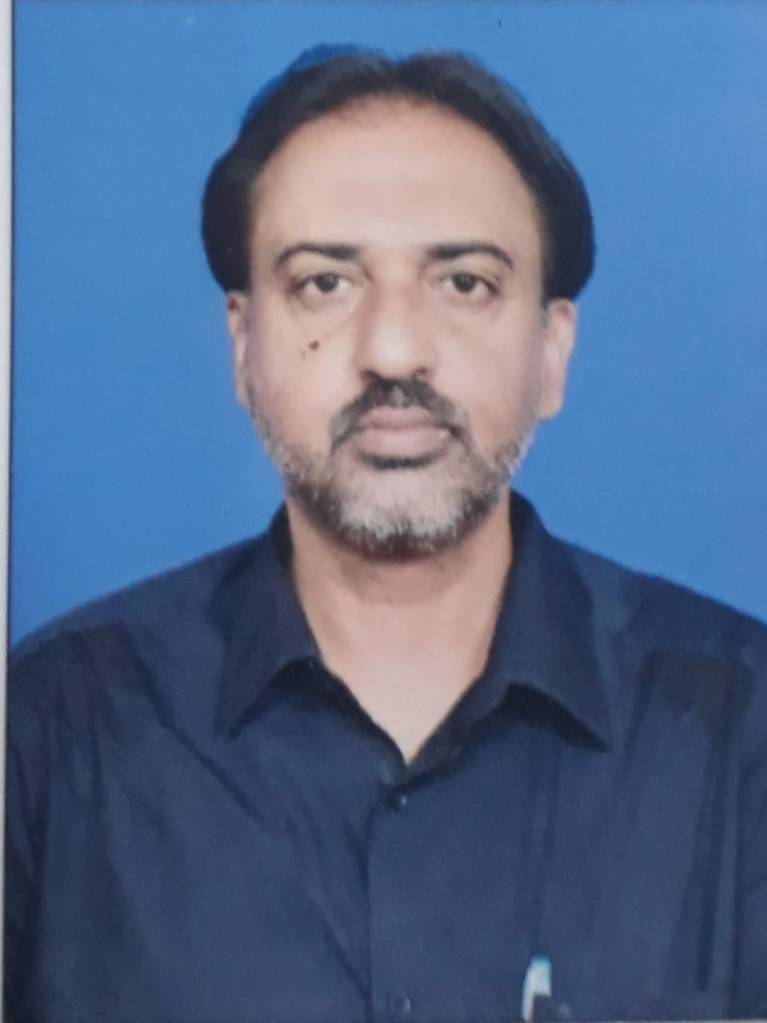
Binu Mathew

Can you interview an online site?

You can’t. So, I did the next best thing. I interviewed Binu Mathew, the man behind the award-winning million readers a month or three million-page views a month online journal, Countercurrents. Mathew claims this is not a big thing except that his journal is based on ideology and openness. He calls it a “people’s journal” in his you tube interview.

He has also started a ‘People’s Manifesto‘, a campaign that will be released by August 15, 2020. He is asking people to give an alternative vision to the government for a post-COVID 19 India. Mathew grew up in a farm on Kerala and turned to journalism. He has talked of his life in an interview with John Scales Avery, a theoretical chemist who is a part of the Nobel Peace Prize winning Pugwash Conferences.

Mathew is a man who finds links and interlinks between major world issues from climate change, COVID to economics and politics. What impresses me most about Mathew is that while almost all writers and journalists see their journeys at an individual level, he completely identifies with his journal and lives by his ideology. Here in this exclusive, we have Mathew himself unravel his ideology.

You have been running Countercurrent.org for 18 years. Tell us how it was conceived and why?

 I was working as a journalist in Malayalam language news paper. It was a mundane job. Although the job gave me some financial security, it didn’t satisfy my intellectual curiosity. My desire to do something positive for the society kept nagging me. The job itself was a monotonous one, doing local beats and making local pages.

Some of my college mates and I had some discussions about starting an alternative weekly or monthly in Malayalam language. But the financial cost was huge, and it was beyond our capacity.

By the year 2000, internet infiltrated into our homes. There I chanced upon Znet, Electronic Intifada and many such fascinating websites. It was a revelation to me. Znet was a great source of left intellectual literature. Noam Chomsky, the rock star of intellectuals was free to read at the click of a mouse. In those days it was very expensive to buy books by Chomsky.  In other websites, I found people telling stories from Palestine and other conflict zones.

In around the same time, I read the book, When Corporations Rule The World by David Korten. It was an eye opener. I thought I had to do something more than doing the local beats for my paper. Internet gave me the opportunity to do this. I decided to start a website like Znet.

I had zero knowledge in computing language. So I joined a basic html course. I and some of our friends had a brain storming session and decided on the name “Countercurrents“. I took a loan from bank and bought a computer. It was a 20GB hard disc, 256 MB RAM computer. It cost me Rs 40,000 at 18% interest! I paid it back by monthly instalments from my salary.

It was also the time a pogrom in Gujarat against Muslims was going on, in which at least 2000 Muslims were killed. We decided to launch the site as soon as possible.

Artist Razi designed the site, Ajith Kumar B converted it into html. I translated an article from Malayalam by the well-known writer Sarah Joseph titled, “The Womb and the Sword”, on the attack on pregnant Muslim women in Gujarat, in some cases where the pregnant women’s belly was cut open and the foetuses were thrown into the fire. That’s how I became the editor of Countercurrents. It was on March 27, 2002 the first article was published. Since then more than fifty thousand articles have been published. Thousands of well-known and young people have written for CC. Some of them went on to become big journalists or activists.

Tell us about your team and what makes you tick?

I don’t have a team to speak of. Most of the editing work is done by me. There are people like K.P Sasi and Satya Sagar who help me with their intellectual inputs. There are also many other people who are part of the Countercurrents Collective who don’t like to be named. In that way, I’m very fortunate and extremely thankful to them.

What is the philosophy of Countercurrents?

Humanity is facing its greatest existential threat ever with climate change and resource depletion and environmental degradation. This is not a crisis waiting to happen in the future, but it is already here and manifests itself in the COVID-19 pandemic we are facing today. Many resources wars continue to rage in several parts of the world, rising food and fuel prices, growing hunger, natural calamities of horrifying proportions, water scarcity, debt crisis, unemployment, social tensions among communities, growing human rights violations and unprecedented ecological degradation. Unless we take urgent action to change the way we live, trashing our only home, this beautiful planet, this crisis has the potential to wipe out the entire humanity and a majority of the other species from the face of this Earth.

The objective of Countercurrents.org is to spread awareness about this crisis and search for meaningful solutions. We believe that energy intensive globalization should end and it must be replaced by a low energy, ecologically sustainable local economies.  If humanity is to survive, the destructive system of capitalism and consumerism must be replaced by an economic system which is based on just equitable distribution and need based use of resources.  

Your motto says —“Educate! Organise! Agitate!” How do you explain it?

Susan B. Anthony (February 15, 1820 – March 13, 1906), who was an American social reformer and women’s rights activist and played a pivotal role in the women’s suffrage movement said, “Organise, agitate, educate, must be our war cry.”

In the Indian context Dr Ambedkar gave the call “Educate, Agitate and Organise.”

We combined both the slogans and took as our motto —“Educate! Organise! Agitate!”

We thought of it as a revolutionary call for caste annihilation and women’s empowerment, two of the major concerns in the world today. It also envisages a new kind of journalism which ‘educates’ instead of entertains as in ‘infotainment’. Organisation is necessary for social change. Without organisation, we cannot make any social change. However, it is not the duty of Countercurrents to establish an organisation. We hope that an organisation would emerge organically from the masses. An example is ” Fridays For Future” initiated by Greta Thunberg. Countercurrents has been educating the world about the danger of climate change from its inception. It is happy to see organisations emerge organically, especially on critical issues like climate change. Agitation is the final push for social change. It will happen or it should happen. Otherwise, we are all going to perish.

You have many hallowed names attached to your journal, like noted intellectuals like John Scales Avery, Magsaysay award winners, Sandeep Pandey and Prafulla Samantara and social activist Ram Puniyani. What do you think made them pick your journal over others?

I respect and love all these people. They are regular writers of Countercurrents too. They must have seen Countercurrents as an engine of social change. Otherwise they would not have endorsed CC.

You have recently started a section called Citizenship Amendment Act and it has won some recognition from US universities. Can you tell us a bit about this initiative and the subsequent recognition? How will this recognition help Countercurrents or your initiative?

Countercurrents was covering the Citizenship Amendment Act from the initial days of this controversial pact and the resultant agitations across the country. We were happy to know that Ivy Plus universities in the US decided to include it in their digital library for the benefit of faculty and researchers. Their communication said, “The Ivy Plus Libraries Confederation has selected your website — https://countercurrents.org/tag/citizenship-amendment-act — for inclusion in its India’s Citizenship Amendment Act Protest Movement Web Archive. The Archive is an initiative developed by librarians at Columbia University, the University of Pennsylvania, and New York University, under the auspices of the Ivy Plus Libraries Confederation. The Archive contains material related to protests against India’s new Citizen Amendment Act and the National Register of Citizenship, and was created to preserve and expose this content for academic research in politics, religion, sociology, and interdisciplinary South Asian Studies.”

It is extremely heartening to have this recognition from such prestigious universities, especially in this age of fake news. This speaks volumes of the authenticity of the content Countercurrents publishes. By the way, Countercurrents is archived in the US Library of Congress too. That too is an immense recognition

What kind of contributors do you look for?

Whatever the articles that Countercurrents publishes have some insights, give a new perspective to the reader. We won’t publish articles that don’t fit this criterion. We have contributors from Nobel Prize winners to grade ten students. Achievements doesn’t matter. Insights matter.

What kind of readership do you have?

We have readership from around the world. I get emails from even a remote village of Nicaragua.

What do you see as the future of Countercurrents and your own?

The future is beyond our control. We do our best while we can is my motto, the rest is beyond our control. If I die tomorrow, I hope someone will be willing and capable enough to take over.

You Tube interview of Binu Mathew with Vidya Bhushan Rawat, a social and human right’s activist

.

PLEASE NOTE: ARTICLES CAN ONLY BE REPRODUCED IN OTHER SITES WITH DUE ACKNOWLEDGEMENT TO BORDERLESS JOURNAL.