            After the Rain

 After the rain, it’s time to walk the field
 again, near where the river bends. Each year
 I come to look for what this place will yield—
 lost things still rising here.

 The farmer’s plow turns over, without fail,
 a crop of arrowheads, but where or why
 they fall is hard to say. They seem, like hail,
 dropped from an empty sky,

 Yet for an hour or two, after the rain
 has washed away the dusty afterbirth
 of their return, a few will show up plain
 on the reopened earth.

 Still, even these are hard to see—
 at first they look like any other stone.
 The trick to finding them is not to be
 too sure about what’s known;

 Conviction’s liable to say straight off
 this one’s a leaf, or that one’s merely clay,
 and miss the point: after the rain, soft
 furrows show one way

 Across the field, but what is hidden here
 requires a different view—the glance of one
 not looking straight ahead, who in the clear
 light of the morning sun

 Simply keeps wandering across the rows,
 letting his own perspective change.
 After the rain, perhaps, something will show,
 glittering and strange.

 (Reprinted from Darkened Rooms of Summer.)


             Wanderer

 Where all the hills are silent now,
           and through the trees
 The wind, that once shook every bough
           and blossom, leaves

 Only the slightest breath. Here, birds,
           now half asleep,
 Content with songs that have no words,
           find shelter deep

 Within the forest. Here, release
           from constant quest,
 From endless pathways. Soon, like these,
           you too shall rest.

 (First published in Clementine Unbound.)
Jared Carter‘s most recent collection, The Land Itself, is from Monongahela Books in West Virginia. His Darkened Rooms of Summer: New and Selected Poems, with an introduction by Ted Kooser, was published by the University of Nebraska Press in 2014. A recipient of several literary awards and fellowships, Carter is from the state of Indiana in the U.S.
.
PLEASE NOTE: ARTICLES CAN ONLY BE REPRODUCED IN OTHER SITES WITH DUE ACKNOWLEDGEMENT TO BORDERLESS JOURNAL.
An online conversation with Avik Chanda, the best-selling author of Dara Shukoh: The Man Who Would Be King
While we grapple in the throes of not just the pandemic but worldwide disruptions of democratic traditions, protests gone awry and a questioning of divisions that deepen rifts among humans, perhaps it is time to explore more syncretic lore in history and to learn from it. Other than Gandhi, who was killed in 1948, who can we turn to historically? Perhaps, the rulers who preceded the British — the Mughals. Among the Mughals, a name that was revived last year was Dara Shukoh, the eldest son and heir apparent of Shah Jahan. Here, we have an exclusive interview with the author who wrote a whole book on him, Avik Chanda.
On November 2019, a little before non-syncretic riots ripped through Delhi in the wake of Trump’s visit, we had a book that made a mark and touched our hearts with its heartfelt rendition of dry history. Some of the descriptions in this book could give poets a run for their money. I am talking of Chanda’s Dara Shukoh: The Man who would be King. Other than authoring the best-selling book, Chanda is a Forbes 2020 Great People Manager Nominee, business advisor, visiting faculty at XLRI, columnist for various publications, including HBR Ascend, Economic Times, People Matters, and the Founder-CEO of NUVAH ELINT LLP. He makes some very pertinent observations in this interview and we are grateful for the time he has given us.
Dara Shukoh: The Man Who Would Be King continued on the bestseller list for over a year and you were in an out of talks. Tell us a bit about the book. How it came about? Why did you opt to write on Dara and not someone else?
In December 2017, my business book, From Command To Empathy was published by HarperCollins. The book received some good press, and equally encouraging feedback from the readers. So, for me, one immediate option (you could call it – temptation) was to write another book in the same vein. Instead, I wanted to take myself beyond my usual comfort zone. Mughal history, which had always fascinated me, emerged as the genre of choice. I had always wanted to do a biography (or several!), and looking through the literature, I found that a number of prominent books had been published on the Mughal royals, from Babur to Akbar, Jahangir, Shah Jahan, Aurangzeb, right down to the last Mughal, Bahadur Shah Zafar. But even though the legend of Dara Shukoh still lived on in our times, the last full-length monograph on him was published in the 1950s. And I thought – perhaps the time has come for Dara Shukoh to regain his place in the sun.
Tell us about the research you did on the book.
The research involved three different categories of sources – first, translations of contemporary chronicles and treatises, the contemporary European accounts, which presented very interesting, often idiosyncratic, perspectives, of the same events recounted by the official chroniclers, and finally, the wealth of research and scholarship that has come about in the last century, from the time that Sir Jadunath Sarkar’s monumental volumes on Aurangzeb were published.
How has been the reception of the book among readers?
Post the publication of Dara Shukoh:The Man Who Would Be King, it remained in the top 10 non-fiction bestsellers’ list for a long time, was covered by all the major publications nationally, featured at prestigious literary festivals, and also released as an audiobook, by Audible. But the best part, to me, has been the feedback from readers. So many strangers, whom I wouldn’t have known, but for this book, reached out to me, saying how much they liked it. Amongst the best compliments that I have received are that the book “brings history alive”, and also that “it has the power to transport the reader to a bygone time, because it reads as if it has been written by an eye-witness”.
True. I also found your descriptions vivid and the research exhaustive. I loved the lore you discussed – the syncretism that you highlighted. Around this time, there had been a lot of books which highlighted this aspect of syncretic living. Do you think there is a reason for it?
I feel syncretism has always been a fundamental part of our civilisational DNA, therefore it’s not surprising to see it assert itself through creative output. But perhaps, especially during these times, the recent surge of writing is a reaction to the deep sense of divisiveness that we find across the rubric of society.
Do you think writing about syncretic lore can heal lacerations made over centuries? What kind of an impact has your book made?
I wish I could answer this one with a resounding ‘yes’. Books and films certainly play a part in shaping the collective consciousness, but their power is bolstered when buoyed by the mass and social media. If the media is embroiled in partisan feuds, and there’s a surfeit of information, and not a small share of misinformation, people would naturally get distracted from the main issues. My book came out around the time when, uncannily, there was a resurgence of interest on Dara Shukoh in Government circles. In that context, I hope that my book has made a small contribution, not only to the ongoing discourse, and to point out that the best way we can celebrate the life and legacy of Dara Shukoh is by living his ideals, not merely by holding academic symposiums, identifying the exact spot of his mortal remains, or creating statues and monuments in his honour.
That is a very pertinent observation. Dara had some good points as did Gandhi and living by their ideals is the best way to celebrate their legacy. Around this time, there has been another book by Audrey Truschke on Aurangzeb. You have also portrayed Aurangzeb in a big way. Can you compare your perspective with hers for us?
Treatment-wise, the two books are very different. Truschke’s is a slim volume written by an academic, albeit without any accompanying footnotes – whereas mine is written in an almost novelistic style, while adhering to historical authenticity. As regards the age-old debate between Dara Shukoh and his nemesis, Aurangzeb, I have tried, very consciously, to be impartial. Truschke’s position on Dara comes out more through her published statements and interviews, than through the book — I’m not entirely sure that she has been impartial to Dara.
Dara’s story makes one think not just of syncretic lore but of war and peace. Given that Dara was not a soldier or strategist, would he really have been a good king for those times? Do you think he might have been an alternative to Aurangzeb?
One can’t really answer that without indulging in speculation. However, we can take the documented evidence as a point of reference. For instance, it’s known that Dara, along with his sister, interceded with his father, the emperor Shah Jahan, to abolish the pilgrimage tax imposed on Hindus. It seems unlikely, therefore, that had he ascended the throne, he would have reversed this policy, or brought about the reimposition of the Jiziya (a tax for being a non-Muslim). On the other hand, as you indicated in your question, Dara had no experience or interest in military matters, and was an impulsive, mediocre commander in the field of battle, although not cowardly. And in that period of history, one had to be an accomplished general, who could lead from the front, in order to be a successful ruler. It wasn’t enough to be a scholar, theologian, poet, philosopher, chronicler, a uniquely original thinker – such qualities could sometimes even be counter-productive.
The current situation in India seems to have taken a turn where syncretic lore opposes extreme right-wing politics. As you are a writer who has written of a time where choices were made between a syncretic ruler and an extremist ruler. Do you think we can draw a parallel? Can you elaborate on it?
I don’t believe we can draw a parallel with our present times. Let’s start with the Dara figure. Can you think of a national level leader in contemporary India, who embodies Dara’s spirit?
Touché! That is a million dollar question. Well to return to the present, let us go back to the past. Earlier, people fought. Used weapons to win. Now people protest and try to make a point. Given this journey from a violent past, to perhaps a less violent present, do you actually think things can be sorted out by protests?
It depends on how we see violence. We may not be witnessing the insane, rampant bloodletting of a Timur or Atilla – but there’s an undercurrent of intolerant radicalism across the world, and not just in totalitarian regimes. Take the American example of today – and the deep schism across the society there. And alarmingly, the US is by no means alone, in this regard. Nor do we know protests to be always non-violent. From the gilets jaun to Black Lives Matter to Farmers’ Protest in India on its Republic Day, we have a range of instances, where protests that start with peaceful intent can get out of hand.
You have published books on management, fiction and history. Which has been the most interesting journey for you?
Each in its own way has been equally exciting. And I think the main reason for that each time, I was exploring not just a new genre, but a subject that I felt deeply about. With my debut novel, Anchor, I offered a fictionalized version of the violent land-grabbing incident at Singur, in West Bengal. My business book, From Command To Empathy: Using EQ in the Age of Disruption, aimed to urge a greater level of human connect and emotional enablement, in an increasingly automated, gadget-based workplace. And now, of course, there’s Dara Shukoh.
You are an author, columnist and entrepreneur. How do you juggle the three roles?
Experience has taught me that the prospect of multi-tasking, while exhilarating, isn’t necessarily very productive. So, to the extent possible, I try to compartmentalize chunks of time, for specific projects. For instance, I try to keep bylines for the weekend. Of course, if there are deadlines, such a neat compartmentalization becomes untenable. And any form of entrepreneurship keeps you mentally on your toes, all the time. What I love most about this phase of my life, is that I am only working on projects that I am passionate about.
What are your present and future projects?
At present, I’ve begun another book project. It’s non-fiction, again, and history – but it’s not a biography, and I have an even broader canvas to work with, and I’m enjoying the process thoroughly.
Thank you for giving us your time.
This has been an online interview conducted by Mitali Chakravarty.
PLEASE NOTE: ARTICLES CAN ONLY BE REPRODUCED IN OTHER SITES WITH DUE ACKNOWLEDGEMENT TO BORDERLESS JOURNAL
Devraj Singh Kalsi explores how Partition impacts not only countries but families in the modern day India
Division seems to have gained a legitimacy and emerged as a solution to all the deep-rooted problems within families after the horrific Partition in 1947. It created a new reality where peace would prevail and relationships turn cordial through the process of separations, ignoring the fact that peace found on the ruins of severance could only be short-lived. Brothers and cousins living together for years suddenly turned aggressive for their share of land, with scuffles and war of words worsening the situation and indicating that permanent peace is not achievable through unity anymore.
The gradual disintegration of our family, both on the paternal and maternal side from time to time, was performed by the hyped and glorified idea of undergoing the pangs of separation. Partition was carried forward as a legacy of collective strength to survive the worst and shape the best. What the country, particularly in Punjab and Bengal, went through in 1947 has been repeated in so many families over the decades since then. The idea of batwara (separation) was seen as the ideal way to end conflict and restore normalcy. The preparedness to lose a lot to achieve that was palpable.
Brothers lived together in a plot of land but loved the idea of raising a wall between them as a sign of demarcation even though the property remained undivided legally. They lived together but maintained separate kitchens. The flavours of what was cooking in one brother’s home permeated through the walls. If there are special delicacies cooked on certain occasions, the rival brother planned a similar treat for his family. If one brother brought home a bike, the other one drove ahead with a car.
Such rivalries in joint families are common and seen as the way forward to a solution in the long-term. The entire community gets to know the brothers are undergoing strained ties and their justification of who is right and who is wrong becomes contentious. One brother garners local support and emerges stronger with numbers while the other one turns either quiet or vindictive to launch a vilification drive.
Insecurities reach the bone marrow of relationships. When the brothers realise that they cannot continue living separated by walls only endlessly, they decide to seek the interference of the elderly in the family or approach the courts. When mediation for the split begins, it takes the shape of a fight for justice. This conflict finally deprives them of their land holding as the outright sale is seen the panacea to all grievances and problems. They part ways amicably with their share and move out in search of a new beginning, waging the same old battles once again in some other place.
When brothers live with a wall of partition separating them or with two different entry gates on opposite sides, their wives and children grow up in a disturbed environment and perceive those on the other side as their biggest enemies. They are like quarrelsome neighbours next door, and they frequently fight over petty issues like blocked drainage and kitchen smoke. The unpredictability of such tiffs creates an atmosphere of constant fear and tension.
The married-off sisters face a bigger problem when they visit their father’s home. They cannot decide where to live. If the elder brother is preferred, the younger one feels ignored and hurt. Sisters have to decide to have lunch in one house and dinner in the other just to strike a balance. Such bitterness affects sisters who gradually reduce their trips as they cannot stomach the outcome of their educated brothers’ quarrel. Other relatives also think twice about visiting a family with such rifts and infighting.
During occasions like weddings within the family, they have to break the narrow domestic walls and put up a façade of unity. Peace gets restored for some weeks. They eat together, drink together, and dance together, click photographs for a buffer stock of pleasant memories, sit beside each other, converse together, laugh together, and embrace each other like long lost brothers. All their relatives relish such rare glimpses of brotherhood and bless their relationship more than blessing the newlywed couple. Tears of joy overflow, with prayers for permanence of bonhomie on their lips.
Unfortunately, such fraternity peters out within a month and the old normal of rivalry is restored. The families interacting for some days resume their separation and silence. When relatives call up to seek updates, they find the same old tensions. If one brother has a telephone landline connection, he is hesitant to call the other one and gives lame excuses. This coldness makes it clear that the brothers are not going to unite. Their mutual bitterness indicates that separation alone has the power to establish long-lasting peace.
Bickering brothers rejoice when the courts give the verdict and the shameful episode of separation is celebrated on both sides, with thanksgiving prayers to the Lord for this blessing that is actually the precursor of their downfall.
Devraj Singh Kalsiworks as a senior copywriter in Kolkata. His short stories and essays have been published in Deccan Herald, Tehelka, Kitaab, Earthen Lamp Journal, Assam Tribune, and The Statesman. Pal Motors is his first novel.
PLEASE NOTE: ARTICLES CAN ONLY BE REPRODUCED IN OTHER SITES WITH DUE ACKNOWLEDGEMENT TO BORDERLESS JOURNAL.
A nostalgic journey to a village in Assam, fragmented memories of childhood, presented by Pronoti Baglary
My grandparent’s house had a giant mango tree. It stood right next to the entrance gate, on the edge of the dirt road that led up to the house, breaking off from the bigger dirt road that ran through the heart of the village. The gate was made of bamboo, faded yellow with time and sun. Two bamboos were planted perpendicular at the two ends of the path, with three hollowed out holes in each, and three long bamboos slid horizontally through these holes, across the path. They could be slid away to make way for people to enter. Or if you are dexterous enough, you could just bend and slide your body in through the spaces between the perpendicular bamboos. The bamboos came from the backyard of my grandparent’s house, from the thick foliage of bamboos that ran on the edge and signaled where the compound of their home ended. My sister and I were convinced that spirits lived there. Our grandma believed that too.
The mango tree was very tall. If you asked me now how tall, I couldn’t tell you. It was enormous. All I remember is that when I would try to embrace its giant trunk, I felt its width as insurmountable: my childish arms could not contend with it even when stretched fully to its extreme limits. And when I would crane my neck to look up at its branches laden with yellow mangoes, I could never stretch long enough to be able to fully take it all in. How old was I then? 6 or 7? Or could be 8 years old?
My sister and I loved summers. The school vacation meant we would visit the village and have the kind of unbridled freedom that only a village could provide for children. We had so many friends in the village, who we met every summer vacation. With them, we would be free to run from one end of the village to another. At the end of summer, we would depart with no way of knowing if we would see each other again. It was the kind of friendships only children can have: to be present so completely in those moments and enjoy them without feeling the need for the assurance of some form of continuance. In fact, they were special precisely because of their fleeting nature. I don’t remember their names anymore. In fact, I don’t even know if I knew their names then.
We would sit flat on the grass underneath the mango tree on summer afternoons and wait for the periodic “thuds” on the ground, of falling mangoes from the giant mango tree. There were afternoons of incessant thud-thud-thuds, and then there were long afternoons when we would sit and wait for something, anything to fall. You see, the mango tree was so tall that it was easier for us to wait for falling mangoes than to try and pluck them ourselves. We would gather below the tree, and splay under its shade, to talk and play or just doze. There were mangoes in all stages of development. The ripe ones could be eaten as they were. The ones which were unripe or at the initial stages of ripening, would need a little more help.
“I want it with some salt and a pinch of chillie.” Someone would exclaim. “It’s good only with salt and chillies.”
And then as if by magic, salt and chillies plied on wild leaves would be conjured out of thin air. Short stout country knives would be used. Once sliced we would eat the mangoes. The fastest food in the shortest time. Between mouthfuls of salt and spice and sourness, we would listen to our friends’ gossip: who was the dumbest at school, and who gave the slickest answers to the teachers; how the headmaster, who was also my grandparent’s neighbour, would sometimes doze off in the middle of teaching during harvest season; which theatre company would be performing in the neighbouring village or when we could go eat sugarcanes in the fields. Since my sister and I were from town, our friends always took it upon themselves to show us the best of whatever exciting was happening in the village at that time. Sometimes these conversations could go on till the depths of dusk when the conversations would naturally transition to the realm of country ghosts and demons. It had been firmly attested by many present that there was a lazy ghost in the thicket of bamboo behind my grandma’s house. Lazy, because it didn’t make an appearance often enough to be deemed active. Apparently, one only needed to piss out of fear for the ghost to be so disgusted that it would leave the living alone.
After summer storms, the ground below the tree would be dotted with mangoes. The whole village would pay a visit to take their share of the mangoes. It was not just a tree, but it also formed a nucleus where the villagers gathered.
One year, my sister and I spent our last glorious summer in the village and left — not to return for a long time. The next year, we didn’t come back. And then we didn’t come the year after and the one after that. There was no precise reason I can think of for not returning, except for the usual ones that most people would have: we grew out of it perhaps, got busy with school or perhaps my parents decided to not visit. And when I went back many years later, the tree was gone and so were my grandparents, the thicket of bamboos behind the house was gone too.
I wish I could recall the last summer in the village. I can’t. I did not even know it would be my last summer and what “last summers” entail till more than two decades later. We can never know when we would be doing something for the very last time. If we knew, would we be doing it any different?
My family and I moved around a bit from one rented house to another, till my parents built a house of our own in a small quiet town with a river running through it. In time, I left it too for the big city. I would return home every summer and sometimes in the winters, if it was a good year.
Coming back home this summer was different: it was the year of the pandemic. There was the time to reflect in the months I spent alone: like the world paused and all I had was this ringing in my ear like blank noise. It was borne of silence perhaps. Once I could fly back home, my usual three-hour journey from the airport to my home was intercepted by a variety of events which arose due to the new normal of the pandemic. I had to spend time in a quarantine facility, then get admitted to a hospital isolation ward. After a week at the hospital, I was sent home to self-isolate. Sequestered on the first floor of my home, the first afternoon after my hospital visit, I had the unfamiliar experience of being a stranger in my own house, the one I grew up in. I was home and yet I met no one.
For lunch, my mother left me a whole assortment of food outside the door: mutton with potatoes the way I like, a small piece of fish with mustard, a side of sticky rice that smelled like heaven, a crispy brinjal, lentils and lemon. And then a bit disjointed from the overall theme of the meal, was a bowl of raw mangoes grated fine and tempered with salt and chillies. Was it in lieu of dessert? It smelled of childhood memories.
“Did you like the mangoes?”, she asked me on the phone. She, on the ground floor and me, alone on the first floor of my house. “This year, there are a lot of monkeys coming. They eat everything. Your dad has to stand outside every morning when they come to drive them away. There are also insects this year. God knows how. And all the morning walkers steal the mangoes towards the road. There is nothing left on that side.” The tiny mango tree in my parent’s house was planted a couple of year ago. It was hugely popular with the neighbouring children, their tiny frames tried to extend themselves to reach out to the mangoes: so near, yet so far. Even the adults would place their yearly request to be sent mangoes — even the ones who would pick off mangoes during their morning walks: two birds with one stone. But there was always too much, much more than we could eat.
Once my quarantine was over, I re-emerged from my exile, into society. Sitting on the floor of my mother’s bedroom, my sister and I reminisced over our childhood over a plate of steaming lucchi (Bengali fried bread) and mango chutney. Sour and sweet, with ten different spices tempering the sucrose from the molasses; sticky with the aftertaste of the cinnamon and bay leaves. Both of us were in our thirties. We talked a lot about our childhoods now. Often these conversations were tinged with the self-realisation that retrospection sometimes brings. We could see ourselves completely as a person with detachment. I feared I would forget it all soon. Already I found gaping holes in stories, entire years missing from my childhood. I tried to string the missing details from photographs. My sister would fill in the gaps in my memory sometimes, but then, we never knew what we might be leaving out.
I wanted to talk about the mango tree.
“Do you remember the benches? And the rice mill in grandma’s house?” My sister asked.
Indeed, I forgot about the benches laid below the mango tree. I did not want to admit it. So, I said, “Yes. But they took apart the mill and put in somewhere else.”
When we talked of those times, it was always “we”, our identities melded into each other and so did our memories. That was my unchallenged version of our history for a long time. But lately we have been having more conversations about the rifts within these shared histories too: that sometimes we live the same events, but within, they live and occupy space in such different ways.
I call over my mother and ask her, “The giant mango tree in grandma’s house — the one next to the gate. It was so huge right!”
“It wasn’t that big,” my mother says, “It was still young. Hardly planted a couple of years before your sister was born.”
“But wasn’t it so tall? So tall that none of us could reach for its mangoes ourselves?”
“It was not so big. It wasn’t even that old. It was quite young. When I was pregnant with your sister, I couldn’t eat anything so I would just eat the mangoes, salted with a pinch of chillies. That’s all I could eat with rice”.
“But we couldn’t reach them by ourselves. It was so tall”.
“No, you don’t just eat mangoes falling on the ground. They are too ripe to eat by then and they get bruised.”
“I remember it being so big!”. I have this flashback of a giant mango falling from high up on the tree with an enormous thud on the ground. The yellow ripe mango splits open, right next to my feet. “But the mangoes were huge right? I remember them being so big.”
“Yes, they were like your usual mangoes. Not too sweet, not too sour. But it wasn’t so big. The one in your other grandma’s house though. We had one on the back of the house, next to the well. It was many decades old, with a stump so big.” She stretches her arms and shoulders to visibly demonstrate the girth of the tree as being larger than her outstretched arms. “Both of you were very young. You must not remember but when….”
“But when was the mango tree from grandma’s house cut then? Why?” Impatient with my mother’s digression to her own childhood’s mango tree, I swiftly interject to make her stay on course with the history of mine.
“I don’t remember why. Perhaps it was too much of a nuisance for them to have people gather for mangoes all the time.” She leaves mumbling something about milk boiling on the stove.
“But I used to think it’s the largest tree ever!” I turn to my sister and exclaim.
“It was huge. I remember it. It was so big. But we were so young. Who knows anyway?”
The rain lashed on. It was monsoon in all its glory. That was what I missed the most: the sound of rain. With my bowl of raw mangoes, I sat on the balcony chair and looked out at the tiny mango tree in my parent’s house. I took a bite out of my bowl of salty and spicy mangoes. As I watched the mango tree in my house, it dawned on me for the first time in many years: like searching for a piece of important paper for hours only to find it on the coffee table. There it stood: short and strong, with its strong branches laden with mangoes, right next to the entrance gate of my parent’s home. I see it clearly for the first time in years. I take a mouthful: the sweet and salty and sour mangoes tasted like childhood.
Things stay the same and we change. Sometimes if we are lucky, we can find the things we thought we lost within the things we didn’t realise we had. Or maybe it’s merely a consolation, a getting older thing, something about forgetting and misremembering maybe. Maybe it’s the mind teaching us to contend with loss and regret, to lay memories and losses and gains on top of each other until these become a pastiche of a million loves and losses. Lately, every time I try to unpeel a layer, I seem to affect the whole arrangement of the composite and how it lay in my mind. But this has to do I guess, there is no other way to memorise memories.
Pronoti Baglary is a lifelong student of Sociology, and interested in identity, technology and culture. She is currently based in Paris.
.
PLEASE NOTE: ARTICLES CAN ONLY BE REPRODUCED IN OTHER SITES WITH DUE ACKNOWLEDGEMENT TO BORDERLESS JOURNAL
 Dust
 Dust in the mouth
 Do you taste the victory whose reason
      you have long forgotten,
 Or the defeat whose arrival terrorises your nights?
 Does it matter?
 Whether it is the romantic reminder
       of stardust beginnings,
 Or the foreteller of its entropic end?
Devangshu Dutta is an entrepreneur, business advisor and a student of life. His published writing in recent years has largely been restricted to business analyses, but he’s exploring publishing in other spaces.
.
PLEASE NOTE: ARTICLES CAN ONLY BE REPRODUCED IN OTHER SITES WITH DUE ACKNOWLEDGEMENT TO BORDERLESS JOURNAL.
Book Review of an anthology of travel essays by Gracy Samjetsabam
Book:Across and Beyond
Editor: Nishi Pulugurtha
Publisher: Avenel Press, 2020
Across and Beyond edited by Nishi Pulugurtha is an anthology of sixteen essays by multiple writers on travel. Nishi Pulugurtha is an academic and writes on travel, films, short stories, poetry and on Alzheimer’s Disease. Besides Across and Beyond (2020), her works include a monograph on Derozio (2010) and a volume of poems, Real and the Unreal and Other Poems (2020). She has a number of publications in various newspapers, journals and magazines.
Through the essays, the contributors share their travelogues to entertain and enliven our imagination and reason. Pulugurtha opens the introduction by invoking “small little things” from a travel as passages to our journeys taken in which nostalgia, memory, and longing play a significant role in recreating the magical experiences and knowledge gained and shared.
She contends, “Travel is about negotiating with the known and the unknown, the familiar and the unfamiliar.” The essays traverse on these negotiations to humanise the travelling self by pondering on perceptions before and after the travels. Thereby, highlighting how travel writing is not merely about the journey but is more about the experiences of people, places and cultures. And in this, the memory ignites the experiences to a better comprehension on life, politics, history and geography.
The essays are arranged thematically into four sections. Each covers multiplicity of themes on language, identity, gender and culture. In the first section – ‘Music, Textiles, Food and Travel’, Srirupa Dhar’s ‘From the Womb of Wien’ beautifully blends motherhood and music to her travel experiences and takes us on a tour to Vienna, the home of Hayden, Mozart and Strauss. In ‘Here and There: My Experiences with Food’, Usha Banerjee shares her gastronomic travel explorations of places in and around the two places she calls ‘home’ – Roorkee and Calcutta (now Kolkata). Ilakshee Bhuyan Nath’s ‘Celebration of Everywomen’ races her memory of travel to Lyon in France and a nostalgic remembrance of her childhood days in Tipling village in Assam and juxtaposes the two different cultures across time and space to weave new ideas and thoughts. As she ferries across the Brahmaputra, she remembers seeing Le Mur des Canuts, one of the largest murals in Europe, a tribute to silk workers in the city, a celebration of textiles. She thinks of women, weavers and the Muga silk in Assam and hopes for such an “art that celebrate the life of Everywomen”. In “A Journey to Santa Barbara”, Ketaki Datta muses over her trip to Santa Barbara and compares her taking the route Tagore took in 1916, experiencing the Danish culture in the city and visiting the Christian Anderson Museum to getting into portals of history.
In the second section – ‘The Solo Women Traveller’, Sohini Chatterjee’s “Travelling with fear and baggage of vulnerability: Reflections on Gender and Spatial mobility” juxtaposes her travel from Kolkata to Nottingham with the issues faced by women traveling alone, stressing on fear and vulnerability. Amrita Mukherjee’s ‘How Work Travel Taught me a Thing of Two About Life’ recollects her trip to Kashmir to emphasise on how an enriching travel is more about discovering people than places. Debasri Basu in ‘Journey’s Mercies Please – The Female Traveller in Perspective’ recalls her trip to the Himalayan province of Uttarakhand.
In the third section – ‘Literature and Travel’, Nishat Haider’s ‘Travelling Memory: A Study of Qurratulain Hyder’s River of Fire’ critically explores concepts of time, history and memory and examines plurality of culture. Haider notes how the novel evades conventional boundaries of historiography or narratology and is “like time travel across the map of memory”. In Arundhati Sethi’s ‘Re-mapping A Small Place: Examination of the Tourist Gaze and Post-colonial Re-inscription of the Antiguan natural and social landscape in Jamaica Kincaid’s A Small Village’, one can read to find out how Kincaid “uses the Antiguan consciousness to reveal the inerasable tie between the colonial past and the post-colonial present”. Gillian Dooley’s ‘From Timur to Mauritius: Mathew Flinders’ Island Identity’ analyses the travel accounts of the British navigator Captain Mathew Flinders to enlighten us on how the islands inspired him and “never quite lost the aura of romance for him”. Nabanita Sengupta’s ‘A Bibliophile’s Sauntering in and Out of London’ tells us about the joy of actually travelling to re-live familiar places that have earlier featured in books. Sayan Aich’s ‘In Search of the Lost Travellers: Tradition of Travel in the Bengali Milieu’ debates with humour and serious concerns on the label “Bengali tourist”, the community’s passion for travelling and pauses to reflect on how political and social turmoil can dampen the spirit of inclusivity and cultural heterogeneity.
In the fourth Section — ‘History and Travel’, Sheila T. Cavanagh’s ‘“The Sun Shines Bright in Loch Lomond”: Geography Meets Politics in Scottish Highlands’ explores the narratives of the 18th century travellers Dr. Samuel Johnson and James Boswell to point out the power of narratives in shaping political and social agendas of the time. Himanshu Sharma’s ‘The Exotic Tropics of William and Thomas Daniell’ is an interesting take on how one of the earliest travel impressions of the ‘Oriental scenery’ of the two engravers-painters travel to British India from 1786 to 1796 indirectly contributed to coloniality by creating new materiality of India.
Ankita Das’s ‘The Private Lives of Memsahibs: A Study of Emily Eden and Fanny Parkes’ Experiences in India’ discusses multi-layered experiences based on a traveller’s social class or caste and their purpose of travel to relate race, gender and politics in narratives. She explores representation of Otherness, cross-cultural contacts, feminist discourses in Europe and on mental health and travel. Ruskin Bond’s story ‘Susanna’s Seven Husbands’ later made in the Bollywood movie Saat Khoon Maaf was inspired from the life of a Dutch lady Susan Anna Maria who lived in Chinsurah, whose tomb is locally known as “saat saheber bibir kabar” (tomb of the lady with seven husbands). This and many more stories through art, architecture, culture and heritage interlocking history and literature in and around Chinsurah finds life in Nishi Pulugurtha’s ‘By the Ganga-Chinsurah’.
Rich and delightful, subjective yet universal, whether you are a citizen of the world of globalisation or a postcolonial scholar, Across and Beyond is a book for everyone. Ranging from personal accounts of travel to critical essays on literary texts, it engages to connect and cater to mindful and meaningful travelling. Passionately written by a group of travel enthusiasts from their own experiences of travel, their shared moments and memory make the set of essays a bumper harvest for anyone looking for ideas or insights to solo travel or group travel, or for those who want to partake in what Jumpa Lahiri wrote in Namesake, “… to travel without moving your feet”.
.
Gracy Samjetsabam teaches English Literature and Communication Skills at Manipal Institute of Technology, MAHE, Manipal. She is also a freelance writer and copy editor. Her interest is in Indian English Writings, Comparative Literature, Gender Studies, Culture Studies, and World Literature.
.
PLEASE NOTE: ARTICLES CAN ONLY BE REPRODUCED IN OTHER SITES WITH DUE ACKNOWLEDGEMENT TO BORDERLESS JOURNAL
Sunil Sharma unravels the mystique of the Spanish ingénue, the man who fights windmills and has claimed much much literary attention post Quichotte
Don Quixote attacking the Windmill by John Doyle. Courtesy: Wiki
While learning Spanish in Mumbai recently, I came to enjoy Don Quixote immensely. And I also came to discover a unique tutor who came from the same enchanting land once traversed by the great philosophical Don on his poor steed Rocinante and in the company of his trusted fellow-adventurer, Sancho Panza. The shared links to Spain and her present and past culture made my wiry tall tutor a valuable guide. His observations vastly added to the pleasure of understanding the more than four-hundred-year-old sacrosanct text. He proved to be a skillful navigator, guiding me through the thick maze of the interesting book, generally considered to be the first modern novel of the West.
Spanish language is called the language of Cervantes — so rich is the effect and contribution of this artist on the overall national language and culture of Spain, and, on Western cultural life, by extension. The bulky rambling novel has inspired a host of great writers like Flaubert and Dostoevsky, among others. Picasso was said to be inspired by the adventures of this loveable simple man seeking beauty and romance in the most prosaic age of commerce and overseas conquest for colonies.
The Don’s creator can be called the precursor of magical Marquez and Isabel Allende and other experimental fictionists of the last century. The way even the mundane in Spain is fantastically transformed in the pages of this novel is an astonishing feat of unmatched artistic skill. It is a charming but lost place you come to see; a strange country that is conjured up for you. It is like catching a fleeting historical moment and preserving that elusive moment forever, for the succeeding generations of mind-travelers who want to revisit a famous literary site and be a participant in the unfolding seductive landscape marked by the surprising visual contraries.
The sheer magnitude, the solidity, the hugeness of the windmills can be experienced afresh by the reader through the eyes of the Don questing for the extraordinary in an ordinary age. The banal becomes the marvelous.
Don Quixote celebrates the creative difference in human perceptions — very much like the artistic genius of a Picasso or Dali who see things differently from the rest. This can disorient and yield a new insight. The windmills are not the ordinary windmills but are perceived to be giants. With the Don, the conventional view is drastically changed, and you get radicalised by a totally alien view. The usual appears unusual.
The artistic inversion and the radical reversal produce a startling breakthrough — the kind experienced in Kafka or Grass. There are other dramatic modifications. Deep transformations occurring in the text and within the reader. The world gets topsy-turvy. Don destabilizes stale perspectives and blasé viewpoints and manufactures refreshing realities, far removed from his current context and location.
The gentle sheep become an army of marauding mercenaries, a shocking opposite: the commonplace taverns and non-descript inns shed their dull features and turn into mysterious dark castles housing the secrets and weaponry of the ideal knights; the scheming magicians, it is claimed, make the precious libraries vanish. It is a continual collision of the real and the unreal, fact and fiction, heroic past and pedestrian present. In short, lands miraculous where things appear to be their reverse: everything appears to be whatit is not.
For example, Dulcinea is a fair princess for the smitten fifty-year-something Don; in reality, she is an ordinary farm girl. Cervantes has upturned the existing conventions of romance by describing ordinary real people of his country in a most favourable light and this bold gesture inaugurates the process of democratisation of literature that deepens further in succeeding centuries. A working farm girl serving as the original for an ideal princess itself is a remarkable advance, a literary breakthrough, a literary coup.
These ideas did not come naturally to me in my readings of Don Quixote but were a result of my constant interaction with my tutor. He was, incidentally, from Madrid and had a strong resemblance to Don. He went by a long name of Juan Rodriguez de Silva but preferred to be called Amando. Once, during a break in the long afternoon lessons, the 45-year-old Mumbai-based freelance writer and part-time Spanish tutor — in the country for a year for some research on the early proselytizing of the Spanish Catholic priests in Goa, Mumbai, Cochin and Chennai, among other coastal cities of the South India — told me that the father of my favourite author, Don Rodrigo de Cervantes, was a very interesting figure, largely ignored by the later scholarship.
He said: “I found him, Cervantes senior, quite fascinating. He was a surgeon who wandered from one place to another in search of work. The family led a difficult and unsettled life due to this reason. In those days, in sixteenth-century Spain, the job of a surgeon was not high-paying and considered lowly. It did not enjoy any social prestige. The poor family suffered many financial problems on account of this vagrant lifestyle.”
I listened attentively to this family history that was like opening a window on the hoary past of a different era and nation. “Spain was feudal. Aristocracy prevailed. Finding acceptability, honour and respect was difficult for the disinherited and dispossessed. The senior Cervantes was a man of ingenuity, very much like Don Quixote of La Mancha. I have this feeling that the immortal Don Quixote was modeled to some extent on Rodrigo. A few parallels can be seen,” said Amando.
“How?” I asked.
“Well, the guy was like to-day’s harmless imposter, not willing to violate the law or break rules but willing to twist facts and invent a bit of illustrious history or lineage to make him look grand. You can call such desperate persons as simple pretenders who mean no harm. Cervantes’ father thought what he was actually not. He was very inventive. The wandering barber-surgeon claimed he was descended from a noble family. An aristocratic past, I would say, for his impoverished family. But, in the long run, this fiction did not help, and he landed up in the debtors’ prison for unpaid arrears, very much like John, the unfortunate overspending dad of Dickens, who served as a model for Mr. Micawber. In fact, both the writers were much haunted by the imprisonment of their failed fathers and the misfortunes that attend such a situation. Poverty and inequalities of an unjust system are sympathetically described by both chroniclers of two great societies, most poignantly by Dickens and satirically, by Cervantes.”
This sounded exciting.
Amando continued, “You can call them forgeries. Innocent ones, of course. Who does not want to have a duke or duchess in their blood? People invent an interesting past for themselves for different reasons.”
I agreed. I know of a young man who had created a Christian past to woo a European woman in a multinational corporation in Mumbai and was successful in this deception. In America, many Indians have adopted Anglican names to blend well in their society and avoid hostility.
“You see, we all are like that. We all fictionalise, invent and re-create things for ourselves, at one point or other, in our unremarkable lives. Don is an avid reader of books that talk of romance and chivalry and wants to re-create that lapsed order of things in an age hostile to such revival and the entire project is doomed from the beginning.” I nodded.
Amando went on: “I know many poor young men who say they are from wealthy families, but the lies get exposed. The truth is to be confronted. Rodrigo lived in a dual world of lies and bitter truths. He was escaping from bitter facts into the comforts of fiction. Don was also like him. The imaginative man wanted to revive an entire age that was gone forever. Naturally, such an attempt was going to be farcical and ultimately tragic, simply because history can never be reversed. You cannot run away from your present and reality catches up—finally.”
He was right. Fiction does not last forever. They do not help, either. One has to return — to a normal sane world or die dubbed insane. This dramatic tension between the past and the present, between romance and grim reality, between an imagined past and an impoverished stark present, continually informs the life and the optimistic but hopeless quest of the man from La Mancha.
“Rodrigo was using a language no longer understood in a cynical age of greed. Like Don Quixote, he was caught up in a cusp of crucial change. A new world order was starting and the older solid one was dying. Folks like Don could see things others could not. Don is a visionary or a mad prophet—take your pick. A genius or a phony. In fact, forgeries, deceptions, self-deceptions, thefts are all common in art world. All art, if you permit, is itself, a great forgery. It may scandalize the establishment, but it is a truth that cannot be denied. The Bard is a known literary thief. Many painters did forgeries and were never caught. Forgery proves one point: No art can claim to be original except the precocious Greeks. Everything else is a mere re-telling or mere re-working of the original. That is why geniuses like Shakespeare or Picasso never bothered about originality but, ironically, could produce some of the most original works that were commentaries on the preceding ones, kind of meta-fiction or meta-work or meta-criticism. Borges did that through his short fiction called ‘Pierre Menard, the Author of the Quixote’ raises the question of continued relevance of an artwork for the coming generations. It tells us how we re-create the classics and fashion them in our own image. A text is never static but an open and dynamic series. Borges himself did successful literary forgeries to prove the point that search for originality of vision is futile exercise and need not be undertaken by the modern artists. It also undermined the seriousness of art.”
Talking of Cervantes, the insightful Spanish tutor said somberly, “Even Miguel Cervantes did forgery of a different sort by inventing an exotic authorship for the fictional Don Quixote and his adventures that defy common sense. He attributed authorship of this long text to one Arab Benegeli. He said it was originally written by the Moor, translated by another and edited by him. But then, it was a common practice for many writers to do like that only. Stevenson did that. Authorship, originality and artistic vision were not exclusive preserves of the narrating voice but were diffused in the wider culture of the day.”
I nodded.
He was quiet for long and then said, “In fact, this desire to recreate and represent the given facts is an act of forgery but since we are aesthetically conditioned or trained to view these as art objects, we miss the obvious and call it as a creation.” Now, this was revelation. “Don Quixote is an exquisite example of this human creative desire to recreate older realities or traditions in newer ways that can be shockingly, startlingly, daringly different from the older ones. They call them these days as revisions. In fact, every new voice is a renewed older voice. If you acknowledge the source, it becomes a tribute. Otherwise, it is plagiarism. Then there are other issues as well.”
I looked at him. A fine but unknown reader and critic, Amando said after a long pause, “The value of popular traditions, the value of books and the fictional truth and the outcome of a desire to implement these literary truths in the altered context of the contemporary reader of that text or tradition are all discussed by the writer. Rodrigo changes his pedigree, Don Quixote wants to re-create an imagined past in the romantic tradition of an era yet to come. Cervantes creates an Arab author for this history of an individual that reflects the seventeenth-century Spain and in the process, mocks that tradition and anticipates the emergence of another world that is no longer feudal. All these acts are forgeries of the prevalent facts. They challenge and change the facts and are changed by the subsequent facts of the succeeding generations.”
Yes, he was right.
He continued: “It is — great art — both local and universal. It is both temporal and eternal. It is both present and future. Now, the question is, can the great art of last century or much earlier, speak to us directly? Borges raises the same query in the Pierre Menard fiction and says a creative engagement with great texts like Don can be historically productive as we try to interpret these texts in the light of our own times. We try to refashion these multi-layered rich texts pregnant with multiple meanings and try to extricate valuable insights into the nature of time, humanity, life and society. Both creation and critical reading is a continual process of re-inventing, recreating, altering historical facts with imagination and then trying to make it give some historically true conclusions that can be called progressive at a later stage of its evolution. In a way, a great artist is able to transcend the limits of his social condition and rise above his historical moment and see the dawn of another moment. The past, present and future are all sedimented in great art that belongs to all the centuries and not to its century of creation. It is the great paradox of art. You commit artistic forgeries and produce genuine serious art out of this act of self-conscious tampering. Old knowledge being made contemporary and relevant by reading the present into the text of the old and making it yield new truths whose echoes can be found distinctly in that of the old text. Postmodern fiction does perform only this task for us. The only difference is they call it parody and avoid the term forgery.” That was brilliant.
“In our life ordinary, we all tend to fictionalise to some extent but have to return to bitter realities of the human existence. Fictionalised worlds are delightful ad hoc realms but fail to provide permanent sanctuaries. The real for a previous era or eras is unreal for us; the unreal for us was the real for our ancestors and out of the dramatic tension of the two, emerges newer dimensions and newer texts in a ceaseless manner. As the wise, not mad, Don says to Sancho, in chapter sixty-six, that each person is a forger of his own destiny and he, of his own but without necessary prudence. This results in one disaster after another. This view marks a radical juncture between the ideologies of the feudal and the emerging world and shows the inevitability of the decay and death of the former and the birth of the latter.”
After another long pause, he said, this somber Spaniard, a look-alike of Miguel Cervantes, “Last consideration on Don. Last three centuries, the imaginary Don has shed his fictional character and become real — like Mephistopheles, Hamlet, Wilhelm Meister or Young Werther, Raskolnikov and Madame Bovary. These characters have become super real and cultural figures of eminence and reached cult status. It is amazing transformation within art. They speak to the curious and the willing. The Don could see backwards and forwards, Janus-like. The historically well-located Cervantes could witness the dialectics of change vividly. He announced the total eclipse of a dominant world order and the arrival of another world order. In painting, the same was achieved by another brilliant Spanish genius. Velazquez achieves the same prophecy in his painting, Las Meninas, whereby he foresees the fading of monarchy and signals the end of the monolithic worldview of feudalism by splintering the single unified view into multiple perspectives. By rupturing the old and inaugurating the novel, serious art becomes prophetic and consecrates the new point of view that may look scandalous to many but gradually becomes accepted as the official version — till a new voice terminates the outdated and heralds the new beginnings for a changed age. Don does all this for us and by the inherent dualism of artistic projection and artistic cognition, renews and revitalizes the narrative traditions and their continuities. By constant re-engagement with the classics, we fulfill deeper needs for epistemologies and gain bold insights into the past, our present and dim future based on this temporal cycle. Great artists explain the world present past and future and tell us that nothing is eternal but subject to historical change. As long as they perform this task, they will never be irrelevant to us or others after us.”
Amando had just unfolded so many dimensions that others could not perceive in Don. But then, that is the art of reading and critically explaining to us through a consecrated cultural text of the yore. Is it not? All of us write our own Don Quixotes in our own way as close collaborators and gain rare insights, epistemes by this joint process. And feel educated or enlightened. ‘Epiphanies’ is what Joyce called these lucid moments.
Reading Don was such a moment for me in the company of my imagined Spanish tutor…
Sunil Sharma is the editor of SETU. He is a senior academic, critic, literary editor and author with 21 published books, seven collections of poetry, three of short fiction, one novel, a critical study of the novel, and, eight joint anthologies on prose, poetry and criticism, and, one joint poetry collection.
.
PLEASE NOTE: ARTICLES CAN ONLY BE REPRODUCED IN OTHER SITES WITH DUE ACKNOWLEDGEMENT TO BORDERLESS JOURNAL
 In my youth I walked the midlands.
 Oh how I walked, hi-lili.

 A bird that purrs is a cat.
 A shadow that fails

 to shade is just
 for show like my threadbare rain

 poncho.
 I’ll have more on that

 in a moment.
 Hi-lili, hi-lo.

 In my youth I wore Doc Martens
 bought at the outlet mall

 in Ohio, hi-lili, hi-lili,
 hi-lo.

 What I wanted most
 was to lower myself

 to just about anyone’s level.
Glen Armstrong holds an MFA in English from the University of Massachusetts, Amherst and teaches writing at Oakland University in Rochester, Michigan. He edits a poetry journal called Cruel Garters and has three current books of poems: Invisible Histories, The New Vaudeville, and Midsummer. His work has appeared in Inverse Journal, Ræd Leaf Poetry India, and Sonic Boom.
.
PLEASE NOTE: ARTICLES CAN ONLY BE REPRODUCED IN OTHER SITES WITH DUE ACKNOWLEDGEMENT TO BORDERLESS JOURNAL.
Ratnottama Sengupta, eminent journalist and daughter of Bengali writer Nabendu Ghosh, has been a force behind translating Bengali literature and bringing it to the doorstep of those who do not know the language. In this exclusive, she discusses how translations impact the world of literature.
I have often been asked, “Nabendu Ghosh was a literary figure and a screenwriter. How much importance did he place on translation?” Truthfully, because he was a literary person, my father placed a lot of importance on translations which, as he once pointed out, has given us access to almost all the first books in a bevy of Indian languages.
Let me elaborate. Adi Kavi Valmiki, the harbinger poet in Sanskrit literature, composed the original – ‘mool’ – Ramayan long before the first century BC. But Krittibas Ojha’s 15th century rendition in Bengali ‘Panchali’ style is not merely a rewording of the original epic, it gives a description of Bengal’s society and culture in the Middle Ages. It also explores the concept of Bhakti which later contributed to the emergence of Vaishnavism in the Gangetic belt.
This is said to have had a profound impact on the literature of the surrounding region. In Bihar of 16th century Goswami Tulsidas heightened the Bhakti quotient as he retold Ramayan in Hindi, as Ramcharit Manas. The same happened in Orissa. Earlier it had been adapted, with plot twists and thematic adaptations, in the 12th century Tamil Ramavataram; 14th century Telugu Sri Ranganatha Ramayanam; several Kannada versions, starting in 12th century; Ramacharitam in Malayalam; into Marathi also around this time.
My father had inculcated in us this love for multiple languages when I was about ten. As we all sat around after dinner, he would read from these texts – Valmiki’s Ramayan, Tulsi’s Ramcharit Manas, The Old Testament from the Bible, Buddhist Jataka Tales, and Sri Sri Ramakrishna Kathamrita wherein Mahendra Nath Gupta recounts, word for Bengali word, the conversations and activities of the 19th century Indian mystic. Published in five volumes between 1902 and 1910, this work summing up the life philosophy of Ramkrishna Paramahans through simple anecdotes and parables, has been translated into English and Hindi.
Before that, at the young age of nine, I was also initiated into the crème de la crème of world literature – Tolstoy, Gorky, Mark Twain, and Shakespeare too – through translations into Bengali. Abridged versions of Crime and Punishment, Mother, Adventures of Tom Sawyer, Blue Bird, and Hamlet, Lear, Othello, Romeo and Juliet were published by Deb Sahitya Kutir — among other Bengali publishers — for young readers. Later in life, as a student of English Literature, I realized that our understanding of the ways and woes of our world would be so much poorer if Iliad and Odyssey had remained confined to Greek readers; if Henrik Ibsen’s A Doll’s House had not crossed the frontiers of Norway; if Don Quixote were to be read only in the Spanish that Miguel Cervantes wrote in; if The Hunchback of Notre Dame was meant only for those raised in French, or if Faust were to be played only to German viewers.
And, talking of viewers: how would the world have known about the Russian Sergei Eisenstein, the Japanese Akira Kurosawa, the Greek Theo Angelopoulos, the Italian Michelangelo Antonioni and Federico Fellini, the French Jean Luc Godard and Francois Truffaut, the Swedish Ingmar Bergman, the Polish Andrzej Wajda, the Czech Jiri Menzel, the Argentinian Fernando Solanas, the Turkish Yilmaz Guney, the Chinese Zhang Yimou, the Iranian Abbas Kiarostami, or our very own Satyajit Ray? Unthinkable, the world of cinema without subtitles in this day and age when Hollywood films come with subtitles in not just English and Hindi – the two official languages of India – but also in its umpteen regional languages to reach viewers in pockets that speak only Tamil, Telugu, Malayalam, Marathi, Bengali…
The importance of translation is best exemplified by the Song Offerings. If Rabindranath Tagore had not translated the poems of Gitanjali, Asia would have had to wait longer for its first Nobel Prize. Incidentally the central theme of this work too is devotion – and it is part of UNESCO’s collection of Representative Works. And it is my belief that no other Nobel for literature has come to India because we have not come up with any worthy translation – say, of Bibhuti Bhushan Bandopadhyay? At least, not until recent years, nor in a big way.
Also, it is my own experience that only after Me and I — translated from the Bengali original, Aami O Aami by Devottam Sengupta — was published by Hachette India that a major international publishing house got interested in translating Nabendu Ghosh into French.
*
That brings me to the frequently asked question: “Why are you translating Nabendu Ghosh rather than publishing his Bengali originals?” The answer takes me back to 1940s when Baba’s Phears Lane was translated into Urdu and published in Lahore. Clearly Nabendu Ghosh was a ‘star’ in Bengali literature then. Allow me to quote Soumitra Chatterjee, the thespian who we lost so recently and was a Master in Bengali: “I had known about Nabendu Ghosh even before I took to studying Bengali literature, since Daak Diye Jaai (The Clarion Call) was a sensation even when I was in school. His writing was not confined to urban setting and city life. He went to the villages and wrote about the man of the soil too. His characters were always flesh and blood humans.”
But the Partition of India had halved the market for books and films in Bengali, dimming the prospects of even established directors and writers who sought a new opening on the shores of the Arabian Sea. Thus, when Bimal Roy – a celluloid star after his meteoric debut with Udayer Pathey ( In the Path of Sunrise, 1943) — left for Bombay in 1950 to make a film for Bombay talkies, Nabendu Ghosh joined his unit. However, in Bombay he found that his kind of writing did not have as much of a prospect in films which were made primarily for the entertainment of an amorphous mass. So, he decided to write scripts based on other people’s stories, and his own thought-provoking stories — which he described as ‘fingers pointing at what ails society’ — he continued to write as pure literature, in Bengali, and send to publishers in Kolkata.
This oeuvre bears the distinct stamp of his outlook towards life, society, or state. As a critic wrote, “There is deep empathy for human emotions, layers of meaning that add to the depth of the spoken words, subtle symbolism, description of unbearable life paired with flight in the open sky of imagination.” But this aspect of the writer got buried under the glamour of screen writing, and even in Bengal people thought of him only as the screen writer of successful films. Small wonder, since he wrote more than eighty scripts, for directors like Bimal Roy, Guru Dutt, Hrishikesh Mukherjee, Basu Bhattacharya, Vijay Bhatt, Sultan Ahmed, Dulal Guha, Lekh Tandon, Phani Majumdar, Satyen Bose, Shakti Samanta, Sushil Mazumdar, among others. Most of them are considered classics of the Indian screen: Sujata, Bandini, Devdas, Parineeta, Aar Paar, Majhli Didi, Teesri Kasam, Chaitanya Mahaprabhu, Ganga Ki Saugandh, Khan Dost, Baadbaan, Insaan Jaag Utha, Lal Patthar …
But Baba was saddened that even his colleagues in the filmdom did not know his literary pouring as only a handful were translated into Hindi and none into English. This is what I have tried to rectify through Chuninda Kahaniyaan (2009), Me and I (2017), and That Bird Called Happiness (2017). Mistress of Melodies (2020) you could say is a part of a continuum that started with River of Flesh (2016) and comes after That Bird Called Happiness. Nabendu Ghosh would read up volumes — books, news items, dictionaries and encyclopedia — when he fleshed out his characters. Perhaps that is why they play out their lives before you, like moving images. It was no different when he was writing Song of a Sarangi/ Ekti Sarengir Sur, included in Chaand Dekhechhilo that won him the Bankim Puraskar.
But above all, the reason for putting my energy in this art is to take a part of my heritage to the world. Because, as the celebrated Bengali writer Shirshendu Mukherjee said about Nabendu Ghosh, he is a writer who deserves to be read. Allow me to finish with a quote from him as he talked about his senior’s continuing relevance, to readers of Bengali literature and outside.
“Nabendu Da’s use of language was remarkable. He starts one of his stories with the word ‘Bhabchhi / (I’m) Thinking.’ It is a single word, that is also a complete sentence, and it has been used as a para in itself. One of his stories, Khumuchis, explores the secret language used by pickpockets. Bichitra Ek Prem Gatha (A Wondrous Love) – published to mark 2550th year of the Buddha — uses a vocabulary that is devoid of any word that would not have existed before the advent of Islam.
“He had an amazing sense of the optimum in this matter — he never overdid it. Not many writers of his time were into such experiments. Nabendu Ghosh did. He stood apart from his contemporaries in this respect. A part of his mind always ticked away, thinking of how his characters would speak. This added to the readability of his novels and stories. It quickened the pace of unfolding the narrative. They were all so racy! So fast paced, so real, so full of conflict and its resolution… Exceptional is the only word to describe it.
“And this was because of his language/ vocabulary. He was always pushing the boundaries of the language. His ‘throw’ was such that it turns into an eternal emotion which continues to cast its spell.
The same focused development of a plot shorn of every trivial and expendable branch, razor sharp emotions, whirlwind passion — I feel writing itself was a passion for him. He did not write with his head alone, his heart bled for the human condition.
“And this is why he never dated. His writing is the stuff that makes a story universal, eternal. For today’s readers he is a lesson in how to write — they can master how to write a narrative that flows like a boat down a rapid stream. In terms of language, structure, characters and situation, he is a writer who would be relevant to the young readers of not only Bengal but worldwide.”
Translations of Nabendu Ghosh novels initiated by Ratnottama Sengupta in recent years
Ratnottama Sengupta, formerly Arts Editor of The Times of India, teaches mass communication and film appreciation, curates film festivals and art exhibitions, and translates and write books. She has been a member of CBFC, served on the National Film Awards jury and has herself won a National Award.
.
PLEASE NOTE: ARTICLES CAN ONLY BE REPRODUCED IN OTHER SITES WITH DUE ACKNOWLEDGEMENT TO BORDERLESS JOURNAL
And spring is not far. There is so much hope, so much to look forward to that I am sure, Ms Sara will be bringing us a lovely collection this month too. I wish you all a colourful spring and a fabulous journey into Ms Sara’s world… (pssst… if you get the time, do look up the poem I have quoted by Hopkins). Now over to Ms Sara…
Thank you. Yes, it is a colourful spring that we look forward to. Let us begin with some writing on nature…
Essays
While we wait for spring, twelve-year-old Anoushka Chopra from Kolkata writes a small personification of the wind… which reminds of the beginning of Shakespeare’s Blow, Blow thou winter wind
‘A Strong, Loud Wind’
By Anoushka Chopra
The wind leaped across the sky, howling in anger. It lifted its powerful arms and destroyed everything that came in its path. The grey swirling wind gave a malevolent grin. It blew with great force and speed, like an angry person craving for revenge and smashed the glass windows and rattled the doors.
Then, gradually it slowed down, its speed dropped, its force seemed to vanish and within a few minutes the strong, damaging wind turned into a small breeze, smiling innocently as if it had done nothing more than blow gently around.
Thirteen-year-old Aanya Surana from Kolkata uses a letter writing (or epistolary) technique to write about the scarlet ibis, a bird that is as vibrant as spring in it’s colours.
The Scarlet Ibis
By Aanya Surana
42 Ribbon Street Kolkata-700023 26th November, 2020
Dear Riya, Its been a while since we have caught up with each other, I hope you’re doing well. I know we’ve lost touch ever since I moved to Brazil for my further studies, but I really miss you and would do anything to stay as attached and close as we were before.
The weather here is so beautiful as the autumn season is passing and the winter is setting in. During this time of year, we generally have expeditions. As a part of the science class activity, we went to a bird sanctuary. It was so beautiful.
I was in charge of a group of children from class six and we were led by an ornithologist. He was so experienced that he could identify the only check with their chirping noise. We saw a number of birds but across the lake there was a beautiful flock of vibrant, colourful, scarlet coloured birds which was were rare species known as scarlet ibis.
I was so mesmerized seeing the beautiful red bird that I could sit there forever and enjoy the calmness around her. Our ornithologist told a lot about that bird and I found it very interesting . He told us that the scarlet ibis is a sociable and gregarious bird, and very communally-minded regarding the search for food and the protection of the young. I thought that it would be a fun activity to feed the bird so the students and I asked our guide what it ate. He said that it had a varied diet and that it and it ate stuff like crabs frogs worms and insects. Hearing this, the students stepped back from feeding it because they were terribly scared of worms and insects themselves!
We went further inside the sanctuary and saw numerous and rare species of the bird. It was a trip to remember.
Give my greetings to uncle and aunt and I hope you like the pictures I have sent because I know you love nature and everything about it.
Hope to see you soon. Your loving friend, Radhika
Next, we move away from nature for a bit. Eight-year-old Nirav tells us what he thinks school uniforms are necessary — he believes it strongly!
All Students Should Wear School Uniforms
By Nirav
Uniforms are an excellent idea that can help school students be more disciplined. It is my belief that uniforms are a great way to maintain a level of social equality. Dress code eliminates competition and creates an equal environment.
If there is no uniform, children, who are rich, will wear branded clothes and children who are poor will wear regular and simple clothes. The poor children will feel left out because they will be different.
Without school uniform, students will spend more time on picking out clothes rather than doing work. School uniforms, thus, help maintain a school’s academic standards.
I belong to an Institution which is almost two hundred years old and I take great pride in wearing my uniform and it identifies me to an educational institute which is the finest in the country.
My winter uniform is the best as it makes me looks good and everybody calls me handsome.
Poetry
We start with a poem to Earth.
Six-year-old Mayuri Sriram speaks from her heart in this poem to save the Earth. May we all feel as passionate about saving nature.
Dear Mother Earth
By Mayuri Sriram
Dear mother Earth,
You are our saviour,
You are our best thing,
We show respect to you.

You are the planet with blue and green
You are our mother Earth!
I wish people would stop polluting you,
What a graceful presence you are.
I will save you!
Earth is really the best home we can imagine, isn’t it? We can breathe easily in its atmosphere. There is water to drink and so much of greenery and food. And we have developed so many lovely things … like music and the piano.
Twelve-year-old Asmita Ramalingam from Houston, Texas, has penned a beautiful poem expressing her gratitude to her piano.
I Am Grateful For My Piano
By Asmita Ramalingam
I am grateful for my piano --
The black and white checkered across,
The cool, hard touch,
The crisp sound.
Music in my head is never lost.

Sharing the delightful melody,
With my teacher,
Friends,
Family,
And the list does not soon end.

My fingers move like a waterfall.
As I flip the pages of my book,
The tune draws me in,
As if it’s a hook.

“Music takes you to a magical place I say,”
And I am grateful for my piano,
Today and everyday.
We have another poem on what we all have been doing the past year — online learning. Eight-year-old Jhanvi Shah from Mumbai pens this relatable and funny poem about the perils of online learning.
Disconnected Teacher
By Jhanvi Shah
The teacher gets disconnected,
From the meeting.
The host does not let her in.
The teacher says, “Hey… that’s cheating”!

She gets disconnected,
Again and again.
Everyone is happy.
Even bored little Ben.

She has got bad network.
“What’s the problem with that anyways?
I’ll fix it all up,”
The teacher says.

So the next day she comes,
With a computer brand new.
She tells the students,
“I’ve got to talk to you.”

“Listen, listen students all,
Corona will end anyways..."
But there she gets disconnected,
“Not again!”, the teacher says.
Stories
And what an interesting ouvre we have this month. We start by stepping out of this planet — towards a large, large universe…
Eleven-year-old Adwaith Menon from Chennai brings us a story with friendly aliens.
A Day With The Aliens
By Adwaith Menon
Hey guys! My name is Ray Jones and I am about to tell you a strange incident that happened to me.
Two years ago, I was sitting in my room studying for my exams. I was so preoccupied, I even refused my dinner.
After preparing for my exams, I went out to get some fresh air. I looked up at the dark night and said, “How beautiful!” I saw a streak of light in the sky and followed it. Suddenly, I felt myself beamed up into the sky. I fainted.
I woke up to the sound of a person yelling, “Species number 661 captain — they are called humans.”
When I opened my eyes, I saw that the speaker was an alien. Another alien being, with big bulging eyes, said: “Thank you Commander.”
He paused to look at me. “So, human…”
I interrupted him, “How do you know my language?” I asked.
“Who are you and where am I?” I screamed.
“Calm down my friend. My name is Twackey. We have a machine on board called the Languaphone which allows us to understand and speak other languages and are plugged in inside our ears. You are on board the Starlight V-7,” he said. Then he helped me stand up.
“Brrrrr”, my stomach started to growl. I hadn’t had my dinner and was hungry.
“Hungry, are you? Well, me too,” Twackey said with a smile.
He led me into a huge room and offered me food. I was happy and shocked at the same time to see that it wasn’t some alien food but something that I was used to eating.
“Our chef, Mr Rabuto, knows how to prepare all kinds of food that different species eat,” Twackey explained to me seeing my reaction.
After eating, he took me on a tour of the spaceship. He showed me a 5-D simulator, a theater for space shows, an in-built amusement park and a library. Seeing all the books in the library made me think of my home and I started feeling home-sick. Sensing me, Twackey said to me, “ Feeling homesick huh?”
“I am sorry but I have to go home now,” I said. He smiled at me affectionately. “I understand. Bye Ray!”, he said.
I bid him goodbye too.
Then, in a flash, I appeared on my bed. But…but…I thought. I didn’t go to bed, or did I? I looked up hoping it had all been real.
If you were a pet dog what would your life be like? Eight-year-old Mahit Verma from Kolkata believes he would be a loyal and courageous dog with a thirst for adventure.
My Life As A Pet Dog
By Mahit Verma
Hi everyone! I am a brown bulldog born in the woods and as soon as I turned a month old, I was transferred to a pet shop.
As luck would have it, I was bought by a small boy called Ronan. On his birthday, he bought me as a present for himself. Since I was a present, I was decorated with a stylish bow dog collar. Ronan picked me up and I licked him all over, being the affectionate dog that I am!
Ronan believed I was his best gift and I felt very proud about that. But I think he gave me the best gift – himself and my name ‘Bringo’.
Everyone loved me in the family, especially Ronan, who treated me like his own brother.
Sundays were much awaited as I went for longer walks near the river and got more dog treats and scrumptious food. The other days I used to get a drive in the car( but I like open air more and running in the garden )as I went to drop him to school.
Let me tell you all humans are not the same. Some boys used to come kick me and pull my tail at school. I too have my friends at the dog shelter where I am taken weekly and, boy, do we have a gala time!
All in all life was fantastic. But as they say with the good comes the evil. The date 25th September will be etched in my heart forever.
On that frightful dreaded night, the sky was overcast with dark and misty clouds. The wind was blowing hard. Nature was at its darkest best. We had stepped out for our evening walk along the river but my fright got the better of me and I jumped onto Ronan’s lap. And Ronan skid over the muddy surface. The next moment my Ronan was gone. The strong river current had sucked him in.
I yelped for help but not a single soul was around. I ran along the river bank but there was no sight of Ronan. The very thought I could lose him forever made me muster courage and, splash, I was in the middle of the river!
Fighting the current, swimming for miles and miles, braving the storm, I felt I had donned the Iron Man’s suit. At last my prayers was were answered when I saw Ronan holding onto a bushy shrub. I grabbed him by his leg and swam ashore.
Finally we were home. Everyone shrieked with relief and shed happy tears on seeing us. I was gifted a gold made collar for my bravery by the Rescue Academy.
Five years have passed since that day and we have opened a dog training institute where I flash my gold collar as a chief instructor.
And let us stay with our animal friends…Six-year-old Shanaya Singh from Kolkata saw something amazing while she was out playing in the garden. Do read to know what she saw!
A Happy Squirrel Family
By Shanya Singh
One fine morning, while I was playing in my garden, the weather was so good. The wind was blowing on the branches of the trees. I could hear birds jumping around me. Suddenly, I heard a husky barking around the tree branch.
On hearing the sound, one squirrel came and sat next to her father on the branch. Next, I heard both of them squeaking and calling ‘Kiki’. Then another squirrel came out of the hole. I heard similar chirping and I saw one more squirrel joining them on the branch. All of them squeaked and barked together.
Kati, a tiny squirrel came running and sat next to them. They all started to swing in the air and play happily. How loving and caring they were! I also named the father squirrel Kally.
It was a pleasure to see the beauty of nature. Did you know that animals and birds communicate with each other?
What a lovely drawing of the squirrel and her family. Thank you Shanya and all our good friends from Bookosmia. We look forward to the madness of March — let us dream of a colourful spring and a lovely year ahead. This is Ms Sara wishing you all adieu!



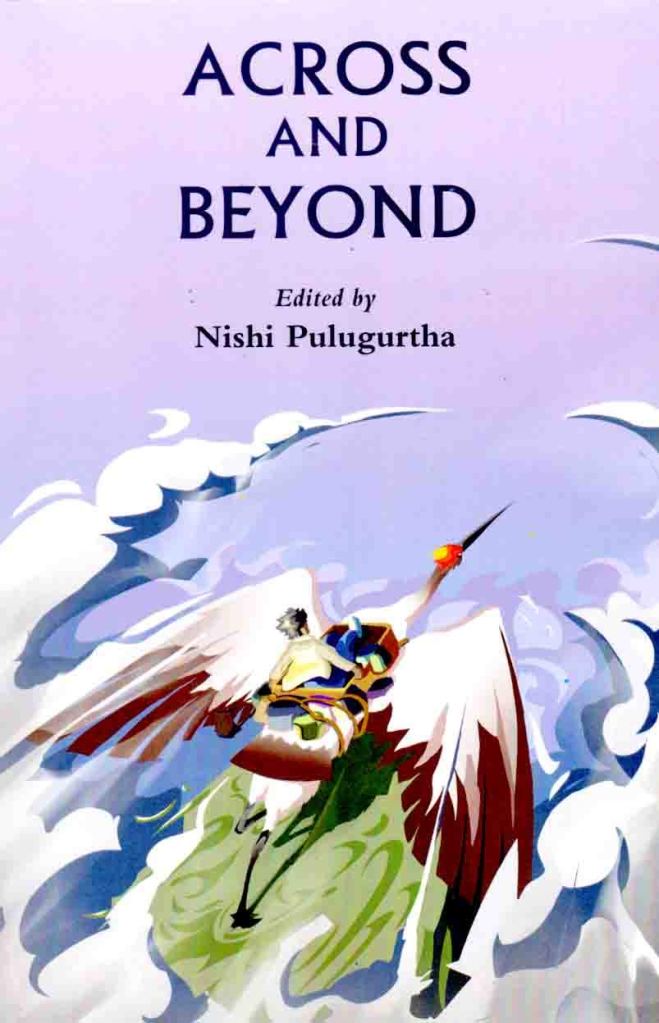
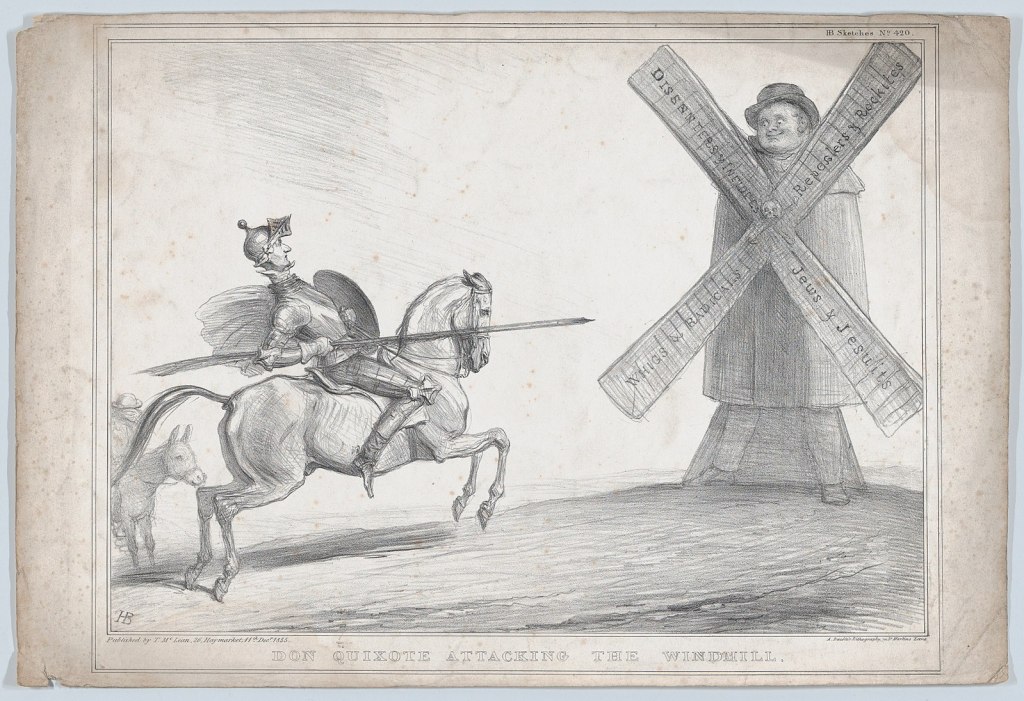

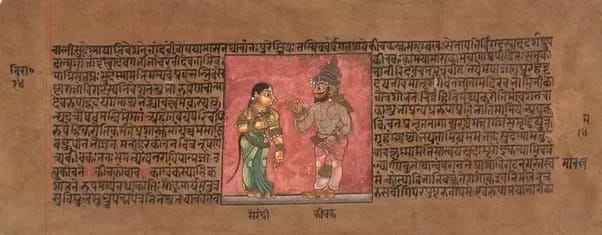
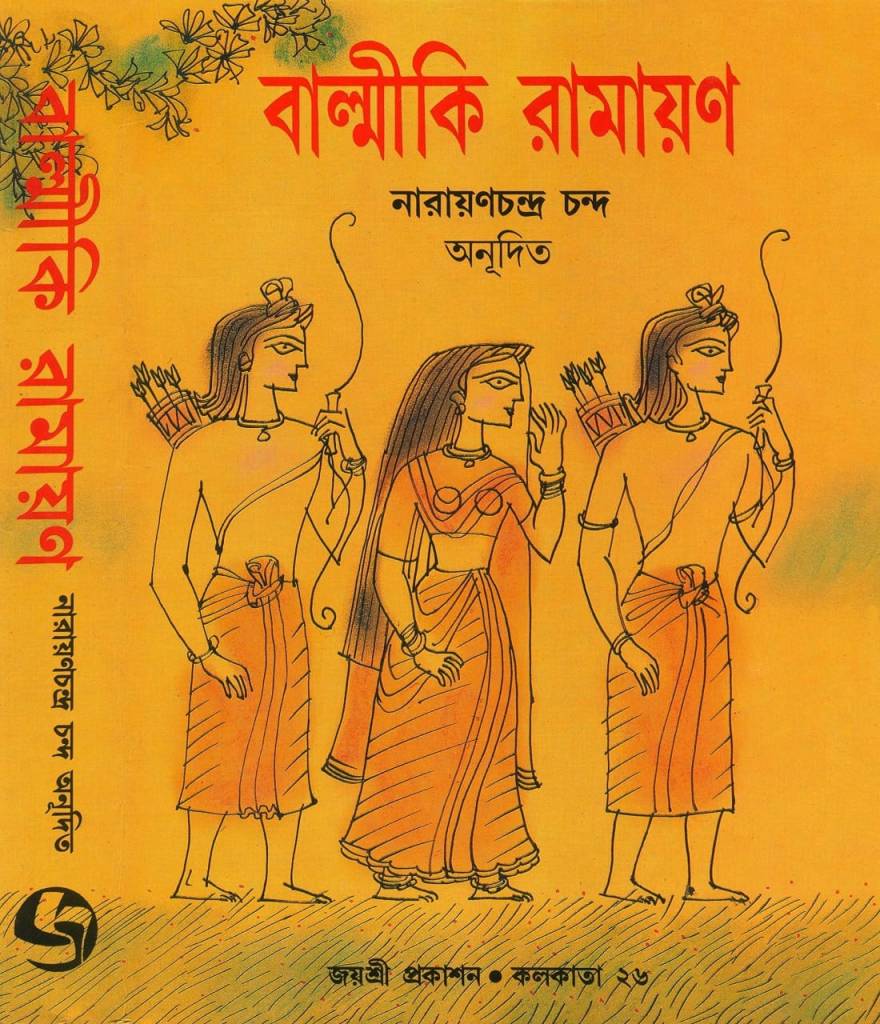
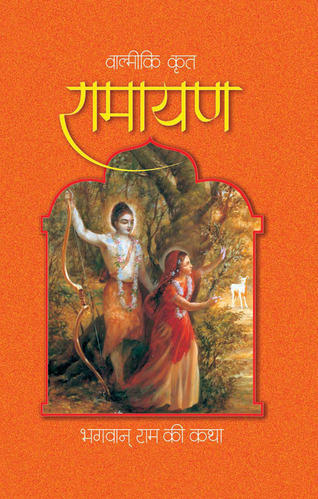
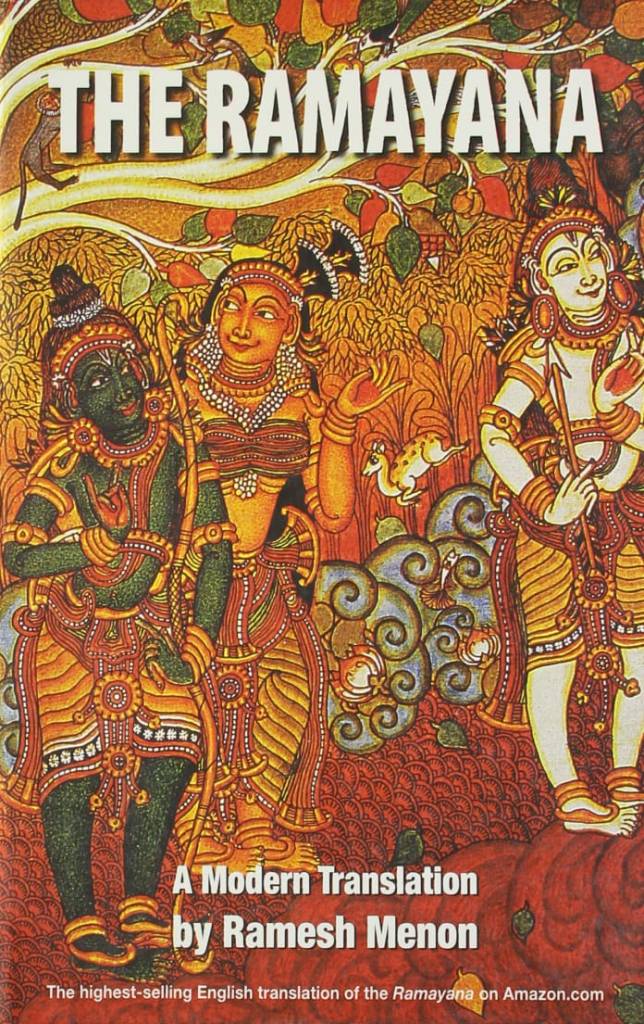
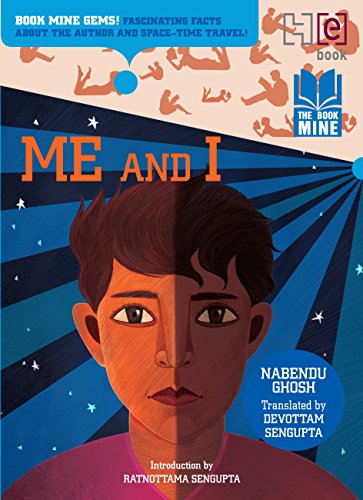
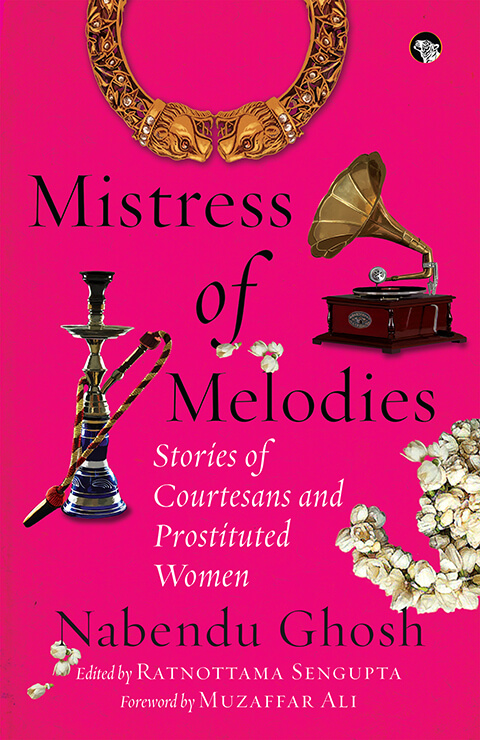





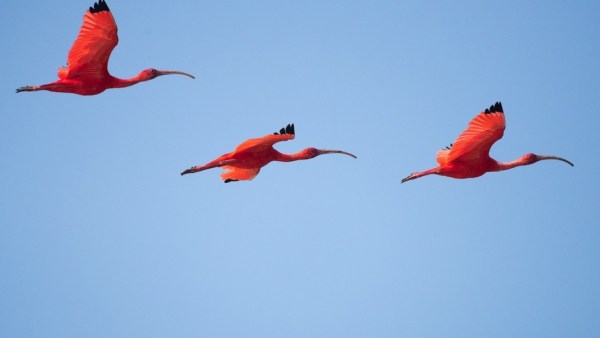










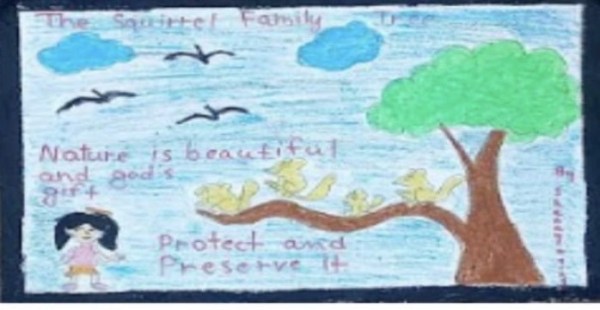

 Borderless
