By Naramsetti Umamaheswararao
Mr. Williams lived in a town called Vinjamur. He owned several businesses and was well-known for being extremely careful with money. Whether at home or in his shop, he made sure that not even a single rupee was wasted.
One day, Mr. Williams had to go out on some work. Before leaving, he asked his fifteen-year-old son, Raman, to sit in the shop. While Mr. Williams was away, a group of devotees came to the shop asking for donations for the construction of a temple. Raman took Rs 100 from the cash box and gave it to them as charity.
When Mr. Williams returned and heard of Raman’s donation, he became very angry. He made his son sit in front of him and said sternly, “First learn how hard it is to earn money. Only after that should you think of charity. If you do this again, I will not tolerate it.”
Another incident happened sometime later. One day, when Mr. Williams was not at home, a beggar came asking for food. His ten-year-old daughter felt pity for the poor man. She fed him till he was full. She also gave him some rice to take home.
When Mr. Williams came to know about this, he was angry with his daughter as well. He warned her strictly never to do such a thing again.
Mr. Williams’ wife knew her husband very well. She never argued with him about money matters, but she warned the children to be careful and not to go against their father.
A few days later, an old man with an unshaven beard and torn clothes came to Mr. Williams’ shop. He asked the workers about Mr. Williams. Looking at his appearance, the workers assumed he was a beggar. Afraid that their owner would scold them if he saw the man, they asked him to leave at once.
But the old man did not go away. He waited patiently for a long time. After some time, Mr. Williams arrived at the shop. The moment he saw the old man standing there, he recognised him.
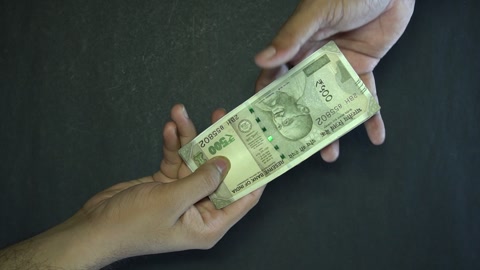
Mr. Williams immediately called him inside, made him sit on a chair, and offered him drinking water. When the old man said he was hungry, Mr. Williams arranged food for him. He sat in front of him until he finished eating. Before the old man left, Mr. Williams spoke to him privately and gave him ten thousand rupees.
The workers were stunned. They could not believe that their master—who never spent money easily—had given away such a large amount.
Just then, Raman came to the shop to deliver some things. He saw an unknown person eating in front of his father and, to his shock, saw his father give him a bundle of money. Raman could not believe his eyes.
He went to his father and asked,
“Father, you scolded me for donating just one hundred rupees, and you scolded my sister for giving rice to a beggar. Then how could you give ten thousand rupees to a stranger?”
Mr. Williams smiled and replied,
“He is not a stranger. He is someone I know very well. And he was once a very prosperous man. You don’t need to know anything more.”
Saying this, he returned to his work.
Confused by his father’s words, Raman went home and told his mother everything that had happened. Curious to know the truth, Mrs. Williams came to the shop.
“I know you never give anything away for free,” she said. “You ask for accounts even if ten rupees are spent. So, I cannot believe that you gave ten thousand rupees to a stranger. Who is he?”
Mr. Williams sighed and said,
“So, this matter has reached you as well? He is not a stranger. You know him very well. Do you remember how, soon after our marriage, our relatives cheated us and threw us out? We were on the streets with small children and not a single rupee in hand.”
“Yes, I remember,” she said softly.
“At that time,” continued Mr. Williams, “one great man gave us shelter. He fed us and even gave me some money to start a business. Do you remember him?”
“Yes,” she replied. “His name was Parandham. I can never forget his kindness.”
“The man who came today was Parandham,” Mr. Williams said. “His sons and daughters-in-law took away all his property and threw him out. He said his wife needs medical treatment and he needed money. The foundation of our success today was laid with the help he gave us back then. Today, I got the chance to repay that debt of gratitude.”
Mrs. Williams was deeply moved.
“Has he fallen into such trouble? If he comes again, please bring him home. We will look after him and feed him for as many days as he wants,” she said.
Mr. Williams agreed.
Turning to his son, who was watching everything with wonder, Mr. Williams said, “We have reached this position only after swallowing many hardships and humiliations. Every penny we earned came through hard work. That is why I know the true value of money. When we have nothing, we cannot beg anyone with an outstretched hand. So, when we have money, it must be spent carefully and thoughtfully. I scolded you earlier because you are still too young to understand charity. I did not want you to suffer the hardships we once faced.”
Raman finally understood. He realised that parents always think of their children’s welfare, and that every action of his father had a deeper meaning behind it. From that day on, he learned not to misunderstand his father’s actions, but to try to understand them.
Naramsetti Umamaheswararao has written more than a thousand stories, songs, and novels for children over 42 years. he has published 32 books. His novel, Anandalokam, received the Central Sahitya Akademi Award for children’s literature. He has received numerous awards and honours, including the Andhra Pradesh Government’s Distinguished Telugu Language Award and the Pratibha Award from Potti Sreeramulu Telugu University. He established the Naramshetty Children’s Literature Foundation and has been actively promoting children’s literature as its president.
.
PLEASE NOTE: ARTICLES CAN ONLY BE REPRODUCED IN OTHER SITES WITH DUE ACKNOWLEDGEMENT TO BORDERLESS JOURNAL
Click here to access the Borderless anthology, Monalisa No Longer Smiles
Click here to access Monalisa No Longer Smiles on Amazon International
 Borderless