By Neeman Sobhan
These days, it seems to sixty-year-old Husna that the past is clearer than the blur of her mirror…
The black Morris had come to a halt near the major crossing on Top-Khana road. In the back seat, feeling as plump as the upholstery, Husna was sweating and dabbing her pretty twenty-year-old face and neck with the anchal end of her cotton Jamdani sari.
Pregnancy had made it hard for her to fit into the long tunics and gathered pants of her hitherto comfortable shalwar-kameez outfits. Beside her lay the folded newspaper that Baba, her father Dr. Rahman, had left behind that morning, when he got dropped at the Dacca Medical College. She picked it up to fan herself. It was the Bengali language daily, Azad[1], dated February 20, 1952. The headlines wafted back and forth, screaming in print the news of the continuing agitations around Dacca, East Pakistan, on the language issue.
Without needing to look at the paper, she knew about the meeting that day of the Language Action Committee from her youngest brother Shonju, the student activist. She knew that they were meeting to discuss a nationwide hartal[2] scheduled for tomorrow, a general strike against the government’s repressive policies and disregard for the legitimate demand of the people that their mother language be given its rightful place as one of the two state languages of the country.
Since January, when she had returned home from West Pakistan for her confinement, all the discussion around the family dinner table involved the Prime Minister Khwaja Nazimuddin’s reiteration of Governor-General of Pakistan, Jinnah’s enraging declaration of two years ago that “Urdu, and only Urdu shall be the state language of Pakistan.”
She glanced at driver Rashid Miya. The middle-aged man seemed unaffected by the heat, unlike Husna. She was due for delivery in a “matter of days”, as Daktar Chacha[3], her father’s MD friend, had promised during the last check-up, patting her head as if she were still the teen-aged, newly married bride, who had left for West Pakistan a year ago with her banker husband, Jamil.
In a way she was glad that Jamil and she had left their familiar world of Dacca immediately after their arranged marriage, helping two newlywed strangers to bond over the shared adventure of starting life as Bengalis new to the quasi-foreign, Urdu-speaking territory of Karachi in West Pakistan.
Not that Urdu was unfamiliar to Husna. Despite problems with gender in the language, she could manage basic social conversation (though, it annoyed her that she never found any Urdu speaking Pakistani who could utter even a word of Bengali, or tried to). But she was proud that just by listening to the radio she had learnt to sing the popular film ghazals of her favourite Indian playback singer Talat Mahmood, or Noor Jahan, now a Pakistani singer, who migrated to Lahore recently, after the Partition of India five years ago.
It was a bit disappointing that Jamil preferred her to sing the Tagore and Nazrul songs her music teacher had taught her since childhood, when all along her heart hummed with film songs. Songs from Bengali and Hindi films that her strict mother had seldom allowed her to see, unless escorted to the cinema halls by friends and relatives, and on special occasions, like Eid.
She had hoped to right this wrong immediately upon getting married. After all, Ma always said, “Do whatever you wish….after you’re married.” And Jamil did take her to the cinema, though, mostly to see English films. Matinees or late shows at the Rex or Ritz, or an early show at the Odeon followed by dinner in a hotel like Beach Luxury. Once she had seen a belly dancer from Beirut or Cairo perform there and had felt embarrassed yet fascinated by the lissom female body, the unfettered, uninhibited moves. She had felt a dizzy sense of freedom just watching the dancer.
She sighed, running her hand over the watermelon that was her belly! Today she didn’t feel like that bright eyed young girl in Karachi anymore. Nor even a mother-to-be. She just felt like a bloated animal, she sulked looking out of the car window. They were at a standstill for what seemed like an hour. Minutes crawled like the runnels of sweat under Husna’s new high-necked blouse, inspired by the popular Indian Bengali actress Suchitra Sen. She dabbed the constant beading of her nose and upper lip that Jamil always said he found endearing.
She started a mental reply to his last letter. “Dearest one. . . ” She began, then floundered. This would be her third letter to him since she arrived in Dacca, but she was still not convinced about how to address him in writing. Some of her Urdu-speaking female acquaintances in Karachi called their husbands by name, though often using the polite pronoun “aap[4].” Ma always called Baba “Ogo[5]” or “Shuncho?” as in “Are you listening?” That was funny because even if Baba were not listening, Ma would chatter on.
She felt awkward and insincere mimicking the spontaneous affection in Jamil’s letters, calling her “Beloved” and his “Myna bird” and so many other endearments, while she was unable to address him in a way that felt comfortable and not a lie. As usual, she settled for no salutations but an outright “Kemon acho?”
How’re you? I’m as well as can be expected. It’s only February and already Dhaka is uncomfortably warm. How is Karachi? Here, it’s not just the weather that’s heating up, but the political environment as well. The ‘bhasha andolon’, which the English newspapers refer to as ‘the Language Movement’ is going on full force. Baba and Ma are always worrying about Shonju, who is out on the streets every day and in student meetings at all hours. He creeps home late and stores all his protest posters and fliers under my bed and fills me in on what’s going on. I often have to cover for him to the family….”
She pulled forward the end of her sari and tried to cover her belly and wipe her glistening face. Oh! Pregnancy was so boring; and this heat was claustrophobic. If only she could be like Shonju, free to just come and go, walk the streets or ride the cycle or take a rickshaw.
“Ki holo, Rashid Bhai? What’s up?” she asked, as she wound the window all the way down.
“Apa[6], I think there’s a procession approaching. I feel we should take a side street. This road is blocked.” Rashid was already turning the steering wheel.
“Oh! Then, no New Market today? I wanted to collect my harmonium that I left for tuning.” Husna’s voice was lost in a volley of shouts that came from somewhere ahead. Meanwhile, a rickshaw edged close to the car, and two boys, possibly students, with cloth bags hanging from their shoulders, started throwing pamphlets through the windows of a few buses and into other rickshaws that were milling around.
One pamphlet landed on Husna’s lap like the silly, anonymous love-note she had once received while being driven to college, just two years ago. She smiled. She had often wished the author had been her elder brother’s friend and her girlhood crush, Farid. But he was hardly the type to write something romantic to her. Certainly not “Beloved one” or “My Myna bird.” No, it was hard to imagine that serious, brooding, good-looking face bent over anything but medical books.
Rashid stopped to make way for a group of demonstrators, banners folded under their arms. Some raised a slogan and the rest joined in. “Manbo na! Manbo na! Never will we accept!” Husna’s heart pumped. Ah! Unlike her, these boys dared to proclaim that they rejected whatever was being imposed on them. Was this possible? She wished she could get out of the car and walk with the boys, raise her voice in slogans. Unthinkable and unladylike, of course; plus, she was a waddling, pregnant beast.
Rashid Miya swung the car around and they entered a narrow street that led out to a wider road. He braked to give way to a truck that sped past, full of khaki-uniformed police, their rifles flashing in the sun. “Too many demonstrations today near the university, Apa. I hope tomorrow, your father will not go to Medical College. And our Shonju Bhaiyya should be careful. He and his friends were getting on a rickshaw at the gate this morning, when I was wiping the car, and they were talking about processions tomorrow. I kept hearing the date. 21st…Ekushey February. God only knows what will happen!”
“We better go home, Rashid Bhai. Shall we pick up Baba?”
“No, it’s only past 5. I’ll come for him later. Let me drop you first.”
Suddenly, preceded by the rumble of microphone, a van came into view. As it crawled past, it left the sputtering debris of words in crackling Bengali. She could decipher only: Section 144 imposed in the city… for 30 days…a ban on gatherings of more than 4 people in public places…processions or demonstrations to be severely punished…
Husna grew restless for Shonju. She prayed he would come home safely and not get embroiled in something foolhardy. He usually confided in her. At least, he used to till Husna got married. They were the closest among their many siblings. Even on the eve of her wedding, it was he and not one of her sisters who had insisted that if she had any doubts about this arranged marriage, it was not too late to speak up.
But she had never mustered enough courage. Or conviction. After all, Farid had not really confessed his feelings for her, and, from what she discovered about Jamil, he was a perfectly decent human being. In fact, she had no complaints about her husband, except that he was not the one her heart had chosen. If only she had met him on her own, and he had not been imposed on her, as if by state decree: “Jamil, and only Jamil shall be your husband!” And… if only elusive Farid had been clear about his feelings. Even if it were non-reciprocal, she would have felt free. Her heart would not now feel so mute.
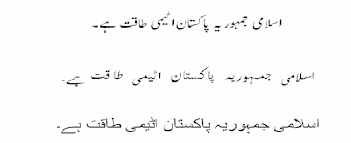
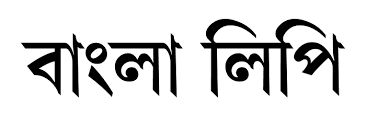
Why was the language of the heart so complicated, so hard to decipher? It was as if its familiar truths, which could be accessed non-verbally, instinctively, were now locked in a foreign alphabet that she had to relearn in order to decode their meanings. Almost like that ridiculous proposal in the Legislative Assembly two years ago that Shonju had laughed with her about, regarding the use of Arabic script to write Bengali!
“Just imagine, Bubu, the word ‘mother’ would still be pronounced ‘Ma’ but not written ‘moye-akar’ but ‘meem-alef’! Our Brahmi script curling and prancing forward gracefully from left to right would be attacked from right to left by the slanting arrows of the Nastaliq squiggles, and then both colliding explosively in the middle!”
Oh! Shonju was so dramatic! A laugh escaped Husna, then she fell silent.
They were driving past the Ramna Racecourse. Her baby shifted in her womb. Later. . . many years later, she would think that her son Azeem knew that they were passing what in two decades would be a historical spot: the pulse point of an unprecedented political gathering on a March morning in 1971. On the seventh day of that month, a voice would rise like a colossal bird filling the Dhaka sky with its fateful, uncompromising call, announcing that the time had come “for the ultimate struggle, the struggle for freedom”: Ebarer shongram, shadhinotar shongram!
Had she been clairvoyant, known that the heady creature would swoop down and snatch her son and hurl them all into the whirlpool of destiny, perhaps she would have told Rashid Miya to change route, take another road. But would that have changed the course of history, erased the scribbling of fate?
For the moment, the Black Morris like a rigid pen on paper drives inexorably forward, and the future is drowned out by the sporadic shouts in the distance of “Rashtro bhasha Bangla chai! We demand Bangla for national language!”
The baby came early. In fact, the very evening after she returned from her outing, the pains started. There was no time to shift her to the maternity ward of the private clinic of Daktar Chacha, so he sent a nurse over to help deliver her baby at home. Early in the morning of February 21, her baby son arrived.
A trunk call was made to Karachi to give Jamil the good news. Then there was much rejoicing in the house with relatives dropping in to see the baby. By late afternoon, however, the atmosphere in the house became subdued as disturbing news from the streets filtered through.
The police had opened fire on protesting students. There were hushed discussions so she would not hear. But she overheard the day nurse telling the night nurse before she left that injured students had been taken to the Medical College. The very next day, Husna’s elder brother, the final year medical student, Monju Bhaijan, had come to the breakfast table shouting in rage that a student had succumbed to his wounds, and the body of another had been found on the floor behind the Anatomy room. Baba confirmed it with sadness.
Even Jamil’s letter to her after the joy of the news of Azeem’s birth contained a postscript: “Stay safe. These are volatile times. Worried about Shonju. The Dawn newspaper here carried an editorial saying that the people of West Pakistan have no objection to Bangla getting a status equal to Urdu. Why is there always such a divide between the wielders of political power and the populace?”
A few days later, Husna wasn’t sure if it was the 25th or 26th, Ma and the nurse had just taken away the baby when Shonju arrived. He was carrying a box of sweets. “Moron Chand and Sons” it said on the box. Inside were her favourite sweets: the soft, creamy white, renin-based balls of rose-scented pranhara-shondesh.
Ma must have bought the sweets and forced him to come visit his newborn nephew. Husna breathed a sigh of relief, seeing her brother, who paced restlessly, refusing to sit.
“I saw the baby in Ma’s room on my way in. Looks like Dulabhai.”
“Really? I think he has our family nose.”
“Poor kid! Hope not.” Shonju finally grinned, but his mind was elsewhere. He was wearing a black badge of mourning on his white kurta sleeve.
Husna stretched her arm and took his hand: “My heart aches for those who died, Shonju. But I’m so grateful you are okay.”
He didn’t let go of her hand but turned his angry face away.
“We students are still in battle mode. It will continue, the andolon, the protests, the confrontation. The Shaheed Minar memorial we constructed outside Medical College was destroyed, but we will rebuild it.”
“Shabdhan[7], Shonju!” Husna cautioned.
He pulled his hand away, clicking his tongue: “Oh! Don’t worry. Nothing will happen to me. When you fight for a cause you feel superhuman, invincible. The collective spirit strengthens us, makes us feel immortal. We are more than an individual life. What will our enemies do? Kill or wound one person, right? But the cause… they can’t defeat that. We are the multitudes… ”
“Uff! Stop this speechifying!” Husna rolled her eyes. “Mothers don’t want multitudes. They just want their sons. Sisters want their brothers. Yes, even though you’re a moron, I’d rather have you than a street full of heroes.”
Shonju laughed. “In that case, Bubu, you better start speaking only in Urdu. Sell your mother tongue to these politicians.”
After Shonju left, the nurse brought the baby to be fed. Husna touched baby Azeem’s toes, his petal-like fingers. Once, she had laughed at her elder sister for her incessant baby talk when her son was born. Now it spilled out of her, and she felt no embarrassment. Soft, mashed up balls of Bengali words lisped with maternal love, sweeter, and more tender than the pranhara in the box.
Was that how all mother tongues started? With silly, besotted mothers cooing to the babies in their language? She realised that if she had to make up baby talk in another language, she probably couldn’t do it. There was something about expressing oneself in one’s own tongue, heard from infancy. It was the home that one carried within, because the earliest memories of the mother’s voice absorbed from the womb animated it. It was a birth right that no one could be permitted to take away or undermine.
But was it worth dying for? Worth being martyred like the student the police had shot on Thursday, the twenty-first?
A week later, after lunch, the house suddenly filled with voices. Shonju entered, followed by Monju Bhaijan, and Farid. Husna looked at him surreptitiously. His face was impassive and he gave her a distracted nod. What else could he do, or say, Husna could understand. After all, there she was, much married and a mother, to boot.
Loudly ordering tea to be served, sounding like a housewife, she left the room, disappointed in herself that despite her show of poise and indifference, her heart still ached in a dim way.
She asked herself, if, in the past, she and Farid had been granted the opportunity and the courage to express to each other what she was certain was a mutual attraction, would her life be different? Would the knowledge that her feelings were requited, or not, have made a difference to her sense of self?
When Jamil’s proposal of marriage came to her parents, and they had accepted on her behalf. It was too late. Farid was not around, having gone to visit his parents in Barishal, so nothing had been acknowledged. There had been no beginning, and subsequently, no closure.
During her impending wedding she had to make sure her feelings did not go into a Bhasha Andolon of sorts within her, agitating and demanding the right of her heart’s true language to be respected. Instead, she had gagged her heart, imposed on herself another language: a formal, emotionally correct, and socially acceptable language. The vocabulary of wedded propriety appropriate to an obedient daughter and daughter-in-law. An official language, foreign to her, like Urdu.
She sighed. Language supposedly empowered humans and differentiated them from animals. But if, despite the ability to verbalise, people could not make their wishes known or heard, were they not equal to dumb beasts? What use was the mother tongue when ones’ own mother had not understood her daughter’s unspoken wish just because she could not speak out: “I don’t want to marry, yet. I want to wait! Manbo na! Manbo na!” And what use was language when Farid too, had failed to use his tongue, express himself at the right time, ask her clearly to wait and not accede to the arranged marriage.
*
No, it was better that the Bengalis had spoken out. It was better that they had taken to the streets. This andolon would lead them to express their rights and desires, claim what was true. Of course, it would take four more years for Bengali to be constitutionally recognised as a state language of Pakistan, along with Urdu. But time was a tiny link in the cosmic chain of historical and personal events. Obviously, this last was not something thought up by Husna at the time, but by the Husna of today, watching her past self.
Today, she observed herself through the telescope of time, on the first day the young mother Husna nursed her baby son. Surely, she was unaware at that moment that everything was connected: her breast milk and baby talk in Bangla nourished not just her child, Azeem, but through him later, Shonju’s “multitudes” of a future generation, as a whole nation journeyed from Ekushey or twenty-first, to Ekattor or seventy-one: from the upheaval for language of February 21, 1952 to claiming a home for it in the war of independence of 1971. All were linked, even if separated by time and generation. In the end, everything existed in a grand NOW, where past and present simmered together.
Needless to say, all this was what she would think many years later, as an older sixty-year-old woman, looking back on her life as she wrote her journal, sitting in her room in her daughter’s suburban home in Maryland, in the US.
She dusted the photo frames on the painted bureau. Her doting late husband Jamil, and her gentle yet impassioned elder son Azeem looked at her from the distance of lost eras. One was gone in 1966 in a helicopter crash. The other in 1971, as a freedom fighter.
Farid, unframed, was a forbidden, almost forgotten memory. Lost like an unspoken language. Lost, because she had never fought for him.
She has a fanciful wish: in some after life she would like to ask those who had agitated and fought for a cause, and even laid down their life for it: in the end, was the sacrifice worth it?
“Today is February 21, 2002. Commemorated as Omor Ekushey in Bangladesh. But just another day here…” She wrote in her diary in Bangla, a language that her grandchildren could not speak.
She pulled out from under her bed the harmonium her daughter had recently bought for her from an Indian family that was moving back to India. She sat down on the rug, stroking the black and white keys with one hand and pumping lightly on the bellows at the back of the instrument.
On top of her harmonium lay open her old songbook, marked and written on by the music teacher of her childhood. She was a trained singer, and in 1950, she with a group from her school had performed some mass anthems and marching songs on what was then Radio Pakistan Dacca. There, they had met a musician named Abdul Latif, who would later put to melody a poem written by a journalist named Abdul Gaffar Choudhury for the student who had died on February 21. Later, the song would be recomposed by a noted composer named Altaf Mahmud and emerge as an anthem for what became Mother Language Day.
For her, of course, the day had a different and personal significance. It was the sacred anniversary of her motherhood that she had entered so reluctantly. On this day, every year, she sang to the son who had taught her the ultimate lesson of love and sacrifice and of never forgetting.
She started to hum the familiar refrain as she tried out a few chords.
Her granddaughter Zainab peeked through the door.
“What’re you singing, Nani[8]?” She said in her American accent.
“It’s a song about love, sweetie. About loving one’s language.”
“Which language, Nani?”
“Any language that you love, sweetheart. For me it’s Bangla, which you hear me speak with your mom.”
She sang the first lines. Zainab sat down beside Husna, gazing at her moving fingers.
“Cool! It’s like a portable piano! Can I learn to play it?”
“Well, only if you also learn to sing this song with me.”
“Deal!”
In bed that night, Husna wrote in her journal: “Today is February 21. International Mother Language Day. Today Zainab learnt to sing the Ekushey song, especially the refrain ‘Ami ki bhulite pari?’ And when I tested her on what it meant, she got it right as she ran away giggling and yelling: ‘Can I ever forget it?’
So, today turned out to be. . . not just another day, after all.”
Husna closed her eyes with a smile on her face. Just before she fell asleep, she felt as if she understood the world not with the uttered meanings of any language, but like an unborn baby breathing in the womb its mother’s voice, dreaming his or her first spoken word.
Dreaming in whatever language would become their home, their motherland.
.
[1] Literal translation of Azad is free
[2] Strike, translated from Bangla
[3] Doctor uncle, translated from Bangla
[4] Formal way of addressing in Urdu or Hindi — You
[5] Informal way of addressing a husband in Bangla as taking a husband’s name was seen as disrespectful and harmful
[6] Elder sister
[7] Careful, translation from Bangla
[8] Maternal grandmother, translation from Bangla
Neeman Sobhan is an Italy based Bangladeshi writer, poet, columnist and translator. Till recently, she taught Bengali and English at the University of Rome. She has an anthology of columns, An Abiding City: Ruminations from Rome; fiction collection: Piazza Bangladesh; Poetry: Calligraphy of Wet Leaves. Armando Curcio Editore is publishing her stories in Italian. This short story was first published in Ekhushey Anthology 1952-2022, edited by Niaz Zaman, writers.ink in 2022.
.
PLEASE NOTE: ARTICLES CAN ONLY BE REPRODUCED IN OTHER SITES WITH DUE ACKNOWLEDGEMENT TO BORDERLESS JOURNAL
Click here to access the Borderless anthology, Monalisa No Longer Smiles
Click here to access Monalisa No Longer Smiles on Amazon International
 Borderless
One reply on “Just Another Day”
Enjoyed reading Neemans story. I moved from pillar to post changing language environment and friends I found this so easy to relate to.
LikeLiked by 1 person