By Jun A. Alindogan… also known as Manuel A, Alindogan
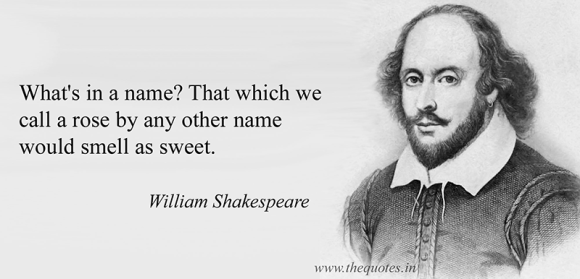
When I was in kindergarten, the only name I knew was Jun. So when my teacher called me by my full name, I didn’t respond at all.
Obviously, I was named after my father and am the second child in a brood of four. Many acquaintances actually mistake my name for Emmanuel. I don’t know why my grandparents named my father Manuel, but it might be attributed to common influences in the community, not necessarily based on a desired dream or a definite meaning. My grandfather was from Fujian, China, as were many other Chinese migrants to the Philippines. It is presently common for Filipino Chinese to have Filipino surnames, which could be traced back to the Spanish regime in the Philippines when conversion to Catholicism entailed getting a godparent to sponsor one’s last name.
Although my surname has its Tagalog root, which means alluring or captivating, my facial features are predominantly Chinese despite being just a quarter Chinese. According to my mom, I got my habit of heavy toothbrushing from my father. My dentist told me that I inherited my yellowish and strong teeth from my dad. According to stories, my grandmother, Isadora, was from Tondo, Manila, who I presume, had some Chinese roots too as her maiden name was Gubangco.
While teaching at a special speech school in Manila, I met a student from Capiz province whom I got to know better through some conversations on a bus heading to a southern suburb. She asked me about my middle name, which is Arnaldo, and mentioned that my roots might have a tendril from her province. She also noted that in addition to Roxas City, there is an Arnaldo City in the province. Similarly, there is a highway named Arnaldo in General Trias, Cavite province. However, our Arnaldo clan is from Bulacan province, so I am not sure if we have relatives who migrated to Capiz or if it is the other way around.
It is interesting to note that my grandfather had only one sibling. They shared two last names, which were Arnaldo Cruz. These names were not to be mistaken for middle and last names, as is the legal order of our names. From some information I received from my cousins, I discovered that my grandfather decided to only have one last name, so he adopted Arnaldo, while his brother took on Cruz. In Spanish, arnaldo means powerful as an eagle.
Our Arnaldo clan is large, as my mother had twelve siblings, with one dying shortly after birth. All of my uncles’ first names ended with the letter O, while two of my aunts shared the same last letter, A, in their first names as my mom. I do not have information about my grandfather’s brother and whether he had a large family as well. However, I do know that my mom and her siblings were close to their first cousins, who mostly lived in a village in Tondo, Manila.
One of their cousins worked in theatre, sharing the last name Arnaldo, for many years until his passing. My second cousin, whose maiden name is also Arnaldo, is a seasoned actress for television and movies. Another nephew who shares the same last name, Arnaldo, owns a boutique in Makati and is a fashion designer. His father was a village captain (Barangay Chairman) in Tondo. I am a freelance writer with a creative non-fiction portfolio. I do not know if talent is innate, but I believe it is a gift that needs to be consistently nourished and shared. Each family has its own unique talent, origin, and destination.
A former movie actress, who used to be known by her maiden name Arnaldo, has now become a nun and has turned her back on films. However, we are not related. She was also an environmentalist. Perhaps we are all connected in some way, but as time and tradition fade away, we cannot definitively identify these physiological and social elements.
When I moved to a residence uphill a few decades ago, the municipal mayor’s last name was Cuerpo. Residents claimed he was originally from Nueva Ecija, the province next to Bulacan. Recently, I discovered that two last names were common during our grandparents’ time. I learned about this during annual visits to our family tomb in Obando, my hometown. My grandmother had a brother whom we fondly called Lolo (grandfather) and was a good painter. I remember a porch at their house with a concrete wall painted with fish, shells, and other marine life. His name was Eliseo, but we knew him by his nickname Sayong. On our family tomb, his death marker shows his full name as Eliseo Cuerpo Cruz Enriquez. Does this mean that we are remotely related to the previous town mayor of my current residence? Her daughter recently started a political career and won as the number one councilor in our just-concluded national and local government elections. It would be great to have a conversation with her about her family origins. Cuerpo means body in Spanish.
In my first teaching job at a high school in my province in the late 80s, I had the opportunity, along with my colleagues, to visit the ancestral house of the then-municipal mayor, former mayor Tito Enriquez of Bulakan, Bulacan, on his birthday. His house reminded me of the Alindogan ancestral house, also known as Bahay na Bato (stone house), where the ground floor was used for firewood storage, free-range chicken, and other household items. I suspect that we may be related, as my grandmother was also from Bulacan, but from a different municipality, Baliwag. I recall attending a large family reunion of the Arnaldo-Enriquez clan in the same town during my childhood, which rarely occurs now since all of my mom’s siblings have passed away. In my first year of teaching, I was too timid to inquire or discuss my ancestry with the mayor. “Enriquez” means “son of Enrique” in Spanish. According to history, the Enriquez family of Bulakan, Bulacan, were prominent heroes in the Battle of San Rafael[1].
Not everyone has the opportunity to observe, identify, and understand family connections from the past and present, but it is always a good idea to remember where we come from. This can perhaps help us navigate our present and future destinations more clearly.
[1] Fought between the Spanish and the Filipinos in 1896
.
Manuel A. Alindogan, Jr. or Jun A. Alindogan is the Academic Director of the Expanded Alternative Learning Program of Empowered East, a Rizal-province based NGO in the Philippines and is also the founder of Speechsmart Online that specializes in English test preparation courses. He is a freelance writer and a member of the Freelance Writers’ Guild of the Philippines (FWGP).
.
PLEASE NOTE: ARTICLES CAN ONLY BE REPRODUCED IN OTHER SITES WITH DUE ACKNOWLEDGEMENT TO BORDERLESS JOURNAL
Click here to access the Borderless anthology, Monalisa No Longer Smiles
Click here to access Monalisa No Longer Smiles on Kindle Amazon International

 Borderless