Categories
Essay

My Love Affair with (Printed) Books

By Ravi Shankar

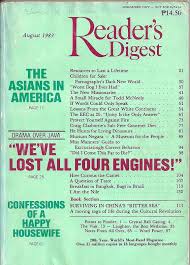
The last two years have been especially sad ones for printed books and magazines. Toward the end of 2023, the iconic magazine, National Geographic stopped selling its print issues. And in April 2024, Reader’s Digest stopped publishing. Many other print magazines have also downed their shutters though the online version continues.

I grew up with the Reader’s Digest. My father subscribed to the magazine and each month a copy wrapped in a brown envelope arrived at our door. The envelope partially covered the magazine inside, and you could see the top and bottom of the magazine. The size was small, and this made for easy handling. Reader’s Digest was a magazine you could read comfortably in bed. During the festival of Diwali, there was a special wrapping for the magazine. We had several magazines in our house when I was growing up. My mother used to read many magazines in Malayalam (our mother tongue).

Reader’s Digest provided shortened versions of stories and articles that had been published elsewhere. Their skill was in condensing the material while still retaining the interest. There was a rich collection of reading material. There were also advertisements for other books published by Reader’s Digest. Unfortunately, these were beyond our family budget. I wanted to purchase these when I grew up and became financially stronger. My neighbour who was a scientist had some of these books that I occasionally borrowed.

Another favourite of mine was the National Geographic. My father was a faculty member at a banker’s training college in Mumbai and their library subscribed to National Geographic. He often brought the magazine home. I was mesmerised by the articles and the photos in the magazine. The artistic quality of the photos was superb. The magazine had only three or four articles in an issue but addressed these at great depth. I travelled to faraway places, to the bottom of the ocean, to within the human body and to outer space with the magazine. Later, National Geographic started a television channel, and I would watch the documentaries in the nineties.

We also subscribed to the Illustrated Weekly of India. This was in a large format and again had very good photographs. I still remember the column by the journalist Khushwant Singh titled ‘With malice towards one and all’. I was also a fan of the comics section of the magazine. I had a huge collection of comics and my father purchased both Amar Chitra Katha and Indrajal Comics. Amar Chitra Katha introduced me to the rich history of India. Indrajal comics had superheroes like Phantom, Mandrake, and Flash Gordon. I used to eagerly await new issues. Most of my comics were lost when we shifted houses.   

When the news magazine, India today, made an appearance, we subscribed to it and to Outlook and The week (Indian news magazines). During my school days in May, I used to eagerly await the new textbooks and notebooks for the next class following the results. I used to go with my mother to purchase these from a stationery store near the railway station. The smell of the new paper and the fresh ink was mesmerising. I loved to read some of the easier chapters in these books. Covering the notebooks with brown paper was another major activity. Our school year started with the rains in June.  

My good friend, Sanjay Mhatre had a good library and loved to collect books. I loved to borrow from his vast collection. His collection on physics and cosmology were extensive. In those days, the erstwhile Soviet Union used to have cheap books of high quality for Indian readers. I remember the publishers Mir and Progress and I had several of their collections on science. The Soviet publishers used to hold exhibitions in our college. For twenty or thirty rupees, you could purchase high quality hard bound books. My introduction to quantum mechanics and to chemistry was through one such book.

At Thrissur in Kerala most of our medical textbooks were western and predominantly from the United Kingdom. There used to be an English Language Book Society (ELBS) that published cheaper versions of textbooks for developing countries. With our limited resources purchasing textbooks was a challenge. The two major textbooks published from the United States were those of Anatomy and Pathology. Those days we did not have online textbooks and online sources and were limited to the printed word.   

I used to write for our medical college magazine and eagerly waited for the annual issue to be published. During my residency days at PGI, Chandigarh I was the literary secretary and was very involved in bringing out the annual magazine, The Resident. We also introduced a newsletter, ARDent Voice, with ARD standing for the Association of Resident Doctors.

At Pokhara, Nepal the college library had a good collection of general books and novels in addition to medical books. I used to read a lot of novels and the author, Frederick Forsyth was one of my favourites. His meticulous research blurred the lines between fact and fiction. Sidney Sheldon was another bestselling author. Novels enabled me to travel vicariously to different places and through varied situations.

Today reading has become less common among the younger generation. Reading strengthens creativity and the imagination as you must imagine in your mind’s eye the situation the author is creating. Is it not magical that the author can communicate with you, the reader through squiggles on a page across the boundaries of space and time?

I started writing during my MBBS days. I still remember the versification competition I took part in and won the first prize. I used to participate in different literary events at my college. In Nepal, I combined my triple loves of writing, photography and hiking with articles for the newly started newspaper, The Himalayan Times. I met my writing guru, Don through the magazine, ECS Nepal. Don was the editor of the magazine and a powerful writer with a deep knowledge of Nepal. I learned a lot from his comments and suggestions and the workshops he conducted. I also used to write a medical column for ECS Nepal. ECS Nepal was a beautifully produced magazine with great photographs. Unfortunately, it stopped publishing around the beginning of the pandemic.

Other travel and lifestyle magazines were also published from Nepal but could not sustain themselves. In the Caribbean Island of Aruba, I used to write off and on for a daily newspaper published in English. Again, the newspaper ceased publishing. During the last two decades several print magazines have ceased to exist. I feel it is a great loss.

I do not read much on paper these days. Most of my reading is done online on computers, laptops and tablets. I also have a Kindle reader. Kindle screen mimics the appearance of paper closely, but it is not the same as reading a printed page. You can no longer feel the smoothness of glazed paper, the smell of fresh ink and the vivid colours of photographs. With the closure of the print version of Reader’s Digest, an era in print publishing has ended. The demise was sadly expected. Without printed books, our (my) world may never be the same again!

.

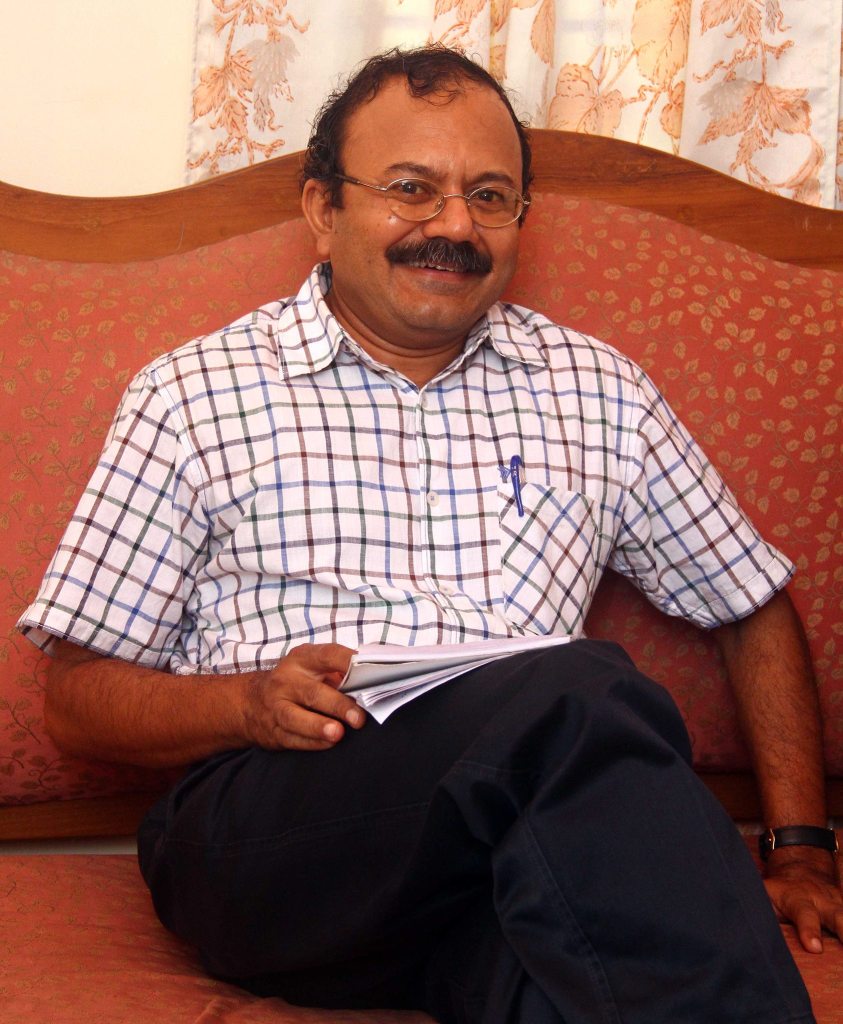
Dr. P Ravi Shankar is a faculty member at the IMU Centre for Education (ICE), International Medical University, Kuala Lumpur, Malaysia. He enjoys traveling and is a creative writer and photographer.

.

PLEASE NOTE: ARTICLES CAN ONLY BE REPRODUCED IN OTHER SITES WITH DUE ACKNOWLEDGEMENT TO BORDERLESS JOURNAL

Click here to access the Borderless anthology, Monalisa No Longer Smiles

Click here to access Monalisa No Longer Smiles on Kindle Amazon International

Categories
Musings

And then the tranquility got shattered

By Shevlin Sebastian 

At 11 p.m., on a Saturday a few weeks ago, I was cruising down National Highway No 47 in Kochi. Elton John’s ‘Circle of Life’ was playing on the music system. 

The mood inside the car was tranquil. My daughter, Sneha, had just landed from Bangalore. My wife, teenage son and I had gone to collect her from the airport. She has just started studying in a college in Bangalore. Dressed in jeans and a cream top, blue sneakers, without socks, she smiled happily as she entered the car. 

The conversation began. Sneha spoke about the quality of the food in her hostel, her roommates, lecturers, classmates, and the latest movie she had seen. My son, two years younger, sitting next to her on the back seat, listened silently. 

The highway was relatively deserted: a few trucks and some cars. Kochi sleeps early: the metro service, besides the pillars of which we were travelling, had closed. And so were the private bus services. An occasional long-distance Kerala State Road Transport Corporation bus trundled past, with its distinctive red and yellow colours. 

I was driving at 50 kms per hour as we were in no hurry and I was listening to what my daughter was saying rather than concentrating on the road. 

Children grow up so fast. It seemed only the other day that I held Sneha in my arms. And now she was all grown up. When she was in Class 12, I remembered the large birthday card, almost the size of an A 3 size chart, that some of her classmates had made in which they drew and wrote greetings, using red, green, blue and purple felt pens. However, one comment from a boy made me stop breathing for a few moments. “You have a nice ass,” he wrote. It took me some time to digest that. And accept. My daughter was a sexual being to her male contemporaries. 

In the car, Sneha suddenly asked, “Baba, do you mind if I put my music on?”  

“Sure,” I said. And she leaned forward and pressed a cable wire into the socket of the music system and her mobile. Soon, her songs started to play. The first one was Selena Gomez’s haunting ‘Lose you to love me’. 

Incredibly, I had heard it the day before. I read an article about the song and decided to hear it on YouTube. In her song, Selena was indirectly commenting on her failed romance with pop superstar Justin Bieber. Sneha was shocked and impressed when I told her all this. 

Baba, you are in touch,” she said, with a smile. 

“Just a fluke,” I said, modestly.   

She hummed the first few lines: 

‘You promised the world and I fell for it

I put you first and you adored it

Set fires to my forest

And you let it burn’

All of a sudden, a red Maruti Suzuki car swerved in from an outer lane and cut in front of me. I instinctively half-pressed the brake and dropped my speed to 40 kms an hour. The other car moved ahead. I was wondering why the driver had the need to cut in. There were three lanes on our side. He could have easily gone straight ahead. 

I thought: “Is the driver drunk, high on drugs or has he slept off for an instant?” 

 I could see a few heads in the car.  

Inexplicably, a few moments later, it swerved violently to the right and hit a pillar of the Kochi Metro at high speed. The thud sounded like a thunderbolt. All of us looked through the windscreen with bulging eyes and open mouths. I braked as a black piece, probably a part of the bumper, ricocheted away and came to a stop just in front. I quickly moved the vehicle to the left, without looking at the rear-view mirror. Thankfully, there was no vehicle behind us. I parked on one side.  

 Inside the stricken car, there was no movement for several moments.  

Sneha suggested that I call the police. I pulled out my mobile and did so. By the time I passed all the relevant information to the helpline, including the number of the metro pillar where the accident took place, a crowd had gathered. When I reached the damaged car I saw that the two white airbags in front had burst open. That probably explained why the driver, a thin man with curly black hair, had escaped with just a cut on his upper lip. A thin line of blood could be seen. He looked about 22, and stood to one side, with blank eyes, as if he could not see. 

Somebody said, “Did you sleep off suddenly?” He quickly shook his head and said, “No, I lost control.” Somebody asked whether it was a brake failure. He shook his head. Was he drinking? The reply was a tightening of his jaws.   

A woman, who was in the back seat, was pulled out gently by a few bystanders, with her husband cradling her head. She was laid down on the road — a middle-aged lady in a green salwar kameez. From the look on her face — the eyeballs almost vanishing as the lids closed — she was rapidly losing consciousness. There were two children, a boy and a girl, both below ten years of age. They stood nearby staring at their mother. 

Soon, a white car which was going past was stopped by several people, with raised arms and shouts. Again the woman was carried to the back seat, men holding her arms and legs, and somebody placed his palms under her back to balance her. The husband put his children on both his knees, as he sat in the front seat, next to the driver. They headed to the nearest hospital. 

Meanwhile, drivers, who were going past, slowed down, slid their window panes down, and stared with frozen eyes at the shattered engine. Where the bonnet had been smooth, now it was all crumpled metal. Ten minutes later, the police arrived. 

Some passers-by expressed the hope the woman would be okay.  

A couple of days later I called the Kalamassery police station under whose jurisdiction the accident had taken place. A policeman said that the woman had been declared brain-dead on her arrival at the hospital. The doctors put her on the ventilator. They informed the husband. He spoke to his family members. They agreed there was no point. Two days after the accident, the ventilator was switched off. And she passed away. She was only 37 years old and worked in the administration section of a government hospital in Kochi itself. It seemed she hit her forehead on the back of the front seat with great force, and this proved to be fatal.   

From the time the driver lost control to hitting the pillar was all of two seconds. That was the minuscule time taken for a tragedy to take place. 

So, why did this event take place? Why did God take the mother away from the children at such a crucial stage in their lives? What will be the psychological blow on them? Who can replace their irreplaceable mother? Nobody, I guess. How will the husband handle the situation of being both father and mother? As strangers, we will never know the answers.   

Meanwhile, when we set out again, there was a tomb-like silence in the car. Everybody stared straight ahead, lost in their thoughts. My wife told me later that Sneha had been deeply affected, especially when she came to know that the woman had died. 

So, how does one respond when a fortnight later Sneha was involved in a two-wheeler accident in Bangalore? She was travelling behind a classmate on a scooter on a Sunday morning. They took a right turn, a car came speeding up, hit them and sped away. My daughter was flung onto the pavement. She had scratches on her face, arms, elbows and knees. 

Sneha called us from the hospital. My wife shed tears but she quickly regained control. We decided to leave immediately. At that time, there were no flights. The runway at Kochi airport was being re-carpeted. So, the flights were only in the early mornings or at night. 

We took a train to Salem and then a bus. By the time we reached it was 11 p.m. Thankfully, a relative’s wife, a homoeopathic doctor, had handled matters. She went to the hospital, got my daughter discharged and took her to a better hospital. An X-ray revealed a crack in her pelvic bone. The healing had to be natural. A two-month rest was advised by the doctor. So, we brought her back to Kochi. Sadly, she missed many classes. 

I did wonder how much of seeing the first accident played a role in my daughter getting involved in an accident of her own? Who knows how the mind works? The subconscious is a mystery. 

In retrospect, I wished that we had not seen the accident. 

When asked what he feared the most as Prime Minister, the late Harold Macmillan said, “Events, dear boy, events.” 

Indeed, this seems to be right.   

The repercussions of an event can lead one to sunlight or darkness. 

Shevlin Sebastian is a journalist based in Kochi. He has published around 4500 articles over 30 years, most of them feature stories. He has worked in Sportsworld magazine, (ABP Group), The Week magazine (of the Malayala Manorama Group), the Hindustan Times in Mumbai and the New Indian Express in Kochi and in DC Books, Kottayam. 

Categories
Musings

Notes from Kerala: Running during COVID

By Shevlin Sebastian 

Every day, at 6 p.m., I set out from my home in Kochi for a run. In these coronavirus times, I have marked out a route that runs parallel to the main road. For a few days, the cops, in khaki uniform, were stopping cars and two-wheelers but they left the individuals alone. 

I have started running after a decade. During those years, I was swimming. But the pool, where I swim, is closed. The lifeguard has gone home. The club is shuttered. There is a lone watchman in a blue uniform standing at the gate and saying, “Nobody is here.” 

In my mid-fifties, it takes time for my body to move. The legs are stiff, and movements in the arms are negligible. But around 300 meters into my run, a miracle happens. My body shakes off the lethargy, my legs start moving rhythmically, and soon I am gliding across the road. A younger version has taken over. Or maybe, my muscle memory has asserted itself. 

It is a beautiful route. There are large trees with overhanging branches on either side.

Most houses have lawns in front where red and white roses bloom. In some homes, there are vegetable patches at the back. In the concrete jungle of Mumbai, you may have to pay crores of rupees to enjoy this. But in Kochi, these are the houses of middle-class people. How lucky we are!  

Over the rasping of my breath through my open mouth, I can hear birdsong. No longer are auto and car horns and the groaning exhaust of ill-maintained lorries the dominant sound. When I run, I no longer have to look at the road, as no vehicles are coming from the opposite direction, just a stray white dog who looks at me with mournful eyes as if asking, “Where have all the people gone?” 

But they are there, inside their houses, and outside too. 

I see a woman picking up a large blue bedsheet from a clothesline on the terrace of her house. I see a thirty-something woman, in a white nightgown, standing at the door, holding a sleeping baby, with a white headscarf, in her arms, and looking curiously at me. On another terrace, a woman is watering her plants, placed on the parapet, a row of red pots, using a green hose. “Nice colour contrast,” I think. 

On this hot, April summer day, with more than 95 per cent humidity, perspiration starts to drip down my forehead. My breath is rushing out, like water from a burst pipe, through my open mouth. Incredibly, at this moment, I think of my mother. 

Last night, when I went to meet her, she said she was thinking of her father. She said the entire family had gone to the St. Alphonsa Pilgrim Centre at Bharananganam (75 km from Kochi). “My father was about to fall into a deep pit, which was hidden under a canopy of weeds,” she said. “But at the very last moment, he bent and saw it. He said that St. Alphonsa had saved him.” 

It is a big family — many brothers and sisters. A few are scattered all over the world. Three have passed away. Her parents are both dead. Their house has become a private college. Where my grandfather used to sit in a low armchair, a short, squat man, with silver hair and a bald brown patch at the top of his head, in a large hall, where the tick-tock of a large black clock on the wall could be heard clearly, now college students come and listen, with drooping eyes, to the drone of a teacher, who looks bored and sounds listless. He’s been teaching the same syllabus for decades. 

As my mother spoke, I realized that she is an orphan. She can never meet her parents anymore except in her imagination. And in a matter of years, I will be an orphan too, as my father is now 93 and my mother is 83. What would life be like without parents? A friend, who lost his parents, told me that you think of them more when they have passed away rather than when they are alive. 

I run faster and expectedly I can feel a pain in my lungs, as my body tells me to slow down. And so I do. 

I am depressed. I have lost my job in the print media, and my 38-year career seems to have come to an end. What do I do now? Owing to the virus, the economy is at a standstill. And so am I. 

I have a daughter and a son in college. Early marriage, but late parenthood. Two miscarriages roiled my wife’s equanimity. But finally, after nine years of marriage, and several treatments at various fertility centres, God nodded and the babies came. But now, how do I pay my bills, their bills, our bills? Thankfully, my wife has a good job as a counsellor in a college. So, we won’t starve. 

Unfortunately, we have a bitter-sweet marriage. The pattern is one week of sweetness followed by three weeks of sourness. This routine has continued for a long time. “You are too self-absorbed,” she said. “I can’t handle it.” 

We have been married for 27 years.   

I partly agree with her. All writers go inside themselves all the time. You lose touch with the outside. You lose awareness of people and their emotional needs. Which woman likes that?

Since I have slowed down, my breath, through my wide-open mouth, has begun to go in and out easier. One day, there will be the last breath. Which day, month and year will it be? At what time? How old will I be? Who will be around me? Will I be in a hospital room all alone? Will my children be far away? In another country? Will they have any affection left for me? 

And will my wife be still around? Will she be staring at me, by my bedside, as I get ready to leave the planet; will it be a bittersweet moment for her? Sad that I am dying but happy for some crumbs of freedom after I am buried — free at last, free at last, thank God Almighty I am free at last. 

And nobody will point fingers at her, which might have happened if we had divorced. These accusations could have been shouted at her by relatives or our children. But this is the smoothest way to freedom. The bugger died. Not my fault. 

I feel my legs starting to move smoothly again. I think this is a second wind. If I want, I can stop. But I know I can continue if I keep going in this steady manner. Now my body has become like a machine. Of course, it is an ageing machine. 

It was my friend Sanjay who introduced me to running. I was a frail boy with black-framed spectacles, who liked to read books all the time. A nerd. He lived two buildings away on a street beside a large park in Calcutta. I don’t know how we first met, but we were in our teens. He was 6’ and I was 5’ 5”. And he had a passion for tennis. He played it every day at a club inside the park. And to keep fit, he would go for runs on the perimeter of the park. He urged me to come with him. 

“I have never run before,” I said. There is always a first time, he said. So I asked my parents to buy me a pair of white keds, and they gladly did so. They did not like me staying cooped up inside the house all the time. A shy boy with no friends. 

But when I started running, it was a revelation. I had a smooth style. Always, from the very beginning, I felt that I was gliding over the ground. “Man, you are good,” said Suresh, who showed thumbs up to me. There was a reason for his appreciation. He ran in a heavy lumbering way. Of course, he was 85 kgs and this weight proved a hindrance. It came as no surprise that through the decades, he never liked running. 

But I am sure he likes his present-day life a lot. He is a tennis coach at a millionaires’ club in Florida. Through shrewd real-estate deals and stock investments, Suresh has made a pot of money. He lives in a gated community that has a clear lake, an amber-blue swimming pool, a well-equipped gym and a gleaming black Mercedes Benz in his garage. But he has stayed in touch. Calls me once a month. Has retained his Indian accent and simplicity. When in the mood, both of us speak in Bengali, as a nostalgic tribute to our Calcutta roots. A Rajput and a Malayali speaking in Bengali. That’s the beauty of a syncretic India, now under furious attack by fundamentalists who are unwilling to accept that the people they demonise have a soul just like them. 

I am running steadily now. Three elderly men, in white and multi-coloured lungis, stand around, keeping the social distancing norms (Kerala has the highest literacy rates in India, so they know the rules) and chat about the hot weather. I go past. They pause to look at me. May make comments about me after I have gone some distance away. It does not worry me at all. But what I am worried about is the state of my knees.   

A decade ago, fearful that my knees would take a hit since I was always running on tarred roads, I shifted to swimming. And this turned out to be even better than running. Gliding through the water, every muscle getting a workover, especially the lower back, always a point of weakness for sedentary workers, the sense of rejuvenation I felt when I stepped out of the pool after a 45-minute session. There was nothing to match it. My brain became soaked in dopamine.   

And the moment my head hit the pillow, I was out, like a knockout blow to the chin by a professional boxer. 

But now, in the times of the virus, I have to rely on the good old legs but the dopamine that seeps out is a trickle, like the flow of water in a river during the middle of a drought. Still, something is better than nothing. Be happy.  

In the end, I stop running and take out my handkerchief and wipe my face and neck. And keep wiping it as the sweat continues to flow. I walk and walk, till I finally reach my home….an oasis as well as a battlefront.   

Shevlin Sebastian is a journalist based in Kochi. He has published around 4500 articles over 30 years, most of them feature stories. He has worked in Sportsworld magazine, (ABP Group), The Week magazine (of the Malayala Manorama Group), the Hindustan Times in Mumbai and the New Indian Express in Kochi and in DC Books, Kottayam.