Book Review by Bhaskar Parichha
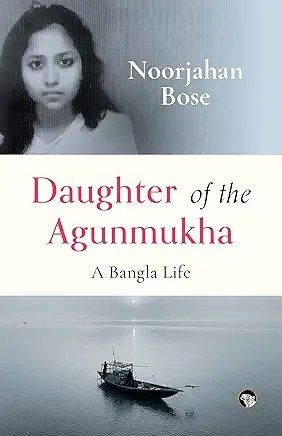
Title: Daughter of The Agunmukha: A Bangla Life
Author: Noorjahan Bose (Author), Rebecca Whittington (Translator)
Publisher: Speaking Tiger Books
This memoir recounts the journey of a young woman from a small island in Bangladesh who discovers the works of Tagore, Marx, and de Beauvoir, ultimately emerging as a prominent advocate for feminist causes.
Noorjahan Bose is a feminist author, social advocate, and activist resides between the United States and Bangladesh. She is the founder of two organizations based in the US aimed at empowering South Asian women: Ashiyanaa (previously known as ASHA) and Samhati. Rebecca Whittington serves as a literary translator specialising in Tamil, Bangla, and Hindi.
The narrative of Daughter of the Agunmukha[1] intricately weaves the life story of Noorjahan Bose, a remarkable woman whose journey is marked by resilience, courage, and an unwavering quest for freedom. Born in 1938 in a rural area of what is now Bangladesh, Noorjahan’s early life was deeply intertwined with the rhythms of nature and the struggles of her family, who were farmers living in close proximity to the tumultuous River Agunmukha, ominously referred to as the Fire Mouth River. This river, with its fierce currents and unpredictable nature, serves as a powerful metaphor for the challenges Noorjahan would face throughout her life.
From a young age, Noorjahan was thrust into a world of hardship and trauma. She endured sexual abuse at the hands of male relatives, a harrowing experience that left deep emotional scars. Compounding her struggles was the influence of her mother, who, having been a child bride herself, was often constrained by the societal norms and expectations of their time. Despite her own limitations, Noorjahan’s mother became a beacon of hope and creativity in her life. She instilled in Noorjahan a sense of joy and the importance of self-expression, encouraging her to explore her talents and dreams even in the face of adversity.
As Noorjahan grew older, her thirst for knowledge and personal freedom became increasingly evident. Education, however, was not easily accessible to her. The societal barriers and gender discrimination prevalent in her community posed significant obstacles to her academic pursuits. Yet, with the unwavering support of her mother and the encouragement of local activists who recognised her potential, Noorjahan began to carve out a path for herself. These activists, driven by a vision of social justice and equality, played a crucial role in empowering her to challenge the status quo.
Emboldened by her experiences and the solidarity she found in progressive movements, Noorjahan’s journey took her beyond the borders of her village. She became an advocate for women’s rights, using her voice to speak out against the injustices faced by women in her community and beyond. Her activism not only transformed her own life but also inspired countless others to join the fight for equality and empowerment.
As she traveled the globe, Noorjahan encountered diverse cultures and perspectives, each enriching her understanding of the world and deepening her commitment to social change. Her experiences abroad further fueled her passion for education and advocacy, leading her to collaborate with international organisations dedicated to uplifting marginalised communities.
Noorjahan’s life has been marked by significant hardships, beginning with the anguish of Partition, followed by the loss of her husband when she was merely 18 and expecting a child. Additionally, she faced the relentless threat of cyclones that jeopardised her family’s home and means of survival. Despite these challenges, her bravery is evident throughout her memoir. She advocated for the rights of the Bangla language in East Pakistan, navigated the tumultuous period of Bangladesh’s Liberation War (1971), and entered into a marriage that transcends her family’s religious boundaries.
This poignant and compelling narrative encapsulates a profound journey of trauma, loss, resilience, and empowerment.
.
[1] Agunmukha means fire mouthed
Bhaskar Parichha is a journalist and author of Cyclones in Odisha: Landfall, Wreckage and Resilience, Unbiased, No Strings Attached: Writings on Odisha and Biju Patnaik – A Political Biography. He lives in Bhubaneswar and writes bilingually. Besides writing for newspapers, he also reviews books on various media platforms.
.
PLEASE NOTE: ARTICLES CAN ONLY BE REPRODUCED IN OTHER SITES WITH DUE ACKNOWLEDGEMENT TO BORDERLESS JOURNAL
Click here to access the Borderless anthology, Monalisa No Longer Smiles
Click here to access Monalisa No Longer Smiles on Amazon International
 Borderless