Categories
Tribute

The Eternal Sleep of Kumbhakarna

By Farouk Gulsara

I reported to Kuala Pilah[1]District Hospital on 11th August 1989. Just having passed out from medical school a year earlier, followed by a year of housemanship training, I was rearing to go. Like Dr. David Livingstone, who explored the interior of Africa to treat the needy (and convert them), I thought I would change the world.

1989 Kuala Pilah District Hospital was a secondary 100-bedded hospital with a resident Obstetrician-Gynaecologist, a few medical officers and a functioning operating theatre. Many seriously ill patients who needed tertiary care were transferred to a general hospital about 40km away.  

The hospital administrator was pleasantly surprised to meet me. He thought I would join the team when the rest of the doctors reported on the first of the month. Truth be told, I was down with a case of occupational hazard. I was down with chicken pox after delivering a mother with the disease. I had to extend my training ten days after exhausting my annual leave.

After the cursory formalities, I was given time off to help settle in. The hospital did not have any accommodation facilities for its staff. They only had a vacant but rundown wooden attap house just outside the hospital. It had all the basic amenities, electricity and water supply. I thought I would use it temporarily before getting better accommodation elsewhere. That is when I was introduced to CK. CK was to be my housemate. 

CK was working as an anaesthetic medical officer in the hospital. He was a year senior to me in service and was training to be an anaesthetic specialist. He alternated with another medical officer trained in anaesthesia to do daily calls in the Kuala Pilah District Hospital. 

CK walked in when I was talking to the hospital administrator, Dr Teng. 

“Oh yes. This is Dr. CK. He can be your housemate,” Dr Teng said. He will move into a new place once he gets one.”

“I think I’ll stay with CK and probably share his new place,” I said, “…that is if he is okay with sharing.”

CK was a lovable chap with a smiling face and an approachable demeanour. Slightly chubby, he resembled a cuddly teddy bear. His affable charm put everyone at ease, which helped him in his career as an anaesthetist. I later found that, understandably, the one thing he loved in his life was his food. He would later jokingly say that his paunch was an asset for him in his job. It helped to stabilise patients’ heads when he was intubating them. 

A tall Minangkabau roof. From Public Domain

Before the phrase ‘living out of a suitcase’ became vogue, I was already living that life. Uprooting from point A to point B meant shoving everything into a couple of suitcases into the car’s boot, and off I went. My needs were few. 

My stay was at an old wooden house built with a tall Minangkabau-styled roof. At any time of the day, it was cool. A cool breeze constantly swept through the length of the house. The tall ceiling helped. Despite its location in the heart of Kuala Pilah town, it was eerily quiet. The only noise one hears is the squeaking of its wooden floor when someone walks. As mentioned, the home had modern electricity and water supplies. The quarters pleasantly surprised me with a newly installed telephone line. 

It was a time before digital mobile devices came into existence. All we had were landlines and pagers. Telephones were essential to medical treatment as they remained the only way to track down doctors on the go, from ward to ward, in a compound with single-story buildings. It was comical to see musical chairs at play. Sometimes calling someone is like playing ‘Whac-a-Mole’. One calls Ward B only to be told the doctor has gone to Ward A, which has just been called. In emergencies, if a doctor could not be tracked down, a runner (literally the most agile of the staff) would run from point to point to hunt the doctor down. The public announcement system was available but would forever be under repair, and the person holding the key to the audio room would be AWOL[2]

As CK was the anaesthetic medical officer (MO) on call, attending cases that needed surgery, he did not need to sleep in the hospital. He could return to his quarters (the one I was to share) after midnight to retire for the night. He would typically hang around the hospital before leaving for his quarters when the coast was clear.

Now, CK was a heavy sleeper. Like Kumbhakarna[3], he was one of those who could sleep through a nuclear holocaust. The only thing that CK woke up to was a telephone ringing—the first ring at that! No, the bleep of the pager would not do.

Later that evening, after meeting around the new colleagues, CK and I walked to a nearby food court for dinner. The char koay teow[4] stall there later became our favourite hunting ground for dinner for the next year while we were there in Kuala Pilah. 

Ah Chong, the char koay teow seller, who had known CK for his regular patronage, ran out. Ah Chong was born and bred in Kuala Pilah. He ran Kuala Pilah’s famous halal char koay teow stall and took a keen interest in every little gossip around town. A simple-looking man whose wardrobe probably had two types of garments — white pagoda tee-shirts and black knee-length trousers — must probably be one of the wealthiest men in Kuala Pilah. 

“Hello, boss. What happened early this morning, ah? So much commotion, with lights, honking and ambulance sirens. What happened? A bus accident or something like that? I think the whole of Kuala Pilah got up!”

CK sheepishly told Ah Chong, “No, nothing. The hospital just wanted to contact me.” Ah Chong left to prepare our dish.

After Ah Chong left our table, CK started to chuckle.

“You know what he is talking about?” asked CK.

“No.” I shrugged.

“The day I arrived here, I knew I would be on-call. And I took the quarters to stay before getting a proper house. Teng, the administrator, told me to do calls on the third day I arrived.” CK started. “I told Teng he needed to install the telephone line at the quarters immediately as they may need to contact me after late.” 

“Teng told me he will get it done next week. He said, “You know, these small towns, they do things slowly.”

“I told him I was doing calls and that I am a deep sleeper. The only thing that wakes me up is the sound of a phone ringing.”

“But he said he would get it done as soon as possible.”

“Yesterday, I was on call. I don’t know why; maybe it was because it was the start of the hungry ghost month or something, and the wards were eerily quiet. There were no cases after 4pm.”

“I was at the doctors’ lounges watching TV and dosed off. Can you imagine there were bed bugs on the settee cushion?”

“I started scratching and scratching like a monkey on heat. I left for the quarters, telling the Operation Theatre (OT) staff to contact me if needed.”

“I left close to midnight. As luck would have it, a mother came in just as I left, after being in labour at home since morning. Our friend, Morrison, thought she needed a Caesarian Section. They paged me. Twice. No reply. So, Wahab, the OT attendant, ran to the quarter.”

“Wahab came to the quarters’ gate. He was just too shy to come in. So, he started calling for me. I must have been in my deepest sleep state. I guess I was just too tired yesterday. Too tired, not doing any work.”

“After a few times, he started throwing pebbles at my window. No response. Then he ran back to the nurse to tell the situation. The OT nurse, now in desperate mode, called the ambulance driver. She thought the ambulance driver, being good at raising the alarm, could raise me from a dead sleep!”

“What?” I exclaimed. I had no clue in which direction this story was going.

“Now, the ambulance driver is a smart man. He knew it was 4 o’clock on a Tuesday morning. He can’t simply turn on the ambulance siren at full blast. People had to go to work the next morning. He had to answer if any of the townfolks were to complain.” 

“He brought the ambulance near the quarters, parked it facing the main gate and turned on the high beam. No reply. Then he flickered it repeatedly. All were quiet in the rooms.”

“Then the genius thought, why not turn on the beacon? So, up came the stroboscopic red light twirling around town, waking everybody!”

“He was not prepared for what came next. Lights from nearby shophouses started flickering, too. Soon, he could see silhouettes of people drawing their curtains, trying to figure out the commotion. One by one, everyone was up!”

“Still, I was sleeping, it seemed. As a last measure, before calling the police, the driver started blaring the siren!”

“Luckily, I got up. As an instinct, I saw my pager and the numerous messages there.”

“I ran out like the Merry Melodies cartoon character. I got the shock of my life when I came out to the gate. Outside, to greet me were the uncles and aunties, with their sarongs[5]and nighties, all with blurry eyes trying to make sense of the pandemonium. I could see through the windows that the lights were on. People were craning their necks trying to see all the excitement — lights, ambulance lights, siren and crowd.”

“KP is a peaceful town. I think people never get more excitement in their lives. Ever.”

“Anyway, the surgery went fine and baby too.”

That was how our first day started. A few days after that episode, we moved to a single-storey house some 10 minutes from the hospital. Filled with quirky moments like that and many more, we got embroiled in our respective works. A year flew past by. CK went on to be a consultant anaesthetist a few years later. We have been in contact since.

One October morning, 2024, I heard CK was found slouched in the bathroom. He had an apparent coronary event. Nothing could arouse CK this time, not even the 1,000 elephants who allegedly walked over Kumbhakarna to wake him up. 

.

[1] Kuala Pilah is the second in the State of Negeri Sembilan, Malaysia. It is 36 km from the state capital, Seremban, and 101 km from Kuala Lumpur.

[2] Absent without official leave

[3] In Ramayana, Ravana’s (the king who abducted Sita) brother is Kumbhakarna. An intellectual and physically menacing prince was tricked into receiving the boon of sloth. He remained asleep for six months, just to get up, eat and sleep again. Legend has it that he could only be awakened by having 1,000 elephants walking over him.

[4] A popular stir-fried flat rice noodle dish of Southern Chinese origin

[5] A loose cloth wrapped around the lower body, worn by men and women of the Malay Archipelago.

Farouk Gulsara is a daytime healer and a writer by night. After developing his left side of his brain almost half his lifetime, this johnny-come-lately decided to stimulate the non-dominant part of his remaining half. An author of two non-fiction books, Inside the twisted mind of Rifle Range Boy and Real Lessons from Reel Life, he writes regularly in his blog, Rifle Range Boy.

.

PLEASE NOTE: ARTICLES CAN ONLY BE REPRODUCED IN OTHER SITES WITH DUE ACKNOWLEDGEMENT TO BORDERLESS JOURNAL

Click here to access the Borderless anthology, Monalisa No Longer Smiles

Click here to access Monalisa No Longer Smiles on Kindle Amazon International

Categories
Musings

Finding the Fulcrum

By Farouk Gulsara

From Public Domain

I decided to care for my ailing octogenarian mother, not because she willed me a great fortune or because I have a great liking to care for the sick. Neither do I want to gaslight her for all the not-so-nice things she said about me and my family in better health all through her healthy life.

I volunteered because, given the circumstances the rest of my siblings were in, I was in the best position to keep her. As the son and her firstborn, I had to also fulfil my filial duties. Maybe, I thought, that there is no such thing as a free lunch. Everything has a price. All that nocturnal supply of breast milk and immaculate care during the trying times of infancy and toddlerhood are not free. Maybe she drilled it subliminally into my young mind as she nursed me during those formative years.

Through her babbling and rumbling, I can see she is not happy where she is now. Her apoplexy-stricken grey cells cannot comprehend that her lifeless limbs cannot carry her atrophied body to care for herself. Yet, she wants to stay on her own. She wants to be the Queen of her little space and controller of her destiny. In her demented mind, she imagines herself as her usual 30-year-old buxomly go-getter who wants to pave a future for her three children.

She explicitly expresses her dissatisfaction to her caretaker (i.e. me) with cusses and hurtful words a mother would not utter to her offspring; however, she is not in control. She sees herself as the young lady she once was, with a one-track mind to succeed despite whatever curveballs life throws. She wants to walk back to her house, some 300km away, the home she and my father built so many years ago. She vehemently thinks she can.

She grew up never having anything called coming of age. She whizzed through her adolescence and early teenage years like it was a non-event. Robbed of a mother at 15 to breast cancer, she grew up fast to fit into her working boots. She had to fend for herself. Her widowed father did not want to be bogged down by his four teenage children running around clinging to his trousers, demanding this and that. After all, he was young and had a life to live. Even before the soil settled on his wife’s grave, her father was already busy wooing his new wife. This early loss and the subsequent responsibilities she had to shoulder shaped her into the person she is today.

Without a mother’s embrace to comfort and a shoulder to lay her uncertainties on, this teenage girl became an adult overnight. She looked at the world as an evil beast waiting to engulf her. Her view of the future was bleak; she wanted to be prepared for a rainy day, even for the monsoon season. This outlook apparently has stayed until now. She thought it worked for her then; why should it not work for her now.

I do not want this current image of my mother as the only memory of her for the rest of my life. I long for the nurturing mother of my toddler years, with her cooking and bedtime stories. I long for that comforting mother.

May this transition be smooth for both of us. May you forgive me for all the times, I get angry with you, and for all the times you make it challenging to care for yourself. I must tell myself that you have lost that one thing that makes a human a human—rational thinking and free will. Your actions do not reflect your inner soul. They are mere peripheral reflexes responding to defective neuronal connections. This role of a caregiver is not easy, and I acknowledge the difficulties it brings.

I forgive you for all the pain and hard times you gave me growing up. You did not believe in mollycoddling the children but chose to follow the example of a tiger mum. You did the best with your life experiences and what you learnt to be the best form of upbringing. Like you used to say, ‘Spare the rod and spoil the child’ in your own way, your version sounded brutal. Your version was that there was nothing like an excellent periodic whacking to get the kids’ chakras aligned appropriately.

Rather than forgiving you, a thank you is long overdue for a work well done. Or it is not for me to say but the downlines who would be at the receiving end of my existence.

Farouk Gulsara is a daytime healer and a writer by night. After developing his left side of his brain almost half his lifetime, this johnny-come-lately decided to stimulate the non-dominant part of his remaining half. An author of two non-fiction books, Inside the twisted mind of Rifle Range Boy and Real Lessons from Reel Life, he writes regularly in his blog Rifle Range Boy.

.

PLEASE NOTE: ARTICLES CAN ONLY BE REPRODUCED IN OTHER SITES WITH DUE ACKNOWLEDGEMENT TO BORDERLESS JOURNAL

Click here to access the Borderless anthology, Monalisa No Longer Smiles

Click here to access Monalisa No Longer Smiles on Kindle Amazon International
Categories
Stories

Don Quixote’s Paradise

By Farouk Gulsara

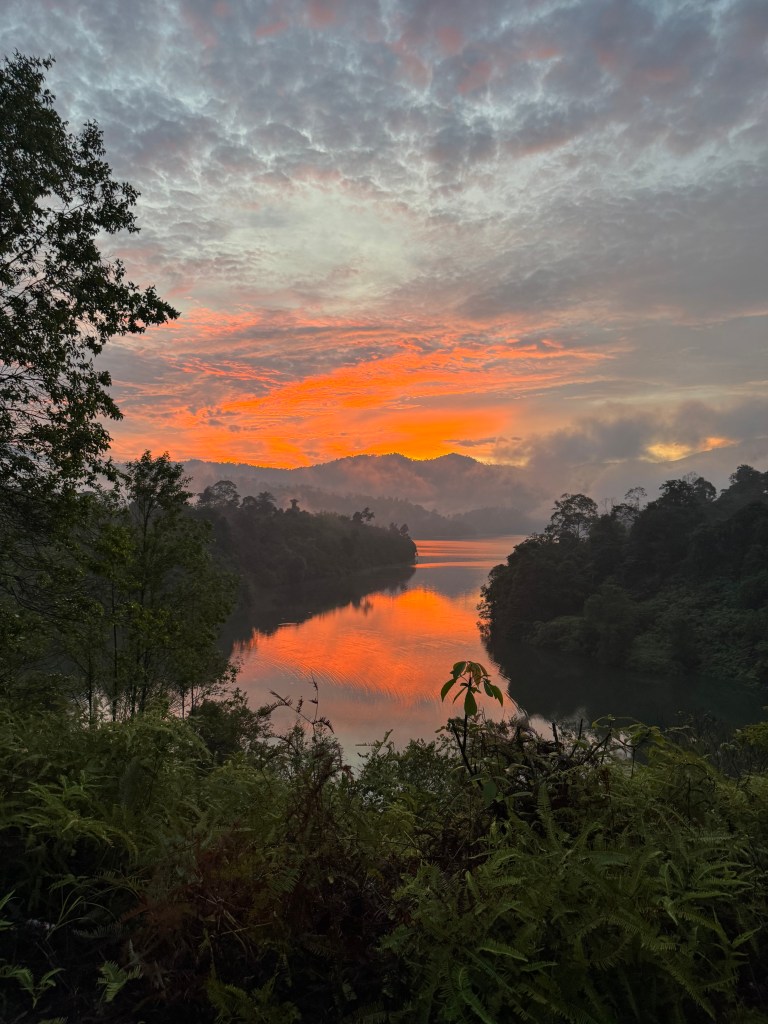
 A new dawn or the sunset of better times? Photo Courtesy: Farouk Gulsara

It is the year 2074. Yes, the world is still around, and so is the human race. It has been over a century since Malaysia received its mandate to self-rule. Technically, we should be in a utopia with so much sunlight throughout the year and a chirpy tropical climate devoid of depressing, chilling winters or debilitating natural calamities. A potpourri of food options is available 24/7 at our fingertips and delivered to our doorsteps with easy-access drone servers. We should be the happiest people in the world. In reality, however…

Teenagers growing up in the formative years of Malaysia in the 1980s, not too long after the 1969 racial riots, were given a promissory note. They were told that if they followed the dotted line, they were assured of a utopia. They would be ushered into a land of milk and honey, oozing with order and tranquility. A land where brothers and sisters of all strata would be walking, holding hands, and singing one song of camaraderie and unity. Peace would be seen seeping from every pore. Smiles and cheery images of bright yellow sunflowers were immortalised in their vision of the future.

Coincidentally, massive oil reserves were discovered off their shores around that time, multiplying their euphoria. Money started flowing freely. The government made it their God-given duty to make millionaires out of their sycophants and display them as the nation’s success story. 

They were so confident that the good times would roll forever that they felt a pressing need to increase the population and strengthen their vote bank. They wanted their 17 million population in 1990 to snowball to 70 million by 2020!

Maybe it was their subconscious intention to exhibit their patriarchal prowess. Soon, the urban skyline was brimming with phallic-like skyscrapers. The Petronas Twin Tower became the pride of the nation. Detractors said it was a waste of taxpayers’ money, but the Government insisted it was a private venture of Petronas, the private-public partnership that struck black gold. 

Like the Tower of Babel, grand towers sprouted here and there, giving the illusion of wealth and prosperity. The government asserted that the promised ‘Vision 2020’ would have citizens speak one language of love for each other and would be knowledgeable and mindful. 

To facilitate foreign investors’ seamless flying in and out of the country, a world-class airport sprung out of the lush greenery at the expense of its natural fauna and flora. 

Like the fate of the Tower of Babel, with the sky being the limit but short on foundation, the idea of uninterrupted progress came tumbling down. The thought of people speaking one language was only on paper. Doublespeak was not only the domain of the leaders. The average citizen gave little back to Malaysia. Many saw little hope in their motherland. They grew wings to fly away to faraway shores. 

Trying times came in droves—first, repeated economic downturns and other black swan events that only the anti-fragile could weather. Then, a global pandemic hit the world. Rather than scrambling to save the economy, leaders were content undercutting and downplaying opponents to grasp the helm of administration. Instead of utilising science to fight rumours, they looked at religious texts for answers. That is when the penny dropped. Citizens realised the country had reached the point of no return. 

Now, in 2074, what we have is a country of economic migrants who sponge on the nation and use Malaysia as a transit point to hopscotch to greener pastures. The descendants of the first wave of workers whom the colonial masters brought in to build the nation are all but long gone. Draconian laws that rewarded mediocrity and championed race and religion successfully converted its subjects to a bunch of zombies, unflinching to the changes to the environment, but one with a one-track mind to satisfy the voices of his master. Religious bigotry ruled the land. Rather than speeding forward to the 22nd century, citizens were hellbent on returning to the 7th, their perceived golden era.

The latest election, the 25th election, went on without a glitch. Of course, there were no untoward incidences. All the opposition leaders have either been forced to retire or behind bars. Voters have been cowed to submission. Years of indoctrination have made the youths of today a bunch of unthinking yeomen. As they have been doing in the past ten elections, the ruling party won more than half of the election seats, uncontested. 

The propaganda machine ensures that people only receive pleasant news. In its infancy, the Internet promised the democratisation of information. Soon, everyone realised that people were not competent enough to filter news. The herd is easily swayed and falls prey to popular clickbait. Hence, the government had to play nanny to alleviate undue anxiety among its citizens. 

Our education system, which used to be at par with any other country, took a slow plunge. One by one, politicians scrapped examinations to garner popularity. Automatic promotions finally produced young adults who left high school without essential reading, writing, or arithmetic skills. People are inebriated by regular freebies and the periodic intoxicating religious cocktails churned out by government-appointed holy men. When they mentioned everyone using the same language and way of thinking, they meant mass conversion. Plurality and multiculturalism had gone out of the proverbial window long ago.

Under the guise of national security, press freedom is a legacy of the past. Policing the public meant monitoring what netizens uttered online and even the thoughts they shared on their social media posts. The lush tropical forests have mysteriously been denuded over the years. All the public protests fell to the deaf ears of the forest department. Files were closed when no one could be zeroed in to be responsible for the crime to nature. Everyone knows whose hand is in the cookie jar, but the leaders conveniently condemn it to global warming. The blame goes back to the public for being irresponsible in disposing of their garbage!

Outside the country, the three world wars that rocked the world to the brink of extinction never woke humans from their slumber. The Nuremberg trials failed to impress us that no one race is superior to the other and that in wars, nobody wins except arms dealers.

The imagined world free from wars and climate crises remains an unfulfilled dream. Whether 2074 or 2704, the world is fated not to learn from its past and is cursed to repeat the same mistake that it never learnt from its history. Humanity can only appreciate the beautiful world it once was on augmented reality screens. A once-promising roaring Asian tiger called Malaysia has now morphed into a toothless and tattered paper tiger. The best it can do is be a cautionary tale for other nations about what not to do in nation-building. 

.

Farouk Gulsara is a daytime healer and a writer by night. After developing his left side of his brain almost half his lifetime, this johnny-come-lately decided to stimulate the non-dominant part of his remaining half. An author of two non-fiction books, Inside the twisted mind of Rifle Range Boy and Real Lessons from Reel Life, he writes regularly in his blog, Rifle Range Boy.

.

PLEASE NOTE: ARTICLES CAN ONLY BE REPRODUCED IN OTHER SITES WITH DUE ACKNOWLEDGEMENT TO BORDERLESS JOURNAL

Click here to access the Borderless anthology, Monalisa No Longer Smiles

Click here to access Monalisa No Longer Smiles on Kindle Amazon International

Categories
Slices from Life

At the Doctor’s

By Farouk Gulsara

A rule is often made for others. 

A morning in the doctor’s clinic, a retired teacher was apprehensive about the nagging pain she had over her left nipple. Her beloved sister had succumbed to dreaded breast cancer. Naturally, she was concerned. 

She came with a stack of her medical reports, old ultrasound pictures and mammography prints. 

“You know Doctor, I have brought all these films for you to see,” she said. “Well, my late sister died at the age of 35 due to breast cancer.” 

Her conjunctiva, showing strains of not sleeping well the night before, was flushed. There was a weakness in her voice. She hoped that it would just turn out to be a red herring, something superficial without much fanfare. After all, she had just undergone a major gastrointestinal surgery four months ago. Indeed, God couldnot be so unkind. She had done her duty as a human, paid her dues to humanity. 

“I cannot be so despicable to get a double whammy,” she thought, gazing at the doctor who was scrutinising intently into her medical records. “I have been a good person.” 

“I see you have kept all your records nicely, pictures from 1996 all the way to 2006,” the doctor blurted out, looking directly at her eyes. He turned back to his perusal of the documents. 

The teacher opened her mouth to say, “I don’t know why, Doctor, my hospital stopped giving my ultrasound pictures for the past few years.” 

“I wonder why?” 

Still deep in thoughts, halfway looking at her and the other at the notes, he verbalised. “They are scared. With the increasing complaints against hospitals and the litigious nature of the society, they may find it better not to give out reports freely.” 

A long pause. 

“There are many people out there just to find fault with others… to kick dirt. They create problems only to exert power because they can. And there are many pseudo-intellectuals to douse the fire with kerosene,” the doctor added, sounding frustrated as if he was one of such victims. 

The patient was quick to rebut: “No, I am not that of person. I was a teacher, I know.” She appeared slightly irritated that the good doctor was wasting time talking rather than diagnosing her! “I hold the medical profession close to my heart with the utmost respect. I don’t find fault.” 

“Why is the doctor smiling?” the teacher wondered. “This cynical doctor better not keep me in further suspense. I don’t think my heart can take all these uncertainties.” 

Time almost stood still. 

In what appeared like aeons later, the healer vocalised. She could not believe what she was hearing. It could not be accurate. After all, she had been keeping these documents so carefully. 

“Ms Nayagam, do you know that the last film that you have been safeguarding for the — the past 15 years actually belongs to a 30-year-old Malay lady, not yours!” 

“What!?” 

“You see here,” he pointed to the printed corner of the ultrasound picture. “Anyway, the rest of the images and your clinical examination are normal.” 

Ms Nayagam felt overwhelmed with an avalanche of relief. Suddenly she felt empty. That is how she had been all her life, anyway. Constantly worrying about something or someone, so much so that her children must have decided to stay away. 

“No, this cannot go on!” she thought. 

“Doctor, can I have the films? I have to go back to the breast clinic to kick up some dirt.” She suddenly found new strength. “I have to complain about this foul-up to the highest of authorities. Some heads need to roll!” 

The smiling doctor broke into a wide grin revealing his coffee-stained teeth. 

“Well, well, well! Now you know why people are becoming defensive these days.” the doctor went into lecture mode again. “One small error and the whole twenty years of good work done on you gone down the drain. Nice!” 

Silence. 

“What is that, Ms Nayagam?” the doctor chided as he gazed directly at his first patient of the day’s eyes. He could see clearly her cholesterol deposits of arcus senilis on her sclera. 

He thought to himself, “What is there in your mouth, Ms Nayagam? A hot potato?” as he scrutinised her slightly agape lower jaw and her face pale with embarrassment. 

.

Farouk Gulsara is a daytime healer and a writer by night. After developing his left side of his brain almost half his lifetime, this johnny-come-lately decided to stimulate the non-dominant part of his remaining half. An author of two non-fiction books, ‘Inside the twisted mind of Rifle Range Boy’ and ‘Real Lessons from Reel Life’, he writes regularly in his blog ‘Rifle Range Boy’.

.

PLEASE NOTE: ARTICLES CAN ONLY BE REPRODUCED IN OTHER SITES WITH DUE ACKNOWLEDGEMENT TO BORDERLESS JOURNAL