By Candice Louisa Daquin
In childhood I recall getting my coveted membership to Save Our Seas. I loved the sea and marine animals, and this seemed a meaningful way of helping from a child’s perspective. I recall reading Rachael Carsons famous books Silent Spring and The Sea Around Us at the same age and wondering how a book written in the sixties could be so prescient and why the subject was still under debate? If a ten-year-old can understand the message Carson had, of indiscriminate application of agricultural chemicals, pesticides, and other modern chemicals polluting waterways, damaging wildlife populations and causing health problems for humans, then why not adults?
It’s easy for a child’s mind to think those simple questions, not understanding the intricacies of what’s at play. Not least; politics, big business and money. These more than anything has dictated international policy, and it’s not science that sways policy, it’s influence. Vandana Shiva, an Indian environmentalist, is another such example of a prescient activist whose truth has been stifled in the march toward profit. Shiva, both physicist and social activist, founded the Research Foundation for Science, Technology, and Natural Resource Policy devoted to developing sustainable methods of agriculture. Shiva is contended; “Justice and sustainability both demand that we do not use more resources than we need. Uniformity is not nature’s way; diversity is nature’s way. We are either going to have a future where women lead the way to make peace with the Earth or we are not going to have a human future at all.”
Sadly, Shiva’s work is less known than companies like Monsanto who are responsible for mass destruction due to putting profits before conscience in the selling of GMO[1] seeds that caused widespread bankruptcy, suicides and irreversible environmental damage. In 1995, the United States Environmental Protection Agency, EPA, listed Monsanto among the top 5 lethal corporations dumping toxic waste, as it was recorded dumping nearly 37 million tons of toxic waste, through air, water, and land. . It is unfathomable why such blatant atrocities should be permitted but our global history is littered with them.
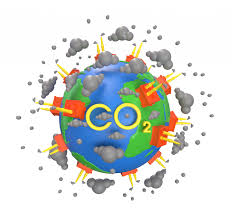
Scientists have warned since the 1800s, where experiments suggesting that human-produced carbon dioxide (CO2) and other gases were able to collect in the atmosphere and insulate Earth (or its reverse) were met with more curiosity than concern. By the late 1950s, CO2 readings would offer some of the first data to corroborate the global warming theory. That it’s not if, but when, climate change will alter the way humans experience life on this planet, let alone wildlife and nature.
At one extreme we have the eco warrior who has valiantly tried to campaign and actively fight against human encroachment; in the middle, we have the skeptic who points to fluctuating weather patterns going back millennia and at the other extreme, there are the climate deniers who despite having children seem not to be concerned about the earth those children will inherit. There is proof that “Dating back to the ancient Greeks, many people had proposed that humans could change temperatures and influence rainfall by chopping down trees, plowing fields or irrigating a desert.”
If I sound biased it is because it’s a generally accepted fact that the earth isn’t just heating up, it is changing. The only issue under debate now is who or what is responsible, if anyone is, and how long do we have before things get really bad. Twenty years ago, people still mulled over whether climate change was happening, many believing it was just cyclical and sometimes it was, but there have been enough giant seismic changes in the last 40 years to put that doubt to rest. “Scientists have pieced together a record of the earth’s climate by analysing a number of indirect measures of climate, such as ice cores, tree rings, glacier lengths, pollen remains, and ocean sediments, and by studying changes in the earth’s orbit around the sun. This record shows that the climate varies naturally over a wide range of time scales, but this variability does not explain the observed warming since the 1950s. Rather, it is extremely likely (> 95%) that human activities have been the dominant cause of that warming.”
Now if you turn on the TV, the nightly news is as much about weather as it is other things. Weather dominates our lives more than ever. Perhaps it’s ironic that ancient man would live or die by weather and we are now doing the same. The heyday of calm weather may have been slightly exaggerated but most people over 50 can attest that things weren’t quite as dramatic all the time, every year, as they appear to be now.
The harbinger of our behaviour in terms of polluting the environment has speeded up, something that may have been inevitable but could possibly have been avoided. The hardest part being that ‘developed’ countries such as America and Europe asked ‘developing’ countries to reduce their carbon and other emissions without really reflecting that they were as if not more guilty, relatively speaking, before they ‘saw the light’. To ask developing countries to leapfrog ahead in their development for the sake of the environment is coming from a position of privilege, having already polluted the world themselves first.
On the other hand, developing countries may struggle to reduce emissions because they are gaining traction in terms of improving quality of life for most of their population but are not there yet in terms of having the luxury to reduce emissions. It takes a lot of money, effort, commitment and determination to do this and for a country that is trying to improve its lot for its citizens this isn’t always their first priority, not to mention the patronising tone of developed countries demanding this be done. It is important to see this relationally which means understanding the difference in countries development and that some of those countries were abused and depleted of resources and kept ‘poor’ by conquering overlords who reaped the benefits and left them poor as a result. Those counties will struggle to climb out of the post-colonial model and that should be considered when judging them.
But we don’t have time. Despite know this beforehand, we did not do enough. In the late 1800’s, Swedish chemist Svante Arrhenius [1859-1927] wondered if decreasing levels of CO2 in the atmosphere might cool Earth. To explain earth’s ice ages, he considered if decreased volcanic activity could lower CO2 levels globally. Those calculations evidenced that if CO2 levels were halved, global temperatures may decrease by about 9 degrees Fahrenheit. From this, Arrhenius investigated if the reverse were also true; investigating what would occur if CO2 levels doubled. His results suggested global temperatures would increase by the same amount.
By the 1980s global temperatures were going rapidly higher. So, climate-based experts use 1988 as a critical turning point when events placed global warming in the spotlight with extreme weather and increased public interest. Scientists, the UN and many others warned we were heading to a point of no return.
Turn on the news today and we seem to be there.
Even if we did everything right as a planet from now on, it would still be too late to repair the biggest climate change consequences. That doesn’t mean we shouldn’t try but it’s alarming to imagine we’ve let it become too late, though not surprising when you consider the apathy of world leaders to come together and make this happen.
UN Secretary-General António Guterres’ remarks to the General Assembly in March 2022 illustrates this: “Just last week, the Intergovernmental Panel on Climate Change issued an alarming report that showed climate impacts are already devastating every region of the world, but particularly developing countries and small island States. The session considered the irreversible impacts of the climate crisis, which could render some parts of the earth uninhabitable.” What does it mean for us? For the future generations if there are to be any? It means things we took for granted will change. Just as more animals are going extinct than ever before we also must look to history to give us an idea of what we might face in the near future.
Look how many times there have been huge seismic shifts in the earth? One example in particular is quite interesting. The Storegga Slide happened in approximately (600-BCE) and was the largest Paleo tsunami to hit Europe in the (Paleo) era. It altered the geography of Europe massively, causing England to break off from continental Europe from where Scotland was attached to Scandinavia. This was lost beneath the sea as a huge part of Scandinavia broke off and caused giant waves that poured over this fertile land and swallowed it whole.
Climate deniers use these types of stories to explain away climate change as being a natural phenomenon but that’s inaccurate. Whilst significant and damaging things have occurred throughout history and will continue to, as scientists warned, it’s the number of disasters and changes occurring that count, not that they happen but that they happen with such regularity and severity. It’s been this hot before, but has it been this hot consistently and throughout the world for as long before? I was born in a year where there was freak heatwave but that’s just it, it was a freak heatwave.
Such things are natural in nature but not if its progressive or things keep happening one after the other. People assume if there is a cold winter then climate change can’t be real but that’s the funny thing, it’s the extremes of weather as much as heat, that are indicative of climate change. For every extraordinarily hot summer and burning Hawaii, there are extreme weather events in winter too as the planet falls out of a healthy cycle and is slowly losing its ability to nurture life like it used to.
Does it mean we will become extinct? Or just that life will become harder and less places habitable? And hasn’t that happened before? Well, it has, in so much as once Africa was a grassland without drought and Europe was covered in ice. But when a planet first forms it’s likely to have extreme weather. As long as humans have been churning out chemicals that pollute the seas and mining the earth for its ore, we’ve accelerated and exacerbated those disasters. And just as it is believed a meteor killed off the dinosaurs and a virus might have killed off the Neanderthals it’s possible our actions will hasten our demise and at very least make life more unbearable.
How? Along with viruses being more omnipresent than previously and antibiotic resistance, UV exposure and higher radiation have increased. The average human has more chemicals and formaldehyde and plastics in their body than at any other point in history. It affects our health, our reproduction and our longevity. Cancers hit the young more than ever before. We’re either over medicated or not able to afford medication. If global temperatures rose by 11 or 12 degrees, more than half the world’s population, as distributed today, would die of direct heat. The disparity between the ‘haves’ and the ‘have nots’ have exaggerated like in the feudal past. The idea we’re all middle class is a myth borne on ownership for technology rather than quality of life, which for many working two or three jobs to sustain their lifestyle, is hardly enviable.
The world is heading for a collision, and we are propagating this by a lifestyle we don’t seem capable of changing. If we label those who care about the environment as eco terrorists and pay football players millions whilst leaving nurses and teachers underfunded? Our priorities must be reflected in these things to have a trickledown effect in the future. If we can’t educate our children to understand that saving the planet isn’t just a day every year or a whim but must be a full-time effort, then what hope does the future possess?
ActNow is the United Nations campaign to inspire people to act for the Sustainable Development Goals and many other organisations like it fight against misinformation and seek to actuate these goals, but they’re often drowned out by lobbyists for special interests, such as the car industry, gas industry, fossil fuel industry, nuclear industry etc.
Just like in the fight against cancer, we need science to lead the way, that science which is not the influenced by special interest groups, like in the case of cancer, big-pharma and big-business. We need to take profit out of research and make it objective rather than tied to business, so it can be unimpeded to do what’s necessary. With cancer research, profit has stymied progress and stalled any meaningful change, instead people believe cancer is being cured by pharmaceutical promises, whilst more people than ever are getting cancer. Contrast this to climate change and if we don’t do the research into sustainable alternatives and ways to live into the future, there may be no future worth living for.
All hope is not completely lost of course. We always find ways, maybe one of them will be to go off world whilst another would be to live in Antarctica when it melts, provided the sea doesn’t swallow it. But what of the towns and cities by the coasts? What will that look like in 50 years? Maybe less. I think in my life time it is predicted that many of these places will be unliveable, beneath water, and whilst this has happened before it hasn’t happened to this degree. Yes, Venice has always been sinking and maybe NYC wasn’t built on the best land but everywhere else? And what will the displaced do? And how is space travel possible without a healthy earth?
Those old enough can attest that the world seems to be burning and statistically with more people than ever on an already burgeoning planet in terms of resources. We seem to be wasting more food, yet more people are hungry in certain pockets of the world. We are growing hotter in some parts, colder in others, heatwaves represent an increasing threat to cities in both the Northern and Southern hemispheres. And it’s shifting agricultural production. Heatwaves are affecting colder countries too. A study states: “As illustrated by the example of Quebec, rising temperatures and heatwaves are an increasing hazard in countries of comparably cold climate as well as in warmer climates. According to a report published by UN Climate Change, higher temperatures due to climate change cause heatwaves which affect human health. For example, in Germany alone, the heatwave of 2003 resulted in nearly 7,000 deaths and many heat-related illnesses due to heat stroke, dehydration, and cardiovascular disease.”
Realistically many places in the planet are harder to live in, firstly because prices are pushed artificially high by unrelenting inflation but slower wage increases, people are often underemployed or expected to work longer hours for less pay if you consider the cost of living 50 years ago to now and relate that to increase in wages. On another level, people’s standards of living seem to improve in some areas, but again this is hard to gauge when you consider the divide between the very wealthy elite and the rest.
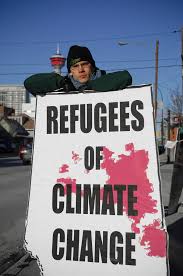
In America at least, displaced people’s flood through the borders and are hopefully given shelter and housing and opportunities but are they really better off than from the places they have fled? In some circumstances invariably, but for others, they may earn more but that money is swallowed by the higher cost of living; so, they’re not really better off. It’s an illusion to consider America as the land of the free or the American Dream, with so many living below the poverty line or just above it, which is negligible when you consider you may have slightly more money but you are thus not eligible for social assistance so you end up being as poor or poorer than those who do qualify for social assistance. This all relates to climate change because what incentive do people who are struggling to survive have, to help save the environment? Can you blame them? Shouldn’t we blame if we are to allocate blame, those who perpetuate poverty and turn a blind eye to its outcomes? Like former colonial countries who once having raped the land, decry its poverty, even as it’s the direct result of such pillage? Haiti being a great example of that.
Meanwhile the war machine grinds on and we pour money into that, to the detriment of climate change. Climate change is left for summits about but little changes. Countries make pledges but few are actuated and that’s without considering the lies that abound, or the cover ups of environmental disasters that are hushed up but have caused immeasurable harm. In 2017, the US Air Force used USD$4.9 billion worth of fuel; also, that year, the US military was responsible for 59 million tons of CO2 which is the same as total emissions of some industrialised countries like Switzerland or Sweden.
If we don’t even get the actual truth, how can we know the true extent of damage and our real part in it? Think of the nuclear disasters? That said, it’s understandable countries seeking to free themselves from fossil fuels would consider nuclear power, but how tenable is that when it depends upon people to function, what if those people were lost? Would the sites go critical and kill all survivors? Where do we safely store radioactive nuclear waste when it takes thousands of years to degrade even slightly? Just like those toxic super-dumping sites dotted throughout the planet, filling the seas with plastic and debris, we don’t think about the consequence of such dumping, only the immediacy of needing air conditioners.
Eventually fossil fuels will run out, but we haven’t found a tangible replacement. Electric car batteries don’t do well in heat, they also aren’t as durable in distance driving, cost a lot in using electricity which is still using resources, are prohibitively expensive and likewise with solar energy and wind energy. It seems there are downsides to all we’ve come up with so far, and whilst some progress is made with desalination of water to ensure clean drinking water and terraforming of previously uninhabitable land, is it enough to ward off the inevitable or does it mean those who already are rich, will be somewhat protected from the first consequences of planet earths deteriorating climate, whilst those without, will be the first to pay the price?
We’ve had so many canaries in the coal mine warnings from long before now, that none of this is news but people still en mass prefer not to think of it. When polled, voters in America usually do not put climate change in the top five concerns they have. The last few years this has changed, and that might signal a positive shift to taking climate change seriously, but it’s a bit late. Things can be done to shore up some of the fragile resources, but it will take a sustained commitment. How can that happen if majority of politicians’ are more focused on power and money than true change, renewable energy that works and a consensus that if we do nothing, we only have ourselves to blame? We have to change politics, policies and education if we hope to have a meaningful impact long term.
If we replace jobs with AI and technology as we are doing, how will people afford to improve their lives and make significant change? Everything is interconnected, it all matters, but we have to care, and being distracted by technology and super stars isn’t the answer. Why can’t an eco-warrior be a hero as much as a basketball player? We must keep trying. As Dr. Vandana Shiva is quoted as saying; “I do not allow myself to be overcome by hopelessness, no matter how tough the situation. I believe that if you just do your little bit without thinking of the bigness of what you stand against, if you turn to the enlargement of your own capacities, just that itself creates new potential.”
[1] Genetically Modified Organism
.
Candice Louisa Daquin is a Psychotherapist and Editor, having worked in Europe, Canada and the USA. Daquins own work is also published widely, she has written five books of poetry, the last published by Finishing Line Press called Pinch the Lock. Her website is www thefeatheredsleep.com
.
PLEASE NOTE: ARTICLES CAN ONLY BE REPRODUCED IN OTHER SITES WITH DUE ACKNOWLEDGEMENT TO BORDERLESS JOURNAL
Click here to access the Borderless anthology, Monalisa No Longer Smiles
Click here to access Monalisa No Longer Smiles on Kindle Amazon International

 Borderless