Lara Geyla converses about her memoir, Camels from Kyzylkum, and her journey as an immigrant.
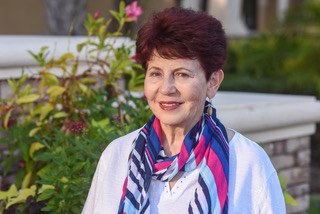
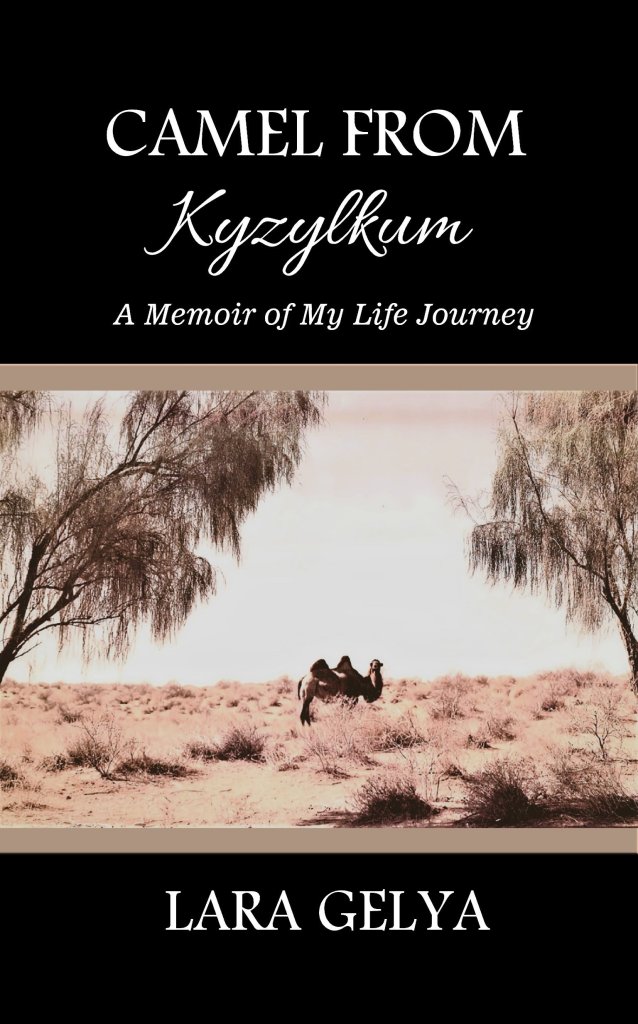
A migrant’s journey is never easy – it’s rife with adjustments and changes. Adapting to a country that is totally different from the one in which an immigrant is born, requires adjustments of various kinds, including learning new languages. Migrants also need to find acceptance and friends in the country they move to as did Lara Geyla, when she migrated out of a crumbling USSR to America, pausing by the way of Austria and Italy. She recorded her journey in Camels from Kyzylkum: A Memoir of my Life Journey.
Kyzylkum is a desert located in Uzbekistan. Geyla lived and worked in the desert for twenty years. She learnt that the camels were the hardiest of creatures. Her life’s journey like that of any other immigrant, had been hard. So, at the start of her memoir, she tells us: “I am a camel from Kyzylkum, too. Like a camel, I have adapted and found ways to help myself survive in the desert. As a camel stores his energy in its hump as part of its legendary ability to travel hundreds of miles without food and water, I stored the energy of my spirit to help me stay strong as I crossed continents alone, with two suitcases and $140 in my pocket in my search for a better life.”
Perhaps, this is a resilience that each migrant needs to unearth to settle into a country of their choosing, or sometimes thrust on them due to external factors like war and climate change. Through her memoir, we get glimpses of different parts of the world as she inched her way closer to the country she sought. People helped her along. At one point, when she arrived at the wrong destination for an interview with the American embassy that was crucial to her move to the country of her choice, an Italian taxi driver drove her at breakneck speed to the right address, where after a few questions, she was given the permission to emigrate.
This was in the 1990s. After moving to America, she helped more of her family to move to the country which gave her refuge. She found acceptance in a firm as a programmer/ analyst in Maryland. She lives now in her new home in Florida with her new family and friends and basks in their acceptance and love. In this exclusive, she talks to us of her journey.
Tell us what made you write Camel from Kyzylkum?
I had wanted to write my life story for a long time, as I believed my life journey was filled with incredible places and events. However, while I was working, I never had the time to focus on writing. Even then, I knew that if I ever wrote a book, it would be titled Camel from Kyzylkum. I finally wrote my story during the COVID 19 pandemic in 2020–21, when we were confined to our home.
Where in the Soviet Union did you grow up? What was your childhood like? Tell us about your schooling and a child’s life in the Soviet Union? How was it different from what we find in other countries?
I was born into a Jewish family in Vinnitsa, a city in southwestern Ukraine, not far from the capital, Kiev. At the time, Ukraine was part of the Soviet Union. Life wasn’t easy for those born into Jewish families in the Soviet Union; being Jewish was considered a nationality, not a religion. In fact, during my time there, we lived under the slogan: “Religion is poison for the people.” Religion was heavily suppressed, and atheism was strongly promoted during my time there. Although I grew up much like other children—playing the same games and attending the same schools—I was aware from a young age that there was a stigma attached to being Jewish. I felt different but didn’t understand why. After 1948, anti-semitism in the Soviet Union reached new heights, particularly during the anti-cosmopolitan campaign, when numerous Yiddish poets, writers, painters, and sculptors were arrested or killed. During my time there, antisemitism was consistently supported by the Soviet state and used as a tool to consolidate power.
When I was about 12 years old, my parents divorced, and my mother and I moved to Belarus to live with my grandmother. We all shared the same apartment. Soon after, I was sent to a boarding school, which I hated but had no choice and stayed there until I graduated. I’ve written about all of this in my book.
How was life different from what we find in other countries? That likely depends on the country you compare it to. Despite the many challenges and negative aspects of life in the Soviet Union, one notable advantage was the education system. It was of quite high quality, mandatory, and free.
You moved with your husband to the desert of Kyzylkum. What was it like living in the desert? In tents?
For the first three years, our young family lived in a small settlement belonging to a geological expedition. It really was in the middle of nowhere. The nearest civilized city, Navoi, was 200 kilometers (124 miles) away. Our settlement, simply called Geological Party #10, and it consisted of about two dozen barracks under the blistering sun, set in a barren landscape devoid of vegetation and offering hostile living conditions for humans, plants, and animals alike. The summers were extremely hot. The winters were harsh. At night, the wind became a growling, tumbling mix of sand and snow. I lay awake for hours, listening to the eerie howling outside. It was one of those winds that frayed nerves, made your hair stand on end, and left your skin crawling.
After three years, we moved to Muruntau, a slightly larger geological settlement, but we still lived in barracks. From there, we relocated to Zarafshan, a city in the heart of the Kyzylkum Desert of Uzbekistan, where we finally got our first apartment.
I have written extensively about our life in Zarafshan in my memoir, Camel from Kyzylkum. However, you might find it interesting to read an article by a Canadian reporter who accidentally stumbled upon Zarafshan while exploring Google Earth. He wrote and published the piece online in 2011, In Zarafshan.
What work were you doing there? What jobs did you do in the USSR? Did you go back to university there?
I earned my degree from a geological college in Kiev and worked as a geophysicist in the Kyzylkum Desert, focusing on gold and uranium deposits. Geophysics involves using surface methods and specialised equipment to measure the physical properties of the Earth’s subsurface and identify anomalies. These measurements help to make interpretations about a geological site, detect and infer the presence and location of ore minerals. Geophysical data is then integrated with surface geological observations to develop a comprehensive understanding of a region’s geological structure and history.
My job required me to work in various environments, including the open fields of the desert, open-pit and underground mines, as well as in the office. In fact, the Muruntau gold deposit in the Kyzylkum Desert, where I once worked, was and still is being mined as the world’s largest open-pit gold mine.
You have told us you were part Ukrainian and part Jewish? Judaism is faith — not a geography. So, were both your parents Ukrainian?
I was born into a Jewish family in Ukraine, which was part of the Soviet Union at the time. Both of my parents were Jewish and born in the Soviet Union. In my time there, Judaism was not considered a faith but rather a nationality. Nationality was stated in one’s passport. Synagogues were closed, and like most other Jewish families in the Soviet Union, our did not follow Jewish religious or spiritual practices. Instead, we celebrated all Soviet holidays. However, I do remember my father’s family gathering for Hanukkah and giving us, little kids, gifts and money. My husband, however, was Ukrainian, which made our daughter part Ukrainian and part Jewish.
Were you there during glasnost? Did things improve for you after the Perestroika and Glasnost? Please elaborate. How long did you stay after the dissolution of the USSR within your country of birth?
I would like to answer to this question with excerpt from my memoir Camel from Kyzylkum:
“Glasnost was understood as the movement in the USSR towards greater openness and dialogue. In the period from 1987-1991, Glasnost became synonymous with “publicity,” “openness,” and it reflected a commitment by the Gorbachev administration to allow Soviet citizens to publicly discuss the problems and potential solutions of their system.

I still lived in Zarafshan and took an active part in Perestroika and Glasnost—I was not afraid to express my opinions or attend meetings. I truly believed that we could change life for the better. One day I came to work only to find out that agents from the KGB had searched my office. KGB stands for Komitet Gosudarstvennoy Bezopasnosti, which translates to “Committee for State Security” in English.

At the time of Perestroika and Glasnost, books that previously had been available only through the underground distribution in the Soviet Union became legal, and excerpts were printed in many publications. I read a lot, and these books opened my eyes to the bloody recent history of our country—from the 1918 Revolution to the present day, on to all of the misleading, hidden truth, hypocrisies of our government, and the Soviet system as a whole. I realised that all of the concepts and ideas that they had taught us from early childhood were mendacious.”
I left the Soviet Union in October 1989, and as punishment, my citizenship was revoked. The Soviet Union ultimately collapsed on December 26, 1991, by which time I was already living in the United States.
Why did you want to move out of the Soviet Union? Can you give us the timeframe in which you moved out in terms of Glasnost and other events?
The Glasnost period in the Soviet Union was from 1987 to 1991. I left in 1989.
The late 1980s were years of exodus from the Soviet Union. Gorbachev opened the door of the “iron curtain” and everyone who could escape was leaving. I moved from Zarafshan, Uzbekistan, to Gomel, Belarus, in 1988. At that time, every single day platforms at the Gomel railroad station were full of people: families who were lucky to get exit visas, and relatives and friends who came to say their last goodbyes to them.
There was a code word: “to leave.” If you whispered it with a mysterious gravitas, there would be no need to ask further questions.
When I was asked if I would consider leaving, I said “yes” with no hesitation. I did not know what leaving would entail, but I started to go through the process as everyone else did. I apprised the family members, but there was no need or time to have long discussions—it was a once-in-a-lifetime chance, and the “iron curtain” could be down again at any time. We all knew how challenging and frightening immigration could be, but we had a hope that after all of the suffering, we could build a better life.
How is it you were on the list for visas and others were not given the privilege? Who were the people given the right to leave the Soviet Union?
Under Soviet law, no person could leave the country without the government’s permission, granted through an exit visa. This regulation applied not only to Soviet citizens but also to foreigners, including diplomatic personnel. Emigration policies varied over time and were always challenging to navigate.
In the 1970s, Jewish people in the USSR, often referred to as “refuseniks,” staged hunger strikes to protest the Soviet government’s refusal to grant them permission to emigrate to Israel. These protests highlighted the severe restrictions on their right to leave the country and garnered international attention, becoming a pivotal part of the movement advocating for Soviet Jewry, an international human rights campaign for Soviet Jews.
In the late 1980s and early 1990s, liberalised emigration policies allowed many Soviet Jews to leave, with more than half of the Jewish population emigrating, primarily to Israel, the United States, Germany, Canada, and Australia. However, it wasn’t only Jewish individuals departing; anyone who could endure the convoluted emigration process took the opportunity to leave. As a punishment, those who emigrated had their citizenship revoked.
The Hebrew Immigrant Aid Society (HIAS) played a vital role in assisting people leaving the Soviet Union, supporting them on their journeys to new destinations. HIAS continues to advocate for the protection of refugees and ensures displaced individuals are treated with the dignity they deserve.
For me, navigating the bureaucratic barriers of Soviet emigration policies in the late 1980s was extremely difficult, but my Jewish heritage worked to my advantage. After overcoming numerous hurdles, I left the Soviet Union at the end of October 1989. I had two suitcases, $140 in my pocket, and no certainty about my final destination. With my Soviet citizenship revoked, I became a “citizen of the World”.
Why did you choose to move to the USA over all other countries?
When I left the Soviet Union at the end of October 1989, I knew my point of departure but not necessarily my destination. The only identity document I had was an exit visa from the USSR and the train ticket to Vienna, Austria. I held no citizenship in any country and knew very little about immigration laws or processes. My ultimate goal was to reach America because I believed that the United States was the land of opportunity like no other country. During my interview in Austria, I was given the option to select a country I wanted to go to, and I chose the United States.
Other than language, did you have to study further to get a job in the US? How is working in the US different from working in the USSR?
Yes, I wore many hats and attended various schools before landing my professional job in the USA. First, I had to learn English. My journey began with earning a certificate as a nurse assistant. Next, I attended school to become a medical assistant, followed by completing a two-year program and passing the exam to become an X-ray technician. I worked in that role until I later completed a course for computer programming.
My first job in the US, however, was clearing tables at Burger King. I worked as a waitress, cleaned people’s houses, worked in department stores, and babysat young children. I did whatever it took to survive and was never afraid of hard work.
Working in the US was vastly different from working in the USSR, mainly because of the many barriers I faced: learning a new language, navigating cultural differences, adapting to unfamiliar social norms, and constantly acquiring new skills. Despite the challenges, I succeeded. Now, I’m happily retired, enjoying life in a beautiful community in Southwest Florida.
Have you ever returned to Russia after you migrated? How did you find it, especially as the Soviet Union broke up into so many countries?
My husband and I traveled to Ukraine in 2010, by which time it was an independent country. This was after the Orange Revolution1, a series of protests primarily in Kiev in response to election fraud. The revolution, which unfolded between late November 2004 and January 2005, brought significant political upheaval. Viktor Yushchenko was elected president on December 26, 2004, after weeks of turmoil that thrust the country into chaos.
As the informal leader of the Ukrainian opposition coalition, Yushchenko was one of two main candidates in the 2004 presidential election, the other being Prime Minister Viktor Yanukovych. During the campaign, Yushchenko survived an assassination attempt when he was poisoned with dioxin, leaving him disfigured. Despite this, he persevered and emerged victorious in the re-run election.
When we visited Ukraine in July 2010, the memory of the Orange Revolution was still fresh. We explored many cities, stayed with my childhood friend in Vinnitsia, and visited relatives in Yalta, Crimea. Crimea, sadly, was annexed from Ukraine by Russia in 2014.
The changes in Ukraine since my time living there were noticeable, but some things remained the same. We especially enjoyed our time in Yalta—a vibrant city filled with cheerful faces, where people celebrated life at this beautiful Black Sea resort.
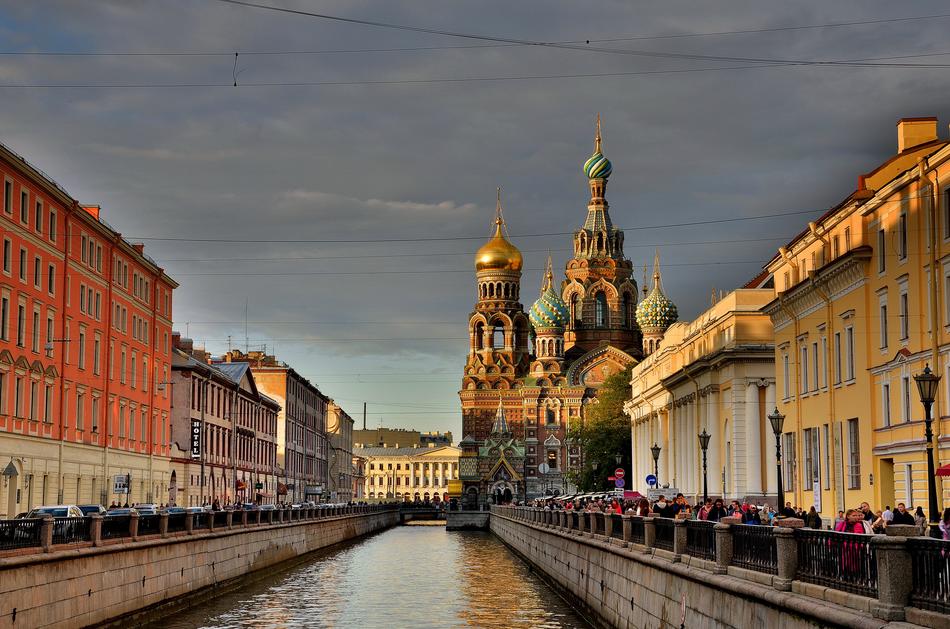
In June 2018, during a cruise around the Baltic countries, we spent a day in St. Petersburg, Russia. The city and its museums are undeniably remarkable, as they always have been. However, the rude customs control at the port, long lines at the museums, being rushed through the exhibits, and other all-too-familiar experiences immediately brought back unpleasant memories from the past. After this brief visit, I have no desire to ever return to this country.
So, are you writing more books?
I’m considering it. However, finding the time to focus has been challenging. Between our extensive travels, my photography and video projects, marketing my memoir, and other everyday activities, my schedule hasn’t left much room for writing another book.
Thanks for giving us your time.
Click here to read an excerpt from Camels from Kyzylkum
(This online interview has been conducted by Mitali Chakravarty.)
PLEASE NOTE: ARTICLES CAN ONLY BE REPRODUCED IN OTHER SITES WITH DUE ACKNOWLEDGEMENT TO BORDERLESS JOURNAL.
Disclaimer: The opinions expressed are solely that of the interviewee and not of the Borderless Journal.
Click here to access the Borderless anthology, Monalisa No Longer Smiles
Click here to access Monalisa No Longer Smiles on Kindle Amazon International
- Orange Revolution took place in Ukraine between November 2004 to January 2005, primarily a response to the Presidential elections ↩︎
 Borderless