Categories
Tagore Translations

Snow & Petals of Parijat

Travel writing by Tagore: Translation by Somdatta Mandal

In 1885, under Jnanadanandini’s1 editorial venture, a children’s magazine called Balak was published from the Tagore household in Calcutta. It contained different writings of the young Rabindranath, who would handle a lot of things for the publication. This magazine was later merged with Bharati and edited by his elder sister, Swarnakumari Devi. Among the different entries that Rabindranath contributed for Balak are two interesting travel pieces. One travelogue published in Vol. 3, Ashar 1292 B.S. (July-August 1885) called “Das Diner Chhuti” (Ten Days’ Holiday) narrates his trip to Hazaribagh that year along with his nephew and niece during their school holidays. The second one called “Baraf Pora” (Snowfall) describes his first experience of snowfall in England in the winter of 1878 when he was living in Brighton along with his brother Satyendranath’s family2.

Rabindranth Tagore (1861-1941) in England
Baraf Pora (Snowfall)

The outlines of pictures gradually blur out of the mind; the shadows of all that we see every day come ahead and crowd it, replacing the things we had seen a few days earlier. We cannot clearly understand where the earlier images get lost in the melee.

I went to England in the year 1878 A.D. That was about seven years ago. At that time, I was young too. I can remember overall what I had seen in England, but all her pictures are no longer clear in my mind. I cannot match one line with another. A kind of mist has already descended on my memories of England. The pictures must be brought out occasionally and aired in the sun. That is why I have brought out my memories in the sunlight today.

It was the middle of October when I reached England. I didn’t feel it to be too cold then. We stayed in Brighton. It was sunny in Brighton then. Happy with the sunshine, all men, both young and old, had come in hordes to the seashore. The sick and the elderly people moved in pushcarts with one or two young girls or any other member of the family accompanying them. The ladies were dressed up in different kinds of clothing with umbrellas over their heads. Small boys dragged iron wheels and ran along with them. Some ladies sat on the seashore with open umbrellas over their heads. Some were busy following the movement of the waves and collecting different kinds of seashells. An Italian beggar was moving around playing an organ. Vegetable and milk vendors were returning after supplying their products in different houses. A man and a woman were riding their own horses on the pathway and the dressed up stable boys were following them. Some schoolmasters were walking with a big group of boys following them; on the other hand, each schoolmistress had a whole trail of schoolgirls following her. They had come to enjoy the sea breeze, or if not, at least the sunshine. Quite often we would run around the grassy fields near the seashore. Though the age was not conducive for running around, we didn’t mind because no one suitable was present there to criticise us for our out-of-the-way behaviour. The best time for our outing was ten or eleven o’clock in the morning. Whatever it might be, the seaside was celebrating the festival of sunshine when we reached Brighton.

As the days went by, the cold started increasing. The mud on the streets froze in the cold weather. The dew on the grass would freeze too and it seemed as if someone had scattered lime powder everywhere. On waking up in the morning I found that ice crystals had formed different designs on the windowpane. Sometimes I also found one or two sparrows that had died in the cold lying on the road. The few yellow leaves remaining on the trees also fell down, leaving the lean bare branches behind. The small little robin birds came to the glass windows with reliable hearts begging for bits of bread. Everyone assured us that we would soon witness snowfall. 

Christmas was almost approaching. It was biting cold on a moonlit night. The doors and the windows of the room were all shut tight with the curtains drawn over them. The gas was burning. A fire was lit to warm up the place. After dinner we were all around the fireplace busy chatting. The two young boys attacked me. Despite having plenty of proof, I do not want to mention here that they never behaved politely with me. They have grown up now, they even read Balak; so, I do not want to write about them and then make my life more miserable answering their questions. A few days later they will also learn to protest. Because I would not be able to counter them, I remained quiet. You readers can guess whatever you like about their behaviour – I will not volunteer to take any responsibility on my shoulders.

Everyone was sitting warm enough when suddenly we got the news of the snowfall. As all our doors were shut, we did not know when it began. All of us including the children ran outside to see the beautiful sight. The cold seemed to have frozen the moonlight in layers and stuck on the streets, on the grass, the bare branches, the sloped slate roofs. There was no one on the street. All the houses in front of us had their doors and windows shut. The night and quietness, the moonlight and the snow all blended to create a wonderful scene! The children (and I too) picked up the snow on the grass and turned it into little balls. As soon as we brought them in, they melted into water.

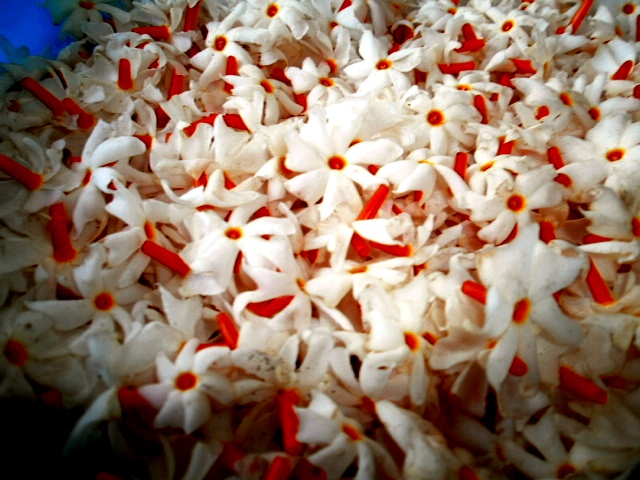
For me this was the first night of snowfall. After this I have seen snowfall several times. But describing it is not easy, especially after so many years. I was walking on the street covering myself entirely in black woolen clothes. The sky was grey. Little flakes of snow were falling all around like quinine powder. It did not fall like raindrops – it came in lightly as if flying or dancing. It came and touched your clothes lightly; you could dust and collect them. The wheels of cars left their marks on the soft white layers of snow. One also felt sad to leave dirty and muddied shoe imprints on the white layer of snow. It seemed as if the petals of the parijat flower were falling from the sky. Snow also got stuck on the black dresses and black umbrellas of the pedestrians.


It was wonderful to watch how everything got covered with snow gradually. At first, it fell merely like some white streaks on the streets. There was a small plot of land in front of our house. It had a few saplings and creepers – no leaves on the shrubs but just bare branches. Those branches were still not covered with snow, so it was a mixture of green and white. The saplings seemed to be freezing in the cold. Their clothes were gone; wearing white funeral clothes of snow, the sap in their veins also seemed to be freezing. The black slate roof of the house was gradually turning grey and then white.  Soon the streets were also covered with snow – the small saplings got buried in it. The snow also piled up on the narrow windowsill. The noses of the few pedestrians on the street turned blue, their faces shriveled in the cold. Far off at a distance, the church steeple was faintly visible like a white ghost in the sky.

It is very difficult now in this hot and humid summer month to even imagine how cold it was. I remember how after taking a cold-water bath in the morning my hands would become so numb that I could not find the handkerchief in my pocket. There was no limit to the amount of warm clothes on my body. Despite the thick shoes and socks, the soles of my feet would become cold in no time. Even after getting inside a bundle of blankets at night, I would be worried how I would turn on the other side because whenever I turned, I would get a shock. We heard the story about four fishermen who had gone out to fish in the sea. When a ship came near their boat, they saw that the four of them had already frozen to death. The coachman who was sleeping on his carriage at night had also died. The water in the pipes often froze and caused the pipes to burst. Snow had covered up the River Thames. The lake inside Hyde Park was also frozen. Hundreds of people wore a kind of iron shoes and skated over that lake every day.

This skating was a wonderful affair. Hundreds of people wearing skating shoes turned and bent and twisted and glided over that hard lake. The way people skated was like the way a boat moved with its sail. With the body slightly tilted on one side, one could float easily on the ground. No effort was needed to step forward – one did not have to quarrel with the ground or defeat it with each footstep.

Trying to bring back the winter of England to our country even through our imagination is futile. The heat here rises very quickly, melts like the snow and cannot be grasped. It is not sufficiently welcomed within the blankets and quilts here. 

  1. Eldest sister-in-law of Tagore ↩︎
  2. Elder brother of Rabindranath Tagore and ↩︎

Rabindranath Tagore (1861 to 1941) was a brilliant poet, writer, musician, artist, educator – a polymath. He was the first Nobel Laureate from Asia. His writing spanned across genres, across global issues and across the world. His works remains relevant to this day.

Somdatta Mandal is a critic and translator and a former Professor of English at Visva-Bharati, Santiniketan, India.

.

PLEASE NOTE: ARTICLES CAN ONLY BE REPRODUCED IN OTHER SITES WITH DUE ACKNOWLEDGEMENT TO BORDERLESS JOURNAL

Click here to access the Borderless anthology, Monalisa No Longer Smiles

Click here to access Monalisa No Longer Smiles on Amazon International
Categories
Essay

A Season of Magical Mellow Wistfulness

Meenakshi Malhotra demystifies the autumnal celebration of Durga Puja as a time of homecoming for married daughters through folk songs that are associated with the festival

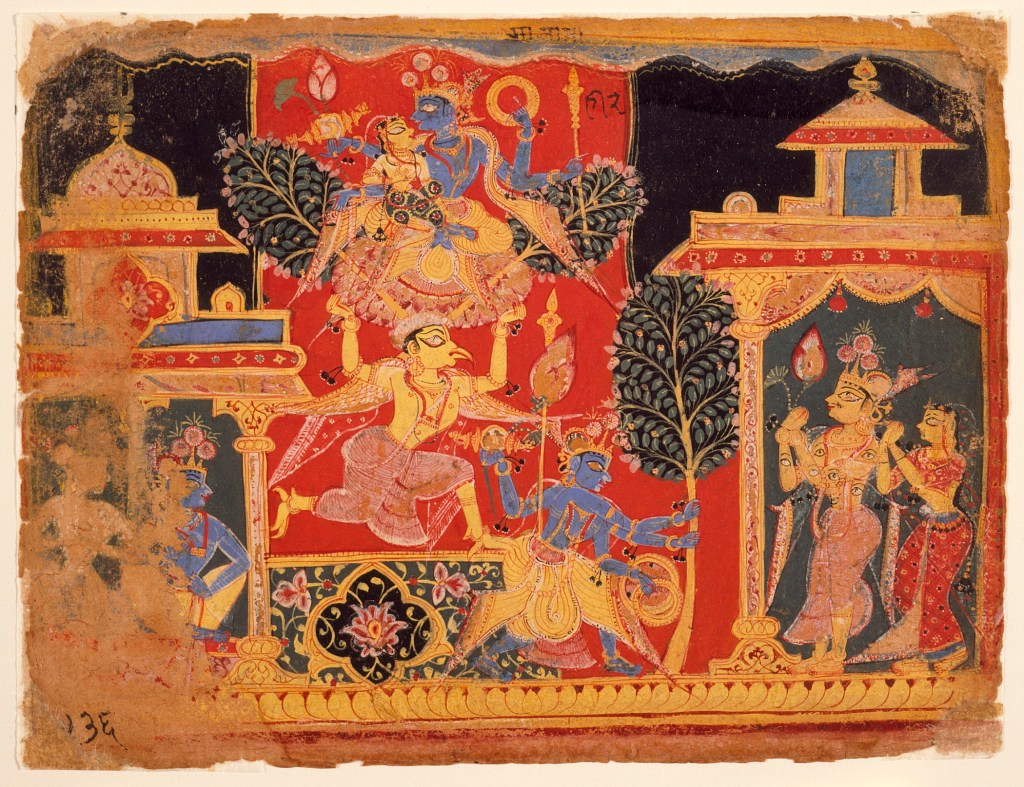
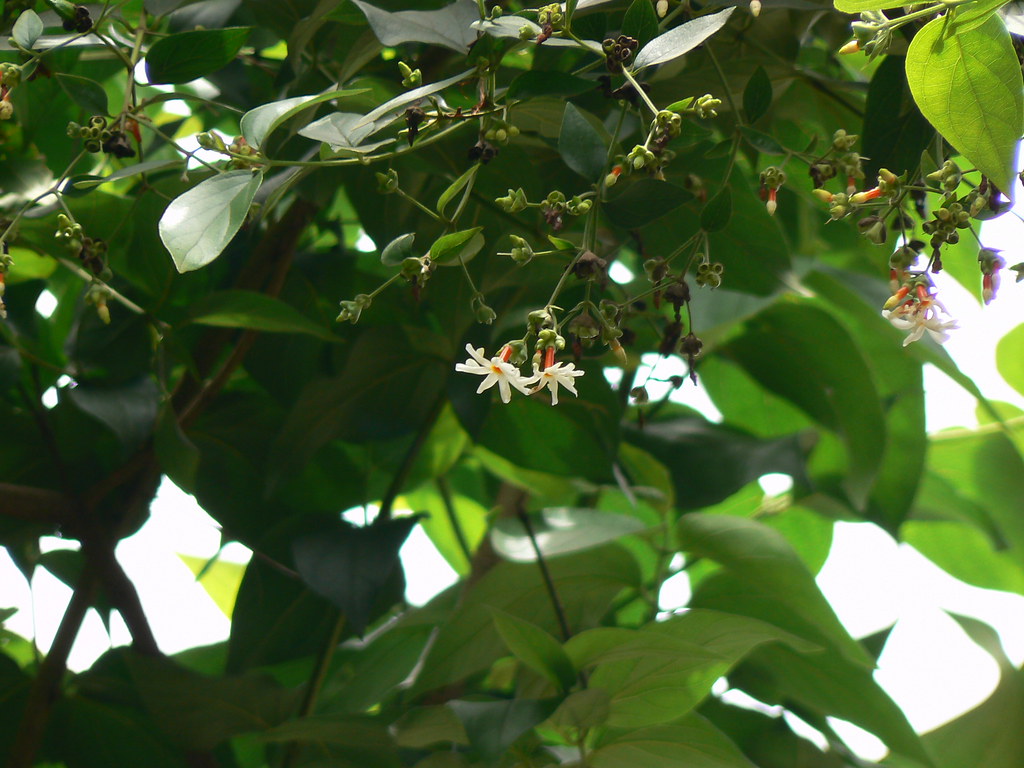
It is that time of the year again… a time of magic and enchantment when the air comes wafting with the fragrance of shiuli flowers, a species of night-flowering coral jasmine also known as the parijat. Legend has it that this flower is from a heavenly tree  that was brought to Earth  by Lord Krishna, one of the central gods in the Hindu pantheon. Interestingly, in a somewhat unusual twist, this tree is considered so sacred that its flowers picked up from the ground are also deemed appropriate for worship, to make sacred offerings. This is rare, given that flowers offered for worship are usually to be plucked from the tree and not picked up from the ground.

In Hindu mythology, the parijat tree is the tree of the universe which is owned by Indrani, the consort of Indra or the king of the Gods in Hindu mythology. Apparently Krishna stole it from Indra’s consort, Indrani and planted it in a region located between heaven and earth. The tree, also known as “kalpa-taru” or wishing tree, is one which grants all objects of desire.

From the sacred texts like Bhagawat Purana, the Vishnu Purana and the Mahabharata, we  learn that the elaborate process of samudra manthan (churning of the ocean of milk) yielded the  parijat tree as one of the three valuables.  This tree is said to have blossomed atop Mount Meru, the garden of paradise. It was claimed by Indra when  it rose to the surface and emitted its fragrance.

Krishna steals the Parijat tree from Mount Meru. Water colour India, app 1525-1550 CE. Courtesy: Creative commons

This is only one of the many gifts of nature, the exquisitely fragrant flowering tree which sheds blossoms and carpets the Earth  around it. Autumn, that season so famously invoked as the time of “mellow fruitfulness”, carries hints of ripening and a mature fecundity. For many sections of Indians, it is the time of the goddess, a time that a lot of us associate with the advent of the goddess Durga, who signifies the triumph of good over evil. In Durga, we have the divine represented both in terms of mythic abstractions and the material everyday, as power and poetry, as divine and human, as mother and daughter. Similarly the goddess Durga’s descent on Earth for the days of the festival, is also the advent of the daughter to the house of the mother, a moment which overflows with affection, feelings and emotions.

The event happens at a certain time in the Hindu calendar and participates in linear time, as well as being a part of time imagined as part of a larger ongoing cycle of temporality. Similarly, it  participates in mythic and magical time or eternity as it were. For the daughter, longing to be enfolded in the mother’s arms, who counts  the days till she can go back to her natal home, albeit for a few days, this is also a special time indeed.

It is this note of longing, dispossession and exile that is captured in the folk songs in the Bengali or Bangla language, which were documented in the 18th century. These songs are called Aagamoni which translates into advent, here referring to one who arrives. Why this gains a certain poignancy is that girlhood in Indian and many traditional cultures was viewed as a fleeting and fugitive time, haunted by transience. Female children were in the past often regarded as temporary occupants in their natal homes and were  characterised as ones who do not belong or belong to someone else, whose real home is with their in-laws.

Durga Puja celebrations
Courtesy: Creative Commons

In the Hindu pantheon, Durga, Uma or Parvati is a prominent mother goddess, the consort of Shiva. Her names refer to split roles of the feminine imaginary. As Durga she is the fiery slayer of demons. But– and this is the central theme here– she is also the gentle daughter Uma. It is in her form of the daughter who is separated from her parents, that the songs of Aagomoni and Bijoya emphasise. Bijoya translates as victory and starts with the return of the Goddess to her spouse, Shiva. Aagomoni and Bijoya are genres of Bengali folk songs celebrating the return of the Goddess Durga/Parvati to the home of her parents on the eve of the autumn festival of Durga Puja. The Aagomani songs describe the return of Parvati to her home in rural Bengal, not as Goddess but as daughter, and are followed by Bijoya songs which describe the sorrow of parting three days later as Parvati returns to her husband ShivaAagomoni songs can be interpreted as an expression of collective feelings, experiences and aspirations, another way of rethinking or reimagining the self-inscription of a collectivity.

In one of the best known and common Aagomoni songs, ‘Ogo amar agomoni’ (‘The Advent of Durga’):

The Advent of Durga

I herald the advent of the Goddess 
With the lighting of my lamps 
During the autumn whirlwinds.
At the end of night, the sun bursts forth.

In the swirling storm, 
At the end of the night,
The light in my path is turned off.
The beacon of my life has turned off. 
I herald the advent of my Goddess.

The lamp that reveals my path,
Brightens my life by pouring 
The nectar of your presence. 
I am lost in the blackness of fear. 
When you come in your radiant chariot, 
Your refulgence will shatter the 
Deep darkness in all directions.

Play the aubade of aurora.
It will all be divine. 
I herald the advent of my Goddess 
With the lighting of my lamps.
I herald the advent of our Goddess. 

(Translated by Mitali Chakravarty)

The song is full of the imagery of light and refulgence. My goddess “light of my life’’ could be both a reference to the divine mother, as well as to a daughter, who was very often  referred to as ‘Ma’ as a term of affection. While this song maps the emotional link between the mother and the daughter and can be seen in terms of affect, the focus is on her refulgence and divinity. The reference to the goddess in terms of the mother/ daughter trope is much more evident in other songs, which narrates the saga of dispossession — the fair  princess who has to live in disorderliness and poverty.

Go Get Gouri

Go, go Giriraj
To fetch your daughter Gouri
Uma is in deep sorrow
Uma has cried for her mother
Living in misery

Bhang consuming Shiv
Ash-smeared and wild
Sold off her finery
All her jewellery
To fund his addiction 

Bhola revels in intoxication 
He has collected hashish from 
The three realms….heaven, hell and earth.

Bhola put the intoxicant, bhang
Made with crushed
Datura seed on my Uma’s face.

Go lord of the mountains go
Go to fetch Gouri
Uma has cried herself hoarse.

(Translated by Mitali Chakravarty)

In another evocative song, the mother cries –“Ebaar Uma ele/Aar pathabo naa ( This time when Uma comes/ I will not send her back)”.

When My Uma Returns…

This time when my Uma comes,
I will not send her back. 
If people call me bad, let them. 
I will not listen to anyone. 
This time when my Uma returns,
I will not send her back, 
This time when my Uma comes.

If the conqueror of death comes
To talk of taking Uma back, 
If Mritunjaya comes
To talk of taking her back, 
We, mother and daughter, 
together will quarrel with him.
I will not agree because 
he is my son-in -law       
 
This time when my Uma returns,
I will not send her back, 
This time when my Uma comes...

The poet says 
Can life tolerate such wounds?
Shiva roams the cremation grounds,
And does not think of his own home. 

This time when my Uma comes,
I will not send her back. 
If people call me bad, let them. 
I will not listen to anyone. 
This time when my Uma returns,
I will not send her back, 
This time when my Uma comes...

(Translated by Mitali Chakravarty)

Here, the mother vows not to send Uma back to her wild and undomesticated husband when she comes visiting. This articulates a resolve uttered by the mother not to jeopardize or endanger her daughter by ‘giving’ her to an undeserving husband. The anxiety, insecurity and fear for the daughter’s safety is clearly evident in these lines. Maternity and maternality is here described as a tortuous and beleaguered  state. In all these lines, we see a shift from the narrative account of arming and empowerment of the goddess to a more human and humble register. Begging, cajoling, importuning-the mother’s pain and anxiety for the daughter, married to that strange and alien  figure, the untamed and undomesticated God Shiva, is evident in every line.

The narrative of mother and daughter pining for each other, appears to have similarities with  the Greek myth of Demeter and Persephone. In some,  the daughter is imagined as asking her husband for permission to visit her mother: “It has been so many days since I went home and saw my mother face to face ceaselessly… she weeps for me…” (Bhattacharya, in Mc Dermott 2001:132). The men ( both father  Giriraj and husband Shiva ) emerge as emotionally unreceptive. (Kaul 2022:9) We hear Menaka bemoaning an emotionally unresponsive husband who won’t fetch the daughter:

“Whom can I tell
the way I feel for Uma?"

Thus the story of the festival of Durga embraces not only the radiant, refulgent and resplendent image of the goddess; behind it lurks the secret sorrows of generations of mothers and daughters caught in the inevitable dance of life as they play out sagas of dispossession. As autumn is the season of liminality poised between summer and on the cusp of winter, the goddess visiting her natal home, is poised between humanity and divinity, both as a daughter in exile and as a slayer of demons. From this paradox, this spectacle that hovers between the majestic and the everyday, a sublime beauty is born.   

.

  Dr Meenakshi Malhotra is Associate Professor of English Literature at Hansraj College, University of Delhi, and has been involved in teaching and curriculum development in several universities. She has edited two books on Women and Lifewriting, Representing the Self and Claiming the I, in addition  to numerous published articles on gender, literature and feminist theory.       

.

PLEASE NOTE: ARTICLES CAN ONLY BE REPRODUCED IN OTHER SITES WITH DUE ACKNOWLEDGEMENT TO BORDERLESS JOURNAL