Categories
Tagore Translations

Rabindranath’s Song of Hope

First published in 1915 in Sabuj Patra, ‘Hobe Joye (Victory will be ours)’, has been translated as ‘Song of Hope’
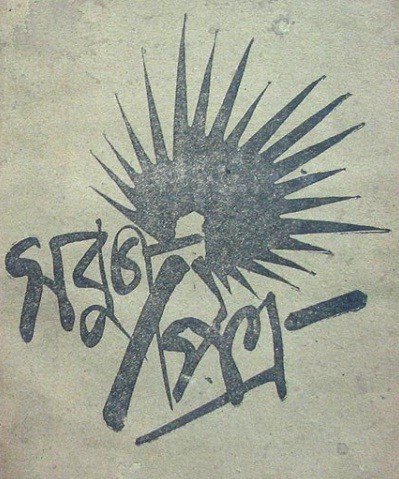
Sabuj Patra was a magazine in which Tagore published often. This is the logo designed by the eminent artist Nandalal Bose who was a close associate of Tagore. The lettering in Bengali gives the name of the journal, which translated means, Green Leaves.
SONG OF HOPE

Victory will be ours, victory will be ours, victory will be ours, 
O valiant, O fearless! 
Life will conquer — eternal life, the song of joy will triumph.
Love will win over anger. The enlightened will prevail. 
This dusk too shall pass, shall fritter away. 
O valiant, O fearless! 
Awake, open your eyes, may your weariness fade away. 
Let the light of hope illuminate a fresh dawn. 

The song in the original Bengali had been rendered by the legendary Pankaj Mullick(1905-1978), who was impacted by Tagore and even gave the music for Diner Sheshe, Ghumer Deshe (translated as ‘The Last Boat’).

This has been translated by Mitali Chakravarty with editorial backing from Sohana Manzoor and Anasuya Bhar.

.

PLEASE NOTE: ARTICLES CAN ONLY BE REPRODUCED IN OTHER SITES WITH DUE ACKNOWLEDGEMENT TO BORDERLESS JOURNAL
Categories
Tagore Translations

The Last Boat by Tagore

Originally written as a poem by Tagore called ‘Shesh Kheya‘ in 1907 and then set to music in 1922 by Pankaj Mullick, ‘Diner Sheshe Ghoomer Deshe‘( At the Close of the Day in the Land of Sleep) is a solemn song, which seems to cry out with an unfathomable yearning for an unknown fate.

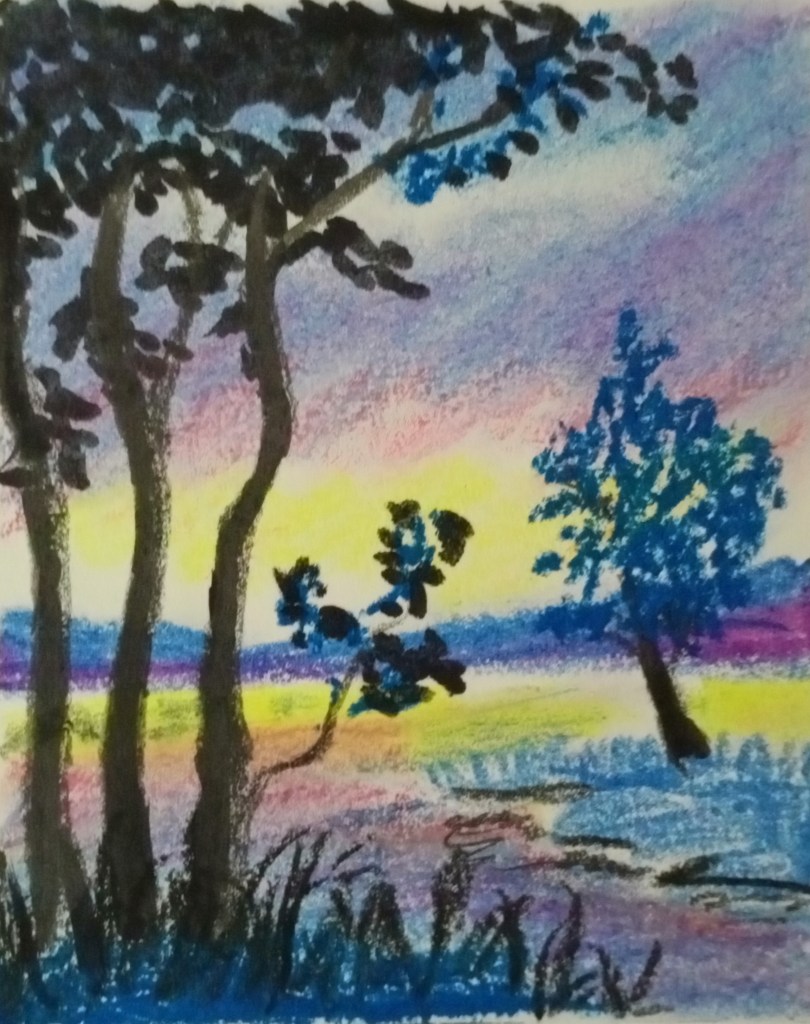
Sohana Manzoor’s pastel that was inspired by Tagore’s Diner Sheshe Ghoomer Deshe
The Last Boat 

At the close of the day, in the land of sleep, a veiled shadow 
Makes me forget, forget my life. 
On the other bank, a golden shore edges the gloaming,
Which like an enchantress disrupts my work.
The wayfarers who head back after completing their task,
Do not look back at the trail they leave behind. 
Like a receding tide, intoxicated, I am drawn away from home.
The dusk sets in as the day leaves. 
Please come, o ferryman, one
Who can row me across on the last
Ferry at the end of the day.
In the dusk, a few ferries ebb with the tide
To the other side. 
How will I recognise the ferryman among the other ones 
Waiting at the arrival to take me to my destination?
Downhill, by the thick vegetation at the bank, 
The shade moves like a shadow.
Where is the ferryman who is willing to halt
When I call out? 
O come, 
The one who will row me 
At the close of the day in the last ferry.
Those who were returning home have gone back. 
Those who headed for the riverside have reached the banks. 
The dusk calls out to one 
Who is neither at home nor at the riverbank, but stuck mid-way.
Flowers do not bloom for those whose crops did not yield harvest —
When I try to shed tears, it turns into sorrowful mirth —
He who has turned off the daylight, did not light up the dusk.
He is the one who sits by the riverbank. 
Please come, 
O ferryman who will row me across
At the close of the day in the last ferry...


Here is the song sung by Pankaj Mullick(1905-1978)

(This has been translated by Mitali Chakravarty on behalf of Borderless Journal with editorial help from Sohana Manzoor.)

PLEASE NOTE: ARTICLES CAN ONLY BE REPRODUCED IN OTHER SITES WITH DUE ACKNOWLEDGEMENT TO BORDERLESS JOURNAL