Categories
Poetry

Found in Translation: Sangram Jena’s Poetry

Five Odia poems by Sangram Jena have been translated by Snehaprava Das
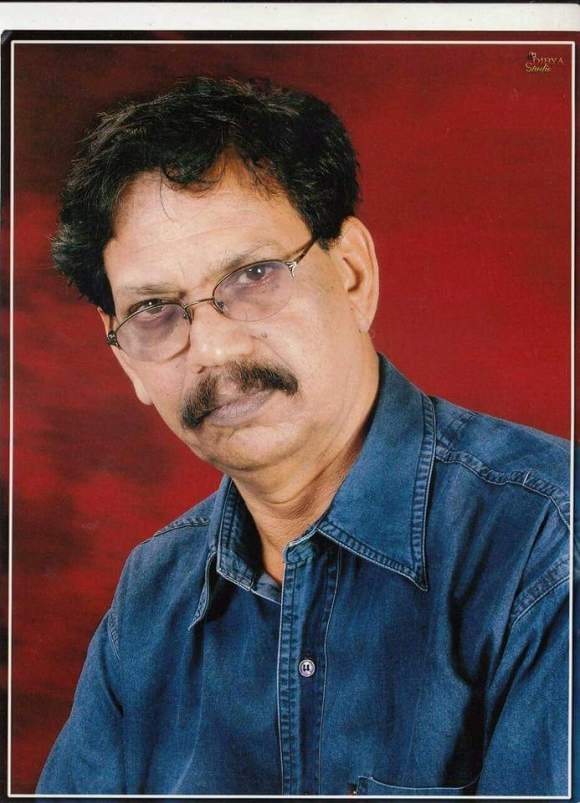
Sangram Jena
 RETURN

Is there ever a return?
Do the years left behind,
Or, water flown away in the river,
Return ever?
Do parents who had quit the world
years before come back?
Or, the erstwhile beloved
married now to another man?
What are the things that return
after having gone?
Doesn’t the sun that depart every evening
return on the next?
Perpetually, endlessly?
Is returning a reality
or, an illusion of one?
And, wrapped in it,
life moves on
from the crib to the crematorium.


ROCK*

What did he stumble on?
The unobtrusive block of stone
that lay on his way,
the sacred scriptures, the hearsay
all carried the story that
the sinning Ahalya was redeemed
at the touch of his holy feet;
When Indra had touched her that day,
what was that touch?
Was it a pretence? A betrayal?

It matters little whose touch is it
if there is trust in love!
A pretense of love is sometimes
More intimate than a relationship
that has no life in it!
What promises of redemption the world
That labels love a sin, held out for her?
She was neither a wife nor a beloved
after she was transformed
from a rock to a woman;
Hadn’t it been better
to have remained a rock
and lived the rest of the life
holding on to the memory
of a handful of those ecstatic moments!

*Refers to the story of Ahalya in Ramayana

IT IS NOT THERE WHERE YOU LOOK

It is not there where I look!
May be, what appears to be where
is never there in reality,
Like the face that is not there in the mirror,
Or, the pain in the body,
Will the words that need to be said
Ever be there in written letters?
Does the meaning dwell in the words?
Does the sun sit behind the mountains,
Or the sea ends at the skyline?
Actually, what appears where
Is never there!

SEARCH

There is no point in searching.

A river flows while
You keep searching words.
As you look for the right colours,
the painting fades.
The sun drops into night
as you grope for the morning

and a moon comes up while
you chase the dark.

The petals wilt and drop
before the search for fragrance ends.
The poem is lost
before the right images are found.
While you seek the sea,
The horizon shifts further.
The feet are lost
Through the search for a ground underneath.
The thread of the kite snaps
In the quest for a sky.
The clouds dissipate
While craving the rain,
And the body dissolves
While you look for the shadow.

Ther is no point in a search.

Life fritters away quietly
As you keep browsing.

WHAT DO YOU THINK?

Life does not flow
the way you expect.

Do you think morning does not arrive
Till the crows’ caw?
Does the kaash not bloom
after the river recedes?

Do you think butterflies never circle
The flower after the petals drop?
Does no one look up at the sky
After the moon goes into hiding?

Do the frogs stop croaking
When the rain goes away?
Can the night be omnipresent
With its darkness?
Can everyone find the way
When there is light?

Doesn’t your shadow stay back
After you leave?
What do you think?

Sangram Jena (1952), is an eminent poet, translator, critic and editor. He writes both in English and Odia and has published more than 70 books. Translation of his poems have been published in several Indian languages including English, Bengali, Hindi, Tamil, Assamese and Marathi. His poetry in English have been published in many magazines in India and abroad. He has translated Classics of World Poetry into Odia and classical, medieval and contemporary Odia Poetry into English. He has received many awards including Sahitya Akademi Award (National Academy of Letters, New Delhi) for translation, a Senior Fellowship from the Department of Culture, Govt. of India and served as a jury member of National Selection Committee (New Delhi) for award of ‘Saraswati Samman’. He edits two literary journals, Nishant in Odia and Marg Asia in English. He has served as Vice-President, Odisha Sahitya Akademi. He lives in Odisha, India.

Dr.Snehaprava Das, is a noted writer and a translator from Bhubaneswar, Odisha. She has five books of poems, three of stories and thirteen collections of translated texts (from Odia to English), to her credit. 

PLEASE NOTE: ARTICLES CAN ONLY BE REPRODUCED IN OTHER SITES WITH DUE ACKNOWLEDGEMENT TO BORDERLESS JOURNAL

Click here to access the Borderless anthology, Monalisa No Longer Smiles

Click here to access Monalisa No Longer Smiles on Kindle Amazon International
Categories
Poetry

Found in Translation: Soubhagyabanta Maharana’s Poetry

Five Odia poems by Soubhagyabanta Maharana  have been translated by Snehaprava Das

SUNSET: A SYMBOL 

To bridge the agelessly waiting gap
Between an unvoiced luminosity and a vibrant darkness
Sunset is a magic silence,
An indulging over the wispy interlapping
Of light and shadow.

It is an ancient oil-painting
On the old drawing sheet of the sky by a
Bohemian, invisible artist who fills the earth
With a spectrum of the melody of
An unforgettable twilight.

Sunset is the gentle thump of
Disembodied dancers’ feet, tripping
To the rhythm of witch-chanting
On a phantom, ashy-pale stage.

A lifetime that had glowed like a fake sun
In the crimson smile of the earth
Slowly turns black,
And on the black canvas of the sky
Painted in scatters are millions of sparkling stars.

Sunset is a Truth,
A promise of a melodious, bright morning
That the sun dreams of
Slumbering in the palanquin of the night.

SILENCE BETWEEN WORDS

Like a lone, saffron-robed monk
The silence hiding between the words, waits
Keeping awake in secret,
Hoping to get free
from the mysterious chains of mystic incantations.

The bewildering crowd of thoughts stuck between
One word and another,
Before even the mystery of the meaning is unraveled
Confuses the interpreting.

And the silence is left alone,
Weeping, elegizing the loss --
A dumb witness to the unwarranted death of words.

Because the silence does not reveal itself
In happiness,
A sorrow lives permanently in the palpitations
Of the poet’s heart
To bring the un-wilting flowers of poetry
Molded from the poet’s blood into blooming
in their vivid, picturesque charm.

In the unshackled voice of the poet
words and silence seek a nerve center,
in a sensitive, ultimate moment of love
to melt into each other.

Who else other than a poet could gauge
The depth of the silence hidden
In the koel’s song
To bridge the gap between life and death?

A VILLAGE THAT WAS: SKETCHING NOSTALGIA

No one was there waiting eagerly
To meet my shadow,
No one to lament the loss of a village
That was there once.
The smell of love in the wet mud
Has faded with the passage of time.
The melody of spring in the soft breeze,
The shadow of a rainbow on the face of water
Have disappeared too.

The day when I left the village,
A fleeting cloud played hide and seek
In my book-satchel.
The fragrance of the lotus in the village-pond
That wished to caress fondly
The vibrance of childhood on my face
Missed me.
The name of that village lives in me.
A village crowded with forests of Mahula
And throbbing with the song of Adivasis
Dancing in the shadows of the Sal --
The village where rings the rhythm of my birth-cries
in a straw-thatched hut --
the name of that village, has melted into my breath.

A deep sadness pricks me though
That just as I understood the village
I lost my way to it,
Before I could trace the lotus-pond
And inhale its fragrance.
The smoke the factories emitted
Choked me midway,
As I went on narrating the nostalgia
I was left with just myself.
Alone.
While I searched for dreams
Painted in rural shades,
I lost my own self in the pale horizon
Of a smoky, grey sky.

DECLARATION

I gathered the ardour of that missing warmth
From the ashes of a decadent sun
To charge the cold blood that run in my veins.
I gathered the exotic smell of blinking stars
To add years to my life.

My skeletal frame that resembles
some ancient sculptor has a voice.
It can speak, and it can hide
from the eyes of the world
the pain it writhes under,
lest someone use its vulnerability
and sign a sworn statement for befriending
its invisible blood, flesh and sinews.

In every corner of my body that is caged,
In the prison of the elements,
Love sojourns.
And the intimate voice of my shadow-self
Has reached up to the planets and beyond.

The primeval tale of my century-old wait
Has sheltered in the feeble gaze of my eyes
May be, I am designed to stand as
The enemy of Time.
It was perhaps designed so,
That my victory march, with the bugle blowing
Will be declared a glorious success
Against a different backdrop.

RELATIONSHIP: ANOTHER HORIZON

It feels odd at times
To play the hero in
The brief interlude between
Ignorance and innocence.
There are times when a relationship
Founded on poisoned, defiled trust
Tastes sweet.
In the dark sanctum of bitter animosity,
A beguiling god assumes a friendly form
And embraces to overwhelm you
with his gratifying blessings.

Only a fake hero would nurture
The overpowering urge to
Flaunt himself in vain glory on the
Dazzling stage of civility.
It is he who fosters a brazen wish
To draw a line on the water,
And to wish for the moon
In a moonless night-sky.
True friendship is where
The sapling of love grows
Its green foliage
To reach a lofty height
And brings life to fruition.
It’s like a faint streak of light
That illumines a blind alley at night.

A heart bathed in that love
Becomes more sacred than a shrine,
More craved than the potion of immortality.
It is the comfort an orphan child enjoys,
Sleeping inside a cozy culvert
In the chilly night of the month of the Pausha*.

*December- January
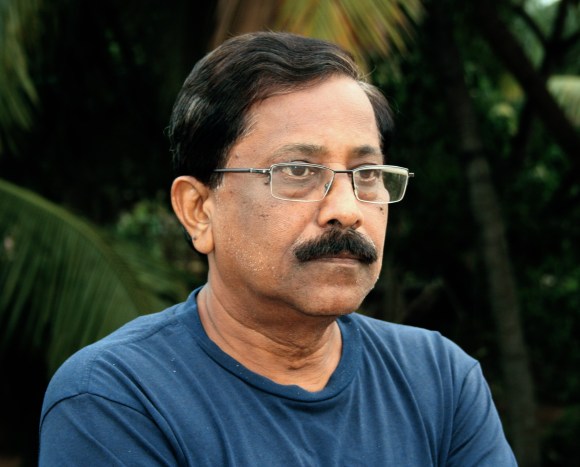
Soubhagyabanta Maharana

Soubhagyabanta Maharana (b.1951) in the  Bolangir town, Odisha, is a prominent bilingual poet, critic and translator of Odia and English.  He is an awardee of Odisha Sahitya Akademi for poetry in 2010 along with many prestigious literary awards. He has to his credit nineteen poetry collections  and  six essay collections on modern Odia poetry.

Dr.Snehaprava Das, is a noted writer and a translator from Bhubaneswar, Odisha. She has five books of poems, three of stories and thirteen collections of translated texts (from Odia to English), to her credit. 

PLEASE NOTE: ARTICLES CAN ONLY BE REPRODUCED IN OTHER SITES WITH DUE ACKNOWLEDGEMENT TO BORDERLESS JOURNAL

Click here to access the Borderless anthology, Monalisa No Longer Smiles

Click here to access Monalisa No Longer Smiles on Kindle Amazon International
Categories
Poetry

Found in Translation: Bipin Nayak’s Poetry

 Five Odia poems by Bipin Nayak have been translated by Snehaprava Das

WITHIN 

An equestrian within me
Mounts an unbridled horse
And plays a violin.
A boatman inside me
Crosses an imaginary river
Again, and again
In a non-existent boat.

Within me, there is a wayfarer
That refuses to
Travel the trodden road
And takes a turn.

A lake ripples in me,
Waiting futilely
To lose itself in the sea,
And a waterfall
Leaps noisily from above
To wet the rocks.

A cloud floats within me,
All of a sudden,
Flashes a lightning smile
And goes back to sleep.

In me, a cowherd
Returns home in the twilight
Painted in the colours of sunset
And lights a kerosene lamp.

A camel inside me
Sags under a sack-load of salt,
But trudges across the sands
Dreaming of a lush meadow.

A mother in me conceives words,
Bleeds in labour,
Nourishes the vulnerable words
With love and care
And watches them grow…

PAPER BIRD

My woes pull your neck longer.
My beloved words become the air
To stuff your insides.
I forge your wings from
The crumpled paper of my dreams,
And mold your beak with my kisses,
Paint you in the colour
Of my solitary nights….
Trim you with
All my fears and frustrations.
Because I could not
Make a paper-boat of you
To sail in the muddy puddle,
I lift you up
To fly across
The monsoon sky.
When you climb a little higher
Into the air
And are drenched out of shape,
I, a naked child,
Stand here in the rain, look up and cry!

THE MAKING

I pick a few bones of my hardest grief,
Scoop some blood
Oozing red to create.

I fix a face of smoke or a patch of weepy cloud
Mold a nose from the wafting breeze.
I fix a pair of eyes, like day and night,
There in the face.
In one of them, I put a tornado,
A bird in the other.
With flowers of joy and grief,
I shape the lips.
The body I try to make
Out of a river that hides under it,
A fire and a perpetually vain desire
To reach the sea or a desolate jungle.
I design the limbs from a
Lingering surge of green.
All these efforts
Are but only to replicate
What has been made before.
I set afloat
Because it has been set to drift
Much before…
And because it has sprinkled
A cosmic fervour across
A secret sanctum inside me,
To bring a god to life,
I worship it!
I keep trying to create and re-create inside me
Because it has made me much before that!


A SKY AS I AM

I have set out to paint a sky of my own --
A sky that is exactly as I am!
And for that I have picked up
Some nomadic dreams, a sunset,
I have collected the blood of flowers,
The tune of a stream that has flown away,
The chirping of orphan birds,
The layers of moss spread over
A decrepit piece of rock-writing.
I have scooped up
A handful of ash from the debris of
Perished time,
And a wild storm that had retreated
After having blown me away.
I took out the wet melody from a violin and
the primeval music of the insect,
throbbing inside the grass.
From the reminisces stuck in the sinews
I have gathered a few scattered sighs,
And from the darkness, the mysteries of nights,
I have got warmth from dreams,
Sin from pollen grains.
With these elements beside me
And a canvas in shreds,
I sit down to paint a sky of mine
A sky that is exactly as I am!

LET THEM SING

Let them sing a song.
I do not mind
If my wound heals them,
Or my tears make them glow,
And my blood paints them crimson.

My quick breathing flits about, but
I do not mind if someone plays a flute
Blowing into the holes of my bones
And sings through the lips
Borrowed from me.

Let them sing, why must I mind it?
The lips are not mine. Nor is the song!


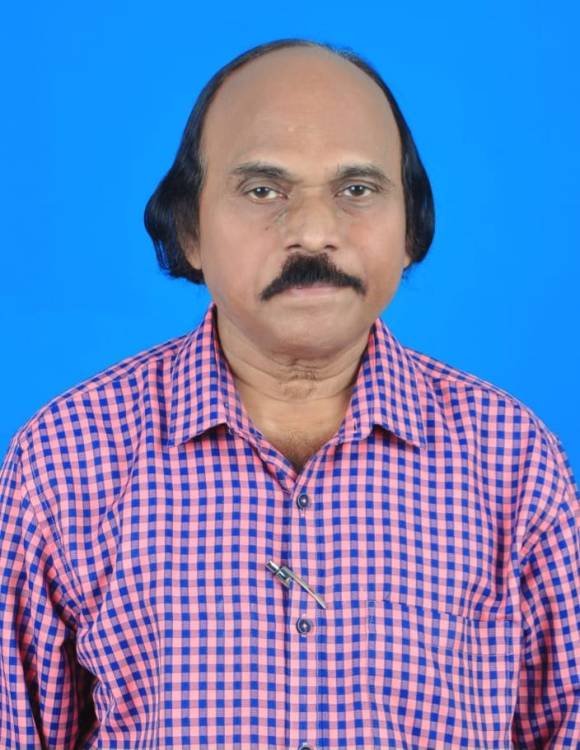
Bipin Nayak

Bipin Nayak (1950), a bold and engaging voice in the literary scenario of modern Odisha, is a trend setter who explored new possibilities for Odia poetry. One of the most significant postmodernist and minimalist poet in Odia, Nayak is a believer in the artefact of words than the meaning and medium. For him poetry is an aesthetic exploration through the fragile, fluid words which could be liberated from its conventional canons and connotations. There is a distinct undertone of metaphysical too in his poetry that hovers over the slim divide between the real and the surreal. Bipin Nayak is a pioneer in Odia auto-fiction writing. His ‘Jatra ra Ketoti Pada’[1], an unprecedented experimental work, that challenges the conventional style through a blending of prose and poetry and does not conform to any traditional literary genre. Besides being the recipient of the prestigious Odisha Sahitya Akademi award the poet has received several accolades for his contribution to Odia literature. Significant amongst them are the Bishuba Jhankar Purashkar, Akhila Mohan Kabita Sammana, Sachivalaya Lekhaka Parishada Sammana and Sammana from Kalinga Sahitya Samaja. He has been widely published in Hindi, Bengali and also in English and has adorned the pages of Indian Literature, Kavya Bharati and other prestigious journals. His major works include Swarachitra (The Painted voice) that fetched him the Odisha Sahitya Akademi award, Nija Nija Barnabodha Apustaka, Sadaja, Bidagdha Bichara, Band Ghara ra Basna.         

[1] Translates to ‘how many steps are there in a journey’

Dr.Snehaprava Das, is a noted writer and a translator from Bhubaneswar, Odisha. She has five books of poems, three of stories and thirteen collections of translated texts (from Odia to English), to her credit. 

PLEASE NOTE: ARTICLES CAN ONLY BE REPRODUCED IN OTHER SITES WITH DUE ACKNOWLEDGEMENT TO BORDERLESS JOURNAL

Click here to access the Borderless anthology, Monalisa No Longer Smiles

Click here to access Monalisa No Longer Smiles on Kindle Amazon International