Photographs and Narrative by Suzanne Kamata
My day job is “associate professor,” so I sometimes attend academic conferences. When I learned of an upcoming conference on language teaching in Fukui Prefecture, which I had never been to, I was eager to sign up. Sure, I wanted to hear all the cutting-edge theories about teaching English to language learners – how to motivate my students to write haiku, how to use AI, and so on – but my primary reason was to see the dinosaur bones.
Although at one time it seems that dinosaurs pretty much roamed the whole world, fossils of dinosaur bones weren’t discovered in Japan until 1989. Those bones were found in Katsuyama City, Fukui Prefecture. Since then, even more bones have been discovered, and a museum ̶ Fukui Prefectural Dinosaur Museum ̶ opened in 2000. As part of the pre-conference activities, the host university had arranged for a trip to the museum. A free shuttle but would depart at 11:30am.


I consulted an app on my smartphone and determined that it would take me about five hours to reach Fukui Station from my home in Tokushima Prefecture on the island of Shikoku. I would have to take a bus, a train, another train, and the high-speed bullet train. After a recent trip to Tokyo, I had learned how to use an electronic transit card, which was basically an app on my phone. This app could be used to breeze through ticket gates at train stations, as well as on buses and subways.
I got up at 5:30am on the day of the museum tour. My husband dropped me off at the bus station. I got on the bus and got off in Osaka. Then I took a train to Kyoto, which was mobbed with travelers. Although I thought I could get on the next train, the so-called Thunderbird, with my app, I discovered that I needed to have a reservation. I suppose I could have made one on my smartphone while standing in line, but I was confused. I left the platform and queued up to buy a reserved ticket from the vending machine, which disrupted my tight schedule and meant I would not be able to make it to Fukui in time for the free shuttle bus.
The Thunderbird goes straight from Kyoto to Fukui with few stops in between. The scenery is mostly composed of rice fields and squat mountains. The monotonous view was calming. About an hour later, the train pulled into Tsuruga where I had to switch to the brand-new Hokuriku Shinkansen for the last seventeen minutes of my journey. In my rush to finish my business at the vending machine in Kyoto, I had inadvertently booked a seat in the most luxurious car. I was the only one there.
I texted a friend who was also attending the conference. She had already arrived. I told her that I would be late, and that I wouldn’t be able to ride the bus with her. This was Japan, where everything was always on time! However, the organisers were Americans, and they were willing to wait for me. Hooray!
As soon as I got to Fukui Station, with its moving animatronic raptor keeping guard out front, I hopped into a taxi and finally arrived at the university, where the bus was indeed waiting. I sprinted onboard, apologised to my fellow passengers, and thanked the organiser profusely.

The museum was impressive, as advertised. Replicas of dinosaurs discovered in such far-flung locales as Morocco and Mongolia were on display. There were, of course, also exhibits of the five dinosaurs and one bird species discovered in Fukui, including the long-necked stubby-legged Fukuititan, the herbivorous Fukuisaurus, and the Fukuiraptor. Although the museum offers an excavation experience where visitors can pretend to dig and discover fossils, my friend and I just walked around looking at all of the cool rocks and bones.


Having gone through my son’s dinosaur obsession when he was young, I could remember some of the dinosaur’s names – the Ankylosaurus with its bumpy back, the Stegosaurus, and Pterodactyl. When we were ready to take a break, my friend and I made our way to the cafeteria for dino-themed snacks.

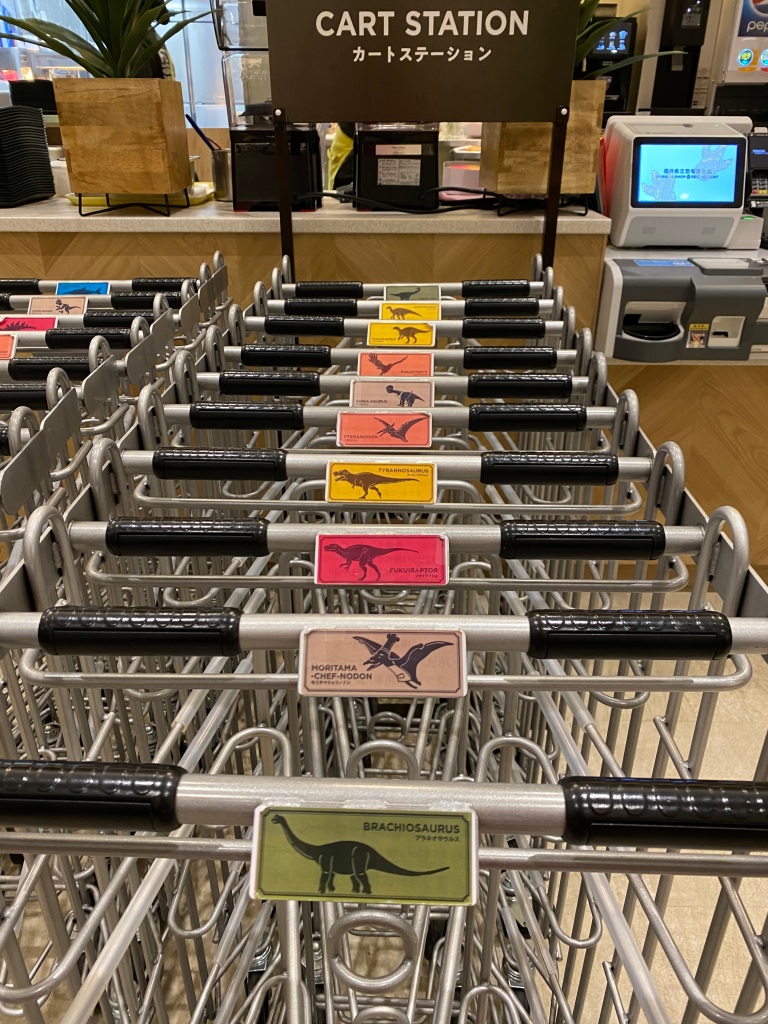
While many famous destinations in Japan are struggling with over-tourism, Fukui, while slightly off the beaten track, has a pleasantly relaxing vibe. Things may change with the new bullet train, but for now, I recommend it as a fascinating horde-free place to visit.

Suzanne Kamata was born and raised in Grand Haven, Michigan. She now lives in Japan with her husband and two children. Her short stories, essays, articles and book reviews have appeared in over 100 publications. Her work has been nominated for the Pushcart Prize five times, and received a Special Mention in 2006. She is also a two-time winner of the All Nippon Airways/Wingspan Fiction Contest, winner of the Paris Book Festival, and winner of a SCBWI Magazine Merit Award.
PLEASE NOTE: ARTICLES CAN ONLY BE REPRODUCED IN OTHER SITES WITH DUE ACKNOWLEDGEMENT TO BORDERLESS JOURNAL
Click here to access the Borderless anthology, Monalisa No Longer Smiles
Click here to access Monalisa No Longer Smiles on Amazon International

 Borderless