Categories
Poetry

Poems by Kumar Sawan

Kumar Sawan
ABSENCE

One fine morning,
I sit on the river bank.
I stand on the river bank.
I sit. And stand again.
But I do not open my hands,
For the fear of this wind.
I'm sorry if I fumble, I'm not used to this.
This is not a poem of joy,
Or exhilarating remembrance.
This is a poem of non-presence.
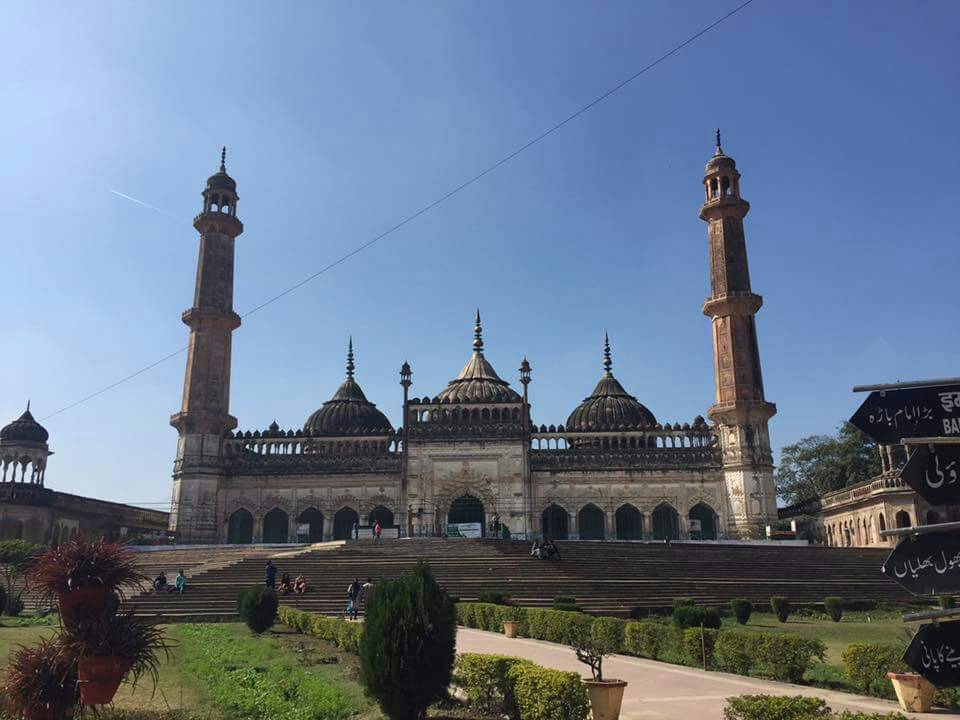
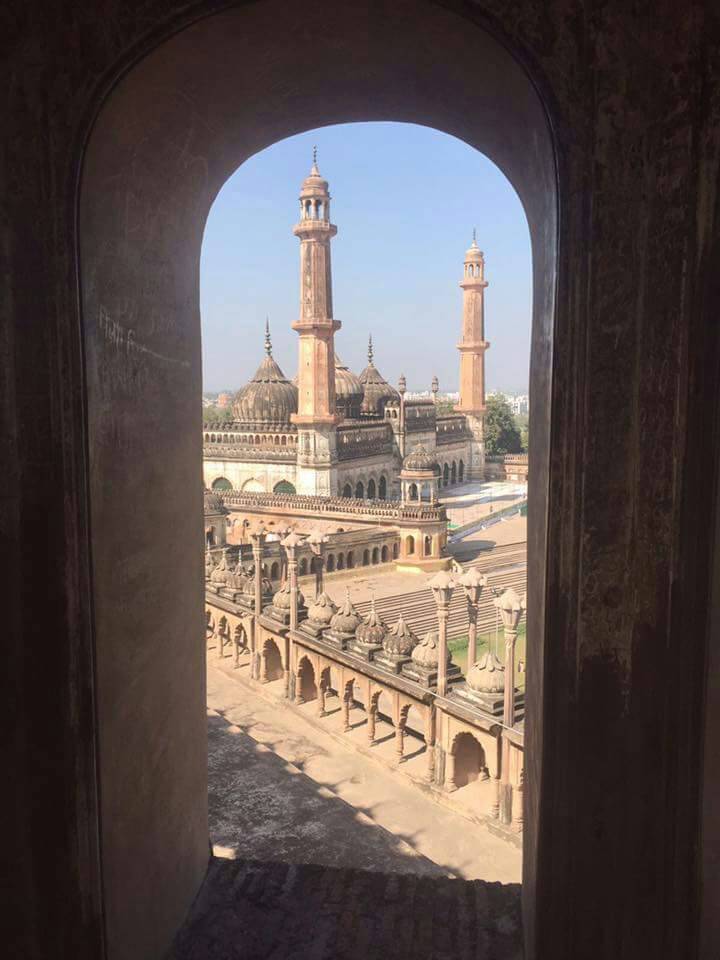
I see these lanes, monuments,
Crevices, just like my father told me.
He would tell me of
How he would come here,
Stroll with friends and weave stories.
He never left this city except when
His mother passed away in the village.
The world stays unaffected,
While everything inside you
Falls apart, ruptures
Like broken skin
Before it bleeds.
But you can’t
Bring it to your face
Or they will ask what happened,
And you won’t know
Where to start,

He said.
If I look ahead, I will see the clouds,
Watching over the river and me,
And a boatman throwing his net
In the green water.
But I don't look anywhere,
Instead, I hold my hands open,
And let the wind gust over me.
The wind disburdens me of my father's ashes,
And leaves me heavier than before.

CANVAS

offer me your blood
I will dab my fingers
and paint your dreams

on the canvas
Hungry for a piece of art
Hungry like a lonely wolf

in search of its prey.
the canvas enjoys
the foreplay

of the coloured fingers.
you are to me
what art is to a canvas.

THE MATCH

I gave you the match.
The stick. The kerosene.
And you light it.
Make it a torch. A mashaal*.
And you set fire to the bridge between us.
With each charred piece falling,
Our memories fall too.
The smoke blurs your apparition,
I’m burning too. Alive.
But you can’t see me.

*mashaal: a torch made by wrapping a piece of cloth on a wooden stick, pouring some flammable oil on it.

Kumar Sawan was born and brought up in Lucknow. He is a Ph.D. scholar in theDepartment of English and Modern European Languages, at Lucknow University. His works have been published in Rhetorica: A Literary Journal of Arts, Contemporary Literary Review India, SPL Journal, Literary Horizon, Creative Saplings, and the Teesta Review.

.

PLEASE NOTE: ARTICLES CAN ONLY BE REPRODUCED IN OTHER SITES WITH DUE ACKNOWLEDGEMENT TO BORDERLESS JOURNAL

Click here to access the Borderless anthology, Monalisa No Longer Smiles

Click here to access Monalisa No Longer Smiles on Kindle Amazon International
Categories
Poetry

Poetry on Solar Eclipse & More…

By Prithvijeet Sinha

SHADOWLANDS
(Inspired by the global solar eclipse on April 8th, 2024)

Tomorrow
the shadowlands
will
have their edict
up
in the sky
with
the whole world's prior knowledge.

The Sun
and The Moon --
those two fastidious
and ever at loggerheads
to mark their showy turns --
will indulge
in their sibling rivalry
of ages.

It will be a sight.

The earth will be omnipresent,
pooling resources
for this compromise
between two
arch-rivals,
pulling
in a tie
as the final verdict.

It will all be over
before we know it.

EXPEDITION

There is a halt in
the expedition.

From not so far
away,
a decaying skeleton
shrieks,
its bones
gradually
ground to a paste.

Sordidly,
the remnants
of privation
now feebly
agitate
for all of us.

A blood-soaked spray
emerges
from a songwriter's
torso.

The day has commenced.
Rain clouds
cry
tears of blood
today.

Prithvijeet Sinha, is a resident of the cultural epicenter of Lucknow. He has published poetry, musings on the city, cinema in anthologies and journals of national and international repertoire as well as a blog. His life-force resides in writing, in the art of self-expression.

.

PLEASE NOTE: ARTICLES CAN ONLY BE REPRODUCED IN OTHER SITES WITH DUE ACKNOWLEDGEMENT TO BORDERLESS JOURNAL

Click here to access the Borderless anthology, Monalisa No Longer Smiles

Click here to access Monalisa No Longer Smiles on Kindle Amazon International
Categories
Review

I am Not the Gardener

Book Review by Ranu Uniyal

Title: I am Not the Gardener: Selected Poems by Raj Bisaria

Author: Raj Bisaria

Publisher:  Terra Firma, Bangalore

Here is a book that I have been waiting for.  In several sittings you go through these breathtaking poems by Raj Bisaria.  A book that needs to be read with patience and, if you have had the privilege of being taught by him, you read with a curious eye.  Soft and gentle – a touch of an artist gently goads you to read it loudly– as if you are in an auditorium reading out to an unknown audience.  Who will listen to this voice of a gardener who with I am Not the Gardener weaves seasons of delight “telling of one’s heart is not self-gazing” but divine contemplation? 

The book does not carry an introduction to the author.  It has forty-three poems with photos capturing moments with family and friends. A few pictures of the domes and spires from Lucknow too add a special meaning to the verses. As director, producer, designer, actor and professor, Raj Bisaria has left an indelible mark. Press Trust of India described him as “Father of the modern theatre in North India”. Raj Bisaria founded Theatre Arts Workshop in 1966 and Bhartendu Academy of Dramatic Arts in 1975 in Lucknow. He taught English literature for more than three decades at the University of Lucknow. He is the first to receive Padma Shree from Uttar Pradesh for his contribution to modern theatre.  As a theatre artist his contribution remains unparalleled.

The first poem in this collection is ‘The Curtain Boy’. The poem is a thoughtful mediation on the meaning rather meaninglessness of all our actions.  The poet writes “I am not the gardener, / Nor the owner of the garden. / My job is to do odd things/ To weed out little wrongs/ To keep the pathway clean”. ‘Odd’ and “little” acts of “watching” lead to an awareness of the burden of possession and the transitory nature of dreams.  And this is followed by a similar concern in the poem ‘To a Young Actor’ – “I was told once to discipline/ Imagination in the rhythm/ of iambs and trochees. Only I wonder / If external form will give / Meaning to chaos.”

The poet, artist, and the philosopher in him create a complex mirage of emotions that reflect the restlessness and the anxiety of a man who finds comfort in words.  “In your dying/ My love has found / A new lease:/ For beyond death / Only love goes on”, the poet expresses his love for his mother in the poem ‘Elegy’.  Like Hamlet he gives voice to his own fears and then affirms with a defining certitude “Love is a quiet secret, / The seed within the rose.” The images are drawn from garden to the sea and the mountains “And I learnt to be silent / with the unspeakable granite of the mountains.”

Travel as a motif binds his restless spirit and opens the unreachable corners of his heart.  Love and fulfilment are contraries in a world trapped in the mundane.  In his poem ‘Byzantium’, Yeats refers to “The fury and mire of the human veins”. An artist seeks perfection in this imperfect world. The desire to transcend the ordinary compels him to write. The debut collection of poems gives us fascinating insights as Bisaria draws us to a wide range of experiences with a cry for attention “Do not shut my words out.  It is winter.” Here in lies an assertion with a sad awareness that yes, life is ending.  The artist within and the performer without must often be traversing contradictory spaces.  Both are equally strong and vulnerable. 

Sometimes the voice of the performer seems to undermine the anguish of the poet.  “He who does not forgive himself/ Forgives others less.” These are poems of love, longing, grief, and interminable loneliness that invades an artist whenever he confronts his inner self.  Those familiar with Bisaria’s dramatic productions might find a different voice lurking behind these poems.  It requires courage to accept one’s vulnerabilities, to confront the inner daemons and to pour an array of emotions with a faith that only an eternal seeker can display.  “To your shrines I came my Lord, / But I came without faith; / To your people I spoke my Lord / But I spoke without love; …Yet give me Lord peace/ To bear my own emptiness, / And your silence /Quieten my doubting mind.” This is not just a poem with the title ‘Prayer’, but a plea that resonates with a quest for self-realisation. 

A sadness runs through these poems.  Read and receive every word, every glance, every touch of this mortal self where “Love comes slowly by and by…” and the poet firmly believes “Love’s life is more than time…”. “It is a flight in the freedom of self…”. Even if you try hard, it is difficult to run away from oneself.  Like a shadow your inner conscience follows you, here, there, and everywhere.   

Ranu Uniyal is a poet and a Professor from the Department of English and Modern European Languages, University of Lucknow.

.

PLEASE NOTE: ARTICLES CAN ONLY BE REPRODUCED IN OTHER SITES WITH DUE ACKNOWLEDGEMENT TO BORDERLESS JOURNAL

Click here to access the Borderless anthology, Monalisa No Longer Smiles

Click here to access Monalisa No Longer Smiles on Kindle Amazon International

Categories
Review

The Warrior Queen of Awadh

Book Review by Somdatta Mandal

Title: Begum Hazrat Mahal: Warrior Queen of Awadh

Author: Malathi Ramachandran

Publisher: Niyogi Books

Over the past few decades there has been a surge in the publication of Indian historical fiction where the authors are fascinated by India’s rich past, and the many human stories of love and loss buried beneath the larger narratives. Simplistically speaking, historical fiction is a literary genre in which the plot takes place in a setting related to the past events, but is fictional.  An essential element of historical fiction is that it is set in the past and pays attention to the manners, social conditions, and other details of the depicted period. Authors also frequently choose to explore notable historical figures in these settings, allowing readers to better understand how these individuals might have responded to their environments. After The Legend of Kuldhara (2017) and Mandu (2020), Malathi Ramachandran has now presented us with a fascinating novel, Begum Hazrat Mahal: Warrior Queen of Awadh (2023). She endeavours in her novel not just to re-create history as it happened long ago, but to also explore the lives and relationships of those who lived in those times.

The setting of the novel is Lucknow, 1857 where the First War of Independence against the British is fought. Wajid Ali Shah, the last Nawab of Awadh has been exiled by the British to Calcutta along with his courtiers and his coterie some months ago. Only his second wife, the beautiful queen Begum Hazrat Mahal, who had refused to accompany her husband to Calcutta stays back with her young twelve-year old prince Birjis Ali. Hazrat vows to fight the British and win back her beloved Awadh for her people and the crown for her son. She builds a rebel army and high drama ensues as they besiege the Residency, the walled British cantonment, for five months. A fictional saga based on actual events, this book takes us within the walls of the Residency where love and passion rage alongside the battle, and into the world of Begum Hazrat and her loyal band. From the beginning we encounter Hazrat’s interactions with Major Kenneth Murphy, the Company’s liaison officer who is enamoured by the beauty of the Begum and succumbs to her machinations. She wants his help to crown Birjis Ali the next Nawab and win back their lands and their properties. Then there are many stereotypical British characters – women who came from England to seek husbands and worked in evangelical missions, doctors, sergeants, and officers who took up native women for sexual gratification, and the like.

When Hazrat decides on action against the Angrez1, she forms baithaks2 comprising of the rich and poor, powerful and subordinate, Hindu, Muslim and Christian, all of whom feel that they had had enough of subjugation by these tyrants from another land. They would not take any more of their religious conversions, their oppression on the streets, their suppression in the garrisons. Her friendship with Jailal Singh, based on a shared love for Hindustan, blossomed and he promised her his allegiance in the fight against the British. She had found in Jailal a confederate, an able accomplice.

A large section of the narrative is then devoted to the details of the fight that ensued. There were times when the natives thought that they had managed to restrict the British soldiers from winning; at other times the tide of fortune turned in their disfavour when even after forming women’s brigade and defiant groups among the natives, success didn’t come in their favour. The reader is kept guessing whether the rebel army would storm the British bastion before their relief forces arrived or the tide would turn in a wave of loss and grief, crushing Hazrat Mahal’s dream for Awadh and her son. In November 1858, after more than nine months of fighting in Lucknow, and finally establishing complete control over North India, the Governor General, Lord Canning, presided over the Queen’s Durbar in Allahabad and read out the Proclamation from Queen Victoria. The territories of India, up until now governed by the East India Company, would now come directly under the Crown, and be governed by the Queen’s civil servants and military personnel.

After several turns of incidents Hazrat realises that defeated she and her army may be, but they would never be vanquished in spirit. In her chamber in the Baundi fort, she paces back and forth, the printed proclamation crumpled in her hand. Her close supporters watched in mute frustration. She would never agree to the British offer of clemency with all its benefits. She would rather live in penury than become one of their vassals. Deep inside the stone fortress, she sits huddled in her quilt, and feeling the loneliness and desolation of one who had fought and lost everything. The story ends with Hazrat and her son silently leaving the already orphaned Awadh and heading into the forests to cross over to Nepal on the other side and seek asylum there.  

Malathi Ramachandran must be appreciated for the racy narrative style of the novel that does not weigh down under the plethora of historical events. Here one must mention the similarity of incidents narrated about the plight of another Indian queen in another historical fiction titled The Last Queen written by Chitra Banerjee Divakaruni. This novel also tells us the story of Jindan Kaur, Maharaja Ranjit Singh’s youngest and last queen, his favourite. She became regent when her son, Dalip, barely six-years-old, unexpectedly inherited the throne. Sharp-eyed, stubborn, passionate, and dedicated to protecting her son’s heritage, Jindan distrusted the British and fought hard to keep them from annexing Punjab. Defying tradition, she stepped out of the zenana, cast aside the veil, and conducted state business in public. Addressing her Khalsa troops herself, she inspired her men in two wars against the ‘firangs3.’ Her power and influence were so formidable that the British, fearing an uprising, robbed the rebel queen of everything she had, including her son. She was imprisoned and exiled. But that did not crush her indomitable will. Like Begum Hazrat Mahal, she also had to live the last years of her life in exile, shorn of all her power and wealth. In both the novels, we learn about the strong and determined will power of Indian women who wanted to retain the pride of their motherland despite all odds and machinations of the British. A perfect blending of fact with fiction, the novel is strongly recommended for all categories of readers, serious and casual alike.

  1. British ↩︎
  2. Concerts ↩︎
  3. Foreigners ↩︎

Somdatta Mandal, author, critic and translator, is former Professor of English at Visva-Bharati University, Santiniketan, India.

PLEASE NOTE: ARTICLES CAN ONLY BE REPRODUCED IN OTHER SITES WITH DUE ACKNOWLEDGEMENT TO BORDERLESS JOURNAL

Click here to access the Borderless anthology, Monalisa No Longer Smiles

Click here to access Monalisa No Longer Smiles on Kindle Amazon International

Categories
Poetry

Windows

By Prithvijeet Sinha

There are some windows,

like the one Manani* stood by,

with her sweet morning voice calling birds from all the surrounding trees,

to feed them her open heart’s musings

and a little bit of the loneliness she felt,

perched up here on the topmost floor.

.

She was a bird herself,

frugal and simple to a fault,

opening windows to the eastern sky

when the sunrise came to her inner eye

like the first stroke of the universe,

so essential to her at that age.

Living in two spare rooms,

with a prominent prayer house and a central kitchen,

her own birdhouse of sorts.

Just enough for her,

guarded most securely by a balcony and the worldwide open,

free and independent like her.

.

Her window to the world,

her soul left open to be free,

like the leaves and a cluster of beloved sparrows close to her feet

as they kept all her last wishes and secret correspondences in their tiny bosoms.

They sat with her at noon everyday,

peeking at each form and shade of clouds,

as she seemed to imitate the arch of that nose or the impression of that face,

from her family tree in the sky.

**

They come to me by this same window today,

tiny heads poking in and searching for a manifestation of her spirit.

She has simply flown out from here, l tell them,

with no inkling of her final moments or a destination.

.

She came to me with a whiff of the winter chill,

in my windowless room,

by the open partition between roof and yard,

as if arrived to say that her pulse had fallen,

that she had prepared her final prayers before her bath,

and her crop of falling, open hair was her only garment and adornment in that image,

on that fateful day.

.

She was here to say,

she had come out of her two rooms,

out of that forever open window,

held up by her coterie of birds,

right into the soft trillings of my heart.

.

Now I’m here,

vacating her sparse space

and the soul of her freedom

as a solitary sparrow comes to me,

staring at me with a slight right tilt of her head,

just like you always did when in joy.

Something tells me the myth is correct,

you have become one of your own

and come as a winged messenger,

telling me you will always be here.

.

And I’m glad it happens to the soul in flight,

the window of your spirit forever open for correspondences.

For there are some windows which trace our ancestry of memories,

from one distant line to our loved ones in heaven.

.

NOTE : * the term of endearment ‘Manani’ used in the second line of this poem refers to the Indian compact of mother and maternal grandmother, Ma+ Nani, with which I called my grandmother. This poem is written as a tribute to her and the window of memories she has left open for me ; the details here are all culled from real life observations

.

Prithvijeet Sinha is from Lucknow. He is a post graduate in MPhil, having launched his writing career by self publishing on the worldwide community Wattpad since 2015 and on his WordPress blog An Awadh Boy’s Panorama besides having his works published in several varied publications as Gnosis Journal, Reader’s Digest, Café Dissensus, Confluence, The Medley, Thumbprint Magazine, Wilda Moriss’s Poetry blog, Screen Queens, Borderless Journal encompassing various genres of writing ,from poetry to film reviews, travel pieces, photo essays to posts on culture . His life force resides in writing and poetry is his first and only love.

.

PLEASE NOTE: ARTICLES CAN ONLY BE REPRODUCED IN OTHER SITES WITH DUE ACKNOWLEDGEMENT TO BORDERLESS JOURNAL.