Tagore’s poem translated from Bengali by Debali Mookerjea-Leonard
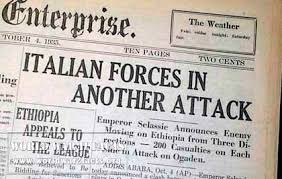
Rabindranath Tagore composed the poem ‘Africa‘ in response to Mussolini’s invasion of Abyssinia (modern-day Ethiopia) in 1935. Written in 1937, this poem was included in his collection Patraput (‘cup of leaves’) published in 1938.
  In that bewildering, ancient time
         When the discontent Creator,
Repeatedly took apart his new creation
     In those days of His impatient head-shakes,
The arms of the turbulent seas
     Wrested you away from the bosom
Of the Orient, Africa—
      Bound you in the dense watchful woodlands,
In the deepest interiors, where light is meagre.
     Immersed in that profound solitude,
You gathered the mysteries of the obscure,
     Deciphered the enigmas of earth-water-sky,
  Nature’s concealed magic inspired in you,
    Incantations, from someplace beyond consciousness.
In the disguise of the hideous,
    You mocked the terrible;
In the intense majesty of the dreadful,
    You aspired to defeat fear, making yourself fierce
To the drumbeats of a cataclysmic dance.

   Oh, woman in the shadows
Under the dark veil
   Your humanity went unrecognised,
Invisible in chaotic disregard.
    Then, they came with iron manacles,
They, whose nails are sharper than your wolves’ claws
    Came the captors of humanity
Blinded with pride, a blindness darker than your sunless wilderness.
    The barbaric greed of the civilised
Stripping naked their shameless inhumanity.
     Your wordless weeping wet the jungle paths,
Muddied the dust in your tears and blood
      That under the plunderers’ hobnailed boots
Turned to grisly sludge,
     Marking for all eternity your disgraced history.

At that moment, across the seas, their church bells
     Pealed at daybreak and dusk
In calls to prayer, in the name of compassionate God;
      Children played on mother’s laps
And poets’ songs lauded
       The beautiful.

    Today, when on the western horizon
Twilight holds its breath at the impending tempest,
   And beasts slink out of their secret lairs—
    To declare with ominous howls, the end of day,
     Come, poet of the end-time,
      In the last light before nightfall
   Stand at the door of that dishonoured woman;
        Beg -- “Forgive me”—
     In the midst of vicious rants
Let that be the final sacred utterance of your civilisation.
Debali Mookerjea-Leonard is the Roop Distinguished Professor of English at James Madison University. Together with research and teaching, she also translates Bengali poetry and fiction.
.
PLEASE NOTE: ARTICLES CAN ONLY BE REPRODUCED IN OTHER SITES WITH DUE ACKNOWLEDGEMENT TO BORDERLESS JOURNAL
Click here to access the Borderless anthology, Monalisa No Longer Smiles
Click here to access Monalisa No Longer Smiles on Amazon International

 Borderless