
Categories
Essay

250 Years of Jane Austen: A Tribute by Meenakshi Malhotra

Jane Austen. From Public Domain

It is a truth almost universally acknowledged that Jane Austen is a great writer. The world created by her in just six novels continues to regale generations of readers with tales of love, marriage and money, a sentiment which would be reiterated by substantial numbers of her fans all over the globe.  We could well echo Evelyn Waugh on the comic writer P. G. Wodehouse: that his (Wodehouse’s) inimitable world could never grow stale….that he has made a world for us (readers) to live in and delight in…

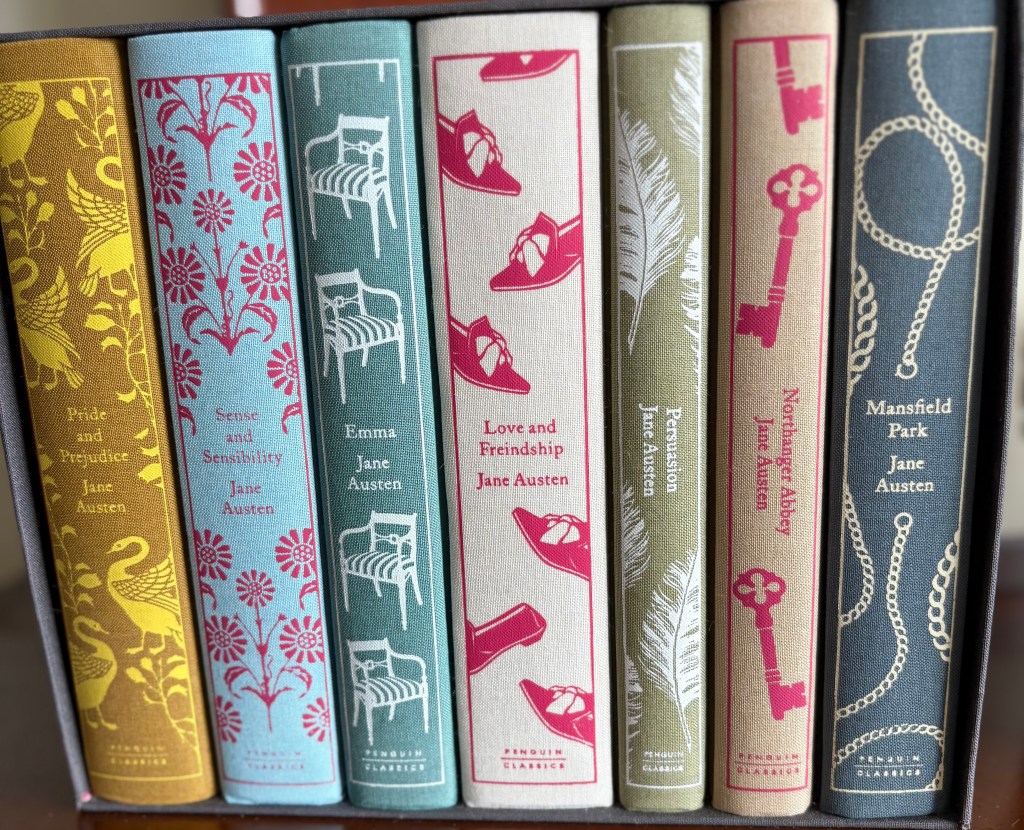
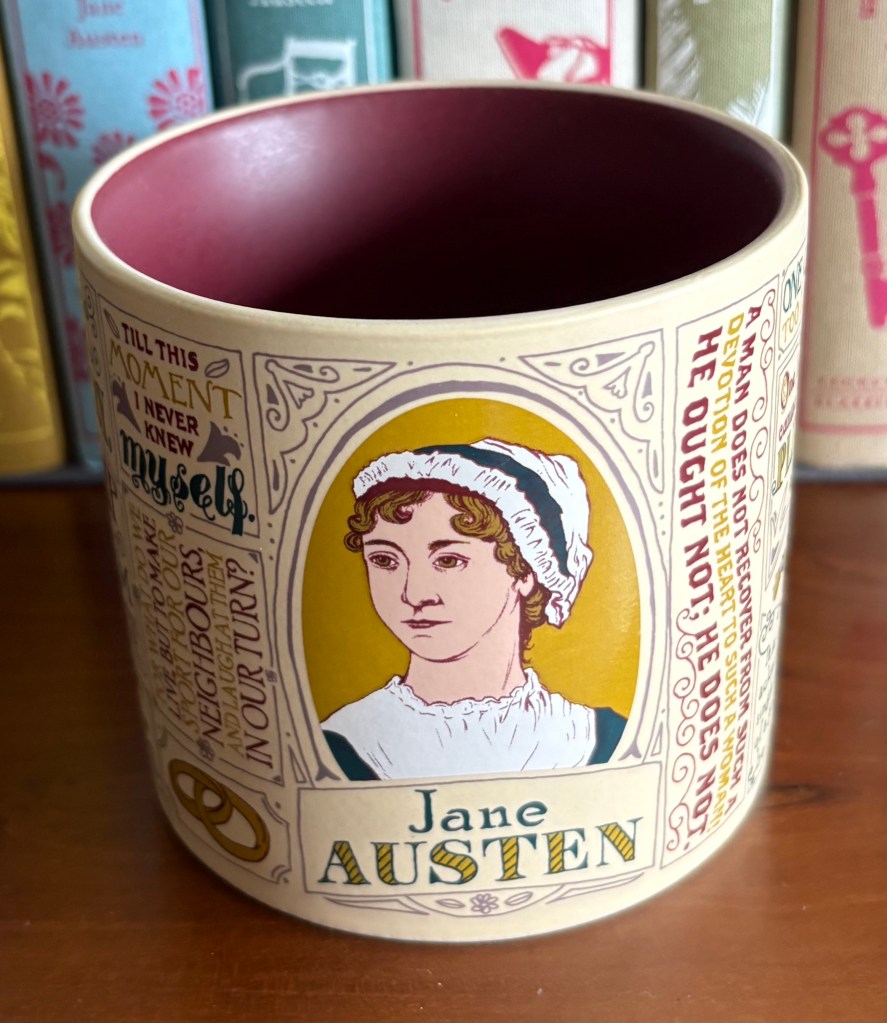
Jane Austen(1775-1817) has acquired a kind of cult status in the last couple of centuries. Such is her reputation that it has helped birth a veritable Jane Austen industry, replete with museums, memorabilia and mementos. There have been numerous novels and films inspired by Pride and Prejudice and Emma and many films (and remakes and adaptations) based on her novels.

16 December 2025 marks her 250th birth anniversary. Many museums in the UK and the USA have showcased exhibits which give viewers delightful glimpses into her life and writing.  Her novels, full of wit and satire, provide an insightful commentary on the social hierarchies, as well as the quirks and oddities of her milieu.Their plots and themes are woven around women and the necessity of marriage, money and the determining power of money.With considerable irony and subtlety, she turns the mirror on how manners are a function of morality and good sense and not just a matter of appearances. Rarely didactic or preachy(with Mansfield Park as the only exception), her novels convey in perfectly nuanced and measured prose, how difficult and crucial it is for women to find the right spouse and space.

As the youngest daughter of a poor clergyman, mostly educated at home, Jane Austen was well aware of the value of an independent income and a home of their own. After the death of her father, she, her sister Cassandra and mother, rather like the Dashwood women in her novel Sense and Sensibility, had to move around as they were dependant on the financial support of her brothers, especially her wealthy brother, Edward. The pain of this unequal fortune and frequent shifts, which Jane and her sister Cassandra may have experienced, is expressed by Elinor and Marianne in the novel where they have to practice small economies and learn to scale their expectations according to their situation.  

Austen led a largely sheltered and sequestered existence, surrounded by her family, bound to family duties which “might have been the more expected of a dependent spinster aunt such as she was.”[1] Many intelligent women, like Charlotte Lucas, Elizabeth Bennett’s friend in Pride and Prejudice are shown to accept inferior matches to escape from spinsterhood and the expectations of their natal families. The absence of livelihood opportunities for women in her day and the lack of any income of her own would have proved irksome to Austen and provided her with a further impetus to “write her way into some money,” as she wrote in a letter to her brother, Captain Francis Austen, in July 1813. Further, in another letter to her niece Fanny Knight, she writes that “single women have the propensity to be poor which is one very strong inducement for women to marry.”

Her novels often do not always reveal the full measure of Jane Austen’s remarkable achievement: how she, constrained by genteel poverty, “the lack of a room of her own”, and writing materials which had to be put away often to attend to obligatory family commitments, wrote her novels based on such close  observation of, and acute insight into contemporary life. Her eye for detail is such that it invites frequent references to her own words: “A little bit of ivory, two inches wide, on which I work with a brush so fine as to produce little effect after much labour.” This modest disclaimer and “little effect” have,  however, fascinated generations of readers and inspired hosts of writers. 

That  Jane Austen’s 250th anniversary is  being celebrated and commemorated all over the English-speaking world perhaps comes as no surprise but it still leaves us with some questions.  What is the relevance of her novels now? Are her novels relevant to present-day political realities, in addition to their astute observations on graded social hierarchies? Can we view her as a feminist? Does she merit inclusion and study in universities of the global south at a time when there is a strong drive to decolonise English, the language of the erstwhile colonial masters?

In her book Jane Austen: The Secret Radical, Helena Kelly writes of the subversive and radical potential and intent of Jane Austen’s novels. Kelly goes a step beyond Marilyn Butler’s 1987 Jane Austen and the War of Ideas that had suggested that Austen leaned on the conservative Burkean side when challenged by new-fangled  Jacobinism with its ideas of equality and brotherhood, coming from France which disturbed hierarchies, ideas and values long held to be sacrosanct in traditional English society. Kelly suggests that far from being conservative, insulated from contemporary political concerns, Jane Austen held radical and possibly subversive views which she did not express openly but which are clearly configured in the world of her novels. In doing so, she made the novel a meaningful art-form and a vehicle for  the expression of  ideas around love, marriage and additionally also of debates on slavery, female education and emancipation.

“It is a truth universally acknowledged that a single man in possession of a good fortune must be in the want of a wife.”[2] This famous ironic opening sentence of Austen’s has captured attention and elicited many critical commentaries. It’s a brilliant masterstroke where Austen underlines the mindset of young women and their anxious mothers on the lookout for eligible bachelors. Articulated like a truism, it seeks to facetiously universalise a partial truth. The omniscient authorial tone and tenor encompasses the dominant themes of Pride and Prejudice in the opening statement itself. Marriage, women’s responses, men’s reactions, social rank and wealth —  all the principal subjects of Austen’s writing are near universal themes. In her novels, Austen communicates the constraints within which women function and the limited or literally the only ‘choice’ available to them. Having experienced financial instability and economic dependence, she had a clear understanding of the constraints experienced by women in early nineteenth-century England.

The happy ending that we see where Elizabeth Benett indeed becomes “mistress of Pemberley” symbolises the moment when some  women, having acquired a certain status, become custodians of the home and the private sphere. Some feminist historians like Gerda Lerner, however, have pin-pointed this moment as one where the economic marginalisation of women is complete, in the aftermath of the Industrial Revolution, and they are pushed back from the public sphere.

Even as women were participating in print culture and taking their place as readers and writers, they were increasingly relegated to the private sphere. The tendency to relegate women to the private sphere and making them responsible for the entire range of domestic tasks of nurturing and care-giving and thereby sustaining the edifice of domestic life is something that persists even now. The fact is that women’s participation in the paid economy and public sphere has added to their ‘double’ burden in the 21st century.      

Many critical voices have pointed out that Jane Austen’s writings do not directly mention the political situation, philosophical debates or religious discourses of the day centering on questions of social equality, justice, economic questions or the rights of man. Yet her fine crafted depiction of socio-economic relations, the dynamics of  human relationships shaped and moulded by the struggle for wealth or power or status exposes the political reality, social hierarchy and the economic structure in society which shaped and informed all social transactions.

While the position of women may have improved in some spheres, there are still glaring gaps when it comes to women’s access to equality or justice. Changes in the last two centuries have gone beyond superficial tokenism. There are still miles to go in our march towards equality. It is in this larger context where there is a grudging acceptance or disavowal of women’s rights that the Jane Austen heroine’s negotiations with patriarchy remain relevant.

They demonstrate a mode of assertion, of agency in the face of inequality and in socially disadvantaged  situations, which sustain an illusion of female empowerment and wish-fulfilment. It is this vision of romance, which, informed by a comic and somewhat ironical view of life, consolidates the exercise of female agency and makes the reading and re-reading of Jane Austen’s novels a rewarding and enriching experience. Her astute delineation of human delusion and human folly holds up a mirror to her society that often impels recognition on our part and remains forever relevant. Her perceptive analysis of the warp and weft of her society remains almost unmatched.

To recall Auden’s well-known lines on Jane Austen:

…yet he (Byron) cannot match the shock she (Austen) gives me;
Beside her, Joyce is as innocent as young grass. I feel truly uneasy, my mind unsettled,
Watching the English middle-class spinster
describe the power of money to attract love,
so plainly and soberly revealing
the economic foundations that sustain human society.

W.H.Auden’s lines on Jane Austen and the unlikely comparison with the prince of notoriety, Lord George Byron, never fails to instruct or entertain us. Such is the mark of great literature which leaves its imprint decades and centuries after its inception.
[1] Juthika Patankar, Wire, November 2025

[2] Pride and Prejudice

Meenakshi Malhotra is Professor of English Literature at Hansraj College, University of Delhi, and has been involved in teaching and curriculum development in several universities. She has edited two books on Women and Lifewriting, Representing the Self and Claiming the I, in addition  to numerous published articles on gender, literature and feminist theory.  Her most recent publication is The Gendered Body: Negotiation, Resistance, Struggle.

.

PLEASE NOTE: ARTICLES CAN ONLY BE REPRODUCED IN OTHER SITES WITH DUE ACKNOWLEDGEMENT TO BORDERLESS JOURNAL

Click here to access the Borderless anthology, Monalisa No Longer Smiles

Click here to access Monalisa No Longer Smiles on Amazon International

Categories
Review

Of the Raj, Maharajas and Me

Book Review by Bhaskar Parichha


Title: Of the Raj, Maharajas and Me

Author: MA Sreenivasan

Publisher: Speaking Tiger Books

This is a delightful book for two reasons: One, it is a reminiscence of a civil service official with the princely state of Mysore and Gwalior, and later with the government of British India. Secondly, the stream of language and the lucidness with which the author has penned his recollections is remarkable. What is more, it reflects on the administrative practices of the former princely states of India.

M.A. Sreenivasan (1897-1998) lived through almost the entire 20th century and was among the very few people who witnessed at close quarters the enormous changes that took place in India during this period. Born in Madras, he belonged to a family that traced his subsequent generations of Pradhans (ministers) of successive kings of Mysore for 150 years. Sreenivasan joined the Mysore Civil Service in 1918 and, after a varied career both with the Mysore Government and the Government of British India. He became a Pradhan of the Maharaja of Mysore in 1943. In 1947, he was invited by the Maharaja of Gwalior to become the Dewan of that State. During that momentous year, he was a member of the Constituent Assembly of India and in regular touch with many of the leading figures (including Mountbatten) involved in the transfer of power from British to Indian hands.

Much more than an autobiography, the book is a rare portrait of India during and immediately after the British Raj. The princely States of India have been neglected by scholars, many of whom have tended to be unfairly critical. There is much in this book on the effectiveness of administration in two major princely States. It redresses the balance and makes the book a valuable document on the subject. Further, Sreenivasan provides sharp insights into the negotiations that led to the end of the Raj, and into the new polity that emerged after Independence. 

Writes Sreenivasan about Louis Mountbatten: “I had seen and talked to Mountbatten at lunch parties in Viceroy’s House and meetings of the Chamber of Princes. Tall of stature, with an enviable reputation as Supreme Commander of the Allied Forces during the War, he impressed everyone with his fine personality and pleasing manner. Standing on the dais that day, wearing his bright, white naval uniform, festooned with medals and decorations, he addressed the gathering as Crown Representative of His Majesty, the King of Great Britain, his cousin, and spoke of the King’s concern for the Princes of India with whom the Crown’s long-standing associations and obligations were soon to come to an end.”

Elsewhere in the book he writes about Sir CP Ramaswamy Iyer: “He was a remarkable man. Endowed with a fine personality and a keen intellect, he was learned and brilliant, an eloquent speaker, and a brave and dynamic administrator. In his early years, he was a much sought-after lawyer and one of the first, most ardent, champions of Home Rule for India. CP, as he was called by friends, was among the leaders and statesmen whose views were sought by successive British missions. He did not, however, take part in the Constituent Assembly or its committees. I knew he had plans of making Travancore an independent maritime State. I had always held him in esteem as a distinguished elder statesman and called on him at Travancore House in New Delhi, asking him why he had not agreed to the accession of Travancore.”

Write Shashi Tharoor in the foreword: “This book is simultaneously an exploration of the region’s glorious past and present and a memorable personal history, tracing Sreenivasan’s life and career, which was as challenging as it was deeply interesting. From the ups and downs of local politics to navigating the bureaucracy of nascent independent India, not to mention moving forays into Sreenivasan’s home life particularly relating to his beloved and constantly supportive wife, Chingu, there is little that is not covered. The reader follows the author through his myriad journeys, from Mysore to New York and London, to the Chambal Valley and beyond.”

The last few chapters of the book are notable. Whether it is the merger of the princely states or Prime Minister Nehru, Sardar Patel and the two Nobel laurates- CV Raman and Dalai Lama – Sreenivasan’s chronicles make for an absorbing read.

In the epilogue, he writes: “The years have witnessed revolutionary changes in India. There has been impressive progress in many directions and many remarkable achievements. The scourge of smallpox and plague has been eradicated. The shame of human beings carrying night soil has ended in many cities and towns. Infant mortality has been reduced, and life expectancy enhanced.

“The production of food grains and other needed crops has vastly increased. Thanks to generous foreign aid and increased revenues, huge dams and reservoirs have been built. Hydro-and thermal power generating stations installed. An industrial revolution has taken place. Thousands of mills and factories turn out myriads of products, from cotton cloth and silk to telephones, television sets, computers, locomotives, motorcars, and aeroplanes. Transport and communication have also been revolutionized. Scores of universities, hundreds of engineering and medical colleges and research institutions have been started and equipped. India can boast of having perhaps the largest surplus of scientists and technologists in the world for export. But progress has not come with both hands full. With great gains have come great losses. An irreparable loss is the grievous vivisection of India.”

This captivating life story will be of particular interest to students and scholars of modern Indian history as well as the general reader.

Bhaskar Parichha is a journalist and author of UnbiasedNo Strings Attached: Writings on Odisha and Biju Patnaik – A Political Biography. He lives in Bhubaneswar and writes bilingually. Besides writing for newspapers, he also reviews books on various media platforms.

.

PLEASE NOTE: ARTICLES CAN ONLY BE REPRODUCED IN OTHER SITES WITH DUE ACKNOWLEDGEMENT TO BORDERLESS JOURNAL

Click here to access the Borderless anthology, Monalisa No Longer Smiles

Categories
Essay

The Wabi-Sabi of Making a Living

By Aditi Yadav

When Magellan set sail on the seas in 1519, little did he know that his expedition would be the first to circumnavigate the earth. Unfortunately, he died midway and could not see the historic feat that his voyage accomplished. Human race has travelled an exponentially long way since then– locating places through GPS, hopping around on Google earth, planning voyages to solar system family and researching on galaxies far, far away.  In some inter-galactic bird’s eye-view, just like Carl Sagan(1934-1996) said, the earth is just a ‘pale blue dot.’ Yet, the ‘only home we’ve ever known’, is marred with myriads of conflicts across the continents. Major conflicts on global scale, time and again lead to wars and revolutions.

 The French Revolution which laid the foundation of democratic institutions of the world, was deeply inspired by the famous political philosopher Jean-Jacques Rousseau (1717-1778). As an enlightened man of his times, Rousseau famously said, “Man is born free but everywhere he is in chains”. I do not know if he considered women absolutely free or irredeemably enslaved that he put it down with a such male-centric perspective. Nonetheless, to celebrate the progress of civilization, let’s just rephrase it for modern times– humans are born free but everywhere they are in chains. Indeed, such are the repercussions of the said and unsaid social contracts we find ourselves tied to, that stir conflicts in everyday human life.

“Work” is one such social contract that involves exchange of labour and capital. But it is not just labour that one puts in — there is so much of one’s precious soul and time that goes into the process. Even if one gets capital or remuneration in exchange — more often than not, there is not enough time or energy to make fulfilling use of this compensation. Such is the conflict of ‘work-life’ balance. The internet these days is ablaze with reactions to a certain Indian CEO calling for ‘18 hours of work per day’ while the first world countries rethink working patterns with ‘four days a week’ option. In my personal experience, I recall many high-ranking corporate bosses saying how they have serious problems with non-working Saturdays. Oh, the conflict of losing one’s life while making a living!

Since the dawn of Industrial Revolution, the world has increasingly taken to machines and industrialisation. Humans have enhanced their control over nature while their own lives are controlled by the force of their inventions. Sociologically speaking as Karl Marx (1818-1883) propounded, this is the age of alienation. He theorised that this estrangement takes place on four levels: from the process of production, from the product, from the family and fellow workers and from the self. The last category of estrangement is indeed disconcerting.

The concept of work in post-covid scenario needs a serious rethink on the macro-level, with well-planned sustainable and flexible approach keeping in pace with the demographic scene. What would a physically sick and mentally stressed population accomplish anyway? In modern times nuclear families have become the norm, and the stakeholder-ship of women in work force is on the rise. The work policies, infrastructure and facilities need to be upgraded. Men and women should equally be given the environment where they don’t feel guilty about taking care of their families or themselves. All this needs systemic structural change and would take substantial time to be put into practice. Meanwhile, until the system overhauls or evolves, it is incumbent upon us as individuals to try a mind shift to address the conflict of everyday work and life. Moreover, any macro change will happen only when enough micro level consciousness lays its foundations.

Throughout school and college, one is continuously wired to focus on earning good credentials, and building up a brilliant CV, to rank high on labour-capital exchange quotient. When we join the work force as adults, there are bound to be troubles, because we haven’t been humane enough to ourselves.  In the face of multifold de-humanisation, Austrian philosopher Ivan Illych (1926-2002) even called for ‘Deschooling society’, wishing for a liberated humane model of education.

Let’s first come to terms with the fact that a human being is not a machine with the sole goal to be the perfect employee to maximise profits. Life as gift of nature should be valued and cherished. The chicanery of modern times is that your fears and dreams are exploited if you are not on your guard. That top spot, that super performer tag, that fear of failure and ignominy — are all factors that will make you vulnerable mentally and psychologically — more often than not leading to serious ailments. You will feel stuck in a rut and suffocated if your life pivots arounds this exploitation.

Although extremely recommended and desirable, not all of us are able to find regular time out for physical routine or yoga session. It instead seems more prudent to wire a change of perspective in day-to-day life situations to deal with conflict. In this regard, the spirit of Japanese philosophy of wabi-sabi [1]can be of comfort. There is inner peace and contentment in being kinder to oneself.

Wabi-sabi’ as a way of life is acceptance of simplicity, imperfection and transience. It reminds you that it’s okay to not be perfect (because perfectionism is elusive anyway). There is not one single word in the English language to exactly express this beautiful philosophy. The essence is to be grasped by inferred understanding. Literally, the kanji character for wabi (侘) stands for the feeling of desolation and solitude one experiences, especially midst nature. It sounds depressing at first. But the root feeling is that of humility and gratefulness, realising that in the scheme of grand nature, you are only one among billions of living forms. It the true essence of life, you come alone and go alone, as there is only so much you can do.  While sabi (寂) means to rust, wither or decay. It underscores the impermanence of life. How the cherry blossom petals wither away in spring after a brief dazzling display of ethereal pink! The transience of life should teach us better appreciation of aging, loss and celebration of little moments that we have in everyday life.

Erin Niimi Longhurst in her book Japonisme (2018) tries to elucidate what wabi-sabi encompasses. Applying the principles with a bit of thoughtfulness can be helpful for a lot of conflict resolution within one self.

  • “Asymmetry, not conformity or evenness”: There will be days you’ll be on top of things at work, but miss out on personal goals, while vice versa on other days. Lopsidedness of achievements is natural. Have some, loose some. Celebrate little joys that come your way. Reassess and reset priorities once in a while.
  • “Humble and modest, not arrogant, conceited or proud”: Humility is strength indeed. It helps you see and accept your flaws, and fix what can be fixed. It makes you a cooperative member of the society. The flexibility it instills, earns peace. Arrogance not only earns you toxic energy of those around you, it is self-defeating for personal growth where you are blind to you mistakes.
  • “Growth not stagnation”:  While one starts celebrating simple pleasures of life, chooses to opt out of blind race, is peaceful with being flawed, it does not mean stagnation. Impermanence of life means acceptance of changes. Working on weeding out toxicity in life is a life-long growth process. Once this takes roots, you connect will your priorities better.
  • “Natural decay, not synthetic nor preserved”: As a natural product, every thing has a natural life. Lifestyle choices make a great impact on mindset and vice-versa. Choosing to moderate processed and synthesized food, spending time in nature are little steps of consciousness with profound impact. Also, aging is inevitable. Practice kindness unto yourself– accept the onset of wrinkles and ward off chronic worry to look youthful. As time passes you by, you become a work of time you spend with yourself. Peace starts with you.
  •   “Slow not fast”. The implied meaning is slowing down enough to connect to your own pace of life.  Taking time to observe, appreciate and reflect, rather than storming headlessly through life.
  • “Abstemious, not gluttonous”: As much as it is important to know what you can do, it is crucial to understand your limitations too. It’s like knowing what your digestive system can take and what it is intolerant to. Just as overeating is dangerous, overcommitment at work or in personal relations to meet everybody’s expectations, can take a toll on your life — and before you realise you are caught in the vicious cycle of meeting people’s expectations at the expense of your peace. Limit yourself and cautiously expand the boundaries.
  • “Small moments not grand gestures”: The beauty of a well composed haiku is in its brevity to capture the moment. It conveys how epic emotions can be experienced in transience. Take a moment to congratulate others around you, compliment them, or immerse in brewing your coffee/ tea- little by little- profoundness of life begins to shine in mundane, everyday things. Each moment is a grand celebration of life. Do not wait for that grand day or promotion to hold a party. Be your own host, your own guest. Revel!
  • “Unfinished, not complete”: The uncertainty of life makes it all the more precious and mysteriously alluring. The best thing is to remember that the rest is still unscripted. There’s still more to come, and life always stays an unfinished project, even when one leaves the earth. Perfection or being best of the best are grand illusions. One always remains imperfect. With that understanding, take some time to look inward at what bothers you at work place or home, what irritates you, there so much toxic grass to weed out. Better still, search for anything that uplifts or makes you feel creative. Have yourself merry little breaks.  Merry little heart will go a long, long way.

The whole spirit of building micro-level consciousness is like kintsugi[2] to heal our broken parts. It tones down our toxic drive toward continuous competition, comparison, and excessive target planning. The approach is to know yourself better, and set work limits accordingly in your natural pace. Soon you realise the carrot that dangles is only a bait to bigger trap, and you start setting your boundaries as a human. Though this prima-facie[3] appears opposed to the socially perceived standards of success, the continuous practice earns you inner peace at your intrinsic pace-kind of negotiating your way through the matrix. Instead of perfection, you choose sustainability. You have raced enough, find a breather, connect with what relaxes you, comforts you, recharge time and again, live.

St. Augustine(354-453) contends: “There are many going afar to marvel at the heights of mountains, the mighty waves of the sea, the long courses of great rivers, the vastness of the ocean, the movements of the stars, yet they leave themselves unnoticed!” Magellan’s ship went on to circumnavigate the earth. Guided by the essence of wabi-sabi, there is much more adventure and fulfillment when one sets out to circumnavigate oneself. Bon Voyage, humans!


[1] The transient nature of life

[2] Repairing broken ceramics with gold

[3] Latin for apparent or self-evident

Aditi Yadav is a public servant from India. As and when time permits she engages in creative pursuits and catches up her never-ending to-read list. 

.

PLEASE NOTE: ARTICLES CAN ONLY BE REPRODUCED IN OTHER SITES WITH DUE ACKNOWLEDGEMENT TO BORDERLESS JOURNAL