Categories
Essay

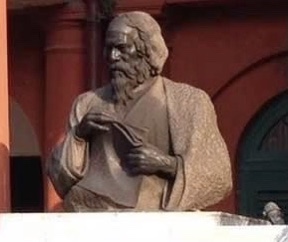
The Myriad Hues of Tagore by Aruna Chakravarti

As the author of Jorasanko and Daughters of Jorasanko, which map the life of the greatest visionaries of the world, Aruna Chakravarti gives us a brief summation of the genius of Rabindranath Tagore.
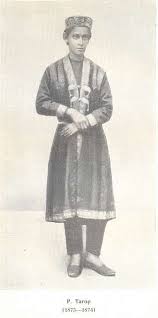
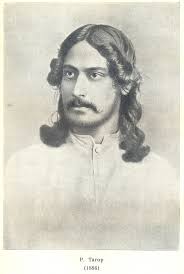
Rabindranath Tagore was born in 1861 in the throes of the Bengal Renaissance. A unique movement which took place during the latter half of the nineteenth century, it saw the germination and the slow stirring into life of a social and religious consciousness and the emergence of a middle class that idealised British rule and used its support to usher in considerable social change. The revolutionising of values and the social, political and literary awakening that followed gradually came to encompass the whole of India.

The Bengal Renaissance, like its European counterpart, swung precariously for a while, between two worlds. One old, decrepit and dying by degrees — the other struggling to be born. A host of great personalities emerged during this time; household names to this day.

All were protagonists engaged in battle. Some to keep alive and perpetuate the old; some to hasten its death and bring about the birth of the new. Needless to say, it was the latter who prevailed. Bengal saw an upsurge of activity, the like of which had never been seen before, in fields as diverse from each other as politics and religion to literature and the performing arts. In this, Bengal’s close contact with the British served as a catalyst.

Yet the same movement, in its latter years, saw the first stirrings of resentment against British domination. India’s acceptance of English education and her faith in the scientific discoveries of the West was countered by a new revivalism. An assertion of political independence and the growth of a nationalist consciousness. A need for introspection became the call of the hour. Rabindranath was among the first to articulate this need. In an essay, entitled Byadhi-o-pratikar[1]written in the early years of the twentieth century Rabindranath expressed his doubts regarding the changed Indian psyche wrought by the West. Reflecting on the French Revolution, the efforts to abolish slavery and the upsurge of literary activity in Europe he wrote: “Western civilisation seemed to proclaim an inclusiveness for all humanity irrespective of race and colour. We were spell bound by Europe. We contrasted the generosity of that civilisation with the narrow mindedness of our own and applauded the West.” He goes on to say, however, that the scales had fallen from the nation’s eyes. The supposedly Western ideal had failed Indians. European education and adoption of its values hadn’t helped them to achieve equality with the white race.

Thus, the movement came full circle. Rabindranath had not been part of it from its inception. Yet, if one were to look for and identify a single persona in whom the entire Bengal Renaissance may be said to be epitomised, it would, without doubt, be the persona of Rabindranath Tagore.

Poet, playwright, novelist, painter, composer, educationist, nationalist and internationalist, Rabindranath was not only a myriad minded genius but a Renaissance Man in the truest sense of the word. In fact, the dawn or awakening of Rabindranath’s creative inspiration is synonymous with the awakening of a whole nation.

The cultural identity of India and the place in it of religion, caste, class and gender which much of Rabindranath’s prose and poetry explores, continue to retain their relevance even today, a hundred years later, in a post-colonial time frame. His novels offer masterly insights and analyses of the complexities of Indian life with its teeming contradictions; its rootedness in tradition as well its ability to assimilate and accommodate change.
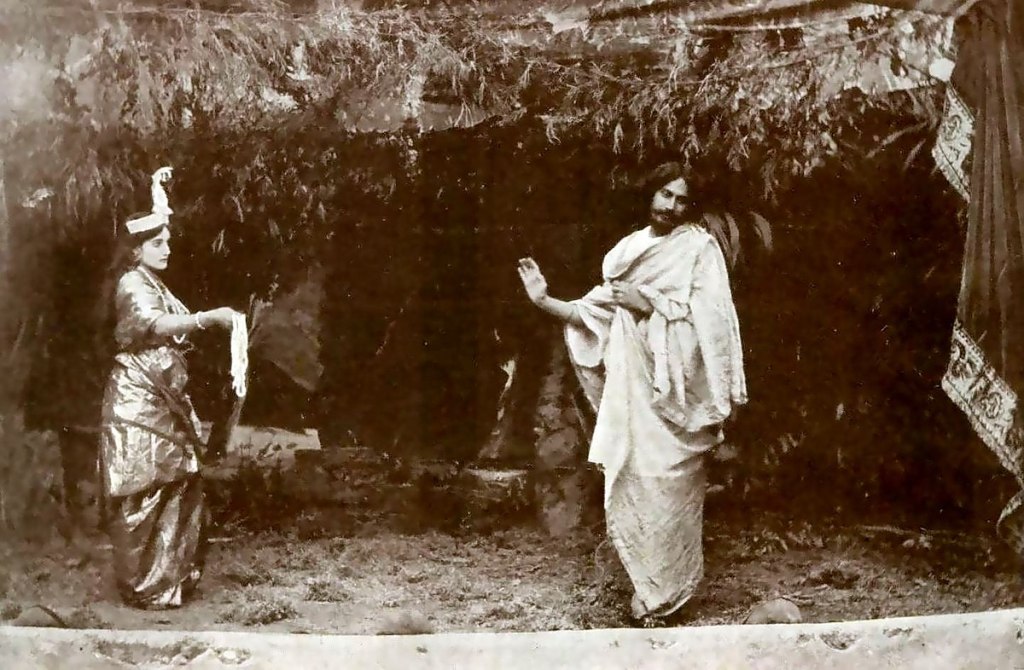
Rabindranath Tagore and Pratibha Devi (his neice) performing in his dance-drama, Valmiki-Pratibha (The Genius of Valmiki) 1881. Photo from Public Domain

Rabindranath, however, is best known as a poet. His poetry, drawn from ancient cultural memory as well as the immediate present, is in a class of its own. For there is a third dimension to it. He not only wrote of what he saw and remembered but what he saw only in his mind — a world that lay a vast space away from reality. ” There are two kinds of reality in the world,” Rabindranath said[2] of his paintings. “One of them is true; the other truer.” He could have said this of his poetry too. The real and surreal quality of his images in the vast span of his poems and lyrics; their indefinable nuances and evocative power are comparable to the works of the great Impressionists.

Interestingly, Rabindranath arrived at the canvas through his poetry. The calligraphic erasures and corrections with which he embellished many of his poems became sketches of a special kind. “I try to make my corrections dance,” he said[3] once, “connect them in a rhythmic relationship and transform accumulation into adornment.”

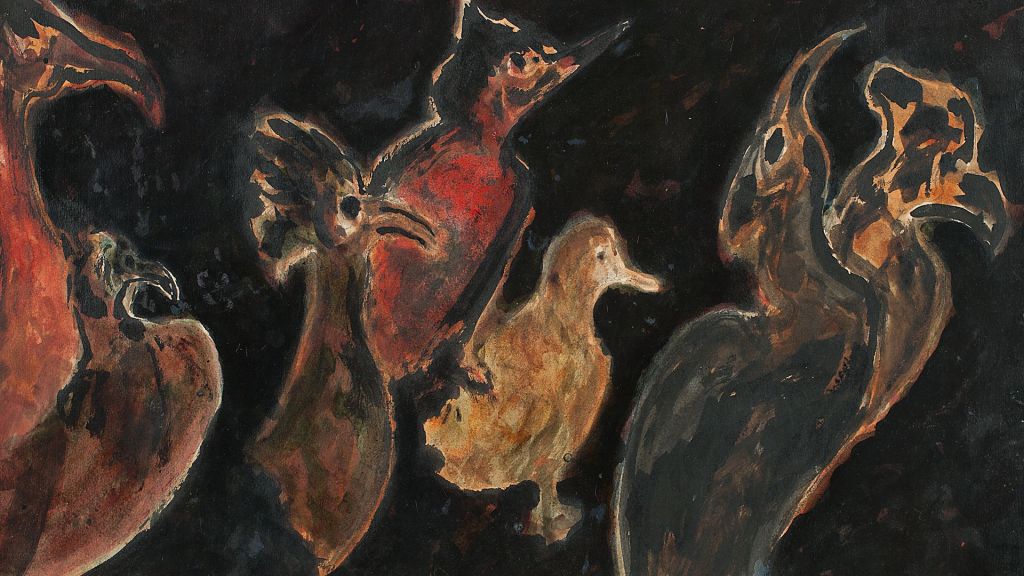
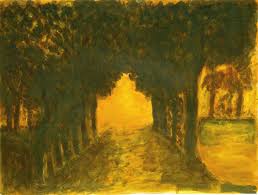
Later, in the last thirteen years of his life he threw himself into frenzied bouts of painting leaving behind more than two thousand and five hundred art works. Strange, haunting faces with eyes that look deep into one’s soul; surreal landscapes the like of which were never seen this side of the horizon; trees and flowers painted in violent colours that erupt from the artist’s palette in volcanic bursts — his paintings, as an artist once said, reflect “emotions recollected more in turmoil than in tranquillity.”
Yet, though famed the world over for his poetry and painting, it is as a music maker that Rabindranath has stayed entrenched in the hearts of his own people. His songs, loved and sung by generations of Bengalis, range in theme from celebrations of nature and yearning for freedom to love of God and Man. They convey the poet’s profound philosophy of life, his deep faith in humanity and his sensitive exploration of the Universe, often touching on the quest of the unattainable. Rabindranath once said that, though he could not predict how future generations would receive the rest of his work, he was confident that his songs would live. The increasing popularity of Rabindra Sangeet, both in India and abroad, bears ample testimony to the fact that his prophecy was based on a certainty born out of self-knowledge. Vast and varied though his genius was — music was its mainspring. He wrote of his songs: “I feel as if music wells up from within some unconscious depth of my mind; that is why it has a certain completeness.”
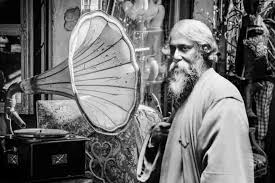
Photo from Public Domain

[1] The Disease and its Cure, 190

[2] Quoted from Tagore’s Galpa Salpa (Conversations) by Soumendranath Bandopadhyay in Expressionism and Rabindranath

[3] Quoted in An Artist in Life by Niharranjan Ray

Aruna Chakravarti has been the principal of a prestigious women’s college of Delhi University for ten years. She is also a well-known academic, creative writer and translator with fourteen published books on record. Her novels JorasankoDaughters of JorasankoThe InheritorsSuralakshmi Villa have sold widely and received rave reviews. The Mendicant Prince and her short story collection, Through a Looking Glass, are her most recent books. She has also received awards such as the Vaitalik Award, Sahitya Akademi Award and Sarat Puraskar for her translations.

.

PLEASE NOTE: ARTICLES CAN ONLY BE REPRODUCED IN OTHER SITES WITH DUE ACKNOWLEDGEMENT TO BORDERLESS JOURNAL

Click here to access the Borderless anthology, Monalisa No Longer Smiles

Click here to access Monalisa No Longer Smiles on Kindle Amazon International

Categories
Bhaskar's Corner

Tagore & Odisha

Odisha and West Bengal, two geographically contiguous states of India, are as much a proximate in culture and language. Both states have a close link – from people movements to culinary familiarity. More to that. Puri attracts lakhs of people from Bengal. In truth, it is the Bengalis around whom the holy city of Puri revolves. They contribute greatly to the city’s economy. The Tagore family of Jorasonko too had a close connection with Odisha and it stretches back to generations. Rabindranath Tagore’s great grandfather Nilamani Thakur had come to Cuttack as a ‘Sirastadar‘ (revenue collector) duly appointed by the British.

In 1840, Rabindranath’s grandfather Prince Dwarakanath Tagore had bought a small estate near Pandua in the present Jagatsinghpur district. Tagores even had a house built in Cuttack’s Tulasipur area. Later, Rabindranath’s father Maharshi Debendranath Tagore visited Odisha sometime around  1851 to supervise the estate at Pandua  from where he visited Puri.

Records of those times bring out how the Tagore family was fascinated by Puri’s pristine beach, the camaraderie, and the cool breeze.

In 1891, Rabindranath Tagore visited Odisha for the first time to oversee the land his ancestors had bought. Tagore’s maiden visit to Odisha was memorable and soul-stirring. The bard’s fascination for Puri finds mentioned in ‘Chinnapatra’ — his letters to Indira Devi, Tagore’s niece. In one such letter, Tagore wrote: 

“The road from Cuttack to Puri is good. It is high with low-lying fields on both sides. There are big shady trees, mostly mango. At this time, all the mango trees are in blossom, filling the way with fragrance. Some villages are seen surrounded by mango, pipal, banyan, coconut and palm trees.”

Tagore informs further:

“In places covered carts are standing on the banks of shallow rivers. There are confectioners under palm-leaf thatches. Inside the huts in rows, under the trees on both sides of the road, the pilgrims are taking their meals. The beggars are shouting in strange languages, whenever they see fresh batches of pilgrims or carriages or palanquins.”

He wrote fabulously about what he saw on his way to the glorious city of Puri:

“As one approaches Puri, the pilgrims are seen in greater numbers. Covered carts are seen moving in lines. People are found lying down, looking or gossiping together on the banks of tanks. On the right side of the road, a big spire of the Jagannath temple rises. Suddenly at one place, crossing the line of trees and bushes, the wide stretch of sandy sea-beach and the azure line of the sea become visible.”

Tagore visited Odisha once more in 1893.This time it was Cuttack with his nephew Balendranath. Tagore was a guest at the then District magistrate BL Gupta, ICS ( Malati Chaudhury’s grandfather). Having spent a few days there, Tagore  set out to Puri  on a palanquin and he was spellbound  over the unspoiled  sceneries on both sides of  the Jagannath Sadak as it was called then. Tagore’s last visit to Odisha was in 1939. 

 He came on the request of Biswanath Das, the then Chief Minister (called Prime Minister) of Odisha   to visit the province. When Das was in Kolkata to attend a meeting of the All India Congress Committee, he personally met the poet to pay respects and extend the invitation.

Tagore reached Puri on 19th April in 1939. He was warmly received by the ministers and government officials. The poet stayed in the Circuit House as the state government’s guest. But all his engagements were canceled as the poet developed a slight fever and the doctors advised him complete rest.

On 8th May 1939, the poet was given an ovation on behalf of the women of Odisha. The next day — his birthday – was celebrated with gusto. The birthday bash was held on a well decorated pandal with an opening song. The poet was welcomed with the chanting of Vedic hymns by the pundits of Puri’s Sanskrit College. Flower, sandal paste, vermilion and coconuts were offered to the poet as a mark of veneration.

So enthralled was Tagore at this spirit of love and affection that he wrote in a letter to his former Secretary Dr. Amiya Chakravarti:

“I have come to Puri. I am the invited guest of those who are now at the helm of the affairs of Orissa. There is something novel in this fact. In older days, they who were kings or heads of the state, used to honour the meritorious, thereby honouring their own countries and governments. By this liberality, they used to keep contact with human culture and admit the universal heritage in the development of faculties.”

He further wrote:

 “We have learnt the modern system of political administration from the English. The talented have no place in it. The statesmen of Europe wield the outward aspect of that power which is based upon economic and administrative laws. They cannot have the right to govern the spirit that lies underneath but it is needless to argue that having acknowledged and paid due regard to it, a noble environment can be created for the government. In oriental system of administration, the scope for acknowledgment of the individual talent has, however, not been neglected.”

In the same letter, he was a bit apologetic: 

“Let me now tell you about myself. I have no work here, nor am I of any use to anybody. Those who are taking care of me here, expect no material advice from me. That salutary and refreshing effect with which the sea breeze is touching my body and mind is the very symbol of the hospitality of the newly responsible Orissa Government. Administrative procedure has created no obstacle to it, nor has it been affected by the budgetary economy.”

On human relations Rabindranath wrote when he was convalescing:

“Sitting on the first floor of the Circuit House, I have unhesitatingly given myself up to pure idleness. The ministers here, having noticed the tired condition of my health, come every day to encourage me to spend my days without any purpose. The mentality of admitting human relationships even in the midst of heavy pressure of work is still inherent in our country; and this has been felt by me especially after I have come over here.”

During his stay at Puri, the Raja of Puri – an institution by himself – and the Superintendent of Sri Jagannath temple, bestowed upon Rabindranath, the title Parama Guru (the great teacher). As the poet was indisposed, the ceremony was not held publicly. The Dewan (manager) of the king came down to the circuit house in a procession to confer the title. The panegyric was read out in the hallowed Sanskrit language. Then a camphor garland, head dress and a pair of silk clothes were offered as a mark of respect by the chief priest. 

Historian Prof. Pravat Mukherji later wrote about Tagore’s acceptance of the recognition thus: “He had been warmly received in many countries of the world, but the reception which was given that day by the people of Odisha touched his heart, as it was according to the traditional Hindu style.”

Tagore’s stay in Puri had a few other blissful moments. Many poets and freedom fighters met him. Among them were Lexicographer and compiler of ‘Purnachandra Bhashakosh’ (Odia Encyclopedia), Gopal Chandra Praharaj, Pandit Raghunath Mishra, freedom fighter Sarala Devi, poet and novelist Kalindi Charan Panigrahi and yet another gentleman from Jajpur, Chandrasekhar Das, about whom Tagore penned a few lines:

“O’ my unknown admirer,

Today you have become known.

With my blessings I repay

My admirer your loan.”

Two contemporary Odia poets — Bhaktakabi Madhu Sudan Rao and Kantakabi Laksmikanta Mohapatra (creator of the state song ‘Bande Utkal Janani’) – were inspired by Tagore and wrote two books – Kusumanjali (Posy of Flowers) and Jiban Sangeeta (Life Song) respectively, which are rare beginnings in modern Odia literature. 

It was also during the Puri layover that Tagore wrote the dance drama ‘Chitrangada’ – the theme he seemed to have overheard from the local epic-sayers. Tagore also wrote some of his famous poems: Pravasi (Expatriate), Janmadin (Birthday) and Epare Opare (This side and that side) in Puri. In Pravasi, Tagore describes himself as a “man of the world and he does not consider anybody to be alien”

Tagore loved the people of Odisha so much that he concluded: 

“From a distance I have formed an idea about the love of the people and the efficiency of those who are at the helm of the administration of Orissa at present, and now I am appreciating it from close quarters.”


References:

Guru Kalyan Mohapatra: Puri & the Poet

Sambad by Prof Basanta Kumar Panda ( Odiya translation of Chinnapatra). The excerpts from the Chinnapatra have been translated by Bhaskar Parichha from Odiya.

.

Bhaskar Parichha is a journalist and author of No Strings Attached: Writings on Odisha and Biju Patnaik – A Political Biography. He lives in Bhubaneswar and writes bilingually. Besides writing for newspapers, he also reviews books on various media platforms.

.

PLEASE NOTE: ARTICLES CAN ONLY BE REPRODUCED IN OTHER SITES WITH DUE ACKNOWLEDGEMENT TO BORDERLESS JOURNAL