Categories
Musings

What is Great Anyway?

By Farouk Gulsara

It all started with a Facebook post which quoted Churchill and read, “If you are twenty and not a Communist[1], you don’t have a heart. But if you are forty and still a leftist, you do not have a brain.” That snowballed into a literary discourse on the word great and what constitutes greatness. The funny thing is that Churchill never said anything to that effect. The closest one gets to that quotation is Otto von Bismarck, the first Chancellor of Germany who may have uttered, “He who is not a socialist at 19, has no heart. He who is still a socialist at 30, has no brain.” By the way, Bismarck’s brand of politics earned him the title ‘Iron Chancellor’. How do we classify something or someone as great or otherwise?

As written by the victors, history also designates Churchill as a great leader and statesman. A towering figure, he stood steadfast with the people, with his oratory skills, during ‘The Darkest Hour[2], as London was bombarded by German fighter planes. Surprisingly, he was also voted out of office after World War II. He was mentioned to have said, “History will be kind to me, for I intend to write it.”[3] I do not think that the family members of the 1943 Bengal famine victims will consider him anything but great – a racist, a bigot and a white supremacist, maybe. 

Even then, many in the United Kingdom thought Churchill was not a statesman but a foul-mouthed drunkard. At a function, a female guest of aristocratic standing, obviously not his fan, berated him and his politics. She is said to have said, “Sir, if you were my husband, I’d poison your tea.” Without a single pause, the witty Churchill quipped, “Madame, if you were my wife, I’d drink it!” [4]

When Churchill was informed about the Bengal Famine, he was infamously quoted as saying, “Serves them right for breeding like rabbits and, by the way, why isn’t Gandhi dead yet?” [5]

My point is that one man’s great leader may be another’s mortal enemy. This is especially true in a world where power and wealth are used as a yardstick of prosperity. We often forget that these commodities are finite; the losses of one side exactly offset the gains of the other.

Alexander may be ‘Great’ for putting a small region called Macedonia on the world map. With all the carnage and misery he spread over the lands he and his army traversed, it took only the might of a tiny mosquito to bring him down. At least, that is one of the likely ways he died. Other contenders include alcoholic liver disease, depression and strychnine poisoning. 
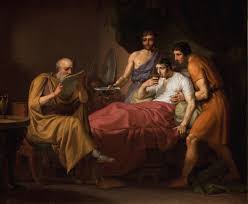
Alexander The Great On His Sickbed, By Christoffer Wilhelm Eckersberg (c. 1783 – 1853). From Public Domain

Like Alexander, many monarchs with the suffix ‘The Great’, such as Peter, Catherine, and Frederick II, left behind an enormous body count and a trail of devastation. 

The Great ‘state-of-the-art’ Titanic was marketed as ‘unsinkable’, and itself was a lifeboat with tight watertight compartments, giving ample time for ferry passengers to be rescued by rescue vessels. Hence, the need for an adequate number of lifeboats was deemed unnecessary. We all know about the irony of its disastrous maiden journey, which is still spoken about a century later as one of Man’s greatest miscalculations.[6]

Indians of the 20th century honoured Karamchand Mohandas Gandhi as a selfless soul who chose a life of poverty to stir the masses’ consciousness towards self-rule. The people thought it appropriate to address him as Mahatma (the Great Soul) or the Father of the Nation. Today, an increasing number of Indians are having second thoughts. Perhaps they may have been taken for a ride and got the short end of the stick from the British. It is amusing that Gandhi’s son, Harilal, despite the reverence of the people of the subcontinent towards his father, also did not hold his father in high regard. Disillusioned with the senior’s move to block his law scholarship to England, Harilal became a rebel, spiralling into alcoholism, eventually becoming a public nuisance and falling into oblivion.[7] 

The Great War, also known as World War I, was touted as a necessary battle to end all wars. We know it never ended anything, but its post-war deals remain a nidus for World War II and the turmoils that persist even today. 

The Great Gatsby exposes the fallacy of the American Dream and the notion of a successful life under capitalism. F. Scott Fitzgerald shows that success-based materialism and trying to relive a nostalgic past will not lead to fulfilment. Instead, it will lead to a decadent path and disappointment. [8]
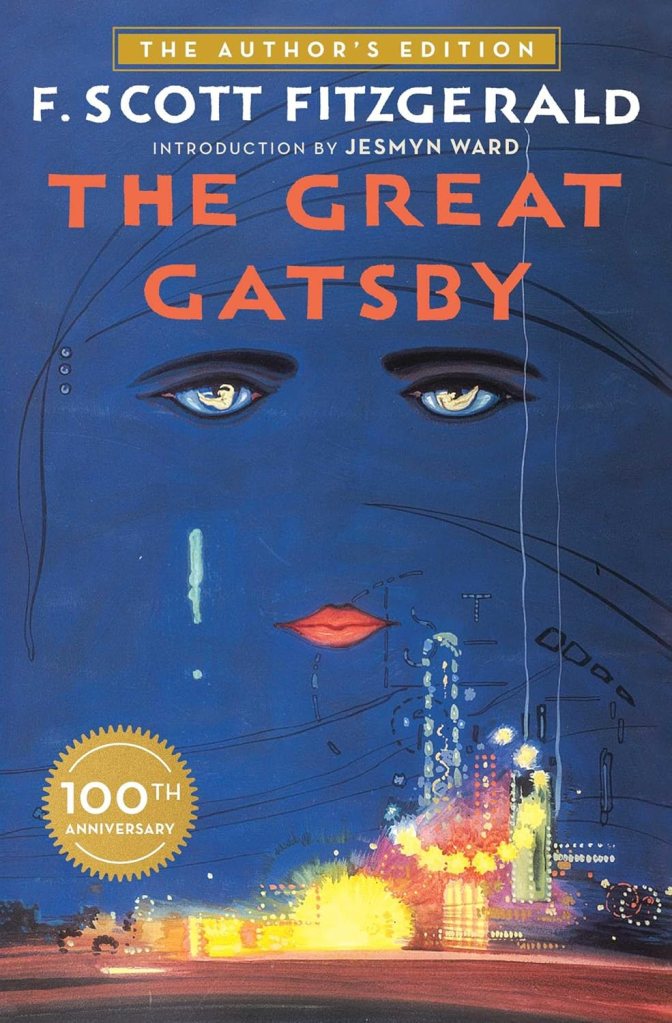
In a world so entrenched in wealth acquisition, we have heard of many families afflicted with the misfortune of striking it rich in the lottery and seeing their family spiral into an abyss.

The Great Train Robbery in 1963, the UK’s biggest heist, where the robbers scooted off with the present-day value of £62 million, ended with none of the culprits laying their hands on the loot, but mostly just behind bars. [9]

Just look at Trump and his track to the White House using the ticket which promises to ‘Make America Great Again (MAGA)’. The illusion of the blissful past only morphed into civil unrest, which required the deployment of National Guards and Marines to use flash-bang grenades and tear gas to squash down their own citizens. If that was not enough, now there is talk of MIGA — Make Iran Great Again, perhaps returning Iran to its glory days of the Persian Empire! [10]

When we describe something as great, we usually refer to it in a positive light, as something extraordinary pushing human abilities beyond normal boundaries. It is a subjective assessment. One man’s greatness is another’s failure. It can serve as a cautionary tale for those who have fallen. 

It’s just food for thought. After having a bad day at the office when nothing went right, we returned to find that we had forgotten the house key at work and had to go all the way back to the office to retrieve it. What do we say? “Great!”

.

[1] ). Even though this quote is often referred to as coming from Churchill, it may have  been originated from Otto von Bismarck, the first Chancellor of unified Germany between 1871 and 1890. He could have said, “he who is not a socialist at 19, has no  heart. He who is still a socialist at 30, has no brain.”

Katycarruther’s.com

https://en.wikiquote.org/wiki/Talk:Otto_von_Bismarck#Unsourced

[2] Speech and 2017 bmovie, which included the speech called ‘The Darkest Hour’

[3] https://www.goodreads.com/quotes/4611-history-will-be-kind-to-me-for-i-intend-to

[4] People probably put words into Churchill’s mouth. It may be a misquotation. The conversation may have taken place between Lady Astor and Churchill’s aide. 

https://www.smithsonianmag.com/history/illustrious-history-misquoting-winston-churchill-180953634/

[5] Churchill’s policies contributed to the 1943 Bengal famine – study.

https://www.theguardian.com/world/2019/mar/29/winston-churchill-policies-contributed-to-1943-bengal-famine-study

[6] Did Anyone Really Think the Titanic was Unsinkable? The makers probably oversold it.’

https://www.britannica.com/story/did-anyone-really-think-the-titanic-was-unsinkable

[7] Father to a nation, stranger to his son.

https://www.theguardian.com/film/2007/aug/10/india

[8] The reality was not what success for everyone in America.

https://www.ewadirect.com/proceedings/chr/article/view/9147

[9] The men behind the Great Train Robbery

https://www.bbc.co.uk/culture/article/20250410-the-men-behind-the-great-train-robbery

[10] MAGA to MIGA.

https://www.wionews.com/world/from-maga-to-miga-donald-trump-suggests-regime-change-to-make-iran-great-again-1750631822282/amp

.

Farouk Gulsara is a daytime healer and a writer by night. After developing his left side of his brain almost half his lifetime, this johnny-come-lately decided to stimulate the non-dominant part of his remaining half. An author of two non-fiction books, Inside the twisted mind of Rifle Range Boy and Real Lessons from Reel Life, he writes regularly in his blog, Rifle Range Boy.

Disclaimer: The opinions expressed are solely that of the author and not of Borderless Journal.

PLEASE NOTE: ARTICLES CAN ONLY BE REPRODUCED IN OTHER SITES WITH DUE ACKNOWLEDGEMENT TO BORDERLESS JOURNAL

Click here to access the Borderless anthology, Monalisa No Longer Smiles

Click here to access Monalisa No Longer Smiles on Kindle Amazon International
Categories
Musings

In Favour of a Genre …

By Saeed Ibrahim

According to Australian author Frank Moorhouse, a short story is like a beautiful handmade toy — a specialised craft requiring talent, originality, creativity and skill. Not surprisingly, many of today’s  successful writers have used this medium to launch their professional careers. And for good reason. Short stories have helped them hone their writing skills, develop the writing habit and inculcate a sense of discipline in their writing schedules.

Contrary to what some editors and publishers believe, there is a growing market for the short story. Modern technology has  offered a tremendous boost to the short story genre. The short story today can be made accessible to readers in a much quicker time frame and at a much lower cost. With so many online magazines, it’s now cheaper to produce and distribute more short fiction than ever before. This flexibility makes it possible to download a short story on a website, on a mobile phone or on a tablet; and a short story can be read and enjoyed anywhere and anytime – during a lunch break, in a doctor’s waiting room, on a short journey or a commute, or even whilst waiting in a queue!

From the reader’s point of view there are several other advantages to a short story. One of the major strengths of the short story lies in its brevity and compactness, providing a punch that is so different from a novel. The theme of the story, the setting, the plot, the characters, the conflict, the turning point and the resolution are all contained in a short space. And it is precisely this compactness that makes this form of writing so appealing. A short story provides a quick and easy read from start to finish in a short period of time, and often in a single sitting. In the words of Neil Gaiman, “Short stories are journeys you can make to the far side of the universe and still be back in time for dinner.”

Apart from that, because of the media overload in today’s world, our attention spans are shrinking. This is why it is important to condense the message in a short and concise form that catches the attention of the reader and stimulates his curiosity. They could be a way towards inculcating the reading habit. They are great for reluctant readers, slow readers or anyone intimidated by books.

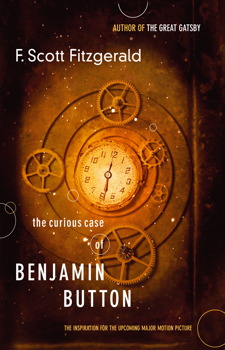
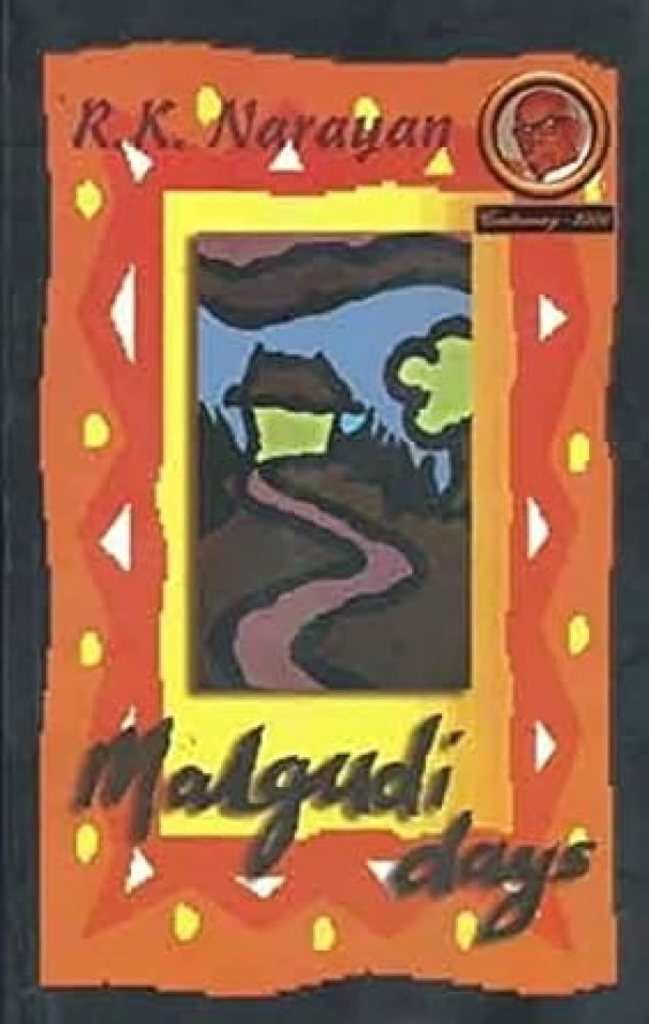
The lasting power of the short story is so well illustrated in the fact that many famous and successful films and television series were based on  short stories. The Curious Case of Benjamin Button, for instance, was an award-winning film inspired by F Scott Fitzgerald  short story of 1922 and released 86 years after the original story was written. Malgudi Days was made into a television serial of 54 episodes and four seasons and had become a household name in India. It was inspired by a series of 32 short stories written in 1943 by celebrated author, RK Narayan.

So if you are an aspiring young writer, the short story would be a good means of kick starting your writing career. We all have a story inside us waiting to be told. And who knows, that yet to be written masterpiece may well find its way to a block buster series on Netflix!

Saeed Ibrahim’s family saga, Twin Tales from Kutcch, and his book of short stories, The Missing Tile and Other Stories, have had successful  runs both in India and overseas. He continues to write newspaper articles, travel essays and book reviews for various Indian and international publications.

.

PLEASE NOTE: ARTICLES CAN ONLY BE REPRODUCED IN OTHER SITES WITH DUE ACKNOWLEDGEMENT TO BORDERLESS JOURNAL

Click here to access the Borderless anthology, Monalisa No Longer Smiles

Click here to access Monalisa No Longer Smiles on Kindle Amazon International
Categories
Essay

The Lyric Temper

By Jared Carter

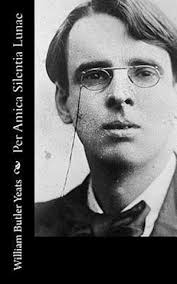
In the last section of that book with the most beautiful of titles, Per Amica Silentia Lunae,[1] the Irish poet Yeats, addressing Iseult Gonne, refers to those moments when he becomes happy – when poetry over brims on the page, and things turn luminous, and time seems to “burn up” in the sense of no longer mattering, no longer having the power to detract or diminish.

He is writing about lyric poetry, of course, and about those special moments that may come upon us at any age or at any time, but which become more recognisable to the poet as he or she grows older, and more experienced and knowledgeable – although they are also becoming, in actuarial terms, more rare.

But perhaps not. Perhaps, with wisdom and insight and acceptance, they actually increase in frequency. Recently I told an old friend, a visitor to my home, that after all these years I have finally begun to understand how to write poems. Put simply, I have gotten better at being patient, and at waiting until they appear. I have learned the necessity of silencing my own thoughts in order to hear the brushing of their wings as they pass overhead.

Or, to change the metaphor – only when the wind dies down can the bee or the butterfly land on the blossom. Genuine lyricism comes only after the self has been quieted. Not put to sleep, or – least of all – “put on hold,” in that ugly modern phrase.

Rather, shifted into neutral. Allowed to drift, and possibly to become something rich and strange.

“It may be an hour before the mood passes,” Yeats writes, in a completely disarming, unexpected passage, “but latterly I seem to understand that I enter upon it the moment I cease to hate.” He goes on to say, “I think the common condition of our life is hatred – I know that this is so with me – irritation with public or private events or persons.”

He attempts to define what he means by not hating, and it is not necessarily loving. Rather, “in those brief intense visions of sleep, I have something about me that, though it makes me love, is more like innocence. I am in the place where the Daimon is, but I do not think he is with me until I begin to make a new personality.”

This new personality is a paradox. Recognisably human – fragile, perishable, transient – it lacks the negative aspects of selfhood. It is no longer selfish or greedy or hateful. It has accepted its present state of being and its eventual death and dissolution.

We are speaking, then, of neither comedy or tragedy, nor their dramatic manifestations in verse, but of the lyric temper in poetry, and of the manner in which the poem is its abode – just as the moth or butterfly, as it seeks to gather up the pollen, finds its momentary resting place in the flower. But there is a dark side to this metaphor, and in any such discussion it cannot be avoided. Even the purest lyric voice is, by its very nature, transitory and perishable.

Honeybees, too, gather up pollen, but these are worker bees, who venture far from the hive, and who overcome all manner of risk in doing so. Within the hive itself, the drones partake of the bounty, but they do nothing to earn their keep. Only one of them will bed the queen. The others, whether they know it or not, are doomed. By autumn, as part of the very nature of things, the workers, understanding that only a finite amount of food is available to see them through the winter, push the drones out of the hive, where they perish amid the thorns and brambles.

Sappho

The works of many a lyric poet, who has dined the summer long on the ambrosia of the imagination, will eventually be subject to sheer circumstance, and drop away from the hive. Sappho[2]’s main works are lost; Keats[3]’s productive years were pitiably few. Madness overtook Smart[4], Hölderlin[5], Clare[6], and dozens more. We know this, and thus each lyric poem we have managed to preserve from past centuries speaks to us in an especially poignant way. However lovely, however evocative, we know it will not last.

The philosopher and poet George Santayana[7] has summed up the situation: “Even the most inspired verse, which boasts not without a relative justification to be immortal, becomes in the course of ages a scarcely legible hieroglyphic; the language it was written in dies, a learned education and an imaginative effort are requisite to catch even a vestige of its original force. Nothing is so irrevocable as mind.”

This is why lyric poetry retains its power to speak to us, down through the ages: because it is perishing before our very eyes, even as our own eyes are perishing. And yet it does not matter. “I am in the place,” Yeats explains, “where the Daimon is.”

And what might that be – the presence of “the Daimon”? Such a term can mystify, but surely this refers to some fundamental antinomy of human existence, some intuition of paradox that lies at the heart of being. Keats called it “negative capability”; F. Scott Fitzgerald[8] praised “that ability to hold two opposed ideas in the mind at the same time, and still retain the ability to function.”

The two ideas? The notion that art itself, in all its fragility, strives to endure. Perhaps another poet, Edwin Arlington Robinson[9], best described the paradox, in his tribute to Walt Whitman[10]: “When we write / Men’s letters on proud marble or on sand,/ We write them there forever.”

To be with the Daimon, to participate in timeless awareness, is why we write lyric poems, why we return to them – and why we revere the great periods of lyric achievement. Undoubtedly there have been many, in different cultures around the world, but we have managed to record only a few.

We treasure the lyric writings of the Sufis and the Elizabethans. We hark back to the time of Wordsworth and Hölderlin, to the T’ang Dynasty [618-906] and to that amazing stretch from Baudelaire to Mallarmé in the second half of the nineteenth century, a time that included Tennyson, Dickinson, Verlaine, Hopkins, Housman, Hardy, and Yeats himself.

Eventually, in the course of time, all these will slip away and be forgotten, which is why they now seem so lovely and memorable. They are that which has managed to survive and come down to us in spite of everything. Wang Wei knew this quite well. As the glories of the T’ang began to crumble and fall away, he paid tribute to that bittersweet awareness that we have come to know as the lyric temper:


Be not disquieted either by kindness or by insult –
          empty joy or sorrow.
Do not count on good or evil – you will only
          waste your time . . .
And why seek advice from the Yellow Emperor
          or Confucius?
Who knows but that we all live out our lives
          in the maze of a dream?


“Per amica silentia lunae” is a line from the Virgil[11]‘s Aeneid. Yeats translates it as “Through the friendly silences of the moon”. It is a most pregnant line. The moon never speaks; its very essence is change. And yet each of us considers it a friend, and we invariably greet it with our innermost being, each time we see it in the night sky. We have carried on this friendship since childhood. Lyric poetry deals with such verities.

The following is by Witter Bynner[12], taken from his masterful introduction to The Jade Mountain: A Chinese Anthology: “. . . if we will be honest with ourselves and with our appreciation of what is lastingly important, we shall find these very same poems to be momentous details in the immense patience of beauty. They are the heart of an intimate letter. They bring the true, the beautiful, the everlasting, into simple, easy touch with the human, the homely, and the immediate.”

A key phrase in this passage is worth repeating and remembering: “The immense patience of beauty.” Surely it is to this that the poet must surrender if the lyric temper is to be made manifest.

[1] Translates to ‘Through the Friendly Silences of Moon’, was written by Yeats (1865-1939) between January and May of 1917, and consists of a Prologue and an Epilogue for Iseult Gonne

[2] Greek poet (630 – 570 BCE)

[3] English poet (1795-1821)

[4] English poet (1722-1771)

[5] German poet and philosopher (1770-1843)

[6] English poet (1793-1864)

[7] American poet and philosopher (1863-1954)

[8] American novelist, essayist, and short story writer (1896-1940)

[9] American poet and playwright (1869-1935)

[10] American poet, essayist, and journalist (1819-1892)

[11] Roman Poet (29-19BCE)

[12] American poet and translator (1881-1968)

Jared Carter’s most recent collection, The Land Itself, is from Monongahela Books in West Virginia. His Darkened Rooms of Summer: New and Selected Poems, with an introduction by Ted Kooser, was published by the University of Nebraska Press in 2014. A recipient of several literary awards and fellowships, Carter is from the state of Indiana in the U.S.

.

PLEASE NOTE: ARTICLES CAN ONLY BE REPRODUCED IN OTHER SITES WITH DUE ACKNOWLEDGEMENT TO BORDERLESS JOURNAL

Click here to access the Borderless anthology, Monalisa No Longer Smiles

Click here to access Monalisa No Longer Smiles on Amazon International