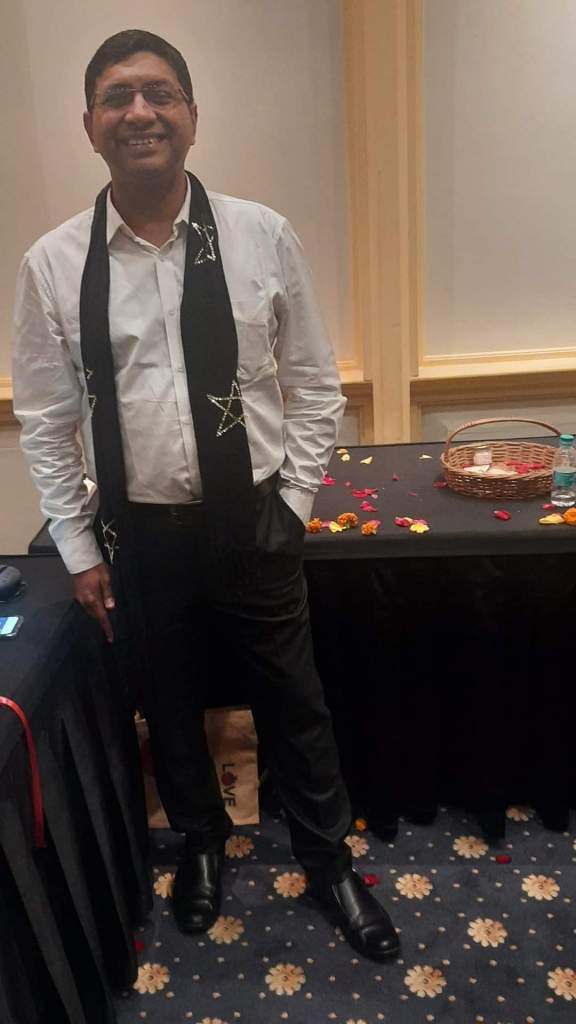
Rajorshi Patranabis shares the philosophy and lore of Wiccans
What, if I say that 68% of the universe is dark? Well, this is not my statement. This is a scientifically proven fact. What is there inside the darkness? Sceptics will say, let science find it out. The spirituals will say there’s mysticism. A Wiccan will say there’s mystical magic. Magic, as in common parlance is entertainment, in Wiccan philosophy, it’s the basis of existence. Magic can be best explained as something that’s occurs yet cannot be fathomed.
The term, Wicca, came was popularised by Gerald Gardiner with his books. Many said, it was misogynistic. To be fair to him, 1925 was not as open as it is today, as far as societal norms were concerned. It is more accepted today. I, a practicing Wiccan, follow a way that is more open, more aligned to nature, supernature and the supernatural. What I follow was introduced into India by Ma’am Ipsita Roy Chakraverti.
While this movement may well be termed as historically the first ever feminist movement, the pagan practices involved are more than a thousand years old. Ritualistic worshipping of nature is seamlessly integrated into Wiccan practices. The ancient knowledges that had trickled down through generations are put together in the modern Wiccan practices. Wicca is a philosophy, and I detest calling it a religion. Here, we don’t believe, we seek. We use the knowledge to try and to unfathom mysteries that lie within the dark spheres of nature. Albeit, a miniscule bit, but we do delve into that 68% of darkness, once in a while.
From shamanism to voodoo, from the ancient Egyptian ways of healing to the 64 yoginis, this school covers every way by which the human soul and body can be healed. They say the basic apothecary of life is to align oneself to the directions given by nature. Manifestation of the female power of nature (shakti) forms the essence of this philosophy. The mind, the body and the soul form the complete sphere of the universe. Wicca believes that nothing is inanimate and that everything has a consciousness draped in a veil of conscience.
Everything that’s around us has been derived from this planet, and if this planet is living, Mother Earth is living, then, everything that comes out of it is also living. As the Law of Conservation of Energy says, the total energy is constant, it can neither be created, nor be destroyed. Hence, the body might change, the forms change but the energy remains. Energy is eternal. The metamorphic energy inside a human body that has derived its form mostly from the magnetic or the electric energies of this planet is called the soul. The soul thinks and decides with the mind and the body giving them a presence. A purified soul is the spirit and when this spirit raises itself to survive in unison with the nature, we call that person spiritual.
Chakraverti says every strong woman is a witch. The word ‘witch’ comes from the old English word ‘wik’, which means wise. A female spirit is more nuanced, stubborn, flexible and erudite. A witch is that wise woman who takes on her challenges head on. A witch or a wizard work on the same footing of aligning mankind to the deluges of nature to heal the spirit, the mind, which in turn takes care of the body. Historically, a Wiccan considers Joan of Arc, Robin Hood, Noor Jehan as witches / wizards. Witches were killed at a point due to patriarchal fears of powerful women. These women had been portrayed as negative women in many of the kindergarten folklores.
The Greek goddess, Diana, was worshiped by Wiccan by Budapest Wiccans. Did she metamorphose to Dayaan[1], when she travelled east? Dayaans were to be feared, to be killed if possible. We have come a long way, no doubt, but sporadic news of such killings are still rampant.
There are also certain myths about witches, one being, flying on the broom. The broom is symbolic of cleanliness — cleaning a society of the cobwebs of false beliefs and weak minds. Broom becomes synonymous with power. Flight is of the spirit. A potent spirit reaches places in such time that the body can never think of. There are innumerable examples of saints and sages being spotted at two or more places at the same time. Advanced Wicca philosophy is inclusive of the powers of Hatyoga and Tantra.
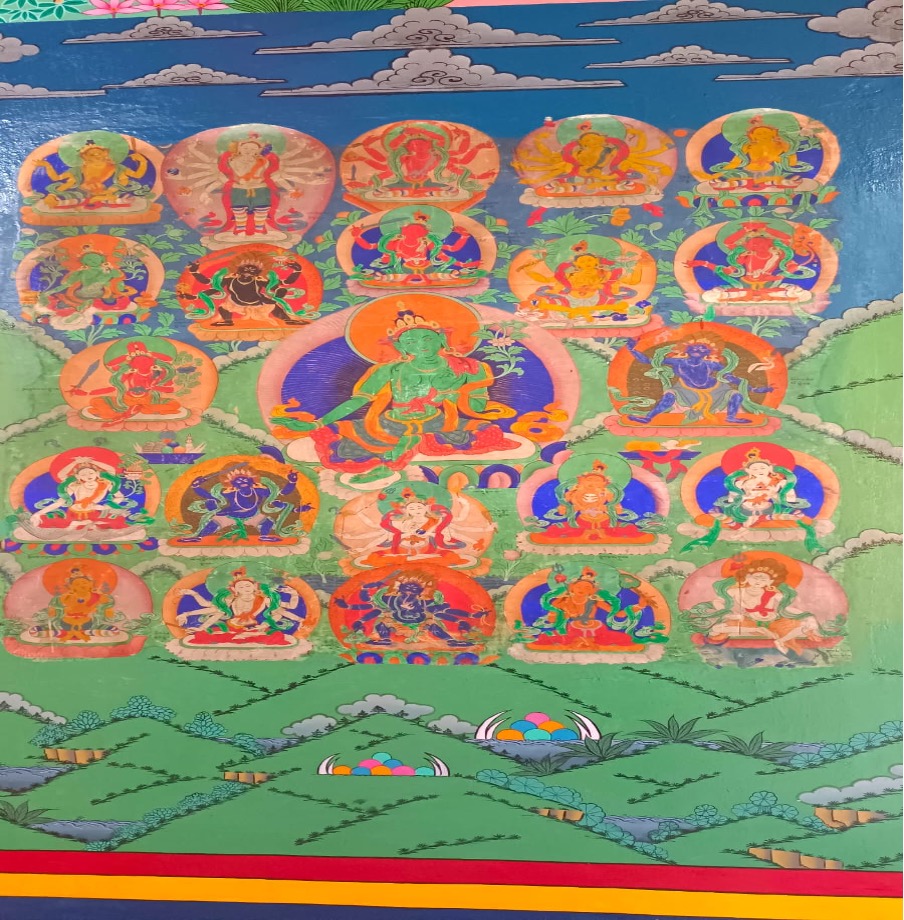
Wiccans are the worshippers of the mother Goddess Isis of Egypt. She’s the moon Goddess and the wife of Lord Osiris, the lord of the dark world. She’s the quintessential witch, the Goddess of magic, the Goddess of strength. Indian Wiccans are influenced by forms of Shakti known as Kamala and the Bhubaneswari. The most ancient traces of worship of the raw female power of nature can be found in Kali. Wiccans are also influenced by the Tibetan Tara and the concept of Dakini (the divine witch).
The basic Wiccan principle of worship is through sound vibrations. Chants take the centre stage. Chants of Buddhism are also regularly practiced as are those of Vodun faith with drumbeats. Healing is practiced with chants, as was a common practice in ancient Egypt. The sound of the singing bowl is potent in helping heal.
They have tools that help focus energies of the Earth. Some sound like falling rain. Then there are stones, as in a crystal, a rose quartz, an obsidian, the lapiz lazuli and so on. But the most important tool is the Athame. This is a blunt long knife that is charged and is used to tap the powers of the nature.
One of the oft asked questions is do Wiccans delve into the ‘other dimension’? Physicists have claimed for long, the existence of a celestial plane. Scientists have even said, that, there is a time difference between the celestial and the terrestrial plane. Dreams are said to be in the celestial plane, and hence, time moves differently in dreams. But in effect all humans would have had a brush with the two worlds through dreams. Wiccans believe the veil between the two worlds becomes very thin in autumn. Thus we have All Soul’s Day, Halloween, Bhoot Chaturdashi (holy night of the ghosts) all around the same time, in the autumn of the Northern hemisphere.
I would like to share a few supernatural experiences that I have had myself. These are all first-hand experiences, and I share them with no intention to influence the readers.
A psychic expedition at the Rabindra Sarovar Lake in Kolkata at around 9.30 am on a November morning revealed a figure in my camera. The lake was the psychiatric hospital for the American Soldiers during the 2nd world war. The spirit communicated with us and what could generally be fathomed was, ‘ 1942, Michael James, Death nail through my heart’.
Another time, I rode in an e-rickshaw with someone who had crossed over 20 years before. The driver was very much in congruence with my story when he said, he takes a ride every other evening. This place is a traditionally haunted village in East Midnapore district of West Bengal, India. And yet again, at one of the famous 5-star hotels in Delhi, I could feel someone removing the sacred thread[2] from my body.
I can go on and on. But when it’s Wicca, it’s the strength of Isis that needs to be manifested for healing. And as a true Wiccan, I take leave with, Tebua Netr Anset (You’re the Isis, we know).
.
[1] Witch in Hindi
[2] A thread worn by Brahmins after they go through an initiation ceremony in their teens.
Rajorshi Patranabis is a poet, critic, reviewer and translator. A Wiccan by philosophy and belief, he is a food consultant by profession with 10 books of poetry and 4 books of translation.
.
PLEASE NOTE: ARTICLES CAN ONLY BE REPRODUCED IN OTHER SITES WITH DUE ACKNOWLEDGEMENT TO BORDERLESS JOURNAL.
Click here to access the Borderless anthology, Monalisa No Longer Smiles
Click here to access Monalisa No Longer Smiles on Kindle Amazon International
 Borderless