By Jun A. Alindogan
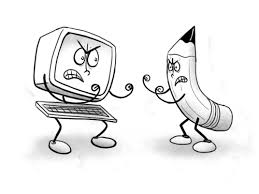
It is always refreshing when trust can be established online without any face-to-face interaction. Social media is filled with scammers, making it challenging to trust individuals based solely on their stories. This becomes even more complicated when the relationship starts at a time when the internet was not easily accessible. In these situations, you have to rely only on the person’s words. Sincerity is difficult to gauge, even with the use of emotive and abstract language in any physical correspondence.
Many years ago, I found myself in a situation where I met a woman through physical correspondence, as encouraged by a friend. He advised me to introduce myself to the lady and share about my work teaching at the seminary, providing English tutorials for Koreans, and assisting a church in a suburban foothill. As it turned out, she was part of a Christian NGO based in the US, along with a few other senior citizens. The organisation’s mission was to provide funds for seminary scholarships, livelihood support, books, conference fees, further studies, and toys.
Our relationship was purely based on trust as we did not know each other personally and yet for a number of years, she supported me financially as she learned of my journey. She preferred to write her letters on an electric typewriter and on blue-coloured stationery with a lovingly short note of affirmation. She took my every word at face-value although at times, I sent her photos of myself and church activities to support my stories that she sometimes quoted in her monthly newsletter.
When a missionary friend detoured to the US prior to her Colombian street kids’ programme, she visited the organisation’s garage cum office and brought my gift of a passenger jeep replica made from the ashes of a previous volcanic eruption, which she greatly appreciated. The organisation’s resources were donated to a graduate-level seminary in the US, that included her book, Pilgrims and Strangers Seek The City Not Made with Hands, upon her demise and all her colleagues.
Words only have meaning when they are used in a relational context; otherwise, they are simply meaningless.
Years before the internet became readily accessible, I used to write letters to two friends who worked as domestic helpers in Singapore. Despite having college degrees, they were unable to find relevant jobs in our country due to its political turmoil. I myself was jobless for two years, and like many new college graduates, I succumbed to depression and questioned my faith and self-worth. The struggles were compounded by stress from family and friends. I found a way to vent my issues to these Overseas Filipino Workers (OFWs), who also had their fair share of misery and homesickness. My letters were selfish. Over time, the correspondence gradually faded, along with the photos that sometimes accompanied their stories. One migrated to Canada and the other one is retired and lives with her sibling who has a physical disability in a suburban locality. All my letters from my benefactors and friends were washed away in an unexpected catastrophic flood that swept my residence. Up to this day, the loss is still palpable.
I lost two aunts during the pandemic, who were the last of my father’s siblings. The younger one passed away in her late 70s, while the older one died in her early 90s. Both were based in the US and worked as medical professionals. Every Christmas, I make sure to send them individual greeting cards through the mail, along with a few personal thoughts. They lived separately in the same village in the US, and I believe they appreciated these physical cards for their nostalgic value. They didn’t usually respond to emails or cards, as technology can be bothersome for the elderly.
My older aunt once told my eldest brother, who also lives in the US, that my emails were too long and tended to put her to sleep. I also send them thank you cards for the occasional holiday cash they send. My relationship with my aunts is mainly through written correspondence, with only a few rare occasions of meeting in Manila. Despite this, they never fail to remember me and my younger sibling, sending us thoughtful notes. My dad passed away at 60, and my aunts fondly told me that I look like my father. Perhaps this resemblance was one of the catalysts that kept our correspondence going, even in its irregularity. Stories, however trivial, matter to them.
Letter writing can be tedious, especially when done by hand. However, it is also tiring to write letters on computers and share both trivial and significant stories to send by post, as we are not certain if our experiences matter to our recipients. Nevertheless, physical personal correspondence brings about a certain degree of warmth that is often lacking online. It takes more effort to scribble than to type. It is also more spontaneous compared to digital writing, where you can effortlessly edit and revise through AI tools. Sometimes, the physical paper used says a lot about the sender and receiver. I am particularly fond of lined stationery with religious quotes and maxims on recycled paper. The envelope is of equal value as well because it must similarly match its properties.
At times, I also use plain paper to write letters. I remember writing letters of regards and sharing personal news with a college classmate and friend who was stationed on one of the most remote islands in the country for a kids’ mission. She replied to me, but her letters took a long time to reach me through the mail. Both her letters and mine were written in longhand. We were able to reconnect through letters because there were no mobile phones or internet at that time. The distance and physical absence made our words more meaningful and profound.
They say that the post office is in its dying stage, but time and again, it has proven itself to still be relevant in the internet age. Not everyone is connected, especially in areas where there is no access to electricity.
In one of the upland villages in my municipality, which is just about a two-hour drive from the city, they have not had electricity for years. This is because streetlights have to be paid for by the consumer. If the area has rugged terrain, it will require a good number of posts to be erected to bring electricity. This is a common scenario in agricultural and upland villages. While solar power is an option, procuring panels can be quite expensive as the government has not taken any measures yet to bring the cost down. To connect, villagers go to stores that offer WiFi for a minimal fee. Mobile signals are not available in many remote locations, so the gap is still widespread despite technological tools. We must accept the fact that technology is limited. Physical correspondence is here to stay.

Manuel A. Alindogan, Jr., also known as Jun A. Alindogan, is the Academic Director of the Expanded Alternative Learning Program of Empowered East, a Rizal-province based NGO in the Philippines and is also the founder of Speechsmart Online that specialises in English test preparation courses. He is a freelance writer and a member of the Freelance Writers’ Guild of the Philippines (FWGP).
PLEASE NOTE: ARTICLES CAN ONLY BE REPRODUCED IN OTHER SITES WITH DUE ACKNOWLEDGEMENT TO BORDERLESS JOURNAL.
Click here to access the Borderless anthology, Monalisa No Longer Smiles
Click here to access Monalisa No Longer Smiles on Kindle Amazon International

 Borderless